Posts Tagged ‘CHICAGO SUN-TIMES’
ABC NEWS, ALTERNET, AMERICABLOG, AP, BABY BOOMER RESISTANCE, BBC, BLOOMBERG NEWS, BUZZFEED, CBS NEWS, CHICAGO SUN-TIMES, CNN, CROOKS AND LIARS, DAILY KOS, DECEIT, DETECTIVES, FACEBOOK, FIVETHIRTYEIGHT, HARPER’S MAGAZINE, HUFFINGTON POST, INTERROGATION, INTERVIEWING, LIE DETECTORS, MEDIA MATTERS, MIRANDA VS. ARIZONA, MOTHER JONES, MOVEON, MSNBC, NBC NEWS, NEW REPUBLIC, NEWSDAY, NEWSWEEK, NPR, PBS NEWSHOUR, POLICE, POLITICO, POLITICUSUSA, POLYGRAPH, PROSECUTION, RAW STORY, REUTERS, SALON, SEATTLE TIMES, SLATE, SUPREME COURT, TALKING POINTS MEMO, THE ATLANTIC, THE CHICAGO SUN-TIMES, THE CHICAGO TRIBUNE, THE DAILY BEAST, THE DAILY BLOG, THE DENVER POST, THE GUARDIAN, THE HILL, THE HUFFINGTON POST, THE INTERCEPT, THE LOS ANGELES TIMES, THE NATION, THE NEW REPUBLIC, THE NEW YORK TIMES, THE NEW YORKER, THE VILLAGE VOICE, THE WALL STREET JOURNAL, THE WASHINGTON POST, THINKPROGRESS, TIME, TRUTHDIG, TRUTHOUT, U.S. NEWS & WORLD REPORT, UPI, USA TODAY, X
In Bureaucracy, History, Law, Law Enforcement, Politics, Social commentary on February 12, 2026 at 12:10 am
Ever heard of “polygraph by copier”?
If you haven’t, here’s how it works:
A detective loads three sheets of paper into a Xerox machine.
“Truth” has been typed onto the first sheet.
“Truth” has been typed onto the second sheet.
“Lie” has been typed onto the third sheet.

Then a criminal suspect is led into the room and told to put his hand against the side of the machine.
“What is your name?” asks the detective.
The suspect gives it.
The detective hits the copy button, and a page comes out: “Truth.”
“Where do you live?” asks the detective.
The suspect gives an address, the detective again hits the copy button, and a second page appears: “Truth.”
Then comes the important question: “Did you kill Big Jim Tate on the evening of….?”
The suspect answers. The detective presses the copy button one last time, and the sheet appears: “Lie.”
“Well, well, well, you lying little bastard,” says the detective.
Convinced that the police have found some mysterious way to peer into the darkest recesses of his criminality, the suspect “gives it up” and makes a full confession.
Yes, contrary to what many believe, police can legally use deceit to obtain a confession.
In 1973, the Supreme Court ruled, in United States v. Russell: “Nor will the mere fact of deceit defeat a prosecution, for there are circumstances when the use of deceit is the only practicable law enforcement technique available.”
In that case, the Court narrowly upheld a conviction for methamphetamine production even though the defendant had argued entrapment.
So what types of interrogative deceit might a police officer use to develop admissible evidence of a suspect’s guilt?

Police interrogation
The general rule is that deception can be used so long as it’s not likely to cause an innocent person to commit a crime or confess to a crime that s/he didn’t commit.
Consider the following examples:
- A detective is interviewing a suspect in a rape case. “Oh, that girl,” he says, thus implying that the victim was a slut and had it coming. The suspect, thinking he’s dealing with a sympathetic listener, starts bragging about his latest conquest—only to learn, too late, that his listener isn’t so simpatico after all.
- “We found your prints on the gun”—or on any number of other surfaces. Actually, there are few good places on a pistol to leave prints. And those that are left can be smeared. The same goes for other surfaces. But if a suspect can be led to believe the cops have his prints, a confession is often forthcoming.
- A police officer is interrogating a suspect in a murder case. “He came at you, didn’t he?” asks the cop. The suspect, who murdered the victim in cold blood, thinks he has an escape route. “Yeah, he came at me”—this confirming that, yes, he did kill the deceased.
- “Your partner just gave you up” is a favorite police strategy when there is more than one suspect involved. If one suspect can be made to “flip”—turn–-against the other, the case is essentially wrapped up.
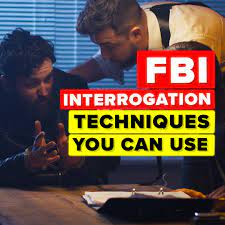
- Interrogating a bank robbery suspect, a cop might say: “We know you didn’t do the shooting, that you were only the wheelman.” This implies that the penalty for driving the getaway car is far less than that for killing someone during a robbery. In fact, criminal law allows every member of the conspiracy to be charged as a principal.
- “I don’t give a damn what you did,” says the detective. “Just tell me why you did it.” For some suspects, this offers a cathartic release, a chance to justify their guilt.
- The “good cop/bad cop” routine is known to everyone who has ever seen a police drama. Yet it continues to yield results so often it continues to be routinely used. “Look, I believe you,” says the “good” cop, “but my partner’s a real asshole. Just tell me what happened so we can clear this up and you can go.”
- “So,” says the detective, “why do you think the police believe you did it?” “I have no idea,” says the suspect, confident that he isn’t giving up anything that might come back to haunt him. “Well,” says the cop, “I guess you’ll just have to make something up.” Make something up sounds easy, but it’s actually a trap. The suspect may end up giving away details that could incriminate him—or lying so brazenly that his lies can be used against him.
So is there a best way for a suspect to deal with an invitation to waive his Miranda right to remain silent?
Yes, there is. It’s to refuse to say anything and to ask for permission to call a lawyer.
That’s the preferred method for Mafia hitmen—and accused police officers.
Any cop who finds himself under investigation by his department’s Internal Affairs unit automatically shuts up—and calls his lawyer.
Contrary to popular belief, an arrestee is allowed to make more than one phone call in most states.
Any other reason—no matter how well-intentioned—may well result in a lengthy prison sentence.
ABC NEWS, ALTERNET, AMERICABLOG, AP, BABY BOOMER RESISTANCE, BBC, BLOOMBERG NEWS, BUZZFEED, CBS NEWS, CHICAGO SUN-TIMES, CNN, CROOKS AND LIARS, DAILY KOS, DECEIT, DETECTIVES, FACEBOOK, FIVETHIRTYEIGHT, HARPER’S MAGAZINE, HUFFINGTON POST, INTERROGATION, INTERVIEWING, LIE DETECTORS, MEDIA MATTERS, MIRANDA VS. ARIZONA, MOTHER JONES, MOVEON, MSNBC, NBC NEWS, NEW REPUBLIC, NEWSDAY, NEWSWEEK, NPR, PBS NEWSHOUR, POLICE, POLITICO, POLITICUSUSA, POLYGRAPH, PROSECUTION, RAW STORY, REUTERS, SALON, SEATTLE TIMES, SLATE, SUPREME COURT, TALKING POINTS MEMO, THE ATLANTIC, THE CHICAGO SUN-TIMES, THE CHICAGO TRIBUNE, THE DAILY BEAST, THE DAILY BLOG, THE DENVER POST, THE GUARDIAN, THE HILL, THE HUFFINGTON POST, THE INTERCEPT, THE LOS ANGELES TIMES, THE NATION, THE NEW REPUBLIC, THE NEW YORK TIMES, THE NEW YORKER, THE VILLAGE VOICE, THE WALL STREET JOURNAL, THE WASHINGTON POST, THINKPROGRESS, TIME, TRUTHDIG, TRUTHOUT, U.S. NEWS & WORLD REPORT, UPI, USA TODAY, X
In Bureaucracy, History, Law, Law Enforcement, Politics, Social commentary on December 16, 2024 at 12:10 am
Ever heard of “polygraph by copier”?
If you haven’t, here’s how it works:
A detective loads three sheets of paper into a Xerox machine.
“Truth” has been typed onto the first sheet.
“Truth” has been typed onto the second sheet.
“Lie” has been typed onto the third sheet.
Then a criminal suspect is led into the room and told to put his hand against the side of the machine.
“What is your name?” asks the detective.
The suspect gives it.
The detective hits the copy button, and a page comes out: “Truth.”
“Where do you live?” asks the detective.
The suspect gives an address, the detective again hits the copy button, and a second page appears: “Truth.”
Then comes the important question: “Did you kill Big Jim Tate on the evening of….?”
The suspect answers. The detective presses the copy button one last time, and the sheet appears: “Lie.”
“Well, well, well, you lying little bastard,” says the detective.
Convinced that the police have found some mysterious way to peer into the darkest recesses of his criminality, the suspect “gives it up” and makes a full confession.
Yes, contrary to what many believe, police can legally use deceit to obtain a confession.
In 1973, the Supreme Court ruled, in United States v. Russell: “Nor will the mere fact of deceit defeat a prosecution, for there are circumstances when the use of deceit is the only practicable law enforcement technique available.”
In that case, the Court narrowly upheld a conviction for methamphetamine production even though the defendant had argued entrapment.
So what types of interrogative deceit might a police officer use to develop admissible evidence of a suspect’s guilt?
Police interrogation
The general rule is that deception can be used so long as it’s not likely to cause an innocent person to commit a crime or confess to a crime that s/he didn’t commit.
Click here: The Lawful Use of Deception – Article – POLICE Magazine
Consider the following examples:
- A detective is interviewing a suspect in a rape case. “Oh, that girl,” he says, thus implying that the victim was a slut and had it coming. The suspect, thinking he’s dealing with a sympathetic listener, starts bragging about his latest conquest—only to learn, too late, that his listener isn’t so simpatico after all.
- “We found your prints on the gun”—or on any number of other surfaces. Actually, there are few good places on a pistol to leave prints. And those that are left can be smeared. The same goes for other surfaces. But if a suspect can be led to believe the cops have his prints, a confession is often forthcoming.
- A police officer is interrogating a suspect in a murder case. “He came at you, didn’t he?” asks the cop. The suspect, who murdered the victim in cold blood, thinks he has an escape route. “Yeah, he came at me”—this confirming that, yes, he did kill the deceased.
- “Your partner just gave you up” is a favorite police strategy when there is more than one suspect involved. If one suspect can be made to “flip”—turn–against the other, the case is essentially wrapped up.
- Interrogating a bank robbery suspect, a cop might say: “We know you didn’t do the shooting, that you were only the wheelman.” This implies that the penalty for driving the getaway car is far less than that for killing someone during a robbery. In fact, criminal law allows every member of the conspiracy to be charged as a principal.
- “I don’t give a damn what you did,” says the detective. “Just tell me why you did it.” For some suspects, this offers a cathartic release, a chance to justify their guilt.
- The “good cop/bad cop” routine is known to everyone who has ever seen a police drama. Yet it continues to yield results so often it continues to be routinely used. “Look, I believe you,” says the “good” cop, “but my partner’s a real asshole. Just tell me what happened so we can clear this up and you can go.”
- “So,” says the detective, “why do you think the police believe you did it?” “I have no idea,” says the suspect, confident that he isn’t giving up anything that might come back to haunt him. “Well,” says the cop, “I guess you’ll just have to make something up.” Make something up sounds easy, but is actually a trap. The suspect may end up giving away details that could incriminate him—or lying so brazenly that his lies can be used against him.
So is there a best way for a suspect to deal with an invitation to waive his Miranda right to remain silent?
Yes, there is. It’s to refuse to say anything and to ask for permission to call a lawyer.
That’s the preferred method for Mafia hitmen—and accused police officers.
Any cop who finds himself under investigation by his department’s Internal Affairs unit automatically shuts up—and calls his lawyer.
Any other reason—no matter how well-intentioned—may well result in a lengthy prison sentence.
ABC NEWS, ALTERNET, AMERICABLOG, AP, BABY BOOMER RESISTANCE, BBC, BLOOMBERG NEWS, BUZZFEED, CBS NEWS, CHICAGO SUN-TIMES, CNN, CROOKS AND LIARS, DAILY KOS, FACEBOOK, FIVETHIRTYEIGHT, HARPER’S MAGAZINE, HUFFINGTON POST, INTERROGATION, MEDIA MATTERS, MIRANDA VS. ARIZONA, MOTHER JONES, MOVEON, MSNBC, NBC NEWS, NEW REPUBLIC, NEWSDAY, NEWSWEEK, NPR, PBS NEWSHOUR, POLICE, POLITICO, POLITICUSUSA, RAW STORY, REUTERS, SALON, SEATTLE TIMES, SLATE, TALKING POINTS MEMO, THE ATLANTIC, THE CHICAGO SUN-TIMES, THE CHICAGO TRIBUNE, THE DAILY BEAST, THE DAILY BLOG, THE DENVER POST, THE GUARDIAN, THE HILL, THE HUFFINGTON POST, THE INTERCEPT, THE LOS ANGELES TIMES, THE NATION, THE NEW REPUBLIC, THE NEW YORK TIMES, THE NEW YORKER, THE VILLAGE VOICE, THE WALL STREET JOURNAL, THE WASHINGTON POST, THINKPROGRESS, TIME, TRUTHDIG, TRUTHOUT, TWITTER, U.S. NEWS & WORLD REPORT, UPI, USA TODAY
In Bureaucracy, History, Law, Law Enforcement, Politics, Social commentary on February 20, 2023 at 12:10 am
Ever heard of “polygraph by copier”?
If you haven’t, here’s how it works:
A detective loads three sheets of paper into a Xerox machine.
“Truth” has been typed onto the first sheet.
“Truth” has been typed onto the second sheet.
“Lie” has been typed onto the third sheet.
Then a criminal suspect is led into the room and told to put his hand against the side of the machine.
 “What is your name?” asks the detective.
The suspect gives it.
The detective hits the copy button, and a page comes out: “Truth.”
“Where do you live?” asks the detective.
The suspect gives an address, the detective again hits the copy button, and a second page appears: “Truth.”
Then comes the bonus question: “Did you or did you not kill Big Jim Tate on the evening of….?”
The suspect answers. The detective presses the copy button one last time, and the sheet appears: “Lie.”
“Well, well, well, you lying little bastard,” says the detective.
Convinced that the police have found some mysterious way to peer into the darkest recesses of his criminality, the suspect “gives it up” and makes a full confession.
Yes, contrary to what many believe, police can legally use deceit to obtain a confession.
In 1973, the Supreme Court ruled, in United States v. Russell: “Nor will the mere fact of deceit defeat a prosecution, for there are circumstances when the use of deceit is the only practicable law enforcement technique available.”
In that case, the Court narrowly upheld a conviction for methamphetamine production even though the defendant had argued entrapment.
So what types of interrogative deceit might a police officer use to develop admissible evidence of a suspect’s guilt?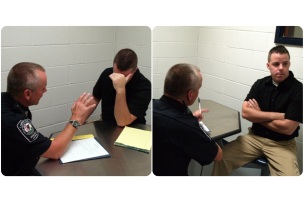 Police interrogation
The general rule is that deception can be used so long as it’s not likely to cause an innocent person to commit a crime or confess to a crime that s/he didn’t commit.
Click here: The Lawful Use of Deception – Article – POLICE Magazine
Consider the following examples:
- A detective is interviewing a suspect in a rape case. “Oh, that girl,” he says, thus implying that the victim was a slut and had it coming. The suspect, thinking he’s dealing with a sympathetic listener, starts bragging about his latest conquest—only to learn, too late, that his listener isn’t so simpatico after all.
- “We found your prints on the gun”—or on any number of other surfaces. Actually, there are few good places on a pistol to leave prints. And those that are left can be smeared. The same goes for other surfaces. But if a suspect can be led to believe the cops have his prints, a confession is often forthcoming.
- A police officer is interrogating a suspect in a murder case. “He came at you, didn’t he?” asks the cop. The suspect, who murdered the victim in cold blood, thinks he has an escape route. “Yeah, he came at me”—this confirming that, yes, he did kill the deceased.
- “Your partner just gave you up” is a favorite police stratagey when there is more than one suspect involved. If one suspect can be made to “flip”—turn–against the other, the case is essentially wrapped up.
- Interrogating a bank robbery suspect, a cop might say: “We know you didn’t do the shooting, that you were only the wheelman.” This implies that the penalty for driving the getaway car is far less than that for killing someone during a robbery. In fact, criminal law allows every member of the conspiracy to be charged as a principal.
- “I don’t give a damn what you did,” says the detective. “Just tell me why you did it.” For some suspects, this offers a cathartic release, a chance to justify their guilt.
- The “good cop/bad cop” routine is known to everyone who has ever seen a police drama. Yet it continues to yield results so often it continues to be routinely used. “Look, I believe you,” says the “good” cop, “but my partner’s a real asshole. Just tell me what happened so we can clear this up and you can go.”
- “So,” says the detective, “why do you think the police believe you did it?” “I have no idea,” says the suspect, confident that he isn’t giving up anything that might come back to haunt him. “Well,” says the cop, “I guess you’ll just have to make something up.” Make something up sounds easy, but is actually a trap. The suspect may end up giving away details that could incriminate him—or lying so brazenly that his lies can be used against him.
So is there a best way for a suspect to deal with an invitation to waive his Miranda right to remain silent?
Yes, there is. It’s to refuse to say anything and to ask for permission to call a lawyer.
That’s the preferred method for Mafia hitmen—and accused police officers.
Any cop who finds himself under investigation by his department’s Internal Affairs unit automatically shuts up—and calls his lawyer.
Any other respon—no matter how well-intentioned—may well result in a lengthy prison sentence.
ABC NEWS, ALTERNET, AP, BBC, BUZZFEED, CBS NEWS, CHICAGO SUN-TIMES, CNN, DAILY KOS, FACEBOOK, INTERROGATION, MIRANDA VS. ARIZONA, MOTHER JONES, MOVEON, NBC NEWS, NEWSWEEK, NPR, POLICE, POLITICO, RAW STORY, REUTERS, SALON, SEATTLE TIMES, SLATE, THE ATLANTIC, THE CHICAGO SUN-TIMES, THE CHICAGO TRIBUNE, THE DAILY BEAST, THE DENVER POST, THE GUARDIAN, THE HILL, THE HUFFINGTON POST, THE LOS ANGELES TIMES, THE NEW YORK TIMES, THE WALL STREET JOURNAL, THE WASHINGTON POST, TIME, TWITTER, U.S. NEWS & WORLD REPORT, UPI, USA TODAY
In Bureaucracy, History, Law, Law Enforcement, Politics, Social commentary on July 5, 2017 at 12:18 am
Ever heard of “polygraph by copier”?
If you haven’t, here’s how it works:
A detective loads three sheets of paper into a Xerox machine.
“Truth” has been typed onto the first sheet.
“Truth” has been typed onto the second sheet.
“Lie” has been typed onto the third sheet.
Then a criminal suspect is led into the room and told to put his hand against the side of the machine.
“What is your name?” asks the detective.
The suspect gives it.
The detective hits the copy button, and a page comes out: “Truth.”
“Where do you live?” asks the detective.
The suspect gives an address, the detective again hits the copy button, and a second page appears: “Truth.”
Then comes the bonus question: “Did you or did you not kill Big Jim Tate on the evening of….?”
The suspect answers. The detective presses the copy button one last time, and the sheet appears: “Lie.”
“Well, well, well, you lying little bastard,” says the detective.
Convinced that the police have found some mysterious way to peer into the darkest recesses of his criminality, the suspect “gives it up” and makes a full confession.
Yes, contrary to what many believe, police can legally use deceit to obtain a confession.
In 1973, the Supreme Court ruled, in United States v. Russell: “Nor will the mere fact of deceit defeat a prosecution, for there are circumstances when the use of deceit is the only practicable law enforcement technique available.”
In that case, the Court narrowly upheld a conviction for methamphetamine production even though the defendant had argued entrapment.
So what types of interrogative deceit might a police officer use to develop admissible evidence of a suspect’s guilt?
Police interrogation
The general rule is that deception can be used so long as it’s not likely to cause an innocent person to commit a crime or confess to a crime that s/he didn’t commit.
Click here: The Lawful Use of Deception – Article – POLICE Magazine
Consider the following examples:
- A detective is interviewing a suspect in a rape case. “Oh, that girl,” he says, thus implying that the victim was a slut and had it coming. The suspect, thinking he’s dealing with a sympathetic listener, starts bragging about his latest conquest—only to learn, too late, that his listener isn’t so simpatico after all.
- “We found your prints on the gun—or on any number of other surfaces. Actually, there are few good places on a pistol to leave prints. And those that are left can be smeared. The same goes for other surfaces. But if a suspect can be led to believe the cops have his prints, a confession is often forthcoming.
- A police officer is interrogating a suspect in a murder case. “He came at you, didn’t he?” asks the cop. The suspect, who murdered the victim in cold blood, thinks he has an escape route. “Yeah, he came at me”—this confirming that, yes, he did kill the deceased.
- “Your partner just gave you up” is a favorite police stratagen when there is more than one suspect involved. If one suspect can be made to “flip—turn–against the other, the case is essentially wrapped up.
- Interrogating a bank robbery suspect, a cop might say: “We know you didn’t do the shooting, that you were only the wheelman.” This implies that the penalty for driving the getaway car is far less than that for killing someone during a robbery. In fact, criminal law allows every member of the conspiracy to be charged as a principal.
- “I don’t give a damn what you did,” says the detective. “Just tell me why you did it.” For some suspects, this offers a cathartic release, a chance to justify their guilt.
- The “good cop/bad cop” routine is known to everyone who has ever seen a police drama. Yet it continues to yield results so often it continues to be routinely used. “Look, I believe you,” says the “good” cop, “but my partner’s a real asshole. Just tell me what happened so we can clear this up and you can go.”
- “So,” says the detective, “why do you think the police believe you did it?” “I have no idea,” says the suspect, confident that he isn’t giving up anything that might come back to haunt him. “Well,” says the cop, “I guess you’ll just have to make something up.” Make something up sounds easy, but is actually a trap. The suspect may end up giving away details that could incriminate him—or lying so brazenly that his lies can be used against him.
So is there a best way for a suspect to deal with an invitation to waive his Miranda right to remain silent?
Yes, there is. It’s to refuse to say anything and to ask for permission to call a lawyer.
That’s the preferred method for Mafia hitmen—and accused police officers.
Any cop who finds himself under investigation by his department’s Internal Affairs unit automatically shuts up—and calls his lawyer.
Any other respons—no matter how well-intentioned—may well result in a lengthy prison sentence.
ABC NEWS, ARREST, CBS NEWS, CHICAGO SUN-TIMES, CIVIL RIGHTS, CNN, CONFESSION, DECEPTION, FACEBOOK, FALSE EMPATHY, FIFTH AMENDMENT, FINGERPRINTS, GOOD COP/BAD COP, INTERROGATION, MIRANDA VS. ARIZONA, NBC NEWS, POLICE, RAPE, THE CHICAGO SUN-TIMES, THE CHICAGO TRIBUNE, THE DENVER POST, THE LOS ANGELES TIMES, THE NEW YORK TIMES, THE WALL STREET JOURNAL, THE WASHINGTON POST, TWITTER, U.S. SUPREME COURT, UNITED STATES SUPREME COURT, UNITED STATES V. RUSSELL, USA TODAY
In Bureaucracy, History, Law, Law Enforcement, Politics, Social commentary on October 20, 2016 at 12:30 am
Ever heard of “polygraph by copier”? If you haven’t, here’s how it works:
A detective loads three sheets of paper into a Xerox machine.
“Truth” has been typed onto the first sheet.
“Truth” has been typed onto the seond sheet.
“Lie” has been typed onto the third sheet. Then a criminal suspect is led into the room and told to put his hand against the side of the machine.“What is your name?” asks the detective.
The suspect gives it.
The detective hits the copy button, and a page comes out: “Truth.”
“Where do you live?” asks the detective.
The suspect gives an address, the detective again hits the copy button, and a second page appears: “Truth.”
Then comes the bonus question: “Did you or did you not kill Big Jim Tate on the evening of….?”
The suspect answers.
The detective presses the copy button one last time, and the sheet appears: “Lie.”
“Well, well, well, you lying little bastard,” says the detective.
Convinced that the police have found some mysterious way to peer into the darkest recesses of his criminality, the suspect “gives it up” and makes a full confession.
Yes, contrary to what many believe, police can legally use deceit to obtain a confession.
In 1973, the Supreme Court ruled, in United States v. Russell: “Nor will the mere fact of deceit defeat a prosecution, for there are circumstances when the use of deceit is the only practicable law enforcement technique available.”
In that case, the Court narrowly upheld a conviction for methamphetamine production even though the defendant had argued entrapment.
So what types of interrogative deceit might a police officer use to develop admissible evidence of a suspect’s guilt?
The general rule is that deception can be used so long as it’s not likely to cause an innocent person to commit a crime or confess to a crime that s/he didn’t commit.
Click here: The Lawful Use of Deception – Article – POLICE Magazine

Consider the following examples:
- A detective is interviewing a suspect in a rape case. “Oh, that girl,” he says, thus implying that the victim was a slut and had it coming. The suspect, thinking he’s dealing with a sympathetic listener, starts bragging about his latest conquest–only to learn, too late, that his listener isn’t so simpatico after all.
- “We found your prints on the gun”–or on any number of other surfaces. Actually, there are few good places on a pistol to leave prints. And those that are left can be smeared. The same goes for other surfaces. But if a suspect can be led to believe the cops have his prints, a confession is often forthcoming.
- A police officer is interrogating a suspect in a murder case. “He came at you, didn’t he?” asks the cop. The suspect, who murdered the victim in cold blood, thinks he has an escape route. “Yeah, he came at me”–this confirming that, yes, he did kill the deceased.
- “Your partner just gave you up” is a favorite police tactic when there is more than one suspect involved. If one suspect can be made to “flip–turn–against the other, the case is essentially wrapped up.

- Interrogating a bank robbery suspect, a cop might say: “We know you didn’t do the shooting, that you were only the wheelman.” This implies that the penalty for driving the getaway car is far less than that for killing someone during a robbery. In fact, criminal law allows every member of the conspiracy to be charged as a principal.
- “I don’t give a damn what you did,” says the detective. “Just tell me why you did it.” For some suspects, this offers a cathartic release, a chance to justify their guilt.
- The “good cop/bad cop” routine is known to everyone who has ever seen a police drama. Yet it continues to yield results so often it continues to be routinely used. “Look, I believe you,” says the “good” cop, “but my partner’s a real asshole. Just tell me what happened so we can clear this up and you can go.”
- “So,” says the detective, “why do you think the police believe you did it?” “I have no idea,” says the suspect, confident that he isn’t giving up anything that might come back to haunt him. “Well,” says the cop, “I guess you’ll just have to make something up.” Make something up sounds easy, but is actually a trap. The suspect may end up giving away details that could incriminate him–or lying so brazenly that his lies can be used against him.
So: Is there a best way to deal with police who suspect you of a crime?
Yes, there is: Refuse to say anything and ask for permission to call a lawyer.
That’s what the Supreme Court laid out in Miranda vs. Arizona (1966): “You have the right to remain silent….”
That’s the preferred method for Mafia hitmen–and accused police officers. Any cop who finds himself under investigation by his department’s Internal Affairs unit automatically shuts up–and calls his lawyer, supplied by the police union.
Any other response–even if you’re innocent–may well result in a lengthy prison sentence.
ABC NEWS, ARREST, CBS NEWS, CHICAGO SUN-TIMES, CIVIL RIGHTS, CNN, FACEBOOK, INTERROGATION, MIRANDA VS. ARIZONA, NBC NEWS, POLICE, THE DENVER POST, THE LOS ANGELES TIMES, THE NEW YORK TIMES, THE WALL STREET JOURNAL, THE WASHINGTON POST, TWITTER, UNITED STATES SUPREME COURT, USA TODAY
In History, Law Enforcement, Self-Help on March 20, 2015 at 2:43 pm
Ever heard of “polygraph by copier”? If you haven’t, here’s how it works:
A detective loads three sheets of paper into a Xerox machine.
“Truth” has been typed onto the first sheet.
“Truth” has been typed onto the seond sheet.
“Lie” has been typed onto the third sheet. Then a criminal suspect is led into the room and told to put his hand against the side of the machine. “What is your name?” asks the detective.
The suspect gives it.
The detective hits the copy button, and a page comes out: “Truth.”
“Where do you live?” asks the detective.
The suspect gives an address, the detective again hits the copy button, and a second page appears: “Truth.”
Then comes the bonus question: “Did you or did you not kill Big Jim Tate on the evening of….?”
The suspect answers.
The detective presses the copy button one last time, and the sheet appears: “Lie.”
“Well, well, well, you lying little bastard,” says the detective.
Convinced that the police have found some mysterious way to peer into the darkest recesses of his criminality, the suspect “gives it up” and makes a full confession.
Yes, contrary to what many believe, police can legally use deceit to obtain a confession.
In 1973, the Supreme Court ruled, in United States v. Russell: “Nor will the mere fact of deceit defeat a prosecution, for there are circumstances when the use of deceit is the only practicable law enforcement technique available.”
In that case, the Court narrowly upheld a conviction for methamphetamine production even though the defendant had argued entrapment.
So what types of interrogative deceit might a police officer use to develop admissible evidence of a suspect’s guilt?
The general rule is that deception can be used so long as it’s not likely to cause an innocent person to commit a crime or confess to a crime that s/he didn’t commit.
Click here: The Lawful Use of Deception – Article – POLICE Magazine
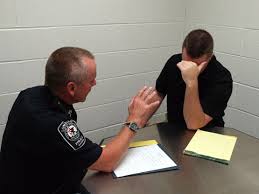 Consider the following examples:
- A detective is interviewing a suspect in a rape case. “Oh, that girl,” he says, thus implying that the victim was a slut and had it coming. The suspect, thinking he’s dealing with a sympathetic listener, starts bragging about his latest conquest–only to learn, too late, that his listener isn’t so simpatico after all.
- “We found your prints on the gun”–or on any number of other surfaces. Actually, there are few good places on a pistol to leave prints. And those that are left can be smeared. The same goes for other surfaces. But if a suspect can be led to believe the cops have his prints, a confession is often forthcoming.
- A police officer is interrogating a suspect in a murder case. “He came at you, didn’t he?” asks the cop. The suspect, who murdered the victim in cold blood, thinks he has an escape route. “Yeah, he came at me”–this confirming that, yes, he did kill the deceased.
- “Your partner just gave you up” is a favorite police strategen when there is more than one suspect involved. If one suspect can be made to “flip”–turn–against the other, the case is essentially wrapped up.
- Interrogating a bank robbery suspect, a cop might say: “We know you didn’t do the shooting, that you were only the wheelman.” This implies that the penalty for driving the getaway car is far less than that for killing someone during a robbery. In fact, criminal law allows every member of the conspiracy to be charged as a principal.
- “I don’t give a damn what you did,” says the detective. “Just tell me why you did it.” For some suspects, this offers a cathartic release, a chance to justify their guilt.
- The “good cop/bad cop” routine is known to everyone who has ever seen a police drama. Yet it continues to yield results so often it continues to be routinely used. “Look, I believe you,” says the “good” cop, “but my partner’s a real asshole. Just tell me what happened so we can clear this up and you can go.”
- “So,” says the detective, “why do you think the police believe you did it?” “I have no idea,” says the suspect, confident that he isn’t giving up anything that might come back to haunt him. “Well,” says the cop, “I guess you’ll just have to make something up.” Make something up sounds easy, but is actually a trap. The suspect may end up giving away details that could incriminate him–or lying so brazenly that his lies can be used against him.
So is there a best way for a suspect to deal with an invitation to waive his Mirandaright to remain silent?
Yes, there is.
It’s to refuse to say anything and to ask for permission to call a lawyer.
That’s the preferred method for Mafia hitmen–and accused police officers. Any cop who finds himself under investigation by his department’s Internal Affairs unit automatically shuts up–and calls his lawyer.
Any other response–no matter how well-intentioned–may well result in a lengthy prison sentence.
ABC NEWS, AMERICAN CIVIL WAR, CBS NEWS, CHICAGO SUN-TIMES, CHICAGO TRIBUNE, CNN, FACEBOOK, GAZA, GAZA STRIP, HAMAS, INTERNATIONAL CRIMINAL COURT, INVESTIGATIVE PROJECT ON TERRORISM, ISRAEL, ISRAELI DEFENSE FORCES, ISREAL, MAHMOUD ABBAS, MISSILES, NBC NEWS, OPERATION PROTECTIVE EDGE, PALESTINIANS, REUVEN BERKO, SELF-DEFENSE, THE LOS ANGELES TIMES, THE NEW Y ORK TIMES, THE NEW YORK TIMES, THE WASHINGTON POST, THE WASHINGTONPOST, TWITTER, USA TODAY, WILLIAM T. SHERMAN, WILLIAM TECUMSEH SHERMAN, WORLD WAR 11
In Bureaucracy, History, Law, Military, Politics, Social commentary on January 7, 2015 at 12:02 am
On December 30, Palestinian President Mahmoud Abbas announced that Palestinians had joined the International Criminal Court to pursue war crimes charges against Israel.
 Mahmoud Abbas
“We want to complain. There’s aggression against us, against our land. The Security Council disappointed us,” Abbas said at a meeting of the Palestinian leadership in the West Bank.
Abbas has plenty to complain about. The Palestinian terrorist organization, Hamas, opened hostilities with Israel on July 7–and promptly lost the war.
In June, 2014, three Israeli teenagers were kidnapped and murdered. Israeli authorities suspected the culprits were members of Hamas, the terrorist organization that’s long called for Israel’s destruction.
In a desperate search for the missing teens, Israeli forces killed 10 Palestinians, injured 130 and arrested 500 to 600 others.
Hamas, in turn, began launching rocket attacks on Israel from the Gaza Strip, which it has controlled since June, 2007. By July 7, 100 rockets had been fired at Israel.
Israeli planes retaliated by attacking 50 targets in Gaza.
On July 8, during a 24-hour period, Hamas fired more than 140 rockets into Israel from Gaza. Saboteurs also tried to infiltrate Israel from the sea, but were intercepted. 
A Hamas rocket streaks toward Israel
That same day–July 8, 2014–Israel launched Operation Protective Edge, a full-scale military attack on Gaza.
Hamas then announced that it considered “all Israelis”–including women, children, the elderly and disabled–to be legitimate targets.
On July 8, Hamas–acting as though it were laying down peace terms to an already defeated Israel–issued the following demands:
- End all attacks on Gaza;
- Release Palestinians arrested during the crackdown on the West Bank;
- Lift the blockade on Gaza; and
- Return to the cease-fire conditions of 2012.
Only then would Hamas be open to a ceasefire agreement. Egypt offered a cease-fire proposal. Israel quickly accepted it, temporarily stopping hostilities on July 15.
But Hamas claimed that it had not been consulted and rejected the agreement.
Palestinians continued to blithely launch hundreds of rockets at Israel–but went into ecstasies of grief before television cameras when one of their own was killed by Israeli return fire.
As a result, Israel has come under repeated verbal attacks by Hamas-sympathetic nations. The charge: Israel is being too effective at defending itself, killing more Palestinians than Hamas is able to kill Israelis.
Reuven Berko, a former soldier in the Israeli Defense Forces (IDF) recently addressed this charge in a guest column in the online newsletter, the Investigative Project on Terrorism (IPT).
A major reason for so many civilian deaths among Palestinians, writes Berko, is that Hamas turns them into human shields by hiding its missiles in heavily-populated centers.
On July 17, the United Nations Relief and Works Agency for Palestine Refugees in the Far East (UNRWA) discovered approximately 20 rockets hidden in a vacant UN school in the Gaza Strip.
“UNRWA strongly condemns the group or groups responsible for placing the weapons in one of its installations,” said the agency in an announcement.
“This is a flagrant violation of the inviolability of its premises under international law.” UNRWA claimed that “this incident…is the first of its kind in Gaza.”
But Israel counters that this is just one of many proven instances of Hamas hiding its fighters and munitions among a heavily civilian population.
Click here: UNRWA Strongly Condemns Placement of Rockets in School | UNRWA
At the heart of Berko’s editorial is the subject of “proportionality.”
Writes Berko: “Israel is held to an impossible moral double standard. “Israelis, proportionality advocates seem to believe, should be killed by Hamas rockets instead of following Home Front Command instructions and running to shelters, to say nothing of Israel’s blatant unfairness in protecting its civilians with the Iron Dome aerial defense system….
“Anyone who demands that Israel agree to a life of terror governed by a continuous barrage of rockets and mortar shells on the heads of its women and children in the name of restraint and ‘proportionality’ would never agree to risk the safety of their own families in a similar situation.”
war against radical Islam if we can’t even name the enemy?”

Berko points out that during World War 11, the Allies didn’t hesitate to retaliate for the Nazi blitz of London. In February, 1945, British and American planes firebombed Dresden, killing about 25,000 people.
Nor did America feel guilty about dropping two atomic bombs on Japan, killing about 250,000 civilians.
Summing up his argument, Berko writes: “The ridiculous demand for proportionality contradicts every basic principle of warfare.“
According to American strategist Thomas Schelling, you have to strike your enemy hard enough to make it not worthwhile for him to continue…. “
In the Western world, killing someone in self-defense is considered justifiable homicide.”
Click here: Guest Column: The Double Standard of Proportionality: The Investigative Project on Terrorism
Berko could just as easily have ended his column with the words of Civil War General William Tecumseh Sherman, whose Union forces cut a swath of destruction across the South in his famous “March to the Sea.” 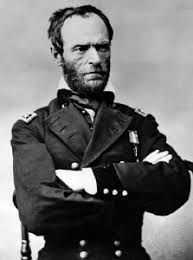
William Tecumseh Sherman
Wrote Sherman: “Those people made war on us, defied and dared us to come south to their country, where they boasted they would kill us and do all manner of horrible things.
“We accepted their challenge, and now for them to whine and complain of the natural and necessary results is beneath contempt.”
ABC NEWS, ALEXANDRA, ASTROLOGY, CBS NEWS, CHICAGO SUN-TIMES, CHICAGO TRIBUNE, CNN, FACEBOOK, GERALD FORD, GRIGORI RASPUTIN, IRAQ WAR, JIMMY CARTER, JOAN QUIGLEY, JODIE FOSTER, JOHN HINCKLEY, MERV GRIFFIN, MIKHAIL GORBACHEV, NANCY REAGAN, NBC NEWS, NICHOLAS 11, Ronald Reagan, SOVIET UNION, STAR WARS, THE LOS ANGELES TIMES, THE NEW YORK TIMES, THE WALL STREET JOURNAL, THE WASHINGTON POST, TWITTER, USA TODAY
In Bureaucracy, History, Politics, Social commentary on December 2, 2014 at 12:00 am
The Presidency of Ronald W. Reagan consumed eight years of American history: 1981 – 1989. But its greed-fueled legacies continue to haunt us.
On October 21, the woman responsible for one of those legacies–government by astrologer–passed away at age 87.
Yes, Joan Quigley is dead.
For those unfamiliar with that name: Quigley was the court astrologer to Ronald and Nancy Reagan.
Ronald and Nancy Reagan in the White House
Nancy Reagan met Quigley on “The Merv Griffin Show” in 1973.
Quigley gave Nancy–and through her, Reagan himself–astrological advice during the latter’s campaign for the Republican Presidential nomination in 1976.
That effort failed to unseat President Gerald Ford–who was defeated that November by Jimmy Carter.
Four years later, in 1980, Reagan defeated Carter to become the 40th President of the United States.
On March 30, 1981, a mentally-disturbed loner named John W. Hinckley shot and critically wounded Reagan. Fixiated on actress Jodie Foster, he believed that by shooting the President he could gain her affection.
For Nancy, the assassination attempt proved a watershed.
Shortly after the shooting, Merv Griffin told her that Quigley had told him: If Nancy had called her on that fateful day, she–Quigley–could have warned that the President’s astrological charts had foretold a bad day.
From that moment on, Nancy made sure to regularly consult Quigley on virtually everything that she and the President intended to do.
When Reagan learned of Nancy’s consultations with Quigley, he warned her: Be careful, because it might look odd if it came out.
Click here: The President’s Astrologers – Joan Quigley, Nancy Reagan, Politicians and Their Families, Ronald Reagan : People.c
Many–if not most–of these calls from the White House to Quigley’s office in San Francisco were made on non-secure phone lines.

Joan Quigley
This meant that foreign powers–most notably the Soviet Union and Communist China–could have been privy to Reagan’s most secret intentions.
Nancy passed on Quigley’s suggestions as commands to Donald Regan, chief of the White House staff.
As a result, Regan kept a color-coded calendar on his desk to remember when the astrological signs were good for the President to speak, travel, or negotiate with foreign leaders.
Green ink highlighted “good” days; red ink “bad” days; yellow ink “iffy” days.
A list provided by Quigley to Nancy made the following recommendations–which Nancy, in turn, made into commands:
Late Dec thru March bad
Jan 16 – 23 very bad
Jan 20 nothing outside WH–possible attempt
Feb 20 – 26 be careful
March 7 – 14 bad period
March 10 – 14 no outside activity!
March 16 very bad
March 21 no
March 27 no
March 12 – 19 no trips exposure
March 19 – 25 no public exposure
April 3 careful
April 11 careful
April 17 careful
April 21 – 28 stay home
Donald Regan, no fan of Nancy’s, chafed under such restrictions: “Obviously, this list of dangerous or forbidden dates left very little lattitude for scheduling,” he later wrote.
Forced out of the White House in 1987 by Nancy, Regan struck back in a 1988 tell-all memoir: For the Record: From Wall Street to Washington.
In 1988, after her secret role in the Reagan White House was revealed, Quigley told the Associated Press that she was a “serious, scientific astrologer.”
The book revealed, for the first time, how Ronald Reagan had actually made his Presidential decisions.
All–including decisions to risk nuclear war with the Soviet Union–were based on a court astrologer’s horoscopes. Rationality and the best military intelligence available played a lesser, secondary role.
The last time major world leader to turn to the supernatural for advice had been Russian Czar Nicholas 11. His advisor had been Grigori Rasputin, a Siberian peasant whom Empress Alexandra believed was the only man who could save her hemophilic son–and heir to the throne.
In 1990, Quigley confirmed the allegations an autobiography, What Does Joan Say?: My Seven Years As White House Astrologer to Nancy and Ronald Reagan.
Click here: What Does Joan Say?: My Seven Years As White House Astrologer to Nancy and Ronald Reagan: Joan Quigley
The title came from the question that Ronald Reagan asked Nancy before making important decisions–including those that could risk the destruction of the United States.
Among the success Quigley took credit for:
- Strategies for winning the Presidential elections of 1980 and 1984;
- Helping Nancy Reagan overhaul her image as a spoiled rich girl;
- Defusing the controversey over Reagan’s visiting a graveyard for SS soldiers in Bitburg, Germany;
- Pursuing “Star Wars” as a major part of his strategy against the Soviet Union;
- The Intermediate-Range Nuclear Forces Treaty;
- Protecting Reagan from would-be assassins through timely warnings to Nancy; and
- Moving Reagan from seeing the Soviet Union as the “Evil Empire” to accepting Mikhail Gorbachev as a peace-seeking leader.
Thirty-three years after he became President, Ronald Reagan remains the most popular figure among Republicans.
His name is constantly invoked by Right-wing candidates, while his deliberately-crafted myth is held up as the example of Presidential greatness.
A number of precedents of the Reagan administration–like government by astrologer–might lend themselves to easy abuse. Thus, voters should consider this carefully before elevating “another Reagan” to the Presidency.
ABC NEWS, ASHLEY JUDD, BARACK OBAMA, BOB WOODWARD, CBS NEWS, CHICAGO SUN-TIMES, CNN, DEEP THROAT, FACEBOOK, FBI, FORTY-SEVEN PERCENT, MITCH MCCONNELL, MITT ROMNEY, NBC NEWS, REPUBLICAN PARTY, RICHARD NIXON, THE CHICAGO TRIBUNE, THE DENVER POST, THE LOS ANGELES TIMES, THE NEW YORK POST, THE NEW YORK TIMES, THE WALL STREET JOURNAL, THE WASHINGTON POST, TWITTER, USA TODAY, W. MARK FELT, WATERGATE
In Bureaucracy, History, Politics, Social commentary on October 24, 2014 at 12:06 am
President Barack Obama and Republican Presidential candidate Mitt Romney raised and spent millions of dollars for campaign ads. They logged thousands of miles, crisscrossing the nation, speaking to millions of Americans.
And yet, when the 2012 Presidential race finally ended on November 6, 2012, history recorded the contest was settled with a single video.
It was the infamous “47%” video of Romney speaking–for once, truthfully–at a private fundraiser:

“Well, there are 47% of the people who will vote for the President no matter what. All right? There are 47% who are with him.
“Who are dependent upon government. Who believe that–that they are victims. Who believe that government has a responsibility to care for them.
“Who believe that they’re entitled to healthcare, to food, to housing, to you name it. But that’s–it’s an entitlement.
“…These are people who pay no income tax. 47% of Americans pay no income taxes. So our message of low taxes doesn’t connect. And he’ll be out there talking about tax cuts for the rich.”
A great deal of speculation has centered on: Who filmed it?
And in April, 2013, history repeated itself–with another Republican caught telling the ugly truth behind closed doors.
In this case, it was Kentucky United States Senator Mitch McConnell. A microphone (probably stationed outside his Senate office) caught him discussing how to attack Ashley Judd’s mental health if the actress decided to challenge him in 2014.
“She’s clearly, this sounds extreme, but she is emotionally unbalanced,” a McConnell aide said. “I mean, it’s been documented….She’s suffered some suicidal tendencies. She was hospitalized for 42 days when she had a mental breakdown in the 90s.”
“I assume most of you have played the game Whac-A-Mole,” said McConnell. “This is the Whac-A-Mole period of the campaign…when anybody sticks their head up, do them out.”
McConnell, the Senate Minority Leader, refused to answer reporters’ questions about whether an opponent’s mental health or religious beliefs are fair game in a political campaign.
Instead, he accused “the political left” of mounting “quite a Nixonian move.” An ironic charge, considering that Nixon and McConnell rose to power within the same political party.
As in the case of the Mitt Romney videotape, the focus of the press quickly turned to: Who recorded it?
But this totally missed the point.
It doesn’t matter who provides vital information. What does matter is: Is that information accurate?
In Romney’s case, it opened a window into a world seldom-seen by voters: The world of big-league donors and their money-grubbing political solicitors.
In McConnell’s case, it cast light on the how entrenched politicians ruthlessly defend their turf.
It should be clear that money-grubbing politicians have two versions of campaign speaking: One for donors whose money they seek, and another for the public whose votes they seek.
Rich and greed-obsessed donors (unlike poor and ignorant voters) are too smart to be fobbed off with appeals to their fears and prejudices. They expect a tangible return for their support–namely:
- Lower (preferably no) taxes
- Freedom to pollute
- Freedom to pay their employees the lowest possible wages
- Freedom to treat their employees like serfs
- Freedom to churn out shoddy or even dangerous goods
So what a candidate says in private, to his wealthy donors–or his campaign strategists–reflects what he really means and intends to do.
A similar frenzy of speculation centered on the identity of “Deep Throat”–the legendary source for Washington Post reporter Bob Woodward during the Watergate scandal. For decades, this proved a favorite guessing game for Washington reporters, politicians and government officials.
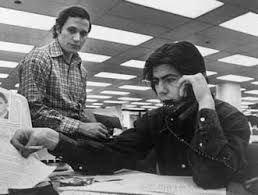
Bob Woodward and Carl Bernstein working on Watergate
In the end, “Deep Throat” turned out to be W. Mark Felt, assistant director of the FBI.
Commentators have endlessly debated his motives for leaking crucial Watergate evidence that ultimately ended the corrupt Presidency of Richard Nixon.
And, in the end, despite all the theories, it didn’t matter.
Felt provided Washington Woodward with the evidence necessary to keep the Watergate investigations going–by both the Post and the FBI.

W. Mark Felt
Thus, the question making the rounds about the McConnell discussion shouldn’t have been: Who taped it?
It should have been: How can more private fundraisers and political strategy sessions be penetrated and recorded–so voters can learn the truth about those who would become our elected rulers?
Definitely, those who specialize in “opposition research” should be thinking hard about this.
Private investigators–who regularly unearth secrets others want to keep secret–might also take an interest in this line of work.
And news organizations should offer financial rewards to those who provide such secret information.
With the advent of billionaires trying to buy the Presidency, and the unwillingness of Congress and the Supreme Court to stop the flow of unsavory money into politics, this may be our only chance to preserve what is left of the Republic.
Anyone who’s ever turned on a light to find roaches scurrying quickly over a kitchen floor knows the truth of this.
Turn on the lights–and watch the roaches scurry away.
ABC NEWS, CBS NEWS, CHICAGO SUN-TIMES, CNN, FACEBOOK, INTERROGATION, MIRANDA VS. ARIZONA, NBC NEWS, POLICE, THE DENVER POST, THE LOS ANGELES TIMES, THE NEW YORK TIMES, THE WALL STREET JOURNAL, THE WASHINGTON POST, TWITTER, UNITED STATES SUPREME COURT, USA TODAY
In Bureaucracy, History, Law, Law Enforcement, Social commentary on October 22, 2014 at 12:01 am
Ever heard of “polygraph by copier”?
If you haven’t, here’s how it works:
A detective loads three sheets of paper into a Xerox machine.
“Truth” has been typed onto the first sheet.
“Truth” has been typed onto the seond sheet.
“Lie” has been typed onto the third sheet.
Then a criminal suspect is led into the room and told to put his hand against the side of the machine.
“What is your name?” asks the detective.
The suspect gives it.
The detective hits the copy button, and a page comes out: “Truth.”
“Where do you live?” asks the detective.
The suspect gives an address, the detective again hits the copy button, and a second page appears: “Truth.”
Then comes the bonus question: “Did you or did you not kill Big Jim Tate on the evening of….?”
The suspect answers. The detective presses the copy button one last time, and the sheet appears: “Lie.”
“Well, well, well, you lying little bastard,” says the detective.
Convinced that the police have found some mysterious way to peer into the darkest recesses of his criminality, the suspect “gives it up” and makes a full confession.
Yes, contrary to what many believe, police can legally use deceit to obtain a confession.
In 1973, the Supreme Court ruled, in United States v. Russell: “Nor will the mere fact of deceit defeat a prosecution, for there are circumstances when the use of deceit is the only practicable law enforcement technique available.”
In that case, the Court narrowly upheld a conviction for methamphetamine production even though the defendant had argued entrapment.
So what types of interrogative deceit might a police officer use to develop admissible evidence of a suspect’s guilt?
The general rule is that deception can be used so long as it’s not likely to cause an innocent person to commit a crime or confess to a crime that s/he didn’t commit.
Click here: The Lawful Use of Deception – Article – POLICE Magazine
Consider the following examples:
- A detective is interviewing a suspect in a rape case. “Oh, that girl,” he says, thus implying that the victim was a slut and had it coming. The suspect, thinking he’s dealing with a sympathetic listener, starts bragging about his latest conquest–only to learn, too late, that his listener isn’t so simpatico after all.
- “We found your prints on the gun”–or on any number of other surfaces. Actually, there are few good places on a pistol to leave prints. And those that are left can be smeared. The same goes for other surfaces. But if a suspect can be led to believe the cops have his prints, a confession is often forthcoming.
- A police officer is interrogating a suspect in a murder case. “He came at you, didn’t he?” asks the cop. The suspect, who murdered the victim in cold blood, thinks he has an escape route. “Yeah, he came at me”–this confirming that, yes, he did kill the deceased.
- “Your partner just gave you up” is a favorite police strategen when there is more than one suspect involved. If one suspect can be made to “flip”–turn–against the other, the case is essentially wrapped up.
- Interrogating a bank robbery suspect, a cop might say: “We know you didn’t do the shooting, that you were only the wheelman.” This implies that the penalty for driving the getaway car is far less than that for killing someone during a robbery. In fact, criminal law allows every member of the conspiracy to be charged as a principal.
- “I don’t give a damn what you did,” says the detective. “Just tell me why you did it.” For some suspects, this offers a cathartic release, a chance to justify their guilt.
- The “good cop/bad cop” routine is known to everyone who has ever seen a police drama. Yet it continues to yield results so often it continues to be routinely used. “Look, I believe you,” says the “good” cop, “but my partner’s a real asshole. Just tell me what happened so we can clear this up and you can go.”
- “So,” says the detective, “why do you think the police believe you did it?” “I have no idea,” says the suspect, confident that he isn’t giving up anything that might come back to haunt him. “Well,” says the cop, “I guess you’ll just have to make something up.” Make something up sounds easy, but is actually a trap. The suspect may end up giving away details that could incriminate him–or lying so brazenly that his lies can be used against him.
So is there a best way for a suspect to deal with an invitation to waive his Miranda right to remain silent?
Yes, there is. It’s to refuse to say anything and to ask for permission to call a lawyer.
That’s the preferred method for Mafia hitmen–and accused police officers.
Any cop who finds himself under investigation by his department’s Internal Affairs unit automatically shuts up–and calls his lawyer.
Any other response–no matter how well-intentioned–may well result in a lengthy prison sentence.


 Bureaucracybuster's Blog
ABC NEWS, ALTERNET, AMERICABLOG, AP, BABY BOOMER RESISTANCE, BBC, BLOOMBERG NEWS, BUZZFEED, CBS NEWS, CHICAGO SUN-TIMES, CNN, CROOKS AND LIARS, DAILY KOS, DECEIT, DETECTIVES, FACEBOOK, FIVETHIRTYEIGHT, HARPER’S MAGAZINE, HUFFINGTON POST, INTERROGATION, INTERVIEWING, LIE DETECTORS, MEDIA MATTERS, MIRANDA VS. ARIZONA, MOTHER JONES, MOVEON, MSNBC, NBC NEWS, NEW REPUBLIC, NEWSDAY, NEWSWEEK, NPR, PBS NEWSHOUR, POLICE, POLITICO, POLITICUSUSA, POLYGRAPH, PROSECUTION, RAW STORY, REUTERS, SALON, SEATTLE TIMES, SLATE, SUPREME COURT, TALKING POINTS MEMO, THE ATLANTIC, THE CHICAGO SUN-TIMES, THE CHICAGO TRIBUNE, THE DAILY BEAST, THE DAILY BLOG, THE DENVER POST, THE GUARDIAN, THE HILL, THE HUFFINGTON POST, THE INTERCEPT, THE LOS ANGELES TIMES, THE NATION, THE NEW REPUBLIC, THE NEW YORK TIMES, THE NEW YORKER, THE VILLAGE VOICE, THE WALL STREET JOURNAL, THE WASHINGTON POST, THINKPROGRESS, TIME, TRUTHDIG, TRUTHOUT, U.S. NEWS & WORLD REPORT, UPI, USA TODAY, X
COP: “YOUR PARTNER JUST GAVE YOU UP.” DON’T BELIEVE IT.
In Bureaucracy, History, Law, Law Enforcement, Politics, Social commentary on February 12, 2026 at 12:10 amEver heard of “polygraph by copier”?
If you haven’t, here’s how it works:
A detective loads three sheets of paper into a Xerox machine.
“Truth” has been typed onto the first sheet.
“Truth” has been typed onto the second sheet.
“Lie” has been typed onto the third sheet.
Then a criminal suspect is led into the room and told to put his hand against the side of the machine.
“What is your name?” asks the detective.
The suspect gives it.
The detective hits the copy button, and a page comes out: “Truth.”
“Where do you live?” asks the detective.
The suspect gives an address, the detective again hits the copy button, and a second page appears: “Truth.”
Then comes the important question: “Did you kill Big Jim Tate on the evening of….?”
The suspect answers. The detective presses the copy button one last time, and the sheet appears: “Lie.”
“Well, well, well, you lying little bastard,” says the detective.
Convinced that the police have found some mysterious way to peer into the darkest recesses of his criminality, the suspect “gives it up” and makes a full confession.
Yes, contrary to what many believe, police can legally use deceit to obtain a confession.
In 1973, the Supreme Court ruled, in United States v. Russell: “Nor will the mere fact of deceit defeat a prosecution, for there are circumstances when the use of deceit is the only practicable law enforcement technique available.”
In that case, the Court narrowly upheld a conviction for methamphetamine production even though the defendant had argued entrapment.
So what types of interrogative deceit might a police officer use to develop admissible evidence of a suspect’s guilt?
Police interrogation
The general rule is that deception can be used so long as it’s not likely to cause an innocent person to commit a crime or confess to a crime that s/he didn’t commit.
Consider the following examples:
So is there a best way for a suspect to deal with an invitation to waive his Miranda right to remain silent?
Yes, there is. It’s to refuse to say anything and to ask for permission to call a lawyer.
That’s the preferred method for Mafia hitmen—and accused police officers.
Any cop who finds himself under investigation by his department’s Internal Affairs unit automatically shuts up—and calls his lawyer.
Contrary to popular belief, an arrestee is allowed to make more than one phone call in most states.
Any other reason—no matter how well-intentioned—may well result in a lengthy prison sentence.
Share this: