During the 1930s, Winston Churchill, a seemingly failed politican, repeatedly warned his British countrymen against the growing menace of Nazi Germany.
The leaders of Britain, France and the United States–the three great victors of World War 1–hoped that if they simply ignored the increasingly aggressive behavior of Adolf Hitler, they could somehow escape catastrophe.
Winston Churchill
When, in the early 1930s, Hitler began re-building a powerful German army (Whermacht) in open defiance of the Versallies Treaty that had ended World War 1, Churchill gave warning–and was ignored.
When Hitler ordered his army to occupy his native Austria in 1938, Churchill warned that the Nazis would not be content with the conquest of one nation. And was ignored.
In 1938, Hitler demanded that Czechoslavakia cede the Sudetenland, its northern, southwest and western regions, which were inhabited mostly by ethnic Germans.
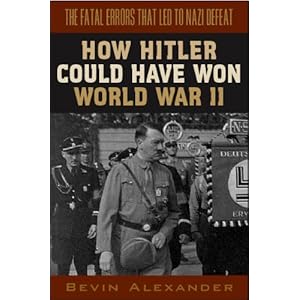
Adolf Hitler
When British Prime Minister Nveille Chamberlain surrendered to Hitler’s demands at the infamous “Munich conference,” his fellow Britons were ecstatic. He returned to England as a hero.
Churchill knew better: “Britain and France had to choose between war and dishonor. They chose dishonor. They will have war.”
In March, 1939, the German army occupied the rest of Czechoslovakia.
Hitler next turned his attention to Poland–which he invaded on September 1, unintentionally triggering World War II.
In time, historians and statesmen would regard Munich as an object lesson in the futility—and danger—in appeasing evil and aggression.
It is a lesson that current world leaders have forgotten as Islamic fundamentalists increasingly flex their military and economic muscles–and demand that Western nations bow to their demands.
- In Iran, scientists continue to fashion a nuclear weapons program–while insisting they intend to use the atom only for “peaceful purposes.”
- In Pakistan–which has 90-110 nuclear warheads–Osama bin Laden lived less than a mile from the Pakistan Military Academy, the country’s West Point. So much for America’s “ally” in the “war on terror.”
- The rising tide of Muslim population growth spells deadly challenges for non-Islamic nations.
Winston Churchill’s warnings fell on deaf ears until other world leaders–most notably Franklin Roosevelt and Joseph Stalin–were forced by events to take action.
So did the warnings of Harvard political science professor Samuel P. Huntington.
In 1993, he published an essay in Foreign Affairs called “The Clash of Civilizations?” In this, he argued that the post-Cold War would be marked by civilizational conflict. Among his assertions:
- People are divided along religious and cultural lines.
- Islamic civilization do not share the general ideals of the Western world–such as individualism and democracy.
- Their primary attachment is to their religion, not to their nation-state.
- When the Muslim world conflicts with other civilizations, tensions and wars result.
- Arab dictatorships were fragile and could be overturned by the masses of unemployed young men. But even if they fell, the new regimes would not modernize along Western lines.
- A fundamental clash of civilizations between Islam and the West is inevitable.
- Relations between Muslims and non-Muslims–such as Catholics, Protestants, Hindus, Buddhists and Jews–have been marked by Islamic antagonism and violence.
- Western nations should distance themselves from Islamic ones. The more both civilizations interact, the greater tensions between them will be.
Huntington’s critique of Islamic civilizations ignited a firestorm of controversey–especially his statement: “Islam has bloody borders.”
In 1996, Huntington expanded his thesis into a book–also called The Clash of Civilizations. Once again, he minced no words:
“Some Westerners, including President Bill Clinton, have argued that the West does not have problems with Islam but only with violent Islamist extremists. Fourteen hundred years of history demonstrate otherwise.”
Huntington cited British scholar Barry Buzan as giving several reasons for an inevitable war between the West and Islam:
- Western secular vs. Islamic religious values.
- Past historical rivalry between Christianity and Islam.
- Jealousy of Western power by Islamic nations.
- Islamic resentments of Western domination during the post-colonial restructuring of the Middle East.
- Islamic bitterness and humiliation at the achiveements of Western civilization over the last 200 years.
Much of the fury Muslims were directing toward the West, wrote Huntington, was aimed at its embrace of secularism. Westerners were attacked not for being Christian but “for not adhering to any religion at all.”
Following the 1979 Iranian Revolution, a quasi-war developed between some Islamic nations and some Western ones. On the Islamic side: Iran, Sudan, Iraq, Libya and Syria. On the Western side: The United States and Britain.
“In this quasi war,” wrote Huntington, “each side has capitalized on its own strengths and the other side’s weaknesses.” For example:
- Muslim terrorists exploited the openness of Western societies to plant car bombs at selected targets.
- Western powers used their superior air power to bomb selected targets in Islamic countries.
- Islamics plotted the assassination of Western leaders.
- The United States plotted the overthrow of hostile Islamic regimes.
Writing at a time before the United States directed its full military power at conquering Afghanistan and Iraq, Huntington ominously noted:
“During the 15 years between 1980 and 1995…the United States engaged in 17 military operations in the Middle East, all of them directed against Muslims. No comparable pattern of U.S. military operations occurred against the people of any other civilization.”
The war that Huntington warned was coming and was, in fact, already in progress, has since erupted into full-scale conflict, with no end in sight.
.jpg)


 Bureaucracybuster's Blog
1968 PRESIDENTIAL RACE, ADOLF HITLER, BERNARD LAW MONTGOMERY, D-DAY, DWIGHT D. EISENHOWER, ERWIN ROMMEL, EUGENE MCCARTHY, FACEBOOK, LYNDON B. JOHNSON, ROBERT F. KENNEDY, THIRD REICH, TWITTER, U.S. ARMY RANGERS, WORLD WAR ii
TWO ANNIVERSARIES–ONE GLORIOUS, THE OTHER TRAGIC
In History, Politics, Social commentary on June 6, 2013 at 12:01 am“For it is the doom of men that they forget.”
–Merlin, in “Excalibur”
June 6–a day of glory and tragedy.
The glory came 69 years ago–on Tuesday, June 6, 1944.
On that morning, Americans awoke to learn–from radio and newspapers–that their soldiers had landed on the French coast of Normandy.
In Supreme Command of the Allied Expeditionary Force was American General Dwight D. Eisenhower. Overall command of ground forces was given to British General Bernard Montgomery.
Operation Overlord, the Allied invasion to liberate France from Nazi Germany, proved one of the pivotal actions of World War II.
It opened shortly after midnight, with an airborne assault of 24,000 American, British, Canadian and Free French troops. This was followed at 6:30 a.m. by an amphibious landing of Allied infantry and armored divisions on the French coast.
Field Marshal Erwin Rommel–the legendary “Desert Fox”–commanded the German forces. For him, the first 24 hours of the battle would be decisive.
“For the Allies as well as the Germans,” he warned his staff, “it will be the longest day.”
The operation was the largest amphibious invasion in history. More than 160,000 troops landed–73,000 Americans, 61,715 British and 21,400 Canadians.
Initially, the Allied assault seemed likely to be stopped at the water’s edge–where Rommel had always insisted it must be. He had warned that if the Allies established a beachhead, their overwhelming advantages in numbers and airpower would eventually prove irresistible.
German machine-gunners and mortarmen wreaked a fearful toll on Allied soldiers. But commanders like U.S. General Norman Cota led their men to victory through a storm of bullets and shells.
Coming upon a group of U.S. Army Rangers taking cover behind sand dunes, Cota demanded: “What outfit is this?”
“Rangers!” yelled one of the soldiers.
“Well, Goddamnit, then, Rangers, lead the way!” shouted Cota, inspiring the soldiers to rise and charge into the enemy.
The allied casualty figures for D-Day have been estimated at 10,000, including 4,414 dead. By nationality, the D-Day casualty figures are about 2,700 British, 946 Canadians and 6,603 Americans.
The total number of German casualties on D-Day isn’t known, but is estimated at 4,000 to 9,000.
Allied and German armies continued to clash throughout France, Belgium and Germany until May 7, 1945, when Germany finally surrendered.
But those Americans who had taken part in D-Day could be proud of having dealt a fatal blow to the evil ambitions of Adolf Hitler’s Third Reich.
So much for the glory of June 6. Now for the tragedy–which occurred 45 years ago.
Twenty-four years after D-Day, Americans awoke to learn–mostly from TV–that New York Senator Robert F. Kennedy had died at 1:44 a.m. of an assassin’s bullet.
He had been campaigning for the Democratic Presidential nomination, and had just won the California primary on June 4.
This had been a make-or-break event for Kennedy. He had won the Democratic primaries in Indiana and Nebraska, but had lost the Oregon primary to Minnesota Senator Eugene McCarthy.
If he could defeat McCarthy in California, Kennedy could force his rival to quit the race. That would lead to a showdown between him and Vice President Hubert Humphery for the nomination.
(President Lyndon B. Johnson had withdrawn from the race on March 31–just 15 days after Kennedy announced his candidacy on March 16.)
After winning the California and South Dakota primaries, Kennedy gave a magnaminous victory speech in the ballroom of the Ambassador Hotel in Los Angeles:
“I think we can end the divisions within the United States….We are a great country, an unselfish country, and a compassionate country. And I intend to make that my basis for running over the period of the next few months.”
Then he entered the hotel kitchen–where Sirhan Sirhan, a 24-year-old Palestinian from Jordan, opened fire with a .22 revolver. Kennedy was hit three times–once fatally in the back of the head. Five other people were also wounded.
Kennedy’s last-known words were: “Is everybody all right?” and “Jack, Jack.” Then he lost consciousness–forever, dying in a hospital bed 24 hours later.
Kennedy had been a U.S. Attorney General (1961-1964) and Senator (1964-1968). But it was his connection to his murdered brother, President John F. Kennedy, for which he was best-known.
His assassination–less than five years after that of JFK–convinced many Americans there was something “sick” about the nation’s culture.
One of the best summaries of Robert Kennedy’s legacy was given in Coming Apart: An Informal History of America in the 1960’s, by historian William L. O’Neil:
“…He aimed so high that he must be judged for what he meant to do, and, through error and tragic accident, failed at….He will also be remembered as an extraordinary human being who, though hated by some, was perhaps more deeply loved by his countrymen than any man of his time.
“That too must be entered into the final account, and it is no small thing. With his death something precious disappeared from public life.”
Share this: