Archive for the ‘Law Enforcement’ Category
9-1-1-, ABC NEWS, CBS NEWS, CNN, EMERGENCIES, FACEBOOK, NBC NEWS, POLICE DISPATCHING, ROBERT F. KENNEDY, SAN FRANCISCO, SAN FRANCISCO DEPARTMENT OF EMERGENCY MANAGEMENT, SAN FRANCISCO GIANTS, SAN FRANCISCO POLICE DEPARTMENT, THE CHICAGO SUN-TIMES, THE CHICIAGO TRIBUNE, THE LOS ANGELES TIMES, THE NEW YORK TIMES, THE SAN FRANCISCO FIRE DEPARTMENT, THE WASHINGTON POST, TWITTER
In Bureaucracy, History, Law Enforcement, Politics, Social commentary on January 5, 2016 at 12:01 am
The quickest way of opening the eyes of the people is to find the means of making them descend to particulars, seeing that to look at things only in a general way deceives them.…
–-Niccolo Machiavelli, The Discourses
One morning at about 8:10, a friend of mine named Robert heard a helicopter repeatedly buzzing the San Francisco Tenderloin area, where he lived.
Thinking that a fire or police action might be in the works, he called the non-emergency number of the San Francisco Police Department (SFPD): (415) 553-0123.

And he got a recorded message.
This told him–in English–what he already knew: He had reached the San Francisco Police Department.
Then it told him this again in Spanish. Then again in Cantonese. Then came a series of high–pitched squeals–presumably for those who are hard-of-hearing.
Then the line went dead, and another recorded voice told Robert: “If you’d like to make a call, please hang up and try again.”
At that point, Robert decided to waste no more time trying to learn if there was an emergency going on in his area. Or, to put it more accurately, he decided to waste no more time trying to learn this from the SFPD.
Instead, Robert turned on his TV and checked all the local news channels. When he didn’t see anyone reporting a raging fire or police sealing off an area, he decided there probably wasn’t anything to worry about.
But later on he decided to call the SFPD once again–to complain at a level he believed would attain results.
That level was the office of its chief, Greg Suhr.
Robert didn’t expect to reach the chief himself. But he didn’t have to: Reaching Suhr’s secretary should serve the same purpose.
The secretary he reached turned out to be a sworn officer of the agency. She patiently heard out Robert’s complaint. And she totally agreed with it.
She also agreed that this was a longstanding problem with the SFPD–citizens not being able to get through for help because of an ineffective communications system.
Finally, she agreed with Robert that the situation counted as a major PR disaster for her agency. People who become disgusted and/or disillusioned with a police department’s phone system aren’t likely to trust that agency with their cooperation–or their lives.
Then she had a surprise for Robert: Like him, she had at times been unable to reach a live dispatcher–even when calling 9-1-1.
She added that the police department did not handle its own dispatch work. This had been farmed out long ago to the San Francisco Department of Emergency Management (SFDEM).
She said that the SFPD didn’t have any control–or even influence–over SFDEM, which operated as an independent agency.
Robert suggested that it was definitely in the best interests of the SFPD for someone at its highest level to contact SFDEM and demand major reforms. Or to find another agency that would take its dispatcher responsibilities seriously.
The chief’s secretary said she would pass along Robert’s comments to the proper authority.
Will anything change? Not likely, barring a miracle.
There are few events more frightening and frustrating than having to call the police, fire department or paramedics during an emergency–and get a recorded message.
Whether intended or not, the message this sends the caller can only be: “Your call is simply not important to us–and neither are you. We’ll get to you when we feel like it.”

When people call the police or fire department, they’re usually frightened–for themselves or others. They know that, in a fire or crime or medical emergency, literally every second counts.
It’s going to take the police or fire or paramedics several minutes to arrive–assuming they don’t get caught up in a traffic snarl.
And it’s going to take them even longer to arrive if it takes the caller several minutes to reach them with a request for help.
This is the sort of bread-and-butter issue that local authorities–who operate police and fire departments–should take most seriously.
Mayors and council members should not expect to be treated with respect when their constituents are treated so disrespectfully in a time of crisis.
And citizens aren’t stupid. They can easily tell lies from truths.
Lies such as: “We’d like to put in a new communications system, but we can’t afford it due to budget cuts.”
And truths such as: While San Francisco faced a $229 million deficit for the fiscal year, 2012, it nevertheless found
- Monies to tap after the San Francisco Giants won the 2011-12 World Series, 4-0.
- Monies to decorate various San Francisco buildings (such as the airport) with the orange-and-black colors of the Giants.
- Or with the Giants logo.
- Monies to throw a day-long party for the victorious Giants on October 31–Halloween.

San Francisco Airport–decked out with San Francisco Giants colors
So, in the end, it all comes down to a matter of priority–for both citizens and their elected leaders.
As Robert F. Kennedy once said: “Every nation gets the kind of government it deserves–and the kind of law enforcement it insists in.”
ABC NEWS, BEDBUGS, BUILDING INSPECTION, BUSINESS, CBS NEWS, CHRIS MATHEWS, CNN, FACEBOOK, FEDERAL ASSET FORFEITURE STATUTES, KIP MACY, LANDLORDS, NBC NEWS, NICOLE MACY, RENT CONTROL, RENTERS, SAN FRANCISCO, SAN FRANCISCO DEPARTMENT OF BUILDING INSPECTION, SAN FRANCISCO DEPARTMENT OF PUBLIC HEALTH, SLUMLORDS, THE HUFFINGTON POST, THE NEW YORK TIMES, THE WALL STREET JOURNAL, THE WASHINGTON POST, TWITTER
In Bureaucracy, History, Law, Law Enforcement, Politics, Social commentary on January 1, 2016 at 12:57 am
Slumlords would have everyone believe that San Francisco is a “renters’ paradise.” A place where hard-working landlords are routinely taken advantage of by rent-avoiding bums who want to be constantly pampered.
On the contrary: It’s not renters who hold “untouchable” status, but slumlords themselves.

If you doubt it, you need only review the case of slumlords Kip and Nicole Macy. They waged a two-year war on their rent-paying tenants to force them out of their South of Market building.
The reason: The Macys wanted to get them out of their rent-controlled apartments so they could rent these out to tenants who could afford extortionate rents.
For two years, the police and district attorney’s office stood by while the Macys aimed threats, vandalism, illegal lockouts and violence at their law-abiding tenants.
The Macys have since been convicted and will be sentenced to four years and four months imprisonment. But this case is a rarity for the San Francisco District Attorney’s Office.
Meanwhile, thousands of San Francisco tenants have lived with rotting floors, nonworking toilets, chipping lead-based paint and other outrages for not simply months but years.
But San Francisco tenants need not be put at the mercy of greedy, arrogant slumlords. And the agencies that are supposed to protect them need not be reduced to impotent farces.
The San Francisco District Attorney’s Office should create a special unit to investigate and prosecute slumlords. Prosecutors should offer rewards to citizens who provide tips on major outrages by the city’s slumlords.
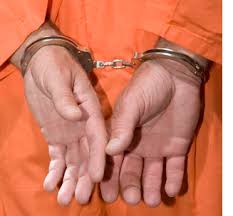
And the San Francisco Department of Building Inspection–which is charged with guaranteeing the habitability of apartment buildings–should immediately adopt a series of long-overdue refirms.
By doing so, it can:
- Vastly enhance its own prestige and authority;
- Improve living conditions for thousands of San Francisco renters; and
- Bring millions of desperately-needed dollars into the City’s cash-strapped coffers.
In Part 2 of this series I outlined 14 such reforms. In this concluding column, I will outline the remaining eight:
- DBI should order landlords to post their Notices of Violation in public areas of their buildings–on pain of serious financial penalties for failing to do so. When DBI orders a slumlord to take corrective action, s/he is the only person who is notified. Thus, if that slumlord refuses to comply with those directives, s/he is the only one who realizes it. Given the pressing demands on DBI, weeks or months will pass before the agency learns about this violation of its orders. Tenants have a right to know if their landlord is complying with the law.
- DBI should launch–and maintain–a city-wide advertising campaign to alert residents to its services. Everyone knows the FBI pursues bank robbers, but too many San Franciscans do not even know that DBI exists, let alone what laws it enforces. This should be an in-your-face campaign: “Do you have bedbugs in your apartment? Has your stove stopped working? Are you afraid to ride in your building elevator because it keeps malfunctioning? Have you complained to your landlord and gotten nowhere? Then call DBI at —–. Or drop us an email at ——.”
- Landlords should be legally required to give each tenant a list of the major city agencies (such as DBI, Department of Public Health and the Rent Board) that exist to help tenants resolve problems with their housing.
- Landlords should be legally required to rehabilitate a unit every time a new tenant moves in, or at least have it examined by a DBI inspector every two years. A tenant can occupy a unit for ten or more years, then die or move out, and the landlord immediately rents the unit to the first person who comes along, without making any repairs or upgrades whatsoever.
- Landlords should be required to bring all the units in a building up to existing building codes, and not just those in need of immediate repair.
- Landlords should be legally required to hire a certified-expert contractor to perform building repairs. Many landlords insist on making such repairs despite their not being trained or experienced in doing so, thereby risking the lives of their tenants.
- DBI should not view itself as a “mediation” agency between landlords and tenants. Most landlords hate DBI and will always do so. They believe they should be allowed to treat their tenants like serfs, raise extortionate rents anytime they desire, and maintain their buildings in whatever state they wish. And no efforts by DBI to persuade them of its good intentions will ever change their minds.
- Above all, DBI must stop viewing itself as a mere regulatory agency and start seeing itself as a law enforcement one. The FBI doesn’t ask criminals to comply with the law; it applies whatever amount of force is needed to gain their compliance. Niccolo Machiavelli said it best: If you can’t be loved by your enemies, then at least make yourself respected by them.
As Robert F. Kennedy wrote: “Every society gets the kind of criminal it deserves. What is equally true is that every community gets the kind of law enforcement it insists on.”
ABC NEWS, BEDBUGS, BUILDING INSPECTION, BUSINESS, CBS NEWS, CHRIS MATHEWS, CNN, FACEBOOK, FEDERAL ASSET FORFEITURE STATUTES, KIP MACY, LANDLORDS, NBC NEWS, NICOLE MACY, RENT CONTROL, RENTERS, SAN FRANCISCO, SAN FRANCISCO DEPARTMENT OF BUILDING INSPECTION, SAN FRANCISCO DEPARTMENT OF PUBLIC HEALTH, SLUMLORDS, THE HUFFINGTON POST, THE NEW YORK TIMES, THE WALL STREET JOURNAL, THE WASHINGTON POST, TWITTER, WAR ON DRUGS
In Bureaucracy, History, Law, Law Enforcement, Politics, Social commentary on December 31, 2015 at 12:01 am
The “war on drugs” has some valuable lessons to teach the San Francisco Department of Building Inspection (DBI) which is charged with protecting tenants against predatory landlords.
Consider:
- At least 400,000 rape kits containing critical DNA evidence that could convict rapists sit untested in labs around the country.
- But illegal drug kits are automatically rushed to the had of the line.
It isn’t simply because local/state/Federal lawmen universally believe that illicit drugs pose a deadly threat to the Nation’s security.
It’s because:
- Federal asset forfeiture laws allow the Justice Department to seize properties used to “facilitate” violations of Federal anti-drug laws.
- Local and State law enforcement agencies are allowed to keep some of the proceeds once the property has been sold.
- Thus, financially-strapped police agencies have found that pursuing drug-law crimes is a great way to fill their own coffers.
- Prosecutors and lawmen view the seizing of drug-related properties as crucial to eliminating the financial clout of drug-dealing operations.
It’s long past time for DBI to apply the same attitude–and methods–toward slumlords.

DBI should become not merely a law-enforcing agency but a revenue-creating one. And those revenues should come from predatory slumlords who routinely violate the City’s laws protecting tenants.
By doing so, DBI could vastly:
- Enhance its own prestige and authority;
- Improve living conditions for thousands of San Francisco renters; and
- Bring millions of desperately-needed dollars into the City’s cash-strapped coffers
Among those reforms it should immediately enact:
- Hit slumlord violators up-front with a fine–payable immediately–for at least $2,000 to $5,000 for each health/safety-code violation.
- The slumlord would be told he could reclaim 75-80% of the money onlyif he fully corrected the violation within 30 days. The remaining portion of the levied fine would go into the City coffers, to be shared among DBI and other City agencies.
- This would put the onus on the slumlord, not DBI. Appealing to his greed would ensure his willingness to comply with the ordered actions. As matters now stand, it is DBI who must repeatedly check with the slumlord to find out if its orders have been complied with.
- If the landlord failed to comply with the actions ordered within 30 days, the entire fine would go into the City’s coffers–to be dividedamong DBI and other agencies charged with protecting San Francisco residents.
- In addition, he would be hit again with a fine that’s at least twice the amount of the first one.
- Inspectors for DBI should be allowed to cite landlords for violations that fall under the jurisdiction of the Department of Public Health. They can then pass the information on to DPH for its own investigation.
- If the DBI Inspector later discovers that the landlord has not corrected the violation within a designated time-period, DBI should be allowed to levy its own fine for his failure to do so.
- If DPH objects to this, DBI should propose that DPH’s own Inspectorsbe armed with similar cross-jurisdictional authority. Each agency would thus have increased motivation for spotting and correcting health/safety violations that threaten the lives of San Francisco residents.
- This would instantly turn DBI and DPH into allies, not competitors. And it would mean that whether a citizen called DBI or DPH, s/he could be assured of getting necessary assistance. As matters now stand, many residents are confused by the conflicting jurisdictions of both agencies.
- DBI should insist that its Inspectors Division be greatly expanded. DBI can attain this by arguing that reducing the number of Inspectors cuts (1) protection for San Francisco renters–and (2) monies that could go to the general City welfare.
- The Inspection Division should operate independently of DBI. Currently, too many high-ranking DBI officials tilt toward landlords because they are landlords themselves.
- DBI should create a Special Research Unit that would compile records on the worst slumlord offenders. Thus, a slumlord with a repeat history of defying DBI NOVs could be treated more harshly than a landlord who was a first-time offender.
- Turning DBI into a revenue-producing one would enable the City to raise desperately-needed revenues—in a highly popular way. Fining delinquent slumlords would be as unpopular as raising taxes on tobacco companies. Only slumlords and their hired lackey allies would object.
- Slumlords, unlike drug-dealers, can’t move their operations from one street or city to another. Landlords aren’t going to demolish their buildings and move them somewhere else.

ABC NEWS, BEDBUGS, BUILDING INSPECTION, BUSINESS, CBS NEWS, CHRIS MATHEWS, CNN, FACEBOOK, FEDERAL ASSET FORFEITURE STATUTES, KIP MACY, LANDLORDS, NBC NEWS, NICOLE MACY, RENT CONTROL, RENTERS, SAN FRANCISCO, SAN FRANCISCO DEPARTMENT OF BUILDING INSPECTION, SAN FRANCISCO DEPARTMENT OF PUBLIC HEALTH, SLUMLORDS, THE HUFFINGTON POST, THE NEW YORK TIMES, THE WALL STREET JOURNAL, THE WASHINGTON POST, TWITTER, WAR ON DRUGS
In Bureaucracy, History, Law, Law Enforcement, Politics, Social commentary on December 30, 2015 at 2:32 pm
To hear slumlords tell it, San Francisco is a “renters’ paradise,” where obnoxious, lazy, rent-evading tenants constantly take advantage of hard-working, put-upon landlords.
Don’t believe it.
And in case you’re inclined to anyway, consider the story of Kip and Nicole Macy, two San Francisco slumlords who recently pled guilty to felony charges of residential burglary, stalking and attempted grand theft.

Kip Macy

Nicole Macy
Determined to evict rent control-protected tenants from their apartment building in the South of Market district, they unleashed a reign of terror in 2006:
- Cut holes in the floor of one tenant’s living room with a power saw–while he was inside his unit.
- Cut out sections of the floor joists to make the building collapse.
- Threatened to shoot Ricardo Cartagena, their property manager, after he refused to make the cuts himself.
- Changed the locks to Cartagena’s apartment, removed all of his belongings and destroyed them.
- Created fictitious email accounts to appear as a tenant who had filed a civil suit against the Macys–and used these to fire the tenant’s attorney.
- Cut the tenants’ telephone lines and shut off their electricity, gas and water.
- Changed the locks on all the apartments without warning.
- Mailed death threats.
- Kicked one of their tenants in the ribs.
- Hired workers to board up a tenant’s windows from the outside while he still lived there.
- Falsely reported trespassers in a tenant’s apartment, leading police to hold him and a friend at gunpoint.
- Broke into the units of three tenants and removed all their belongings.
- Again broke into the units of the same three victims and soaked their beds, clothes and electronics with amonia.
The Macys were arrested in April, 2008, posted a combined total of $500,000 bail and then fled the country after being indicted in early 2009.
In May, 2012, Italian police arrested them and deported them back to America a year later.
Having pled guilty, they were sentenced in September, 2013, to a prison term of four years and four months.
How could such a campaign of terror go on for two years against law-abiding San Francisco tenants?
Simple.
Even in the city misnamed as a “renter’s paradise,” slumlords are treated like gods by the very agencies that are supposed to protect tenants against their abuses.

The power of slumlords calls to mind the scene in 1987’s The Untouchables, where Sean Connery’s veteran cop tells Eliot Ness: “Everybody knows where the liquor is. It’s just a question of: Who wants to cross Capone?”
Many tenants have lived with rotting floors, bedbugs, nonworking toilets, mice/rats, chipping lead-based paint and other outrages for not simply months but years.
Consider the situation at the San Francisco Department of Building Inspection, which is supposed to ensure that apartment buildings are in habitable condition:
- A landlord is automatically given 30 days to correct a health/safety violation. If he drags his feet on the matter, the tenant must live with that problem until it’s resolved.
- If the landlord claims for any reason that he can’t fix the problem within one month, DBI doesn’t demand that he prove this. Instead, it automatically gives him another month.
- A slumlord has to work at being hit with a fine—by letting a problem go uncorrected for three to six months.
- And even then, repeat slumlord offenders often avoid the fine by pleading for leniency.
- That’s because many DBI officials are themselves landlords.
But the situation doesn’t have to remain this way.
DBI could:
- Vastly enhance its own prestige and authority
- Improve living conditions for thousands of San Francisco renters, and
- Bring millions of desperately-needed dollars into the City’s cash-strapped coffers.
How?
By learning some valuable lessons from the “war on drugs” and applying them to regulating slumlords.
Consider:
- At least 400,000 rape kits containing critical DNA evidence that could convict rapists sit untested in labs around the country.
- But illegal drug kits are automatically rushed to the had of the line.
It isn’t simply because local/state/Federal lawmen universally believe that illicit drugs pose a deadly threat to the Nation’s security.
It’s because:
- Federal asset forfeiture laws allow the Justice Department to seize properties used to “facilitate” violations of Federal anti-drug laws.
- Local and State law enforcement agencies are allowed to keep some of the proceeds once the property has been sold.
- Thus, financially-strapped police agencies have found that pursuing drug-law crimes is a great way to fill their own coffers.
- Prosecutors and lawmen view the seizing of drug-related properties as crucial to eliminating the financial clout of drug-dealing operations.
It’s long past time for San Francisco agencies to apply the same attitude–and methods–toward slumlords.
In my next column I will lay out how this can be done.
9/11, 9/11 ATTACKS, ABC NEWS, ABRAHAM LINCOLN, ASSASSINATION, BARACK OBAMA, BUREAUCRACY, CBS NEWS, CNN, FACEBOOK, GEORGE W. BUSH, HOUSE OVERSIGHT AND GOVERNMENT REFORM COMMITTEE, IRAQ WAR, ISIS, JOHN F. KENNEDY, MSNBC, NBC NEWS, PENTAGON, PRESIDENTIAL PROTECTION, REP. JASON CHAFFETZ, REP. PETER KING, RICHARD NIXON, ROBERT F. KENNEDY, RONALD KESSLER, Secret Service, SECURITY, TERRORISM, THE CHICAGO SUN-TIMES, THE CHICAGO TRIBUNE, THE LOS ANGELES TIMES, THE NEW YORK TIMES, THE WASHINGTON POST, TWITTER, WORLD TRADE CENTER
In Bureaucracy, History, Law Enforcement, Politics on December 29, 2015 at 12:19 am
On the night of September 19, 2014, an Iraq war veteran, Omar Gonzales, jumped the White House fence, ran more than 70 yards across the north lawn, and sprinted just past the north portico White House doors.
Only then was he apprehended by Secret Service agents.
Gonzalez’ short-lived trespass onto White House grounds was one of 143 security breaches–or attempted breaches–at facilities protected by the United States Secret Service (USSS) during during the last 10 years.
Then, less than 24 hours after Gonzalez’s arrest, a second man was apprehended after he drove up to a White House gate and refused to leave. This triggered a search of his vehicle by bomb technicians in full gear. Other agents shut down nearby streets. No bombs were found.
Asked for Obama’s reaction, White House spokesman Frank Benenati gave this boilerplate reply: “The president has full confidence in the Secret Service and is grateful to the men and women who day in and day out protect himself, his family and the White House.”
Yet not all is well in Presidential security.
A newly-released report by the House Oversight and Government Reform Committee found the Secret Service to be “in crisis.”
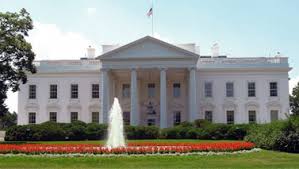
The White House
“Morale is down, attrition is up, misconduct continues and security breaches persist,” Rep. Jason Chaffetz, (R-Utah) publicly stated.
“Strong leadership from the top is required to fix the systematic mismanagement within the agency, and to restore it to its former prestige.”
But the blunt truth is that many of the problems now plaguing the USSS were on full display as early as 2009.
That was when well-known investigative reporter Ronald Kessler published his then-latest book, In the President’s Secret Service.
Kessler had previously pubilshed books outlining the inner workings of the White House, the CIA and the FBI.

Kessler praised the courage and integrity of Secret Service agents as a whole. But he warned that the agency was risking the safety of many of its protectees, including President Obama.
He was particularly critical of SS management for such practices as:
- Shutting off weapon-scanning magnetometers at rallies for Presidential candidates–and even for Presidents George W. Bush and Obama.
- During a speech Bush gave at Tbilisi, Georgia in 2005, an assailant threw a live hand grenade–which failed to explode–at him.
- Despite 9/11, Secret Service agents are still being trained to expect an attempt by a lone gunman—rather than a professional squad of terrorist assassins.
- The Service’s Counter Assault Teams (CATs) have generally been cut back from five or six agents to two, rendering them useless if a real attack occurred.
- Salaries paid to USSS agents have not kept pace with reality. Veteran USSS men and women are now being offered up to four times their salary for moving to the private sector, and many are leaving the agency for that reason.
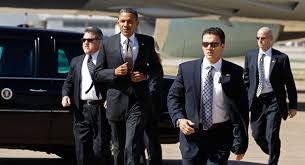
Secret Service agents protecting President Barack Obama
- While Congress has greatly expanded the duties of this agency, Secret Service management has not asked for equivalent increases in funding and agents.
- Many agents are leaving out of frustration that it takes “juice” or connections with top management to advance one’s career.
- USSS agents are being trained with weapons that are outdated (such as the MP5, developed in the 1960s) compared to those used by other law enforcement agencies and the potential assassins they face (such as the M4–with greater range and armor-piercing capabilities).
- The Service refuses to ask for help from other agencies to meet its manpower needs. Thus, a visiting head of state at the U.N. General Assembly will usually be assigned only three agents as protection.
- The agency tells agents to grade themselves on their physical training test forms.
- Agents are supposed to be evaluated on their marksmanship skills every three months. But some agents have gone more than a year without being tested.
- Some agents are so overweight they can’t meet the rigorous demands of the job. As a result, they pose a danger to the people they’re supposed to be guarding.
- The Secret Service inflates its own arrest statistics by claiming credit for arrests made by local police.
- Congressional members who visit the agency’s Rowley Training Center in Laurel, Maryland, are treated to rehearsed scenarios of how the agency would deal with attacks. If agents were allowed to perform these exercises without rehearsals, Congressional members would see they make mistakes like anyone else.
Kessler closes his book with the warning: “Without….changes, an assassination of Barack Obama or a future president is likely.
“If that happens, a new Warren Commission will be appointed to study the tragedy. It will find that the Secret Service was shockingly derelict in its duty to the American people and to its own elite corps of brave and dedicated agents.”
And the effects will be not only momentary but long-term. As Kessler writes:
“By definition, an assassination threatens democracy.
“If Abraham Lincoln had not been assassinated, Andrew Johnson, his successor, would not have been able to undermine Lincoln’s efforts to reunite the nation and give more rights to blacks during the Reconstruction period.
“If John F. Kennedy had not been assassinated, Lyndon Johnson likely never would have become President. If Robert F. Kennedy had not been killed and had won the presidency, Richard Nixon might never have been elected.”
9/11, 9/11 ATTACKS, ABC NEWS, ABRAHAM LINCOLN, ASSASSINATION, BARACK OBAMA, BUREAUCRACY, CBS NEWS, CNN, FACEBOOK, GEORGE W. BUSH, HOUSE OVERSIGHT AND GOVERNMENT REFORM COMMITTEE, IRAQ WAR, ISIS, JOHN F. KENNEDY, MSNBC, NBC NEWS, PENTAGON, PRESIDENTIAL PROTECTION, REP. JASON CHAFFETZ, REP. PETER KING, RICHARD NIXON, ROBERT F. KENNEDY, RONALD KESSLER, Secret Service, SECURITY, TERRORISM, THE CHICAGO SUN-TIMES, THE CHICAGO TRIBUNE, THE LOS ANGELES TIMES, THE NEW YORK TIMES, THE WASHINGTON POST, TWITTER, WORLD TRADE CENTER
In Bureaucracy, History, Law Enforcement, Politics on December 28, 2015 at 2:37 am
The United States Secret Service (USSS) is “in crisis”–a crisis that threatens President Barack Obama and his successors as President of the United States.
That’s the verdict of a review of the House Oversight and Government Reform Committee.
Since April, 2012, the agency has faced scandal–and scrutiny by the press and Committee. That was when reports first surfaced of agents buying the favors of prostitutes in Columbia.
Even more embarrassing for the USSS were a series of security breaches that potentially exposed President Barack Obama to danger.
As a result, during the last three years, three directors have headed the Secret Service. Numerous agents–including senior officials–have been disciplined, transferred or fired.
For decades, the Secret Service was seen by the press, public and other law enforcement agencies as an elite agency. And the Presidential Protection Detail (PPD) was seen as the most elite part of the agency.
No longer.

Secret Service agents guarding President Obama
Among the findings of the 438-page report:
- The agency is understaffed and overworked.
- Its staffing crisis started in 2011 owing to government-wide budget cuts demanded by Republicans.
- The Secret Service has fewer employees today than it did in 2014, despite recommendations from an independent panel that staffing be increased.
- There have been a number of undisclosed security breaches–such as in October, 2014, when an unauthorized woman gained access to a Congressional Hispanic Caucus event that Obama attended.
- In February, two people gained access to the outer security perimeter of the White House.
- There have been 143 security breaches–or attempted breaches–during the last 10 years at facilities protected by the agency.
“This report reveals that the Secret Service is in crisis,” Rep. Jason Chaffetz, (R-Utah) publicly stated. “Morale is down, attrition is up, misconduct continues and security breaches persist.
“Strong leadership from the top is required to fix the systematic mismanagement within the agency, and to restore it to its former prestige.”
But the truth is that many of the problems now plaguing the U.S. Secret Service were on display long before the House issued its report.
On September 11, 2001, Secret Service agents literally grabbed Vice President Dick Cheney and hauled him from the White House to a secure facility beneath the Executive Mansion.
As for everyone else who worked in the White House, agents simply threw open the White House doors and ordered: “Run!”
“Women, take off your shoes!” agents shouted–so they could run faster. Frightened Presidential aides were told to remove their White House badges–just in case snipers were lurking nearby.
That was it.
With the World Trade Center and Pentagon in flames, and the White House seemingly next in line as a target, this was the sum total of protection offered White House staffers by the agency considered the elite in Federal law enforcement.

White House staffers fleeing on 9/11
Not knowing what to do, some aides walked home in a daze.
Click here: Amazon.com: Days of Fire: Bush and Cheney in the White House (9780385525190): Peter Baker: Books
(President George W. Bush was not in the White House at the time. He was reading The Pet Goat to a group of children at Emma E. Booker Elementary School in Sarasota, Florida.)
Three days later, on September 14, Andy Card, Bush’s chief of staff, addressed White House staffers in Room 450 of the Eisenhower Executive Office Building, next to the West Wing.
Card said he understood that “this is not what any of you signed up for when you joined the White House staff.” And he offered them the chance to resign without anyone–himself or the President–thinking any less of them.
When no one offered to leave, Card let a Secret Service agent offer security advice:
- Vary your routines to and from work.
- Watch out for any cars that might be following you.
- Go to different restaurants for lunch.
At least one member of the audience, Bradford Berenson, an associate White House counsel, knew he wouldn’t be taking that advice.
Like most of the others at the meeting, his name was listed in the local phone book. A terrorist wanting to kill him need only lurk outside Berenson’s home and open fire when he appeared.
Click here: 500 Days: Secrets and Lies in the Terror Wars: Kurt Eichenwald: 9781451669398: Amazon.com: Books
And that was it, as far as the Secret Service was concerned.
No offers of even temporary escorts by Secret Service agents. No offers to install “panic buttons” in their homes in case of emergency.
In essence: “We’re really glad you’ve decided to serve your country. But don’t expect us to protect you. You’re on your own.”

Fast forward 13 years later.
On the night of September 19, 2014, an Iraq war veteran, Omar Gonzales, jumped the White House fence, ran more than 70 yards across the north lawn, and sprinted just past the north portico White House doors.
Gonzalez appeared unarmed as he ran across the lawn–possibly one reason why Secret Service agents didn’t shoot him or release their service dogs to detain him. But he had a small folding knife with a three-and-one-half-inch serrated blade when he was apprehended.
According to a criminal complaint, when he was arrested he told Secret Service agents he was “concerned that the atmosphere was collapsing” and needed to contact the President “so he could get word out to the people.”
ABC NEWS, BALTIMORE POLICE DEPARTMENT, BALTIMORE SUN, CBS NEWS, CNN, FACEBOOK, FREDDIE GRAY, MARILYN MOSBY, NBC NEWS, POLICE BRUTALITY, REUTERS, ROUGH RIDES, THE CHICAGO SUN-TIMES, THE CHICAGO TRIBUNE, THE LOS ANGELES TIMES, THE NEW YORK TIMES, THE WASHINGTON POST, TWITTER, USA TODAY
In Bureaucracy, History, Law, Law Enforcement, Politics, Social commentary on December 18, 2015 at 12:26 am
Freddie Gray’s tally of arrests came to at least 18.
But on April 12, he was arrested for what would be the final time.
That arrest would lead to Gray’s death and scandal for the Baltimore Police Department.
On May 1, Marilyn Mosby, Baltimore’s chief deputy prosecutor at the State’s Attorney office, publicly released the findings of her agency in the Gray case:
- “The knife was not a switchblade and is lawful under Maryland law.” [Police had claimed it was a switchblade.]
- “Lt. Rice, Officer Miller and Officer Nero failed to establish probable cause for Mr. Gray’s arrest as no crime had been committed by Mr. Gray. Accordingly Lt. Rice Officer MIller and Office Nero illegally arrested Mr. Gray.”
- “Lt. Rice Officer Miller and Officer Nero loaded Mr. Gray into the wagon and at no point was he secured by a seatbelt while in the wagon contrary to a BPD [Baltimore Police Department] general order.”
- “…Mr. Gray suffered a severe and critical neck injury as a result of being handcuffed, shackled by his feet and unrestrained inside of the BPD wagon.”
- “Despite stopping for the purpose of checking on Mr. Gray’s condition, at no point did [Officer Goodson] seek nor did he render any medical assistance for Mr. Gray.”
- “Mr. Gray…requested help and indicated that he could not breathe. Officer Porter asked Mr. Gray if he needed a medic at which time Mr. Gray indicated at least twice that he was in need of a medic.”

Marilyn Mosby
- “…Despite Mr. Gray’s appeal for a medic, both officers [William Porter, Caesar Goodson] assessed Mr. Gray’s condition and at no point did either of them….render or request medical assistance.”
- “Sgt. [Alicia] White….spoke to the back of Mr. Gray’s head. When he did not respond, she did nothing further despite the fact that she was advised that he needed a medic. She made no effort to look or assess or determine his condition.”
- “Despite Mr. Gray’s seriously deteriorating medical condition, no medical assistance was rendered or summoned for Mr. Gray at that time by any officer.”
- “By the time Officer Zachary Novak and Sgt. White attempted to remove Mr. Gray from the wagon, Mr. Gray was no longer breathing at all.”
- “A medic was finally called to the scene where upon arrival, the medic determined Mr. Gray was now in cardiac arrest and was critically and severely injured.”
- “Mr. Gray was rushed to the University of Maryland Shock Trauma where he underwent surgery. On April 19, 2015, Mr. Gray succumbed to his injuries and was pronounced dead.”
- “The manner of death deemed homicide by the Maryland Medical Examiner is believed to be the result of a fatal injury that occurred while Mr. Gray was unrestrained by a seatbelt in custody of the Baltimore Police Department wagon.

After presenting her findings, Mosby then outlined the criminal charges her office was bringing against the officers involved:
- Officer Caesar Goodson Jr., 45: Second-degree depraved murder, manslaughter, second-degree assault, two counts of vehicular manslaughter charges and misconduct in office.
- Officer William Porter, 25: Involuntary manslaughter, second-degree assault and misconduct in office.
- Brian Rice, 41: Involuntary manslaughter, two counts of second-degree assault, two counts of misconduct in office and false imprisonment.
- Officer Edward Nero, 29: Two counts of second-degree assault, two counts of misconduct in office and false imprisonment.
- Officer Garrett Miller, 26: Two counts of second-degree assault, two counts of misconduct in office and one false imprisonment charge.
- Alicia White, 30: Involuntary manslaughter, second-degree assault and misconduct in office.
* * * * *
On December 16, Baltimore City Circuit Court Judge Barry Williams declared a mistrial in the trial of William Porter, the first of the six Baltimore police officers charged in Gray’s death.
For 16 hours, the jury had deliberated on whether Porter was guilty of involuntary manslaughter. After jurors reported they were deadlocked on all charges, Judge Williams said an administrative judge would set a new trial date as early as December 17.
The Freddie Gray case has polarized Baltimore–and America.
On the Left–and especially among blacks–are those who believe Gray was an innocent victim of police oppression.
“Even if he was guilty of dealing and using narcotics,” they say, “the anti-drug laws are a stupid waste of police resources.”
On the Right are those who steadfastly defend all police actions, including the most brutal and lawless.
“Even if the cops were guilty of brutality and/or negligence,” they say, “so what? A career criminal won’t ply his trade anymore.”
Both sides are wrong.
Until the anti-drug laws are repealed, they are legal and will continue to be enforced. Freddie Gray knew this better than most.
But police who employ illegal methods to enforce the law risk losing not only the cases they want to bring but their own careers as well. They also invite contempt and hatred for their own police agencies and law enforcement in general.
Such officers who cause death or injury by unjustified brutality and/or negligence must be held accountable.
That has long been considered the difference between the FBI and the KGB.
There is a difference between supporting the legal actions of police—and living in a police state.
America’s citizens have the right to expect protection from crime–whether committed by civilian criminals or those wearing police uniforms.
ABC NEWS, BALTIMORE POLICE DEPARTMENT, CBS NEWS, CNN, FACEBOOK, FREDDIE GRAY, MARILYN MOSBY, NBC NEWS, POLICE BRUTALITY, REUTERS, ROUGH RIDES, THE BALTIMORE SUN, THE CHICAGO SUN-TIMES, THE CHICAGO TRIBUNE, THE LOS ANGELES TIMES, THE NEW YORK TIMES, THE WASHINGTON POST, TWITTER, USA TODAY
In Bureaucracy, History, Law, Law Enforcement, Politics, Social commentary on December 17, 2015 at 12:43 am
Leave out his name for a moment. Then consider the following:
His biography includes at least 18 arrests:
- July 16, 2007: Possession of a controlled dangerous substance with intent to distribute, unlawful possession of a controlled dangerous substance (2 counts)
- August 23, 2007: False statement to a peace officer, unlawful possession of a controlled dangerous substance
- August 28, 2007: Possession of marijuana
- August 29, 2007: Possession of a controlled dangerous substance with intent to distribute, violation of probation
- February 11, 2008: Unlawful possession of a controlled dangerous substance, possession of a controlled dangerous substance
- March 14, 2008: Possession of a controlled dangerous substance with intent to manufacture and distribute
- March 28, 2008: Unlawful possession of a controlled dangerous substance
- July 16, 2008: Possession of a controlled dangerous substance, possession with intent to distribute
- April 13, 2012: Possession of a controlled dangerous substance with intent to distribute, unlawful possession of a controlled dangerous substance, violation of probation
- September 28, 2013: Distribution of narcotics, unlawful possession of a controlled dangerous substance, second-degree assault, second-degree escape
- January 25, 2014: Possession of marijuana
- August 31, 2014: Illegal gambling, trespassing
- December 14, 2014: Possession of a controlled dangerous substance
- December 31, 2014: Possession of narcotics with intent to distribute
- January 14, 2015: Possession of a controlled dangerous substance, possession of a controlled dangerous substance with intent to distribute
- January 20, 2015: Fourth-degree burglary, trespassing
- March 13, 2015: Malicious destruction of property, second-degree assault
- March 20, 2015: Possession of a Controlled Dangerous Substance
His criminal record was one of drug charges and minor crimes. He was involved in 20 criminal court cases–five were still active at the time of his death.
In February 2009, he was sentenced to four years in prison for two counts of drug possession with intent to deliver and was paroled in 2011–after serving only two.
In 2012, he was arrested for violating parole but was not sent back to prison.
In 2013, he returned to prison for a month before being released again.
He was due in court on a drug possession charge on April 24.
Who was he?
He was Freddie Gray, the 25-year-old black man who spent seven days in a coma after he suffered injuries while in the custody of Baltimore police.
Click here: Freddie Gray Arrest Record, Criminal History & Rap Sheet

Freddie Gray
His last arrest came on April 12.
While being transported in a police van to the police station, Gray fell into a coma and was taken to a trauma center. He died on April 19, owing to a broken neck.
On April 21, the six Baltimore police officers involved in his arrest were temporarily suspended with pay while an investigation occurred.
According to the police account of Gray’s arrest:
On April 12, at 8:39 A.M. Lieutenant Brian W. Rice, Officer Edward Nero, and Officer Garrett E. Miller were patrolling on bicycles and “made eye contact” with Gray.
According to Miller, Gray, “unprovoked upon noticing police presence,” fled on foot.
After a brief foot chase, he was caught and arrested “without the use of force or incident,” according to Miller.
Miller further wrote that:
- He “noticed a knife clipped to the inside of his [Gray’s] front right pocket”; and
- Gray “did unlawfully carry, possess, and sell a knife commonly known as a switch blade knife, with an automatic spring or other device for opening and/or closing the blade within the limits of Baltimore City. The knife was recovered by this officer and found to be a spring assisted one hand operated knife.”
A witness to Gray’s arrest have since stated that the police were “folding” Gray. That is: One officer was bending Gray’s legs backwards, while another was pressing a knee into Gray’s neck.
A second witness claimed to have seen Gray being beaten with police batons.
On April 24, Baltimore Police Commissioner Anthony Batts said, “We know our police employees failed to get him medical attention in a timely manner multiple times.”
He also admitted that his officers had failed to buckle Gray in the van–standard police procedure–before he was transported to the police station.
News reports have raised the possibility that Gray was treated to a “rough ride”–where a handcuffed prisoner is placed without a seatbelt in a vehicle deliberately driven over rough roads at high speed as an unofficial punishment.

Inside a typical police van
And Gray had clearly had enough run-ins with the law to be known to police as a habitual criminal.
In fact, medical examiners reported Gray sustained more injuries by slamming around inside the van, “apparently breaking his neck; a head injury he sustained matches a bolt in the back of the van.”
But even worse findings were to come for the officers involved.
On May 2, the Baltimore Sun broke the story that, of the six policemen involved with Gray’s arrest, Brian Rice—the highest ranking officer—had seven guns confiscated by sheriff’s deputies in April, 2012.
He had also been temporarily removed from duty–over concerns about his mental health.
Click here: Lieutenant Brian Rice charged in Freddie Gray death had weapons seized in 2012 – Baltimore Sun
But that was merely embarrassing. What happened on May 1 was life-changing.
9/11, ABC NEWS, ADOLF HITLER, BARACK OBAMA, BOSTON MARATHON BOMBING, CBS NEWS, CHRIS CHRISTIE, CHRISTIANITY, CNN, COLUMBIA UNIVERSITY, DONALD TRUMP, FACEBOOK, HARVARD UNIVERSITY, IRAN, ISLAM, ISLAMIC STATE OF IRAQ AND SYRIA (ISIS), JEB BUSH, JOHN KASICH, LEBANON, LINDSEY GRAHAM, MUNICH OLYMPICS MASSACRE, NBC NEWS, POLITICAL CORRECTNESS, RACIAL PROFILING, RELIGION, SAMUEL P. HUNTINGTON, TERRORISM, THE CHICAGO SUN-TIMES, THE CHICAGO TRIBUNE, THE CLASH OF CIVILIZATIONS, THE LOS ANGELES TIMES, THE NEW YORK TIMES, THE SPECTATOR, THE WASHINGTON POST, TWITTER, USA TODAY, WINSTON CHURCHILL, WORLD TRADE CENTER
In Bureaucracy, History, Law Enforcement, Military, Politics, Social commentary, Uncategorized on December 10, 2015 at 12:30 am
One man who foresaw the present conflicts between America and the Islamic world was Samuel P. Huntington.
Most importantly, he had the courage to say what has since become Politically Incorrect.

Samuel P. Huntington
A political scientist, Huntington taught government at Harvard University (1950-1959, then at Columbia University (1959-1962). He returned to Harvard in 1963, and remained there until his death in 2008.
The author of nine books, in 1996 he published his most influential one: The Clash of Civilizations and the Remaking of World Order. Its thesis was that, in the post-Cold War world, people’s cultural and religious identities would be the primary sources of conflict.
Among the points he makes:
- Modernization does not mean Westernization.
- Economic progress has come with a revival of religion.
- Post-Cold War politics emphasize ethnic nationalism over ideology.
- Civilizations are fundamentally differentiated from each other by centuries-old history, language, culture, tradition, and, most important, religion.
- As the world becomes smaller, different civilizations increasingly interact. These intensify civilization consciousness and the awareness of differences between civilizations.
- Economic modernization and social change separate people from age-old identities (such as hometowns and familiar neighbors). Religion has replaced this gap, providing a basis for identity, socialization and commitment that transcends national boundaries and unites civilizations.
- The West, at the peak of its power, is confronting non-Western countries that increasingly have the desire, will and resources to shape the world in non-Western ways.
- Cultural characteristics and differences are less mutable and hence less easily compromised and resolved than political and economic ones.
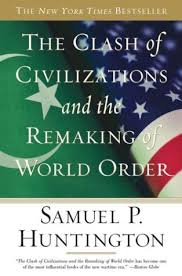
The most controversial part of The Clash of Civilizations focuses on Islam. Huntington points out, for example, that Muslim countries are involved in far more intergroup violence than others.
And he warns that the West’s future conflcts with Islamic nations will be rooted in the Islamic religion:
“Islam’s borders are bloody and so are its innards. The fundamental problem for the West is not Islamic fundamentalism. It is Islam, a different civilisation whose people are convinced of the superiority of their culture and are obsessed with the inferiority of their power.”
Huntington argues that civilizational conflicts are especially prevalent between Muslims and Christians. Among the reasons for these conflicts:
- Both seek to convert others.
- Both are “all-or-nothing” religions; each side believes that only its faith is the correct one.
- Both believe that people who violate the base principles of their religion are heretics and thus damned.
Other reasons for the Western-Islamic clash are:
- Western secular values conflict with Islamic religious values.
- Past historical rivalry between Christianity and Islam.
- The jealousy of Western power by Islamic nations.
- Islamic resentments of Western domination during the post-colonial restructuring of the Middle East.
- Islamic bitterness and humiliation at the achievements of Western civilization over the last 200 years.
- The Islamic revival, which began in the 1970s and is manifested in greater religious piety and in a growing adoption of Islamic culture, values, dress, separation of the sexes, speech and media censorship.
- Western universalism–the belief that all civilizations should adopt Western values–infuriates Islamic fundamentalists.
- Islamic civilizations do not share the general ideals of the Western world–such as individualism and democracy.
- Islamics’ primary attachment is to their religion, not to their nation-state.
- When the Muslim world conflicts with other civilizations, tensions and wars result.
- Arab dictatorships are fragile and can be overturned by the masses of unemployed young men. But even if they fall, the new regimes will not modernize along Western lines.
- Relations between Muslims and non-Muslims–such as Catholics, Protestants, Hindus, Buddhists and Jews–have been marked by Islamic antagonism and violence.
- Western nations should distance themselves from Islamic ones. The more both civilizations interact, the greater will be the tensions between them.
These differences will not disappear. Nor will they be sweet-talked away by Politically Correct politicians, however well-meaning.
The result: A fundamental clash of civilizations between Islam and the West is inevitable.
A point of Islamic irony: Islamic terror groups such as Al Qaeda and ISIS damn Western nations as havens of corrupt infidels. But tens of thousands of Syrians and Iraqis are now fleeing to Europe and the United States–to escape the barbaric slaughters of their fellow Islamics.
Following the 1979 Iranian Revolution, a quasi-war developed between some Islamic nations and some Western ones.
On the Islamic side:
- Iran
- Sudan
- Iraq
- Libya
- Syria
On the Western side:
- The United States
- Great Britain
“In this quasi war,” wrote Huntington, “each side has capitalized on its own strengths and the other side’s weaknesses.” For example:
- Muslim terrorists exploited the openness of Western societies to plant car bombs at selected targets.
- Western powers used their superior air power to bomb selected targets in Islamic countries.
- Islamics plotted the assassination of Western leaders.
- The United States plotted the overthrow of hostile Islamic regimes.
Writing at a time before the United States directed its full military power at conquering Afghanistan and Iraq, Huntington ominously noted:
“During the 15 years between 1980 and 1995…the United States engaged in 17 military operations in the Middle East, all of them directed against Muslims. No comparable pattern of U.S. military operations occurred against the people of any other civilization.”
The war that Huntington warned was coming and was, in fact, already in progress, has since erupted into full-scale conflict, with no end in sight.
9/11, ABC NEWS, ADOLF HITLER, BARACK OBAMA, BOSTON MARATHON BOMBING, CBS NEWS, CHRIS CHRISTIE, CHRISTIANITY, CNN, COLUMBIA UNIVERSITY, DONALD TRUMP, FACEBOOK, HARVARD UNIVERSITY, IRAN, ISLAM, ISLAMIC STATE OF IRAQ AND SYRIA (ISIS), JEB BUSH, JOHN KASICH, LEBANON, LINDSEY GRAHAM, MUNICH OLYMPICS MASSACRE, NBC NEWS, POLITICAL CORRECTNESS, RACIAL PROFILING, RELIGION, SAMUEL P. HUNTINGTON, TERRORISM, THE CHICAGO SUN-TIMES, THE CHICAGO TRIBUNE, THE CLASH OF CIVILIZATIONS, THE LOS ANGELES TIMES, THE NEW YORK TIMES, THE SPECTATOR, THE WASHINGTON POST, TWITTER, USA TODAY, WINSTON CHURCHILL, WORLD TRADE CENTER
In Bureaucracy, History, Law Enforcement, Military, Politics, Social commentary, Uncategorized on December 9, 2015 at 1:10 am
There is a famous “joke” about racial profiling that’s long made the rounds of the Internet. It appears in the guise of a “history test,” and offers such multiple-choice questions as:
In 1972 at the Munich Olympics, athletes were kidnapped and massacred by:
- Olga Korbut
- Sitting Bull
- Arnold Schwarzenegger
- Muslim male extremists mostly between the ages of 17 and 40
In 1979, the US embassy in Iran was taken over by:
- Lost Norwegians
- Elvis
- A tour bus full of 80-year-old women
- Muslim male extremists mostly between the ages of 17 and 40
During the 1980s a number of Americans were kidnapped in Lebanon by:
- John Dillinger
- The King of Sweden
- The Boy Scouts
- Muslim male extremists mostly between the ages of 17 and 40
In 1983, the US Marine barracks in Beirut was blown up by:
- A pizza delivery boy
- Pee Wee Herman
- Geraldo Rivera
- Muslim male extremists mostly between the ages of 17 and 40
On September 11, 2001, four airliners were hijacked. Two were used as missiles to take out the World Trade Center; one crashed into the Pentagon; and the other was diverted and crashed by the passengers. Thousands of people were killed by:
- Bugs Bunny, Wiley E. Coyote, Daffy Duck and Elmer Fudd
- The Supreme Court of Florida
- Mr. Bean
- Muslim male extremists mostly between the ages of 17 and 40
* * * * *
It’s well to remember the bitter truth behind this joke, especially in light of the recent denial by President Barack Obama that America is at war with Islam.
On the contrary: Since September 11, 2001, the United States has been actively at war with Islamics for 14 years.
And, since the 1970s, America has been the target of repeated terrorist attacks by Islamics–as shown in the examples of the above “joke.”
Repeatedly, those who have committed atrocities against Americans have loudly proclaimed Islam as their reason for doing so.
Alone among the 2016 candidates for President, Trump has dared to say the unsayable: America is at war with Islam.
And he has called on his countrymen to see it–and wage it–as a war.

Donald Trump
“Donald J. Trump is calling for a total and complete shutdown of Muslims entering the United States until our country’s representatives can figure out what the hell is going on.”
Trump gave his speech on December 7–the day when many older Americans still observe the anniversary of the 1941 Japanese attack on Pearl Harbor.
Only five days earlier, two Islamic terrorists had staged the worst Islamic attack on America since 9/11.
Using semi-automatic pistols and rifles, they had slaughtered 14 people and injured another 21 at the Inland Regional Center in San Bernardino, California.
“Without looking at the various polling data, it is obvious to anybody the hatred is beyond comprehension. Where this hatred comes from and why we will have to determine,” Trump said to his enthusiastic audience in Mount Pleasant, South Carolina.
“Until we are able to determine and understand this problem and the dangerous threat it poses, our country cannot be the victims of horrendous attacks by people that believe only in Jihad, and have no sense of reason or respect for human life.”
Speaking on MSNBC on December 8, Trump followed up: “We have to get a hand around a very serious problem. And it’s getting worse. And you will have more World Trade Centers and you will have more, bigger than the World Trade Center, if we don’t toughen up, smarten up, and use our heads.”
Trump’s Republican competitors in the Presidential race–desperate to overtake him in the polls–quickly attacked him.
- New Jersey Governor Chris Christie: “This is the kind of thing that people say when they have no experience and don’t know what they’re talking about. We do not need to endorse that type of activity, nor should we.”
- Former Florida Governor Jeb Bush: “Donald Trump is unhinged. His ‘policy’ proposals are not serious.”
- Ohio Governor John Kasich: “This is just more of the outrageous divisivenes that characterizes his every breath and another reason why he is entirely unsuited to lead the United States.”
- South Carolina Senator Lindsey Graham: “He’s putting at risk the lives of interpreters, American supporters, diplomats, & the troops in the region by making these bigoted comments.”
On December 6 President Barack Obama, speaking from the Oval Office, sought to comfort jittery Americans about the threat they faced from Islamic terrorism.
Among the proposals he laid out for defeating the Islamic State of Iraq and Syria (ISIS):
“We cannot turn against one another by letting this fight be defined as a war between America and Islam. That, too, is what groups like [ISIS] want. [ISIS] does not speak for Islam.”
One man who did foresee the present conflicts with stunning clarity–and had the courage to say what has since become Politically Incorrect–was Samuel P. Huntington.
Samuel P. Huntington
A political scientist, Huntington taught government at Harvard University (1950-1959, then at Columbia University (1959-1962). He returned to Harvard in 1963, and remained there until his death in 2008.
The author of nine books, in 1996 he published his most influential one: The Clash of Civilizations and the Remaking of World Order.
Its thesis: In the post-Cold War world, people’s cultural and religious identities would replace nationalistic ones as the primary sources of conflict.


.jpg)


9-1-1-, ABC NEWS, CBS NEWS, CNN, EMERGENCIES, FACEBOOK, NBC NEWS, POLICE DISPATCHING, ROBERT F. KENNEDY, SAN FRANCISCO, SAN FRANCISCO DEPARTMENT OF EMERGENCY MANAGEMENT, SAN FRANCISCO GIANTS, SAN FRANCISCO POLICE DEPARTMENT, THE CHICAGO SUN-TIMES, THE CHICIAGO TRIBUNE, THE LOS ANGELES TIMES, THE NEW YORK TIMES, THE SAN FRANCISCO FIRE DEPARTMENT, THE WASHINGTON POST, TWITTER
WHY CITIZENS DESPISE GOVERNMENT
In Bureaucracy, History, Law Enforcement, Politics, Social commentary on January 5, 2016 at 12:01 amThe quickest way of opening the eyes of the people is to find the means of making them descend to particulars, seeing that to look at things only in a general way deceives them.…
–-Niccolo Machiavelli, The Discourses
One morning at about 8:10, a friend of mine named Robert heard a helicopter repeatedly buzzing the San Francisco Tenderloin area, where he lived.
Thinking that a fire or police action might be in the works, he called the non-emergency number of the San Francisco Police Department (SFPD): (415) 553-0123.
Police dispatcher
And he got a recorded message.
This told him–in English–what he already knew: He had reached the San Francisco Police Department.
Then it told him this again in Spanish. Then again in Cantonese. Then came a series of high–pitched squeals–presumably for those who are hard-of-hearing.
Then the line went dead, and another recorded voice told Robert: “If you’d like to make a call, please hang up and try again.”
At that point, Robert decided to waste no more time trying to learn if there was an emergency going on in his area. Or, to put it more accurately, he decided to waste no more time trying to learn this from the SFPD.
Instead, Robert turned on his TV and checked all the local news channels. When he didn’t see anyone reporting a raging fire or police sealing off an area, he decided there probably wasn’t anything to worry about.
But later on he decided to call the SFPD once again–to complain at a level he believed would attain results.
That level was the office of its chief, Greg Suhr.
Robert didn’t expect to reach the chief himself. But he didn’t have to: Reaching Suhr’s secretary should serve the same purpose.
The secretary he reached turned out to be a sworn officer of the agency. She patiently heard out Robert’s complaint. And she totally agreed with it.
She also agreed that this was a longstanding problem with the SFPD–citizens not being able to get through for help because of an ineffective communications system.
Finally, she agreed with Robert that the situation counted as a major PR disaster for her agency. People who become disgusted and/or disillusioned with a police department’s phone system aren’t likely to trust that agency with their cooperation–or their lives.
Then she had a surprise for Robert: Like him, she had at times been unable to reach a live dispatcher–even when calling 9-1-1.
She added that the police department did not handle its own dispatch work. This had been farmed out long ago to the San Francisco Department of Emergency Management (SFDEM).
She said that the SFPD didn’t have any control–or even influence–over SFDEM, which operated as an independent agency.
Robert suggested that it was definitely in the best interests of the SFPD for someone at its highest level to contact SFDEM and demand major reforms. Or to find another agency that would take its dispatcher responsibilities seriously.
The chief’s secretary said she would pass along Robert’s comments to the proper authority.
Will anything change? Not likely, barring a miracle.
There are few events more frightening and frustrating than having to call the police, fire department or paramedics during an emergency–and get a recorded message.
Whether intended or not, the message this sends the caller can only be: “Your call is simply not important to us–and neither are you. We’ll get to you when we feel like it.”
When people call the police or fire department, they’re usually frightened–for themselves or others. They know that, in a fire or crime or medical emergency, literally every second counts.
It’s going to take the police or fire or paramedics several minutes to arrive–assuming they don’t get caught up in a traffic snarl.
And it’s going to take them even longer to arrive if it takes the caller several minutes to reach them with a request for help.
This is the sort of bread-and-butter issue that local authorities–who operate police and fire departments–should take most seriously.
Mayors and council members should not expect to be treated with respect when their constituents are treated so disrespectfully in a time of crisis.
And citizens aren’t stupid. They can easily tell lies from truths.
Lies such as: “We’d like to put in a new communications system, but we can’t afford it due to budget cuts.”
And truths such as: While San Francisco faced a $229 million deficit for the fiscal year, 2012, it nevertheless found
San Francisco Airport–decked out with San Francisco Giants colors
So, in the end, it all comes down to a matter of priority–for both citizens and their elected leaders.
As Robert F. Kennedy once said: “Every nation gets the kind of government it deserves–and the kind of law enforcement it insists in.”
Share this: