2020 PRESIDENTIAL ELECTION, ADOLF HITLER, AFFORDABLE CARE ACT (ACA), ALTERNET, AMERICABLOG, AP, ARLINGTON CEMETERY, AUSTRIA, BABY BOOMER RESISTANCE, BARCK OBAMA, BBC, BENJAMIN NETANYAHU, BIRTHRIGHT CITIZENSHIP, BLOOMBERG, BLUESKY, BRENDEN CARR, BUCHENWALD, BUREAU OF LABOR STATISTICS, BUZZFEED, CANADA, CBS NEWS, CHARLIE KIRK, CHRIS KREBS, CLIMATE CHANGE, CNN, CONSUMER FINANCIAL PROTECTION BUREAU, CROOKS AND LIARS, CZECHOSLOVAKIA, DAILY KOS, DEATH’S HEAD REVISITEDD (TV SHOW), DENMARK, DIVERSITY EQUITY AND INCLUSION (DEI), DONALD TRUMP, ENGLAND, FBI, FEDERAL AVIATION ADMINISTRATION (FAA), FIVETHIRTYEIGHT, FRANCE, GAZA, GOVERNMENT SHUTDOWN, GREAT DEPRESSION, GREENLAND, GULF OF AMERICA, GULF OF MEXICO, HARPER’S MAGAZINE, HARVARD UNIVERSITY, HERITIAGE FOUNDATION, HILLARY CLINTON, HUFFINGTON POST, illegal immigration, IMMIGRATION AND CUSTOMS ENFORCEMENT (ICE), IRAN, ISRAEL, J.D. VANCE, JAMES COMEY, JANUARY 6 COUP ATTEMPT, JEWS, JIMMY KIMMEL, JIMMY KIMMEL LIVE!, JOHN F. KENNEDY CENTER FOR THE PERFORMING ARTS, JOSEPH BIDEN, JOSEPH STALIN, Kamala Harris, KATJA HOYER, LATE NIGHT WITH STEPHEN COLBERT, LETITIA JAMES, LOS ANGELES, MARK MEADOWS, MEDIA MATTERS, MEDICAID, MEDICARE, MINNEAPOLIS, MOTHER JONES, MOVEON, MSNBC, NATIONAL GUARD, NAZI GERMANY, NAZI PARTY, NBC NEWS, NEWSDAY, NEWSWEEK, NORTH ATLANTIC TREATY ORGANIZATION (NATO), NPR, Oil, PAUL VON HINDENBURG, PBS NEWSHOUR, POLITICO, POLITICUSUSA, PROJECT 2025, RAW STORY, REUTERS, ROD SERLING, RUDY GIULIANI, SALON, SEATTLE TIMES, SLATE, SOVIET UNION, STEPHEN COLBERT, STRAIT OF HORMUZ, SUPPLEMENTAL NUTRITION ASSISTANCE PROGRAM (SNAP), TALKING POINTS MEMO, TARIFFS, THE ATLANTIC, THE CHICAGO SUN-TIMES, THE CHICAGO TRIBUNE, THE DAILY BEAST, THE DAILY BLOG, THE GUARDIAN, THE HILL, THE HOLOCAUST, THE HUFFINGTON POST, THE INTERCEPT, THE LOS ANGELES TIMES, THE NATION, THE NEW REPUBLIC, THE NEW YORK TIMES, THE NEW YORKER, THE SS, THE VILLAGE VOICE, THE WASHINGTON POST, THINKPROGRESS, THIRD REICH, TIME, TREATY OF VERSAILLES, TRUTHDIG, TRUTHOUT, TWILIGHT ZONE (SERIES), TWO POLITICAL JUNKIES, U.S. NEWS & WORLD REPORT, UNITED STATES CONSTITUTION, UNITED STATES DEPARTMENT OF JUSTICE, UPI, USA TODAY, WASHIINGTON D.C., WEIMAR, WEIMAR REPUBLIC, WEIMAR: LIFE ON THE EDGE OF CATASTROPHE (BOOK), WHITE HOUSE BALLROOM, WHITE SUPREMACISTS, WORLD HEALTH ORGANIZATION (WHO), X
NAZI PAST IS AMERICA’S PRESENT: PART TWO (OF FIVE)
In Bureaucracy, Business, History, Law, Law Enforcement, Medical, Military, Politics, Social commentary on September 29, 2026 at 12:13 am
If Nuremberg-style justice comes to the United States, those citizens who have lustily supported Donald Trump’s legacy of hatred, tyranny and corruption will be forced to answer for the horrors their support enabled Trump to commit.
Among these:
- Issuing executive orders revoking the security clearance of Chris Krebs, former director of the Cybersecurity and Infrastructure Security Agency. Krebs’ “crime”: Preventing lies spread by Russians—and Americans—on social media platforms from swaying the 2020 Presidential election to Trump.
- Flooding the streets of Los Angeles, Washington, D.C. and Chicago with federalized National Guard troops against state governors’ wishes during immigration crackdowns and civil unrest.
- Flooding Minneapolis and St. Paul, Minnesota, with 3,000 Immigration and Customs Enforcement (ICE) agents who terrorized (and in two cases murdered) both American citizens and illegal aliens.
- Threatening Harvard University with the loss of billions of dollars in federal funding, claiming that 2023 student protests about Gaza violated the civil rights of Jewish students.
- Threatening Greenland—an autonomous territory within the Kingdom of Denmark—with invasion unless it agreed to acquisition by the United States. Since Denmark is a member of NATO, such an invasion would pit the United States against its own alliance.
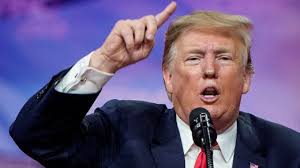
Donald Trump
- Launching an unprovoked attack on Iran on February 28, believing that in six weeks he can force its Islamic rulers to abandon their plans to develop nuclear weapons.
- Iran immediately closes the Strait of Hormuz—through which about 20 million barrels of oil used to pass each day. That flow has been reduced to between two million and six million barrels each day.
- This has created a worldwide spiral in oil prices—and fueled inflation in the United States and other nations. But as prices for housing, energy and food soar in the United States, Trump claims that “affordability” is a “Democratic hoax.”
- Like Adolf Hitler contemplating architectural models while Nazi Germany neared destruction, Trump focuses on vanity projects like a 90,000 square foot White House ballroom and a towering “Victory Arch” overlooking Arlington Cemetery.
- Seven months later—by September—the war continues and Iran still controls the Strait of Hormuz. Trump’s on-again, off-again bombing campaign has dangerously strained and depleted American military stockpiles.
Reading Weimar: Life on the Edge of Catastrophe, by Katja Hoyer, catapults the reader into the doomed Weimar Republic, which lasted from November 9, 1919, to March 23,1933.
Its parallels—whether intentional or unintentional, between that era and the one the United States is now living through—are uncanny and frightening.
During its 14-year existence, the Republic granted Germans rights they had never enjoyed—and which would be ruthlessly suppressed during the 12-year Third Reich that replaced it.
Among those rights:
- Freedom of speech
- Freedom of assembly
- Privacy of mail, telegraph, and telephone
- Free and secret elections
- All citizens were eligible for public office
But the Republic had dangerous enemies—Communists on the Left, and Nazis on the Right. And it was plagued by charges of illegitimacy and even treason—for its members’ having signed the Treaty of Versailles ending World War 1.
Another motivating factor: Right-wing antisemitism, shared by millions of Germans. The fact that the Republic held many Jews within its topmost ranks only increased the hatred aimed at it.
Germans refused to admit they had lost World War 1 on the battlefield. They demanded scapegoats—Jews, Communists, traitors—who had “stabbed us in the back.”
Adolf Hitler joined the National Socialist German Workers (Nazi) Party in 1919—the year after World War 1 ended.
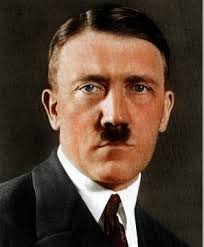

Adolf Hitler
In 1923, he staged a coup attempt in Bavaria—which was quickly and brutally put down by police. He was arrested and sentenced to less than a year in prison.
After that, Hitler decided that winning power through violence was no longer an option. He must win it through election—or appointment.
He repeatedly ran for the highest office in Germany—President—but never got a clear majority in a free election.
When the 1929 Depression struck Germany, the fortunes of Hitler’s Nazi party rose as the life savings of ordinary Germans fell. Streets echoed with bloody clashes between members of Hitler’s Nazi Stormtroopers and those of the German Communist Party.
Germany seemed on the verge of collapsing.
Germans desperately looked for a leader—a Fuhrer—who could somehow deliver them from the threat of financial ruin and Communist takeover.
In early 1933, members of his own cabinet persuaded aging German president, Paul von Hindenburg, that only Hitler’s appointment as Chancellor could do this.
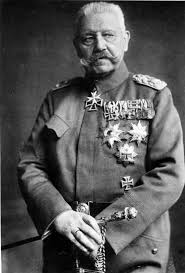
Paul von Hindenburg
Hindenburg considered Hitler a dangerous radical. But he allowed himself to be convinced that, by putting Hitler in the Cabinet, he could be “boxed in” and thus controlled.
So, on January 30, 1933, he reluctantly appointed Adolf Hitler Chancellor—the equivalent of Attorney General.
On August 2, 1934, Hindenburg died, and Hitler immediately assumed the titles—and duties—of the offices of Chancellor and President.
His rise to total power was now complete.
Eighty-four years after Adolf Hitler became Chancellor of Germany, Donald Trump became President of the United States.
The parallels between these two administrations have since become alarmingly clear.


2020 PRESIDENTIAL ELECTION, ADOLF HITLER, AFFORDABLE CARE ACT (ACA), ALTERNET, AMERICABLOG, AP, ARLINGTON CEMETERY, AUSTRIA, BABY BOOMER RESISTANCE, BARCK OBAMA, BBC, BENJAMIN NETANYAHU, BIRTHRIGHT CITIZENSHIP, BLOOMBERG, BLUESKY, BRENDEN CARR, BUCHENWALD, BUREAU OF LABOR STATISTICS, BUZZFEED, CANADA, CBS NEWS, CHARLIE KIRK, CHRIS KREBS, CLIMATE CHANGE, CNN, CONSUMER FINANCIAL PROTECTION BUREAU, CROOKS AND LIARS, CZECHOSLOVAKIA, DAILY KOS, DEATH’S HEAD REVISITEDD (TV SHOW), DENMARK, DIVERSITY EQUITY AND INCLUSION (DEI), DONALD TRUMP, ENGLAND, FBI, FEDERAL AVIATION ADMINISTRATION (FAA), FIVETHIRTYEIGHT, FRANCE, GAZA, GOVERNMENT SHUTDOWN, GREAT DEPRESSION, GREENLAND, GULF OF AMERICA, GULF OF MEXICO, HARPER’S MAGAZINE, HARVARD UNIVERSITY, HERITIAGE FOUNDATION, HILLARY CLINTON, HUFFINGTON POST, illegal immigration, IMMIGRATION AND CUSTOMS ENFORCEMENT (ICE), IRAN, ISRAEL, J.D. VANCE, JAMES COMEY, JANUARY 6 COUP ATTEMPT, JEWS, JIMMY KIMMEL, JIMMY KIMMEL LIVE!, JOHN F. KENNEDY CENTER FOR THE PERFORMING ARTS, JOSEPH BIDEN, JOSEPH STALIN, Kamala Harris, KATJA HOYER, LATE NIGHT WITH STEPHEN COLBERT, LETITIA JAMES, LOS ANGELES, MARK MEADOWS, MEDIA MATTERS, MEDICAID, MEDICARE, MINNEAPOLIS, MOTHER JONES, MOVEON, MSNBC, NATIONAL GUARD, NAZI GERMANY, NAZI PARTY, NBC NEWS, NEWSDAY, NEWSWEEK, NORTH ATLANTIC TREATY ORGANIZATION (NATO), NPR, Oil, PAUL VON HINDENBURG, PBS NEWSHOUR, POLITICO, POLITICUSUSA, PROJECT 2025, RAW STORY, REUTERS, ROD SERLING, RUDY GIULIANI, SALON, SEATTLE TIMES, SLATE, SOVIET UNION, STEPHEN COLBERT, STRAIT OF HORMUZ, SUPPLEMENTAL NUTRITION ASSISTANCE PROGRAM (SNAP), TALKING POINTS MEMO, TARIFFS, THE ATLANTIC, THE CHICAGO SUN-TIMES, THE CHICAGO TRIBUNE, THE DAILY BEAST, THE DAILY BLOG, THE GUARDIAN, THE HILL, THE HOLOCAUST, THE HUFFINGTON POST, THE INTERCEPT, THE LOS ANGELES TIMES, THE NATION, THE NEW REPUBLIC, THE NEW YORK TIMES, THE NEW YORKER, THE SS, THE VILLAGE VOICE, THE WASHINGTON POST, THINKPROGRESS, THIRD REICH, TIME, TREATY OF VERSAILLES, TRUTHDIG, TRUTHOUT, TWILIGHT ZONE (SERIES), TWO POLITICAL JUNKIES, U.S. NEWS & WORLD REPORT, UNITED STATES CONSTITUTION, UNITED STATES DEPARTMENT OF JUSTICE, UPI, USA TODAY, WASHIINGTON D.C., WEIMAR, WEIMAR REPUBLIC, WEIMAR: LIFE ON THE EDGE OF CATASTROPHE (BOOK), WHITE HOUSE BALLROOM, WHITE SUPREMACISTS, WORLD HEALTH ORGANIZATION (WHO), X
NAZI PAST IS AMERICA’S PRESENT: PART TWO (OF FIVE)
In Bureaucracy, Business, History, Law, Law Enforcement, Medical, Military, Politics, Social commentary on September 29, 2026 at 12:13 amIf Nuremberg-style justice comes to the United States, those citizens who have lustily supported Donald Trump’s legacy of hatred, tyranny and corruption will be forced to answer for the horrors their support enabled Trump to commit.
Among these:
Donald Trump
Reading Weimar: Life on the Edge of Catastrophe, by Katja Hoyer, catapults the reader into the doomed Weimar Republic, which lasted from November 9, 1919, to March 23,1933.
Its parallels—whether intentional or unintentional, between that era and the one the United States is now living through—are uncanny and frightening.
During its 14-year existence, the Republic granted Germans rights they had never enjoyed—and which would be ruthlessly suppressed during the 12-year Third Reich that replaced it.
Among those rights:
But the Republic had dangerous enemies—Communists on the Left, and Nazis on the Right. And it was plagued by charges of illegitimacy and even treason—for its members’ having signed the Treaty of Versailles ending World War 1.
Another motivating factor: Right-wing antisemitism, shared by millions of Germans. The fact that the Republic held many Jews within its topmost ranks only increased the hatred aimed at it.
Germans refused to admit they had lost World War 1 on the battlefield. They demanded scapegoats—Jews, Communists, traitors—who had “stabbed us in the back.”
Adolf Hitler joined the National Socialist German Workers (Nazi) Party in 1919—the year after World War 1 ended.
Adolf Hitler
In 1923, he staged a coup attempt in Bavaria—which was quickly and brutally put down by police. He was arrested and sentenced to less than a year in prison.
After that, Hitler decided that winning power through violence was no longer an option. He must win it through election—or appointment.
He repeatedly ran for the highest office in Germany—President—but never got a clear majority in a free election.
When the 1929 Depression struck Germany, the fortunes of Hitler’s Nazi party rose as the life savings of ordinary Germans fell. Streets echoed with bloody clashes between members of Hitler’s Nazi Stormtroopers and those of the German Communist Party.
Germany seemed on the verge of collapsing.
Germans desperately looked for a leader—a Fuhrer—who could somehow deliver them from the threat of financial ruin and Communist takeover.
In early 1933, members of his own cabinet persuaded aging German president, Paul von Hindenburg, that only Hitler’s appointment as Chancellor could do this.
Paul von Hindenburg
Hindenburg considered Hitler a dangerous radical. But he allowed himself to be convinced that, by putting Hitler in the Cabinet, he could be “boxed in” and thus controlled.
So, on January 30, 1933, he reluctantly appointed Adolf Hitler Chancellor—the equivalent of Attorney General.
On August 2, 1934, Hindenburg died, and Hitler immediately assumed the titles—and duties—of the offices of Chancellor and President.
His rise to total power was now complete.
Eighty-four years after Adolf Hitler became Chancellor of Germany, Donald Trump became President of the United States.
The parallels between these two administrations have since become alarmingly clear.
Share this:
Related