Threats of violence have become common among Republicans since 2015, when Donald Trump first ran for President.
On March 16, 2016, Trump warned Republicans that if he didn’t win the GOP nomination in July, his supporters would literally riot: “I think you’d have riots. I think you would see problems like you’ve never seen before. I think bad things would happen. I really do. I wouldn’t lead it, but I think bad things would happen.”
Almost five years later, on January 6, 2021, then-President Trump incited a deadly riot against the United States Capitol to stop Congress from certifying the electoral victory of Joe Biden in the 2020 presidential election.
Upon taking office again as President on January 20, 2025, Trump issued a blanket pardon to about 1,500 of his supporters who carried out the attack. This sent a clear message to his future opponents: “I will similarly pardon anyone who assaults you.”
In 2025, a re-elected Trump launched a sweeping deportation effort. Agents of Immigration and Customs Enforcement [ICE] have brutalized migrants and American citizens.
In Minneapolis and Saint Paul, Minnesota, for example, protesters blow whistles, yell or honk horns. Immigration officers break vehicle windows, use pepper spray on protesters and warn observers not to follow them through public spaces. Immigrants and citizens alike are forcibly pulled from cars, stores or homes and detained for hours, days or longer.
On January 7, 2026, an ICE agent shot 37-year-old Renee Nicole Good, a writer and poet, as she legally observed federal agents arresting suspected illegal aliens.
The Third Reich similarly relied on violence—or the threat of it—to preserve its dictatorial control over Germany.
A key representative of that violence was Reinhard Tristan Eugen Heydrich.
A tall, blond-haired former naval officer, Heydrich was both a champion fencer and talented violinist. Heydrich joined the Schutzstaffel, or Protective Squads, better known as the SS, in 1931, and quickly became head of its counterintelligence service.
In 1934, he oversaw the “Night of the Long Knives” purge of Adolf Hitler’s brown-shirted S.A., or Stormtroopers.
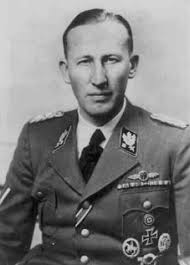
Reinhard Heycrich
In September, 1941, Heydrich was appointed “Reich Protector” of Czechoslovakia, which had fallen prey to Germany in 1938 but whose citizens were growing restless under Nazi rule.
Heydrich immediately ordered a purge, executing 92 people within the first three days of his arrival in Prague. By February, 1942, 4,000-5,000 people had been arrested.
In January, 1942, Heydrich convened a meeting of high-ranking political and military leaders in Wannsee, Germany, to streamline “the Final Solution to the Jewish Question.”
An estimated six million Jews were thus slaughtered.
Returning to Prague, Heydrich continued his policy of carrot-and-stick with the Czechs—improving the social security system and requisitioning luxury hotels for middle-class workers, alternating with arrests and executions.
Two British-trained Czech commandos—Jan Kubis and Joseph Gabcik—parachuted into Prague.
On May 27, 1942, they waited at a hairpin turn in the road always taken by Heydrich. When Heydrich’s Mercedes slowed down, Gabcik raised his machinegun—which jammed.
Rising in his seat, Heydrich aimed his revolver at Gabcik—as Kubis lobbed a hand grenade at the car. The explosion drove steel and leather fragments of the car’s upholstery into Heydrich’s diaphragm, spleen and lung.

Scene of Reinhard Heydrich’s assassination
Hitler dispatched doctors from Berlin to save the Reich Protector. But infection set in, and on June 4, Heydrich died at age 38.
The assassination sent shockwaves through the upper echelons of the Third Reich. No one had dared assault—much less assassinate—a high-ranking Nazi official.
Nazis had slaughtered tens of thousands without hesitation. Suddenly they realized that the fury they had aroused could be turned against themselves.
Which brings us to the leaders of America’s own Right-wing.
The names of infamous Nazis were widely known:
- Fuhrer Adolf Hitler
- Reichsmarshall Hermann Goering
- Propaganda Minister Paul Joseph Goebbels
- Deputy Fuhrer Rudolf Hess
- Propaganda Film Director Leni Riefenstahl
- SS-Reichsfuhrer Heinrich Himmler
- “Hanging Judge” Roland Freisler
- Foreign Minister Joachim von Ribbentrop
- SS Obergruppenfuhrer Reinhard Heydrich
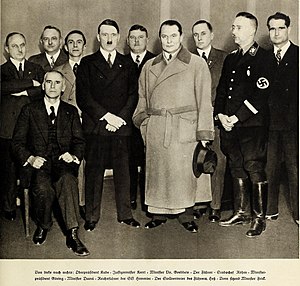
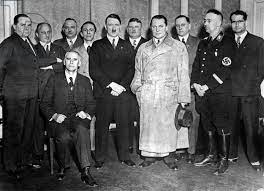
Members of the Nazi government
And so are the names of the infamous leaders of the American Right:
- President Donald Trump
- House Majority Leader Mike Johnson
- White House Deputy Chief of Staff for Policy Stephen Miller
- Texas Senator Ted Cruz
- Supreme Court Justice Clarence Thomas
- Attorney General Pam Bondi
- Secretary of State Marco Rubio
- Department of Homeland Security Secretary Kristi Noem
- U.S. Border Patrol commander Gregory Bovino
The difference between these two infamous groups is this:
In Nazi Germany, ordinary Germans could not learn about the personal lives of their dictators—including their home addresses—and to conspire against them.
In the United States, ordinary citizens have an array of means to do this. They can turn to newspapers, TV and magazines. And if that isn’t enough, “people finder” websites, for a modest price, provide addresses and names of relatives of potential targets.
In Nazi Germany, firearms were tightly controlled.
In the United States, the Right’s National Rifle Association has successfully lobbied to put lethal firepower into the hands of virtually anyone who wants it.
Almost 84 years ago, Reinhard Heydrich believed himself invulnerable from the hatred of the enemies he had made. That arrogance cost him his life.
The day may soon come when America’s own Right-wingers start learning that same lesson.
 Bureaucracybuster's Blog
ABC NEWS, ADOLF HITLER, ALTERNET, AMERICABLOG, AP, ASSASSINATION, BABY BOOMER RESISTANCE, BBC, BLOOMBERG NEWS, BRETT KAVANAUGH, BUZZFEED, CBS NEWS, CLARENCE THOMAS, CNN, CROOKS AND LIARS, CZECHOSLOVAKIA, DAILY KOS, DONALD TRUMP, DRUDGE REPORT, FINAL SOLUTION, FIVETHIRTYEIGHT, GREGORY BOVINO, HARPER’S MAGAZINE, HEINRICH HIMMLER, HERMANN GOERING, HUFFINGTON POST, IMMIGRATION AND CUSTOMS ENFORCEMENT (ICE), JANUARY 6 INSURRECTION, JOE BIDEN, KRISTI NOEM, MARCO RUBIO, MEDIA MATTERS, MEDICAID, MOTHER JONES, MOVEON, MSNBC, NATIONAL RIFLE ASSOCIATION, NAZI GERMANY, NBC NEWS, NEW REPUBLIC, NEWSDAY, NEWSWEEK, NPR, PAM BONDI, PBS NEWSHOUR, POLITICO, POLITICUSUSA, RAW STORY, REINHARD HEYDRICH, RENEE GOOD, REUTERS, ROLAND FREISLER, RUDOLF HESS, SALON, SEATTLE TIMES, SLATE, SS, STEPHEN MILLER, TALKING POINTS MEMO, TED CRUZ, THE ATLANTIC, THE CHICAGO SUN-TIMES, THE CHICAGO TRIBUNE, THE DAILY BEAST, THE DAILY BLOG, THE GUARDIAN, THE HILL, THE HUFFINGTON POST, THE LOS ANGELES TIMES, THE NATION, THE NEW REPUBLIC, THE NEW YORK TIMES, THE NEW YORKER, THE SUPREME COURT, THE VILLAGE VOICE, THE WASHINGTON POST, THINKPROGRESS, TIME, TRUTHDIG, TRUTHOUT, TWO POLITICAL JUNKIES, U.S. NEWS & WORLD REPORT, UPI, USA TODAY, WANNSEE CONFERENCE, X
REINHARD HEYDRICH HAS A WARNINIG FOR REPUBLICANS
In Bureaucracy, Entertainment, History, Politics, Social commentary on January 21, 2026 at 12:13 amThreats of violence have become common among Republicans since 2015, when Donald Trump first ran for President.
On March 16, 2016, Trump warned Republicans that if he didn’t win the GOP nomination in July, his supporters would literally riot: “I think you’d have riots. I think you would see problems like you’ve never seen before. I think bad things would happen. I really do. I wouldn’t lead it, but I think bad things would happen.”
Almost five years later, on January 6, 2021, then-President Trump incited a deadly riot against the United States Capitol to stop Congress from certifying the electoral victory of Joe Biden in the 2020 presidential election.
Upon taking office again as President on January 20, 2025, Trump issued a blanket pardon to about 1,500 of his supporters who carried out the attack. This sent a clear message to his future opponents: “I will similarly pardon anyone who assaults you.”
In 2025, a re-elected Trump launched a sweeping deportation effort. Agents of Immigration and Customs Enforcement [ICE] have brutalized migrants and American citizens.
In Minneapolis and Saint Paul, Minnesota, for example, protesters blow whistles, yell or honk horns. Immigration officers break vehicle windows, use pepper spray on protesters and warn observers not to follow them through public spaces. Immigrants and citizens alike are forcibly pulled from cars, stores or homes and detained for hours, days or longer.
On January 7, 2026, an ICE agent shot 37-year-old Renee Nicole Good, a writer and poet, as she legally observed federal agents arresting suspected illegal aliens.
The Third Reich similarly relied on violence—or the threat of it—to preserve its dictatorial control over Germany.
A key representative of that violence was Reinhard Tristan Eugen Heydrich.
A tall, blond-haired former naval officer, Heydrich was both a champion fencer and talented violinist. Heydrich joined the Schutzstaffel, or Protective Squads, better known as the SS, in 1931, and quickly became head of its counterintelligence service.
In 1934, he oversaw the “Night of the Long Knives” purge of Adolf Hitler’s brown-shirted S.A., or Stormtroopers.
Reinhard Heycrich
In September, 1941, Heydrich was appointed “Reich Protector” of Czechoslovakia, which had fallen prey to Germany in 1938 but whose citizens were growing restless under Nazi rule.
Heydrich immediately ordered a purge, executing 92 people within the first three days of his arrival in Prague. By February, 1942, 4,000-5,000 people had been arrested.
In January, 1942, Heydrich convened a meeting of high-ranking political and military leaders in Wannsee, Germany, to streamline “the Final Solution to the Jewish Question.”
An estimated six million Jews were thus slaughtered.
Returning to Prague, Heydrich continued his policy of carrot-and-stick with the Czechs—improving the social security system and requisitioning luxury hotels for middle-class workers, alternating with arrests and executions.
Two British-trained Czech commandos—Jan Kubis and Joseph Gabcik—parachuted into Prague.
On May 27, 1942, they waited at a hairpin turn in the road always taken by Heydrich. When Heydrich’s Mercedes slowed down, Gabcik raised his machinegun—which jammed.
Rising in his seat, Heydrich aimed his revolver at Gabcik—as Kubis lobbed a hand grenade at the car. The explosion drove steel and leather fragments of the car’s upholstery into Heydrich’s diaphragm, spleen and lung.
Scene of Reinhard Heydrich’s assassination
Hitler dispatched doctors from Berlin to save the Reich Protector. But infection set in, and on June 4, Heydrich died at age 38.
The assassination sent shockwaves through the upper echelons of the Third Reich. No one had dared assault—much less assassinate—a high-ranking Nazi official.
Nazis had slaughtered tens of thousands without hesitation. Suddenly they realized that the fury they had aroused could be turned against themselves.
Which brings us to the leaders of America’s own Right-wing.
The names of infamous Nazis were widely known:
Members of the Nazi government
And so are the names of the infamous leaders of the American Right:
The difference between these two infamous groups is this:
In Nazi Germany, ordinary Germans could not learn about the personal lives of their dictators—including their home addresses—and to conspire against them.
In the United States, ordinary citizens have an array of means to do this. They can turn to newspapers, TV and magazines. And if that isn’t enough, “people finder” websites, for a modest price, provide addresses and names of relatives of potential targets.
In Nazi Germany, firearms were tightly controlled.
In the United States, the Right’s National Rifle Association has successfully lobbied to put lethal firepower into the hands of virtually anyone who wants it.
Almost 84 years ago, Reinhard Heydrich believed himself invulnerable from the hatred of the enemies he had made. That arrogance cost him his life.
The day may soon come when America’s own Right-wingers start learning that same lesson.
Share this: