Posts Tagged ‘WIRETAPPING’
ABC NEWS, ALTERNET, ARNOLD SCHWARXENEGGER, BARACK OBAMA, BREITBART NEWS, BUZZFEED, CBS NEWS, CIA, CNN, DAILY KOS, DONALD TRUMP, FACEBOOK, FBI, FLETCHER KNEBEL, HILLARY LINTON, JEFF SESSIONS, JOHN OLIVER, JOSH EARNEST, MARK LEVIN, MENTAL ILLNESS, MERYL STREETP, MOTHER JONES, MOVEON, NATIONAL SECURITY AGENCY, NBC NEWS, NEIL YOUNG, NEW JERSEY, NEWSWEEK, NIGHT AT CAMP DAVID, NPR, OBAMACARE, POLITICO, RAW STORY, RUSSIA, SALON, SEVEN DAYS IN MAY, SLATE, THE CHICAGO SUN-TIMES, THE CHICAGO TRIBUNE, THE DAILY BEAST, THE HUFFINGTON POST, THE LOS ANGELES TIMES, THE NEW YORK TIMES, THE WALL STREET JOURNAL, THE WASHINGTON POST, THIS WEEK, TIME, TWITTER, U.S. NEWS & WORLD REPORT, USA TODAY, WATERGATE, WIRETAPPING
In Bureaucracy, History, Medical, Politics, Social commentary on March 20, 2017 at 12:53 am
On March 4, in a series of unhinged tweets, President Donald J. Trump accused former President Barack Obama of tapping his Trump Tower phones prior to the election:
“Terrible! Just found out that Obama had my ‘wires tapped’ in Trump Tower just before the victory. Nothing found. This is McCarthyism!”
“Is it legal for a sitting President to be ‘wire tapping’ a race for president prior to an election? Turned down by court earlier. A NEW LOW!”
“I’d bet a good lawyer could make a great case out of the fact that President Obama was tapping my phones in October, just prior to Election!”
“How low has President Obama gone to tapp my phones during the very sacred election process. This is Nixon/Watergate. Bad (or sick) guy!”
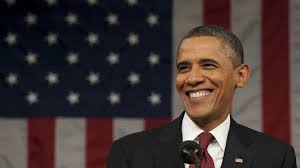
President Barack Obama
Trump offered no proof to substantiate his libelous claims.
There are three plausible theories about what prompted Trump’s accusations.
Theory #1: They were prompted by Right-wing media outlets that had been pushing wiretapping claims in recent days.
On March 2, Right-wing radio host Mark Levin claimed that Obama had used “powers of the federal government to surveil members of the Trump campaign.”
Referring to Attorney General Jeff Sessions and his newly disclosed meetings with Russia’s ambassador in 2016, Levin asked: “Today’s reporting on Sessions having a chance meeting with the ambassador–where did that information come from? Look at the timing of it. Was Obama surveilling top Trump campaign officials during the election?”
On March 3, the Fascist media site Breitbart News echoed that charge. Its story was based on Levin’s show and offered no evidence to back up its accusations.
Trump could have first contacted the directors of the FBI, CIA and National Security Agency–the agencies which are authorized to conduct such an operation. He could have asked them, “Did you wiretap me?”
They could have quickly and confidentially given him an answer. And if it was “Yes,” they would have been able to provide him with the records to document it.
That would have been the action of a rational President. But Trump chose to act like a child–or, worse, an unbalanced adult.
After reading the Breitbart story, Trump impulsively chose to go on Twitter and make libelous accusations.
Theory #2: Trump, under scrutiny for ties between his campaign and Russia, sought to deflect attention by making an outrageous accusation.
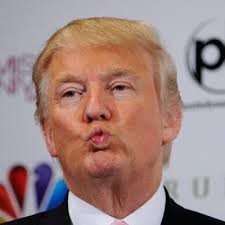
Donald Trump
Former White House Press Secretary Josh Earnest has his own take on Trump’s motivation. Appearing on the March 5 edition of ABC’s “This Week”, he said: “We know exactly why President Trump tweeted what he tweeted.
“Because there is one page in the Trump White House crisis management playbook. And that is simply to tweet or say something outrageous to distract from the scandal, and the bigger the scandal, the more outrageous the tweet.”
Earnest served as White House Press Secretary under President Obama from 2014 to 2017.
He added: Obama could not have legally ordered a wiretap: “The President of the United States does not have the authority to unilaterally order the wiretapping of an American citizen.”
Theory #3: Trump is too mentally unbalanced to hold the Presidency–and command of America’s nuclear arsenal.
Trump’s shoot-first-and-never-mind-the-consequences approach to life has been thoroughly documented.
From June 15, 2015, when he launched his Presidential campaign, until October 24, 2016, he fired nearly 4,000 angry, insulting tweets at 281 people and institutions. The New York Times needed two full pages of its print edition to showcase them.
Among these targets were:
- His Democratic rival, Hillary Clinton
- His fellow Republican Presidential candidates
- Actress Meryl Streep
- News organizations
- President Barack Obama
- Comedian John Oliver
- Obamacare
- Singer Neil Young
- The state of New Jersey
- Actor Arnold Schwarzenegger.
And during his first two weeks as President, Trump attacked 22 people, places and things on his @realDonaldTrump account.
Trump’s vindictiveness, his narcissism, his compulsive aggression, his complaints that his “enemies” in government and the press are trying to destroy him, have caused many to ask: Could the President of the United States be suffering from mental illness?
One who has dared to answer this question is John D. Gartner, a practicing psychotherapist.
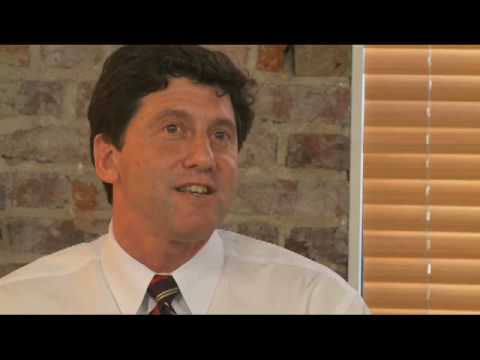
John D. Gartner
Gartner graduated magna cum laude from Princeton University, received his Ph.D in clinical psychology from the University of Massachusetts, and served as a part time assistant professor of psychiatry at Johns Hopkins University Medical School for 28 years.
During an interview by U.S. News & World Report (published on January 27), Gartner said: “Donald Trump is dangerously mentally ill and temperamentally incapable of being president.”
Gartner said that Trump suffers from “malignant narcissism,” whose symptoms include anti-social behavior, sadism, aggressiveness, paranoia and grandiosity.
“We’ve seen enough public behavior by Donald Trump now that we can make this diagnosis indisputably,” says Gartner, who admits he has not personally examined Trump.
In 1965, Fletcher Knebel, the best-selling author of Seven Days in May, raised the then-unthinkable question: “What would happen if the President of the U.S.A. went stark-raving mad?”
He did so in his novel, Night of Camp David.
In 1965, the idea that an American President might become insane was thought so outlandish it could only appear in a novel.
Fifty-two years later, it’s no longer unthinkable. For millions, it’s a terrifying reality.
2016 PRESIDENTIAL CAMPAIGN, ABC NEWS, ALTERNET, BARACK OBAMA, BEN CARSON, BETSY DEVOS, BILL CLINTON, BIRTHERS, BREITBART, BUREAU OF LABOR STATISTICS, BUZZFEED, CBS NEWS, CIA, CNN, CONSERVATIVE POLITICAL ACTION CONFERENCE, DAILY KOS, DIRECTOR OF NATIONAL INTELLIGENCE, DONALD TRUMP, FACEBOOK, GATEWAY PUNDIT, GOLDMAN SACHS, HILLARY CLINTON, INFOWARS, INTELLIGENCE AGENCIES, JOINT CHIEFS OF STAFF, MEDICARE, MIKE PENCE, MOTHER JONES, MOVEON, NAVY SEALS, NBC NEWS, NEWSWEEK, NPR, POLITICO, RAW STORY, REX TILLERSON, ROBERT REICH, SALON, Secret Service, SECRETARY OF EDUCATION, SECRETARY OF STATE, SLATE, STEVE BANNON, TAXES, THE CHICAGO SUN-TIMES, THE CHICAGO TRIBUNE, THE DAILY BEAST, THE HUFFINGTON POST, THE LOS ANGELES TIMES, THE NEW YORK TIMES, THE PRESS, THE WALL STREET JOURNAL, THE WASHINGTON POST, TIME, TWITTER, U.S. NEWS & WORLD REPORT, USA TODAY, WIRETAPPING, YEMEN
In Bureaucracy, History, Military, Politics, Social commentary on March 17, 2017 at 12:16 am
Since taking office as the Nation’s 45th President, Donald Trump has attacked or undermined one public or private institution after another.
Among these:
- The Secret Service: Trump has kept his longtime private security force, and combined its members with those of the elite federal agency. By marginalizing the Secret Service, he has clearly sent the message: You’re not good enough, and I don’t trust you.
- The Bureau of Labor Statistics (BLS): As a Presidential candidate Trump slammed the agency’s employment numbers that showed the economy improving under the Obama administration. His response on March 12, 2016: “The numbers are phony. These are all phony numbers. Numbers given to politicians to look good. These are phony numbers.”
- In February, 2017, the BLS said that American businesses had added 235,000 workers to their payrolls.
- On March 10, a reporter asked Trump’s press secretary, Sean Spicer, whether, given his past statements, Trump thought this jobs report was “accurate.” Spicer replied: “I talked to the president prior to this, and he said to quote him very clearly: ‘They may have been phony in the past, but it’s very real now.’”
- The Environmental Protection Agency (EPA): Trump believes that climate change is a hoax. He didn’t offer any proof for this. Instead, he appointed an EPA director–Scott Pruitt–who claimed that climate change wasn’t caused by human activity.
- Pruitt ordered EPA staffers to remove pages from the agency’s website concerning climate change, threatened to review all of the agency’s data and publications, and cut the budgets of all scientific research in government.
- The Congressional Budget Office (CBO): Fearing the CBO’s verdict on the costs and coverage of his proposed Trumpcare replacement for the Affordable Care Act (ACA), Trump ordered a preemptive strike on the agency’s credibility. Said Sean Spicer to assembled reporters: “If you’re looking at the CBO for accuracy, you’re looking in the wrong place.”
- The director of the CBO is a Republican economist and former George W. Bush administration official who was chosen for his position by the Republican Congress in 2015.
- President Barack Obama: For five years, Trump, more than anyone else, popularized the slander that President Barack Obama was born in Kenya–and was therefore not an American citizen.
- On March 23, 2011, Trump said: “I want him to show his birth certificate. I want him to show his birth certificate. …There’s something on that birth certificate that he doesn’t like.”
- Even after Obama released the long-form version of his birth certificate–on April 27, 2011–Trump tweeted, on August 6, 2012: “An ‘extremely credible source’ has called my office and told me that @BarackObama‘s birth certificate is a fraud.”
- On November 23, 2014, he tweeted this: “@futureicon: @pinksugar61 Obama also fabricated his own birth certificate after being pressured to produce one by @realDonaldTrump“.
- Then, in June, 2015, Trump declared himself a candidate for President. By September, 2016, he found his popularity steadily dropping among black voters. Even the managers of Trump’s campaign urged him to put the “birther” issue behind him.
- On September 16, 2016–10 days before his scheduled first debate with Democratic Presidential nominee Hillary Clinton–Trump made his version of a reversal: “Hillary Clinton and her campaign of 2008 started the birther controversy. “I finished it. I finished it. You know what I mean. President Barack Obama was born in the United States, period.”
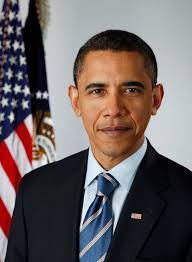
Barack Obama
- On March 4, 2017, in a series of unhinged tweets, Trump accused former President Obama of tapping his Trump Tower phones prior to the election: “Terrible! Just found out that Obama had my ‘wires tapped’ in Trump Tower just before the victory. Nothing found. This is McCarthyism!”
- “Is it legal for a sitting President to be ‘wire tapping’ a race for president prior to an election? Turned down by court earlier. A NEW LOW!”
- “I’d bet a good lawyer could make a great case out of the fact that President Obama was tapping my phones in October, just prior to Election!”
- “How low has President Obama gone to tapp my phones during the very sacred election process. This is Nixon/Watergate. Bad (or sick) guy!”
Thus, without offering a shred of evidence to back it up, Trump accused his predecessor of committing an impeachable offense.
* * * * *
Donald Trump isn’t crazy, as many of his critics charge. He knows what he’s doing. His strategy is two-fold–both immediate and long-term.
In the short-term, he’s attacking anyone who dares to disagree with him. Much of this is driven by his own natural aggression–he can’t tolerate criticism or dissent.
The long-term reason for his assaults on public and private institutions is far more sinister.
He intends to strip every potential challenger to his authority–or his version of reality–of any credibility with the public.
If he succeeds, there will be:
- No independent press to reveal his failures and crimes.
- No independent law enforcement agencies to investigate his abuses of office.
- No independent judiciary to hold him accountable.
- No independent military authorities to dissent as he recklessly hurtles toward potential nuclear showdowns.
- No candidate–Democrat or Republican–to challenge him for re-election in 2010.
- No candidate–Democrat or Republican–to challenge his remaining in office as “President-for-Life.”
2016 PRESIDENTIAL CAMPAIGN, ABC NEWS, ALTERNET, BARACK OBAMA, BEN CARSON, BETSY DEVOS, BILL CLINTON, BIRTHERS, BREITBART, BUZZFEED, CBS NEWS, CIA, CNN, CONSERVATIVE POLITICAL ACTION CONFERENCE, DAILY KOS, DIRECTOR OF NATIONAL INTELLIGENCE, DONALD TRUMP, FACEBOOK, GATEWAY PUNDIT, GOLDMAN SACHS, HILLARY CLINTON, INFOWARS, INTELLIGENCE AGENCIES, JOINT CHIEFS OF STAFF, MEDICARE, MIKE PENCE, MOTHER JONES, MOVEON, NAVY SEALS, NBC NEWS, NEWSWEEK, NPR, POLITICO, RAW STORY, REX TILLERSON, ROBERT REICH, SALON, Secret Service, SECRETARY OF EDUCATION, SECRETARY OF STATE, SLATE, STEVE BANNON, TAXES, THE CHICAGO SUN-TIMES, THE CHICAGO TRIBUNE, THE DAILY BEAST, THE HUFFINGTON POST, THE LOS ANGELES TIMES, THE NEW YORK TIMES, THE PRESS, THE WALL STREET JOURNAL, THE WASHINGTON POST, TIME, TWITTER, U.S. NEWS & WORLD REPORT, USA TODAY, WIRETAPPING, YEMEN
In Bureaucracy, History, Military, Politics, Social commentary on March 16, 2017 at 12:28 am
On February 19, Robert Reich, former Secretary of Labor under President Bill Clinton, posted a scathing–and accurate–attack on Donald Trump.
Writing on his Facebook page, Reich pointed out a series of statements Trump made during the 2016 Presidential campaign–and how each of them has proven to be a lie [italics in blue are added]:

Robert Reich
1. He called Hillary Clinton a crook.
You bought it.
Then he paid $25 million to settle a fraud lawsuit.
2. He said he’d release his tax returns, eventually.
You bought it.
He hasn’t, and says he never will.
3. He said he’d divest himself from his financial empire, to avoid any conflicts of interest.
You bought it.
He is still heavily involved in his businesses, manipulates the stock market on a daily basis, and has more conflicts of interest than can even be counted.
4. He said Clinton was in the pockets of Goldman Sachs, and would do whatever they said.
You bought it.
He then proceeded to put half a dozen Goldman Sachs executives in positions of power in his administration.
5. He said he’d surround himself with all the best and smartest people.
You bought it.
He nominated theocratic loon Mike Pence for Vice President. A white supremacist named Steve Bannon is his most trusted confidant. Dr. Ben Carson, the world’s greatest idiot savant brain surgeon, is in charge of HUD. Russian quisling Rex Tillerson is Secretary of State.
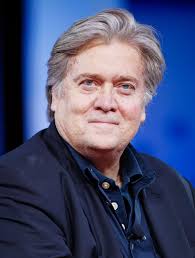
Steve Bannon
6. He said he’d be his own man, beholden to no one.
You bought it.
He then appointed Betsy DeVos as Secretary of Education, whose only “qualifications” were the massive amounts of cash she donated to his campaign.
7. He said he would “drain the swamp” of Washington insiders.
You bought it.
He then admitted that was just a corny slogan he said to fire up the rubes during the rallies, and that he didn’t mean it.
8. He said he knew more about strategy and terrorism than the Generals did.
You bought it.
He promptly gave the green light to a disastrous raid in Yemen- even though all his Generals said it would be a terrible idea. This raid resulted in the deaths of a Navy SEAL, an 8-year old American girl, and numerous civilians. The actual target of the raid escaped, and no useful intel was gained.
9. He said Hillary Clinton couldn’t be counted on in times of crisis.
You bought it.
He didn’t even bother overseeing that raid in Yemen; and instead spent the time hate-tweeting the New York Times, and sleeping.
10. He called CNN, the Washington Post and the New York Times “fake news” and said they were his enemy.
You bought it.
He now gets all his information from Breitbart, Gateway Pundit, and InfoWars.
Donald Trump
11. He called Barack Obama “the vacationer-in-Chief” and accused him of playing more rounds of golf than Tiger Woods. He promised to never be the kind of president who took cushy vacations on the taxpayer’s dime, not when there was so much important work to be done.
You bought it.
He took his first vacation after 11 days in office. On the taxpayer’s dime. And went golfing. And that’s just the first month.
* * * * *
Since taking office as the Nation’s 45th President, Trump has attacked or undermined one public or private institution after another.
Among these:
- American Intelligence and military agencies: A Trump executive order allows the Director of National Intelligence and chairman of the Joint Chiefs of Staff to attend the Principals’ Committee only when it pertains to their “responsibilities and expertise.”
- Senior Adviser and Chief Strategist Steve Bannon–an anti-Semitic white supremacist–will now wield influence over the National Security Council.
- In February, Trump approved and ordered a Special Forces raid in Yemen on an Al Qaeda stronghold. The assault resulted in the death of Navy SEAL Chief Petty Officer William “Ryan” Owens.
- Disavowing any responsibility for the failure, Trump said: ““This was a mission that was started before I got here. This was something they wanted to do. They came to me, they explained what they wanted to do–the generals–who are very respected, my generals are the most respected that we’ve had in many decades, I believe. And they lost Ryan.”
- Medicare: During the 2016 campaign, Trump said he would allow Medicare to negotiate down the price of prescription drugs. At his January 10 press conference he charged that pharmaceutical companies were “getting away with murder.”
- But after meeting with pharmaceutical lobbyists on January 31, Trump said: “I’ll oppose anything that makes it harder for smaller, younger companies to take the risk of bringing their product to a vibrantly competitive market. That includes price-fixing by the biggest dog in the market, Medicare.”
- The press: On February 17, Trump tweeted: “The FAKE NEWS media (failing @nytimes, @NBCNews,@ABC, @CBS, @CNN) is not my enemy, it is the enemy of the American People!”
- And, appearing before the Conservative Political Action Conference on February 24, Trump said: “I want you all to know that we are fighting the fake news. It’s fake, phony, fake….I’m against the people that make up stories and make up sources. They shouldn’t be allowed to use sources unless they use somebody’s name. Let their name be put out there.”
ABC NEWS, BARACK OBAMA, BREITBART NEWS, CBS NEWS, CHRISTOPHER S. MURPHY, CIA, CNN, DEMOCRATIC NATIONAL COMMITTEE, DEMOCRATIC PARTY, DONALD TRUMP, ERIC SCHNEIDERMAN, EXTORTION, FACE THE NATION, FACEBOOK, FERGUS CULLEN, FOX NEWS SUNDAY, GREG ABBOTT, HACKING, HILLARY CLINTON, IRS, JAMES B. COMEY, JAMES R. CLAPPER, JEFF SESSIONS, JEWS, JOHN KASICH, JUSTICE DEPARTMENT, KEN PAXTON, MARK LEVIN, MICHAEL ROGERS, MIKE PENCE, NATIONAL SECURITY AGENCY, NBC NEWS, NEW HAMPSHIRE REPUBLICAN PARTY, NEWSWEEK, NPR, PAM BONDI, PAUL RYAN, PHILIP KLEIN, POLITICO, Racketeer Influenced Corrupt Organizations (RICO) Act, REPUBLICAN NATIONAL COMMITTEE, REPUBLICAN NATIONAL CONVENTION, REPUBLICAN PARTY, ROGER STONE, SALON, SOVIET UNION, THE CHICAGO SUN-TIMES, THE CHICAGO TRIBUNE, THE HUFFINGTON POST, THE LOS ANGELES TIMES, THE NEW YORK TIMES, THE WASHINGTON EXAMINER, THE WASHINGTON POST, THREATS, TIME, TREASON, TRUMP UNIVERSITY, TRUMP-RUSSIA TIES, TWITTER, U.S. NEWS & WORLD REPORT, U.S. SECRET SERVICE, USA PATRIOT ACT, USA TODAY, VLADIMIR PUTIN, WIRETAPPING
In Bureaucracy, History, Law, Law Enforcement, Politics, Social commentary on March 8, 2017 at 12:06 am
President Donald Trump claims that, as a Presidential candidate, he was a victim of illegal wiretapping ordered by President Barack Obama.
In fact, even without wiretaps, there were at least four instances where Federal law enforcement authorities could have utterly changed the outcome of the 2016 election.
Two of these dealt with purely domestic issues–
- The Trump University scandal; and
- Trump’s repeated threats of violence against Republican and Democratic opponents.
The third and fourth ones dealt with issues directly affecting the security of the United States.
It is unprecedented for an American Presidential candidate to repeatedly bestow fulsome praise on the leader of a foreign power hostile to the United States. And to receive equally fawning compliments in return from that leader.
Yet that is precisely what has happened between Donald Trump and Vladimir Putin.
Thus Putin on Trump: “He is a bright personality, a talented person, no doubt about it. It is not up to us to appraise his positive sides, it is up to the U.S. voters. but, as we can see, he is an absolute leader in the presidential race.”
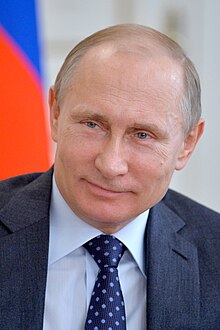
Vladimir Putin
And Trump on Putin: “It is always a great honor to be so nicely complimented by a man so highly respected within his own country and beyond. He’s running his country, and at least he’s a leader. Unlike what we have in this country”–a clear attack on President Barack Obama.
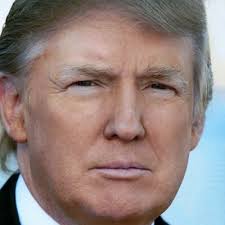
Donald Trump
Case #3: The Justice Department did not invalidate the results of the 2016 election, despite overwhelming evidence that Russia intervened to elect Trump as Vladimir Putin’s chosen candidate.
- Admiral Michael Rogers, director of the National Security Agency (NSA) and US Cyber Command, said in mid-November that Russia made “a conscious effort” to sway the results of the Presidential election by the hacking of 20,000 emails from the Democratic National Committee.
- “There shouldn’t be any doubt in anybody’s mind,” said Rogers. “This was not something that was done casually. This was not something that was done by chance. This was not a target that was selected purely arbitrarily. This was a conscious effort by a nation-state to attempt to achieve a specific effect.”

- The Russians hacked the Democratic committee’s servers–but not those of the Republican National Committee.
- On December 16, FBI Director James B. Comey and Director of National Intelligence James R. Clapper Jr. agreed with a CIA assessment that Russia intervened in the 2016 election in part to help Donald Trump win the White House.

Trump, however, has steadfastly denied any such role by Russia: “I think it’s ridiculous,” he told “Fox News Sunday.” “I think it’s just another excuse. I don’t believe it….No, I don’t believe it at all.”
Case #4: The Justice Department did not prosecute Trump for treason, even though he solicited aid from Russia, a nation hostile to the United States. And no major official of the government–including President Obama–publicly condemned him as a traitor.
At a news conference in Doral, Florida on July 27, Trump publicly invited “Russia”–i.e., Vladimir Putin–to hack Hillary Clinton’s emails: “I will tell you this, Russia: If you’re listening, I hope you’re able to find the 30,000 emails that are missing. I think you will probably be rewarded mightily by our press.”
This was essentially treason–calling on a hostile foreign power to interfere directly in an American Presidential election. And it was seen as such by both Democrats and even Republicans.
- “This has to be the first time that a major presidential candidate has actively encouraged a foreign power to conduct espionage against his political opponent,” Hillary for America policy adviser Jake Sullivan said in a statement. “That’s not hyperbole, those are just the facts. This has gone from being a matter of curiosity, and a matter of politics, to being a national security issue.”
- “I find those kinds of statements to be totally outrageous because you’ve got now a presidential candidate who is, in fact, asking the Russians to engage in American politics,” said former CIA Director Leon Panetta, a Clinton surrogate. “I just think that’s beyond the pale.”
- Brendan Buck, a spokesman for House Speaker Paul Ryan, said: “Russia is a global menace led by a devious thug. Putin should stay out of this election.”
- Even Trump’s Vice Presidential running mate, Mike Pence, said: “If it is Russia and they are interfering in our elections, I can assure you both parties and the United States government will ensure there are serious consequences.”
FBI Director James Comey believed that Hillary Clinton’s emails on a private server were so dangerous to national security that he announced–11 days before the election–that he was re-opening an investigation he had closed.
That announcement erased widespread outrage over Trump’s unintended admissions of predatory behavior toward women–“Grab them by the pussy”–and reversed Clinton’s growing lead in the polls.
Yet the Bureau has not issued any such statements about the continuing reports of close ties between Trump and Putin, and Trump’s possible investments in Russia.
To their shame, the federal agencies charged with safeguarding America failed to take action against these abuses.
And, to their shame, the news media, to date, has failed to indict them for their negligence.
ABC NEWS, BARACK OBAMA, BREITBART NEWS, CBS NEWS, CHRISTOPHER S. MURPHY, CIA, CNN, DEMOCRATIC NATIONAL COMMITTEE, DEMOCRATIC PARTY, DONALD TRUMP, ERIC SCHNEIDERMAN, EXTORTION, FACE THE NATION, FACEBOOK, FERGUS CULLEN, FOX NEWS SUNDAY, GREG ABBOTT, HACKING, HILLARY CLINTON, IRS, JAMES B. COMEY, JAMES R. CLAPPER, JEFF SESSIONS, JOHN KASICH, JUSTICE DEPARTMENT, KEN PAXTON, LEON PANETTA, MARK LEVIN, MICHAEL ROGERS, MIKE PENCE, NATIONAL SECURITY AGENCY, NBC NEWS, NEW HAMPSHIRE REPUBLICAN PARTY, NEWSWEEK, NPR, PAM BONDI, PAUL RYAN, PHILIP KLEIN, POLITICO, Racketeer Influenced Corrupt Organizations (RICO) Act, REPUBLICAN NATIONAL COMMITTEE, REPUBLICAN NATIONAL CONVENTION, REPUBLICAN PARTY, ROGER STONE, SALON, SOVIET UNION, THE CHICAGO SUN-TIMES, THE CHICAGO TRIBUNE, THE HUFFINGTON POST, THE LOS ANGELES TIMES, THE NEW YORK TIMES, THE WASHINGTON EXAMINER, THE WASHINGTON POST, THREATS, TIME, TREASON, TRUMP UNIVERSITY, TRUMP-RUSSIA TIES, TWITTER, U.S. NEWS & WORLD REPORT, U.S. SECRET SERVICE, USA PATRIOT ACT, USA TODAY, VLADIMIR PUTIN, WEIMAR REPUBLIC, WIRETAPPING
In Bureaucracy, History, Law, Law Enforcement, Politics, Social commentary on March 7, 2017 at 12:35 am
Even without wiretaps, there were at least four instances when Federal law enforcement authorities could have disqualified Donald Trump as a Presidential candidate–or secured his indictment.
Threatening your political opponents with violence is a crime under Federal law. Yet such threats against his Republican and Democratic opponents played a major role in Trump’s Presidential campaign.
- Philip Klein, the managing editor of the Washington Examiner, wrote on the eve of the Republican National Convention in July: “Political commentators now routinely talk about the riots that would break out in Cleveland if Trump were denied the nomination, about how his supporters have guns and all hell could break loose, that they would burn everything to the ground. It works to Trump’s advantage to not try too hard to dispel these notions.”
- On August 9, 2016, Trump told a rally in Wilmington, North Carolina: “Hillary [Clinton] wants to abolish, essentially abolish, the Second Amendment. If she gets to pick her [Supreme Court] judges, nothing you can do folks. Although the Second Amendment people, maybe there is, I don’t know.”
- Reacting to Trump’s “dog-whistle” threat against Clinton, Michael Hayden, former head of the CIA and National Security Agency (NSA) said: “Well, let me say if someone else said that outside of the hall, he’d be in the back of a police wagon now, with the Secret Service questioning him.”
Making threats against anyone under protection by the U.S. Secret Service is a felony. Yet Donald Trump was never held legally accountable by the Justice Department.
Threats of violence continued to be made by Trump supporters right up to the day of the election.
- On July 29, 2016, Roger Stone, a notorious Right-wing political consultant acting as a Trump strategist, told Breitbart News: “The first thing Trump needs to do is begin talking about [voter fraud] constantly. If there’s voter fraud, this election will be illegitimate, the election of the winner will be illegitimate, we will have a constitutional crisis, widespread civil disobedience, and the government will no longer be the government.”
- At a town hall meeting where Trump’s Vice Presidential nominee Mike Pence appeared, a woman named Rhonda said: “For me personally, if Hillary Clinton gets in, I myself am ready for a revolution.”
- In Cincinnati, a Trump supporter threatened to forcibly remove Hillary Clinton, the Democratic nominee, from the White House if she won the race: “If she’s in office, I hope we can start a coup. She should be in prison or shot. That’s how I feel about it,” said Dan Bowman, a 50-year-old contractor. “We’re going to have a revolution and take them out of office if that’s what it takes. There’s going to be a lot of bloodshed. But that’s what it’s going to take….”
Even Fergus Cullen, former chairman of the New Hampshire GOP, expressed fear of what might happen if Trump lost the election:

Fergus Cullen
“That’s really scary,” Cullen said, recounting the violence at Trump rallies around the country leading up to the Republican National Convention. “In this country, we’ve always had recriminations after one side loses. But we haven’t had riots. We haven’t had mobs that act out with violence against supporters of the other side.
“There’s no telling what his supporters would be willing to do at the slightest encouragement from their candidate,” he said.
Trump even began encouraging his mostly white supporters to sign up online to be “election observers” to stop “Crooked Hillary from rigging this election.” He urged them to act as poll watchers in “other” [non-white] communities to ensure that things are “on the up and up.”
Many of his supporters promised to do so.
“Trump said to watch your precincts. I’m going to go, for sure,” said Steve Webb, a 61-year-old carpenter from Fairfield, Ohio.
“I’ll look for…well, it’s called racial profiling. Mexicans. Syrians. People who can’t speak American,” he said. “I’m going to go right up behind them. I’ll do everything legally. I want to see if they are accountable. I’m not going to do anything illegal. I’m going to make them a little bit nervous.”
Knowing that large numbers of angry–and possibly armed–Right-wingers planned to descend on polling places could only have had a chilling effect on untold numbers of Democratic voters. And this would have been especially true in heavily conservative states.
Both the USA Patriot Act and the Racketeer Influenced Corrupt Organizations (RICO) Act have statutes dealing with making terrorist threats against government institutions to influence their members.
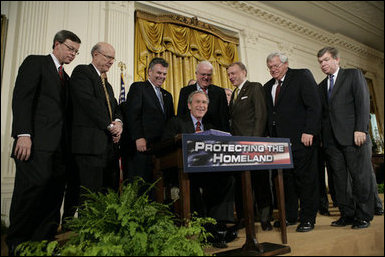
President George W. Bush signing the USA Patriot Reauthorization Act of 2005
If Trump’s remarks did not violate one or both of those laws, certainly remarks made by his surrogates did.
Thus, the Justice Department could have cited the Patriot Act in indicting Trump and/or any number of his followers for “activities that…appear to be intended…to influence the policy of a government by intimidation or coercion [and]…occur primarily within the territorial jurisdiction of the United States.”
The Justice Department could have also demanded that the results of the election be invalidated on the basis that widespread voter and candidate intimidation played a massive role in it.
But of course this did not happen.
ABC NEWS, BARACK OBAMA, BREITBART NEWS, CBS NEWS, CHRISTOPHER S. MURPHY, CIA, CNN, DEMOCRATIC NATIONAL COMMITTEE, DEMOCRATIC PARTY, DONALD TRUMP, ERIC SCHNEIDERMAN, EXTORTION, FACE THE NATION, FACEBOOK, FERGUS CULLEN, FOX NEWS SUNDAY, GREG ABBOTT, HACKING, HILLARY CLINTON, IRS, JAMES B. COMEY, JAMES R. CLAPPER, JEFF SESSIONS, JOHN KASICH, JUSTICE DEPARTMENT, KEN PAXTON, LEON PANETTA, MARK LEVIN, MICHAEL ROGERS, MIKE PENCE, NATIONAL SECURITY AGENCY, NBC NEWS, NEW HAMPSHIRE REPUBLICAN PARTY, NEWSWEEK, NPR, PAM BONDI, PAUL RYAN, PHILIP KLEIN, POLITICO, Racketeer Influenced Corrupt Organizations (RICO) Act, REPUBLICAN NATIONAL COMMITTEE, REPUBLICAN NATIONAL CONVENTION, REPUBLICAN PARTY, ROGER STONE, SALON, SOVIET UNION, THE CHICAGO SUN-TIMES, THE CHICAGO TRIBUNE, THE HUFFINGTON POST, THE LOS ANGELES TIMES, THE NEW YORK TIMES, THE WASHINGTON EXAMINER, THE WASHINGTON POST, THREATS, TIME, TREASON, TRUMP UNIVERSITY, TRUMP-RUSSIA TIES, TWITTER, U.S. NEWS & WORLD REPORT, U.S. SECRET SERVICE, USA PATRIOT ACT, USA TODAY, VLADIMIR PUTIN, WIRETAPPING
In Bureaucracy, History, Law, Law Enforcement, Politics, Social commentary on March 6, 2017 at 12:56 am
Future historians–if there are any–may one day write that it’s what didn’t happen that played at least as great a role in electing Donald Trump President as what actually did.
There were at least four instances where intervention by Federal law enforcement authorities could have utterly changed the outcome of the 2016 election.
And Trump’s completely unsupported accusations that he was illegally wiretapped were not one of those instances.
On March 4, in a series of unhinged tweets, Trump accused former President Barack Obama of tapping his Trump Tower phones prior to the election:
“Terrible! Just found out that Obama had my ‘wires tapped’ in Trump Tower just before the victory. Nothing found. This is McCarthyism!”
“Is it legal for a sitting President to be ‘wire tapping’ a race for president prior to an election? Turned down by court earlier. A NEW LOW!”
“I’d bet a good lawyer could make a great case out of the fact that President Obama was tapping my phones in October, just prior to Election!”
“How low has President Obama gone to tapp my phones during the very sacred election process. This is Nixon/Watergate. Bad (or sick) guy!”
There are two theories about what prompted Trump’s accusations.
Theory #1: They were prompted by Right-wing media outlets that had been pushing wiretapping claims in recent days.
On March 2, Right-wing radio host Mark Levin claimed that Obama had used “powers of the federal government to surveil members of the Trump campaign.”
Referring to Attorney General Jeff Sessions and his newly disclosed meetings with Russia’s ambassador last year, Levin asked: “Today’s reporting on Sessions having a chance meeting with the ambassador–where did that information come from? Look at the timing of it. Was Obama surveilling top Trump campaign officials during the election?”
On March 3, the Fascist media site Breitbart News echoed the charge. Its story was based on Levin’s show and offered no evidence to back up its accusations.
Theory #2: Trump, under scrutiny for ties between his campaign and Russia, sought to deflect attention by making an outrageous accusation.
Donald Trump
Even without wiretaps, there were at least four instances where intervention by Federal law enforcement authorities could have disqualified Trump as a Presidential candidate and/or secured his indictment.
Case #1: The Justice Department did not indict Trump and/or the Attorney Generals of Texas and/or Florida for their roles in the Trump University scandal.
- Florida Attorney General Pam Bondi personally solicited a political contribution from Donald Trump around the same time her office deliberated joining an investigation of alleged fraud at Trump University and its affiliates.
- After Bondi dropped the Trump University case against Trump, he wrote her a check $25,000 for her re-election campaign. The money came from the Donald J. Trump Foundation.
- Republican Texas Attorney General Ken Paxton moved to muzzle a former state regulator who says he was ordered in 2010 to drop a fraud investigation into Trump University for political reasons.
- Paxton’s office issued a cease and desist letter to former Deputy Chief of Consumer Protection John Owens after he made public copies of a 14-page internal summary of the state’s case against Donald Trump for scamming millions from students of his now-defunct real estate seminar.
- After the Texas case was dropped, Trump cut a $35,000 check to the gubernatorial campaign of then attorney general and now Texas Governor Greg Abbott.
One attorney general who refused to accept money from Trump was New York’s Eric Schneiderman. His decision to press fraud claims against Trump forced the real estate mogul to settle the case out of court for $25 million.
“Today’s $25 million settlement agreement is a stunning reversal by Donald Trump,” said Schneiderman on November 18, “and a major victory for the over 6,000 victims of his fraudulent university.”
There have been no press reports that the Justice Department investigated these cases to determine if Trump violated the Racketeer Influenced Corrupt Organizations (RICO) Act statutes.

If the Justice Department did not investigate these cases, it should have. And if he did violate the RICO statutes, he should have been indicted, even as a Presidential candidate or President-elect.
Even if an indictment had not produced a conviction, the mere bringing of one would have cast an unprecedented cloud over his candidacy–let alone his being sworn in as President.
Case #2: The Justice Department did not indict Trump for his series of threats that he made–directly and indirectly–against Republicans and Democrats throughout the 2016 campaign.
- On March 16, he warned Republicans that if he didn’t win the GOP nomination in July, his supporters would literally riot: “I think you’d have riots. I think you would see problems like you’ve never seen before. I think bad things would happen. I really do. I wouldn’t lead it, but I think bad things would happen.”
- An NBC reporter summed it up as: “The message to Republicans was clear on [March 16]: ‘Nice convention you got there, shame if something happened to it.’”
- That Republicans clearly saw this as a threat is undeniable. Paul Ryan, their Speaker of the House, said on March 17: “Nobody should say such things in my opinion because to even address or hint to violence is unacceptable.”
ABC NEWS, APALACHIN RAID, BUSINESS, CBS NEWS, CEO, CLYDE TOLSON, CNN, ELECTRONIC SURVEILLANCE, FACEBOOK, FBI, FEDERAL BUREAU OF NARCOTICS, HARRY ANSLINGER, ILLEGAL ALILENS, IMMIGRATION AND CUSTOMS ENFORCEMENT (ICE), IRAN-CONTRA, J. EDGAR HOOVER, MAFIA, MEYER LANSKY, NBC NEWS, OLIVER NORTH, ROBERT F. KENNEDY, Ronald Reagan, THE CHICAGO SUN-TIMES, THE CHICAGO TRIBUNE, THE LOS ANGELES TIMES, THE NEW YORK TIMES, THE WASHINGTON POST, TOP HOODLUM PROGRAM, TWITTER, WAL-MART, WILLIAM E. ROEMER, WIRETAPPING, WIRETAPS
In Bureaucracy, Business, History, Law, Law Enforcement, Politics, Social commentary on April 11, 2016 at 12:04 am
In 1959, J. Edgar Hoover, the legendary director of the FBI, declared war on the Mafia.
He set up a Top Hoodlum Program and encouraged his agents to use wiretapping and electronic surveillance (“bugging”) to make up for lost time and Intelligence.
But Hoover also imposed a series of restrictions that could destroy an agent’s professional and personal life.
William E. Roemer, Jr., assigned to the FBI’s Chicago field office, was one of the first agents to volunteer for such duty.
In his memoirs, Man Against the Mob, published in 1989, Roemer laid out the dangers that went with such work:
- If confronted by police or mobsters, agents were to try to escape without being identified.
- If caught by police, agents were not to identify themselves as FBI employees.
- They were to carry no badges, credentials or guns–or anything else connecting themselves with the FBI.
- If they were arrested by police and the truth emerged about their FBI employment, the Bureau would claim they were “rogue agents” acting on their own.
- Such agents were not to refute the FBI’s portrayal of them as “rogues.”

If he had been arrested by the Chicago Police Department and identified as an FBI agent, Roemer would have:
- Definitely been fired from his position as an FBI agent.
- Almost certainly been convicted for at least breaking and entering.
- Disbarred from the legal profession (Roemer was an attorney).
- Perhaps served a prison sentence.
- Been disgraced as a convicted felon.
- Been unable to serve in his chosen profession of law enforcement.
Given the huge risks involved, many agents, unsurprisingly, wanted nothing to do with “black bag jobs.”

The agents who took them on were so committed to penetrating the Mob that they willingly accepted Hoover’s dictates.
In 1989, Roemer speculated that former Marine Lieutenant Colonel Oliver North had fallen victim to such a “Mission: Impossible” scenario: “The secretary will disavow any knowledge of your actions….”
In 1986, Ronald Reagan’s “arms-for-hostages” deal known as Iran-Contra had been exposed.
To retrieve seven Americans taken hostage in Beirut, Lebanon, Reagan had secretly agreed to sell some of America’s most sophisticated missiles to Iran.
During this operation, several Reagan officials–including North–diverted proceeds from the sale of those missiles to fund Reagan’s illegal war against the Sandinistas in Nicaragua.
In Roemer’s view: North had followed orders from his superiors without question. But when the time came for those superiors to step forward and protect him, they didn’t.
They let him take the fall.
Roemer speculated that North had been led to believe he would be rescued from criminal prosecution. Instead, in 1989, he was convicted for
- accepting an illegal gratuity;
- aiding and abetting in the obstruction of a congressional inquiry; and
- ordering the destruction of documents via his secretary, Fawn Hall.
That is how many employers expect their employees to act: To carry out whatever assignments they are given and take the blame if anything goes wrong.
Take the case of Wal-Mart Stores, Inc., the world’s biggest retailer.
In March, 2005, Wal-Mart escaped criminal charges when it agreed to pay $11 million to end a federal probe into its use of illegal aliens as janitors.
Agents from Immigration and Customs Enforcement (ICE) raided 60 Wal-Mart stores across 21 states in October, 2003. The raids led to the arrest of 245 illegal aliens.

Federal authorities had uncovered the cases of an estimated 345 illegal aliens contracted as janitors at Wal-Mart stores.
Many of the workers worked seven days or nights a week without overtime pay or injury compensation. Those who worked nights were often locked in the store until the morning.
According to Federal officials, court-authorized wiretaps revealed that Wal-Mart executives knew their subcontractors hired illegal aliens.
Once the raids began, Federal agents invaded the company’s headquarters in Bentonville, Ark., seizing boxes of records from the office of a mid-level executive.
Click here: Wal-Mart Settles Illegal Immigrant Case for $11M | Fox News
Of course, Wal-Mart admitted no wrongdoing in the case. Instead, it blamed its subcontractors for hiring illegal aliens and claiming that Wal-Mart hadn’t been aware of this.
Which, of course, is nonsense.
Just as the FBI would have had no compunctions about letting its agents take the fall for following orders right from the pen of J. Edgar Hoover, Wal-Mart meant to sacrifice its subcontractors for doing precisely what the company’s executives wanted them to do.
The only reason Wal-Mart couldn’t make this work: The Feds had, for once, treated corporate executives like Mafia leaders and had tapped their phones.
Click here: Wal-Mart to review workers – Business – EVTNow
Which holds a lesson for how Federal law enforcement agencies should treat future corporate executives when their companies are found violating the law.
Instead of seeing CEOs as “captains of industry,” a far more realistic approach would be giving this term a new meaning: Corrupt Egotistical Oligarchs.
A smart investigator/prosecutor should always remember:
Widespread illegal and corrupt behavior cannot happen among the employees of a major government agency or private corporation unless:
- Those at the top have ordered it and are profiting from it; or
- Those at the top don’t want to know about it and have taken no steps to prevent or punish it.
That’s something to remember the next time a scandal hits a major corporation or government agency.
ABC NEWS, BUGGING, CBS NEWS, CELLPHONE CAMERAS, CNN, CRIME, DRIVER'S LICENSES, ENCRYPTION SYSTEMS, FACEBOOK, FBI, JAMES B. COMEY, NBC NEWS, POLICE BRUTALITY, REAL ID ACT, SURVEILLANCE, TERRORISM, THE CHICAGO SUN-TIMES, THE CHICAGO TRIBUNE, THE LOS ANGELES TIMES, THE NEW YORK TIMES, THE WASHINGTON POST, TWITTER, UPI, USA TODAY, WIRETAPPING
In Bureaucracy, History, Law Enforcement, Social commentary on October 29, 2015 at 12:04 am
Want to report a crime to the FBI? First you’ll have to prove you deserve to even see an FBI agent.
Step 1: Visit a Federal building where the FBI has a field office. To enter, you must show a driver’s license or State ID card.
If your name is on the FBI’s “Ten Most Wanted” list, you won’t show it at all (let alone visit any FBI office).
And if you aren’t a notorious criminal or terrorist, handing over a driver’s license or State ID card with the name “John Smith” isn’t going to tell the security guard anything relevant about you.
It’s simply an invasion of your privacy in the name of security theater.
Step 2: You must remove
- Your belt;
- Your shoes;
- Your watch;
- Your wallet;
- All other objects from your pants pockets;
- Any jacket you’re wearing;
- Any cell phone you’re carrying.
All of these must be placed in one or more large plastic containers, which are run through an x-ray scanner.
Step 3: Assuming you avoid setting off any alarm system, you’re allowed to enter.
Step 4: Take an elevator to the floor where the Bureau has its office and walk into a large room filled with several comfortable chairs that sit close to the floor.
Step 5: Approach a window such as you find in a bank–made of thick, presumably bulletproof glass.
A secretary on the opposite side greets you, and asks why you’ve come.
Step 6: State your reason for wanting to speak with an agent. If the secretary thinks it’s legitimate, she requires you to show her your driver’s license or State ID card.
Step 7: Slide this through a slot in the glass window. Then she makes a xerox of this and hands the card back.
Step 8: Then you must fill out a single-page card, which requires you to provide your:
- Name;
- Address;
- Phone number;
- Social Security Number;
- The reason you want to speak to an agent.
Of course, you can refuse to fill out the card. But then the secretary will refuse to let you meet with an agent.
So the FBI has no qualms about requiring others to give up their privacy. But its director, James B. Comey, believes the public actions of police should be hidden from citizens’ scrutiny.
Addressing a forum at the University of Chicago Law School on October 23, Comey offered a series of possible reasons for the recent surge in crime rates in America.
Click here: FBI — Law Enforcement and the Communities We Serve: Bending the Lines Toward Safety and Justice
“Maybe it’s the return of violent offenders after serving jail terms. Maybe it’s cheap heroin or synthetic drugs. Maybe after we busted up the large gangs, smaller groups are now fighting for turf.
“Maybe it’s a change in the justice system’s approach to bail or charging or sentencing. Maybe something has changed with respect to the availability of guns….”
Then Comey offered what he thought was the real villain behind the rise in crime: Cellphones aimed at police.

FBI Director James B. Comey
“In today’s YouTube world, are officers reluctant to get out of their cars and do the work that controls violent crime? Are officers answering 911 calls but avoiding the informal contact that keeps bad guys from standing around, especially with guns?
“I spoke to officers privately in one big city precinct who described being surrounded by young people with mobile phone cameras held high, taunting them the moment they get out of their cars. They told me, ‘We feel like we’re under siege and we don’t feel much like getting out of our cars.’
“I’ve been told about a senior police leader who urged his force to remember that their political leadership has no tolerance for a viral video.
“So the suggestion, the question that has been asked of me, is whether these kinds of things are changing police behavior all over the country.
“And the answer is, I don’t know. I don’t know whether this explains it entirely, but I do have a strong sense that some part of the explanation is a chill wind blowing through American law enforcement over the last year. And that wind is surely changing behavior.”
The FBI has
- Lobbied Congress for an electronic “key” that would allow it to enter a cyber “back door” to eavesdrop on even those emails protected by encryption systems;
- Monitored electronic bugs and wiretapped phones–as well as social media sites like Facebook and Twitter;
- Treated law-abiding citizens like criminal suspects before they can even seek help from an agent; and
- Repeatedly preached to Americans that if they have nothing to hide, they should have nothing to fear from police surveillance.
But according to the FBI, citizens who aim cameras at cops in public places present a clear and present danger. This holds true even if they don’t interfere with the ability of police to make arrests.
They make heavily armed police feel so threatened that many officers are refusing to carry out their sworn duties.
ABC NEWS, APALACHIN RAID, BUGGING, CBS NEWS, CLYDE TYOLSON, CNN, ELECTRONIC SURVEILLANCE, FACEBOOK, FBI, FEDERAL BUREAU OF NARCOTICS, ILLEGAL ALIENS, IMMIGRATION AND CUSTOMS ENFORCEMENT, IRAN, IRAN-CONTRA, J. EDGAR HOOVER, MAFIA, MEYER LANSKY, NBC NEWS, NICARAGUA, OLIVER NORTH, ORGANIZED CRIME, ROBERT F. KENNEDY, Ronald Reagan, SANDINISTAS, SENATE LABOR RACKETS COMMITTEE, THE LOS ANGELES TIMES, THE NEW YORK TIMES, THE WASHINGTON POST, TOP HOODLUM PROGRAM, TWITTER, WAL-MART, WIRETAPPING
In Bureaucracy, Business, History, Law, Law Enforcement, Politics, Social commentary on April 9, 2014 at 12:01 am
In 1959,, J. Edgar Hoover, the legendary director of the FBI, declared war on the Mafia.
He set up a Top Hoodlum Program and encouraged his agents to use wiretapping and electronic surveillance (“bugging”) to make up for lost time and Intelligence.
But Hoover also imposed a series of restrictions that could destroy an agent’s professional and personal life.
William E. Roemer, Jr., assigned to the FBI’s Chicago field office, was one of the first agents to volunteer for such duty.
In his memoirs, Man Against the Mob, published in 1989, Roemer laid out the dangers that went with such work:
- If confronted by police or mobsters, agents were to try to escape without being identified.
- If caught by police, agents were not to identify themselves as FBI employees.
- They were to carry no badges, credentials or guns–or anything else connecting themselves with the FBI.
- If they were arrested by police and the truth emerged about their FBI employment, the Bureau would claim they were “rogue agents” acting on their own.
- Such agents were not to refute the FBI’s portrayal of them as “rogues.”
If he had been arrested by the Chicago Police Department and identified as an FBI agent, Roemer would have:
- Definitely been fired from his position as an FBI agent.
- Almost certainly been convicted for at least breaking and entering.
- Disbarred from the legal profession (Roemer was an attorney).
- Perhaps served a prison sentence.
- Been disgraced as a convicted felon.
- Been unable to serve in his chosen profession of law enforcement.
Given the huge risks involved, many agents, unsurprisingly, wanted nothing to do with “black bag jobs.”
The agents who took them on were so committed to penetrating the Mob that they willingly accepted Hoover’s dictates.
In 1989, Roemer speculated that former Marine Lieutenant Colonel Oliver North had fallen victim to such a “Mission: Impossible” scenario: “The secretary will disavow any knowledge of your actions….”
In 1986, Ronald Reagan’s “arms-for-hostages” deal known as Iran-Contra had been exposed.
To retrieve seven Americans taken hostage in Beirut, Lebanon, Reagan had secretly agreed to sell some of America’s most sophisticated missiles to Iran.
During this operation, several Reagan officials–including North–diverted proceeds from the sale of those missiles to fund Reagan’s illegal war against the Sandinistas in Nicaragua.
In Roemer’s view: North had followed orders from his superiors without question. But when the time came for those superiors to step forward and protect him, they didn’t.
They let him take the fall.
Roemer speculated that North had been led to believe he would be rescued from criminal prosecution. Instead, in 1989, he was convicted for
- accepting an illegal gratuity;
- aiding and abetting in the obstruction of a congressional inquiry; and
- ordering the destruction of documents via his secretary, Fawn Hall.
That is how many employers expect their employees to act: To carry out whatever assignments they are given and take the blame if anything goes wrong.
Take the case of Wal-Mart Stores, Inc., the world’s biggest retailer.
In March, 2005, Wal-Mart escaped criminal charges when it agreed to pay $11 million to end a federal probe into its use of illegal aliens as janitors.
Agents from Immigration and Customs Enforcement (ICE) raided 60 Wal-Mart stores across 21 states in October, 2003. The raids led to the arrest of 245 illegal aliens.
Federal authorities had uncovered the cases of an estimated 345 illegal aliens contracted as janitors at Wal-Mart stores.
Many of the workers worked seven days or nights a week without overtime pay or injury compensation. Those who worked nights were often locked in the store until the morning.
According to Federal officials, court-authorized wiretaps revealed that Wal-Mart executives knew their subcontractors hired illegal aliens.
Once the raids began, Federal agents invaded the company’s headquarters in Bentonville, Ark., seizing boxes of records from the office of a mid-level executive.
Click here: Wal-Mart Settles Illegal Immigrant Case for $11M | Fox News
Of course, Wal-Mart admitted no wrongdoing in the case. Instead, it blamed its subcontractors for hiring illegal aliens and claiming that Wal-Mart hadn’t been aware of this.
Which, of course, is nonsense.
Just as the FBI would have had no compunctions about letting its agents take the fall for following orders right from the pen of J. Edgar Hoover, Wal-Mart meant to sacrifice its subcontractors for doing precisely what the company’s executives wanted them to do.
The only reason Wal-Mart couldn’t make this work: The Feds had, for once, treated corporate executives like Mafia leaders and had tapped their phones.
Click here: Wal-Mart to review workers – Business – EVTNow
Which holds a lesson for how Federal law enforcement agencies should treat future corporate executives when their companies are found violating the law.
Instead of seeing CEOs as “captains of industry,” a far more realistic approach would be giving this term a new meaning: Corrupt Egotistical Oligarchs.
A smart investigator/prosecutor should always remember:
Widespread illegal and corrupt behavior cannot happen among the employees of a major government agency or private corporation unless:
- Those at the top have ordered it and are profiting from it; or
- Those at the top don’t want to know about it and have taken no steps to prevent or punish it.
ABC NEWS, APALACHIN RAID, BUGGING, CBS NEWS, CLYDE TYOLSON, CNN, ELECTRONIC SURVEILLANCE, FACEBOOK, FBI, FEDERAL BUREAU OF NARCOTICS, J. EDGAR HOOVER, MAFIA, MEYER LANSKY, NBC NEWS, ORGANIZED CRIME, ROBERT F. KENNEDY, SENATE LABOR RACKETS COMMITTEE, THE LOS ANGELES TIMES, THE NEW YORK TIMES, THE WASHINGTON POST, TOP HOODLUM PROGRAM, TWITTER, WIRETAPPING
In Bureaucracy, Business, History, Law, Law Enforcement, Politics, Social commentary on April 8, 2014 at 12:15 am
Recruiters for corporate America routinely claim they’re looking for “a team player.”
This sounds great–as though the corporation is seeking people who will get along with their colleagues and work to achieve a worthwhile objective.
And, at times, that is precisely what is being sought in a potential employee.
But, altogether too often, what the corporation means by “a team player” is what the Mafia means by “a real standup guy.”
That is: Someone willing to commit any crime for the organization–and take the fall for its leaders if anything goes wrong.
Consider this classic example from the files of America’s premier law enforcement agency, the Federal Bureau of Investigation (FBI).
On November 14, 1957, 70 top Mafia leaders from across the country gathered at the estate of a fellow gangster, Joseph Barbara, in Apalachin, a small village in upstate New York.
The presence of so many cars with out-of-state license plates converging on an isolated mansion caught the attention of Edgar Crosswell, a sergeant in the New York State Police.
Crosswell assembled as many troopers as he could find, set up roadblocks, and swooped down on the estate.
The mobsters, panicked, fled in all directions–many of them into the surrounding woods. Even so, more than 60 underworld bosses were arrested and indicted following the raid.
Perhaps the most significant result of the raid was the effect it had on J. Edgar Hoover, the legendary director of the FBI.
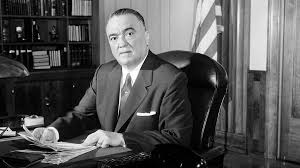
J. Edgar Hoover
Up to that point, Hoover had vigorously and vocally denied the existence of a nationwide Mafia. He had been happy to leave pursuit of international narcotics traffickers to his hated rival, Harry Anslinger, director of the Federal Bureau of Narcotics (FBN).
But he had been careful to keep his own agency well out of the war on organized crime.
Several theories have been advanced as to why.
- Hoover feared that his agents–long renowned for their incorruptibility–would fall prey to the bribes of well-heeled mobsters.
- Hoover feared that his allegedly homosexual relationship with his longtime associate director, Clyde Tolson, would be exposed by the Mob. Rumors still persist that mobster Meyer Lansky came into possession of a compromising photo of Hoover and Tolson engaged in flagrante delicto.
- Hoover knew of the ties between moneyed mobsters and their political allies in Congress. Hoover feared losing the goodwill of Congress for future–and ever-larger–appropriations for the FBI.
- Hoover preferred flashy, easily-solved cases to those requiring huge investments of manpower and money.
Whatever the reason, Hoover had, from the time he assumed directorship of the FBI in 1924, kept his agents far from the frontlines of the war against organized crime.
Suddenly, however, that was no longer possible.
The arrests of more than 60 known members of the underworld–in what the news media called “a conclave of crime”–deeply embarrassed Hoover.

It was all the more embarrassing that while the FBI had virtually nothing in its files on the leading lights of the Mafia, the Federal Bureau of Narcotics had opened its voluminous files to the Senate Labor Rackets Committee.
Heading that committee as chief legal counsel was Robert F. Kennedy–a fierce opponent of organized crime who, in 1961, would become Attorney General of the United States.
So Hoover created the Top Hoodlum Program (THP) to identify and target selected Mafiosi across the country.
Since the FBI had no networks of informants operating within the Mafia, Hoover fell back on a technique that had worked wonders against the Communist Party U.S.A.
He would wiretap the mobsters’ phones and plant electronic microphones (“bugs”) in their meeting places.
The information gained from these techniques would arm the Bureau with evidence that could be used to strongarm mobsters into “rolling over” on their colleagues in exchange for leniency.
Hoover believed he had authority to install wiretaps because more than one Attorney General had authorized their use.
But no Attorney General had given permission to install bugs–which involved breaking into the places where they were to be placed. Such assignments were referred to within the Bureau as “black bag jobs.”
So, in making clear to his agent-force that he wanted an unprecedented war against organized crime, Hoover also made clear the following:
Before agents could install electronic surveillance (an ELSUR, in FBI-speak) devices in Mob hangouts, agents had to first request authority for a survey. This would have to establish:
- That this was truly a strategic location;
- That the agents had a plan of attack that the Bureau could see was logical and potentially successful; and, most importantly of all
- That it could be done without any “embarrassment to the Bureau.”
According to former FBI agent William E. Roemer, Jr., who carried out many of these “black bag” assignments:
“The [last requirement] was always Mr. Hoover’s greatest concern: ‘Do the job, by God, but don’t ever let anything happen that might embarrass the Bureau.”


 Bureaucracybuster's Blog
ABC NEWS, ALTERNET, ARNOLD SCHWARXENEGGER, BARACK OBAMA, BREITBART NEWS, BUZZFEED, CBS NEWS, CIA, CNN, DAILY KOS, DONALD TRUMP, FACEBOOK, FBI, FLETCHER KNEBEL, HILLARY LINTON, JEFF SESSIONS, JOHN OLIVER, JOSH EARNEST, MARK LEVIN, MENTAL ILLNESS, MERYL STREETP, MOTHER JONES, MOVEON, NATIONAL SECURITY AGENCY, NBC NEWS, NEIL YOUNG, NEW JERSEY, NEWSWEEK, NIGHT AT CAMP DAVID, NPR, OBAMACARE, POLITICO, RAW STORY, RUSSIA, SALON, SEVEN DAYS IN MAY, SLATE, THE CHICAGO SUN-TIMES, THE CHICAGO TRIBUNE, THE DAILY BEAST, THE HUFFINGTON POST, THE LOS ANGELES TIMES, THE NEW YORK TIMES, THE WALL STREET JOURNAL, THE WASHINGTON POST, THIS WEEK, TIME, TWITTER, U.S. NEWS & WORLD REPORT, USA TODAY, WATERGATE, WIRETAPPING
IS HE CRIMINAL, CRAZY LIKE A FOX–OR JUST CRAZY?
In Bureaucracy, History, Medical, Politics, Social commentary on March 20, 2017 at 12:53 amOn March 4, in a series of unhinged tweets, President Donald J. Trump accused former President Barack Obama of tapping his Trump Tower phones prior to the election:
“Terrible! Just found out that Obama had my ‘wires tapped’ in Trump Tower just before the victory. Nothing found. This is McCarthyism!”
“Is it legal for a sitting President to be ‘wire tapping’ a race for president prior to an election? Turned down by court earlier. A NEW LOW!”
“I’d bet a good lawyer could make a great case out of the fact that President Obama was tapping my phones in October, just prior to Election!”
“How low has President Obama gone to tapp my phones during the very sacred election process. This is Nixon/Watergate. Bad (or sick) guy!”
President Barack Obama
Trump offered no proof to substantiate his libelous claims.
There are three plausible theories about what prompted Trump’s accusations.
Theory #1: They were prompted by Right-wing media outlets that had been pushing wiretapping claims in recent days.
On March 2, Right-wing radio host Mark Levin claimed that Obama had used “powers of the federal government to surveil members of the Trump campaign.”
Referring to Attorney General Jeff Sessions and his newly disclosed meetings with Russia’s ambassador in 2016, Levin asked: “Today’s reporting on Sessions having a chance meeting with the ambassador–where did that information come from? Look at the timing of it. Was Obama surveilling top Trump campaign officials during the election?”
On March 3, the Fascist media site Breitbart News echoed that charge. Its story was based on Levin’s show and offered no evidence to back up its accusations.
Trump could have first contacted the directors of the FBI, CIA and National Security Agency–the agencies which are authorized to conduct such an operation. He could have asked them, “Did you wiretap me?”
They could have quickly and confidentially given him an answer. And if it was “Yes,” they would have been able to provide him with the records to document it.
That would have been the action of a rational President. But Trump chose to act like a child–or, worse, an unbalanced adult.
After reading the Breitbart story, Trump impulsively chose to go on Twitter and make libelous accusations.
Theory #2: Trump, under scrutiny for ties between his campaign and Russia, sought to deflect attention by making an outrageous accusation.
Donald Trump
Former White House Press Secretary Josh Earnest has his own take on Trump’s motivation. Appearing on the March 5 edition of ABC’s “This Week”, he said: “We know exactly why President Trump tweeted what he tweeted.
“Because there is one page in the Trump White House crisis management playbook. And that is simply to tweet or say something outrageous to distract from the scandal, and the bigger the scandal, the more outrageous the tweet.”
Earnest served as White House Press Secretary under President Obama from 2014 to 2017.
He added: Obama could not have legally ordered a wiretap: “The President of the United States does not have the authority to unilaterally order the wiretapping of an American citizen.”
Theory #3: Trump is too mentally unbalanced to hold the Presidency–and command of America’s nuclear arsenal.
Trump’s shoot-first-and-never-mind-the-consequences approach to life has been thoroughly documented.
From June 15, 2015, when he launched his Presidential campaign, until October 24, 2016, he fired nearly 4,000 angry, insulting tweets at 281 people and institutions. The New York Times needed two full pages of its print edition to showcase them.
Among these targets were:
And during his first two weeks as President, Trump attacked 22 people, places and things on his @realDonaldTrump account.
Trump’s vindictiveness, his narcissism, his compulsive aggression, his complaints that his “enemies” in government and the press are trying to destroy him, have caused many to ask: Could the President of the United States be suffering from mental illness?
One who has dared to answer this question is John D. Gartner, a practicing psychotherapist.
John D. Gartner
Gartner graduated magna cum laude from Princeton University, received his Ph.D in clinical psychology from the University of Massachusetts, and served as a part time assistant professor of psychiatry at Johns Hopkins University Medical School for 28 years.
During an interview by U.S. News & World Report (published on January 27), Gartner said: “Donald Trump is dangerously mentally ill and temperamentally incapable of being president.”
Gartner said that Trump suffers from “malignant narcissism,” whose symptoms include anti-social behavior, sadism, aggressiveness, paranoia and grandiosity.
“We’ve seen enough public behavior by Donald Trump now that we can make this diagnosis indisputably,” says Gartner, who admits he has not personally examined Trump.
In 1965, Fletcher Knebel, the best-selling author of Seven Days in May, raised the then-unthinkable question: “What would happen if the President of the U.S.A. went stark-raving mad?”
He did so in his novel, Night of Camp David.
In 1965, the idea that an American President might become insane was thought so outlandish it could only appear in a novel.
Fifty-two years later, it’s no longer unthinkable. For millions, it’s a terrifying reality.
Share this: