Posts Tagged ‘USA TODAY’
2012 PRESIDENTIAL CAMPAIGN, 2016 PRESIDENTIAL CAMPAIGN, ABC NEWS, ABORTION, ALTERNET, AP, ARMY-MCCARTHY HEARINGS, BAIN CAPITAL, BIRTH CONTROL, BUZZFEED, CBS NEWS, CNN, COMMUNISM, CROOKS AND LIARS, DAILY KOZ, DONALD TRUMP, FACEBOOK, HONOR, HURRICANE SANDY, JAPAN, JOSEPH MCCARTHY, MITT ROMNEY, MOTHER JONES, MOVEON, MSNBC, NBC NEWS, NEWSWEEK, NPR, PBS NEWSHOUR, POLITICO, RAW STORY, REUTERS, RICK SANTORUM, SALON, SAMURAI, SEATTLE TIMES, SLATE, TED CRUZ, THE ATLANTIC, THE CHICAGO SUN-TIMES, THE CHICAGO TRIBUNE, THE DAILY BEAST, THE GUARDIAN, THE HILL, THE HUFFINGTON POST, THE LOS ANGELES TIMES, THE NATION, THE NEW YORK TIMES, THE WALL STREET JOURNAL, THE WASHINGTON POST, TIME, TWITTER, U.S. NEWS & WORLD REPORT, UPI, USA TODAY
In Bureaucracy, History, Social commentary on January 29, 2016 at 12:53 am
“Senator, may we not drop this?…You’ve done enough. Have you no sense of decency, sir? At long last, have you left no sense of decency?”
The speaker was Joseph N. Welch, chief counsel for the United States Army–then under investigation by Joseph McCarthy’s Senate Permanent Subcommittee on Investigations for alleged Communist activities.
It was June 9, 1954, the 30th day of the Army-McCarthy hearings.
And it was the pivotal moment that finally destroyed the career of the Wisconsin Senator whose repeated slanders of Communist subversion had bullied and frightened Americans for four years.
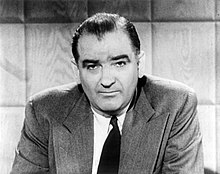
Joseph McCarthy
When the Senate gallery erupted in applause, McCarthy–totally surprised at his sudden reversal of fortune–was finished.
Today, however, other Americans should be asking themselves the question asked by Welch: “At long last, have you left no sense of decency?”
Americans like Rick Santorum, Republican Presidential candidate in 2016.
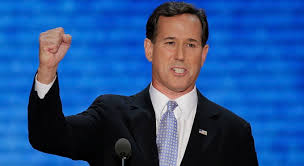
Rick Santorum
As a United States Senator from Pennsylvania (1997-2005) and a 2012 Presidential candidate, Santorum fervently sought to ban legalized abortion–even in rape cases. Also on his list of banned items: birth control.
Abortion and birth control, said Santorum, were an affront to “the way things ought to be.” As decided, of course, by Santorum.
But this did not stop him from marrying, in 1990, a woman–Karen Garver–who had spent six years as the unmarried bedmate of an OBGYN-abortionist named Tom Allen, who was 40 years her senior.
Today, as Mrs. Santorum, she has totally reversed her view on abortion and wants to see it banned.
Then there’s 2016 Presidential candidate Ted Cruz.

U.S. Senator Ted Cruz (R-Texas)
As a Republican United States Senator from Texas, Cruz voted–three times–against providing federal aid for the victims of Hurricane Sandy.
The October, 2012, hurricane killed about 150 people and caused an estimated $75 billion worth of damages across the Northeast.
But when a fertilizer plant exploded in West, McLennan County, Texas, on April 17, 2013, Cruz vowed that he would seek “all available resources” to assist its victims.
The blast killed 13 people, wounded about 200 others, and caused extensive damage to surrounding homes.
It didn’t matter to Cruz that:
- The facility hadn’t been expected by the Labor Department’s Occupational Safety and Health Administration (OSHA) since 1985, when the company was find $30; and
- The plant had been storing 1,350 times the amount of ammonium nitrate that would normally trigger safety oversight by the U.S. Department of Homeland Security (DHS.).
Then there’s Donald Trump, the egocentric businessman and “reality star of NBC’s “The Apprentice,” who, likewise, has thrown his hat into the 2016 Presidential race.

Donald Trump
On April 17, 2011, toying with the idea of entering the 2012 Presidential race, Trump said this about Mitt Romney, the former Massachusetts governor and front-runner GOP candidate:
“He’d buy companies, he’d close companies. He’d get rid of jobs. I’ve built a great company. I’m a much bigger businessman and have a much, much bigger net worth. I mean, my net worth is many, many, many times Mitt Romney.
“Mitt Romney is a basically small-business guy, if you really think about it. He was a hedge fund. He was a funds guy. He walked away with some money from a very good company that he didn’t create. he worked there. He didn’t create it.”
Trump added that Bain Capital, the hedge fund where Romney made millions of dollars before running for governor, didn’t create any jobs. Whereas Trump claimed that he–Trump–had created “hundreds of thousands of jobs.”
So at least some observers must have been puzzled when Trump announced, on February 2, 2012: “It’s my honor, real honor and privilege, to endorse Mitt Romney” for President.
“Mitt is tough. He’s smart. He’s sharp. He’s not going to allow bad things to continue to happen to this country that we all love. So, Governor Romney, go out and get ’em. You can do it,” said Trump.
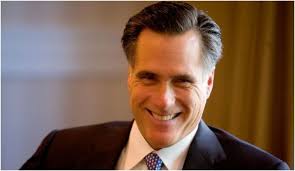
Mitt Romney
And Romney, in turn, had his own swooning-girl moment: “I’m so honored to have his endorsement. There are some things that you just can’t imagine in your life. This is one of them.”
Clearly, the word “hypocrisy” means nothing to Santorum, Cruz and Trump. But it should mean something to the rest of us.
In samurai Japan, officials who publicly disgraced themselves knew what to do. The samurai code of Bushido told them when they had crossed the line into eternal damnation.
And it gave them a way to redeem their lost honor–seppuku. With a small “belly-cutting” knife and the help of a trusted assistant who sliced off their head to spare them the agonizing pain of disembowelment.

Seppuku
In the armies of America and Europe, the method was slightly different: A pistol in a private room.
Considering the ready availability of firearms among Right-wing Republicans, redeeming lost honor shouldn’t be a problem for any of these men.
But of course it will be. It takes more than a trigger pull to “do the right thing. It takes insight to recognize that you’ve “done the wrong thing.” And it takes courage to act on that insight.
In men who live only for their own egos and wallets, such insight and courage will be forever missing. They are beyond redemption.
Their lives give proof to the warning offered in Matthew 7:17-20:
“Even so every good tree bringeth forth good fruit; but a corrupt tree bringeth forth evil fruit. A good tree cannot bring forth evil fruit, neither can a corrupt tree bring forth good fruit.
“Every tree that bringeth not forth good fruit is hewn down, and cast into the fire. Wherefore by their fruits ye shall know them.”
ABC NEWS, AL QAEDA, BASHIR AL-ASSAD, CBS NEWS, CHARLES GEORGE GORDON, CHARLTON HESTON, CNN, FACEBOOK, GEORGE W. BUSH, GREAT BRITAIN, HIZBOLLAH, IRAQ, ISLAM, KHARTOUM, LAURENCE OLIVER, NBC NEWS, NEOCONS, PRESIDENT BARACK OBAMA, REPUBLICAN PARTY, SHIITE MUSLIMS, SUDAN, SUNNI MUSLIMS, SYRIA, THE CHICAGO SUN-TIMES, THE CHICAGO TRIBUNE, THE LOS ANGELES TIMES, THE MADHI, THE NEW YORK TIMES, THE WALL STREET JOURNAL, THE WASHINGTON POST, TWITTER, USA TODAY, WILLIAM GLADSTONE
In Bureaucracy, History, Military on January 28, 2016 at 10:05 pm
January 26, 2016, marked the 131st anniversary of the fall of Khartoum, the Sudanese city that sits on the banks of the White and Blue Nile Rivers.
The siege and fall of Khartoum is one of the truly epic stories of military history.
From March 18, 1884, to January 26, 1885, the charisma and military genius of one man–British General Charles George Gordon–held at bay an army of thousands of fanatical Islamics intent on slaughtering everyone in the city.

Khartoum in the 1800s
At stake were the lives of Khartoum’s 30,000 residents.
By comparison: The defenders of the Alamo–a far better-known battle, in 1836–numbered no more than 250. And the siege of the San Antonio mission lasted only 13 days against an army of about 2,000 Mexicans.
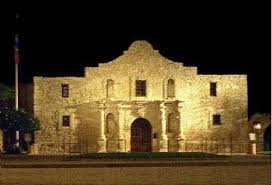
The Alamo
Gordon’s story may seem antiquated. But it bears close inspection as Republicans press the Obama administration to commit ground forces to “freeing” Syria of its longtime dictator, “President” Bashir al-Assad.
The neocons of the George W. Bush Administration plunged the United States into an unprovoked war against Iraq in 2003. After Baghdad quickly fell, Americans cheered, thinking the war was over and the troops would soon return home.
Suddenly, American soldiers found themselves waging a two-front war in the same country: Fighting an Iraqi insurgency to throw them out, while trying to suppress growing sectarian warfare between Sunni and Shia Muslims.
And now, with Syria, Americans are being urged to plunge headfirst into a conflict they know nothing about–and in which they have absolutely no stake.
On one side is the Ba’ath regime of Bashir al-Assad, supported by Russia, Iran, Hizbollah and elements in the Iraqi government. Hizbollah is comprised of Chiite Muslims, who form a minority of Islamics.
A sworn enemy of Israel, it has kidnapped scores of Americans suicidal enough to visit Lebanon and truck-bombed the Marine barracks in Beirut in 1983, killing 299 Americans.

Flag of Hizbollah
Al-Qaeda, on the other hand, is made up of Sunni Muslims, who form the majority of that religion.
It is intolerant of non-Sunni Muslims and has instigated violence against them. It denounces them as “takfirs”–heretics–and thus worthy of extermination.

Flag of Al-Qaeda
In short, it’s a Muslim-vs.Muslim “holy war.
It’s all very reminiscent of events in the 1966 epic film, Khartoum, starring Charlton Heston as British General Charles George Gordon.

Charlton Heston (left); Charles George Gordon (right)
In 1884, the British government sends Gordon, a real-life hero of the Victorian era, to evacuate the Sudanese city of Khartoum.
Mohammed Achmed, a previously anonymous Sudanese, has proclaimed himself “The Madhi” (“The Expected One”) and raised the cry of jihad.

Laurence Oliver (left); Mohammed Achmed (“The Madhi”)
The Madhi (played by Lawrence Olivier) intends to drive all foreigners (of which the English are the largest group) out of Sudan and exterminate all those Muslims who do not practice his “pure” version of Islam.

Movie poster for “Khartoum”
Gordon arrives in Khartoum to find he’s not fighting a rag-tag army of peasants. Instead, the Madhi is a highly intelligent military strategist.
And Gordon, an evangelical Christian, also finds he has underestimated the Madhi’s religious fanaticism: “I seem to have suffered from the delusion that I had a monopoly on God.”
A surprised Gordon finds himself and 30,000 Sudanese trapped in Khartoum when the Madhi’s forces suddenly appear. He sends off messengers and telegrams to the British Government, begging for a military relief force.
But the British Government wants nothing to do with the Sudan. it has sent Gordon there as a cop to British public opinion that “something” had to be done to quell the Madhist uprising.
The siege continues and tightens.
In Britain, the public hails Gordon as a Christian hero and demands that the Government send a relief expedition to save him.
Prime Minister Willilam Gladstone finally sends a token force–which arrives in Khartoum two days after the city has fallen to the Madhi’s forces.
Gordon, standing at the top of a staircase and coolly facing down his dervish enemies, is speared to death.
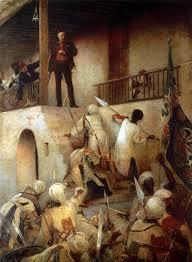
George W. Joy’s famous–and romanticized–painting of “The Death of Gordon”
(Actually, the best historical evidence indicates that Gordon fought to the last with pistol and sword before being overwhelmed by his dervish enemies.)
When the news reaches England, Britons mourn–and then demand vengeance for the death of their hero.
The Government, which had sought to wash its hands of the poor, military unimportant Sudan, suddenly has to send an army to avenge Gordon.
As the narrator of Khartoum intones at the close of the film: “For 15 years the British paid the price with shame and war.”
There is a blunt lesson for Americans to learn from this episode–and from the 1966 movie Khartoum itself.
Americans have been fighting in the Middle East since 2001–first in Afghanistan to destroy Al-Qaeda, and then in Iraq, to pursue George W. Bush’s vendetta against Saddam Hussein.
The United States faces a crumbling infastructure, record high unemployment and trillions of dollars in debt.
It’s time for Americans to clean up their own house before worrying about the messes in other nations–especially those wholly alien to American values.
ABC NEWS, AFFORDABLE CARE ACT, BARACK OBAMA, CBS NEWS, CIA, CNN, FACEBOOK, FRANKLIN D. ROOSEVELT, MITT ROMNEY, MSNBC, NBC NEWS, NEW DEAL, OBAMACARE, PAPA JOHN'S PIZZA, REPUBLICAN PARTY, Ronald Reagan, THE CHICAGO SUN-TIMES, THE CHICAGO TRIBUNE, THE LOS ANGELES TIMES, THE WALL STREET JOURNAL, USA TODAY, WILLIAM J. CASEY
In Bureaucracy, Business, Law, Politics on January 22, 2016 at 12:18 am
When William J. Casey was a young attorney during the Great Depression, he learned an important lesson.
Jobs were hard to come by, so Casey thought himself lucky to land one at the Tax Research Institute of America in New York.
His task was to closely read New Deal legislation and write reports explaining it to corporate chieftains.
At first, he thought they wanted detailed legal commentary on the meaning of the new legislation.
But the he quickly learned a blunt truth: Businessmen neither understood nor welcomed President Franklin D. Roosevelt’s efforts at reforming American capitalism. And they didn’t want legal commentary.
Instead, they wanted to know: “What is the minimum we have to do to achieve compliance with the law?”
In short: How do we get by FDR’s new programs?
Fifty years later, Casey would bring the same mindset to his duties as director of the Central Intelligence Agency (CIA) for President Ronald Reagan.

William J. Casey
He was presiding over the CIA when it deliberately violated Congress’ ban on funding the “Contras,” the Right-wing death squads of Nicaragua.
Casey gave lip service to the demands of Congress. But privately, with the help of Marine Lieutenant Colonel Oliver North, he set up an “off-the-shelf” operation to provide arms to overthrow the leftist government of Daniel Ortega.
It was what President Ronald Reagan wanted. So Casey felt he had a duty to get it done, and Congress be damned.
When news of Casey’s–and Reagan’s–illegal behavior leaked, in November, 1986, it almost destroyed the Reagan administration.
Especially damning: Much of the funding directed to the “Contras” had come from Iran, America’s mortal enemy.
To ransom a handful of American hostages who had been kidnapped in Lebanon, Reagan sold them our most sophisticated missiles in a weak-kneed exchange for American hostages.
Then he went on television and brazenly denied that any such “arms for hostages” trade had ever happened.
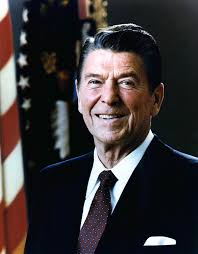
Ronald Reagan
But the “Casey Doctrine” of minimum compliance with the law didn’t die with Casey (who expired of a brain tumor in 1987).
It was very much alive within the American business community as President Barack Obama sought to bring medical coverage to all Americans, and not simply the ultra-wealthy.
The single most important provision of the Affordable Care Act (ACA)–better-known as Obamacare–requires large businesses to provide insurance to fulltime employees who work more than 30 hours a week.
For part-time employees, who work fewer than 30 hours, a company isn’t penalized for failing to provide health insurance coverage.
Obama’s enemies have long slandered him as a ruthless practitioner of Chicago politics.” So it’s easy to assume that he took “the Casey Doctrine” into account when he shepherded the ACA through Congress.
But he didn’t.
The result was predictable. And its consequences are daily becoming more clear.
Employers feel motivated to move fulltime workers into part-time positions, and thus avoid
- providing their employees with medical insurance;
- and a fine for non-compliance with the law.
Some employers have openly shown their contempt for President Obama–and the idea that employers actually have any obligation to those who make their profits a reality. 
John Schnatter, CEO of Papa John’s Pizza, has been quoted as saying:
- The price of his pizzas will go up–by 11 to 14 cents per pizza, of 15 to 20 cents per order; and
- He will pass along these costs to his customers.
“If Obamacare is in fact not repealed,” Schnatter told Politico, “we will find tactics to shallow out any Obamacare costs and core strategies to pass that cost onto consumers in order to protect our shareholders’ best interests.”
After all, why should a multimillion dollar company show any concern for those who make its profits a reality?
Consider:
- Papa John’s is the third-largest pizza takeout and delivery chain in the United States.
- Its 2014 revenues were $1.60 billion, an increase of 11.1% over 2013 revenues of $1.44 billion.
- Its 2014 net income was $73.3 million, compared to 2013 net income of $69.5 million.
In May, 2012, Schnatter hosted a fundraising event for Republican Presidential candidate Mitt Romney at his own Louisville, Kentucky, mansion.
“What a home this is,” gushed Romney. “What grounds these are, the pool, the golf course.
“You know, if a Democrat were here he’d look around and say no one should live like this. Republicans come here and say everyone should live like this.”
Of course, Romney conveniently ignored a brutally ugly fact:
For the vast majority of Papa John’s minimum-wage-earning employees-–many of them working only part-time-–the odds of their owning a comparable estate are non-existent.
Had Obama been the serious student of Realpolitick that his enemies claim he is, he would have predicted that most businesses would seek to avoid compliance with his law.
To counter that, he need only have required employers to provide insurance coverage for all of their employees–regardless of their fulltime or part-time status.
This, in turn, would have produced two substantial benefits:
- All employees would have been able to obtain medical coverage; and
- Employers would have been encouraged to provide fulltime positions rather than part-time ones, since they would feel, “I’m paying for fulltime insurance coverage, so I should be getting fulltime work in return.”
The “Casey Doctrine” needs to be kept constantly in mind when reformers try to protect Americans from predatory employers.
ABC NEWS, ALTERNET, AMERICABLOG, AP, BABY BOOMER RESISTANCE, BBC, BLOOMBERG NEWS, BUZZFEED, CBS NEWS, CNN, CROOKS AND LIARS, DAILY KOZ, DRUDGE REPORT, DRUG WAR, FACEBOOK, FBI, FIVETHIRTYEIGHT, FRANK SINATRA, HARPER’S MAGAZINE, HUFFINGTON POST, JOAQUIN "EL CHAPO" GUZMAN, JOHN F. KENNEDY, JOHN GOTTI, JOSEPH P. KENNEDY, MAFIA, MEDIA MATTERS, MICKEY COHEN, MOTHER JONES, MOVEON, MSNBC, NBC NEWS, NEW REPUBLIC, NEWSDAY, NEWSWEEK, NPR, PBS NEWSHOUR, POLITICO, POLITICUSUSA, RAW STORY, REUTERS, ROBERT F. KENNEDY, ROLLING STONE, SALON, SAM GIANCANA, SAMMY "THE BULL" GRAVANO, SEAN PENN, SEATTLE TIMES, SLATE, TALKING POINTS MEMO, THE ATLANTIC, THE CHICAGO SUN-TIMES, THE CHICAGO TRIBUNE, THE DAILY BEAST, THE DAILY BLOG, THE GUARDIAN, THE HILL, THE HUFFINGTON POST, THE LOS ANGELES TIMES, THE NATION, THE NEW REPUBLIC, THE NEW YORK TIMES, THE NEW YORKER, THE VILLAGE VOICE, THE WASHINGTON POST, THINKPROGRESS, TIME, TRUTHDIG, TRUTHOUT, TWITTER, TWO POLITICAL JUNKIES, U.S. NEWS & WORLD REPORT, UPI, USA TODAY, WITNESS SECURITY PROGRAM, WONKETTE
In Bureaucracy, Entertainment, History, Law Enforcement on January 20, 2016 at 12:02 am
Actor Sean Penn believes the Mexican Government wants to put him at risk by convincing Joaquin “El Chapo” (“Shorty”) Guzman that Penn played a role—deliberately or negligently—in his capture.
“We know the Mexican government, they clearly were humiliated by the notion that someone found him before they did,” Penn told interviewer Charlie Rose.
“Nobody found him before they did. We are not smarter than the DEA, or Mexican Intelligence. We had a contact upon which we were able to facilitate an invitation.”
By “we” Penn meant himself and Mexican actress Kate del Castillo, who had actually arranged the meeting.

Actress Kate del Castillo
“They wanted to encourage the cartel to put you in their crosshairs?” Rose asked.
“Yes,” Penn answered.
This is entirely possible. Guzman’s escape from a “maximum security” prison in July, 2015, had proved internationally embarrassing for the Mexican Government
Even more embarrassing: He escaped through a mile-long tunnel that literally led to his cell. Almost certainly this happened with the collusion of some prison guards.
Penn–and del Castillo–could face dangers from at least three groups.
Danger #1: El Chapo
Already there is evidence that “El Chapo” regrets having given an interview to Penn and del Castillo in the Mexican jungle on October 2, 2015.
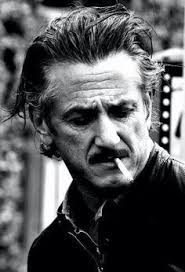
Sean Penn
Published in Rolling Stone on January 9, the article contained such Guzman boasts as:
“I supply more heroin, methamphetamine, cocaine and marijuana than anyone else in the world. I have a fleet of submarines, airplanes, trucks and boats.”
Juan Pablo Badillo, one of Guzman’s attorneys, has since claimed that the article contains falsehoods:
“It’s a lie, absurd speculation from Mr. Penn. Mr. Penn should be called to testify to respond about the stupidities he has said.
“He [Guzman] could not have made these claims. Mr. Guzman is a very serious man, very intelligent.”
This could spell danger for Penn and del Castillo. Guzman is responsible for the deaths of thousands of rivals, journalists and police.

Among the witnesses to the drug cartels’ savagery is Michael Levine, a 25-year veteran of the Drug Enforcement Administration and the author of Deep Cover: Mexican Government Drug Corruption From the Inside.
“Depending on what the cartels and/or the many corrupt Mexican cops and Mexican government officials believe El Chapo divulged during the interview, Penn, and whomever else was present, may be in more physical danger than he could ever imagine,” said Levine.
An anonymous law enforcement official said that not only could Penn be in danger, but so could his entire family.
“It won’t happen now. They [the cartels] wait. Him or people close to him are in danger. They don’t single out the one person. They go for the person’s family.
“He poked his head into a nest of vipers with an amazing global reach. He was a fool. As public as Penn is, he will be a sitting duck.”
Danger #2: Guzman’s Competitors in the Drug Trade
“The problem with dealing with someone like Guzman on this personal basis, where one is perceived as a ‘friend’ or an aide or a business partner of sorts to Chapo, is that you have to be prepared to inherit all his enemies, and there are many,” warned Michael Levine.
“These are some very kill-crazy people. The notoriety gained by killing someone like Penn or even del Castillo will actually turn these bastards on.
“It’s a step into the dark world of the kill crazies. Believe me it is there, and unwittingly these two may have stepped into a world where there is an actual competition to kill them,” said Levine, who has dealt face-to-face with Latin American drug lords.
Danger #3: Wannabe Cartel Members
Countless men–in Mexico and the United States–would love to “do El Chapo a favor” by gunning down Penn and/or del Castillo.
This could happen even if Guzman harbors no ill will toward either. It would be enough for someone to simply believe that he did.
An additional motive: The fame–or infamy–that the assassin of a “big celebrity” like Penn would receive. John Lennon died at the hands of such a fame-obsessed, psychotic gunman.
This means that literally anyone could be a potential assassin–making it that much harder to defend against.
When clients enter the Justice Department’s Witness Security Program, they are quickly asked: “Who do you think poses the biggest threat to you?”
Deputy U.S. marshals, who operate the program, assume that a witness is the best judge of who poses the greatest danger to him.

Witness Security Program protection detail
This works well when a witness is unknown and testifying against someone who is equally unknown to the public.
But when a witness is notorious–such as Sammy “The Bull” Gravano–and the defendant is equally infamous–such as John Gotti–all bets are off.
Of course, Federally-protected witnesses have two advantages going for them that Penn and del Castillo do not:
First, they are protected by the U.S. Marshals Service, which has an excellent track record in protecting its charges; and
Second, they are expected to assume a low profile, which serves as their best protection.
Sean Penn and Kate del Castillo aren’t Federally-protected witnesses. And they’re unlikely to assume a low profile by going into hiding.
ABC NEWS, ALTERNET, AMERICABLOG, AP, BABY BOOMER RESISTANCE, BBC, BLOOMBERG NEWS, BUZZFEED, CBS NEWS, CNN, CROOKS AND LIARS, DAILY KOZ, DRUDGE REPORT, DRUG WAR, FACEBOOK, FBI, FIVETHIRTYEIGHT, FRANK SINATRA, HARPER’S MAGAZINE, HUFFINGTON POST, JOAQUIN "EL CHAPO" GUZMAN, JOHN F. KENNEDY, JOHN GOTTI, JOSEPH P. KENNEDY, MAFIA, MEDIA MATTERS, MICKEY COHEN, MOTHER JONES, MOVEON, MSNBC, NBC NEWS, NEW REPUBLIC, NEWSDAY, NEWSWEEK, NPR, PBS NEWSHOUR, POLITICO, POLITICUSUSA, RAW STORY, REUTERS, ROBERT F. KENNEDY, ROLLING STONE, SALON, SAM GIANCANA, SAMMY "THE BULL" GRAVANO, SEAN PENN, SEATTLE TIMES, SLATE, TALKING POINTS MEMO, THE ATLANTIC, THE CHICAGO SUN-TIMES, THE CHICAGO TRIBUNE, THE DAILY BEAST, THE DAILY BLOG, THE GUARDIAN, THE HILL, THE HUFFINGTON POST, THE LOS ANGELES TIMES, THE NATION, THE NEW REPUBLIC, THE NEW YORK TIMES, THE NEW YORKER, THE VILLAGE VOICE, THE WASHINGTON POST, THINKPROGRESS, TIME, TRUTHDIG, TRUTHOUT, TWITTER, TWO POLITICAL JUNKIES, U.S. NEWS & WORLD REPORT, UPI, USA TODAY, WITNESS SECURITY PROGRAM, WONKETTE
In Bureaucracy, Entertainment, History, Law Enforcement on January 19, 2016 at 1:25 am
Actor Sean Penn is used to being a tough guy–onscreen.
In 2006, he played real-life mobster Mickey Cohen (1913 – 1976) in Gangster Squad. And in 2013, he played Willie Stark, a corrupt, Huey Long-type Southern governor in a remake of All the King’s Men.
As Cohen, Penn put out contracts on his enemies and even went mano-o-mano in a long-running (and fictional) fistfight with an LAPD detective.
And as Stark, he clawed his way to power and bullied both his enemies and his supporters.
Perhaps Penn should have paid more attention to the way those movies ended.

Sean Penn
Mickey Cohen goes to prison, where he is brutally waylaid by other inmates.
And Willie Stark, at the height of his power, is shot by a longtime enemy.
Had he thought about it, he might have decided it could be a mistake to meet with Joaquin “El Chapo” (“Shorty”) Guzman, the notorious Mexican drug lord.
On October 2, 2015, Penn met with Guzman in an undisclosed location in the Mexican jungle. He was there to interview him on behalf of Rolling Stone magazine.
Guzman wanted a movie made about him. So he had reached out to Mexican actress Kate del Castillo, asking her to meet with him to discuss such a project. She, in turn, referred him to Penn, whom Guzman said could come along for the meeting.
Penn had his own agenda: To write an article for Rolling Stone whose “purpose [would] contribute to this conversation on the war on drugs.”
Three months later, on January 8, 2016, Mexican Marines and Federal Police launched an early-morning raid on a house in Los Mochis, in northern Sinaloa, where Guzman’s drug cartel operated.
The Marines expected to find Guzman there, and they did–ending his almost six-month flight after escaping from prison in July.
One day after Guzman’s capture, Rolling Stone published Penn’s 10,000-word article.
Penn had not been allowed to bring a tape recorder or even take notes with pen and paper. So he had been forced to memorize as much of Guzman’s tale as he could.
Penn seemed to be enraptured by Guzman:
“There is no doubt this is the real deal. He’s wearing a casual patterned silk shirt, pressed black pants, and he appears remarkably well-groomed and healthy for a man on the run.
“He opens [actress Kate del Castillo’s] [car} doorand greets her like a daughter returning from college.
“It seems important to him to express the warm affection in person that, until now, he’d only had occasion to communicate from afar.”
Even so, Penn quoted Guzman as bragging: “I supply more heroin, methamphetamine, cocaine and marijuana than anybody else in the world. I have a fleet of submarines, airplanes, trucks and boats.”
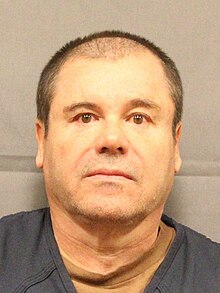
Joaquin “El Chapo” Guzman
After the interview’s publication, Penn came under fire for having allowed Guzman to approve the article. He claimed that, despite this, Guzman had not asked for any changes.
He also drew sharp criticism for having used his status as a movie star to play the part of a reporter.
But worse was to come.
Shortly after the capture of “El Chapo,” Mexico’s Attorney General Arely Gomez “credited” Penn with having played a vital role in the capture of the drug kingpin.
The meeting between Penn, Castillo and Guzman “was an essential element, because we were following [Guzman’s] lawyer, and the lawyer took us to these people and to this meeting.”
Suddenly, American experts on Mexican organized crime cartels began seeing Sean Penn in a new light–that of a movie star with a big target on his chest and back.
Suppose Guzman began suspecting that Penn had deliberately led Mexican authorities to him? Or that he had done so even accidentally, through negligence in how he had traveled?
“These cartels are very violent, they do not forgive any transgression and they will respond in a most violent manner,” said Mike Vigil, a former chief of international operations with the U.S. Drug Enforcement Administration.
“These are people who have been dismembered, who have decapitated individuals. So killing Sean Penn and del Castillo means absolutely nothing to them.”
Vigil believed it was careless for the Mexican Government to publicize any ties between the Penn meeting and Guzman’s arrest:
“If Chapo Guzman perceives that they cooperated with authorities in his capture, [the cartel] will go after them.”
He argued that the risk is likely likely for del Castillo because she was the one in contact with Guzman.
She was the one whom Guzman’s associates supplied with a Blackberry–the phone they believed most secure. And it was her and Guzman’s flirtatious exchanges that led to the meeting in the jungle with Sean Pean.
“Apart from that, [del Castillo] is originally from Mexico, she has all of her family in Mexico. One of the traditional violent methods [the cartels] use is if they can’t get to the target, they’ll go after their family members.
“If I were Kate del Castillo, I would run like the wind.”
2008 PRESIDENTIAL RACE, 9/11, ABC NEWS, ADOLF HITLER, ANDERSON COOPER, ANTI-COMMUNISM, BARACK OBAMA, BILL CLINTON, BIRTHERS, CBS NEWS, CITIZENSHIP, CNN, DONALD TRUMP, FACEBOOK, JOSEPH ARPAIO, LAURENCE TRIBE, MSNBC, MUSLIMS, NAZI GERMANY, NAZI PARTY, NBC NEWS, RAFAEL "TED" CRUZ, REPUBLICAN PARTY, REPUBLICANS, SS, THE BOSTON GLOBE, THE CHICAGO SUN-TIMES, THE CHICAGO TRIBUNE, THE HUFFINGTON POST, THE LOS ANGELES TIMES, THE NEW YORK TIMES, THE WALL STREET JOURNAL, THE WASHINGTON POST, TREASON, TWITTER, UNITED STATES SUPREME COURT, USA TODAY
In Bureaucracy, History, Law, Politics, Social commentary on January 14, 2016 at 12:12 am
“All revolutions,” said Ernst Rohem, leader of Adolf Hitler’s brown-shirted thugs, the S.A., “devour their own children.”
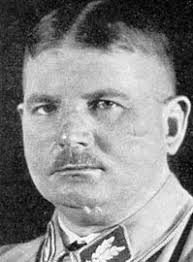
Ernst Rohem
Fittingly, he said this as he sat inside a prison cell awaiting his own execution.
On June 30, 1934, Hitler had ordered a massive purge of his private army, the S.A., or Stormtroopers. The purge was carried out by Hitler’s elite army-within-an-army, the Schutzstaffel, or Protective Squads, better known as the SS.
The S.A. Brownshirts had been instrumental in securing Hitler’s rise to Chancellor of Germany on January 30, 1933. They had intimidated political opponents and organized mass rallies for the Nazi Party.
But after Hitler reached the pinnacle of power, they became a liability.
Ernst Rohem, their commander, urged Hitler to disband the regular German army, the Reichswehr, and replace it with his own legions as the nation’s defense force.
Frightened by Rohem’s ambitions, the generals of the Reichswehr gave Hitler an ultimatum: Get rid of Rohem–or they would get rid of him.
So Rohem died in a hail of SS bullets–as did several hundred of his longtime S.A. cronies.
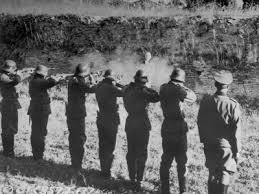
SS firing squad
At least one member of the Republican Party is now learning that an apparently useful weapon can become a liability.
Ever since Barack Obama became a Presidential candidate in 2008, Republicans have accused him of being ineligible to hold office.
Without a political scandal (such as Bill Clinton’s affair with Monica Lewinsky) to fasten on, the Republican Party opted for slander: Obama had been born in Kenya–and thus was not an American citizen.
From this there could be only one conclusion: That he would be an illegitimate President, and should be removed from office if elected.
And this smear campaign continued after he won the election. Right-wingers like real estate billionaire Donald Trump insisted that Obama had been born in Kenya, not Honolulu.
During his first two years in office, Obama tried to ignore the charge.
But polls repeatedly showed that large segments of the country believed it. Finally, even Obama’s closest advisers warned him: You must address this and put it to rest.
So, on April 27, 2011, the President released the long-form of his Hawaii birth certificate.
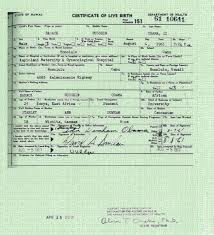
The long-form version of President Obama’s birth certificate
For the vast majority of Americans, this settled the issue. In 2012, they re-elected Obama to a second, four-year term.
Nevertheless, for many Right-wingers, even the release of Obama’s long-form birth certificate meant nothing.
Joseph Arpaio, the Right-wing sheriff of Maricopa County, Arizona, claimed that his “investigators” were certain that Obama’s birth certificate was fraudulent.
Responding to Arpaio’s claims, Joshua A. Wisch, a special assistant to Hawaii’s attorney general, said: “President Obama was born in Honolulu, and his birth certificate is valid. Regarding the latest allegations from a sheriff in Arizona, they are untrue, misinformed and misconstrue Hawaii law.”
Fast forward to 2015.
Donald Trump, who had threatened to run for President in 2012, announced his candidacy on June 16. Since then, he has been the front-runner for Republican voters.
But then Texas’ United States Senator Rafael “Ted” Cruz entered the race. As radical and ruthless as Trump, he quickly became the billionaire’s most dangerous competitor.
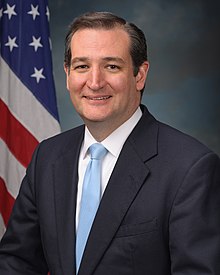
Rafael “Ted” Cruz
What to do?
Then Trump–or someone in his campaign–had an inspiration. Why not use against Cruz the same “he’s-not-an-American” charge that had been used against Obama?
Cruz, born outside the United States, was not really a natural-born American citizen–and was thus ineligible to be President.
Cruz was born in Calgary, Alberta, Canada, to an American mother and a Cuban father.
The U.S. Constitution states specifically that “No person except a natural born Citizen …shall be eligible to the Office of President.”
Cruz has argued that because his mother was an American, he became an American citizen at birth.
But courts have never ruled on the issue of what constitutes a “natural-born” citizen.
At first, the issue seemed confined to Republican politicians and those likely to vote for them. But then others outside the Right began investigating it.
Mary McManamon, a constitutional law professor at Widener University’s Delaware Law School, concluded in an Open Editorial for The Washington Post:
“Sen. Ted Cruz (R-Tex.) is not a natural-born citizen and therefore is not eligible to be president or vice president of the United States.”
Cruz got an even bigger slap in the face from Laurence Tribe, the celebrated professor of Constitutional law at Harvard University. He has argued before the United States Supreme Court 36 times.
Writing in The Boston Globe, Tribe stated:
“…The kind of judge Cruz says he admires and would appoint to the Supreme Court is an ‘originalist,’ one who claims to be bound by the narrowly historical meaning of the Constitution’s terms at the time of their adoption.
“To his kind of judge, Cruz ironically wouldn’t be eligible, because the legal principles that prevailed in the 1780s and ’90s required that someone actually be born on US soil to be a “natural born” citizen.” [Italics added.]
So long as Cruz stays in the race, Trump will continue to use the “birther” charge against him. And it will continue to dog him, as it did Obama.
Thus, the evil that politicians do lives after them.
ABC NEWS, ALTERNET, AP, BUZZFEED, CALIFORNIA DEPARTMENT OF INSURANCE, CALIFORNIA INSURANCE COMMISSION, CALIFORNIA STATE ASSEMBLY, CALIFORNIA STATE SENATE, CBS NEWS, CNN, COBRA INSURANCE PLANS, CROOKS AND LIARS, DAILY KOZ, FACEBOOK, MEDIA, MEDICAL INSURANCE, MOTHER JONES, MOVEON, MSNBC, NBC NEWS, NEWSWEEK, NPR, POLITICO, RAW STORY, REUTERS, SALON, SEATTLE TIMES, SELF-HELP, SLATE, THE ATLANTIC, THE CHICAGO SUN-TIMES, THE CHICAGO TRIBUNE, THE DAILY BEAST, THE GUARDIAN, THE HILL, THE HUFFINGTON POST, THE LOS ANGELES TIMES, THE NATION, THE NEW YORK TIMES, THE WASHINGTON POST, TIME, TWITTER, U.S. NEWS & WORLD REPORT, UP, UPI, USA TODAY
In Bureaucracy, Business, Law, Law Enforcement, Social commentary on January 6, 2016 at 1:58 pm
An insurance company suspends your medical coverage for months—or longer.
You’ve faithfully paid all premiums for your medical insurance—and have the records to prove it. But the company doesn’t care.
Think it can’t happen to you? It did to a couple I’ll call Diane and Mike.
Mike worked as a paralegal for a Los Angeles law firm. He was getting health insurance for himself and his wife, Diane, under a COBRA arrangement.
COBRA stands for Consolidated Omnibus Budget Reconciliation Act of 1985. It’s a Federal law that was passed by Congress and signed by President Ronald Reagan.
One of its provisions creates an insurance program giving some employees the ability to continue health insurance coverage after leaving employment.
But a COBRA can sometimes act the same way the deadly poisonous snake does—with unpredictable and lethal results for those depending on it.

In this case, after Mike left his law firm to work at another, he found the COBRA didn’t operate as it was supposed to.
A snafu developed, involving
- the COBRA management company,
- the hospital where Mike and Diane had long been patients, and
- Mike’s former employer.
Each of these institutions blamed the other for failing to provide appropriate information.
So the insurance company suspended Mike and Diane’s health insurance–completely ignoring their medical needs.
Of course, for most people who have dealt with an insurance company, this won’t come as a surprise. Insurance companies aren’t in business to do good. They’re in business to make money.
Then, one day, Diane called me on an unrelated matter. During the conversation, she let slip the suspension of her medical insurance.
I was stunned at the news–and outraged when she said this had been going on for six months.
At once, I offered my services as a troubleshooter. She accepted.
I decided to call the office of my State Assemblyman. In California, the 80 members of the Assembly serve two-year terms, and are limited to being elected three times.
The 40 members of the State Senate serve four-year terms, and can be elected twice.
Because they face re-election sooner, members of the Assembly must stay closely attuned to resolving their constituents’ problems. That’s why they employ staffers who are experts at navigating through the maze of State agencies.

California State Capitol Building
And State Senators make certain their offices are equally well-staffed with such experts.
When I called my Assemblyman’s office, I didn’t ask to speak with him. I knew I was too politically unimportant to rate a direct chat at that level. And I didn’t need to talk with him, anyway.
I simply told the secretary that I wanted to speak with the office’s specialist on insurance.
California has an Insurance Commissioner who directs the state’s Department of Insurance. The mandate of this agency is to license, regulate and examine insurance companies.
Soon I was speaking with Frank, the Assemblyman’s expert on insurance matters. I quickly explained the problem my friends were having. And, to my surprise, I found that he and I hit it off right away.
Frank said he had a friend–Steve–who worked as an investigator for the Department of Insurance. Then he generously offered to put me through to him. I thankfully accepted.
Soon Steve and I quickly found ourselves getting along well. Then he asked me: “What’s your friend’s number?”
Diane hadn’t authorized me to give her number to anyone, but I decided to forward it. If Steve was that interested in examining their problem, I wasn’t going to throw a damper on his enthusiasm.
Soon Steve and Diane were discussing the situation.
The insurance company Mike and Diane were relying on was, like many such companies, registered in Florida. But, in order to legally do business in California, it had to obey the laws of the State of California.
And California laws forbade exactly the sort of behavior this company was engaging in.

And shortly after that conversation, Diane’s insurance company got an unexpected call from the Insurance Commissioner’s office.
The message was simple–and blunt: Restore that coverage–now.
And, within 48 hours, it had been fully restored.
There are several important lessons to be learned here:
- Maintain accurate records of all your premium payments. And keep them accessible–as in file folders, a safe deposit box or an online file.
- Don’t let your insurance company victimize you. Once you’ve paid your premium, you’ve lived up to your part of the arrangement. Now it’s their obligation to provide the medical care you need.
- Know the names, addresses and phone numbers of your representatives–at local, state and Federal levels. Websites such as http://www.govspot.com/ and http://www.capweb.net/ will instantly provide this information–and a great deal more.
- Know the name, address and phone number of your state Insurance Commissioner.
- If your elected representatives can’t or won’t assist you, complain to the news media. Start with the local newspapers and TV stations. If that doesn’t work, try the Internet.
- If the agencies that are supposed to help consumers won’t aid you, make them part of your complaint to the media.
- If you’re disabled and/or have children who are affected by the insurance cut-off, play up this angle in your contacts with public agencies and/or the media.
- If all else fails, consider filing a lawsuit against the insurance company.
ABC NEWS, ARMAGEDDON, CBS NEWS, CNN, FACEBOOK, JESUS CHRIST, NBC NEWS, NEW YEAR'S DAY, NEW YEAR'S EVE, RIOTS, SAN FRANCISCO, SOREN KIERKEGAARD, THE CHICAGO SUN-TIMES, THE CHICAGO TRIBUNE, THE HUFFINGTON POST, THE LOS ANGELES TIMES, THE MILLENNIUM, THE WASHINGTON POST, TWITTER, USA TODAY, Y2K
In History, Social commentary on January 4, 2016 at 12:56 am
New Year’s Eve, 2015, now lies behind us.
But for those who consciously lived through December 31, 1999, there will never be another New Year’s Eve like it.
New Year’s Eve is traditionally a time for people to reflect on the major events of the previous 12 months. Some of these are highly personal. Others have been shared by the entire country.
Some of these remembrances inevitably bring pleasure. Others bring pain.
But at the heart of every New Year’s Eve celebration is the fantasy that you get to start fresh in a matter of hours. And with that fantasy comes hope–that, this time, you can put your sorrows and failures behind you.
New Year’s Eve, 1999, was marked far more by apprehension and fear than joy.
- Fear of Y2K–that our highly computerized, globally-interconnected world would crash when the “19″ at the start of every year was replaced with a “20″.
- Fear of Armageddon–that Jesus, after dying 2,000 years ago, would return to destroy mankind (except for those 144,000 righteous souls He deemed worthy of salvation).
- Fear of the Millennium itself–of ending not simply another decade and century but an entire thousand-year period of history, and thus losing our historical ties to the familiar highlights of our own (and America’s) past.
And, especially where Y2K was concerned, news commentators were quick to stoke our anxieties.
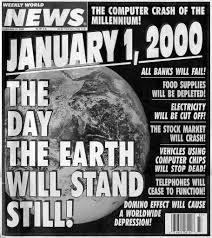
For those living on the West Coast of the United States on December 31, 1999, the day began with news reports of celebrations of the New Year in such distant countries as Australia and New Zealand.
“So far,” each of these reports ended, “there have been no reports of Y2K-related outages.”
But the underlying message was clear: Stay tuned–it could still happen. And this message kept blaring for the rest of the day and into the evening.
Long before New Year’s Eve, TV newscasters repeatedly warned that, when midnight struck on January 1, 2000, the three places you did not want to be were:
- In an airplane.
- In an elevator.
- In a hospital.
Countless numbers of people in America and around the world stocked up on food, water, batteries and other essentials for surviving an emergency.
Merchants and police feared widespread rioting and violence. If Y2K didn’t set it off, then fears of a heaven-sent Apocalypse might.
In San Francisco, along Powell Street–a major center of tourism and commerce–store owners boarded up their doors and windows as New Year’s Eve approached. Many closed earlier than usual that day.
At 9 p.m. California time, a friend of mine turned off a VCR and turned on a local news station to watch celebrations–or chaos–unfold in New York City.
If the lights went off in New York at midnight Eastern time, then, in three more hours, the same would happen in California.
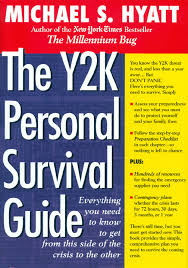
When he saw lights glittering in Times Square, he felt reasonably certain that Y2K would probably be a dud.
Fortunately, no Y2K disasters occurred.
Three people I know decided to throw an “End of the World” party. They didn’t believe the world was coming to an end. But they decided to throw an “absolute last blast” party as though it were.
Among the items they stockpiled for this occasion:
- Country pork spareribs
- Yams
- Crabs
- Apple cidar
- Black olives
- Fresh cranberries
- Avacodos
- Chocolate chip ice cream
- Lambrusco
- Gin and tonic water
- Root beer
- Smoked cheese
- Artichoke hearts
- Pumpkin cream mousse cake
- Chocolate cake
- Pickles
- Asparagus
It was definitely an unforgettable night.
New Year’s Eve 1999 is now 16 years distant. But some lessons may still be learned from it:
Each year is a journey unto itself–filled with countless joys and sorrows. Many of these joys can’t be predicted. And many of these tragedies can’t be prevented.
Learn to tell real dangers from imaginary ones. Computers are real–and sometimes they crash. Men who died 2,000 years ago do not leap out of graveyards, no matter what their disciples predict.
Don’t expect any particular year to usher in the Apocalypse. In any given year there will be wars, famines, earthquakes, riots, floods and a host of other disasters. These have always been with us–and always will be. As Abraham Lincoln once said: “The best thing about the future is that it comes one day at a time.”

Don’t expect some Great Leader to lead you to success. As Gaius Cassius says in William Shakespeare’s “Julius Caesar”: “Men at some time are masters of their fate. The fault, dear Brutus, is not in our stars but in ourselves that we are underlings.”
Don’t expect any particular year or event to usher in your happiness. To again quote Lincoln: “Most people are about as happy as they make up their minds to be.”
If your life seems to make no sense to you, consider this: The philosopher Soren Kierkegaard once noted: “Life can only be understood backwards, but it must be lived forwards.”
ABC NEWS, BALTIMORE POLICE DEPARTMENT, BALTIMORE SUN, CBS NEWS, CNN, FACEBOOK, FREDDIE GRAY, MARILYN MOSBY, NBC NEWS, POLICE BRUTALITY, REUTERS, ROUGH RIDES, THE CHICAGO SUN-TIMES, THE CHICAGO TRIBUNE, THE LOS ANGELES TIMES, THE NEW YORK TIMES, THE WASHINGTON POST, TWITTER, USA TODAY
In Bureaucracy, History, Law, Law Enforcement, Politics, Social commentary on December 18, 2015 at 12:26 am
Freddie Gray’s tally of arrests came to at least 18.
But on April 12, he was arrested for what would be the final time.
That arrest would lead to Gray’s death and scandal for the Baltimore Police Department.
On May 1, Marilyn Mosby, Baltimore’s chief deputy prosecutor at the State’s Attorney office, publicly released the findings of her agency in the Gray case:
- “The knife was not a switchblade and is lawful under Maryland law.” [Police had claimed it was a switchblade.]
- “Lt. Rice, Officer Miller and Officer Nero failed to establish probable cause for Mr. Gray’s arrest as no crime had been committed by Mr. Gray. Accordingly Lt. Rice Officer MIller and Office Nero illegally arrested Mr. Gray.”
- “Lt. Rice Officer Miller and Officer Nero loaded Mr. Gray into the wagon and at no point was he secured by a seatbelt while in the wagon contrary to a BPD [Baltimore Police Department] general order.”
- “…Mr. Gray suffered a severe and critical neck injury as a result of being handcuffed, shackled by his feet and unrestrained inside of the BPD wagon.”
- “Despite stopping for the purpose of checking on Mr. Gray’s condition, at no point did [Officer Goodson] seek nor did he render any medical assistance for Mr. Gray.”
- “Mr. Gray…requested help and indicated that he could not breathe. Officer Porter asked Mr. Gray if he needed a medic at which time Mr. Gray indicated at least twice that he was in need of a medic.”

Marilyn Mosby
- “…Despite Mr. Gray’s appeal for a medic, both officers [William Porter, Caesar Goodson] assessed Mr. Gray’s condition and at no point did either of them….render or request medical assistance.”
- “Sgt. [Alicia] White….spoke to the back of Mr. Gray’s head. When he did not respond, she did nothing further despite the fact that she was advised that he needed a medic. She made no effort to look or assess or determine his condition.”
- “Despite Mr. Gray’s seriously deteriorating medical condition, no medical assistance was rendered or summoned for Mr. Gray at that time by any officer.”
- “By the time Officer Zachary Novak and Sgt. White attempted to remove Mr. Gray from the wagon, Mr. Gray was no longer breathing at all.”
- “A medic was finally called to the scene where upon arrival, the medic determined Mr. Gray was now in cardiac arrest and was critically and severely injured.”
- “Mr. Gray was rushed to the University of Maryland Shock Trauma where he underwent surgery. On April 19, 2015, Mr. Gray succumbed to his injuries and was pronounced dead.”
- “The manner of death deemed homicide by the Maryland Medical Examiner is believed to be the result of a fatal injury that occurred while Mr. Gray was unrestrained by a seatbelt in custody of the Baltimore Police Department wagon.
After presenting her findings, Mosby then outlined the criminal charges her office was bringing against the officers involved:
- Officer Caesar Goodson Jr., 45: Second-degree depraved murder, manslaughter, second-degree assault, two counts of vehicular manslaughter charges and misconduct in office.
- Officer William Porter, 25: Involuntary manslaughter, second-degree assault and misconduct in office.
- Brian Rice, 41: Involuntary manslaughter, two counts of second-degree assault, two counts of misconduct in office and false imprisonment.
- Officer Edward Nero, 29: Two counts of second-degree assault, two counts of misconduct in office and false imprisonment.
- Officer Garrett Miller, 26: Two counts of second-degree assault, two counts of misconduct in office and one false imprisonment charge.
- Alicia White, 30: Involuntary manslaughter, second-degree assault and misconduct in office.
* * * * *
On December 16, Baltimore City Circuit Court Judge Barry Williams declared a mistrial in the trial of William Porter, the first of the six Baltimore police officers charged in Gray’s death.
For 16 hours, the jury had deliberated on whether Porter was guilty of involuntary manslaughter. After jurors reported they were deadlocked on all charges, Judge Williams said an administrative judge would set a new trial date as early as December 17.
The Freddie Gray case has polarized Baltimore–and America.
On the Left–and especially among blacks–are those who believe Gray was an innocent victim of police oppression.
“Even if he was guilty of dealing and using narcotics,” they say, “the anti-drug laws are a stupid waste of police resources.”
On the Right are those who steadfastly defend all police actions, including the most brutal and lawless.
“Even if the cops were guilty of brutality and/or negligence,” they say, “so what? A career criminal won’t ply his trade anymore.”
Both sides are wrong.
Until the anti-drug laws are repealed, they are legal and will continue to be enforced. Freddie Gray knew this better than most.
But police who employ illegal methods to enforce the law risk losing not only the cases they want to bring but their own careers as well. They also invite contempt and hatred for their own police agencies and law enforcement in general.
Such officers who cause death or injury by unjustified brutality and/or negligence must be held accountable.
That has long been considered the difference between the FBI and the KGB.
There is a difference between supporting the legal actions of police—and living in a police state.
America’s citizens have the right to expect protection from crime–whether committed by civilian criminals or those wearing police uniforms.
ABC NEWS, BALTIMORE POLICE DEPARTMENT, CBS NEWS, CNN, FACEBOOK, FREDDIE GRAY, MARILYN MOSBY, NBC NEWS, POLICE BRUTALITY, REUTERS, ROUGH RIDES, THE BALTIMORE SUN, THE CHICAGO SUN-TIMES, THE CHICAGO TRIBUNE, THE LOS ANGELES TIMES, THE NEW YORK TIMES, THE WASHINGTON POST, TWITTER, USA TODAY
In Bureaucracy, History, Law, Law Enforcement, Politics, Social commentary on December 17, 2015 at 12:43 am
Leave out his name for a moment. Then consider the following:
His biography includes at least 18 arrests:
- July 16, 2007: Possession of a controlled dangerous substance with intent to distribute, unlawful possession of a controlled dangerous substance (2 counts)
- August 23, 2007: False statement to a peace officer, unlawful possession of a controlled dangerous substance
- August 28, 2007: Possession of marijuana
- August 29, 2007: Possession of a controlled dangerous substance with intent to distribute, violation of probation
- February 11, 2008: Unlawful possession of a controlled dangerous substance, possession of a controlled dangerous substance
- March 14, 2008: Possession of a controlled dangerous substance with intent to manufacture and distribute
- March 28, 2008: Unlawful possession of a controlled dangerous substance
- July 16, 2008: Possession of a controlled dangerous substance, possession with intent to distribute
- April 13, 2012: Possession of a controlled dangerous substance with intent to distribute, unlawful possession of a controlled dangerous substance, violation of probation
- September 28, 2013: Distribution of narcotics, unlawful possession of a controlled dangerous substance, second-degree assault, second-degree escape
- January 25, 2014: Possession of marijuana
- August 31, 2014: Illegal gambling, trespassing
- December 14, 2014: Possession of a controlled dangerous substance
- December 31, 2014: Possession of narcotics with intent to distribute
- January 14, 2015: Possession of a controlled dangerous substance, possession of a controlled dangerous substance with intent to distribute
- January 20, 2015: Fourth-degree burglary, trespassing
- March 13, 2015: Malicious destruction of property, second-degree assault
- March 20, 2015: Possession of a Controlled Dangerous Substance
His criminal record was one of drug charges and minor crimes. He was involved in 20 criminal court cases–five were still active at the time of his death.
In February 2009, he was sentenced to four years in prison for two counts of drug possession with intent to deliver and was paroled in 2011–after serving only two.
In 2012, he was arrested for violating parole but was not sent back to prison.
In 2013, he returned to prison for a month before being released again.
He was due in court on a drug possession charge on April 24.
Who was he?
He was Freddie Gray, the 25-year-old black man who spent seven days in a coma after he suffered injuries while in the custody of Baltimore police.
Click here: Freddie Gray Arrest Record, Criminal History & Rap Sheet

Freddie Gray
His last arrest came on April 12.
While being transported in a police van to the police station, Gray fell into a coma and was taken to a trauma center. He died on April 19, owing to a broken neck.
On April 21, the six Baltimore police officers involved in his arrest were temporarily suspended with pay while an investigation occurred.
According to the police account of Gray’s arrest:
On April 12, at 8:39 A.M. Lieutenant Brian W. Rice, Officer Edward Nero, and Officer Garrett E. Miller were patrolling on bicycles and “made eye contact” with Gray.
According to Miller, Gray, “unprovoked upon noticing police presence,” fled on foot.
After a brief foot chase, he was caught and arrested “without the use of force or incident,” according to Miller.
Miller further wrote that:
- He “noticed a knife clipped to the inside of his [Gray’s] front right pocket”; and
- Gray “did unlawfully carry, possess, and sell a knife commonly known as a switch blade knife, with an automatic spring or other device for opening and/or closing the blade within the limits of Baltimore City. The knife was recovered by this officer and found to be a spring assisted one hand operated knife.”
A witness to Gray’s arrest have since stated that the police were “folding” Gray. That is: One officer was bending Gray’s legs backwards, while another was pressing a knee into Gray’s neck.
A second witness claimed to have seen Gray being beaten with police batons.
On April 24, Baltimore Police Commissioner Anthony Batts said, “We know our police employees failed to get him medical attention in a timely manner multiple times.”
He also admitted that his officers had failed to buckle Gray in the van–standard police procedure–before he was transported to the police station.
News reports have raised the possibility that Gray was treated to a “rough ride”–where a handcuffed prisoner is placed without a seatbelt in a vehicle deliberately driven over rough roads at high speed as an unofficial punishment.

Inside a typical police van
And Gray had clearly had enough run-ins with the law to be known to police as a habitual criminal.
In fact, medical examiners reported Gray sustained more injuries by slamming around inside the van, “apparently breaking his neck; a head injury he sustained matches a bolt in the back of the van.”
But even worse findings were to come for the officers involved.
On May 2, the Baltimore Sun broke the story that, of the six policemen involved with Gray’s arrest, Brian Rice—the highest ranking officer—had seven guns confiscated by sheriff’s deputies in April, 2012.
He had also been temporarily removed from duty–over concerns about his mental health.
Click here: Lieutenant Brian Rice charged in Freddie Gray death had weapons seized in 2012 – Baltimore Sun
But that was merely embarrassing. What happened on May 1 was life-changing.


.jpg)


2012 PRESIDENTIAL CAMPAIGN, 2016 PRESIDENTIAL CAMPAIGN, ABC NEWS, ABORTION, ALTERNET, AP, ARMY-MCCARTHY HEARINGS, BAIN CAPITAL, BIRTH CONTROL, BUZZFEED, CBS NEWS, CNN, COMMUNISM, CROOKS AND LIARS, DAILY KOZ, DONALD TRUMP, FACEBOOK, HONOR, HURRICANE SANDY, JAPAN, JOSEPH MCCARTHY, MITT ROMNEY, MOTHER JONES, MOVEON, MSNBC, NBC NEWS, NEWSWEEK, NPR, PBS NEWSHOUR, POLITICO, RAW STORY, REUTERS, RICK SANTORUM, SALON, SAMURAI, SEATTLE TIMES, SLATE, TED CRUZ, THE ATLANTIC, THE CHICAGO SUN-TIMES, THE CHICAGO TRIBUNE, THE DAILY BEAST, THE GUARDIAN, THE HILL, THE HUFFINGTON POST, THE LOS ANGELES TIMES, THE NATION, THE NEW YORK TIMES, THE WALL STREET JOURNAL, THE WASHINGTON POST, TIME, TWITTER, U.S. NEWS & WORLD REPORT, UPI, USA TODAY
NO SENSE OF DECENCY
In Bureaucracy, History, Social commentary on January 29, 2016 at 12:53 am“Senator, may we not drop this?…You’ve done enough. Have you no sense of decency, sir? At long last, have you left no sense of decency?”
The speaker was Joseph N. Welch, chief counsel for the United States Army–then under investigation by Joseph McCarthy’s Senate Permanent Subcommittee on Investigations for alleged Communist activities.
It was June 9, 1954, the 30th day of the Army-McCarthy hearings.
And it was the pivotal moment that finally destroyed the career of the Wisconsin Senator whose repeated slanders of Communist subversion had bullied and frightened Americans for four years.
Joseph McCarthy
When the Senate gallery erupted in applause, McCarthy–totally surprised at his sudden reversal of fortune–was finished.
Today, however, other Americans should be asking themselves the question asked by Welch: “At long last, have you left no sense of decency?”
Americans like Rick Santorum, Republican Presidential candidate in 2016.
Rick Santorum
As a United States Senator from Pennsylvania (1997-2005) and a 2012 Presidential candidate, Santorum fervently sought to ban legalized abortion–even in rape cases. Also on his list of banned items: birth control.
Abortion and birth control, said Santorum, were an affront to “the way things ought to be.” As decided, of course, by Santorum.
But this did not stop him from marrying, in 1990, a woman–Karen Garver–who had spent six years as the unmarried bedmate of an OBGYN-abortionist named Tom Allen, who was 40 years her senior.
Today, as Mrs. Santorum, she has totally reversed her view on abortion and wants to see it banned.
Then there’s 2016 Presidential candidate Ted Cruz.
U.S. Senator Ted Cruz (R-Texas)
As a Republican United States Senator from Texas, Cruz voted–three times–against providing federal aid for the victims of Hurricane Sandy.
The October, 2012, hurricane killed about 150 people and caused an estimated $75 billion worth of damages across the Northeast.
But when a fertilizer plant exploded in West, McLennan County, Texas, on April 17, 2013, Cruz vowed that he would seek “all available resources” to assist its victims.
The blast killed 13 people, wounded about 200 others, and caused extensive damage to surrounding homes.
It didn’t matter to Cruz that:
Then there’s Donald Trump, the egocentric businessman and “reality star of NBC’s “The Apprentice,” who, likewise, has thrown his hat into the 2016 Presidential race.
Donald Trump
On April 17, 2011, toying with the idea of entering the 2012 Presidential race, Trump said this about Mitt Romney, the former Massachusetts governor and front-runner GOP candidate:
“He’d buy companies, he’d close companies. He’d get rid of jobs. I’ve built a great company. I’m a much bigger businessman and have a much, much bigger net worth. I mean, my net worth is many, many, many times Mitt Romney.
“Mitt Romney is a basically small-business guy, if you really think about it. He was a hedge fund. He was a funds guy. He walked away with some money from a very good company that he didn’t create. he worked there. He didn’t create it.”
Trump added that Bain Capital, the hedge fund where Romney made millions of dollars before running for governor, didn’t create any jobs. Whereas Trump claimed that he–Trump–had created “hundreds of thousands of jobs.”
So at least some observers must have been puzzled when Trump announced, on February 2, 2012: “It’s my honor, real honor and privilege, to endorse Mitt Romney” for President.
“Mitt is tough. He’s smart. He’s sharp. He’s not going to allow bad things to continue to happen to this country that we all love. So, Governor Romney, go out and get ’em. You can do it,” said Trump.
Mitt Romney
And Romney, in turn, had his own swooning-girl moment: “I’m so honored to have his endorsement. There are some things that you just can’t imagine in your life. This is one of them.”
Clearly, the word “hypocrisy” means nothing to Santorum, Cruz and Trump. But it should mean something to the rest of us.
In samurai Japan, officials who publicly disgraced themselves knew what to do. The samurai code of Bushido told them when they had crossed the line into eternal damnation.
And it gave them a way to redeem their lost honor–seppuku. With a small “belly-cutting” knife and the help of a trusted assistant who sliced off their head to spare them the agonizing pain of disembowelment.
Seppuku
In the armies of America and Europe, the method was slightly different: A pistol in a private room.
Considering the ready availability of firearms among Right-wing Republicans, redeeming lost honor shouldn’t be a problem for any of these men.
But of course it will be. It takes more than a trigger pull to “do the right thing. It takes insight to recognize that you’ve “done the wrong thing.” And it takes courage to act on that insight.
In men who live only for their own egos and wallets, such insight and courage will be forever missing. They are beyond redemption.
Their lives give proof to the warning offered in Matthew 7:17-20:
“Even so every good tree bringeth forth good fruit; but a corrupt tree bringeth forth evil fruit. A good tree cannot bring forth evil fruit, neither can a corrupt tree bring forth good fruit.
“Every tree that bringeth not forth good fruit is hewn down, and cast into the fire. Wherefore by their fruits ye shall know them.”
Share this: