Posts Tagged ‘SAN FRANCISCO DEPARTMENT OF PUBLIC HEALTH’
ABC NEWS, ALCATRAZ PRISON, ALTERNET, AMERICABLOG, AP, BABY BOOMER RESISTANCE, BAY AREA RAPID TRANSIT (BART), BLOOMBERG, BOOKSTORES, BUSINESS CLOSURES, BUZZFEED, CABLE CARS, CAVIAR, CBS NEWS, CNN, CORONAVIRUS, COVID-19, CROOKS AND LIARS, DAILY KOZ, DDMBS (DRUGGIES, DEREK CHAUVIN, DONALD TRUMP, DOORDASH, DRUDGE RETORT, DRUNKS, EMERYVILLE, FACEBOOK, FISHERMAN’S WHARF, FIVETHIRTYEIGHT, GEORGE FLOYD, GHIRADELLI SQUARE, GRUBHUB, HARPER’S MAGAZINE, LONDON BREED, LOOTING, MARKET STREET, MASKS, MEDIA MATTERS, MEDICAL MARIJUANA, MENTALS AND BUMS), MOTHER JONES, MOVEON, MSNBC, NBC NEWS, NEWSWEEK, NPR, OAKLAND, PBS NEWSHOUR, POLITICO, POLITICUSUSA, POWELL STREET, RAW STORY, RESTAURANTS, REUTERS, SALON, SAN FRANCISCO, SAN FRANCISCO DEPARTMENT OF PUBLIC HEALTH, SAN FRANCISCO MUNICIPAL RAILWAY (MUNI) SYSTEM, SAN JOSE, SEATTLE TIMES, SLATE, SOCIAL DISTANCING, TALKING POINTS MEMO, THE ATLANTIC, THE CHICAGO SUN-TIMES, THE CHICAGO TRIBUNE, THE DAILY BEAST, THE DAILY BLOG, THE GUARDIAN, THE HILL, THE HUFFINGTON POST, THE LOS ANGELES TIMES, THE NATION, THE NEW REPUBLIC, THE NEW YORK TIMES, THE VILLAGE VOICE, THE WASHINGTON POST, THINKPROGRESS, TIME, TRUTHDIG, TRUTHOUT, TWITTER, TWO POLITICAL JUNKIES, U.S. NEWS & WORLD REPORT, UBER EATS, UPI, USA TODAY, VANDALISM, WALNUT CREEK, WONKETTE
In Bureaucracy, History, Law, Law Enforcement, Politics, Social commentary on June 3, 2020 at 12:25 am
San Francisco has long been one of the most-loved cities in the United States.
Millions of tourists—from both other parts of the United States as well as around the world—visit this city every year to ride its famous cable cars and dine in its magnificent restaurants.
To visit the ruins of its infamous prison, Alcatraz, eat Ghiradelli ice cream in Ghiradelli Square and buy souveniers at nearby Fisherman’s Wharf.
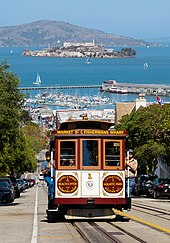
San Francisco Cable car
Thomas Wolf, http://www.foto-tw.de / CC BY-SA (https://creativecommons.org/licenses/by-sa/3.0)
But San Francisco today is not the city it has long been renowned for.
Its major tourist spots are deserted. Its sidewalks are largely free of pedestrians. Many of its best-known stores have been shuttered since mid-March—and many of them may never reopen owing to the financial losses they have incurred.
Its world-famous restaurants no longer offer in-house dining—only take-out or home delivery.
Many of its bus routes have been eliminated. With so many people “sheltering-in-place” in their apartments or houses, the passengers that once carried those routes have largely disappeared.
On March 16, the San Francisco Department of Public Health imposed a shelter-in-place order on city residents. This required them to stay home except for essential needs such as shopping for groceries, getting medications, caring for others and exercising.
The goal of the order: To halt—or at least diminish—the spread of COVID-19.

Coronavirus
The order banned activities considered non-essential: Going to bars, barbers and dinner parties.
Many restaurants offer their fare via Grubhub, Doordash, Caviar or Uber Eats. Some restaurants—notably pizza parlors—use their own employees to deliver food.
This, in turn, demands that potential customers have not only a computer but Internet access. It also demands that they be willing to pay a higher price for food than would be the case if they could dine in.
Another drawback: Choosing what items to order from many restaurants is like choosing what to order in the military: You either accept what they offer—or you do without. Forget about substitutions or additions.
Outdoor exercise is allowed, but gyms are closed.
Some businesses were deemed essential. Among these: Grocery stores, hardware stores, hospitals, drugstores, laundromats, funeral parlors, gas stations, airlines, taxis, rental car companies, childcare facilities, rideshare services.
The effect of the shutdown order on businesses has been devastating.
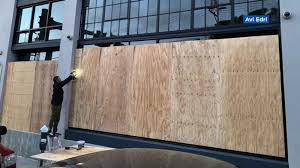
Walk along Market Street—the city’s best-known site for marches and storefronts—and you’ll find store after store not only closed but boarded up. The same for Powell Street, a major tourist magnet.
The city’s internationally famous cable car lines have all been shut down. With “social distancing” the new Golden Rule, cramming people onto small cable cars is no longer an option.
Taxis are still available—but cab drivers have found business difficult to come by, with so many people staying indoors.
The order allowed most marijuana dispensaries to remain open. Bookstores, on the other hand, were ordered closed—and remain so more than two months later.
So businesses selling toxic “medical marijuana” are considered essential. But if you want to buy a copy of Moby Dick at your local bookstore, you’ll have to do it online.
Many businesses started boarding up in April. The reason: Fears that Coronavirus-inspired shortages of items like toilet paper, meat and hand sanitizer might lead to wholesale looting.
Then, on May 25, as if facing a deadly pandemic wasn’t enough of a threat, a new and unexpected reason for fear emerged: The killing of George Floyd, a former black security guard, in Minneapolis, Minnesota.
While Floyd was handcuffed and lying face down on a city street during an arrest, Derek Chauvin, a white Minneapolis police officer, kept his knee on the right side of Floyd’s neck for eight minutes and 46 seconds.

The death of George Floyd
Across the nation, cities were convulsed by protests—including those in the San Francisco Bay Area. Among these: Oakland, San Jose, Emeryville, Walnut Creek and San Francisco itself.
On May 30, an initially peaceful protest march exploded into looting shortly before 9 p.m. as looters broke off and began smashing shop windows and ransacking stores in Union Square and on Market Street.
Among stores looted: A Sak’s Off Fifth Avenue, Old Navy clothing store, a Cartier Boutique, a Coach store. Looters especially targeted CVS and Walgreens drugstores. Liquor stores and a BevMo were also hit.
“Thirty businesses were looted or destroyed,” said David Perry, from Union Square Business Improvement District. A total of 33 arrests were made for “criminal activity.”
That night, San Francisco Mayor London Breed announced that she would impose a citywide curfew beginning May 31, running from 8:00 p.m to 5 a.m.
On the night of May 31, 87 people were arrested for violating the city’s curfew.
Left unstated by city authorities—within San Francisco and across the nation—was this: With so many people massing in streets, many of them unmasked, would this spread COVID-19 even further?
Northern California—and San Francisco in particular—have closely cooperated with “stay-at-home” orders. As a result, COVID-19 cases have remained relatively stable in those areas.
But the street demonstrations may well reverse the results of those months of self-discipline. The truth will be known only weeks from now.
ABC NEWS, ALCATRAZ PRISON, ALTERNET, AMERICABLOG, AP, BABY BOOMER RESISTANCE, BAY AREA RAPID TRANSIT (BART), BLOOMBERG, BOOKSTORES, BUSINESS CLOSURES, BUZZFEED, CABLE CARS, CAVIAR, CBS NEWS, CNN, CORONAVIRUS, COVID-19, CROOKS AND LIARS, DAILY KOZ, DDMBS (DRUGGIES, DEREK CHAUVIN, DONALD TRUMP, DOORDASH, DRUDGE RETORT, DRUNKS, EMERYVILLE, FACEBOOK, FISHERMAN’S WHARF, FIVETHIRTYEIGHT, GEORGE FLOYD, GHIRADELLI SQUARE, GRUBHUB, HARPER’S MAGAZINE, LONDON BREED, LOOTING, MARKET STREET, MASKS, MEDIA MATTERS, MEDICAL MARIJUANA, MENTALS AND BUMS), MOTHER JONES, MOVEON, MSNBC, NBC NEWS, NEWSWEEK, NPR, OAKLAND, PBS NEWSHOUR, POLITICO, POLITICUSUSA, POWELL STREET, RAW STORY, RESTAURANTS, REUTERS, SALON, SAN FRANCISCO, SAN FRANCISCO DEPARTMENT OF PUBLIC HEALTH, SAN FRANCISCO MUNICIPAL RAILWAY (MUNI) SYSTEM, SAN JOSE, SEATTLE TIMES, SLATE, SOCIAL DISTANCING, TALKING POINTS MEMO, THE ATLANTIC, THE CHICAGO SUN-TIMES, THE CHICAGO TRIBUNE, THE DAILY BEAST, THE DAILY BLOG, THE GUARDIAN, THE HILL, THE HUFFINGTON POST, THE LOS ANGELES TIMES, THE NATION, THE NEW REPUBLIC, THE NEW YORK TIMES, THE VILLAGE VOICE, THE WASHINGTON POST, THINKPROGRESS, TIME, TRUTHDIG, TRUTHOUT, TWITTER, TWO POLITICAL JUNKIES, U.S. NEWS & WORLD REPORT, UBER EATS, UPI, USA TODAY, VANDALISM, WALNUT CREEK, WONKETTE
In Bureaucracy, History, Law, Law Enforcement, Politics, Social commentary on June 2, 2020 at 12:05 am
Want to play a new game? Come to San Francisco and play “Count the Stupids.”
Just walk down any major street during a pandemic that’s killed more than 100,000 Americans and count:
- The people who refuse to wear face masks;
- The people wearing face masks below their noses;
- The people wearing face masks around their necks like bandannas.
On some days—depending on how far you walk—you might spot 10 to 60 or more such people.
Those who wear masks below their nose negate the purpose of wearing a mask. If they have COVID-19 and sneeze on someone else who’s not wearing a mask, that person is going to be stricken. And if someone who’s also not wearing a mask sneezes or coughs on them, they will be infected.

Face masks
Many of those wearing masks as bandannas are smoking. Clearly they value getting their intake of cancer as more important than protecting themselves against a deadly virus. Many mask-less men sport heavy beards—which would make a mask impossible to seal properly.
And as for complying with social distancing requirements that put at least six feet between people: Countless people casually pass others only inches away without any apparent concern—for their own safety or that of others.
On May 28, San Francisco Mayor London Breed announced that a new policy would take effect the next day:
San Francisco will enforce the wearing of masks or face coverings when people leave their home and are within 30 feet of anyone that doesn’t live in their household.
That includes when you’re waiting in line to go into a store and when you’re inside shopping. A mask or face covering will not be needed when:
- You’re in a car by yourself;
- You’re with people you live with;
- You’re picnicking with members of your own household and are more than six feet from other groups;
- You’re walking, hiking, running or biking alone or with people you live with.
Even then, you should still have a mask or face covering on hand.
Of course, that will require police to enforce the new ordinance. This in a city where police have refused to crack down on “homeless” encampments—and their piles of feces, hypodermic needles and trash.
For all the kudos offered city residents by Mayor Breed for complying with social distancing, the blunt truth remains that many of them do not. And the fact that Breed felt forced to legally require citizens to wear face masks is a telling point in its own right.
But to return to life in San Francisco in the Age of COVID-19:
Civic Center—which lies directly across from City Hall—might better be renamed COVID-19 Center. Once it housed farmers markets and offered easy access to the Civic Center BART (Bay Area Rapid Transit) station.
Today it is fenced off and serves as shelter for countless “homeless” tents—and all the drugs, trash, alcohol, feces and hypodermic needles that come with this population.

Tent “city” in San Francisco
Of course, Civic Center isn’t the only place in San Francisco where you’ll find huge tents occupied by DDMB’s—Druggies, Drunks, Mentally Ill and Bums.
Walk down almost any major sidewalk and odds are you’ll find your path blocked by one or more huge tents able to house two to four people.
If you’re in a wheelchair or elderly or on crutches, you’ll likely be forced to step into the street or cross the street to continue your journey.
If you call the police on your cell phone, expecting them to remove the tents, you’re in for a big surprise. In bum-loving San Francisco, that sort of action is no longer handled by police.
Instead, they’ll refer you to a “help-the-homeless” agency that specializes in defending the rights of DDMBs over those of law-abiding, tax-paying San Francisco residents.
The “homeless problem” has become so outrageous in San Francisco that Hastings College of the Law—one of the foremost law schools in the nation—recently filed a lawsuit against the city “to end dangerous and illegal conditions in the Tenderloin neighborhood.”
Among its goals: To compel the City
- To clear sidewalks to allow unfettered safe passage for neighborhood residents and workers; and
- To provide healthy and safe solutions for “homeless” people who now use sidewalk encampments as their residence.
And when it comes to public transit: Forget about using the underground stations of the Municipal Railway (MUNI) bus system. Those have been closed since March—allegedly to protect riders and drivers from COVID-19.
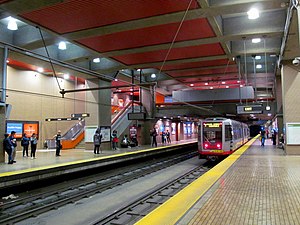
MUNI underground station
Pi.1415926535 / CC BY-SA (https://creativecommons.org/licenses/by-sa/3.0)
MUNI, which serves only San Francisco, has 4,800 employees and an annual budget of $1.28 billion.
The Bay Area Rapid Transit (BART) system serves 33 cities and has an annual budget of $2.3 billion.
Yet BART, which uses many of the same stations is still providing railway service throughout northern California.
MUNI refuses to say why BART has managed to provide service for its passengers—while MUNI has made transit far more complex and time-consuming for its own.
AARON PESKIN, ABC NEWS, AIR POLLUTION, ALTERNET, AMERICABLOG, AP, BABY BOOMER RESISTANCE, BARBARA GARCIA, BAY AREA AIR QUALITY MANAGEMENT DISTRICT (BAAQQMD), BUZZFEED, CATERING, CBS NEWS, CNN, CROOKS AND LIARS, DAILY KOZ, FACEBOOK, FIVETHIRTYEIGHT, FOOD INSPECTION, HEALTH INSPECTION, MERAKAI MARKET, MILLENNIUM TOWER, MOTHER JONES, MOVEON, MSNBC, NAPA, NBC NEWS, NEWSWEEK, NPR, PBS NEWSHOUR, POLITICO, POLITICUSUSA, RAW STORY, REUTERS, SALON, SAN FRANCISCO, SAN FRANCISCO BOARD OF SUPERVISORS, SAN FRANCISCO CHRONICLE, SAN FRANCISCO DEPARTMENT OF BUILDING INSPECTION, SAN FRANCISCO DEPARTMENT OF PUBLIC HEALTH, SEATTLE TIMES, SLATE, SONOMA, STANLEE GATTI, TALKING POINTS MEMO, THE ATLANTIC, THE CHICAGO SUN-TIMES, THE CHICAGO TRIBUNE, THE DAILY BEAST, THE DAILY BLOG, THE GUARDIAN, THE HILL, THE HUFFINGTON POST, THE LOS ANGELES TIMES, THE NATION, THE NEW YORK TIMES, THE WASHINGTON POST, THINKPROGRESS, TIME, TRUTHDIG, TWITTER, U.S. NEWS & WORLD REPORT, UPI, USA TODAY, WOOD STOVES
In Bureaucracy, Business, History, Law, Law Enforcement, Politics, Social commentary on September 19, 2019 at 12:46 am
Officially, government health agencies exist to make our lives safer.
Oftentimes, this simply isn’t true.
Meraki Market opened in October, 2017, at 927 Post Street, directly across from the San Francisco apartment building where Valerie (not her real name) lives.
The main feature of this store—which offers expensive, deli-style food to local residents—is a wood-burning stove. Its fuel is almond and mesquite wood. Mesquite emits an aroma similar to that found in Texas barbecue restaurants.
Since this store opened, Valerie’s apartment—and other apartments on Post, Geary and O’Farrell Streets—has been swathed in thick, foul-smelling smoke that makes eyes water and throats constrict. It clings to clothes and furnishings.
And it poses a threat to tenants’ health.
An article published by the American Lung Association on February 8, 2016, warned: “Wood Burning Stoves Could Be Harming Your Health.” For example:
“…The reality is that smoke from residential wood heaters can be harmful to the health of those in your home and also in your community. This is especially true for people with lung conditions, as well as children, older adults, people with cardiovascular disease and diabetics….
“Smoke from wood-burning stoves can have both short-term and long-term effects. It can trigger coughing, wheezing, asthma attacks, heart attacks, and lead to lung cancer and premature death, among other health effects.
“This is because wood smoke contains fine particle pollution, carbon monoxide, volatile organic compounds, black carbon and air toxics such as benzene. The wood smoke can increase particle pollution to levels that pose serious health concerns both indoors and outdoors. In fact, fine particle pollution (PM2.5) is so tiny that it can get deep into the lungs, harming the lungs, blood vessels and heart.”
The San Francisco Chronicle’s online edition reported: “An inspector with the San Francisco Department of Public Health (DPH) paid Meraki a visit…and found everything in order.”
But this is not as reassuring as it might seem.
The city’s Department of Building Inspection also handed out premature building permits to the notorious Millennium Tower—a luxury residential high-rise in the South of Market district of downtown San Francisco.The result: Since its completion in 2008, the Tower has sunk 17 inches and tilted 14 inches.

The reason: The Millennium Partners did not build on bedrock.
As a result, this 58-story, 645-foot-tall apartment complex is now known as “the leaning tower of San Francisco.”
Meanwhile, Stanlee Gatti, the owner of the market, is one of the best-known event planners in the country. In 1999, he was described by a columnist as one of the three most powerful people in San Francisco.
Gatti’s enormous power as a friend of the city’s top politicians raises the question: “Is he the beneficiary of special consideration?”
The opening of Meraki Market came shortly after the extinguishing of the catastrophic fires in Napa and Sonoma in fall, 2017.
Starting in October, Valerie assumed these fires were still going on because the smell of burning wood was overwhelming the neighborhood.
It was only in early November that she learned the source of the pollution was the market across the street.
While there’s a health concern by those residents forced to live near the pollution-spewing market, it’s not shared by those city officials who don’t live near it.
On January 1, 2018, she emailed her local supervisor, Aaron Peskin. That same day, Peskin replied: “I’m looping in the Department of Public Health to follow up.”
On January 2, Valerie received a second email from Peskin, which contained a notation from Barbara Garcia, an official with the local Department of Public Health: “I’ve added our Environmental Health management for response.”
On January 4, Valerie received that response from the Health Department:
“While we share the concerns for air quality and particulate pollution the outdoor air is primarily regulated by the Bay Area Air Quality Management District (BAAQMD).
“The Department of Public Health’s Environmental Health Branch regulates the safe handling and preparation of the food sold at the market but the outdoor smoke issue is regulated by the BAAQMD.

“So in response to the complaints we received (November 2017) regarding the smoke from this location we directed the owner of Meraki Market to not use or operate the wood burning stove on the BAAQMD designated ‘No Burn Days.’”
Wow! Local residents will be spared breathing polluted air on whatever days BAAQMD deigns to declare as “No Burn Days”!
For those days not so designated—tough luck.
Valerie had already contacted BAAQMD—and found they didn’t have jurisdiction over pollution caused by restaurants. Moreover, one of its inspectors must actually come out and smell or see the pollution while it is occurring.
This is akin to a police department’s refusing to investigate reports of a murder unless one of its detectives actually saw it committed.
Valerie quickly drafted a reply to the Health Department: “Your email offers a textbook example why so many people have given up on government at any level.
“I [expected] the San Francisco Department of Public Health [to show] some interest in addressing the health concerns of a public that’s being daily exposed to toxic air. Obviously, that was a mistake on my part.”
She sent similar emails to Peskin and BAAQMD.
No action has been taken by any agency.
ABC NEWS, ALTERNET, AP, BEDBUGS, BUILDING INSPECTION, BUSINESS, BUZZFEED, CBS NEWS, CHRIS MATHEWS, CNN, CROOKS AND LIARS, DAILY KOZ, FACEBOOK, FEDERAL ASSET FORFEITURE STATUTES, KIP MACY, LANDLORDS, MOTHER JONES, MOVEON, MSNBC, NBC NEWS, NEWSWEEK, NICCOLO MACHIAVELLI, NICOLE MACY, NPR, POLITICO, RAW STORY, RENT CONTROL, RENTERS, REUTERS, ROBERT F. KENNEDY, SALON, SAN FRANCISCO, SAN FRANCISCO DEPARTMENT OF BUILDING INSPECTION, SAN FRANCISCO DEPARTMENT OF PUBLIC HEALTH, SEATTLE TIMES, SLATE, SLUMLORDS, THE ATLANTIC, THE CHICAGO SUN-TIMES, THE CHICAGO TRIBUNE, THE DAILY BEAST, THE GUARDIAN, THE HILL, THE HUFFINGTON POST, THE LOS ANGELES TIMES, THE NATION, THE NEW YORK TIMES, THE WALL STREET JOURNAL, THE WASHINGTON POST, TIME, TWITTER, U.S. NEWS & WORLD REPORT, UPI, USA TODAY, WILLIAM TECUMSEH SHERMAN
In Bureaucracy, History, Law, Law Enforcement, Politics, Social commentary on August 25, 2016 at 1:53 am
City agencies need to see landlords for what they truly are–as, at best, potential predators, if not actual ones. And to act on that knowledge.
As Niccolo Machiavelli warned:
“All those who have written upon civil institutions demonstrate…that whoever desires to found a state and give it laws, must start with assuming that all men are bad and ever ready to display their vicious nature, whenever they may find occasion for it.
“If their evil disposition remains concealed for a time, it must be attributed to some unknown reason; and we must assume that it lacked occasion to show itself. But time, which has been said to be the father of all truth, does not fail to bring it to light.”

Niccolo Machiavelli
The power of slumlords calls to mind the scene in 1987’s The Untouchables, where Sean Connery’s veteran cop tells Eliot Ness: “Everybody knows where the liquor is. It’s just a question of: Who wants to cross Capone?”
Many tenants have lived with rotting floors, bedbugs, nonworking toilets, mice/rats, chipping lead-based paint and other outrages for not simply months but years.
This holds true across the United States. But it also holds true in San Francisco–the “renters’ paradise” where the District Attorney’s Office hasn’t prosecuted a slumlord in decades.

Part Two of this series presented a series of badly-needed, long-overdue reforms for the San Francisco Department of Building Inspection (DBI). This is the agency charged to ensuring safe housing conditions for San Francisco residents.
This concluding part will cover the remainder of those needed reforms.
- Landlords should be required to bring all the units in a building up to existing building codes, and not just those in need of immediate repair.
- Landlords should be legally required to hire a certified-expert contractor to perform building repairs. To save money–that they can well afford to spend–many landlords insist on making such repairs despite their not being trained or experienced in doing so. They thereby risk the health and/or safety of their tenants.
- DBI should not view itself as a “mediation” agency between landlords and tenants. Most landlords hate DBI and will always do so. They believe they should be allowed to treat their tenants like serfs, if not slaves, raise extortionate rents anytime they desire, and maintain their buildings in whatever state they wish. And no efforts by DBI to persuade them of its good intentions will ever change their minds.
- Above all, DBI must stop viewing itself as a regulatory agency and start seeing itself as a law enforcement one. The FBI doesn’t ask criminals to comply with the law. It applies whatever amount of pressure is needed to force their compliance. William Tecumseh Sherman, speaking of the rebellious Southern states, said it best: “They cannot be made to love us, but they may be made to fear us.”
- The San Francisco District Attorney’s Office should create a special unit to investigate and prosecute slumlords. Prosecutors should offer rewards to citizens who provide tips on major outrages by the city’s slumlords.

- Install Rent Control protections for tenants on fixed incomes. San Francisco is notorious for having the highest rents in the nation. A one-bedroom apartment runs $3,448 a month. Even those in the vaunted high-tech industry spend most of their income on rent.
- For tenants on fixed incomes–seniors, disabled, students–the predatory greed of landlords amounts to a staged-in eviction notice. Social Security recipients did not get a cost-of-living increase in 2016 because there had not been a rise in the price of gasoline. But the fact that many of them do not own cars doesn’t mean that the price of everything else–such as groceries–hasn’t sharply risen.
- Allowing landlords to jack up rents to the fullest extent possible every year will eventually drive out all tenants who are not multimillionaires. In fact, an unknown portion of this City’s homeless population doubtless stems from the ability of landlords to gradually raise rents above tenants’ ability to afford them.
- In 1979, San Franciscans passed a Rent Control law to protect tenants against predatory rent hikes and unfair evictions. As a result, a landlord can only raise a tenant’s rent a certain percentage every year. This is set by the set by the Rent Stabilization and Arbitration Board, more popularly known as the “Rent Board.”
- But there is a gaping hole in the law: Once a tenant moves out, the landlord can jack up the rent as high as he wants. This is why the average rent in San Francisco is priced beyond most middle-class wage-earners.
- In addition, landlords are allowed to charge tenants yearly fees to maintain the existence of the Rent Board. This is both unfair and insulting, since the Board was created to protect tenants from predatory landlords. Most tenants have far less money to pay such fees than do landlords, who are free to raise rents every year. And landlords–unlike tenants–can and do write off Rent Board fees on their taxes every year. Thus, landlords–not tenants–should be paying the fees.
As Robert F. Kennedy wrote: “Every society gets the kind of criminal it deserves. What is equally true is that every community gets the kind of law enforcement it insists on.”
ABC NEWS, ALTERNET, AP, BEDBUGS, BUILDING INSPECTION, BUSINESS, BUZZFEED, CBS NEWS, CHRIS MATHEWS, CNN, CROOKS AND LIARS, DAILY KOZ, FACEBOOK, FEDERAL ASSET FORFEITURE STATUTES, KIP MACY, LANDLORDS, MOTHER JONES, MOVEON, MSNBC, NBC NEWS, NEWSWEEK, NICCOLO MACHIAVELLI, NICOLE MACY, NPR, POLITICO, RAW STORY, RENT BOARD, RENT CONTROL, RENTERS, REUTERS, ROBERT F. KENNEDY, SALON, SAN FRANCISCO, SAN FRANCISCO DEPARTMENT OF BUILDING INSPECTION, SAN FRANCISCO DEPARTMENT OF PUBLIC HEALTH, SEATTLE TIMES, SLATE, SLUMLORDS, THE ATLANTIC, THE CHICAGO SUN-TIMES, THE CHICAGO TRIBUNE, THE DAILY BEAST, THE GUARDIAN, THE HILL, THE HUFFINGTON POST, THE LOS ANGELES TIMES, THE NATION, THE NEW YORK TIMES, THE WALL STREET JOURNAL, THE WASHINGTON POST, TIME, TWITTER, U.S. NEWS & WORLD REPORT, UPI, USA TODAY, WILLIAM TECUMSEH SHERMAN
In Bureaucracy, History, Law, Law Enforcement, Politics, Social commentary on August 24, 2016 at 12:28 am
The San Francisco Department of Building Inspection (DBI) has long been outmaneuvered by predatory, law-breaking landlords.
And San Francisco renters–many of them elderly, poor and/or disabled–have been the victims of landlord greed, neglect and/or harassment.

Among the reforms that DBI should immediately enact:
- Hit slumlord violators with a fine–payable immediately–for at least $2,000 to $5,000 for each health/safety-code violation.The slumlord would be told he could reclaim 75-80% of the money only if he fully corrected the violation within 30 days. The remaining portion of the levied fine would go into the City coffers, to be shared among DBI and other City agencies.
- This would put the onus on the slumlord, not DBI. Appealing to his greed would ensure his willingness to comply with the ordered actions. As matters now stand, it is DBI who must repeatedly check with the slumlord to find out if its orders have been complied with.
- If the landlord failed to comply with the actions ordered within 30 days, the entire fine would go into the City’s coffers–to be divided among DBI and other agencies charged with protecting San Francisco residents.
- In addition. he would be hit again with a fine at least twice the amount of the first one.
- Inspectors for DBI should be allowed to cite landlords for violations that fall under the jurisdiction of the Department of Public Health (DPH). They could then pass the information to DPH for its own investigation.
- If the DBI inspector later discovered that the landlord had not corrected the DPH violation within a designated time-period, DBI should be allowed to levy its own fine for his failure to do so.
- If DPH objects to this, DBI should propose that DPH’s own inspectors be armed with similar cross-jurisdictional authority. Each agency would thus have increased motivation for spotting and correcting health/safety violations that threaten the lives of San Francisco residents.
- This would instantly turn DBI and DPH into allies, not competitors. And it would mean that whether a citizen called DBI or DPH, s/he could be assured of getting the necessary assistance. As matters now stand, many residents are confused by the conflicting jurisdictions of both agencies.
- DBI should insist that its Inspectors Division be greatly expanded. DBI can attain this by arguing that reducing the number of Inspectors cuts (1) protection for San Francisco renters–and (2) monies that could go to the general City welfare.
- The Inspection Division should operate independently of DBI. Currently, too many high-ranking DBI officials tilt toward landlords because they are landlords themselves.
- DBI should create a Special Research Unit to compile records on the worst slumlord offenders. Thus, a slumlord with a repeat history of defying DBI Notices of Violation could be treated more harshly than a landlord who was a first-time offender.
- Turning DBI into a revenue-producing agency would enable the City to raise desperately-needed revenues–in a highly popular way. Fining delinquent slumlords would be as unpopular as raising taxes on tobacco companies. Only slumlords and their hired lackey allies would object.
- DBI should legally require landlords to rehabilitate a unit every time a new tenant moves in, or have it examined by a DBI inspector every two years. A tenant can occupy a unit for ten or more years, then die or move out, and the landlord immediately rents the unit to the first person who comes along, without making any repairs or upgrades whatsoever.
- Slumlords, unlike drug-dealers, can’t move their buildings from one street or city to another. If they want to make money in San Francisco, they will have to submit to the jurisdiction of landlord-regulating agencies.
- DBI should require landlords to post their Notices of Violation in public areas of their buildings–on pain of serious financial penalties for failing to do so. When DBI orders a slumlord to take corrective action, s/he is the only one who is notified. If that slumlord refuses to comply with that directive, s/he is the only one who knows it. Given the pressing demands on DBI, weeks or months will pass before the agency learns about this violation of its orders. Tenants have a right to know if their landlord is complying with the law–so they can promptly notify inform DBI if a violation is occurring.

- Landlords should be legally required to give each tenant a list of the major city agencies (such as DBI, the Rent Board and the Department of Public Health) that exist to help tenants solve problems with their housing.
- DBI should launch–and maintain–a citywide advertising campaign to alert residents about its services. Everyone knows the FBI pursues bank robbers. But too many San Franciscans don’t even know that DBI exists, let alone what laws it enforces. This should be an in-your-face campaign: “Do you have bedbugs in your apartment? Has your stove stopped working? Are you afraid to ride in your building elevator because it’s always malfunctioning? Have you complained to your landlord and gotten the runaround? Then call DBI at—- Or drop us an email at_____.”
ABC NEWS, ALTERNET, AP, BEDBUGS, BUILDING INSPECTION, BUSINESS, BUZZFEED, CBS NEWS, CHRIS MATHEWS, CNN, CROOKS AND LIARS, DAILY KOZ, FACEBOOK, FEDERAL ASSET FORFEITURE STATUTES, KIP MACY, LANDLORDS, MOTHER JONES, MOVEON, MSNBC, NBC NEWS, NEWSWEEK, NICCOLO MACHIAVELLI, NICOLE MACY, NPR, POLITICO, RAW STORY, RENT BOARD, RENT CONTROL, RENTERS, REUTERS, ROBERT F. KENNEDY, SALON, SAN FRANCISCO, SAN FRANCISCO DEPARTMENT OF BUILDING INSPECTION, SAN FRANCISCO DEPARTMENT OF PUBLIC HEALTH, SEATTLE TIMES, SLATE, SLUMLORDS, THE ATLANTIC, THE CHICAGO SUN-TIMES, THE CHICAGO TRIBUNE, THE DAILY BEAST, THE GUARDIAN, THE HILL, THE HUFFINGTON POST, THE LOS ANGELES TIMES, THE NATION, THE NEW YORK TIMES, THE WALL STREET JOURNAL, THE WASHINGTON POST, TIME, TWITTER, U.S. NEWS & WORLD REPORT, UPI, USA TODAY, WILLIAM TECUMSEH SHERMAN
In Bureaucracy, History, Law, Law Enforcement, Politics, Social commentary on August 23, 2016 at 12:04 am
To hear slumlords tell it, San Francisco is a “renters’ paradise,” where obnoxious, lazy, rent-evading tenants constantly take advantage of hard-working, put-upon landlords.
Don’t believe it.
And in case you’re inclined to anyway, consider the story of Kip and Nicole Macy, two San Francisco slumlords who recently pled guilty to felony charges of residential burglary, stalking and attempted grand theft.

Nicole and Kip Macy
Determined to evict rent control-protected tenants from their apartment building in the South of Market district, they unleashed a reign of terror in 2006:
- Cut holes in the floor of one tenant’s living room with a power saw–while he was inside his unit.
- Cut out sections of the floor joists to make the building collapse.
- Threatened to shoot Ricardo Cartagena, their property manager, after he refused to make the cuts himself.
- Changed the locks to Cartagena’s apartment, removed all of his belongings and destroyed them.
- Created fictitious email accounts to appear as a tenant who had filed a civil suit against the Macys–and used these to fire the tenant’s attorney.
- Cut the tenants’ telephone lines and shut off their electricity, gas and water.
- Changed the locks on all the apartments without warning.
- Mailed death threats.
- Kicked one of their tenants in the ribs.
- Hired workers to board up a tenant’s windows from the outside while he still lived there.
- Falsely reported trespassers in a tenant’s apartment, leading police to hold him and a friend at gunpoint.
- Broke into the units of three tenants and removed all their belongings.
- Again broke into the units of the same three victims and soaked their beds, clothes and electronics with amonia.
The Macys were arrested in April, 2008, posted a combined total of $500,000 bail and then fled the country after being indicted in early 2009.
In May, 2012, Italian police arrested and deported them back to America a year later.
Having pled guilty, they were sentenced in September, 2013, to a prison term of four years and four months.
How could such a campaign of terror go on for two years against law-abiding San Francisco tenants?
Simple.
Even in the city misnamed as a “renter’s paradise,” slumlords are treated like gods by the very agencies that are supposed to protect tenants against their abuses.

The power of slumlords calls to mind the scene in 1987’s The Untouchables, where Sean Connery’s veteran cop tells Eliot Ness: “Everybody knows where the liquor is. It’s just a question of: Who wants to cross Capone?”
Everybody in San Francisco knows who the slumlords are. But the District Attorney’s Office hasn’t criminally prosecuted a slumlord in decades.
Many tenants have lived with rotting floors, bedbugs, nonworking toilets, mice/rats, chipping lead-based paint and other outrages for not simply months but years.
Consider the situation at the San Francisco Department of Building Inspection (DBI), which is charged with ensuring that apartment buildings are in habitable condition.
Under San Francisco law:
- A landlord is automatically given 30 days to correct a health/safety violation. If he drags his feet on the matter, the tenant must live with that problem until it’s resolved.
- If the landlord claims for any reason that he can’t fix the problem within one month, DBI doesn’t demand that he prove this. Instead, it automatically gives him another month.
- A slumlord has to work at being hit with a fine—by letting a problem go uncorrected for three to six months.
- And even then, repeat slumlord offenders often avoid the fine by pleading for leniency.
- That’s because many DBI officials are themselves landlords.
But the situation doesn’t have to remain this way.
How could it be changed?
By learning some valuable lessons from the “war on drugs” and applying them to regulating slumlords.
Consider:
- At least 400,000 rape kits containing critical DNA evidence that could convict rapists sit untested in labs around the country.
- But illegal drug kits are automatically rushed to the had of the line.
It isn’t simply because local/state/Federal lawmen universally believe that illicit drugs pose a deadly threat to the Nation’s security.
It’s because:
- Federal asset forfeiture laws allow the Justice Department to seize properties used to “facilitate” violations of Federal anti-drug laws.
- Local and State law enforcement agencies are allowed to keep some of the proceeds once the property has been sold.
- Thus, financially-strapped police agencies have found that pursuing drug-law crimes is a great way to fill their own coffers.
- Prosecutors and lawmen view the seizing of drug-related properties as crucial to eliminating the financial clout of drug-dealing operations.
It’s long past time for San Francisco agencies to apply the same attitude–and methods–toward slumlords. 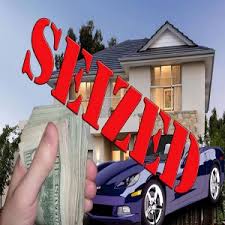
DBI should become not merely a law enforcing agency but a revenue-creating one. And those revenues should come from predatory slumlords who routinely violate the City’s laws protecting tenants.
By doing so, DBI could vastly:
- Enhance its own prestige and authority;
- Improve living conditions for thousands of San Francisco renters; and
- Bring millions of desperately-needed dollars into the City’s cash-strapped coffers.
ABC NEWS, BEDBUGS, BUILDING INSPECTION, BUSINESS, CBS NEWS, CHRIS MATHEWS, CNN, FACEBOOK, FEDERAL ASSET FORFEITURE STATUTES, KIP MACY, LANDLORDS, NBC NEWS, NICOLE MACY, RENT CONTROL, RENTERS, SAN FRANCISCO, SAN FRANCISCO DEPARTMENT OF BUILDING INSPECTION, SAN FRANCISCO DEPARTMENT OF PUBLIC HEALTH, SLUMLORDS, THE HUFFINGTON POST, THE NEW YORK TIMES, THE WALL STREET JOURNAL, THE WASHINGTON POST, TWITTER
In Bureaucracy, History, Law, Law Enforcement, Politics, Social commentary on January 1, 2016 at 12:57 am
Slumlords would have everyone believe that San Francisco is a “renters’ paradise.” A place where hard-working landlords are routinely taken advantage of by rent-avoiding bums who want to be constantly pampered.
On the contrary: It’s not renters who hold “untouchable” status, but slumlords themselves.

If you doubt it, you need only review the case of slumlords Kip and Nicole Macy. They waged a two-year war on their rent-paying tenants to force them out of their South of Market building.
The reason: The Macys wanted to get them out of their rent-controlled apartments so they could rent these out to tenants who could afford extortionate rents.
For two years, the police and district attorney’s office stood by while the Macys aimed threats, vandalism, illegal lockouts and violence at their law-abiding tenants.
The Macys have since been convicted and will be sentenced to four years and four months imprisonment. But this case is a rarity for the San Francisco District Attorney’s Office.
Meanwhile, thousands of San Francisco tenants have lived with rotting floors, nonworking toilets, chipping lead-based paint and other outrages for not simply months but years.
But San Francisco tenants need not be put at the mercy of greedy, arrogant slumlords. And the agencies that are supposed to protect them need not be reduced to impotent farces.
The San Francisco District Attorney’s Office should create a special unit to investigate and prosecute slumlords. Prosecutors should offer rewards to citizens who provide tips on major outrages by the city’s slumlords.
And the San Francisco Department of Building Inspection–which is charged with guaranteeing the habitability of apartment buildings–should immediately adopt a series of long-overdue refirms.
By doing so, it can:
- Vastly enhance its own prestige and authority;
- Improve living conditions for thousands of San Francisco renters; and
- Bring millions of desperately-needed dollars into the City’s cash-strapped coffers.
In Part 2 of this series I outlined 14 such reforms. In this concluding column, I will outline the remaining eight:
- DBI should order landlords to post their Notices of Violation in public areas of their buildings–on pain of serious financial penalties for failing to do so. When DBI orders a slumlord to take corrective action, s/he is the only person who is notified. Thus, if that slumlord refuses to comply with those directives, s/he is the only one who realizes it. Given the pressing demands on DBI, weeks or months will pass before the agency learns about this violation of its orders. Tenants have a right to know if their landlord is complying with the law.
- DBI should launch–and maintain–a city-wide advertising campaign to alert residents to its services. Everyone knows the FBI pursues bank robbers, but too many San Franciscans do not even know that DBI exists, let alone what laws it enforces. This should be an in-your-face campaign: “Do you have bedbugs in your apartment? Has your stove stopped working? Are you afraid to ride in your building elevator because it keeps malfunctioning? Have you complained to your landlord and gotten nowhere? Then call DBI at —–. Or drop us an email at ——.”
- Landlords should be legally required to give each tenant a list of the major city agencies (such as DBI, Department of Public Health and the Rent Board) that exist to help tenants resolve problems with their housing.
- Landlords should be legally required to rehabilitate a unit every time a new tenant moves in, or at least have it examined by a DBI inspector every two years. A tenant can occupy a unit for ten or more years, then die or move out, and the landlord immediately rents the unit to the first person who comes along, without making any repairs or upgrades whatsoever.
- Landlords should be required to bring all the units in a building up to existing building codes, and not just those in need of immediate repair.
- Landlords should be legally required to hire a certified-expert contractor to perform building repairs. Many landlords insist on making such repairs despite their not being trained or experienced in doing so, thereby risking the lives of their tenants.
- DBI should not view itself as a “mediation” agency between landlords and tenants. Most landlords hate DBI and will always do so. They believe they should be allowed to treat their tenants like serfs, raise extortionate rents anytime they desire, and maintain their buildings in whatever state they wish. And no efforts by DBI to persuade them of its good intentions will ever change their minds.
- Above all, DBI must stop viewing itself as a mere regulatory agency and start seeing itself as a law enforcement one. The FBI doesn’t ask criminals to comply with the law; it applies whatever amount of force is needed to gain their compliance. Niccolo Machiavelli said it best: If you can’t be loved by your enemies, then at least make yourself respected by them.
As Robert F. Kennedy wrote: “Every society gets the kind of criminal it deserves. What is equally true is that every community gets the kind of law enforcement it insists on.”
ABC NEWS, BEDBUGS, BUILDING INSPECTION, BUSINESS, CBS NEWS, CHRIS MATHEWS, CNN, FACEBOOK, FEDERAL ASSET FORFEITURE STATUTES, KIP MACY, LANDLORDS, NBC NEWS, NICOLE MACY, RENT CONTROL, RENTERS, SAN FRANCISCO, SAN FRANCISCO DEPARTMENT OF BUILDING INSPECTION, SAN FRANCISCO DEPARTMENT OF PUBLIC HEALTH, SLUMLORDS, THE HUFFINGTON POST, THE NEW YORK TIMES, THE WALL STREET JOURNAL, THE WASHINGTON POST, TWITTER, WAR ON DRUGS
In Bureaucracy, History, Law, Law Enforcement, Politics, Social commentary on December 31, 2015 at 12:01 am
The “war on drugs” has some valuable lessons to teach the San Francisco Department of Building Inspection (DBI) which is charged with protecting tenants against predatory landlords.
Consider:
- At least 400,000 rape kits containing critical DNA evidence that could convict rapists sit untested in labs around the country.
- But illegal drug kits are automatically rushed to the had of the line.
It isn’t simply because local/state/Federal lawmen universally believe that illicit drugs pose a deadly threat to the Nation’s security.
It’s because:
- Federal asset forfeiture laws allow the Justice Department to seize properties used to “facilitate” violations of Federal anti-drug laws.
- Local and State law enforcement agencies are allowed to keep some of the proceeds once the property has been sold.
- Thus, financially-strapped police agencies have found that pursuing drug-law crimes is a great way to fill their own coffers.
- Prosecutors and lawmen view the seizing of drug-related properties as crucial to eliminating the financial clout of drug-dealing operations.
It’s long past time for DBI to apply the same attitude–and methods–toward slumlords.

DBI should become not merely a law-enforcing agency but a revenue-creating one. And those revenues should come from predatory slumlords who routinely violate the City’s laws protecting tenants.
By doing so, DBI could vastly:
- Enhance its own prestige and authority;
- Improve living conditions for thousands of San Francisco renters; and
- Bring millions of desperately-needed dollars into the City’s cash-strapped coffers
Among those reforms it should immediately enact:
- Hit slumlord violators up-front with a fine–payable immediately–for at least $2,000 to $5,000 for each health/safety-code violation.
- The slumlord would be told he could reclaim 75-80% of the money onlyif he fully corrected the violation within 30 days. The remaining portion of the levied fine would go into the City coffers, to be shared among DBI and other City agencies.
- This would put the onus on the slumlord, not DBI. Appealing to his greed would ensure his willingness to comply with the ordered actions. As matters now stand, it is DBI who must repeatedly check with the slumlord to find out if its orders have been complied with.
- If the landlord failed to comply with the actions ordered within 30 days, the entire fine would go into the City’s coffers–to be dividedamong DBI and other agencies charged with protecting San Francisco residents.
- In addition, he would be hit again with a fine that’s at least twice the amount of the first one.
- Inspectors for DBI should be allowed to cite landlords for violations that fall under the jurisdiction of the Department of Public Health. They can then pass the information on to DPH for its own investigation.
- If the DBI Inspector later discovers that the landlord has not corrected the violation within a designated time-period, DBI should be allowed to levy its own fine for his failure to do so.
- If DPH objects to this, DBI should propose that DPH’s own Inspectorsbe armed with similar cross-jurisdictional authority. Each agency would thus have increased motivation for spotting and correcting health/safety violations that threaten the lives of San Francisco residents.
- This would instantly turn DBI and DPH into allies, not competitors. And it would mean that whether a citizen called DBI or DPH, s/he could be assured of getting necessary assistance. As matters now stand, many residents are confused by the conflicting jurisdictions of both agencies.
- DBI should insist that its Inspectors Division be greatly expanded. DBI can attain this by arguing that reducing the number of Inspectors cuts (1) protection for San Francisco renters–and (2) monies that could go to the general City welfare.
- The Inspection Division should operate independently of DBI. Currently, too many high-ranking DBI officials tilt toward landlords because they are landlords themselves.
- DBI should create a Special Research Unit that would compile records on the worst slumlord offenders. Thus, a slumlord with a repeat history of defying DBI NOVs could be treated more harshly than a landlord who was a first-time offender.
- Turning DBI into a revenue-producing one would enable the City to raise desperately-needed revenues—in a highly popular way. Fining delinquent slumlords would be as unpopular as raising taxes on tobacco companies. Only slumlords and their hired lackey allies would object.
- Slumlords, unlike drug-dealers, can’t move their operations from one street or city to another. Landlords aren’t going to demolish their buildings and move them somewhere else.
ABC NEWS, BEDBUGS, BUILDING INSPECTION, BUSINESS, CBS NEWS, CHRIS MATHEWS, CNN, FACEBOOK, FEDERAL ASSET FORFEITURE STATUTES, KIP MACY, LANDLORDS, NBC NEWS, NICOLE MACY, RENT CONTROL, RENTERS, SAN FRANCISCO, SAN FRANCISCO DEPARTMENT OF BUILDING INSPECTION, SAN FRANCISCO DEPARTMENT OF PUBLIC HEALTH, SLUMLORDS, THE HUFFINGTON POST, THE NEW YORK TIMES, THE WALL STREET JOURNAL, THE WASHINGTON POST, TWITTER, WAR ON DRUGS
In Bureaucracy, History, Law, Law Enforcement, Politics, Social commentary on December 30, 2015 at 2:32 pm
To hear slumlords tell it, San Francisco is a “renters’ paradise,” where obnoxious, lazy, rent-evading tenants constantly take advantage of hard-working, put-upon landlords.
Don’t believe it.
And in case you’re inclined to anyway, consider the story of Kip and Nicole Macy, two San Francisco slumlords who recently pled guilty to felony charges of residential burglary, stalking and attempted grand theft.

Kip Macy

Nicole Macy
Determined to evict rent control-protected tenants from their apartment building in the South of Market district, they unleashed a reign of terror in 2006:
- Cut holes in the floor of one tenant’s living room with a power saw–while he was inside his unit.
- Cut out sections of the floor joists to make the building collapse.
- Threatened to shoot Ricardo Cartagena, their property manager, after he refused to make the cuts himself.
- Changed the locks to Cartagena’s apartment, removed all of his belongings and destroyed them.
- Created fictitious email accounts to appear as a tenant who had filed a civil suit against the Macys–and used these to fire the tenant’s attorney.
- Cut the tenants’ telephone lines and shut off their electricity, gas and water.
- Changed the locks on all the apartments without warning.
- Mailed death threats.
- Kicked one of their tenants in the ribs.
- Hired workers to board up a tenant’s windows from the outside while he still lived there.
- Falsely reported trespassers in a tenant’s apartment, leading police to hold him and a friend at gunpoint.
- Broke into the units of three tenants and removed all their belongings.
- Again broke into the units of the same three victims and soaked their beds, clothes and electronics with amonia.
The Macys were arrested in April, 2008, posted a combined total of $500,000 bail and then fled the country after being indicted in early 2009.
In May, 2012, Italian police arrested them and deported them back to America a year later.
Having pled guilty, they were sentenced in September, 2013, to a prison term of four years and four months.
How could such a campaign of terror go on for two years against law-abiding San Francisco tenants?
Simple.
Even in the city misnamed as a “renter’s paradise,” slumlords are treated like gods by the very agencies that are supposed to protect tenants against their abuses.
The power of slumlords calls to mind the scene in 1987’s The Untouchables, where Sean Connery’s veteran cop tells Eliot Ness: “Everybody knows where the liquor is. It’s just a question of: Who wants to cross Capone?”
Many tenants have lived with rotting floors, bedbugs, nonworking toilets, mice/rats, chipping lead-based paint and other outrages for not simply months but years.
Consider the situation at the San Francisco Department of Building Inspection, which is supposed to ensure that apartment buildings are in habitable condition:
- A landlord is automatically given 30 days to correct a health/safety violation. If he drags his feet on the matter, the tenant must live with that problem until it’s resolved.
- If the landlord claims for any reason that he can’t fix the problem within one month, DBI doesn’t demand that he prove this. Instead, it automatically gives him another month.
- A slumlord has to work at being hit with a fine—by letting a problem go uncorrected for three to six months.
- And even then, repeat slumlord offenders often avoid the fine by pleading for leniency.
- That’s because many DBI officials are themselves landlords.
But the situation doesn’t have to remain this way.
DBI could:
- Vastly enhance its own prestige and authority
- Improve living conditions for thousands of San Francisco renters, and
- Bring millions of desperately-needed dollars into the City’s cash-strapped coffers.
How?
By learning some valuable lessons from the “war on drugs” and applying them to regulating slumlords.
Consider:
- At least 400,000 rape kits containing critical DNA evidence that could convict rapists sit untested in labs around the country.
- But illegal drug kits are automatically rushed to the had of the line.
It isn’t simply because local/state/Federal lawmen universally believe that illicit drugs pose a deadly threat to the Nation’s security.
It’s because:
- Federal asset forfeiture laws allow the Justice Department to seize properties used to “facilitate” violations of Federal anti-drug laws.
- Local and State law enforcement agencies are allowed to keep some of the proceeds once the property has been sold.
- Thus, financially-strapped police agencies have found that pursuing drug-law crimes is a great way to fill their own coffers.
- Prosecutors and lawmen view the seizing of drug-related properties as crucial to eliminating the financial clout of drug-dealing operations.
It’s long past time for San Francisco agencies to apply the same attitude–and methods–toward slumlords.
In my next column I will lay out how this can be done.
ABC NEWS, BEDBUGS, BUILDING INSPECTION, BUSINESS, CBS NEWS, CNN, ELLIS ACT, FACEBOOK, FEDERAL ASSET FORFEITURE STATUTES, LANDLORDS, MAFIA, NBC NEWS, ORGANIZED CRIME, RENT CONTROL, RENTERS, ROBERT F. KENNEDY, SAN FRANCISCO, SAN FRANCISCO DEPARTMENT OF BUILDING INSPECTION, SAN FRANCISCO DEPARTMENT OF PUBLIC HEALTH, SLUMLORDS, THE HUFFINGTON POST, THE NEW YORK TIMES, THE WALL STREET JOURNAL, THE WASHINGTON POST, TWITTER, URBAN GREEN INVESTMENTS
In Bureaucracy, Law, Law Enforcement, Social commentary on July 18, 2014 at 6:23 am
San Francisco tenants need not be put at the mercy of greedy, arrogant slumlords. And the agencies that are supposed to protect them need not be reduced to impotent farces.
The San Francisco Department of Building Inspection (DBI)–which is charged with guaranteeing the habitability of apartment buildings–should immediately adopt a series of long-overdue refirms.
Presently, there is no bureaucratic incentive for DBI to rigorously control the criminality of slumlords. But this can be instilled–by making DBI merely a law-enforcing agency but a revenue-creating one.
Parts One and Two of this series outlined a series of long overdue reforms at DBI. Here are the remaining four:
- Landlords should be required to bring all the units in a building up to existing building codes, and not just those in need of immediate repair.
- Landlords should be legally required to hire a certified-expert contractor to perform building repairs. Many landlords insist on making such repairs despite their not being trained or experienced in doing so, thereby risking the lives of their tenants.
- DBI should not view itself as a “mediation” agency between landlords and tenants. Most landlords hate DBI and will always do so. They believe they should be allowed to treat their tenants like serfs, raise extortionate rents anytime they desire, and maintain their buildings in whatever state they wish. And no efforts by DBI to persuade them of its good intentions will ever change their minds.
- Above all, DBI must stop viewing itself as a mere regulatory agency and start seeing itself as a law enforcement one. The FBI doesn’t ask criminals to comply with the law; it applies whatever amount of force is needed to gain their compliance. As Niccolo Machiavelli once advised: If you can’t be loved by your enemies, then at least make yourself respected by them.
By doing so, DBI could vastly:
- Enhance its own prestige and authority;
- Improve living conditions for thousands of San Francisco renters; and
- Bring millions ofdesperately-needed dollars into the City’s cash-strapped coffers
And such reforms are equally overdue at the San Francisco District Attorney’s office. Among these:
- Creating a special unit to investigate and prosecute slumlords.
- This should be modeled on existing units that attack organized crime, with slumlords targeted as major criminals.
- Wiretaps and electronic surveillance should be routinely used.
- Prosecutors should strive for lengthy prison terms and heavy fines.
- Rewards should be offered to citizens who provide tips on major outrages by the city’s slumlords.
By doing so, it can:
- Vastly enhance its own prestige and authority;
- Improve living conditions for thousands of San Francisco renters; and
- Bring millions of desperately-needed dollars into the City’s cash-strapped coffers.
But slumlord atrocities are by no means confined to San Francisco. This is a crisis that needs to be confronted at State and Federal levels.
Many cities lack adequate funding to effectively investigate and prosecute slumlord abuses. And even when the money exists for such efforts, the will to redress such abuses is often lacking.
Thus, legislation is essential at State and Federal levels to ensure that law-abiding tenants are protected against law-breaking slumlords.
At the core of this effort must be a revised view of slumlords. They should be seen, investigated and prosecuted in the same way as Mafia predators.
Their crimes are not “victimless.” And their victims are usually those who are too poor to effectively fight back.
And, like the Mafia, they easily buy public officials–including law enforcement agents–and/or hide their crimes behind teams of expensive attorneys.

At the Federal level, the Justice Department should designate a special section within the FBI to investigate and prosecute slumlord abuses.
Or this could be set up within the U.S. Department of Housing and Urban Development.
- This should be modeled on existing strike force units that attack organized crime, with slumlords targeted as major criminals.
- Court-ordered wiretaps and electronic surveillance should be routinely used.
- Rewards should be offered to citizens who provide tips on major outrages by the city’s slumlords.
- Prosecutors should strive for lengthy prison terms and heavy fines.
- Slumlords’ properties should be sold at public auctions, with the monies divided among various Federal agencies.
- The tenants living in those properties would not be evicted. They would instead now live under a new, law-abiding landlord.
At the State level, similar tenant-protection units should be created within the Department of Justice.
The power of slumlords calls to mind the scene in 1987′s The Untouchables, where Sean Connery’s veteran cop tells Eliot Ness: “Everybody knows where the liquor is. It’s just a question of: Who wants to cross Capone?”
It’s long past time for local, state and Federal governments to forcefully speak up on behalf of American tenants who cannot defend themselves against predatory slumlords.
As Robert F. Kennedy wrote: “Every society gets the kind of criminal it deserves. What is equally true is that every community gets the kind of law enforcement it insists on.”


 Bureaucracybuster's Blog
ABC NEWS, ALCATRAZ PRISON, ALTERNET, AMERICABLOG, AP, BABY BOOMER RESISTANCE, BAY AREA RAPID TRANSIT (BART), BLOOMBERG, BOOKSTORES, BUSINESS CLOSURES, BUZZFEED, CABLE CARS, CAVIAR, CBS NEWS, CNN, CORONAVIRUS, COVID-19, CROOKS AND LIARS, DAILY KOZ, DDMBS (DRUGGIES, DEREK CHAUVIN, DONALD TRUMP, DOORDASH, DRUDGE RETORT, DRUNKS, EMERYVILLE, FACEBOOK, FISHERMAN’S WHARF, FIVETHIRTYEIGHT, GEORGE FLOYD, GHIRADELLI SQUARE, GRUBHUB, HARPER’S MAGAZINE, LONDON BREED, LOOTING, MARKET STREET, MASKS, MEDIA MATTERS, MEDICAL MARIJUANA, MENTALS AND BUMS), MOTHER JONES, MOVEON, MSNBC, NBC NEWS, NEWSWEEK, NPR, OAKLAND, PBS NEWSHOUR, POLITICO, POLITICUSUSA, POWELL STREET, RAW STORY, RESTAURANTS, REUTERS, SALON, SAN FRANCISCO, SAN FRANCISCO DEPARTMENT OF PUBLIC HEALTH, SAN FRANCISCO MUNICIPAL RAILWAY (MUNI) SYSTEM, SAN JOSE, SEATTLE TIMES, SLATE, SOCIAL DISTANCING, TALKING POINTS MEMO, THE ATLANTIC, THE CHICAGO SUN-TIMES, THE CHICAGO TRIBUNE, THE DAILY BEAST, THE DAILY BLOG, THE GUARDIAN, THE HILL, THE HUFFINGTON POST, THE LOS ANGELES TIMES, THE NATION, THE NEW REPUBLIC, THE NEW YORK TIMES, THE VILLAGE VOICE, THE WASHINGTON POST, THINKPROGRESS, TIME, TRUTHDIG, TRUTHOUT, TWITTER, TWO POLITICAL JUNKIES, U.S. NEWS & WORLD REPORT, UBER EATS, UPI, USA TODAY, VANDALISM, WALNUT CREEK, WONKETTE
THE CHANGED FACE OF SAN FRANCISCO: PART TWO (END)
In Bureaucracy, History, Law, Law Enforcement, Politics, Social commentary on June 3, 2020 at 12:25 amSan Francisco has long been one of the most-loved cities in the United States.
Millions of tourists—from both other parts of the United States as well as around the world—visit this city every year to ride its famous cable cars and dine in its magnificent restaurants.
To visit the ruins of its infamous prison, Alcatraz, eat Ghiradelli ice cream in Ghiradelli Square and buy souveniers at nearby Fisherman’s Wharf.
San Francisco Cable car
Thomas Wolf, http://www.foto-tw.de / CC BY-SA (https://creativecommons.org/licenses/by-sa/3.0)
But San Francisco today is not the city it has long been renowned for.
Its major tourist spots are deserted. Its sidewalks are largely free of pedestrians. Many of its best-known stores have been shuttered since mid-March—and many of them may never reopen owing to the financial losses they have incurred.
Its world-famous restaurants no longer offer in-house dining—only take-out or home delivery.
Many of its bus routes have been eliminated. With so many people “sheltering-in-place” in their apartments or houses, the passengers that once carried those routes have largely disappeared.
On March 16, the San Francisco Department of Public Health imposed a shelter-in-place order on city residents. This required them to stay home except for essential needs such as shopping for groceries, getting medications, caring for others and exercising.
The goal of the order: To halt—or at least diminish—the spread of COVID-19.
Coronavirus
The order banned activities considered non-essential: Going to bars, barbers and dinner parties.
Many restaurants offer their fare via Grubhub, Doordash, Caviar or Uber Eats. Some restaurants—notably pizza parlors—use their own employees to deliver food.
This, in turn, demands that potential customers have not only a computer but Internet access. It also demands that they be willing to pay a higher price for food than would be the case if they could dine in.
Another drawback: Choosing what items to order from many restaurants is like choosing what to order in the military: You either accept what they offer—or you do without. Forget about substitutions or additions.
Outdoor exercise is allowed, but gyms are closed.
Some businesses were deemed essential. Among these: Grocery stores, hardware stores, hospitals, drugstores, laundromats, funeral parlors, gas stations, airlines, taxis, rental car companies, childcare facilities, rideshare services.
The effect of the shutdown order on businesses has been devastating.
Walk along Market Street—the city’s best-known site for marches and storefronts—and you’ll find store after store not only closed but boarded up. The same for Powell Street, a major tourist magnet.
The city’s internationally famous cable car lines have all been shut down. With “social distancing” the new Golden Rule, cramming people onto small cable cars is no longer an option.
Taxis are still available—but cab drivers have found business difficult to come by, with so many people staying indoors.
The order allowed most marijuana dispensaries to remain open. Bookstores, on the other hand, were ordered closed—and remain so more than two months later.
So businesses selling toxic “medical marijuana” are considered essential. But if you want to buy a copy of Moby Dick at your local bookstore, you’ll have to do it online.
Many businesses started boarding up in April. The reason: Fears that Coronavirus-inspired shortages of items like toilet paper, meat and hand sanitizer might lead to wholesale looting.
Then, on May 25, as if facing a deadly pandemic wasn’t enough of a threat, a new and unexpected reason for fear emerged: The killing of George Floyd, a former black security guard, in Minneapolis, Minnesota.
While Floyd was handcuffed and lying face down on a city street during an arrest, Derek Chauvin, a white Minneapolis police officer, kept his knee on the right side of Floyd’s neck for eight minutes and 46 seconds.
The death of George Floyd
Across the nation, cities were convulsed by protests—including those in the San Francisco Bay Area. Among these: Oakland, San Jose, Emeryville, Walnut Creek and San Francisco itself.
On May 30, an initially peaceful protest march exploded into looting shortly before 9 p.m. as looters broke off and began smashing shop windows and ransacking stores in Union Square and on Market Street.
Among stores looted: A Sak’s Off Fifth Avenue, Old Navy clothing store, a Cartier Boutique, a Coach store. Looters especially targeted CVS and Walgreens drugstores. Liquor stores and a BevMo were also hit.
“Thirty businesses were looted or destroyed,” said David Perry, from Union Square Business Improvement District. A total of 33 arrests were made for “criminal activity.”
That night, San Francisco Mayor London Breed announced that she would impose a citywide curfew beginning May 31, running from 8:00 p.m to 5 a.m.
On the night of May 31, 87 people were arrested for violating the city’s curfew.
Left unstated by city authorities—within San Francisco and across the nation—was this: With so many people massing in streets, many of them unmasked, would this spread COVID-19 even further?
Northern California—and San Francisco in particular—have closely cooperated with “stay-at-home” orders. As a result, COVID-19 cases have remained relatively stable in those areas.
But the street demonstrations may well reverse the results of those months of self-discipline. The truth will be known only weeks from now.
Share this: