Posts Tagged ‘RON PAUL’
2012 ELECTION, 2016 ELECTION, 2016 PRESIDENTIAL RACE, ABC NEWS, ADOLF HITLER, ADULTERY, CBS NEWS, CNN, DONALD TRUMP, FACEBOOK, HOUSE OF REPRESENTATIVES, HUMOR, JOHN KING, JOSEPH MCCARTHY, LANGUAGE, MARIANNE GINTHER, NBC NEWS, NEWT GINGRICH, OPEN MARRIAGE, REPUBLICANS, RICK SANTORUM, RON PAUL, SECRETARY OF STATE, SOUTH CROLINA PRIMARY, SPEAKER OF THE HOUSE, THE CHICAGO SUN-TIMES, THE CHICAGO TRIBUNE, THE LOS ANGELES TIMES, THE NEW YORK TIMES, THE WASHINGTON POST, TWITTER, USA TODAY
In Bureaucracy, History, Politics, Social commentary on November 15, 2016 at 12:09 am
Even so every good tree bringeth forth good fruit; but a corrupt tree bringeth forth evil fruit. A good tree cannot bring forth evil fruit, neither can a corrupt tree bring forth good fruit.
Every tree that bringeth not forth good fruit is hewn down, and cast into the fire. Wherefore by their fruits ye shall know them.
—Matthew 7: 17-20
Meet the Gingrich Twins: Good Newt and Bad Newt.
Both served as Speaker of the House of Representatives from 1995 to 1999.
Both ran–unsuccessfully–for President in 2012.
Both are again seeking power in 2016–as President-elect Donald Trump’s pick for Secretary of State.
And both also have much to teach America about the effective–and unscrupulous–use of language as used by ambitious, ruthless politicians.
Here’s how Good Newt responded to a question by CNN Moderator John King during the GOP Presidential debate at Charleston, South Carolina, on January 19, 2012:
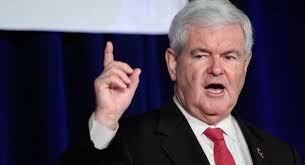
Newt Gingrich, once again giving “the finger” to America
King: “As you know, your ex-wife [Marianne Ginther] gave an interview to ABC News and another interview with The Washington Post.
“And this story has now gone viral on the internet. In it, she says that you came to her in 1999, at a time when you were having an affair. She says you asked her, sir, to enter into an open marriage. Would you like to take some time to respond to that?”

Marianne Ginther
Good Newt: “No, but I will. I think the destructive, vicious, negative nature of much of much of the news media makes it harder to govern this country, harder to attract decent people to run for public office. And I am appalled that you would begin a presidential debate on a topic like that….
“To take an ex-wife and make it two days before the primary a significant question for a presidential campaign is as close to despicable as anything I can imagine….
“Every personal friend I have who knew us in that period said the story was false. We offered several of them to ABC to prove it was false.
“They weren’t interested because they would like to attack any Republican. They’re attacking the governor. They’re attacking me. I’m sure they’ll presently get around to Senator [Rick] Santorum and Congressman [Ron] Paul.”
Good Newt is “appalled” that anyone could stoop so low. He’s concerned not only for himself and his party, but the country.
Unfortunately, for Good Newt, he has an identical evil twin: Bad Newt. And sometimes people–especially Democrats–mistake one for the other.
It was Bad Newt who, as Speaker of the House of Representatives, wrote a 1996 memo that encouraged Republicans to “speak like Newt.”
Entitled “Language: A Key Mechanism of Control,” it urged Republicans to attack Democrats with such words as “corrupt,” “selfish,” “destructive,” “hypocrisy,” “liberal,” “sick,” and “traitors.”
Even worse, Bad Newt encouraged the news media to disseminate such accusations. Among his suggestions:
- “Fights make news.”
- Create a “shield issue” to deflect criticism: “A shield issue is, just, you know, your opponent is going to attack you as lacking compassion. You better…show up in the local paper holding a baby in the neonatal center.”
In the memo, Bad Newt advised:
“….In the video ‘We are a Majority,’ Language is listed as a key mechanism of control used by a majority party, along with Agenda, Rules, Attitude and Learning.
“As the tapes have been used in training sessions across the country and mailed to candidates we have heard a plaintive plea: ‘I wish I could speak like Newt.’
“That takes years of practice. But, we believe that you could have a significant impact on your campaign and the way you communicate if we help a little. That is why we have created this list of words and phrases….
“This list is prepared so that you might have a directory of words to use in writing literature and mail, in preparing speeches, and in producing electronic media.
“The words and phrases are powerful. Read them. Memorize as many as possible. And remember that like any tool, these words will not help if they are not used.”
Here is the list of words Bad Newt urged his followers to use in describing “the opponent, their record, proposals and their party”:
- abuse of power
- anti- (issue): flag, family, child, jobs
- betray
- bizarre
- bosses
- bureaucracy
- cheat
- coercion
- “compassion” is not enough
- collapse(ing)
- consequences
- corrupt
- corruption
- criminal rights
- crisis
- cynicism
- decay
- deeper
- destroy
- destructive
- devour
- disgrace
- endanger
- excuses
- failure (fail)
- greed
- hypocrisy
- ideological
- impose
- incompetent
- insecure
- insensitive
|
- intolerant
- liberal
- lie
- limit(s)
- machine
- mandate(s)
- obsolete
- pathetic
- patronage
- permissive attitude
- pessimistic
- punish (poor …)
- radical
- red tape
- self-serving
- selfish
- sensationalists
- shallow
- shame
- sick
- spend(ing)
- stagnation
- status quo
- steal
- taxes
- they/them
- threaten
- traitors
- unionized
- urgent (cy)
- waste
- welfare
|
Yes, speaking like Newt–or Adolf Hitler or Joseph McCarthy–“takes years of practice.”
So you can understand why Good Newt hates being mistaken for his evil twin, Bad Newt.
Unfortunately, they look–and sound–so alike it’s impossible to tell them apart.
But since they’re both 73, perhaps one day soon we’ll find out which one we’re left with–Good Newt or Bad Newt.
Unless, of course, they both drop off at the same time. Then we will never know which was which.
It’s definitely a mystery worth living with.
2012 PRESIDENTIAL RACE, ABC NEWS, BARACK OBAMA, BAY OF PIGS, CBS NEWS, CIA, CNN, COLD WAR, COMMUNISM, CUBA, FACEBOOK, FBI, FIDEL CASTRO, FLORIDA, GUS RUSSO, JOHN F. KENNEDY, JOHN ROSELLI, LIVE BY THE SWORD, MAFIA, MITT ROMNEY, NBC NEWS, NEWT GINGRICH, RICK SANTORUM, ROBERT F. KENNEDY, ROBERT MCNAMARA, RON PAUL, SAM GIANCANA, THE LOS ANGELES TIMES, THE NEW YORK TIMES, THE WASHINGTON POST, TWITTER
In Bureaucracy, History, Military, Politics, Social commentary on April 17, 2015 at 12:15 am
“John and Robert Kennedy knew what they were doing. They waged a vicious war against Fidel Castro–a war someone had to lose.”
So writes Gus Russo in Live By the Sword: The Secret War Against Castro and the Death of JFK, published in 1998.
During the Cuban Missile Crisis, Robert Kennedy–referring to the 1941 Japanese attack on Pearl Harbor–had resisted demands for a “sneak attack” on Cuba by saying: “I don’t want my brother to be the Tojo of the 1960s.”
But in the fall of 1963, the Kennedys planned just such an attack on Cuba only one month before the November, 1964 Presidential election.
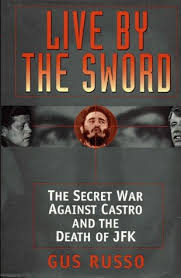
In what is almost certainly the definitive account of the assassination of President John F. Kennedy, Russo reaches some startling–but highly documented–conclusions:
- Lee Harvey Oswald assassinated Kennedy.
- He did it alone.
- Oswald, a former Marine, was a committed Marxist–whose hero was Castro.
- The CIA’s ongoing campaign to overthrow and/or assassinate Castro was an open secret throughout the Gulf.
- Oswald visited New Orleans in the spring of 1963.
- There he learned that Castro was in the crosshairs of the CIA.
- Oswald told his Russian-born wife, Marina: “Fidel Castro needs defenders. I’m going to join his army of volunteers.”
- Jack Ruby, a Dallas nightclub owner, murdered Oswald because he was distraught over Kennedy’s death.
- Ruby was not part of a Mafia conspiracy to silence Oswald.
- Skeptics of the Warren Commission–which concluded that Oswald had acted alone–asked the wrong question: “Who killed Kennedy?”
- They should have asked: “Why was he killed?”
- The answer–according to Russo: “The Kennedys’ relentless pursuit of Castro and Cuba backfired in tragedy on that terrible day in November, 1963.”
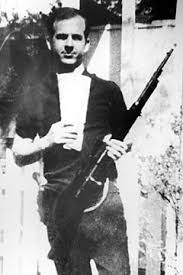
Lee Harvey Oswald
Another book well worth reading about America’s Cuban obsession during the early 1960s is American Tabloid, by James Ellroy.
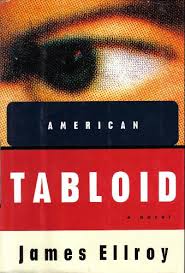
Although a novel, it vividly captures the atmosphere of intrigue, danger and sleaziness that permeated America’s Cuba obsession in a way that dry, historical documents never can.
“The 50s are finished,” reads its paperback dust jacket. “Zealous young lawyer Robert Kennedy has a red-hot jones to nail Jimmy Hoffa. JFK has his eyes on the Oval Office.
“J. Edgar Hoover is swooping down on the Red Menace. Howard Hughes is dodging subpoenas and digging up Kennedy dirt. And Castro is mopping up the bloody aftermath of his new Communist nation….
“Mob bosses, politicos, snitches, psychos, fall guys and femmes fatale. They’re mixing up a Molotov cocktail guaranteed to end the country’s innocence with a bang.”
Among the legacies of America’s twisted romance with anti-Castro Cubans:
- Following the JFK assassination, there was a coverup–to safeguard the reputation of the United States government and that of its newly-martyred President.
- Thus, the CIA and FBI concealed the anti-Castro murder plots from the Warren Commission investigating Kennedy’s assassination.
- Other participating officials in the cover-up included Attorney General Robert F. Kennedy and President Lyndon B. Johnson.
- This secrecy ignited the widespread–and false–belief that the President had died at the hands of a government conspiracy.
- Robert Kennedy feared that his relentless pursuit of Castro might have backfired against JFK, leading Castro to “take out” the President first.
- Fearing his own assassination if he continued Kennedy’s efforts to murder Castro, President Johnson ordered the CIA to halt its campaign to overthrow and/or assassinate the Cuban leader.
- The huge Cuban community throughout Florida–and especially Miami–continues to exert a blackmail influence on American politics.
- Right-wing politicians from Richard Nixon to Newt Gingrich have reaped electoral rewards by catering to the demands of this hate-obsessed voting block.
- As a result, the United States still refuses to open diplomatic relations with Cuba–even though it has done so with such former enemies as the Soviet Union, China and Vietnam.
- Cuban ex-patriots still hope that the United States will launch a full-scale military invasion of the island to remove Castro.
- These alleged Cuban patriots fear to risk their own lives by returning to Cuba and launching an uprising against him.
That crisis stemmed from our twisted obsession with Cuba, an obsession that continues today.
Texas Congressman Ron Paul is correct:
“But I think it’s time…to quit this isolation business of not talking to people. We talked to the Soviets. We talk to the Chinese. And we opened up trade, and we’re not killing each other now.
“We fought with the Vietnamese for a long time. We finally gave up, started talking to them, now we trade with them. I don’t know why…the Cuban people should be so intimidating.”
It’s time to end the half-century contamination of American politics by those Cubans who live for their hatred of Fidel Castro and those political candidates who live to exploit it.
It’s long past time to end this wag-the-dog relationship. A population of about 1,700,000 Cuban exiles should not be allowed to shape the domestic and foreign policy of a nation of 300 million.
Those who continue to hate–or love–Castro should be left to their own private feud. But that is a feud they should settle on their own island, and not from the shores of the United States.
2012 PRESIDENTIAL RACE, ABC NEWS, BARACK OBAMA, BAY OF PIGS, CARLOS MARCELLO, CBS NEWS, CIA, CNN, COLD WAR, COMMUNISM, CUBA, FACEBOOK, FBI, FIDEL CASTRO, FLORIDA, JOHN F. KENNEDY, JOHN ROSELLI, MAFIA, MITT ROMNEY, NBC NEWS, NEWT GINGRICH, RICK SANTORUM, ROBERT F. KENNEDY, ROBERT MCNAMARA, RON PAUL, SAM GIANCANA, THE LOS ANGELES TIMES, THE NEW YORK TIMES, THE WASHINGTON POST, TWITTER
In Bureaucracy, History, Military, Politics, Social commentary on April 16, 2015 at 12:05 am
On April 17, 1961, the U.S. Navy landed 1,700 CIA-trained Cuban exiles ashore at Cuba’s Bay of Pigs.
President John F. Kennedy–wanting to disguise the role of the United States in the invasion–refused to commit U.S. Marines and Air Force bombers to the attack.
Long forewarned of the coming invasion, Fidel Castro sent in his forces to decimate the invaders.
Kennedy took responsibility for the failure. But privately he blamed Castro for refusing to be overthrown.
As a result, Kennedy and his brother, Robert–then Attorney General–created their own covert operation to depose Castro.
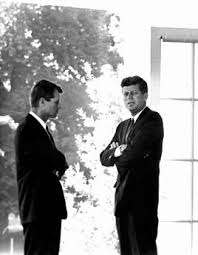
Robert and John F. Kennedy
Known as the Special Group, and overseen by Robert Kennedy, it launched a secret war against the Castro regime, code-named Operation Mongoose.
“We were hysterical about Castro at about the time of the Bay of Pigs and thereafter,” Secretary of Defense Robert S. McNamara later testified before Congress about these efforts. “And there was pressure from JFK and RFK to do something about Castro.”
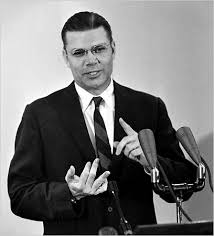
Robert S. McNamara
Nor was everyone in the CIA enthusiastic about the “get Castro” effort.
“Everyone at CIA was surprised at Kennedy’s obsession with Fidel,” recalled Sam Halpern, who was assigned to the Cuba Project. “They thought it was a waste of time. We all knew [Castro] couldn’t hurt us. Most of us at CIA initially liked Kennedy, but why go after this little guy?
“One thing is for sure: Kennedy wasn’t doing it out of national security concerns. It was a personal thing. The Kennedy family felt personally burnt by the Bay of Pigs and sought revenge.”
It was all-out war. Among the tactics used:
- Hiring Cuban gangsters to murder Cuban police officials and Soviet technicians.
- Sabotaging mines.
- Paying up to $100,000 per “hit” for the murder or kidnapping of Cuban officials.
- Using biological and chemical warfare against the Cuban sugar industry.
“Bobby (Kennedy) wanted boom and bang all over the island,” recalled Halpern. “It was stupid. The pressure from the White House was very great.”
Among that “boom and bang” were a series of assassination plots against Castro, in which the Mafia was to be a key player.
Chicago Mobster Johnny Rosselli proposed a simple plan: through its underworld connections in Cuba, the Mafia would recruit a Cuban in Castro’s entourage, such as a waiter or bodyguard, who would poison him.
The CIA’s Technical Services division produced a botulinus toxin which was then injected into Castro’s favorite brand of cigars. The CIA also produced simpler botulinus toxin pills that could be dissolved in his food or drink.
But the deputized Mafia contacts failed to deliver any of the poisons to Castro.
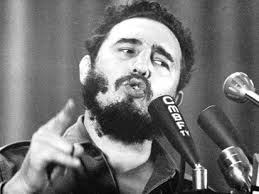
Fidel Castro
As Rosselli explained to the CIA, the first poisoner had been discharged from Castro’s employ before he could kill him, while a back-up agent got “cold feet.”
Other proposals or attempts included:
- Planting colorful seashells rigged to explode at a site where Castro liked to go skindiving.
- Trying to arrange for his being presented with a wetsuit impregnated with noxious bacteria and mould spores, or with lethal chemical agents.
- Attempting to infect Castro’s scuba regulator with tuberculous bacilli.
- Trying to douse his handkerchiefs, tea and coffee with other lethal bacteria.
Americans would rightly label such methods as “terrorist” if another power used them against the United States today. And the Cuban government saw the situation exactly the same way.
So Castro appealed to Nikita Khrushchev, leader of the Soviet Union, for assistance.
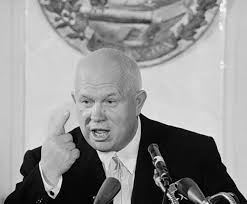
Nikita Khrushchev
Khrushchev was quick to comply: “We must not allow the communist infant to be strangled in its crib,” he told members of his inncer circle.
By October, 1962, the Soviet Union had sent more than 40,000 soldiers, 1,300 field pieces, 700 anti-airctaft guns, 350 tanks and 150 jets to Cuba to deter another invasion.
Khrushchev also began supplying Castro with nuclear-tipped ballistic missiles–whose discovery, on October 15, 1962, ignited the single most dangerous confrontation of the Cold War.
Suddenly, the two most powerful nuclear countries–the United States and the Soviet Union–found themselves on the brink of nuclear war.
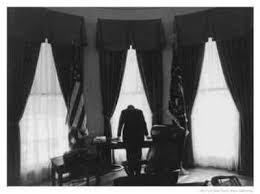
John F. Kennedy in the Oval Office
At the time, Kennedy officials claimed they couldn’t understand why Khrushchev had placed nuclear missiles in Cuba. “Maybe Khrushchev’s gone mad” was a typical musing.
None of these officials admitted that JFK had been waging a no-holds-barred campaign to overthrow the Cuban government and assassinate its leader.
The crisis ended when, after 13 harrowing days, Khrushchev agreed to remove the missiles from Cuba. Behind its resolution lay a promise by the Kennedy administration to not invade Cuba.
But President Kennedy was not finished with Castro. While continuing the campaign of sabotage throughout Cuba, the Kennedys were preparing something far bigger: A fullscale American invasion of the island.
On October 4, 1963, the Joint Chiefs of Staff submitted its latest version of the invasion plan, known as OPLAN 380-63. Its timetable went:
- January, 1964: Infiltration into Cuba by Cuban exiles.
- July 15, 1964: U.S. conventional forces join the fray.
- August 3, 1964: All-out U.S. air strikes on Cuba.
- October 1, 1964: Full-scale invasion to install “a government friendly to the U.S.”
But then fate–in the otherwise unimpressive form of Lee Harvey Oswald–suddenly intervened.
2012 PRESIDENTIAL RACE, ABC NEWS, BARACK OBAMA, BAY OF PIGS, CARLOS MARCELLO, CBS NEWS, CIA, CNN, COLD WAR, COMMUNISM, CUBA, FACEBOOK, FBI, FIDEL CASTRO, FLORIDA, JOHN F. KENNEDY, JOHN ROSELLI, MAFIA, MITT ROMNEY, NBC NEWS, NEWT GINGRICH, RICK SANTORUM, ROBERT F. KENNEDY, ROBERT MCNAMARA, RON PAUL, SAM GIANCANA, THE LOS ANGELES TIMES, THE NEW YORK TIMES, THE WASHINGTON POST, TWITTER
In Bureaucracy, History, Military, Politics, Social commentary on April 15, 2015 at 12:10 am
On January 23, 2012, Newt Gingrich, Rick Santorum, Mitt Romney and Ron Paul–all seeking the Republican nomination for President–attended a candidates’ debate in Tampa, Florida.
Gingrich, Santorum and Romney played to the huge–and influential–Cuban community in Florida, especially in Miami.
All three had carefully avoided military service. But all three “chickenhawks” now wanted to show how eagerly they could send others into harm’s way.
Former House Speaker Gingrich spoke for all three when he said: “The policy of the United States should be aggressively to overthrow the [Castro] regime and to do everything we can to support those Cubans who want freedom.”
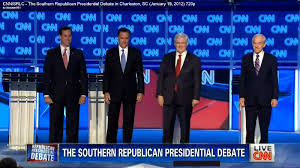
Rick Santorum, Mitt Romney, Newt Gingrich, Ron Paul
Only Texas Congressman Ron Paul–who had served as a flight surgeon in the U.S. Air Force from 1963 to 1968–dared to call for normalization of relations between the United States and Cuba.
But even Paul’s courage ignored a great many ugly historical truths. Among these:

- In October, 1962, Castro stopped regularly scheduled travel between the two countries, and asylum seekers began sailing from Cuba to Florida.
- Between 1962 and 1979, hundreds of thousands of Cubans entered the United States under the Attorney General’s parole authority.
- The overwhelming majority of Cubans who immigrated into the United States settled in Florida, whose political, economic, and cultural life they transformed.
- By 2008, more than 1.24 million Cuban Americans were living in the United States, mostly in South Florida, where the population of Miami was about one-third Cuban.
- Many of these Cubans viewed themselves as political exiles, rather than immigrants, hoping to return to Cuba after its communist regime fell from power.
- The large number of Cubans in South Florida, particularly in Miami’s “Little Havana,” allowed them to preserve their culture and customs to a degree rare for immigrant groups.
- These discontented immigrants became a potential force for politicians to court.
- Unsurprisingly, most of their votes went to Right-wing Republicans.
John F. Kennedy was the first President to face this dilemma.

John F. Kennedy
During the closing months of the administration of President Dwight D. Eisenhower, the CIA had begun training Cuban exiles for an invasion of their former homeland.
The goal: To do what Castro had done–seek refuge in the mountains and launch a successful anti-Castro revolution.
But word of the coming invasion quickly leaked: The exiles were terrible secret-keepers. (A joke at the CIA went: “A Cuban thinks a secret is something you tell to only 300 people.”)
Kennedy insisted the invasion must appear to be an entirely Cuban enterprise. He refused to commit U.S. Marines and Air Force bombers.
The invasion force was quickly overwhelmed at the Bay of Pigs, with hundreds of its men taken prisoner.
Kennedy publicly took the blame for its failure: “Victory has a hundred fathers but defeat is an orphan.” But privately he seethed, and ordered the CIA to redouble its efforts to remove Castro at all costs.
To make certain his order was carried out, he appointed his brother, Robert–then Attorney General–to oversee the CIA’s “Castro removal” program.
It’s here that America’s obsession with Cuba entered its darkest and most disgraceful period.
The CIA and the Mafia entered into an unholy alliance to assassinate Castro–each for its own benefit.
The CIA wanted to please Kennedy. The Mafia wanted to regain its casino and brothel holdings that had made Cuba the playground of the rich in pre-Castro times.
The CIA supplied poisons and explosives to various members of the Mafia. It was then up to the mobsters to assassinate Castro.
The available sources disagree on what actually happened. Some believe that the Mob made a genuine effort to “whack” Fidel.
Others are convinced the mobsters simply ran a scam on the government. They pretended to carry out their “patriotic duty” while in fact making no effort at all to penetrate Castro’s security.
The mobsters hoped to use their pose as patriots to win immunity from future prosecution.
The CIA asked John Roselli, a mobster linked to the Chicago syndicate, to go to Florida in 1961 and 1962 to organize assassination teams of Cuban exiles. They were to infiltrate their homeland and assassinate Castro.

John Roselli
Rosselli called upon two other crime figures: Chicago Mafia boss Sam Giancana and Santos Trafficante, the Costra Nostra chieftain for Cuba, to help him.
Giancana, using the name “Sam Gold” in his dealings with the CIA, was being hounded by the FBI on direct orders of Attorney General Kennedy.

Sam Giancana
2012 PRESIDENTIAL RACE, ABC NEWS, BARACK OBAMA, BAY OF PIGS, CBS NEWS, CIA, CNN, COLD WAR, COMMUNISM, CUBA, FACEBOOK, FLORIDA, JOHN F. KENNEDY, JOHNNY ROSELLI, MAFIA, MARCO RUBIO, MITT ROMNEY, NBC NEWS, NEWT GINGRICH, NIKITA KHRUSHCHEV, RICK SANTORUM, ROBERT F. KENNEDY, RON PAUL, SAM GIANCANA, THE CHICAGO SUN-TIMES, THE CHICAGO TRIBUNE, THE LOS ANGELES TIMES, THE NEW YORK TIMES, THE WALL STREET JOURNAL, TWITTER, USA TODAY
In Bureaucracy, History, Military, Politics, Social commentary on December 29, 2014 at 11:07 am
“John and Robert Kennedy knew what they were doing. They waged a vicious war against Fidel Castro–a war someone had to lose.”
So writes Gus Russo in Live By the Sword: The Secret War Against Castro and the Death of JFK, published in 1998.
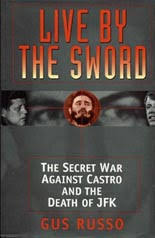
In what is almost certainly the definitive account of the assassination of President John F. Kennedy, Russo reaches some startling–but highly documented–conclusions:
- Lee Harvey Oswald assassinated Kennedy.
- He did it alone.
- Oswald, a former Marine, was a committed Marxist–whose hero was Castro.
- The CIA’s ongoing campaign to overthrow and/or assassinate Castro was an open secret throughout the Gulf.
- Oswald visited New Orleans in the spring of 1963.
- There he learned that Castro was in the crosshairs of the CIA.
- Oswald told his Russian-born wife, Marina: “Fidel Castro needs defenders. I’m going to join his army of volunteers.”
- Jack Ruby, a Dallas nightclub owner, murdered Oswald because he was distraught over Kennedy’s death.
- Ruby was not part of a Mafia conspiracy to silence Oswald.
- Skeptics of the Warren Commission–which concluded that Oswald had acted alone–asked the wrong question: “Who killed Kennedy?”
- They should have asked: “Why was he killed?”
- The answer–according to Russo: “The Kennedys’ relentless pursuit of Castro and Cuba backfired in tragedy on that terrible day in November, 1963.”
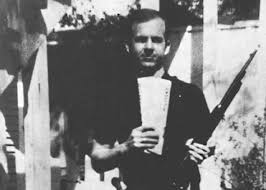
Lee Harvey Oswald
Another book well worth reading about America’s Cuban obsession during the early 1960s is American Tabloid, by James Ellroy.

Although a novel, it vividly captures the atmosphere of intrigue, danger and sleaziness that permeated that era in a way that dry, historical documents never can.
“The 50s are finished,” reads its paperback dust jacket. “Zealous young lawyer Robert Kennedy has a red-hot jones to nail Jimmy Hoffa. JFK has his eyes on the Oval Office.
“J. Edgar Hoover is swooping down on the Red Menace. Howard Hughes is dodging subpoenas and digging up Kennedy dirt. And Castro is mopping up the bloody aftermath of his new Communist nation….
“Mob bosses, politicos, snitches, psychos, fall guys and femmes fatale. They’re mixing up a Molotov cocktail guaranteed to end the country’s innocence with a bang.”
Among the legacies of America’s twisted romance with anti-Castro Cubans:
- Following the JFK assassination, there was a coverup.
- Its purpose was to safeguard the reputation of the United States government–and that of its newly-martyred President.
- To that end, the CIA and FBI concealed the anti-Castro assassination plots from the Warren Commission investigating Kennedy’s assassination.
- Other participating officials included Attorney General Robert F. Kennedy and President Lyndon B. Johnson.
- This secrecy ignited the widespread–and false–belief that the President had died at the hands of a government conspiracy.
- Robert Kennedy feared that his relentless pursuit of Castro might have backfired against JFK, leading Castro to “take out” the President first.
- Fearing his own assassination if he continued Kennedy’s efforts to murder Castro, President Johnson ordered the CIA to halt its campaign to overthrow and/or assassinate the Cuban leader.
- The huge Cuban community throughout Florida–and especially Miami–continues to exert a blackmail influence on American politics.
- Right-wing politicians from Richard Nixon to Newt Gingrich have reaped electoral rewards by catering to the demands of this hate-obsessed voting block.
- As a result, the United States still refuses to open diplomatic relations with Cuba–even though it has done so with such former enemies as the Soviet Union, China and Vietnam.
- The most fervent hope of these Cuban ex-patriots is that the United States will launch a full-scale military invasion of the island to remove Castro.
- At the same time, they fear to risk their own lives by returning to Cuba and launching an uprising against him. (Castro had done just that–successfully–from 1956 to 1958 against Fulgencio Batista, the dictator who had preceded him.)
The United States is fast approaching the 50th anniversay of the most dangerous moment of the Cold War: The Cuban Missile Crisis, when the world stood only minutes away from nuclear Armageddon.
That crisis stemmed from our twisted obsession with Cuba, an obsession that continues today.
Ron Paul is correct:
It’s time to end the half-century contamination of American politics by those Cubans who live for their hatred of Castro and those political candidates who live to exploit it.
(For example: Marco Rubio got himself elected U.S. Senator from Florida in 2010 by claiming that his parents had been forced to leave Cuba in 1959, after Fidel Castro came to power. In fact, they had left Cuba in 1956–three years earlier–during the Batista dictatorship.)
It’s long past time to end this wag-the-dog relationship. A population of about 1,700,000 Cubans should not be allowed to shape the domestic and foreign policy of a nation of 300 million.
Those who continue to hate–or love–Castro should be left to their own private feud. But that is a feud they should settle on their own island, and not from the shores of the United States.
2012 PRESIDENTIAL RACE, ABC NEWS, BARACK OBAMA, BAY OF PIGS, CBS NEWS, CIA, CNN, COLD WAR, COMMUNISM, CUBA, FACEBOOK, FLORIDA, JOHN F. KENNEDY, JOHNNY ROSELLI, MAFIA, MARCO RUBIO, MITT ROMNEY, NBC NEWS, NEWT GINGRICH, NIKITA KHRUSHCHEV, RICK SANTORUM, ROBERT F. KENNEDY, RON PAUL, SAM GIANCANA, THE CHICAGO SUN-TIMES, THE CHICAGO TRIBUNE, THE LOS ANGELES TIMES, THE NEW YORK TIMES, THE WALL STREET JOURNAL, TWITTER, USA TODAY
In Bureaucracy, History, Military, Politics, Social commentary on December 27, 2014 at 5:20 pm
Following the disastrous Bay of Pigs invasion, President John F. Kennedy and his brother, Robert–then Attorney General–created their own covert operation to depose Fidel Castro.
Robert F. and John F. Kennedy conferring in the White House Rose Garden
Known as the Special Group, and overseen by Robert Kennedy, it launched a secret war against the Castro regime, code-named Operation Mongoose.
“We were hysterical about Castro at about the time of the Bay of Pigs and thereafter,” Secretary of Defense Robert S. McNamara later testified before Congress about these efforts. “And there was pressure from JFK and RFK to do something about Castro.”

Robert S. McNamara
Nor was everyone in the CIA enthusiastic about the “get Castro” effort.
“Everyone at CIA was surprised at Kennedy’s obsession with Fidel,” recalled Sam Halpern, who was assigned to the Cuba Project. “They thought it was a waste of time. We all knew [Fidel] couldn’t hurt us. Most of us at CIA initially liked Kennedy, but why go after this little guy?
“One thing is for sure: Kennedy wasn’t doing it out of national security concerns. It was a personal thing. The Kennedy family felt personally burnt by the Bay of Pigs and sought revenge.”
It was all-out war. Among the tactics used:
- Hiring Cuban gangsters to murder Cuban police officials and Soviet technicians.
- Sabotaging mines.
- Paying up to $100,000 per “hit” for the murder or kidnapping of Cuban officials.
- Using biological and chemical warfare against the Cuban sugar industry.
“Bobby (Kennedy) wanted boom and bang all over the island,” recalled Halpern. “It was stupid. The pressure from the White House was very great.”
Among that “boom and bang” were a series of assassination plots against Castro, in which the Mafia was to be a key player.
Chicago Mobster Johnny Rosselli proposed a simple plan: through its underworld connections in Cuba, the Mafia would recruit a Cuban in Castro’s entourage, such as a waiter or bodyguard, who would poison him.
The CIA’s Technical Services division produced a botulinus toxin which was then injected into Castro’s favorite brand of cigars. The CIA also produced simpler botulinus toxin pills that could be dissolved in his food or drink.
But the deputized Mafia contacts failed to deliver any of the poisons to Castro.
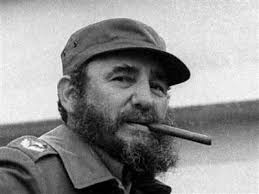
Fidel Castro
As Rosselli explained to the CIA, the first poisoner had been discharged from Castro’s employ before he could kill him, while a back-up agent got “cold feet.”
Other proposals or attempts included:
- Planting colorful seashells rigged to explode at a site where Castro liked to go skindiving.
- Trying to arrange for his being presented with a wetsuit impregnated with noxious bacteria and mould spores, or with lethal chemical agents.
- Attempting to infect Castro’s scuba regulator with tuberculous bacilli.
- Trying to douse his handkerchiefs, tea and coffee with other lethal bacteria.
Americans would rightly label such methods as “terrorist” if another power used them against the United States today. And the Cuban government saw the situation exactly the same way.
So Castro appealed to Nikita Khrushchev, leader of the Soviet Union, for assistance.

Nikita Khrushchev
Khrushchev was quick to comply: “We must not allow the communist infant to be strangled in its crib,” he told members of his inncer circle.
By October, 1962, the Soviet Union had sent more than 40,000 soldiers, 1,300 field pieces, 700 anti-airctaft guns, 350 tanks and 150 jets to Cuba to deter another invasion.
Khrushchev also began supplying Castro with nuclear-tipped ballistic missiles–whose discovery, on October 15, 1962, ignited the single most dangerous confrontation of the Cold War.
Suddenly, the two most powerful nuclear countries–the United States and the Soviet Union–found themselves on the brink of nuclear war.
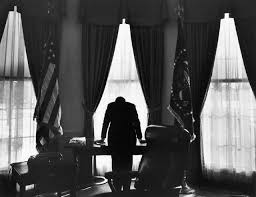
John F. Kennedy in the Oval Office
At the time, Kennedy officials claimed they couldn’t understand why Khrushchev had placed nuclear missiles in Cuba. “Maybe Khrushchev’s gone mad” was a typical musing.
None of these officials admitted that JFK had been waging a no-holds-barred campaign to overthrow the Cuban government and assassinate its leader.
The crisis ended when, after 13 harrowing days, Khrushchev agreed to remove the missiles from Cuba. Behind its resolution lay a promise by the Kennedy administration to not invade Cuba.
But President Kennedy was not finished with Castro. While continuing the campaign of sabotage throughout Cuba, the Kennedys were preparing something far bigger: A fullscale American invasion of the island.
On October 4, 1963, the Joint Chiefs of Staff submitted its latest version of the invasion plan, known as OPLAN 380-63. Its timetable went:
- January, 1964: Infiltration into Cuba by Cuban exiles.
- July 15, 1964: U.S. conventional forces join the fray.
- August 3, 1964: All-out U.S. air strikes on Cuba.
- October 1, 1964: Full-scale invasion to install “a government friendly to the U.S.”
During the Cuban Missile Crisis, Robert Kennedy–referring to the 1941 Japanese attack on Pearl Harbor–had resisted demands for a “sneak attack” on Cuba by saying: “I don’t want my brother to be the Tojo of the 1960s.”
Now the Kennedys planned such an attack on Cuba just one month before the November, 1964 Presidential election.
But then fate–in the otherwise unimpressive form of Lee Harvey Oswald–suddenly intervened.
2012 PRESIDENTIAL RACE, ABC NEWS, BARACK OBAMA, BAY OF PIGS, CBS NEWS, CIA, CNN, COLD WAR, COMMUNISM, CUBA, CUBAN MISSILE CRISIS, FACEBOOK, FLORIDA, JOHN F. KENNEDY, JOHNNY ROSELLI, MAFIA, MARCO RUBIO, MITT ROMNEY, NBC NEWS, NEWT GINGRICH, RICK SANTORUM, ROBERT F. KENNEDY, RON PAUL, SAM GIANCANA, THE CHICAGO SUN-TIMES, THE CHICAGO TRIBUNE, THE LOS ANGELES TIMES, THE NEW YORK TIMES, THE WALL STREET JOURNAL, TWITTER, USA TODAY
In Bureaucracy, History, Law, Military, Politics, Social commentary on December 22, 2014 at 6:32 pm
On January 23, 2012, Newt Gingrich, Rick Santorum and Mitt Romney played to the huge–and influential–Cuban community in Florida, especially in Miami.
All three GOP Presidential candidates had carefully avoided military service. But all three “chickenhawks” now wanted to show how eagerly they could send others into harm’s way.
Former House Speaker Gingrich spoke for all three when he said: “I would suggest to you the policy of the United States should be aggressively to overthrow the regime and to do everything we can to support those Cubans who want freedom.”
Of course, this “chickenhawk” bravado ignored a great many ugly historical truths. Among these:
- In 1959, Fidel Castro swept triumphantly into Havana after a two-year guerrilla campaign against Cuban dictator Fulgencio Batista.
- Almost immediately, hundreds of thousands of Cubans began fleeing to America. The first emigres were more than 215,000 Batista followers.
- The exodus escalated, peaking at approximately 78,000 in 1962.
- In October, 1962, Castro stopped regularly scheduled travel between the two countries, and asylum seekers began sailing from Cuba to Florida.
- Between 1962 and 1979, hundreds of thousands of Cubans entered the United States under the Attorney General’s parole authority.
- The overwhelming majority of Cubans who immigrated into the United States settled in Florida, whose political, economic, and cultural life they transformed.
- By 2008, more than 1.24 million Cuban Americans were living in the United States, mostly in South Florida, where the population of Miami was about one-third Cuban.
- Many of these Cubans viewed themselves as political exiles, rather than immigrants, hoping to eventually return to Cuba after its communist regime fell from power.
- The large number of Cubans in South Florida, particularly in Miami’s “Little Havana,” allowed them to preserve their culture and customs to a degree rare for immigrant groups.
- With so many discontented immigrants concentrated in Florida, they became a potential force for politicians to court.
- And the issue guaranteed to sway their votes was unrelenting hostility to Castro. Unsurprisingly, most of their votes went to right-wing Republicans.
John F. Kennedy was the first President to face this dilemma.
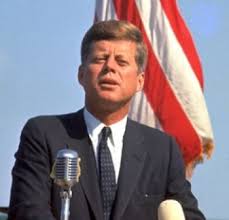
John F. Kennedy
During the closing months of the administration of President Dwight D. Eisenhower, the CIA had begun training Cuban exiles for an invasion of their former homeland.
The goal: To do what Castro had done–seek refuge in the mountains and launch a successful anti-Castro revolution.
But word of the coming invasion quickly leaked: The exiles were terrible secret-keepers. (A joke at the CIA went: “A Cuban thinks a secret is something you tell to only 300 people.”)
Kennedy insisted the invasion must appear to be an entirely Cuban enterprise. He refused to commit U.S. Marines and Air Force bombers.
The invasion force was quickly overwhelmed at the Bay of Pigs, with hundreds of its men taken prisoner.
Kennedy publicly took the blame for its failure: “Victory has a hundred fathers but defeat is an orphan.” But privately he seethed, and ordered the CIA to redouble its efforts to remove Castro at all costs.
To make certain his order was carried out, he appointed his brother, Robert–then Attorney General–to oversee the CIA’s “Castro removal” program.
It’s here that America’s obsession with Cuba entered its darkest and most disgraceful period.
The CIA and the Mafia entered into an unholy alliance to assassinate Castro–each for its own benefit:
The CIA wanted to please Kennedy. The Mafia wanted to regain its casino and brothel holdings that had made Cuba the playground of the rich in pre-Castro times.
The CIA supplied poisons and explosives to various members of the Mafia. It was then up to the mobsters to assassinate Castro.
The available sources differ widely on what actually happened. Some believe that the Mob made a genuine effort to “whack” Fidel.
Others are convinced the mobsters simply ran a scam on the government. They would pretend to carry out their “patriotic duty” while in fact making no effort at all to penetrate Castro’s security.
The mobsters hoped to use their pose as patriots to win immunity from future prosecution.
The CIA asked Johnny Roselli, a mobster linked to the Chicago syndicate, to go to Florida in 1961 and 1962 to organize assassination teams of Cuban exiles.

Johnny Roselli
They were to infiltrate their homeland and assassinate Castro.
Rosselli called upon two other crime figures: Chicago Mafia boss Sam Giancana and the Costra Nostra chieftain for Cuba, Santos Trafficante, to help him.
Giancana, using the name “Sam Gold” in his dealings with the CIA, was being hounded by the FBI on directr orders of Attorney General Kennedy.

Sam Giancana
The mobsters were authorized to offer $150,000 to anyone who would kill Castro and were promised any support the Agency could yield.
Giancana was to locate someone who was close enough to Castro to be able to drop pills into his food.
Trafficante would serve as courier to Cuba, helping to make arrangements for the murder on the island.
Rosselli was to be the main link between all of the participants in the plot.
2012 PRESIDENTIAL RACE, ABC NEWS, BARACK OBAMA, BAY OF PIGS, CBS NEWS, CIA, CNN, COLD WAR, COMMUNISM, CUBA, FACEBOOK, FBI, FLORIDA, GUS RUSSO, JOHN F. KENNEDY, JOHN ROSELLI, LIVE BY THE SWORD, MAFIA, MITT ROMNEY, NBC NEWS, NEWT GINGRICH, RICK SANTORUM, ROBERT F. KENNEDY, ROBERT MCNAMARA, RON PAUL, SAM GIANCANA, THE LOS ANGELES TIMES, THE NEW YORK TIMES, THE WASHINGTON POST, TWITTER
In Bureaucracy, History, Military, Politics on July 28, 2014 at 10:39 am
John and Robert Kennedy knew what they were doing. They waged a vicious war against Fidel Castro–a war someone had to lose.”
So writes Gus Russo in Live By the Sword: The Secret War Against Castro and the Death of JFK, published in 1998.
During the Cuban Missile Crisis, Robert Kennedy–referring to the 1941 Japanese attack on Pearl Harbor–had resisted demands for a “sneak attack” on Cuba by saying: “I don’t want my brother to be the Tojo of the 1960s.”
But in the fall of 1963, the Kennedys planned such an attack on Cuba just one month before the November, 1964 Presidential election.
In what is almost certainly the definitive account of the assassination of President John F. Kennedy, Russo reaches some startling–but highly documented–conclusions:
- Lee Harvey Oswald assassinated Kennedy.
- He did it alone.
- Oswald, a former Marine, was a committed Marxist–whose hero was Castro.
- The CIA’s ongoing campaign to overthrow and/or assassinate Castro was an open secret throughout the Gulf.
- Oswald visited New Orleans in the spring of 1963.
- There he learned that Castro was in the crosshairs of the CIA.
- Oswald told his Russian-born wife, Marina: “Fidel Castro needs defenders. I’m going to join his army of volunteers.”
- Jack Ruby, a Dallas nightclub owner, murdered Oswald because he was distraught over Kennedy’s death.
- Ruby was not part of a Mafia conspiracy to silence Oswald.
- Skeptics of the Warren Commission–which concluded that Oswald had acted alone–asked the wrong question: “Who killed Kennedy?”
- They should have asked: “Why was he killed?”
- The answer–according to Russo: “The Kennedys’ relentless pursuit of Castro and Cuba backfired in tragedy on that terrible day in November, 1963.”
Lee Harvey Oswald
Another book well worth reading about America’s Cuban obsession during the early 1960s is American Tabloid, by James Ellroy.
Although a novel, it vividly captures the atmosphere of intrigue, danger and sleaziness that permeated that era in a way that dry, historical documents never can.
“The 50s are finished,” reads its paperback dust jacket. “Zealous young lawyer Robert Kennedy has a red-hot jones to nail Jimmy Hoffa. JFK has his eyes on the Oval Office.
“J. Edgar Hoover is swooping down on the Red Menace. Howard Hughes is dodging subpoenas and digging up Kennedy dirt. And Castro is mopping up the bloody aftermath of his new Communist nation….
“Mob bosses, politicos, snitches, psychos, fall guys and femmes fatale. They’re mixing up a Molotov cocktail guaranteed to end the country’s innocence with a bang.”
Among the legacies of America’s twisted romance with anti-Castro Cubans:
- Following the JFK assassination, there was a coverup–to safeguard the reputation of the United States government and that of its newly-martyred President.
- Thus, the CIA and FBI concealed the anti-Castro assassination plots from the Warren Commission investigating Kennedy’s assassination.
- Other participating officials in the cover-up included Attorney General Robert F. Kennedy and President Lyndon B. Johnson.
- This secrecy ignited the widespread–and false–belief that the President had died at the hands of a government conspiracy.
- Robert Kennedy feared that his relentless pursuit of Castro might have backfired against JFK, leading Castro to “take out” the President first.
- Fearing his own assassination if he continued Kennedy’s efforts to murder Castro, President Johnson ordered the CIA to halt its campaign to overthrow and/or assassinate the Cuban leader.
- The huge Cuban community throughout Florida–and especially Miami–continues to exert a blackmail influence on American politics.
- Right-wing politicians from Richard Nixon to Newt Gingrich have reaped electoral rewards by catering to the demands of this hate-obsessed voting block.
- As a result, the United States still refuses to open diplomatic relations with Cuba–even though it has done so with such former enemies as the Soviet Union, China and Vietnam.
- Cuban ex-patriots still hope that the United States will launch a full-scale military invasion of the island to remove Castro.
- These alleged Cuban patriots fear to risk their own lives by returning to Cuba and launching an uprising against him.
That crisis stemmed from our twisted obsession with Cuba, an obsession that continues today.
Texas Congressman Ron Paul is correct:
“But I think it’s time…to quit this isolation business of not talking to people. We talked to the Soviets. We talk to the Chinese. And we opened up trade, and we’re not killing each other now.
“We fought with the Vietnamese for a long time. We finally gave up, started talking to them, now we trade with them. I don’t know why…the Cuban people should be so intimidating.”
It’s time to end the half-century contamination of American politics by those Cubans who live for their hatred of Fidel Castro and those political candidates who live to exploit it.
It’s long past time to end this wag-the-dog relationship. A population of about 1,700,000 Cubans should not be allowed to shape the domestic and foreign policy of a nation of 300 million.
Those who continue to hate–or love–Castro should be left to their own private feud. But that is a feud they should settle on their own island, and not from the shores of the United States.
2012 PRESIDENTIAL RACE, ABC NEWS, BARACK OBAMA, BAY OF PIGS, CBS NEWS, CIA, CNN, COLD WAR, COMMUNISM, CUBA, FACEBOOK, FBI, FLORIDA, JOHN F. KENNEDY, JOHN ROSELLI, MAFIA, MITT ROMNEY, NBC NEWS, NEWT GINGRICH, RICK SANTORUM, ROBERT F. KENNEDY, RON PAUL, SAM GIANCANA, THE LOS ANGELES TIMES, THE NEW YORK TIMES, THE WASHINGTON POST, TWITTER
In Bureaucracy, History, Military, Social commentary on July 25, 2014 at 1:01 pm
On April 17, 1961, the U.S. Navy landed 1,700 CIA-trained Cuban exiles ashore at Cuba’s Bay of Pigs.
President John F. Kennedy–wanting to disguise the role of the United States in the invasion–refused to commit U.S. Marines and Air Force bombers to the invasion.
Long forewarned of the coming invasion, Fidel Castro sent in his forces to decimate the invaders.
Kennedy took responsibility for the failure. But privately he blamed Castro for refusing to be overthrown.
As a result, Kennedy and his brother, Robert–then Attorney General–created their own covert operation to depose Castro.
Robert and John F. Kennedy
Known as the Special Group, and overseen by Robert Kennedy, it launched a secret war against the Castro regime, code-named Operation Mongoose.
“We were hysterical about Castro at about the time of the Bay of Pigs and thereafter,” Secretary of Defense Robert S. McNamara later testified before Congress about these efforts. “And there was pressure from JFK and RFK to do something about Castro.”
Robert S. McNamara
Nor was everyone in the CIA enthusiastic about the “get Castro” effort.
“Everyone at CIA was surprised at Kennedy’s obsession with Fidel,” recalled Sam Halpern, who was assigned to the Cuba Project. “They thought it was a waste of time. We all knew [Castro] couldn’t hurt us. Most of us at CIA initially liked Kennedy, but why go after this little guy?
“One thing is for sure: Kennedy wasn’t doing it out of national security concerns. It was a personal thing. The Kennedy family felt personally burnt by the Bay of Pigs and sought revenge.”
It was all-out war. Among the tactics used:
- Hiring Cuban gangsters to murder Cuban police officials and Soviet technicians.
- Sabotaging mines.
- Paying up to $100,000 per “hit” for the murder or kidnapping of Cuban officials.
- Using biological and chemical warfare against the Cuban sugar industry.
“Bobby (Kennedy) wanted boom and bang all over the island,” recalled Halpern. “It was stupid. The pressure from the White House was very great.”
Among that “boom and bang” were a series of assassination plots against Castro, in which the Mafia was to be a key player.
Chicago Mobster Johnny Rosselli proposed a simple plan: through its underworld connections in Cuba, the Mafia would recruit a Cuban in Castro’s entourage, such as a waiter or bodyguard, who would poison him.
The CIA’s Technical Services division produced a botulinus toxin which was then injected into Castro’s favorite brand of cigars. The CIA also produced simpler botulinus toxin pills that could be dissolved in his food or drink.
But the deputized Mafia contacts failed to deliver any of the poisons to Castro.
Fidel Castro
As Rosselli explained to the CIA, the first poisoner had been discharged from Castro’s employ before he could kill him, while a back-up agent got “cold feet.”
Other proposals or attempts included:
- Planting colorful seashells rigged to explode at a site where Castro liked to go skindiving.
- Trying to arrange for his being presented with a wetsuit impregnated with noxious bacteria and mould spores, or with lethal chemical agents.
- Attempting to infect Castro’s scuba regulator with tuberculous bacilli.
- Trying to douse his handkerchiefs, tea and coffee with other lethal bacteria.
Americans would rightly label such methods as “terrorist” if another power used them against the United States today. And the Cuban government saw the situation exactly the same way.
So Castro appealed to Nikita Khrushchev, leader of the Soviet Union, for assistance.
Nikita Khrushchev
Khrushchev was quick to comply: “We must not allow the communist infant to be strangled in its crib,” he told members of his inncer circle.
By October, 1962, the Soviet Union had sent more than 40,000 soldiers, 1,300 field pieces, 700 anti-airctaft guns, 350 tanks and 150 jets to Cuba to deter another invasion.
Khrushchev also began supplying Castro with nuclear-tipped ballistic missiles–whose discovery, on October 15, 1962, ignited the single most dangerous confrontation of the Cold War.
Suddenly, the two most powerful nuclear countries–the United States and the Soviet Union–found themselves on the brink of nuclear war.
John F. Kennedy in the Oval Office
At the time, Kennedy officials claimed they couldn’t understand why Khrushchev had placed nuclear missiles in Cuba. “Maybe Khrushchev’s gone mad” was a typical musing.
None of these officials admitted that JFK had been waging a no-holds-barred campaign to overthrow the Cuban government and assassinate its leader.
The crisis ended when, after 13 harrowing days, Khrushchev agreed to remove the missiles from Cuba. Behind its resolution lay a promise by the Kennedy administration to not invade Cuba.
But President Kennedy was not finished with Castro. While continuing the campaign of sabotage throughout Cuba, the Kennedys were preparing something far bigger: A fullscale American invasion of the island.
On October 4, 1963, the Joint Chiefs of Staff submitted its latest version of the invasion plan, known as OPLAN 380-63. Its timetable went:
- January, 1964: Infiltration into Cuba by Cuban exiles.
- July 15, 1964: U.S. conventional forces join the fray.
- August 3, 1964: All-out U.S. air strikes on Cuba.
- October 1, 1964: Full-scale invasion to install “a government friendly to the U.S.”
But then fate–in the otherwise unimpressive form of Lee Harvey Oswald–suddenly intervened.
2012 PRESIDENTIAL RACE, ABC NEWS, BARACK OBAMA, BAY OF PIGS, CARLOS MARCELLO, CBS NEWS, CIA, CNN, COLD WAR, COMMUNISM, CUBA, FACEBOOK, FBI, FLORIDA, JOHN F. KENNEDY, JOHN ROSELLI, MAFIA, MITT ROMNEY, NBC NEWS, NEWT GINGRICH, RICK SANTORUM, ROBERT F. KENNEDY, ROBERT MCNAMARA, RON PAUL, SAM GIANCANA, THE LOS ANGELES TIMES, THE NEW YORK TIMES, THE WASHINGTON POST, TWITTER
In Bureaucracy, History, Military, Politics on July 24, 2014 at 11:51 am
On January 23, 2012, Newt Gingrich, Rick Santorum, Mitt Romney and Ron Paul–all seeking the Republican nomination for President–attended a candidates’ debate in Tampa, Florida.
Gingrich, Santorum and Romney played to the huge–and influential–Cuban community in Florida, especially in Miami.
All three had carefully avoided military service. But all three “chickenhawks” now wanted to show how eagerly they could send others into harm’s way.
Former House Speaker Gingrich spoke for all three when he said: “The policy of the United States should be aggressively to overthrow the [Castro] regime and to do everything we can to support those Cubans who want freedom.”
Only Texas Congressman Ron Paul–who had served as a flight surgeon in the U.S. Air Force from 1963 to 1968–dared to call for normalization of relations between the United States and Cuba.
But even Paul refused to say that the “chickenhawk” bravado of his fellow Republicans ignored a great many ugly historical truths. Among these:
- In October, 1962, Castro stopped regularly scheduled travel between the two countries, and asylum seekers began sailing from Cuba to Florida.
- Between 1962 and 1979, hundreds of thousands of Cubans entered the United States under the Attorney General’s parole authority.
- The overwhelming majority of Cubans who immigrated into the United States settled in Florida, whose political, economic, and cultural life they transformed.
- By 2008, more than 1.24 million Cuban Americans were living in the United States, mostly in South Florida, where the population of Miami was about one-third Cuban.
- Many of these Cubans viewed themselves as political exiles, rather than immigrants, hoping to return to Cuba after its communist regime fell from power.
- The large number of Cubans in South Florida, particularly in Miami’s “Little Havana,” allowed them to preserve their culture and customs to a degree rare for immigrant groups.
- These discontented immigrants became a potential force for politicians to court.
- Unsurprisingly, most of their votes went to Right-wing Republicans.
John F. Kennedy was the first President to face this dilemma.
John F. Kennedy
During the closing months of the administration of President Dwight D. Eisenhower, the CIA had begun training Cuban exiles for an invasion of their former homeland.
The goal: To do what Castro had done–seek refuge in the mountains and launch a successful anti-Castro revolution.
But word of the coming invasion quickly leaked: The exiles were terrible secret-keepers. (A joke at the CIA went: “A Cuban thinks a secret is something you tell to only 300 people.”)
Kennedy insisted the invasion must appear to be an entirely Cuban enterprise. He refused to commit U.S. Marines and Air Force bombers.
The invasion force was quickly overwhelmed at the Bay of Pigs, with hundreds of its men taken prisoner.
Kennedy publicly took the blame for its failure: “Victory has a hundred fathers but defeat is an orphan.” But privately he seethed, and ordered the CIA to redouble its efforts to remove Castro at all costs.
To make certain his order was carried out, he appointed his brother, Robert–then Attorney General–to oversee the CIA’s “Castro removal” program.
It’s here that America’s obsession with Cuba entered its darkest and most disgraceful period.
The CIA and the Mafia entered into an unholy alliance to assassinate Castro–each for its own benefit.
The CIA wanted to please Kennedy. The Mafia wanted to regain its casino and brothel holdings that had made Cuba the playground of the rich in pre-Castro times.
The CIA supplied poisons and explosives to various members of the Mafia. It was then up to the mobsters to assassinate Castro.
The available sources disagree on what actually happened. Some believe that the Mob made a genuine effort to “whack” Fidel.
Others are convinced the mobsters simply ran a scam on the government. They pretended to carry out their “patriotic duty” while in fact making no effort at all to penetrate Castro’s security.
The mobsters hoped to use their pose as patriots to win immunity from future prosecution.
The CIA asked John Roselli, a mobster linked to the Chicago syndicate, to go to Florida in 1961 and 1962 to organize assassination teams of Cuban exiles. They were to infiltrate their homeland and assassinate Castro.
John Roselli
Rosselli called upon two other crime figures: Chicago Mafia boss Sam Giancana and Santos Trafficante, the Costra Nostra chieftain for Cuba, to help him.
Giancana, using the name “Sam Gold” in his dealings with the CIA, was being hounded by the FBI on direct orders of Attorney General Kennedy.
Sam Giancana


 Bureaucracybuster's Blog
2012 ELECTION, 2016 ELECTION, 2016 PRESIDENTIAL RACE, ABC NEWS, ADOLF HITLER, ADULTERY, CBS NEWS, CNN, DONALD TRUMP, FACEBOOK, HOUSE OF REPRESENTATIVES, HUMOR, JOHN KING, JOSEPH MCCARTHY, LANGUAGE, MARIANNE GINTHER, NBC NEWS, NEWT GINGRICH, OPEN MARRIAGE, REPUBLICANS, RICK SANTORUM, RON PAUL, SECRETARY OF STATE, SOUTH CROLINA PRIMARY, SPEAKER OF THE HOUSE, THE CHICAGO SUN-TIMES, THE CHICAGO TRIBUNE, THE LOS ANGELES TIMES, THE NEW YORK TIMES, THE WASHINGTON POST, TWITTER, USA TODAY
BY HIS FRUITS–AND LANGUAGE–YE SHALL KNOW HIM
In Bureaucracy, History, Politics, Social commentary on November 15, 2016 at 12:09 amEven so every good tree bringeth forth good fruit; but a corrupt tree bringeth forth evil fruit. A good tree cannot bring forth evil fruit, neither can a corrupt tree bring forth good fruit.
Every tree that bringeth not forth good fruit is hewn down, and cast into the fire. Wherefore by their fruits ye shall know them.
—Matthew 7: 17-20
Meet the Gingrich Twins: Good Newt and Bad Newt.
Both served as Speaker of the House of Representatives from 1995 to 1999.
Both ran–unsuccessfully–for President in 2012.
Both are again seeking power in 2016–as President-elect Donald Trump’s pick for Secretary of State.
And both also have much to teach America about the effective–and unscrupulous–use of language as used by ambitious, ruthless politicians.
Here’s how Good Newt responded to a question by CNN Moderator John King during the GOP Presidential debate at Charleston, South Carolina, on January 19, 2012:
Newt Gingrich, once again giving “the finger” to America
King: “As you know, your ex-wife [Marianne Ginther] gave an interview to ABC News and another interview with The Washington Post.
“And this story has now gone viral on the internet. In it, she says that you came to her in 1999, at a time when you were having an affair. She says you asked her, sir, to enter into an open marriage. Would you like to take some time to respond to that?”
Marianne Ginther
Good Newt: “No, but I will. I think the destructive, vicious, negative nature of much of much of the news media makes it harder to govern this country, harder to attract decent people to run for public office. And I am appalled that you would begin a presidential debate on a topic like that….
“To take an ex-wife and make it two days before the primary a significant question for a presidential campaign is as close to despicable as anything I can imagine….
“Every personal friend I have who knew us in that period said the story was false. We offered several of them to ABC to prove it was false.
“They weren’t interested because they would like to attack any Republican. They’re attacking the governor. They’re attacking me. I’m sure they’ll presently get around to Senator [Rick] Santorum and Congressman [Ron] Paul.”
Good Newt is “appalled” that anyone could stoop so low. He’s concerned not only for himself and his party, but the country.
Unfortunately, for Good Newt, he has an identical evil twin: Bad Newt. And sometimes people–especially Democrats–mistake one for the other.
It was Bad Newt who, as Speaker of the House of Representatives, wrote a 1996 memo that encouraged Republicans to “speak like Newt.”
Entitled “Language: A Key Mechanism of Control,” it urged Republicans to attack Democrats with such words as “corrupt,” “selfish,” “destructive,” “hypocrisy,” “liberal,” “sick,” and “traitors.”
Even worse, Bad Newt encouraged the news media to disseminate such accusations. Among his suggestions:
In the memo, Bad Newt advised:
“….In the video ‘We are a Majority,’ Language is listed as a key mechanism of control used by a majority party, along with Agenda, Rules, Attitude and Learning.
“As the tapes have been used in training sessions across the country and mailed to candidates we have heard a plaintive plea: ‘I wish I could speak like Newt.’
“That takes years of practice. But, we believe that you could have a significant impact on your campaign and the way you communicate if we help a little. That is why we have created this list of words and phrases….
“This list is prepared so that you might have a directory of words to use in writing literature and mail, in preparing speeches, and in producing electronic media.
“The words and phrases are powerful. Read them. Memorize as many as possible. And remember that like any tool, these words will not help if they are not used.”
Here is the list of words Bad Newt urged his followers to use in describing “the opponent, their record, proposals and their party”:
Yes, speaking like Newt–or Adolf Hitler or Joseph McCarthy–“takes years of practice.”
So you can understand why Good Newt hates being mistaken for his evil twin, Bad Newt.
Unfortunately, they look–and sound–so alike it’s impossible to tell them apart.
But since they’re both 73, perhaps one day soon we’ll find out which one we’re left with–Good Newt or Bad Newt.
Unless, of course, they both drop off at the same time. Then we will never know which was which.
It’s definitely a mystery worth living with.
Share this: