On March 16, Donald Trump, the front-runner for the Republican Presidential nomination, issued a warning to his fellow Right-wingers: If he didn’t win the GOP nomination at the convention in July, his supporters would literally riot.
“I think we’ll win before getting to the convention. But I can tell you if we didn’t, if we’re 20 votes short or if we’re 100 short and we’re at 1,100 and somebody else is at 500 or 400…I don’t think you can say that we don’t get it automatically. I think you’d have riots.
“I think you would see problems like you’ve never seen before. I think bad things would happen. I really do. I wouldn’t lead it, but I think bad things would happen.”
.jpg&imgrefurl=https%3A%2F%2Fen.wikipedia.org%2Fwiki%2FDonald_Trump&docid=oUQ97aEz8anNMM&tbnid=QsnpHu5vtl_y5M%3A&w=342&h=465&ved=0ahUKEwjN_t6ZzNDLAhUE0mMKHRRiAzcQxiAIAg&iact=c&ictx=1)
Donald Trump
An NBC reporter summed it up as follows: “As Trump indicated, there is a very real possibility he might lose the nomination if he wins only a plurality of delegates thanks to party rules that allow delegates to support different candidates after the initial ballot.
“In that context, the message to Republicans was clear on [March 16]: Nice convention you got there, shame if something happened to it.”
Anyone who’s ever watched a Mafia movie has heard similar threats: “You really ought to think about paying that protection money. Nice family you got–it would be a shame if anything happened to ’em.”
Paul Ryan, Republican Speaker of the House of Representatives, was quick to respond.
On March 17, he said that it was “unacceptable” for Trump to suggest there would be rioting if he was not chosen as the Republican nominee.
“Nobody should say such things in my opinion because to even address or hint to violence is unacceptable.”
Paul Ryan
And Ohio governor and Republican presidential candidate John Kasich chinned in. “Leaders don’t imply violence,” Kasich told “Face the Nation” on March 20.
“When he says that there could be riots, that’s inappropriate. I think you understand that, okay? Secondly, while we have our differences and disagreements, we’re Americans. Americans don’t say, ‘Let’s take to the streets and have violence.’

John Kasich
“I don’t even want to use the word ‘riots’ or ‘violence.’ That’s inappropriate. Our kids are watching. Now…that doesn’t mean I’m not running a positive campaign, but those kind of comments are way out of bounds. Frankly, they’re outrageous,” said Kasich.”
Yet, for all their public outrage, Republicans are no strangers to the uses of extortion and threats. Their tactics are straight out of the playbook of Adolf Hitler.
Robert Payne, author of the bestselling biography, The Life and Death of Adolf Hitler (1973), described the “negotiating” style of the Nazi dictator thus:
“Although Hitler prized his own talents as a negotiator, a man always capable of striking a good bargain, he was totally lacking in finesse. He was incapable of bargaining. He was like a man who goes up to a fruit peddler and threatens to blow his brains out if he does not sell his applies at the lowest possible price.”
In 1994, Newt Gingrich, then Speaker of the House of Representatives, shut down the Federal Government. Officially, the reason was a budget impasse with President Bill Clinton.
Unofficially–and in reality–the reason was altogether different: Clinton had forced him to sit in the back of Air Force One on a trip to Israel for the funeral of former prime minister Yitzhak Rabin.
“This is petty,” Gingrich confessed to startled reporters. “I’m going to say up front it’s petty, But I think it’s human.
“When you land at Andrews [Air Force Base, in Washington, D.C.] and you’ve been on the plane for 25 hours and nobody has talked to you and they ask you to get off by the back ramp….You just wonder, where is their sense of manners, where is their sense of courtesy?”
Gingrich’s childish verbal tirade was a public relations disaster for the Republicans. “Cry Baby,” screamed the New York Daily News, next to a picture of Gingrich in a diaper.
When House Democrats brought a poster-sized image of the cartoon onto the floor, the Republican majority forced them to remove it.
But the damage was done, and Republicans paid a fearful price at the polls for the shutdown and Gingrich’s candor about the reason for it, losing heavily in the House and Senate.
Still, the Republicans continued their policy of my-way-or-else.
In April, 2011, the United States government almost shut down over Republican demands about subsidized pap smears.
During a late-night White House meeting with President Barack Obama and key Congressional leaders, Republican House Speaker John Boehner made this threat:
His conference would not approve funding for the government if any money were allowed to flow to Planned Parenthood through Title X legislation.
Facing an April 8 deadline, negotiators worked day and night to strike a compromise–and finally reached one.
Three months later–on July 9–Republican extortionists again threatened the Nation with financial ruin and international disgrace unless their demands were met.
Sign of The Black Hand
President Obama had offered to make historic cuts in the federal government and the social safety net–on which millions of Americans depend for their most basic needs.
But House Speaker John Boehner rejected that offer. He would not agree to the tax increases that Democrats wanted to impose on the wealthiest 1% as part of the bargain.

John Boehner
 Bureaucracybuster's Blog
2016 REPUBLICAN CONVENTION, ABC NEWS, AFFORDABLE CARE ACT (ACA), BARACK OBAMA, BILL CLINTON, CBS NEWS, CHRIS MATTHEWS, CNN, CUBAN MISSILE CRISIS, DEBT CEILING, DONALD TRUMP, EXTORTION, FACEBOOK, HARDBALL, JOHN F. KENNEDY, JUDGE MERRICK GARLAND, MAFIA, MSNBC, NBC NEWS, NEWT GINGRICH, NICCOLO MACHIAVELLI, OBAMACARE, Racketeer Influenced Corrupt Organizations (RICO) Act, REPUBLICANS, RICHARD WOLFFE, ROBERT PAYNE, THE CHICAGO SUN-TIMES, THE CHICAGO TRIBUNE, THE LIFE AND DEATH OF ADOLF HITLER, THE LOS ANGELES TIMES, THE NEW YORK TIMES, THE PRINCE, THE WALL STREET JOURNAL, THE WASHINGTON POST, U.S. HOUSE OF REPRESENTATIVES, U.S. JUSTICE DEPARTMENT, U.S. SENATE, U.S. SENATOR MITCH MCCONNELL, U.S. SUPREME COURT, USA PATRIOT ACT, WARREN BUFFETT
REPUBLICANS: EXTORTION IS US: PART TWO (OF FOUR)
In Bureaucracy, History, Law, Law Enforcement, Politics, Social commentary on March 23, 2016 at 12:01 amOn July 9, 2011, Republican extortionists threatened the Nation with financial ruin and international disgrace unless their demands were met. They refused to raise the debt ceiling unless Democrats agreed to massively cut social programs for the elderly, poor and disabled.
If Congress failed to raise the borrowing limit of the federal government by August 2, the date when the U.S. reached the limit of its borrowing abilities, it would begin defaulting on its loans.
As Warren Buffett, CEO of Berkshire Hathaway, explained the looming economic catastrophe: “If you don’t send out Social Security checks, I would hate to think about the credit meeting at S&P and Moody’s the next morning.
“If you’re not paying millions and millions and millions of people that range in age from 65 on up, money you promised them, you’re not a AAA,” said Buffett.
Warren Buffett
A triple-A credit rating is the highest possible rating that can be received.
And while Republicans demanded that the disadvantaged tighten their belts, they rejected any raising of taxes on their foremost constituency–the wealthiest 1%.
To raise taxes on the wealthy, they insisted, would be a “jobs-killer.” It would “discourage” corporate CEOs from creating tens of thousands of jobs they “want” to create.
Republicans knew this argument was a lie. And so did the editors of Time. The difference between them: The editors of Time were willing to reveal the truth.
In its June 20, 2011 cover-story on “What U.S. Economic Recovery? Five Destructive Myths,” Rana Foroohar, the magazine’s assistant managing editor in charge of economics and business, delivered this warning: Profit-seeking corporations can’t be relied on to ”make it all better.”
Wrote Foroohar:
“There is a fundamental disconnect between the fortunes of American companies, which are doing quite well, and American workers, most of whom are earning a lower hourly wage now than they did during the recession.
“The thing is, companies make plenty of money; they just don’t spend it on workers here.
“There may be $2 trillion sitting on the balance sheets of American corporations globally, but firms show no signs of wanting to spend it in order to hire workers at home.”
As the calendar moved ever closer to the fateful date of August 2, Republican leaders continued to insist: Any deal that includes taxes “can’t pass the House.”
One senior Republican said talks would go right up to–and maybe beyond–the brink of default.
“I think we’ll be here in August,” said Republican Rep. Pete Sessions, of Texas. “We are not going to leave town until a proper deal gets done.”
President Obama had previously insisted on extending the debt ceiling through 2012. But in mid-July, he simply asked congressional leaders to review three options with their members:
And the Republican response?
Said Rep. Darrell Issa, chairman of the Oversight and Government Reform Committee: “Quite frankly, [Republican] members of Congress are getting tired of what the president won’t do and what the president wants.”
Noted political analyst Chris Matthews summed up the sheer criminality of what happened within the House of Representatives.
Speaking on MSNBC’s “Hardball,” on July 28–five days before Congress reached its August 2 deadline to raise the debt-ceiling–Matthews noted:
“The first people to bow to the demands of those threatening to blow up the economy were the Republicans in the House, the leaders. The leaders did what the followers told them to do: meet the demands, hold up the country to get their way.
Chris Matthews
“Those followers didn’t win the Senate, or the Presidency, just the House. But by using the House they were able to hold up the entire United States government. They threatened to blow things up economically and it worked.
“They said they were willing to do that–just to get their way–not by persuasion, not by politics, not by democratic government, but by threatening the destruction of the country’s finances.
“Right. So what’s next? The power grid? Will they next time threaten to close down the country’s electricity and communications systems?”
With the United States teetering on the brink of national bankruptcy, President Obama faced three choices:
Unfortunately for Obama and the Nation, he chose Number Three.
But he could have countered that danger via the Racketeer Influenced Corrupt Organizations (RICO) Act.
In 1970, Congress passed RICO, Title 18, United States Code, Sections 1961-1968. Its goal: Destroy the Mafia.
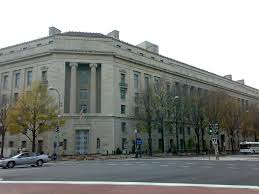
U.S. Department of Justice
RICO opens with a series of definitions of “racketeering activity” which can be prosecuted by Justice Department attorneys. Among those crimes: Extortion.
Extortion is defined as “a criminal offense which occurs when a person unlawfully obtains either money, property or services from a person(s), entity, or institution, through coercion.”
Share this: