bureaucracybusters

Posts Tagged ‘PETE BUTTIGIEG’

AN EVERYDAY THREAT TO GOVERNMENT

In Bureaucracy, Business, History, Law, Law Enforcement, Politics, Social commentary on October 15, 2025 at 12:06 am

It’s wonderful to believe that when you have a problem, you can write your local / state / federal representative and s/he will “give it my fullest attention.”    

Unfortunately, that’s usually not what happens.  

Two cases on the futility of expectations:

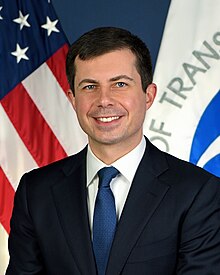
Case #1: On August 12, 2021, Mark (a pseudonym) wrote a letter to Secretary of Transportation Pete Buttigieg. The subject: The disgraceful performance of San Francisco’s Municipal Railway (MUNI) bus lines during the COVID-19 pandemic.

Mark had previously complained to MUNI and his member of the San Francisco Board of Supervisors—without result.  So now he decided to literally make it a Federal case:

“MUNI bus drivers are the highest-paid in the nation: The average MUNI driver makes $79,617, 51% above the national average bus driver salary of $52,730. This pay is 27% higher than the combined average salaries of drivers in Dallas, Boston and Atlanta.

“Yet  for  more  than  a  year,  many  of  these  drivers  have  been  ‘earning’ their pay by staying at home—or  going on  what  amounts to  an  extended vacation at the expense of San Francisco voters and MUNI riders.”

Muni | SFMTA

Many bus routes, Mark wrote, had been eliminated. This forced riders to cram themselves aboard the first bus available—making it impossible to “maintain social distancing” as recorded messages aboard MUNI buses advised.

Other routes had been substantially altered, with passengers learning this only after they were deposited far from their expected drop-off point.

These changes were especially difficult for elderly and/or disabled riders.

Mark suggested that Buttigieg threaten MUNI with:

  1. The loss of the Federal monies it received through the Department of Transportation; and
  2. An Americans With Disabilities lawsuit on behalf of San Franciscans unable to receive the transit services they needed.

Mark never received even the courtesy of a reply, let alone a positive change in MUNI’s operations.  

Pete Buttigieg official photo.jpg

Pete Buttigieg

Case #2:  Janet, a chef in Los Angeles, was fed up with getting Spam calls on her cell phone. Each time she got one, she blocked the number. Being on the national Do Not Call Registry, she believed she had an airtight case to take to the Federal Communications Commission (FCC) which regulates the airways.

So she called the FCC and spoke with one of its representatives.

She said that she had saved to her phone the numbers of Spam callers—and she was prepared to turn these over to the FCC.

The FCC’s rep applauded Janet’s willingness to turn over this information.

“Then what happens?” asked Janet.

“We’ll put it into our files.”

In short: the FCC had no intention of acting on the Spam-caller numbers that Janet was prepared to turn over.

Did you submit a net neutrality comment to the FCC? Are you sure?

Janet didn’t hide her disappointment: “If someone went to the FBI and said, ‘I’m being shaken down by the Mafia,’ and the FBI said, ‘Well, we’ll put this into our files’ but wasn’t willing to do anything more, how many people do you think would be willing to report crimes to the FBI?”

The FCC rep admitted that this would greatly reduce the willingness of the public to report crimes to the FBI. But she made no effort to help Janet stop the harassing Spam calls.

Incidents like the ones above are a potent reason why so many people have lost their trust in government—at all levels.

Untold numbers of average citizens feel their elected officials—and the agencies they administer—don’t care about their problems. Even worse, they believe—accurately—that if they were wealthy contributors to the Democratic or Republican party, their complaints would be addressed promptly.

On April 24, 2016, CBS’ longtime documentary series, “60 Minutes,” aired a segment titled “Dialing for Dollars.”  

It opened with the following: “The American public has a low opinion of Congress. Only 14 percent think it’s doing a good job. But Congress has excelled in one way. Raising money. Members of Congress raised more than a billion dollars for their 2014 election. And they never stop. 

“Nearly every day, they spend hours on the phone asking supporters and even total strangers for campaign donations—hours spent away from the jobs they were elected to do. The pressure on candidates to raise money has ratcheted up since the Supreme Court’s Citizens United decision in 2010. That allowed unlimited spending by corporations, unions and individuals in elections.”

Coat of arms or logo

In short: Members of Congress—the branch that writes the laws governing the lives of 328.2 million Americans—have essentially become telemarketers.

People who write to their members of Congress expect at least the courtesy of a reply addressing their concerns within a reasonable period of time. Many constituents will not receive even that.

Or the “reply” they receive arrives weeks or months later—and opens with: “Thank you for writing me to support my bill….”

Usually they haven’t even heard of the bill cited—and couldn’t care less about it. As they scan the letter—no doubt drafted by a low-level staffer—they search in vain for an offer of help, or at least empathy. 

Millions of Americans will have no other contact with government officials than this. And it will convince them that if government isn’t their enemy, it’s certainly not their friend.

ANCIENT ROME COMES TO AMERICAN POLITICS

In Bureaucracy, Business, History, Military, Politics, Social commentary on September 5, 2022 at 12:10 am

The 1960 Kirk Douglas epic, Spartacus, has proven to be more than great entertainment. It has turned out to be a prophecy of the end of the American Republic.

In the movie, Spartacus (Douglas), a Roman slave, entertains Marcus Crassus (Laurence Oliver) the richest man in Rome. He does so by fighting to the death as a gladiator.

Poster for Spartacus

While Spartacus and his fellow gladiator/friend, Draba (Woody Strode), slash and stab at each other in the arena, Crassus idly chats with his crony, Marcus Glabrus (Jon Dall).

Crassus has just secured Glabrus’ appointment as commander of the garrison of Rome. Glabrus is grateful, but curious as to how he did it.

After all, Gaius Gracchus (Charles Laughton), the leader of the Roman Senate, hates Crassus, and vigorously opposes his every move.

“I fought fire with oil,” says Crassus. “I purchased the Senate behind his back.”  

Just as Crassus bought the Roman Senate in Spartacus, billionaires similarly bought the 2016 Presidential election.

In 2016, Newt Gingrich, former Speaker of the House of Representatives, ran as the pet candidate of casino billionaire Sheldon G. Adelson.

Since 2007, Adelson had spent millions in support of Gingrich and his causes.

Newt Gingrich

Adelson put up seed money and, ultimately, $7.7 million between 2006 and 2010 for a nonprofit group that served as a precursor to Gingrich’s presidential campaign.

Related image

Sheldon Adelson

Such a contribution is beyond the means of the average American. But Adelson is listed by Forbes as the eighth-wealthiest American, with a net worth of $21.5 billion.

Adelson denied any selfish motives for giving millions to a candidate for the most powerful office in the world:

“My motivation for helping Newt is simple and should not be mistaken for anything other than the fact that my wife Miriam and I hold our friendship with him very dear and are doing what we can as private citizens to support his candidacy.”

Former Massachusetts Governor Mitt Romney also relied heavily on a small group of millionaires and billionaires for support.

By February, 2012, a quarter of the money amassed by Romney’s campaign came from just 41 people. Each contributor gave more than $100,000, according to a Washington Post analysis of disclosure data. Nearly a dozen of the donors had contributed $1 million or more.

Related image

Some of Romney’s biggest supporters included executives at Bain Capital, his former firm; bankers at Goldman Sachs; and a hedge fund mogul who made billions betting on the housing crash.

Four years later, in May, 2016, Adelson met privately with Republican Presidential nominee-in-waiting Donald Trump. 

Adelson promised to contribute more to secure Trump’s election than he had contributed to any previous campaign—up to and exceeding $100 million.  

Meanwhile, Trump bragged that he was “not beholden” to any “special interests” because “I’m really rich.”  This falsehood proved a main reason for his popularity as a candidate.

Related image

Donald Trump

Fast forward another three years—and a December 4, 2019 story in Fortune: “2020 Presidential Campaign Fundraising (and Spending) Are on Track to Smash Records.”

By then, Trump had raised $165.3 million.

But Democrats altogether had outstripped him with $475.6 million raised.

Among the largest Democratic money-raisers (in millions):

  • Bernie Sanders: $74.5
  • Elizabeth Warren: $60.3
  • Pete Buttigieg: $51.5
  • Tom Steyer: $49.6
  • Joe Biden: $37.8 

Former New York Mayor Michael Bloomberg entered the race on November 24, 2019. Within a week he paid $57 million for TV ads.

His fellow billionaire Tom Steyer spent over $60 million since July, 2019.

The 2020 Presidential election proved the most expensive in American history—so far.

Joe Biden raised $1.06 billion. Donald Trump raised $0.80 billion.

All of this can be directly traced to the 2010 “Citizens United” decision by the U.S. Supreme Court that ended limits in corporate contributions to political campaigns. The decision is so named for the group that successfully sued over federal campaign finance laws.

The 5-4 decision led to the rise of Super PACs—outside groups affiliated with candidates that can take in unlimited contributions as long as they don’t directly coordinate with the candidate. The overwhelming majority of this money goes for negative ads—that slander opponents without saying anything about what a candidate proposes to do.

Former U.S. Supreme Court Justice Antonin Scalia brushed aside criticism of the corrupting role money played in politics: Change the channel or turn off the TV.

“I don’t care who is doing the speech—the more the merrier,” Scalia said. “People are not stupid. If they don’t like it, they’ll shut it off.”

On the contrary: A fundamental principle of propaganda holds that most people are stupid—or can be made to behave stupidly. If they are ceaselessly bombarded with mind-numbing lies, they will eventually substitute these for reality.  

During the early 1960s a series of movies about the Roman Empire—like Spartacus and Cleopatra—hit the big screen. In these, rich criminals like Marcus Crassus openly bought the favors of ambitious politicians like Julius Caesar.

No doubt millions of moviegoers thought, “Boy, I’m glad that couldn’t happen here.”

But it has happened here—and it’s happening right now.

REPUBLICANS: AIR RAGE OVER MASKS ISN’T TERRORISM

In Bureaucracy, Business, History, Law, Law Enforcement, Politics, Social commentary on March 2, 2022 at 12:18 am

During the first six weeks of 2022, nearly 500 unruly passenger incidents were reported to the Federal Aviation Administration (FAA). 

That makes for more than 6,400 since the start of 2021.

About two-thirds of the incidents in 2021 concerned violations of the federal mask mandate. 

On February 16, the FAA said it had referred a total of 80 incidents to the Justice Department to consider criminal prosecution.

Federal Aviation Administration Jobs - Program Support Assistant - March 2022

Airlines may ban an unruly passenger from their own flights, but competition rules mean that information is not shared with other carriers. Which means that a flier who was banned on Delta might board a flight on Southwest.

In September, 2021, the airline industry asked the Department of Justice (DOJ) to establish a Federal “no-fly” passenger list, whose information would be shared with all airlines.

In February, Delta Air Lines renewed the request in a letter to the DOJ.

Transportation Secretary Pete Buttigieg suggested to CNN’s Dana Bash last fall that a federal no-fly list for violent airplane passengers “should be on the table.” 

American Airlines Pilot Captain Dennis Tajer explained the dangers facing everyone on board when an “air rage” incident erupts: “The moment something happens in the back of the aircraft, as a captain, my attention goes off of my primary duty and onto the back of the airplane.” 

American Airlines pilot reveals 1,600 who were furloughed 'won't fly again until August' | Daily Mail Online

Dennis Tajer

Tajer, who represents the Allied Pilots Association, wants stricter punishments for air rage.

So who isn’t in favor of a “no-fly” ban?

At least eight “law-and-order” Republican United States Senators.

Their names:

  • Rafael Eduardo “Ted” Cruz (Texas)
  • Mike Lee (Utah)
  • Cynthia M. Lummis (Wyoming)
  • James Lankford (Oklahoma)
  • Marco Rubio (Florida)
  • Kevin Cramer (North Dakota)
  • John Hoeven (North Dakota)
  • Rick Scott (Florida)

All eight are virulent supporters of Donald Trump, who, as President, refused to wear a mask and incited violent action against governors who declared mask mandates.

The reason for their unexpected clemency: It would be unfair to people who break mask mandates. 

In a jointly-signed letter to Attorney General Merrick Garland, dated February 14, they stated:

“Your office received a letter from Delta Airlines on February 3, 2022. In that letter, Delta indicated their desire for the U.S, Department of Justice (DOJ) to create a comprehensive “nofly” list.

“This list would would presumably include any airline passenger who has been convicted of any on-board disruption. As a result, those passengers would subsequently be banned from using any commercial air service provider moving forward. We write today to express our strong opposition to the creation of such a list.

“While airlines are currently free to deny service to any individual over past transgressions on their flights, the federal government’s role in denying access to the commercial aviation network has been limited to ensuring that suspected terrorists remain off of domestic flights. 

“According to data from the Federal Aviation Administration, the majority of recent infractions on airplanes has been in relation to the mask mandates from the Transportation Security Administration (TSA).

“While we strongly condemn any violence toward airline workers, there is significant uncertainty toward the efficacy of this mandate as highlighted by the CEO of Southwest Airlines during a recent Senate Conference, Science and Transportation Committee hearing.” 

N95 and Other Respirators | CDC

N95 mask

There is no uncertainty about the efficacy” of the ability of masks to protect people from COVID-19. Since the virus appeared in 2020, the Federal Centers for Disease Control and Prevention (CDC) has repeatedly urged Americans to mask up to protect themselves and others.

“Creating a federal ‘no-fly’ list for unruly passengers who are skeptical of this mandate would seemingly equate them to terrorists who seek to actively take the lives of Americans and perpetrate attacks on the homeland.” 

Being “skeptical” of the need for mask mandates poses no threat to anyone. But refusing to mask up to protect yourself and others from a deadly virus presents a danger to both. And attacking airline employees who are trying to enforce that law presents a clear and present danger to them and passengers.

“The TSA was created in the wake of 9/11 to protect Americans from future horrific attacks, not to regulate human behavior aboard flights.”

In short: It’s OK to protect American airline passengers from Islamic lawbreakers who endanger their lives aboard aircraft. But it’s unfair to protect American airline passengers from American lawbreakers who endanger their lives aboard aircraft.

“The creation of this list by DOJ would result in a severe restriction on the ability of citizens to fully exercise their constitutional right to engage in interstate transportation.”

At the time the Constitution was ratified in 1788, airline travel didn’t exist. In addition, it’s customary to place “severe restrictions” on citizens who break the law. And while Americans have the right to travel between states, they do not have the right to threaten the safety of others while doing so.

Sara Nelson, the president of the Association of Flight Attendants, minced no words about the senators’ request: It’s “irresponsible and political brinkmanship that puts our economic security at risk right along with our lives.

“We’ve been punched, kicked, spit on, and sexually assaulted. We urge the FAA, TSA, and DOJ to come together to implement a plan with due process to keep dangerous flyers on the ground.”

AN EVERYDAY THREAT TO GOVERNMENT

In Bureaucracy, Business, History, Law, Law Enforcement, Politics, Social commentary on September 14, 2021 at 12:05 am

It’s wonderful to believe that when you have a problem, you can write your local / state / federal representative and s/he will “give it my fullest attention.”

Unfortunately, it’s also usually a mistake.

Two cases on the futility of expectations:

Case #1: On August 12, a man I’ll call Mark, wrote a letter to Secretary of Transportation Pete Buttigieg. The subject: The disgraceful performance of San Francisco’s Municipal Railway (MUNI) bus lines during the Covid-19 pandemic.

Mark had previously complained to MUNI and his member of the San Francisco Board of Supervisors—without result.  So now he decided to literally make it a Federal case:

“MUNI bus drivers are the highest-paid in the nation: The average MUNI driver makes $79,617, 51% above the national average bus driver salary of $52,730. This pay is 27% higher than the combined average salaries of drivers in Dallas, Boston and Atlanta.

“Yet  for  more  than  a  year,  many  of  these  drivers  have  been  ‘earning’ their pay by staying at home—or  going on  what  amounts to  an  extended vacation at the expense of San Francisco voters and MUNI riders.”

Muni | SFMTA

Many bus routes, Mark wrote, had been eliminated. This forces riders to cram themselves aboard the first bus available—making it impossible to “maintain social distancing” as recorded messages aboard MUNI buses advise.

Other routes have been substantially altered, with passengers learning this only after they are deposited far from their expected drop-off point.

These changes are especially difficult for elderly and/or disabled riders.

Mark suggested that Buttigieg threaten MUNI with:

  1. The loss of the Federal monies it now receives through the Department of Transportation; and
  2. An Americans With Disabilities lawsuit on behalf of San Franciscans now unable to receive the transit services they need.

To date—one month later—Mark has not received even the courtesy of a reply, let alone seen a positive change in MUNI’s operations.  

Pete Buttigieg official photo.jpg

Pete Buttigieg

Case #2:  Janet, a chef in Los Angeles, was fed up with getting Spam calls on her cell phone. Each time she got one, she blocked the number. Being on the national Do Not Call Registry, she believed she had an airtight case to take to the Federal Communications Commission (FCC) which regulates the airways.

So she called the FCC and spoke with one of its representatives.

She said that she had saved to her phone the numbers of Spam callers—and she was prepared to turn these over to the FCC.

The FCC’s rep applauded Janet’s willingness to turn over this information.

“Then what happens?” asked Janet.

“We’ll put it into our files.”

In short: the FCC had no intention of acting on the Spam-caller numbers that Janet was prepared to turn over.

Did you submit a net neutrality comment to the FCC? Are you sure?

Janet didn’t hide her disappointment: “If someone went to the FBI and said, ‘I’m being shaken down by the Mafia,’ and the FBI said, ‘Well, we’ll put this into our files’ but wasn’t willing to do anything more, how many people do you think would be willing to report crimes to the FBI?”

The FCC rep admitted that this would greatly reduce the willingness of the public to report crimes to the FBI. But she made no effort to help Janet stop the harassing Spam calls.

Incidents like the ones above are a potent reason why so many people have lost their trust in government—at all levels.

Untold numbers of average citizens feel their elected officials—and the agencies they administer—don’t care about their problems. Even worse, they believe—accurately—that if they were wealthy contributors to the Democratic or Republican party, their complaints would be addressed promptly.

On April 24, 2016, CBS’ longtime documentary series, “60 Minutes,” aired a segment titled “Dialing for Dollars.”  

It opened with the following: “The American public has a low opinion of Congress. Only 14 percent think it’s doing a good job. But Congress has excelled in one way. Raising money. Members of Congress raised more than a billion dollars for their 2014 election. And they never stop. 

“Nearly every day, they spend hours on the phone asking supporters and even total strangers for campaign donations—hours spent away from the jobs they were elected to do. The pressure on candidates to raise money has ratcheted up since the Supreme Court’s Citizens United decision in 2010. That allowed unlimited spending by corporations, unions and individuals in elections.”

Coat of arms or logo

In short: Members of Congress—the branch that writes the laws governing the lives of 328.2 million Americans—have essentially become telemarketers.

People who write to their members of Congress expect at least the courtesy of a reply addressing their concerns within a reasonable period of time. Many constituents will not receive even that.

Or the “reply” they receive arrives weeks or months later—and opens with: “Thank you for writing me to support my bill….”

Usually they haven’t even heard of the bill cited—and couldn’t care less about it. As they scan the letter—no doubt drafted by a low-level staffer—they search in vain for an offer of help, or at least empathy. 

Millions of Americans will have no other contact with government officials than this. And it will convince them that if government isn’t their enemy, it’s certainly not their friend.

ANCIENT ROME COMES TO AMERICAN POLITICS

In Bureaucracy, Business, History, Military, Politics, Social commentary on December 10, 2019 at 12:08 am

The 1960 Kirk Douglas epic, Spartacus, has proven to be more than great entertainment. It has turned out to be a prophecy of the end of the American Republic.

In the movie, Spartacus (Douglas), a Roman slave, entertains Marcus Crassus (Laurence Oliver) the richest man in Rome. He does so by fighting to the death as a gladiator.

Poster for Spartacus

While Spartacus and his fellow gladiator/friend, Draba (Woody Strode), slash and stab at each other in the arena, Crassus idly chats with his crony, Marcus Glabrus (Jon Dall).

Crassus has just secured Glabrus’ appointment as commander of the garrison of Rome. Glabrus is grateful, but curious as to how he did it.

After all, Gaius Gracchus (Charles Laughton), the leader of the Roman Senate, hates Crassus, and vigorously opposes his every move.

“I fought fire with oil,” says Crassus. “I purchased the Senate behind his back.”  

Just as Crassus bought the Roman Senate in Spartacus, billionaires similarly bought the 2016 Presidential election.

In 2016, Newt Gingrich, former Speaker of the House of Representatives, ran as the pet candidate of casino billionaire Sheldon G. Adelson. Since 2007, Adelson had spent millions in support of Gingrich and his causes.

Newt Gingrich

Adelson put up seed money and, ultimately, $7.7 million between 2006 and 2010 for a nonprofit group that served as a precursor to Gingrich’s presidential campaign.

Related image

Sheldon Adelson

Such a contribution is beyond the means of the average American. But Adelson is listed by Forbes as the eighth-wealthiest American, with a net worth of $21.5 billion.

Adelson denied any selfish motives for giving millions to a candidate for the most powerful office in the world:

“My motivation for helping Newt is simple and should not be mistaken for anything other than the fact that my wife Miriam and I hold our friendship with him very dear and are doing what we can as private citizens to support his candidacy.”

Former Massachusetts Governor Mitt Romney also relied heavily on a small group of millionaires and billionaires for support.

By February, 2012, a quarter of the money amassed by Romney’s campaign came from just 41 people. Each contributor gave more than $100,000, according to a Washington Post analysis of disclosure data. Nearly a dozen of the donors had contributed $1 million or more.

Related image

Some of Romney’s biggest supporters included executives at Bain Capital, his former firm; bankers at Goldman Sachs; and a hedge fund mogul who made billions betting on the housing crash.

Four years later, in May, 2016, Adelson met privately with Republican Presidential nominee-in-waiting Donald Trump. 

Adelson promised to contribute more to secure Trump’s election than he had contributed to any previous campaign—up to and exceeding $100 million.  

Meanwhile, Trump bragged that he was “not beholden” to any “special interests” because “I’m really rich.”  This falsehood proved a main reason for his popularity as a candidate.

Related image

Donald Trump

Fast forward another three years—and a December 4, 2019 story in Fortune: “2020 Presidential Campaign Fundraising (and Spending) Are on Track to Smash Records.”

Trump, as President, has so far raised $165.3 million.

But Democrats altogether have far outstripped him with $475.6 million raised.

Among the largest Democratic money-raisers (in millions):

  • Bernie Sanders: $74.5
  • Elizabeth Warren: $60.3
  • Pete Buttigieg: $51.5
  • Tom Steyer: $49.6
  • Joe Biden: $37.8 

Former New York Mayor Michael Bloomberg entered the race on November 24. Within a week he paid $57 million for TV ads.

His fellow billionaire Tom Steyer has spent over $60 million since July,

All of this can be directly traced to the 2010 “Citizens United” decision by the U.S. Supreme Court that ended limits in corporate contributions to political campaigns. The decision is so named for the group that successfully sued over federal campaign finance laws.

The 5-4 decision led to the rise of Super PACs—outside groups affiliated with candidates that can take in unlimited contributions as long as they don’t directly coordinate with the candidate. The overwhelming majority of this money goes for negative ads—that slander opponents without saying anything about what a candidate proposes to do.

Former U.S. Supreme Court Justice Antonin Scalia brushed aside criticism of the corrupting role money played in politics: Change the channel or turn off the TV.

“I don’t care who is doing the speech—the more the merrier,” Scalia said. “People are not stupid. If they don’t like it, they’ll shut it off.”

On the contrary: A fundamental principle of propaganda holds that most people are stupid—or can be made to behave stupidly. If they are ceaselessly bombarded with mind-numbing lies, they will eventually substitute these for reality.  

In Mein Kampf, Adolf Hitler laid out his formula for successful propaganda: “All effective propaganda must be confined to a few bare essentials.  

“These must be expressed as far as possible in stereotypical formulas. These slogans should be persistently repeated until the very last individual has come to grasp the idea that has been put forward.”

During the early 1960s a series of movies about the Roman Empire—like Spartacus and Cleopatra—hit the big screen. In these, rich criminals like Marcus Crassus openly bought the favors of ambitious politicians like Julius Caesar.

No doubt millions of moviegoers thought, “Boy, I’m glad that couldn’t happen here.”

But it has happened here—and it’s happening right now.