Posts Tagged ‘PAUL RYAN’
ABC NEWS, BARACK OBAMA, BREITBART NEWS, CBS NEWS, CHRISTOPHER S. MURPHY, CIA, CNN, DEMOCRATIC NATIONAL COMMITTEE, DEMOCRATIC PARTY, DONALD TRUMP, ERIC SCHNEIDERMAN, EXTORTION, FACE THE NATION, FACEBOOK, FERGUS CULLEN, FOX NEWS SUNDAY, GREG ABBOTT, HACKING, HILLARY CLINTON, IRS, JAMES B. COMEY, JAMES R. CLAPPER, JEFF SESSIONS, JOHN KASICH, JUSTICE DEPARTMENT, KEN PAXTON, LEON PANETTA, MARK LEVIN, MICHAEL ROGERS, MIKE PENCE, NATIONAL SECURITY AGENCY, NBC NEWS, NEW HAMPSHIRE REPUBLICAN PARTY, NEWSWEEK, NPR, PAM BONDI, PAUL RYAN, PHILIP KLEIN, POLITICO, Racketeer Influenced Corrupt Organizations (RICO) Act, REPUBLICAN NATIONAL COMMITTEE, REPUBLICAN NATIONAL CONVENTION, REPUBLICAN PARTY, ROGER STONE, SALON, SOVIET UNION, THE CHICAGO SUN-TIMES, THE CHICAGO TRIBUNE, THE HUFFINGTON POST, THE LOS ANGELES TIMES, THE NEW YORK TIMES, THE WASHINGTON EXAMINER, THE WASHINGTON POST, THREATS, TIME, TREASON, TRUMP UNIVERSITY, TRUMP-RUSSIA TIES, TWITTER, U.S. NEWS & WORLD REPORT, U.S. SECRET SERVICE, USA PATRIOT ACT, USA TODAY, VLADIMIR PUTIN, WEIMAR REPUBLIC, WIRETAPPING
In Bureaucracy, History, Law, Law Enforcement, Politics, Social commentary on March 7, 2017 at 12:35 am
Even without wiretaps, there were at least four instances when Federal law enforcement authorities could have disqualified Donald Trump as a Presidential candidate–or secured his indictment.
Threatening your political opponents with violence is a crime under Federal law. Yet such threats against his Republican and Democratic opponents played a major role in Trump’s Presidential campaign.
- Philip Klein, the managing editor of the Washington Examiner, wrote on the eve of the Republican National Convention in July: “Political commentators now routinely talk about the riots that would break out in Cleveland if Trump were denied the nomination, about how his supporters have guns and all hell could break loose, that they would burn everything to the ground. It works to Trump’s advantage to not try too hard to dispel these notions.”
- On August 9, 2016, Trump told a rally in Wilmington, North Carolina: “Hillary [Clinton] wants to abolish, essentially abolish, the Second Amendment. If she gets to pick her [Supreme Court] judges, nothing you can do folks. Although the Second Amendment people, maybe there is, I don’t know.”
- Reacting to Trump’s “dog-whistle” threat against Clinton, Michael Hayden, former head of the CIA and National Security Agency (NSA) said: “Well, let me say if someone else said that outside of the hall, he’d be in the back of a police wagon now, with the Secret Service questioning him.”
Making threats against anyone under protection by the U.S. Secret Service is a felony. Yet Donald Trump was never held legally accountable by the Justice Department.
Threats of violence continued to be made by Trump supporters right up to the day of the election.
- On July 29, 2016, Roger Stone, a notorious Right-wing political consultant acting as a Trump strategist, told Breitbart News: “The first thing Trump needs to do is begin talking about [voter fraud] constantly. If there’s voter fraud, this election will be illegitimate, the election of the winner will be illegitimate, we will have a constitutional crisis, widespread civil disobedience, and the government will no longer be the government.”
- At a town hall meeting where Trump’s Vice Presidential nominee Mike Pence appeared, a woman named Rhonda said: “For me personally, if Hillary Clinton gets in, I myself am ready for a revolution.”
- In Cincinnati, a Trump supporter threatened to forcibly remove Hillary Clinton, the Democratic nominee, from the White House if she won the race: “If she’s in office, I hope we can start a coup. She should be in prison or shot. That’s how I feel about it,” said Dan Bowman, a 50-year-old contractor. “We’re going to have a revolution and take them out of office if that’s what it takes. There’s going to be a lot of bloodshed. But that’s what it’s going to take….”
Even Fergus Cullen, former chairman of the New Hampshire GOP, expressed fear of what might happen if Trump lost the election:

Fergus Cullen
“That’s really scary,” Cullen said, recounting the violence at Trump rallies around the country leading up to the Republican National Convention. “In this country, we’ve always had recriminations after one side loses. But we haven’t had riots. We haven’t had mobs that act out with violence against supporters of the other side.
“There’s no telling what his supporters would be willing to do at the slightest encouragement from their candidate,” he said.
Trump even began encouraging his mostly white supporters to sign up online to be “election observers” to stop “Crooked Hillary from rigging this election.” He urged them to act as poll watchers in “other” [non-white] communities to ensure that things are “on the up and up.”
Many of his supporters promised to do so.
“Trump said to watch your precincts. I’m going to go, for sure,” said Steve Webb, a 61-year-old carpenter from Fairfield, Ohio.
“I’ll look for…well, it’s called racial profiling. Mexicans. Syrians. People who can’t speak American,” he said. “I’m going to go right up behind them. I’ll do everything legally. I want to see if they are accountable. I’m not going to do anything illegal. I’m going to make them a little bit nervous.”
Knowing that large numbers of angry–and possibly armed–Right-wingers planned to descend on polling places could only have had a chilling effect on untold numbers of Democratic voters. And this would have been especially true in heavily conservative states.
Both the USA Patriot Act and the Racketeer Influenced Corrupt Organizations (RICO) Act have statutes dealing with making terrorist threats against government institutions to influence their members.
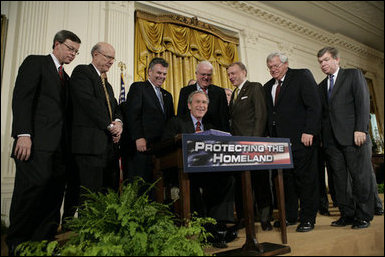
President George W. Bush signing the USA Patriot Reauthorization Act of 2005
If Trump’s remarks did not violate one or both of those laws, certainly remarks made by his surrogates did.
Thus, the Justice Department could have cited the Patriot Act in indicting Trump and/or any number of his followers for “activities that…appear to be intended…to influence the policy of a government by intimidation or coercion [and]…occur primarily within the territorial jurisdiction of the United States.”
The Justice Department could have also demanded that the results of the election be invalidated on the basis that widespread voter and candidate intimidation played a massive role in it.
But of course this did not happen.
ABC NEWS, BARACK OBAMA, BREITBART NEWS, CBS NEWS, CHRISTOPHER S. MURPHY, CIA, CNN, DEMOCRATIC NATIONAL COMMITTEE, DEMOCRATIC PARTY, DONALD TRUMP, ERIC SCHNEIDERMAN, EXTORTION, FACE THE NATION, FACEBOOK, FERGUS CULLEN, FOX NEWS SUNDAY, GREG ABBOTT, HACKING, HILLARY CLINTON, IRS, JAMES B. COMEY, JAMES R. CLAPPER, JEFF SESSIONS, JOHN KASICH, JUSTICE DEPARTMENT, KEN PAXTON, LEON PANETTA, MARK LEVIN, MICHAEL ROGERS, MIKE PENCE, NATIONAL SECURITY AGENCY, NBC NEWS, NEW HAMPSHIRE REPUBLICAN PARTY, NEWSWEEK, NPR, PAM BONDI, PAUL RYAN, PHILIP KLEIN, POLITICO, Racketeer Influenced Corrupt Organizations (RICO) Act, REPUBLICAN NATIONAL COMMITTEE, REPUBLICAN NATIONAL CONVENTION, REPUBLICAN PARTY, ROGER STONE, SALON, SOVIET UNION, THE CHICAGO SUN-TIMES, THE CHICAGO TRIBUNE, THE HUFFINGTON POST, THE LOS ANGELES TIMES, THE NEW YORK TIMES, THE WASHINGTON EXAMINER, THE WASHINGTON POST, THREATS, TIME, TREASON, TRUMP UNIVERSITY, TRUMP-RUSSIA TIES, TWITTER, U.S. NEWS & WORLD REPORT, U.S. SECRET SERVICE, USA PATRIOT ACT, USA TODAY, VLADIMIR PUTIN, WIRETAPPING
In Bureaucracy, History, Law, Law Enforcement, Politics, Social commentary on March 6, 2017 at 12:56 am
Future historians–if there are any–may one day write that it’s what didn’t happen that played at least as great a role in electing Donald Trump President as what actually did.
There were at least four instances where intervention by Federal law enforcement authorities could have utterly changed the outcome of the 2016 election.
And Trump’s completely unsupported accusations that he was illegally wiretapped were not one of those instances.
On March 4, in a series of unhinged tweets, Trump accused former President Barack Obama of tapping his Trump Tower phones prior to the election:
“Terrible! Just found out that Obama had my ‘wires tapped’ in Trump Tower just before the victory. Nothing found. This is McCarthyism!”
“Is it legal for a sitting President to be ‘wire tapping’ a race for president prior to an election? Turned down by court earlier. A NEW LOW!”
“I’d bet a good lawyer could make a great case out of the fact that President Obama was tapping my phones in October, just prior to Election!”
“How low has President Obama gone to tapp my phones during the very sacred election process. This is Nixon/Watergate. Bad (or sick) guy!”
There are two theories about what prompted Trump’s accusations.
Theory #1: They were prompted by Right-wing media outlets that had been pushing wiretapping claims in recent days.
On March 2, Right-wing radio host Mark Levin claimed that Obama had used “powers of the federal government to surveil members of the Trump campaign.”
Referring to Attorney General Jeff Sessions and his newly disclosed meetings with Russia’s ambassador last year, Levin asked: “Today’s reporting on Sessions having a chance meeting with the ambassador–where did that information come from? Look at the timing of it. Was Obama surveilling top Trump campaign officials during the election?”
On March 3, the Fascist media site Breitbart News echoed the charge. Its story was based on Levin’s show and offered no evidence to back up its accusations.
Theory #2: Trump, under scrutiny for ties between his campaign and Russia, sought to deflect attention by making an outrageous accusation.
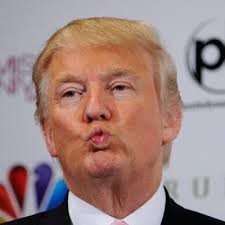
Donald Trump
Even without wiretaps, there were at least four instances where intervention by Federal law enforcement authorities could have disqualified Trump as a Presidential candidate and/or secured his indictment.
Case #1: The Justice Department did not indict Trump and/or the Attorney Generals of Texas and/or Florida for their roles in the Trump University scandal.
- Florida Attorney General Pam Bondi personally solicited a political contribution from Donald Trump around the same time her office deliberated joining an investigation of alleged fraud at Trump University and its affiliates.
- After Bondi dropped the Trump University case against Trump, he wrote her a check $25,000 for her re-election campaign. The money came from the Donald J. Trump Foundation.
- Republican Texas Attorney General Ken Paxton moved to muzzle a former state regulator who says he was ordered in 2010 to drop a fraud investigation into Trump University for political reasons.
- Paxton’s office issued a cease and desist letter to former Deputy Chief of Consumer Protection John Owens after he made public copies of a 14-page internal summary of the state’s case against Donald Trump for scamming millions from students of his now-defunct real estate seminar.
- After the Texas case was dropped, Trump cut a $35,000 check to the gubernatorial campaign of then attorney general and now Texas Governor Greg Abbott.
One attorney general who refused to accept money from Trump was New York’s Eric Schneiderman. His decision to press fraud claims against Trump forced the real estate mogul to settle the case out of court for $25 million.
“Today’s $25 million settlement agreement is a stunning reversal by Donald Trump,” said Schneiderman on November 18, “and a major victory for the over 6,000 victims of his fraudulent university.”
There have been no press reports that the Justice Department investigated these cases to determine if Trump violated the Racketeer Influenced Corrupt Organizations (RICO) Act statutes.

If the Justice Department did not investigate these cases, it should have. And if he did violate the RICO statutes, he should have been indicted, even as a Presidential candidate or President-elect.
Even if an indictment had not produced a conviction, the mere bringing of one would have cast an unprecedented cloud over his candidacy–let alone his being sworn in as President.
Case #2: The Justice Department did not indict Trump for his series of threats that he made–directly and indirectly–against Republicans and Democrats throughout the 2016 campaign.
- On March 16, he warned Republicans that if he didn’t win the GOP nomination in July, his supporters would literally riot: “I think you’d have riots. I think you would see problems like you’ve never seen before. I think bad things would happen. I really do. I wouldn’t lead it, but I think bad things would happen.”
- An NBC reporter summed it up as: “The message to Republicans was clear on [March 16]: ‘Nice convention you got there, shame if something happened to it.’”
- That Republicans clearly saw this as a threat is undeniable. Paul Ryan, their Speaker of the House, said on March 17: “Nobody should say such things in my opinion because to even address or hint to violence is unacceptable.”
ABC NEWS, ALTERNET, ANCIENT GREECE, ASIANS, AUBREY DE SELINCOURT, BERNIE SANDERS, BLACKS, BUZZFEED, CBS NEWS, CIA, CNN, CYBERSECURITY, DAILY KOS, DALLAS MORNING NEWS, DEBBIE WASSERMAN-SCHULTZ, DEMOCRATIC CONVENTION, DEMOCRATIC NATIONAL COMMITTEE, DONALD TRUMP, ELIZABETH WARREN, FACEBOOK, GEORGE W. BUSH, HERODOTUS, HILLARY CLINTON, HUBRIS, MARCO RUBIO, MEXICANS, MICHAEL HAYDEN, MOTHER JONES, MOVEON, MUSLIMS, NBC NEWS, NEWSWEEK, NPR, PAUL RYAN, POLITICO, PRISONERS OF WAR, RAW STORY, RUSSIA, SALON, SLATE, TED CRUZ, THE CHICAGO SUN-TIMES, THE CHICAGO TRIBUNE, THE DAILY BEAST, THE HUFFINGTON POST, THE LOS ANGELES TIMES, THE NEW YORK TIMES, THE WASHINGTON POST, TIME, TWITTER, U.S. NEWS & WORLD REPORT, U.S. STATE DEPARTMENT, VLADIMIR PUTIN, WIKILEAKS, WOMEN
In Bureaucracy, History, Military, Politics, Social commentary on February 7, 2017 at 4:00 pm
Donald Trump has changed Presidential campaigning–perhaps forever.
First, he routinely insulted his opponents. He made angry and brutal attacks on a wide range of persons and organizations–including his fellow Republicans, journalists, news organizations, other countries and even celebrities unconnected with politics.
Among those groups:
- Mexicans
- Prisoners-of-War
- Blacks
- Handicapped

Second, he weaponized social media. He made Twitter an essential arm of his campaign, swiftly insulting his opponents and keeping them constantly off-balance. He proved himself a master at the tabloid news culture and thoroughly in tune with his target audience.
Third, he used the media for free publicity. Since announcing his candidacy on June 16, 2015, he got a year’s worth of free media advertising. This wasn’t the result of a networks’ conspiracy to favor Trump.

Instead, it owed to the media’s lust for sensational copy. And scenes of conflict–such as making brutal attacks on others–generate huge viewership.
This was most apparent in debates, during which he belittled his Republican opponents with insulting nicknames, such as:
- “Little Marco” – Florida U.S. Senator Marco Rubio
- “Goofy” – Massachusetts U.S. Senator Elizabeth Warren
- “Lyin’ Ted” – Texas U.S. Senator Rafael Eduardo “Ted” Cruz
And looking beyond the Republican primary cycle, he created one for his future Democratic antagonist: “Crooked Hillary”–Hillary Clinton, former First Lady, U.S. Senator from New York and Secretary of State.
Political pundits marveled at Trump’s ability to jettison long-held niceties of political discourse and not pay an electoral price for it. They kept predicting that eventually this might happen. But it never did.
Fourth, he openly called for the subversion of the American political system.
On July 22, 2016, Wikileaks released 19,252 emails and 8,034 attachments hacked from computers of the highest-ranking officials of the Democratic National Committee (DNC).
Cyber-security experts believed the hackers originated from Russia–and that Russian President Vladimir Putin authorized it.

The emails revealed the DNC’s bias for Clinton for President. And they showed clear animosity toward her lone challenger, Vermont U.S. Senator Bernie Sanders.
Sanders’ supporters had long charged that the DNC and its chair, Debbie Wasserman-Schultz, were plotting to undercut his campaign.
Five days later, on July 27, at a press conference in Doral, Florida. Trump said:
“Russia, if you’re listening, I hope you’re able to find the 30,000 emails that are missing. I think you will probably be rewarded mightily by our press.”
Trump hoped to score points on Hillary Clinton’s using a private email server as Secretary of State. Instead, he ignited criticism–of himself–on both Left and Right.
“This has to be the first time that a major presidential candidate has actively encouraged a foreign power to conduct espionage against his political opponent,” said Jake Sullivan, Clinton’s chief foreign policy adviser. “This has gone from being a matter of curiosity, and a matter of politics, to being a national security issue.”
Republican Speaker of the House Paul Ryan was equally quick to react. “Russia is a global menace led by a devious thug,” said Brendan Buck, Ryan’s spokesman. “Putin should stay out of this election.”
“If he is talking about the State Department emails on her server, he is inviting a foreign intelligence service to steal sensitive American government information,” said Michael Hayden, head of the CIA under President George W. Bush.
“In addition to its implications for national security today,” wrote Benjy Sarlin, political reporter for MSNBC, “the incident raised disturbing questions about how Trump would govern as president. If a leader is willing to turn to ask foreign spy agencies to target a political opponent, what would he ask of his own spy agencies?”
The avalanche of criticism led Trump to claim: “I was only being sarcastic.”
For at least one normally conservative newspaper, Trump’s words were simply too much. In a July 27 editorial, The Dallas Morning News declared:
“Words have meaning. The world is listening. And what the world is hearing is a man demonstrating that he is unfit to sit in the Oval Office.”
Since the end of World War II, Republicans had taken an intensely anti-Communist stance. Now their Presidential nominee had not only complimented an ex-KGB agent but had even invited him to target the American political system.
Despite the criticism, the overwhelming majority of Republicans–including Paul Ryan–continued to support Trump’s candidacy. Nor did the Obama administration investigate or indict him for treason or subversion.
The ancient Greeks believed hubris–overweening pride–to be the greatest of sins. And, they warned, it was usually punished by divine wrath.

In his book, The World of Herodotus, Aubrey de Selincourt writes that the Greek historian filled his book, The Histories, with “stories of the perils of pride–pride of wealth, pride of power, pride of success, and, deadliest of all, the pride which leads a man to forget that he is a nothing in the sight of the gods.”
And, in the pages of The Histories lies this warning: “Look to the end, no matter what it is you are considering. Often enough, God gives a man a glimpse of happiness, and then utterly ruins him.”
Donald Trump has finally made it to the White House. But there is still time for hubris to overtake and destroy him.
ABC NEWS, ADOLF HITLER, BAVARIA, BEER HALL PUTSCH, BREITBART NEWS, CBS NEWS, CHRISTOPHER S. MURPHY, CIA, CNN, DEMOCRATIC NATIONAL COMMITTEE, DEMOCRATIC PARTY, DONALD TRUMP, EXTORTION, FACE THE NATION, FACEBOOK, FERGUS CULLEN, FOX NEWS SUNDAY, GREG ABBOTT, HACKING, HILLARY CLINTON, HITLER: ASCENT, IRS, JAMES B. COMEY, JAMES R. CLAPPER, JEWS, JOHN KASICH, JUSTICE DEPARTMENT, KEN PAXTON, LEON PANETTA, MEIN KAMPF, MICHAEL ROGERS, MIKE PENCE, MUNICH, NATIONAL SECURITY AGENCY, NAZI PARTY, NBC NEWS, NEW HAMPSHIRE REPUBLICAN PARTY, NEWSWEEK, NPR, PAM BONDI, PAUL RYAN, PHILIP KLEIN, POLITICO, Racketeer Influenced Corrupt Organizations (RICO) Act, REPUBLICAN NATIONAL COMMITTEE, REPUBLICAN NATIONAL CONVENTION, REPUBLICAN PARTY, ROGER STONE, SALON, SOVIET UNION, THE CHICAGO SUN-TIMES, THE CHICAGO TRIBUNE, THE HUFFINGTON POST, THE LOS ANGELES TIMES, THE NEW YORK TIMES, THE WASHINGTON EXAMINER, THE WASHINGTON POST, THREATS, TIME, TREASON, TRUMP UNIVERSITY, TWITTER, U.S. NEWS & WORLD REPORT, U.S. SECRET SERVICE, USA PATRIOT ACT, USA TODAY, VLADIMIR PUTIN, VOLKER ULLRICH, WEIMAR REPUBLIC
In Bureaucracy, History, Law, Law Enforcement, Politics, Social commentary on January 4, 2017 at 12:15 am
Future historians may one day write that it’s what didn’t happen that played at least as great a role in electing Donald Trump President as what actually did.
There were at least four instances where intervention by Federal law enforcement authorities could have utterly changed the outcome of the 2016 election.
Two of these dealt with purely domestic issues—the Trump University scandal and Trump’s repeated threats of violence against Republican and Democratic opponents.
The third and fourth ones dealt with events directly affecting the security of the United States.
It is unprecedented for an American Presidential candidate to repeatedly bestow fulsome praise on the leader of a foreign power hostile to the United States. And to receive equally fawning compliments in return from that leader.
Yet that is precisely what has happened between Donald Trump and Vladimir Putin.
Thus Putin on Trump: “He is a bright personality, a talented person, no doubt about it. It is not up to us to appraise his positive sides, it is up to the U.S. voters. but, as we can see, he is an absolute leader in the presidential race.”
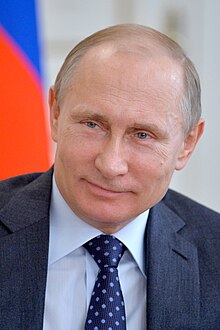
Vladimir Putin
And Trump on Putin: “It is always a great honor to be so nicely complimented by a man so highly respected within his own country and beyond. He’s running his country, and at least he’s a leader. Unlike what we have in this country”—a clear attack on President Barack Obama.
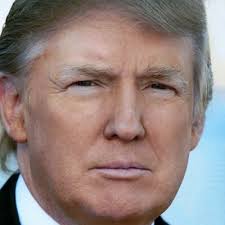
Donald Trump
Case #3: The Justice Department did not invalidate the results of the 2016 election, despite overwhelming evidence that Russia intervened to elect Trump as Vladimir Putin’s chosen candidate.
- Admiral Michael Rogers, director of the National Security Agency (NSA) and US Cyber Command, said in mid-November that Russia made “a conscious effort” to sway the results of the Presidential election by the hacking of 20,000 emails from the Democratic National Committee.
- “There shouldn’t be any doubt in anybody’s mind,” said Rogers. “This was not something that was done casually. This was not something that was done by chance. This was not a target that was selected purely arbitrarily. This was a conscious effort by a nation-state to attempt to achieve a specific effect.”
- The Russians hacked the Democratic committee’s servers–but not those of the Republican National Committee.
- On December 16, FBI Director James B. Comey and Director of National Intelligence James R. Clapper Jr. agreed with a CIA assessment that Russia intervened in the 2016 election in part to help Donald Trump win the White House.

Trump, however, has steadfastly denied any such role by Russia: “I think it’s ridiculous,” he told “Fox News Sunday.” “I think it’s just another excuse. I don’t believe it….No, I don’t believe it at all.”
Case #4: The Justice Department did not prosecute Trump for treason, even though he solicited aid from Russia, a nation hostile to the United States. And no major official of the government—including President Obama—publicly condemned him as a traitor.
At a news conference in Doral, Florida on July 27, Trump publicly invited “Russia”—i.e., Vladimir Putin—to hack Hillary Clinton’s emails: “I will tell you this, Russia: If you’re listening, I hope you’re able to find the 30,000 emails that are missing. I think you will probably be rewarded mightily by our press.”
This was essentially treason—calling on a hostile foreign power to interfere directly in an American Presidential election. And it was seen as such by both Democrats and even Republicans.
- “This has to be the first time that a major presidential candidate has actively encouraged a foreign power to conduct espionage against his political opponent,” Hillary for America policy adviser Jake Sullivan said in a statement. “That’s not hyperbole, those are just the facts. This has gone from being a matter of curiosity, and a matter of politics, to being a national security issue.”
- “I find those kinds of statements to be totally outrageous because you’ve got now a presidential candidate who is, in fact, asking the Russians to engage in American politics,” said former CIA Director Leon Panetta, a Clinton surrogate. “I just think that’s beyond the pale.”
- Brendan Buck, a spokesman for House Speaker Paul Ryan, said: “Russia is a global menace led by a devious thug. Putin should stay out of this election.”
- Even Trump’s Vice Presidential running mate, Mike Pence, said: “If it is Russia and they are interfering in our elections, I can assure you both parties and the United States government will ensure there are serious consequences.”
FBI Director James Comey believed that Hillary Clinton’s emails on a private server were so dangerous to national security that he announced—11 days before the election—that he was re-opening an investigation he had closed.
That announcement erased widespread outrage over Trump’s unintended admissions of predatory behavior toward women—“Grab them by the pussy”—and reversed Clinton’s growing lead in the polls.
Yet the Bureau has not issued any such statements about the continuing reports of close ties between Trump and Putin, and Trump’s possible investments in Russia.
To their shame, the federal agencies charged with safeguarding America failed to take action against these abuses. And, to their shame, the news media, to date, has failed to indict them for their negligence.
ABC NEWS, ADOLF HITLER, BAVARIA, BEER HALL PUTSCH, BREITBART NEWS, CBS NEWS, CHRISTOPHER S. MURPHY, CIA, CNN, DEMOCRATIC NATIONAL COMMITTEE, DEMOCRATIC PARTY, DONALD TRUMP, EXTORTION, FACE THE NATION, FACEBOOK, FERGUS CULLEN, FOX NEWS SUNDAY, GREG ABBOTT, HACKING, HILLARY CLINTON, HITLER: ASCENT, IRS, JAMES B. COMEY, JAMES R. CLAPPER, JEWS, JOHN KASICH, JUSTICE DEPARTMENT, KEN PAXTON, LEON PANETTA, MEIN KAMPF, MICHAEL ROGERS, MIKE PENCE, MUNICH, NATIONAL SECURITY AGENCY, NAZI PARTY, NBC NEWS, NEW HAMPSHIRE REPUBLICAN PARTY, NEWSWEEK, NPR, PAM BONDI, PAUL RYAN, PHILIP KLEIN, POLITICO, Racketeer Influenced Corrupt Organizations (RICO) Act, REPUBLICAN NATIONAL COMMITTEE, REPUBLICAN NATIONAL CONVENTION, REPUBLICAN PARTY, ROGER STONE, SALON, SOVIET UNION, THE CHICAGO SUN-TIMES, THE CHICAGO TRIBUNE, THE HUFFINGTON POST, THE LOS ANGELES TIMES, THE NEW YORK TIMES, THE WASHINGTON EXAMINER, THE WASHINGTON POST, THREATS, TIME, TREASON, TRUMP UNIVERSITY, TWITTER, U.S. NEWS & WORLD REPORT, U.S. SECRET SERVICE, USA PATRIOT ACT, USA TODAY, VLADIMIR PUTIN, VOLKER ULLRICH, WEIMAR REPUBLIC
In Bureaucracy, History, Law, Law Enforcement, Politics, Social commentary on January 3, 2017 at 12:01 am
Threatening his Republican and Democratic opponents with violence played a major role in Donald Trump’s campaign for President.
No other candidate—Republican or Democrat—had ever made such repeated and brutal use of threats of physical assault in pursuing the Presidency.
- Philip Klein, the managing editor of the Washington Examiner, wrote on the eve of the Republican National Convention in July: “Political commentators now routinely talk about the riots that would break out in Cleveland if Trump were denied the nomination, about how his supporters have guns and all hell could break loose, that they would burn everything to the ground. It works to Trump’s advantage to not try too hard to dispel these notions.”
- On August 9, Trump told a rally in Wilmington, North Carolina: “Hillary [Clinton] wants to abolish, essentially abolish, the Second Amendment. If she gets to pick her [Supreme Court] judges, nothing you can do folks. Although the Second Amendment people, maybe there is, I don’t know.”
- “Don’t treat this as a political misstep,” Senator Christopher S. Murphy of Connecticut, who has called for stiffer gun laws, wrote on Twitter. “It’s an assassination threat, seriously upping the possibility of a national tragedy & crisis.”
- “Well, let me say if someone else said that outside of the hall, he’d be in the back of a police wagon now, with the Secret Service questioning him,” said Michael Hayden, former head of the CIA and National Security Agency (NSA).
Making threats against anyone under protection by the U.S. Secret Service is a felony. Yet Donald Trump was never held legally accountable by the Justice Department.
Threats of this type continued to be made by Trump supporters right up to the day of the election.
- On July 29, Roger Stone, a notorious Right-wing political consultant acting as a Trump strategist, told Breitbart News: “The first thing Trump needs to do is begin talking about [voter fraud] constantly. If there’s voter fraud, this election will be illegitimate, the election of the winner will be illegitimate, we will have a constitutional crisis, widespread civil disobedience, and the government will no longer be the government.”
- At a town hall meeting where Trump’s Vice Presidential nominee Mike Pence appeared, a woman named Rhonda said: “For me personally, if Hillary Clinton gets in, I myself am ready for a revolution.”
- In Cincinnati, a Trump supporter threatened to forcibly remove Clinton from the White House if she won the race: “If she’s in office, I hope we can start a coup. She should be in prison or shot. That’s how I feel about it,” Dan Bowman, a 50-year-old contractor, said of Hillary Clinton, the Democratic nominee. “We’re going to have a revolution and take them out of office if that’s what it takes. There’s going to be a lot of bloodshed. But that’s what it’s going to take….I would do whatever I can for my country.”
Even Fergus Cullen, former chairman of the New Hampshire GOP, expressed fear of what might happen if Trump lost the election:
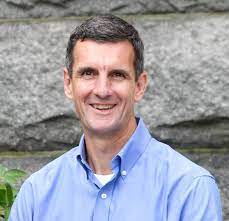
Fergus Cullen
“That’s really scary,” Cullen said, recounting the violence at Trump rallies around the country leading up to the Republican National Convention. “In this country, we’ve always had recriminations after one side loses. But we haven’t had riots. We haven’t had mobs that act out with violence against supporters of the other side.
“There’s no telling what his supporters would be willing to do at the slightest encouragement from their candidate,” he said.
Trump even began encouraging his mostly white supporters to sign up online to be “election observers” to stop “Crooked Hillary from rigging this election.” He urged them to act as poll watchers in “other” [non-white] communities to ensure that things are “on the up and up.”
Many of his supporters promised to do so.
“Trump said to watch your precincts. I’m going to go, for sure,” said Steve Webb, a 61-year-old carpenter from Fairfield, Ohio.
“I’ll look for…well, it’s called racial profiling. Mexicans. Syrians. People who can’t speak American,” he said. “I’m going to go right up behind them. I’ll do everything legally. I want to see if they are accountable. I’m not going to do anything illegal. I’m going to make them a little bit nervous.”
Knowing that large numbers of angry—and possibly armed—Right-wingers planned to descend on polling places could only have had a chilling effect on untold numbers of Democratic voters. And this would have been especially true in heavily conservative states.
Both the USA Patriot Act and the Racketeer Influenced Corrupt Organizations (RICO) Act have statutes dealing with making terrorist threats against government institutions to influence their members.
President George W. Bush signing the USA Patriot Reauthorization Act of 2005
If Trump’s remarks did not violate one or both of those laws, certainly remarks made by his surrogates did.
Thus, the Justice Department could have cited the Patriot Act in indicting Trump and/or any number of his followers for “activities that…appear to be intended…to influence the policy of a government by intimidation or coercion [and]…occur primarily within the territorial jurisdiction of the United States.”
The Justice Department could have also demanded that the results of the election be invalidated on the basis that widespread voter and candidate intimidation played a massive role in it.
But of course this did not happen.
ABC NEWS, ADOLF HITLER, BAVARIA, BEER HALL PUTSCH, BREITBART NEWS, CBS NEWS, CHRISTOPHER S. MURPHY, CIA, CNN, DEMOCRATIC NATIONAL COMMITTEE, DEMOCRATIC PARTY, DONALD TRUMP, ERIC SCHNEIDERMAN, EXTORTION, FACE THE NATION, FACEBOOK, FERGUS CULLEN, FOX NEWS SUNDAY, GREG ABBOTT, HACKING, HILLARY CLINTON, HITLER: ASCENT, IRS, JAMES B. COMEY, JAMES R. CLAPPER, JEWS, JOHN KASICH, JUSTICE DEPARTMENT, KEN PAXTON, LEON PANETTA, MEIN KAMPF, MICHAEL ROGERS, MIKE PENCE, MUNICH, NATIONAL SECURITY AGENCY, NAZI PARTY, NBC NEWS, NEW HAMPSHIRE REPUBLICAN PARTY, NEWSWEEK, NPR, PAM BONDI, PAUL RYAN, PHILIP KLEIN, POLITICO, Racketeer Influenced Corrupt Organizations (RICO) Act, REPUBLICAN NATIONAL COMMITTEE, REPUBLICAN NATIONAL CONVENTION, REPUBLICAN PARTY, ROGER STONE, SALON, SOVIET UNION, THE CHICAGO SUN-TIMES, THE CHICAGO TRIBUNE, THE HUFFINGTON POST, THE LOS ANGELES TIMES, THE NEW YORK TIMES, THE WASHINGTON EXAMINER, THE WASHINGTON POST, THREATS, TIME, TREASON, TRUMP UNIVERSITY, TWITTER, U.S. NEWS & WORLD REPORT, U.S. SECRET SERVICE, USA PATRIOT ACT, USA TODAY, VLADIMIR PUTIN, VOLKER ULLRICH, WEIMAR REPUBLIC
In Bureaucracy, History, Law, Law Enforcement, Politics, Social commentary on January 2, 2017 at 12:12 am
On November 9, 1923, Nazi Party Fuhrer Adolf Hitler tried to overthrow the government in Munich, Bavaria.
About 2,000 Nazis marched to the center of Munich, where they confronted heavily-armed police. A shootout erupted, killing 16 Nazis and four policemen.
Hitler was injured during the clash, but managed to escape. Two days later, he was arrested and charged with treason.
Put on trial, he found himself treated as a celebrity by a judge sympathetic to Right-wing groups. He was allowed to brutally cross-examine witnesses and even make inflammatory speeches.
At the end of the trial, he was convicted of treason and sentenced to five years’ imprisonment.
Serving time in Landsberg Prison, in Bavaria. he was given a huge cell, allowed to receive unlimited visitors and gifts, and treated with deference by guards and inmates.
Hitler used his time in prison to write his infamous book, Mein Kampf-–“My Struggle.” Part autobiography, part political treatise, it laid out his future plans—including the extermination of the Jews and the conquest of the Soviet Union.

Adolf Hitler leaving Landsberg Prison, December, 20, 1924
Nine months later, he was released on parole—by authorities loyal to the authoritarian Right instead of the newly-created Weimar Republic.
Hitler immediately began rebuilding the shattered Nazi party—and deciding on a new strategy to gain power. Never again would he resort to armed force. He would win office by election—or intrigue.
Writes historian Volker Ullrich, in his monumental new biography, Hitler: Ascent 1889 – 1939: “Historians have perennially tried to answer the question of whether Hitler’s rise to power could have been halted….
“There were repeated opportunities to end Hitler’s run of triumphs. The most obvious one was after the failed Putsch of November 1923. Had the Munich rabble-rouser been forced to serve his full five-year term of imprisonment in Landsberg, it is extremely unlikely that he would have been able to restart his political career.”


Thus, it isn’t just what happens that can influence the course of history. Often, it’s what doesn’t happen that has at least as great a result.
Future historians—if there are any—may one day write that it’s what didn’t happen that played at least as great a role in electing Donald Trump President as what actually did.
There were at least four instances where intervention by Federal law enforcement authorities could have utterly changed the outcome of the 2016 election.
Donald Trump
Case #1: The Justice Department did not indict Trump and/or the Attorney Generals of Texas and/or Florida for their roles in the Trump University scandal.
- Florida Attorney General Pam Bondi personally solicited a political contribution from Donald Trump around the same time her office deliberated joining an investigation of alleged fraud at Trump University and its affiliates.
- After Bondi dropped the Trump University case against Trump, he wrote her a check $25,000 for her re-election campaign. The money came from the Donald J. Trump Foundation.
- Republican Texas Attorney General Ken Paxton moved to muzzle a former state regulator who says he was ordered in 2010 to drop a fraud investigation into Trump University for political reasons.
- Paxton’s office issued a cease and desist letter to former Deputy Chief of Consumer Protection John Owens after he made public copies of a 14-page internal summary of the state’s case against Donald Trump for scamming millions from students of his now-defunct real estate seminar.
- After the Texas case was dropped, Trump cut a $35,000 check to the gubernatorial campaign of then attorney general and now Texas Governor Greg Abbott.
One attorney general who refused to accept money from Trump was New York’s Eric Schneiderman. His decision to press fraud claims against Trump forced the real estate mogul to settle the case out of court for $25 million.
“Today’s $25 million settlement agreement is a stunning reversal by Donald Trump,” said Schneiderman on November 18, “and a major victory for the over 6,000 victims of his fraudulent university.”
There have been no press reports that the Justice Department investigated these cases to determine if Trump violated the Racketeer Influenced Corrupt Organizations (RICO) Act statutes.
If the Justice Department did not investigate these cases, it should have. And if he did violate the RICO statutes, he should have been indicted, even as a Presidential candidate or President-elect.
Even if an indictment had not produced a conviction, the mere bringing of one would have cast an unprecedented cloud over his candidacy–let alone his being sworn in as President.
Case #2: The Justice Department did not indict Trump for his series of threats that he made—directly and indirectly—against Republicans and Democrats throughout the 2016 campaign.
- On March 16, he warned Republicans that if he didn’t win the GOP nomination in July, his supporters would literally riot: “I think you’d have riots. I think you would see problems like you’ve never seen before. I think bad things would happen. I really do. I wouldn’t lead it, but I think bad things would happen.”
- An NBC reporter summed it up as: “The message to Republicans was clear on [March 16]: ‘Nice convention you got there, shame if something happened to it.'”
- That Republicans clearly saw this as a threat is undeniable. Paul Ryan, their Speaker of the House, said on March 17: “Nobody should say such things in my opinion because to even address or hint to violence is unacceptable.”
- And Ohio governor and Republican presidential candidate John Kasich chinned in. “Leaders don’t imply violence,” Kasich told “Face the Nation” on March 20. “When he says that there could be riots, that’s inappropriate. I think you understand that, okay? Secondly, while we have our differences and disagreements, we’re Americans. Americans don’t say, ‘Let’s take to the streets and have violence.'”
2016 PRESIDENTIAL RACE, ABC NEWS, ADRIANNE ZUCKER, BILL CLINTON, BILLY BUSH, CARL PALADINO, CBS NEWS, CNN, CORY LEWANDOWSKI, DAYS OF OUR LIVES, DONALD TRUMP, FACEBOOK, GAIUS CALIGULA, GAIUS SUETONIUS TRANQUILLUS, HILLARY CLINTON, IVANKA TRUMP, MICHAEL GERSON, MICHELE BACHMANN, MIKE PENCE, MITCH MCCONNELL, NBC NEWS, PAUL RYAN, PBS NEWSHOUR, REINCE PRIEBUS, REPUBLICAN PARTY, ROMAN EMPIRE, SEXUAL HARASSMENT, THE CHICAGO SUN-TIMES, THE CHICAGO TRIBUNE, THE LOS ANGELES TIMES, THE NEW YORK TIMES, THE TWELVE CAESARS, THE WALL STREET JOURNAL, THE WASHINGTON POST, TODAY, TWITTER
In Business, History, Military, Politics, Social commentary on October 11, 2016 at 12:21 am
Gaius Caligula lived twenty-nine years and ruled Rome three years, ten months and eight days. When he died, his reign of depravity and terror died with him.
Today, millions of Americans fear a similar fate will sweep their country if Donald Trump becomes President.
Caligula’s life spanned August 31, 12 A.D. to January 24, 41 A.D.
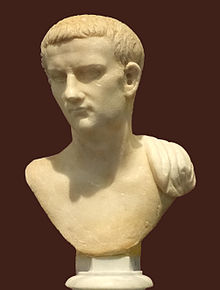
Gaius Caligula
Trump was born on June 14, 1946.
Caligula became Emperor in 37 A.D. after succeeding the Emperor Tiberius, his uncle who had adopted him as a son after his father died.
Trump began his real estate career at his father’s real estate and construction company. His rose to wealth and fame after his father, Fred, gave him control of the business in 1971.
Caligula’s reign began well–and popularly. He gave Tiberius a magnificent funeral–then recalled to Rome all those whom Tiberius had banished.
He gave bonuses to the military and destroyed lists of those Tiberius had declared traitors. He allowed the magistrates unrestricted jurisdiction, without appeal to himself.
Similarly, soon after acquiring the family business, Trump set out to build his own empire–hotels, golf courses, casinos, skyscrapers across North and South America, Europe and Asia. He named many of them after himself.

Donald Trump
He appeared at the Miss USA pageants, which he owned from 1996 to 2015. He hosted and co-produced The Apprentice, an NBC reality television series from 2004 to 2015.
The ancient historians describe Caligula as a noble and enlightened ruler during the first six months of his reign. But in October 37 A.D. he fell seriously ill or perhaps was poisoned.
Caligula soon recovered but emerged a changed man. He began killing or exiling those who were close to him and anyone he saw as a threat.
Trump has never been charged with murder. But during his second Presidential debate with Democratic nominee Hillary Clinton, he previewed the dangers of a Trump Justice Department: “If I win I am going to instruct my attorney general to get a special prosecutor to look into your situation.”
Caligula’s egomania soon reached psychotic heights.
- He gave himself several surnames: “Pious,” “Child of the Camp,” “Father of the Armies,” and “Greatest and Best of Caesars.”
- Flattered that he had risen higher than princes and kings, he began to believe himself a god.
- He appeared at the temple of Castor and Pollux to be worshiped as Jupiter Latiaris.
- He also set up a special temple to his own godhead.
Trump’s egomania is literally stamped on his properties. Of the 515 entities he owns, 268 of them–52%–bear his last name. He often refers to his properties as “the swankiest,” “the most beautiful.”
Among the references he’s made to himself:
- “My fingers are long and beautiful, as, it has been well documented, are various other parts of my body.”
- “I think the only difference between me and the other candidates is that I’m more honest and my women are more beautiful.”
- “My Twitter has become so powerful that I can actually make my enemies tell the truth.”
- “My IQ is one of the highest–and you all know it.”
When Caligula wasn’t ordering wholesale Stalin-like purges–ranging from Roman aristocrats to slaves–he was setting new records for debauchery.
According to the Roman historian Gaius Suetonius Tranquillus: “He lived in habitual incest with all his [three] sisters, and at a large banquet he placed each of them in turn below him, while his wife reclined above. Of these he is believed to have violated Drusilla when he was still a minor.”
Trump has never been charged with incest, but he’s repeatedly made sexually inappropriate comments about his daughter, Ivanka:
- “Yeah, she’s really something, and what a beauty, that one. If I weren’t happily married and, ya know, her father …”
- When Trump appeared on the Dr. Oz Show, he was joined on stage by Ivanka. After they kissed, Dr. Oz said: “It’s nice to see a dad kiss his daughter.” Trump: “I kiss her every chance I get.” The remark was edited before the show aired.
- When asked how he would react if Ivanka, a former teen model, posed for Playboy, Trump replied: “I don’t think Ivanka would do that, although she does have a very nice figure. I’ve said if Ivanka weren’t my daughter, perhaps I’d be dating her.”
- “You know who’s one of the great beauties of the world, according to everybody? And I helped create her. Ivanka. My daughter, Ivanka. She’s 6 feet tall, she’s got the best body.”

Ivanka Trump
One final trait that Caligula shared with Trump: Both relished humiliating others.
Caligula’s fatal mistake was to taunt Cassius Chaerea, a member of his own bodyguard. Caligula considered Chaerea effeminate because of a weak voice and mocked him with names like “Priapus” and “Venus.”
On January 22 41 A.D. Chaerea and several other bodyguards hacked Caligula to death before other guards could save him.
The number of people, places and things Trump has insulted is so extensive The New York Times compiled a list of all 273 of them.
On October 7, Trump’s speaking insultingly about women (“I just start kissing them. I don’t even wait. You can do anything. Grab them by the pussy”) threatened to derail his Presidential candidacy.
It remains to be seen if Trump suffers the final fate of Caligula.
2016 PRESIDENTIAL RACE, ABC NEWS, ADRIANNE ZUCKER, BILL CLINTON, BILLY BUSH, CARL PALADINO, CBS NEWS, CNN, CORY LEWANDOWSKI, DAYS OF OUR LIVES, DONALD TRUMP, FACEBOOK, GAIUS CALIGULA, GAIUS SUETONIUS TRANQUILLUS, HILLARY CLINTON, IVANKA TRUMP, MICHAEL GERSON, MICHELE BACHMANN, MIKE PENCE, MITCH MCCONNELL, NBC NEWS, PAUL RYAN, PBS NEWSHOUR, REINCE PRIEBUS, REPUBLICAN PARTY, ROMAN EMPIRE, SEXUAL HARASSMENT, THE CHICAGO SUN-TIMES, THE CHICAGO TRIBUNE, THE LOS ANGELES TIMES, THE NEW YORK TIMES, THE TWELVE CAESARS, THE WALL STREET JOURNAL, THE WASHINGTON POST, TODAY, TWITTER
In History, Politics, Social commentary on October 10, 2016 at 12:26 am
Donald Trump is the official Republican nominee for President of the United States.
But even many Republicans have come to believe he’s better-suited for the role of apprentice to Gaius Caligula. It was Caligula who, as the mad emperor of Rome, once said: “Bear in mind that I can treat anyone exactly as I please.”
Gaius Caligula
On October 7, The Washington Post leaked a video of Donald Trump making sexually predatory comments about women.
The remarks came during a 2005 exchange with Billy Bush, then the host of Access Hollywood (and now host of Today).
The two were traveling in an Access Hollywood bus to the set of the soap opera Days of Our Lives, where Trump was to make a cameo appearance.
Neither Trump nor Bush could be seen during the exchange–the video focuses entirely on the bus. But the audio came in clearly–and, for Trump, damningly:
Donald Trump: You know and I moved on her actually. You know she was down on Palm Beach.
Unknown: She used to be great. She’s still very beautiful.
Trump: I moved on her and I failed. I’ll admit it.
Trump: I did try and fuck her. She was married.
Unknown: That’s huge news.
Trump: No, no, Nancy. No this was–and I moved on her very heavily, in fact, I took her out furniture shopping. She wanted to get some furniture. I said I’ll show you where they have some nice furniture.
I took her out furniture. I moved on her like a bitch, but I couldn’t get there, and she was married. Then all of a sudden I see her, she’s now got the big phony tits and everything. She’s totally changed her look.
[At that point, they spot Adrianne Zucker, the starring actress in Days in Our Lives.]

Trump, Zucker and Bush
Bush: Sheesh, your girl’s hot as shit. In the purple.
Various: Whoa! Yes! Whoa!
Bush: Yes! The Donald has scored. Whoa, my man!
Trump: Look at you. You are a pussy.
Trump: Maybe it’s a different one.
Bush: It better not be the publicist. No, it’s her. It’s–
Trump: Yeah, that’s her. With the gold. I better use some Tic Tacs just in case I start kissing her. You know I’m automatically attracted to beautiful–I just start kissing them. It’s like a magnet. Just kiss. I don’t even wait. And when you’re a star they let you do it. You can do anything.
Bush: Whatever you want.
Trump: Grab them by the pussy. You can do anything.
When the Washington Post broke the story on October 7, the reaction was immediate–and explosive.
From across the nation, prominent Republicans erupted in shock and anger–whether feigned or genuine:
Gov. Mike Pence, Republican Vice Presidential nominee: “As a husband and father, I was offended by the words and actions described by Donald Trump the eleven-year-old video released yesterday. I do not condone his remarks and cannot defend them.”
House Speaker Paul Ryan: “I am sickened by what I heard today. Women are to be championed and revered, not objectified.”
Senate Majority Leader Mitch McConnell: ““These comments are repugnant, and unacceptable in any circumstance.”
Republican National Committee Chairman Reince Priebus: “No woman should ever be described in these terms or talked about in this manner. Ever.”
Trump tried to stop the uproar by issuing a non-apology that attacked his Democratic opponent, Hillary Clinton: “I’ve never said I’m a perfect person, nor pretended to be someone that I’m not. I’ve said and done things I regret, and the words released today on this more than a decade-old video are one of them.

“Anyone who knows me knows these words don’t reflect who I am. I said it, I was wrong and I apologize…Bill Clinton has actually abused women and Hillary has bullied, attacked, shamed and intimidated his victims.”
Some Republicans excused Trump’s misogynist comments as mere “frat boy” talk. Among these:
Corey Lewandowski, former Trump campaign manager and now CNN commentator: “We are electing a leader to the free world. We’re not electing a Sunday school teacher.”
Michele Bachmann, former Minnesota Congresswoman: Trump was guilty of “bad boy talk.”
And Carl Paladino, the co-chairman of Trump’s campaign in New York: Trump’s comments were something “all men do, at least all normal men.”
But Washington Post Columnist Micheal Gerson has taken a darker–and more accurate–view of Trump’s comments.
Appearing on the PBS Newshour on October 7, Gerson said: “Well, I think the problem here is not just bad language, but predatory language, abusive language…demeaning language.
“That indicates something about someone’s character that is disturbing, frankly, disturbing in a case like this.”
* * * * *
This was not a testosterone-fueled teenager fantasizing about making love with a girl he adored.
This was a 59-year-old man bragging about having used deceit to try to lure a married woman into bed.
And about having used his celebrity status to force himself on women: I moved on her very heavily. Just kiss. I don’t even wait. Grab them by the pussy. You can do anything.
Gaius Caligula himself couldn’t have said it better.
ABC NEWS, ANCIENT GREECE, ASIANS, AUBREY DE SELINCOURT, BERNIE SANDERS, BLACKS, CBS NEWS, CIA, CNN, CYBERSECURITY, DALLAS MORNING NEWS, DEBBIE WASSERMAN-SCHULTZ, DEMOCRATIC CONVENTION, DEMOCRATIC NATIONAL COMMITTEE, DONALD TRUMP, ELIZABETH WARREN, FACEBOOK, GEORGE W. BUSH, HERODOTUS, HILLARY CLINTON, HUBRIS, MARCO RUBIO, MEXICANS, MICHAEL HAYDEN, MUSLIMS, NBC NEWS, PAUL RYAN, PRISONERS OF WAR, RUSSIA, TED CRUZ, THE LOS ANGELES TIMES, THE NEW YORK TIMES, THE WASHINGTON POST, TWITTER, U.S. STATE DEPARTMENT, VLADIMIR PUTIN, WIKILEAKS, WOMEN
In History, Military, Politics on August 1, 2016 at 1:13 am
Donald Trump has changed Presidential campaigning–perhaps forever.
First, He has made angry and brutal attacks on a wide range of persons and organizations–including his fellow Republicans, journalists, news organizations, other countries and even celebrities who have nothing to do with politics.
Among those groups–and the insults Trump has leveled at them:
- Mexicans
- Prisoners-of-War
- Blacks
Second, he has weaponized social media. He has made Twitter an essential arm of his campaign, swiftly insulting his opponents and keeping them constantly off-balance. He has proved himself a master at the tabloid news culture and thoroughly in tune with his target audience.
Third, since announcing his candidacy on June 16, 2015, he has gotten a year’s worth of free media publicity. This has nothing to do with a networks’ conspiracy to favor Trump.
Instead, it owes to the media’s lust for sensational copy. And scenes of conflict–such as making brutal attacks on others–generate huge viewership.
This has been most apparent in debates, during which he belittled his Republican opponents with insulting nicknames.
- “Little Marco” – Florida U.S. Senator Marco Rubio
- “Goofy” – Massachusetts U.S. Senator Elizabeth Warren
- “Lyin’ Ted” – Texas U.S. Senator Rafael Eduardo “Ted” Cruz
And looking beyond the Republican primary cycle, he created one for his future Democratic antagonist: “Crooked Hillary”–Hillary Clinton, former First Lady, U.S. Senator from New York and Secretary of State.
Political pundits have marveled at Trump’s ability to cast aside the long-held niceties of political discourse and not have to pay an electoral price for it. But that time may be coming to an end.
On July 22, Wikileaks released 19,252 emails and 8,034 attachments hacked from computers of the highest-ranking officials of the Democratic National Committee (DNC).
Cyber-security experts believe the hackers originated from Russia–and that Russian President Vladimir Putin may well have authorized it.
The emails revealed the DNC’s bias for Clinton for President. And they showed clear animosity toward her lone challenger, Vermont U.S. Senator Bernie Sanders.
Sanders’ supporters had long charged that the DNC and its chair, Debbie Wasserman-Schultz, were plotting to undercut his campaign. Now thousands of them were descending on the Democratic nominating convention in Philadelphia, Pennsylvania, as furious protesters.
Five days later, on July 27, Trump held a press conference in Doral, Florida. Always ready to pounce on any perceived sign of weakness, he aimed yet another attack on Clinton:
“Russia, if you’re listening, I hope you’re able to find the 30,000 emails that are missing. I think you will probably be rewarded mightily by our press.”
Trump hoped to score points on Hillary Clinton’s using a private email server as Secretary of State. Instead, he ignited criticism–of himself–on both Left and Right.
“This has to be the first time that a major presidential candidate has actively encouraged a foreign power to conduct espionage against his political opponent,” said Jake Sullivan, Clinton’s chief foreign policy adviser. “This has gone from being a matter of curiosity, and a matter of politics, to being a national security issue.”
Republican Speaker of the House Paul Ryan was equally quick to react: “Russia is a global menace led by a devious thug,” said Brendan Buck, Ryan’s spokesman. “Putin should stay out of this election.”
“If he is talking about the State Department emails on her server, he is inviting a foreign intelligence service to steal sensitive American government information,” said Michael Hayden, head of the CIA under President George W. Bush.
“In addition to its implications for national security today,” wrote Benjy Sarlin, political reporter for MSNBC, “the incident raised disturbing questions about how Trump would govern as president. If a leader is willing to turn to ask foreign spy agencies to target a political opponent, what would he ask of his own spy agencies?”
The avalanche of criticism has led Trump to claim: “I was only being sarcastic.”
Only his most hardcore followers seem to believe it.
Since the end of World War II, the Republican party has taken an intensely anti-Communist stance. Now its nominee for President has not only exchanged compliments with an ex-KGB agent but has even invited him to target his Democratic opponent.
For at least one normally conservative newspaper, that’s simply too much. In a July 27 editorial, The Dallas Morning News declared:
“Words have meaning. The world is listening. And what the world is hearing is a man demonstrating that he is unfit to sit in the Oval Office.”
The ancient Greeks believed hubris–overweening pride–to be the greatest of sins. And, they warned, it was usually punished by divine wrath.
In his book, The World of Herodotus, Aubrey de Selincourt writes that the Greek historian filled his book, The Histories, with “stories of the perils of pride–pride of wealth, pride of power, pride of success, and, deadliest of all, the pride which leads a man to forget that he is a nothing in the sight of the gods.”
Trump has long boasted of his wealth, power and success. Perhaps his time of reckoning has finally arrived.
ABC NEWS, ASTROLOGY, BARACK OBAMA, BILL CLINTON, CBS NEWS, CNN, COMMUNIST CHINA, DONALD REGAN, DONALD TRUMP, EMPRESS ALEXANDRA, FACEBOOK, FBI, GEORGE W. BUSH, GERALD R. FORD, GRIGORY RASPUTIN, HILLARY CLINTON, HOUSE OF REPRESENTATIVES, JAMES COMEY, JIMMY CARTER, JOAN QUIGLEY, JODIE FOSTER, JOHN W. HINCKLEY, JUSTICE DEPARTMENT, KEVIN MCCARTHY, MERV GRIFFIN, MIKHAIL GORBACHEV, MITT ROMNEY, NANCY REAGAN, NBC NEWS, NICHOLAS II, PAUL RYAN, REPUBLICANS, Ronald Reagan, SOVIET UNION, SUPERSTITION, THE CHICAGO SUN-TIMES, THE CHICAGO TRIBUNE, THE LOS ANGELES TIMES, THE NEW YORK TIMES, THE WALL STREET JOURNAL, THE WASHINGTON POST, TWITTER, USA TODAY
In Bureaucracy, History, Military, Politics, Social commentary on July 7, 2016 at 12:16 am
On July 6, FBI Director James Comey recommended that the Justice Department not prosecute Hillary Clinton for using a private email server during her tenure as Secretary of State.
Almost immediately afterward, Donald Trump, the presumptive Republican nominee for President, responded on Twitter: “FBI director said Crooked Hillary compromised our national security. No charges. Wow! #RiggedSystem.”
Paul Ryan, the Republican Speaker of the House of Representatives, claimed to be similarly outraged: “Declining to prosecute Secretary Clinton for recklessly mishandling and transmitting national security information will set a terrible precedent.”
“What Director Comey’s statements made clear was that Hillary Clinton’s decision to use a personal unsecured server to send work-related emails while service as Secretary of State—including classified information—was extremely irresponsible,” said House Republican Majority leader Kevin McCarthy.
But 28 years ago, Republicans maintained a tight-lipped silence on another matter involving sensitive national security secrets. That was when news broke that Nancy Reagan, as First Lady, had shared these with a court astrologer.
When President Ronald Reagan wanted advice on whether to nuke the Soviet Union or meet with its leader, Mikhail Gorbachev, his most important adviser wasn’t the CIA or Pentagon.
It was Joan Quigley, a San Francisco-based astrologer.
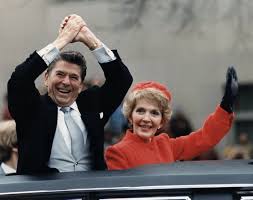
Ronald and Nancy Reagan
Nancy had met Quigley on “The Merve Griffin Show” in 1973. Quigley gave Nancy–and through her, Reagan himself—astrological advice during the latter’s campaign for the Republican Presidential nomination in 1976.
That effort failed to unseat President Gerald Ford–who was defeated by Jimmy Carter. But four years later, in 1980, Reagan defeated Carter to become the 40th President of the United States.
On March 30, 1981, a mentally-disturbed loner named John W. Hinckley shot and critically wounded Reagan. Fixated on actress Jodie Foster, he believed that by shooting the President he could gain her affection.
Shortly after the shooting, Merv Griffin told Nancy that Quigley had told him: If Nancy had called her on that fateful day, she–Quigley–could have warned that the President’s astrological charts had foretold a bad day.
From that moment on, Nancy regularly consulted Quigley on virtually everything that she and the President intended to do.
When Reagan learned of Nancy’s consultations with Quigley, he warned her: Be careful, because it might look odd if it came out.
Nancy may have been speaking on a scrambler-equipped phone. But Quigley–at her San Francisco office–was on an unsecured line. Thus, foreign powers–most notably the Soviet Union and Communist China–could have been privy to President Reagan’s most secret intentions.

Joan Quigley
Nancy passed on Quigley’s suggestions as commands to Donald Regan, chief of the White House staff.
As a result, Regan kept a color-coded calendar on his desk to remember when the astrological signs were good for the President to speak, travel, or negotiate with foreign leaders: Green ink highlighted “good” days; red ink “bad” days; yellow ink “iffy” days.
Donald Regan, no fan of Nancy’s, chafed under such restrictions: “Obviously, this list of dangerous or forbidden dates left very little latitude for scheduling,” he later wrote.
Forced out of the White House in 1987 by Nancy, Regan struck back in a 1988 tell-all memoir: For the Record: From Wall Street to Washington.
Regan’s book revealed, for the first time, how Ronald Reagan had actually made his Presidential decisions.
All–including decisions to risk nuclear war with the Soviet Union–were based on a court astrologer’s horoscopes. Rationality and the best military intelligence available played a lesser, secondary role.
The last major world leader to turn to the supernatural for advice had been Russian Czar Nicholas II. His adviser had been Grigori Rasputin, a Siberian peasant whom Empress Alexandra believed was the only man who could save her hemophiliac son–and heir to the throne.
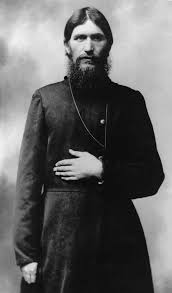
Grigori Rasputin
In 1990, Quigley confirmed the allegations in an autobiography, What Does Joan Say?: My Seven Years As White House Astrologer to Nancy and Ronald Reagan.
The title came from the question that Ronald Reagan asked Nancy before making important decisions–including those that could risk the destruction of the United States.
Bragged Quigley: “Not since the days of the Roman emperors–and never in the history of the United States Presidency—has an astrologer played such a significant role in the nation’s affairs of State.”
Among the successes Quigley took credit for:
- Strategies for winning the Presidential elections of 1980 and 1984;
- Helping Nancy Reagan overhaul her image as a spoiled rich girl;
- Defusing the controversy over Reagan’s visiting a graveyard for SS soldiers in Bitburg, Germany;
- Pursuing “Star Wars” as a major part of his strategy against the Soviet Union;
- The Intermediate-Range Nuclear Forces Treaty;
- Protecting Reagan from would-be assassins through timely warnings to Nancy; and
- Moving Reagan from seeing the Soviet Union as the “Evil Empire” to accepting Mikhail Gorbachev as a peace-seeking leader.
Thirty-five years after he became President, Ronald Reagan remains the most popular figure among Republicans. His deliberately-crafted myth is held up as the example of Presidential greatness by Right-wing candidates.
Curiously, however, none of them mention his approach to government-by-astrologer.


 Bureaucracybuster's Blog
ABC NEWS, BARACK OBAMA, BREITBART NEWS, CBS NEWS, CHRISTOPHER S. MURPHY, CIA, CNN, DEMOCRATIC NATIONAL COMMITTEE, DEMOCRATIC PARTY, DONALD TRUMP, ERIC SCHNEIDERMAN, EXTORTION, FACE THE NATION, FACEBOOK, FERGUS CULLEN, FOX NEWS SUNDAY, GREG ABBOTT, HACKING, HILLARY CLINTON, IRS, JAMES B. COMEY, JAMES R. CLAPPER, JEFF SESSIONS, JOHN KASICH, JUSTICE DEPARTMENT, KEN PAXTON, LEON PANETTA, MARK LEVIN, MICHAEL ROGERS, MIKE PENCE, NATIONAL SECURITY AGENCY, NBC NEWS, NEW HAMPSHIRE REPUBLICAN PARTY, NEWSWEEK, NPR, PAM BONDI, PAUL RYAN, PHILIP KLEIN, POLITICO, Racketeer Influenced Corrupt Organizations (RICO) Act, REPUBLICAN NATIONAL COMMITTEE, REPUBLICAN NATIONAL CONVENTION, REPUBLICAN PARTY, ROGER STONE, SALON, SOVIET UNION, THE CHICAGO SUN-TIMES, THE CHICAGO TRIBUNE, THE HUFFINGTON POST, THE LOS ANGELES TIMES, THE NEW YORK TIMES, THE WASHINGTON EXAMINER, THE WASHINGTON POST, THREATS, TIME, TREASON, TRUMP UNIVERSITY, TRUMP-RUSSIA TIES, TWITTER, U.S. NEWS & WORLD REPORT, U.S. SECRET SERVICE, USA PATRIOT ACT, USA TODAY, VLADIMIR PUTIN, WEIMAR REPUBLIC, WIRETAPPING
ABORTING TRUMP’S CANDIDACY–WHAT MIGHT HAVE BEEN: PART TWO (OF THREE)
In Bureaucracy, History, Law, Law Enforcement, Politics, Social commentary on March 7, 2017 at 12:35 amEven without wiretaps, there were at least four instances when Federal law enforcement authorities could have disqualified Donald Trump as a Presidential candidate–or secured his indictment.
Threatening your political opponents with violence is a crime under Federal law. Yet such threats against his Republican and Democratic opponents played a major role in Trump’s Presidential campaign.
Making threats against anyone under protection by the U.S. Secret Service is a felony. Yet Donald Trump was never held legally accountable by the Justice Department.
Threats of violence continued to be made by Trump supporters right up to the day of the election.
Even Fergus Cullen, former chairman of the New Hampshire GOP, expressed fear of what might happen if Trump lost the election:
Fergus Cullen
“That’s really scary,” Cullen said, recounting the violence at Trump rallies around the country leading up to the Republican National Convention. “In this country, we’ve always had recriminations after one side loses. But we haven’t had riots. We haven’t had mobs that act out with violence against supporters of the other side.
“There’s no telling what his supporters would be willing to do at the slightest encouragement from their candidate,” he said.
Trump even began encouraging his mostly white supporters to sign up online to be “election observers” to stop “Crooked Hillary from rigging this election.” He urged them to act as poll watchers in “other” [non-white] communities to ensure that things are “on the up and up.”
Many of his supporters promised to do so.
“Trump said to watch your precincts. I’m going to go, for sure,” said Steve Webb, a 61-year-old carpenter from Fairfield, Ohio.
“I’ll look for…well, it’s called racial profiling. Mexicans. Syrians. People who can’t speak American,” he said. “I’m going to go right up behind them. I’ll do everything legally. I want to see if they are accountable. I’m not going to do anything illegal. I’m going to make them a little bit nervous.”
Knowing that large numbers of angry–and possibly armed–Right-wingers planned to descend on polling places could only have had a chilling effect on untold numbers of Democratic voters. And this would have been especially true in heavily conservative states.
Both the USA Patriot Act and the Racketeer Influenced Corrupt Organizations (RICO) Act have statutes dealing with making terrorist threats against government institutions to influence their members.
President George W. Bush signing the USA Patriot Reauthorization Act of 2005
If Trump’s remarks did not violate one or both of those laws, certainly remarks made by his surrogates did.
Thus, the Justice Department could have cited the Patriot Act in indicting Trump and/or any number of his followers for “activities that…appear to be intended…to influence the policy of a government by intimidation or coercion [and]…occur primarily within the territorial jurisdiction of the United States.”
The Justice Department could have also demanded that the results of the election be invalidated on the basis that widespread voter and candidate intimidation played a massive role in it.
But of course this did not happen.
Share this: