Posts Tagged ‘PASSWORDS’
ABC NEWS, ALTERNET, AMERICABLOG, AP, BABY BOOMER RESISTANCE, BBC, BLOOMBERG, BLUESKY, BUZZFEED, CBS NEWS, CNN, COMPUTER FRAUD, CROOKS AND LIARS, CYBERCRIME, DAILY KOS, EMAIL, EMAILS, FBI, FIVETHIRTYEIGHT, HARPER’S MAGAZINE, HUFFINGTON POST, INTERNET, MEDIA MATTERS, MOTHER JONES, MOVEON, MSNBC, NBC NEWS, NEWSDAY, NEWSWEEK, NIGERIA, NIGERIAN SCAMS, NPR, PASSWORDS, PBS NEWSHOUR, POLITICO, POLITICUSUSA, RAW STORY, REUTERS, SALON, SCAMS, SEATTLE TIMES, SLATE, TALKING POINTS MEMO, THE ATLANTIC, THE CHICAGO SUN-TIMES, THE CHICAGO TRIBUNE, THE DAILY BEAST, THE DAILY BLOG, THE GUARDIAN, THE HILL, THE HUFFINGTON POST, THE INTERCEPT, THE LOS ANGELES TIMES, THE NATION, THE NEW REPUBLIC, THE NEW YORK TIMES, THE NEW YORKER, THE VILLAGE VOICE, THE WALL STREET JOURNAL, THE WASHINGTON POST, THE WASHINGTONPOST, THINKPROGRESS, TIME, TRUTHDIG, TRUTHOUT, TWO POLITICAL JUNKIES, U.S. NEWS & WORLD REPORT, UPI, USA TODAY, VIRUSES, X
In Business, History, Law Enforcement, Self-Help, Social commentary on January 12, 2026 at 12:12 am
Receiving unsolicited, get-rich-quick emails has become a regular headache for millions of Internet users.
All too often, the result is fraud for their recipients. The Federal Trade Commission reported losses of $12.5 billion from online get-rich Ponzi schemes in 2024..
Here’s how to spot the warning signs of fraud:
- Addressed Generally: “Attention!” “Dear Friend,” “Attention the owner of this email,” “Hello, Dear.” Your name is not mentioned, because this email has been mass-mailed to thousands of intended victims.
- Unsolicited: You’re told that you’ve won a lottery you never entered, or have inherited a fortune from someone you never knew existed.
- Appeals to Religion: “Hello Beloved in the Lord” or “Yours in Christ” seeks to create a bond with those who deeply believe in God.
- Misuse of English: Mis-spellings and faulty grammar usually denote someone—probably a foreigner—using English as a second language. Examples: Run-on sentences; “you’re” for “your”; “except” instead of “accept”; “Dear Beneficial” instead of “Dear Beneficiary.”
- Appeals to Sympathy: “My husband just died” or “I am dying of cancer.” This is to make you feel sorry for the sender and lower your guard as an intended victim.

- Use of Important Titles/Organizations: “Director,” ‘Barrister,” “Secretary General of the United Nations,” “Police Inspector.” This is to impress recipients and convince them that the email comes from a trusted and legitimate organization.
- Request for Personal Information: This includes some combination of: Name / Address / Telephone Number / Bank Name / Bank Account Number / Fax Number / Driver’s License Number / Occupation / Sex / Beneficiary / Passport Number
- Claims of Deposit: “We have deposited the check of your fund to your account” is a typical line to instantly grab your attention. Someone you’ve never heard of claims he has just put a huge amount of money into an account you know nothing about. Nor can you access it unless you first pay a “contact fee.”
- The “Bank” is in Africa: Unless you know you have relatives there, this should be a dead giveaway to a scam. Africa is a continent kept alive by the charity of other nations. It’s not in the business of doling out large sums of money to Westerners.
- Overseas Phone Numbers: If you call these, you’ll have a huge bill. So many people skip calling and just send the money “required” to receive their “cash prize.”
- Highly Personal Requests: Asking you—someone they’ve never met—to assume the burden of acting as the executor of their “Last Will and Testament.”
- Love Scams: The scammer poses as a man or woman—usually outside the United States—seeking love. After days/weeks, the scammer says s/he will fly to the United States to be yours. All you have to do is put up the money for the flight cost.
- “Make Money From Home”: “Work from home” scams promise a way to support yourself and your family. You’re required to provide bank information or pay an up-front “registration fee.” Then you wait for job orders—that never come.
- Debt Relief: Scammers promise to relieve most or all of your debt—for a large up-front fee. You pay the fee—and are not only out of that money but still in debt.
- Home Repair Schemes: Huge down payments are required for home repairs that never happen.
- “Free” Trial Offers: The service or product is free for awhile, but you must opt out later to avoid monthly billings.
- The Email Claims to Be From the FBI: Often the “address” includes “Anti-Terrorist and Monetary Crime Division.” One such email was addressed: “Dear Beneficiary” and offered help in obtaining a “fund.” The FBI is an investigative agency responsible to the U.S. Department of Justice. It does not resolve financial disputes or secure monies for “deserving” recipients. If the FBI wants to contact you, it will do so by letter or by sending agents to your address. The FBI’s own website states: “At this time we do not have a national e-mail address for sending or forwarding investigative information.”
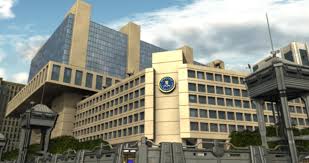
FBI Headquarters: Where stopping cybercrime is now a top priority.
- “I Need Help”: You get an email claiming to be from someone you know—who’s “in jail here in Mexico” or some other foreign country. S/he begs you to send money for bail or bribes to win his/her freedom. If you get such an email, call the person to make certain. Don’t rush to send money—chances are it will go directly to a scammer.
There are several commonsense rules to follow in protecting yourself from online scammers:
- Don’t trust people you’ve never met to want to give you money.
- Shop online only with well-known merchants who have a good reputation.
- Don’t click on unknown links—especially those in emails from unknown senders.
- If you’re required to pay an advance fee—“on faith”—to receive a big amount of money, the odds are it’s a scam.
- If you can’t find any solid information on a company, chances are it doesn’t exist.
- For additional information on how to protect yourself from cybercrime, check out the FBI’s page at http://www.fbi.gov/about-us/investigate/cyber.
- If it sounds too good to be true, the odds are: It is untrue.
ABC NEWS, ALTERNET, AMERICABLOG, AP, BABY BOOMER RESISTANCE, BBC, BLOOMBERG NEWS, BUZZFEED, CBS NEWS, CNN, COMPUTER FRAUD, CROOKS AND LIARS, CYBERCRIME, DAILY KOZ, EMAIL, EMAILS, FACEBOOK, FBI, FIVETHIRTYEIGHT, HARPER’S MAGAZINE, HUFFINGTON POST, INTERNET, MEDIA MATTERS, MOTHER JONES, MOVEON, MSNBC, NBC NEWS, NEW REPUBLIC, NEWSDAY, NEWSWEEK, NIGERIA, NIGERIAN SCAMS, NPR, PASSWORDS, PBS NEWSHOUR, POLITICO, POLITICUSUSA, RAW STORY, REUTERS, SALON, SCAMS, SEATTLE TIMES, SLATE, TALKING POINTS MEMO, THE ATLANTIC, THE CHICAGO SUN-TIMES, THE CHICAGO TRIBUNE, THE DAILY BEAST, THE DAILY BLOG, THE GUARDIAN, THE HILL, THE HUFFINGTON POST, THE LOS ANGELES TIMES, THE NATION, THE NEW REPUBLIC, THE NEW YORK TIMES, THE NEW YORKER, THE VILLAGE VOICE, THE WALL STREET JOURNAL, THE WASHINGTON POST, THE WASHINGTONPOST, THINKPROGRESS, TIME, TRUTHDIG, TRUTHOUT, TWITTER, TWO POLITICAL JUNKIES, U.S. NEWS & WORLD REPORT, UPI, USA TODAY, VIRUSES, WONKETTE
In Bureaucracy, Business, History, Law, Law Enforcement, Politics, Social commentary on December 16, 2021 at 12:11 am
In 2020, the Federal Trade Commission received 4.8 million identity theft and fraud complaints. Of these, 1.4 million were for identity theft, up from 651,000 in 2019.
Identity theft complaints accounted for 29% of all complaints received by the FTC, up from 20% in 2019. About 2.2 million reports were fraud complaints and 1.2 million involved other complaints.
Of the 2.2 million fraud cases, 34% reported money was lost. Fraud robbed consumers of more than $3.3 billion, an increase of $1.5 billion from 2019.
Among the online scams to be alert for:
- Email phishing scams
- Credit card scams
- Bank loan scams
- Lottery fee scams
- Online dating scams
- “Nigerian Prince” scams
Here’s how to protect yourself.
- Addressed Generally: “Attention!” “Dear Friend,” “Attention the owner of this email,” “Hello, Dear.” Your name is not mentioned, because this email has been mass-mailed to thousands of intended victims.
- Unsolicited: You’re told that you’ve won a lottery you never entered, or have inherited a fortune from someone you never knew existed.
- Appeals to Religion: “Hello Beloved in the Lord” or “Yours in Christ” seeks to create a bond with those who deeply believe in God.
- Misuse of English: Misspellings and faulty grammar usually denote someone—probably a foreigner—using English as a second language. Examples: Run-on sentences; “you’re” for “your”; “except” instead of “accept”; “Dear Beneficial” instead of “Dear Beneficiary.”
- Appeals to Sympathy: “My husband just died” or “I am dying of cancer.” This is to make you feel sorry for the sender and lower your guard as an intended victim.
- Use of Important Titles/Organizations: “Director,” ‘Barrister,” “Secretary General of the United Nations,” “Police Inspector.” This is to impress recipients and convince them that the email comes from a trusted and legitimate organization.
- Request for Personal Information: This includes some combination of: Name / Address / Telephone Number / Bank Name / Bank Account Number / Fax Number / Driver’s License Number / Occupation / Sex / Beneficiary / Passport Number
- Claims of Deposit: “We have deposited the check of your fund to your account” is a typical line to instantly grab your attention. Someone you’ve never heard of claims he has just put a huge amount of money into an account you know nothing about. Nor can you access it unless you first pay a “contact fee.”
- The “Bank” is in Africa: Unless you know you have relatives there, this should be a dead giveaway to a scam. Africa is a continent kept alive by the charity of other nations. It’s not in the business of doling out large sums of money to Westerners.
- Overseas Phone Numbers: If you call these, you’ll have a huge bill. So many people skip calling and just send the money “required” to receive their “cash prize.”
- Highly Personal Requests: Asking you—someone they’ve never met—to assume the burden of acting as the executor of their “Last Will and Testament.”
- Love Scams: The scammer poses as a man or woman—usually outside the United States—seeking love. A series of emails flows back and forth for days/weeks, until the scammer says s/he will be glad to fly to the United States to be yours. All you have to do is put up the money for the flight cost.
- “Make Money From Home”: With most employers refusing to hire, “work from home” scams promise a way to support yourself and your family. You’re required to provide bank information or pay an up-front “registration fee.” Then you wait for job orders—that never come.
- Debt Relief: Scammers promise to relieve most or all of your debt—for a large up-front fee. You pay the fee—and are not only out of that money but still in debt.
- Home Repair Schemes: Huge down payments are required for home repairs that never happen.
- “Free” Trial Offers: The service or product is free for awhile, but you must opt out later to avoid monthly billings.
- The Email Claims to Be From the FBI: The FBI is an investigative agency responsible to the U.S. Department of Justice. It does not resolve financial disputes or secure monies for “deserving” recipients. If the FBI contacts you, it does so by letter or sending agents to your address.
- “I Need Help”: You get an email claiming to be from someone you know—who’s “in jail here in Mexico” or some other foreign country. S/he begs you to send money for bail or bribes to win his/her freedom. If you get such an email, call the person to make certain. Don’t rush to send money—chances are it will go directly to a scammer.
FBI Headquarters
There are several commonsense rules to follow in protecting yourself from online scammers:
- Don’t trust people you’ve never met to want to give you money.
- Shop online only with well-known merchants who have a good reputation.
- Don’t click on unknown links—especially those in emails from unknown senders.
- If you’re required to pay an advance fee—“on faith”—to receive a big amount of money, the odds are it’s a scam.
- If you can’t find any solid information on a company, chances are it doesn’t exist.
- For additional information on how to protect yourself from cybercrime, check out the FBI’s page at https://www.fbi.gov/investigate/cyber.
- If it sounds too good to be true, the odds are: It is untrue.
ABC NEWS, ALTERNET, AMERICABLOG, AP, BABY BOOMER RESISTANCE, BUZZFEED, CBS NEWS, CNN, COMPUTER FRAUD, CROOKS AND LIARS, CYBERCRIME, DAILY KOZ, EMAIL, EMAILS, FACEBOOK, FBI, FIVETHIRTYEIGHT, HARPER’S MAGAZINE, INTERNET, MEDIA MATTERS, MOTHER JONES, MOVEON, MSNBC, NBC NEWS, NEWSWEEK, NIGERIA, NIGERIAN SCAMS, NPR, PASSWORDS, PBS NEWSHOUR, POLITICO, POLITICUSUSA, RAW STORY, REUTERS, SALON, SCAMS, SEATTLE TIMES, SLATE, TALKING POINTS MEMO, THE ATLANTIC, THE CHICAGO SUN-TIMES, THE CHICAGO TRIBUNE, THE DAILY BEAST, THE DAILY BLOG, THE GUARDIAN, THE HILL, THE HUFFINGTON POST, THE LOS ANGELES TIMES, THE NATION, THE NEW REPUBLIC, THE NEW YORK TIMES, THE VILLAGE VOICE, THE WALL STREET JOURNAL, THE WASHINGTON POST, THE WASHINGTONPOST, THINKPROGRESS, TIME, TRUTHDIG, TRUTHOUT, TWITTER, TWO POLITICAL JUNKIES, U.S. NEWS & WORLD REPORT, UPI, USA TODAY, VIRUSES, WONKETTE
In History, Law, Law Enforcement, Politics, Social commentary on June 9, 2021 at 12:23 am
In 2020, the Federal Trade Commission received 4.8 million identity theft and fraud complaints. Of these, 1.4 million were for identity theft, up from 651,000 in 2019.
Identity theft complaints accounted for 29 percent of all complaints received by the FTC, up from 20 percent in 2019. About 2.2 million reports were fraud complaints and 1.2 million involved other complaints.
Of the 2.2 million fraud cases, 34 percent reported money was lost. Fraud robbed consumers of more than $3.3 billion, an increase of $1.5 billion from 2019.
Among the online scams to be alert for:
- Email phishing scams
- Credit card scams
- Bank loan scams
- Lottery fee scams
- Online dating scams
- “Nigerian Prince” scams
Here’s how to protect yourself.
- Addressed Generally: “Attention!” “Dear Friend,” “Attention the owner of this email,” “Hello, Dear.” Your name is not mentioned, because this email has been mass-mailed to thousands of intended victims.
- Unsolicited: You’re told that you’ve won a lottery you never entered, or have inherited a fortune from someone you never knew existed.
- Appeals to Religion: “Hello Beloved in the Lord” or “Yours in Christ” seeks to create a bond with those who deeply believe in God.
- Misuse of English: Misspellings and faulty grammar usually denote someone—probably a foreigner—using English as a second language. Examples: Run-on sentences; “you’re” for “your”; “except” instead of “accept”; “Dear Beneficial” instead of “Dear Beneficiary.”
- Appeals to Sympathy: “My husband just died” or “I am dying of cancer.” This is to make you feel sorry for the sender and lower your guard as an intended victim.
- Use of Important Titles/Organizations: “Director,” ‘Barrister,” “Secretary General of the United Nations,” “Police Inspector.” This is to impress recipients and convince them that the email comes from a trusted and legitimate organization.
- Request for Personal Information: This includes some combination of: Name / Address / Telephone Number / Bank Name / Bank Account Number / Fax Number / Driver’s License Number / Occupation / Sex / Beneficiary / Passport Number
- Claims of Deposit: “We have deposited the check of your fund to your account” is a typical line to instantly grab your attention. Someone you’ve never heard of claims he has just put a huge amount of money into an account you know nothing about. Nor can you access it unless you first pay a “contact fee.”
- The “Bank” is in Africa: Unless you know you have relatives there, this should be a dead giveaway to a scam. Africa is a continent kept alive by the charity of other nations. It’s not in the business of doling out large sums of money to Westerners.
- Overseas Phone Numbers: If you call these, you’ll have a huge bill. So many people skip calling and just send the money “required” to receive their “cash prize.”
- Highly Personal Requests: Asking you—someone they’ve never met—to assume the burden of acting as the executor of their “Last Will and Testament.”
- Love Scams: The scammer poses as a man or woman—usually outside the United States—seeking love. A series of emails flows back and forth for days/weeks, until the scammer says s/he will be glad to fly to the United States to be yours. All you have to do is put up the money for the flight cost.
- “Make Money From Home”: With most employers refusing to hire, “work from home” scams promise a way to support yourself and your family. You’re required to provide bank information or pay an up-front “registration fee.” Then you wait for job orders—that never come.
- Debt Relief: Scammers promise to relieve most or all of your debt—for a large up-front fee. You pay the fee—and are not only out of that money but still in debt.
- Home Repair Schemes: Huge down payments are required for home repairs that never happen.
- “Free” Trial Offers: The service or product is free for awhile, but you must opt out later to avoid monthly billings.
- The Email Claims to Be From the FBI: The FBI is an investigative agency responsible to the U.S. Department of Justice. It does not resolve financial disputes or secure monies for “deserving” recipients. If the FBI contacts you, it does so by letter or sending agents to your address.
- “I Need Help”: You get an email claiming to be from someone you know—who’s “in jail here in Mexico” or some other foreign country. S/he begs you to send money for bail or bribes to win his/her freedom. If you get such an email, call the person to make certain. Don’t rush to send money—chances are it will go directly to a scammer.
FBI Headquarters
There are several commonsense rules to follow in protecting yourself from online scammers:
- Don’t trust people you’ve never met to want to give you money.
- Shop online only with well-known merchants who have a good reputation.
- Don’t click on unknown links—especially those in emails from unknown senders.
- If you’re required to pay an advance fee—“on faith”—to receive a big amount of money, the odds are it’s a scam.
- If you can’t find any solid information on a company, chances are it doesn’t exist.
- For additional information on how to protect yourself from cybercrime, check out the FBI’s page at https://www.fbi.gov/investigate/cyber.
- If it sounds too good to be true, the odds are: It is untrue.
ABC NEWS, ALTERNET, AMERICABLOG, AP, BABY BOOMER RESISTANCE, BUZZFEED, CBS NEWS, CNN, COMPUTER FRAUD, CROOKS AND LIARS, CYBERCRIME, DAILY KOZ, DRUDGE RETORT, EMAIL, EMAILS, FACEBOOK, FBI, FIVETHIRTYEIGHT, HARPER’S MAGAZINE, INTERNET, MEDIA MATTERS, MOTHER JONES, MOVEON, MSNBC, NBC NEWS, NEWSWEEK, NIGERIA, NIGERIAN SCAMS, NPR, PASSWORDS, PBS NEWSHOUR, POLITICO, POLITICUSUSA, RAW STORY, REUTERS, SALON, SCAMS, SEATTLE TIMES, SLATE, TALKING POINTS MEMO, THE ATLANTIC, THE CHICAGO SUN-TIMES, THE CHICAGO TRIBUNE, THE DAILY BEAST, THE DAILY BLOG, THE GUARDIAN, THE HILL, THE HUFFINGTON POST, THE LOS ANGELES TIMES, THE NATION, THE NEW REPUBLIC, THE NEW YORK TIMES, THE VILLAGE VOICE, THE WALL STREET JOURNAL, THE WASHINGTON POST, THE WASHINGTONPOST, THINKPROGRESS, TIME, TRUTHDIG, TRUTHOUT, TWITTER, TWO POLITICAL JUNKIES, U.S. NEWS & WORLD REPORT, UPI, USA TODAY, VIRUSES, WONKETTE
In Business, History, Law, Law Enforcement, Social commentary on February 25, 2020 at 12:06 am
In 2018, consumers were victimized in more “emotional romance scams” than any other category of fraud.
“That’s $143 million that consumers reported that they lost in 2018 to romance scams,” said Monica Vaca, of the Federal Trade Commission.
The average loss per victim amounted to $2,600—seven times higher than other frauds. Most of that money was wired or sent with gift cards.
But there are plenty of other online scams to be alert for:
- Email phishing scams
- Credit card scams
- Bank loan scams
- Lottery fee scams
- Online dating scams
- “Nigerian Prince” scams
Here’s how to protect yourself.
- Addressed Generally: “Attention!” “Dear Friend,” “Attention the owner of this email,” “Hello, Dear.” Your name is not mentioned, because this email has been mass-mailed to thousands of intended victims.
- Unsolicited: You’re told that you’ve won a lottery you never entered, or have inherited a fortune from someone you never knew existed.
- Appeals to Religion: “Hello Beloved in the Lord” or “Yours in Christ” seeks to create a bond with those who deeply believe in God.
- Misuse of English: Mis-spellings and faulty grammar usually denote someone—probably a foreigner—using English as a second language. Examples: Run-on sentences; “you’re” for “your”; “except” instead of “accept”; “Dear Beneficial” instead of “Dear Beneficiary.”
- Appeals to Sympathy: “My husband just died” or “I am dying of cancer.” This is to make you feel sorry for the sender and lower your guard as an intended victim.
- Use of Important Titles/Organizations: “Director,” ‘Barrister,” “Secretary General of the United Nations,” “Police Inspector.” This is to impress recipients and convince them that the email comes from a trusted and legitimate organization.
- Request for Personal Information: This includes some combination of: Name / Address / Telephone Number / Bank Name / Bank Account Number / Fax Number / Driver’s License Number / Occupation / Sex / Beneficiary / Passport Number
- Claims of Deposit: “We have deposited the check of your fund to your account” is a typical line to instantly grab your attention. Someone you’ve never heard of claims he has just put a huge amount of money into an account you know nothing about. Nor can you access it unless you first pay a “contact fee.”
- The “Bank” is in Africa: Unless you know you have relatives there, this should be a dead giveaway to a scam. Africa is a continent kept alive by the charity of other nations. It’s not in the business of doling out large sums of money to Westerners.
- Overseas Phone Numbers: If you call these, you’ll have a huge bill. So many people skip calling and just send the money “required” to receive their “cash prize.”
- Highly Personal Requests: Asking you—someone they’ve never met—to assume the burden of acting as the executor of their “Last Will and Testament.”
- Love Scams: The scammer poses as a man or woman—usually outside the United States—seeking love. A series of emails flows back and forth for days/weeks, until the scammer says s/he will be glad to fly to the United States to be yours. All you have to do is put up the money for the flight cost.
- “Make Money From Home”: With most employers refusing to hire, “work from home” scams promise a way to support yourself and your family. You’re required to provide bank information or pay an up-front “registration fee.” Then you wait for job orders—that never come.
- Debt Relief: Scammers promise to relieve most or all of your debt—for a large up-front fee. You pay the fee—and are not only out of that money but still in debt.
- Home Repair Schemes: Huge down payments are required for home repairs that never happen.
- “Free” Trial Offers: The service or product is free for awhile, but you must opt out later to avoid monthly billings.
- The Email Claims to Be From the FBI: The FBI is an investigative agency responsible to the U.S. Department of Justice. It does not resolve financial disputes or secure monies for “deserving” recipients. If the FBI contacts you, it does so by letter or sending agents to your address.
- “I Need Help”: You get an email claiming to be from someone you know—who’s “in jail here in Mexico” or some other foreign country. S/he begs you to send money for bail or bribes to win his/her freedom. If you get such an email, call the person to make certain. Don’t rush to send money—chances are it will go directly to a scammer.
FBI Headquarters
There are several commonsense rules to follow in protecting yourself from online scammers:
- Don’t trust people you’ve never met to want to give you money.
- Shop online only with well-known merchants who have a good reputation.
- Don’t click on unknown links—especially those in emails from unknown senders.
- If you’re required to pay an advance fee—“on faith”—to receive a big amount of money, the odds are it’s a scam.
- If you can’t find any solid information on a company, chances are it doesn’t exist.
- For additional information on how to protect yourself from cybercrime, check out the FBI’s page at https://www.fbi.gov/investigate/cyber.
- If it sounds too good to be true, the odds are: It is untrue.
ABC NEWS, ALTERNET, AP, BUZZFEED, CBS NEWS, CNN, COMPUTER FRAUD, CROOKS AND LIARS, CYBERCRIME, DAILY KOZ, EMAIL, EMAILS, FACEBOOK, FBI, INTERNET, MOTHER JONES, MOVEON, MSNBC, NBC NEWS, NEWSWEEK, NIGERIA, NIGERIAN SCAMS, NPR, PASSWORDS, PBS NEWSHOUR, POLITICO, RAW STORY, REUTERS, SALON, SCAMS, SEATTLE TIMES, SLATE, THE ATLANTIC, THE CHICAGO SUN-TIMES, THE CHICAGO TRIBUNE, THE DAILY BEAST, THE GUARDIAN, THE HILL, THE HUFFINGTON POST, THE LOS ANGELES TIMES, THE NATION, THE NEW YORK TIMES, THE WALL STREET JOURNAL, THE WASHINGTON POST, THE WASHINGTONPOST, TIME, TWITTER, U.S. NEWS & WORLD REPORT, UPI, USA TODAY, VIRUSES
In Business, History, Law, Law Enforcement, Self-Help, Social commentary on March 21, 2019 at 12:08 am
According to the FBI, Internet scams cost victims more than $1.4 billion in 2017. Among the most popular types of fraud:
- Email phishing scams
- Credit card scams
- Bank loan scams
- Lottery fee scams
- Online dating scams
- “Nigerian Prince” scams
But you can protect yourself. Here’s how to spot the warning signs of fraud.
- Addressed Generally: “Attention!” “Dear Friend,” “Attention the owner of this email,” “Hello, Dear.” Your name is not mentioned, because this email has been mass-mailed to thousands of intended victims.
- Unsolicited: You’re told that you’ve won a lottery you never entered, or have inherited a fortune from someone you never knew existed.
- Appeals to Religion: “Hello Beloved in the Lord” or “Yours in Christ” seeks to create a bond with those who deeply believe in God.
- Misuse of English: Mis-spellings and faulty grammar usually denote someone—probably a foreigner—using English as a second language. Examples: Run-on sentences; “you’re” for “your”; “except” instead of “accept”; “Dear Beneficial” instead of “Dear Beneficiary.”
- Appeals to Sympathy: “My husband just died” or “I am dying of cancer.” This is to make you feel sorry for the sender and lower your guard as an intended victim.
- Use of Important Titles/Organizations: “Director,” ‘Barrister,” “Secretary General of the United Nations,” “Police Inspector.” This is to impress recipients and convince them that the email comes from a trusted and legitimate organization.
- Request for Personal Information: This includes some combination of: Name / Address / Telephone Number / Bank Name / Bank Account Number / Fax Number / Driver’s License Number / Occupation / Sex / Beneficiary / Passport Number
- Claims of Deposit: “We have deposited the check of your fund to your account” is a typical line to instantly grab your attention. Someone you’ve never heard of claims he has just put a huge amount of money into an account you know nothing about. Nor can you access it unless you first pay a “contact fee.”
- The “Bank” is in Africa: Unless you know you have relatives there, this should be a dead giveaway to a scam. Africa is a continent kept alive by the charity of other nations. It’s not in the business of doling out large sums of money to Westerners.
- Overseas Phone Numbers: If you call these, you’ll have a huge bill. So many people skip calling and just send the money “required” to receive their “cash prize.”
- Highly Personal Requests: Asking you—someone they’ve never met—to assume the burden of acting as the executor of their “Last Will and Testament.”
- Love Scams: The scammer poses as a man or woman—usually outside the United States—seeking love. A series of emails flows back and forth for days/weeks, until the scammer says s/he will be glad to fly to the United States to be yours. All you have to do is put up the money for the flight cost.
- “Make Money From Home”: With most employers refusing to hire, “work from home” scams promise a way to support yourself and your family. You’re required to provide bank information or pay an up-front “registration fee.” Then you wait for job orders—that never come.
- Debt Relief: Scammers promise to relieve most or all of your debt—for a large up-front fee. You pay the fee—and are not only out of that money but still in debt.
- Home Repair Schemes: Huge down payments are required for home repairs that never happen.
- “Free” Trial Offers: The service or product is free for awhile, but you must opt out later to avoid monthly billings.
- The Email Claims to Be From the FBI: Often the “address” includes “Anti-Terrorist and Monetary Crime Division.” One such email was addressed: “Dear Beneficiary” and offered help in obtaining a “fund.” The FBI is an investigative agency responsible to the U.S. Department of Justice. It does not resolve financial disputes or secure monies for “deserving” recipients. If the FBI wants to contact you, it will do so by letter or by sending agents to your address. The FBI’s own website states: “At this time we do not have a national e-mail address for sending or forwarding investigative information.”
- “I Need Help”: You get an email claiming to be from someone you know—who’s “in jail here in Mexico” or some other foreign country. S/he begs you to send money for bail or bribes to win his/her freedom. If you get such an email, call the person to make certain. Don’t rush to send money—chances are it will go directly to a scammer.
FBI Headquarters
There are several commonsense rules to follow in protecting yourself from online scammers:
- Don’t trust people you’ve never met to want to give you money.
- Shop online only with well-known merchants who have a good reputation.
- Don’t click on unknown links—especially those in emails from unknown senders.
- If you’re required to pay an advance fee—“on faith”—to receive a big amount of money, the odds are it’s a scam.
- If you can’t find any solid information on a company, chances are it doesn’t exist.
- For additional information on how to protect yourself from cybercrime, check out the FBI’s page at https://www.fbi.gov/investigate/cyber.
- If it sounds too good to be true, the odds are: It is untrue.
ABC NEWS, ALTERNET, AP, BUZZFEED, CBS NEWS, CNN, COMPUTER FRAUD, CROOKS AND LIARS, CYBERCRIME, DAILY KOZ, EMAIL, EMAILS, FACEBOOK, FBI, INTERNET, MOTHER JONES, MOVEON, NBC NEWS, NEWSWEEK, NIGERIA, NIGERIAN SCAMS, NPR, PASSWORDS, POLITICO, RAW STORY, REUTERS, SALON, SCAMS, SEATTLE TIMES, SLATE, THE ATLANTIC, THE CHICAGO SUN-TIMES, THE CHICAGO TRIBUNE, THE DAILY BEAST, THE GUARDIAN, THE HILL, THE HUFFINGTON POST, THE LOS ANGELES TIMES, THE NATION, THE NEW YORK TIMES, THE WALL STREET JOURNAL, THE WASHINGTON POST, THE WASHINGTONPOST, TIME, TWITTER, U.S. NEWS & WORLD REPORT, UPI, USA TODAY, VIRUSES
In Business, History, Law Enforcement, Self-Help, Social commentary on April 27, 2018 at 12:04 am
Receiving unsolicited, get-rich-quick emails has become a regular headache for millions of Internet users.
All too often, the result is fraud for their recipients. In 2016, losses from get-rich Ponzi schemes totaled $123 million.
Here’s how to spot the warning signs of fraud:
- Addressed Generally: “Attention!” “Dear Friend,” “Attention the owner of this email,” “Hello, Dear.” Your name is not mentioned, because this email has been mass-mailed to thousands of intended victims.
- Unsolicited: You’re told that you’ve won a lottery you never entered, or have inherited a fortune from someone you never knew existed.
- Appeals to Religion: “Hello Beloved in the Lord” or “Yours in Christ” seeks to create a bond with those who deeply believe in God.
- Misuse of English: Mis-spellings and faulty grammar usually denote someone–probably a foreigner–using English as a second language. Examples: Run-on sentences; “you’re” for “your”; “except” instead of “accept”; “Dear Beneficial” instead of “Dear Beneficiary.”
- Appeals to Sympathy: “My husband just died” or “I am dying of cancer.” This is to make you feel sorry for the sender and lower your guard as an intended victim.
- Use of Important Titles/Organizations: “Director,” ‘Barrister,” “Secretary General of the United Nations,” “Police Inspector.” This is to impress recipients and convince them that the email comes from a trusted and legitimate organization.
- Request for Personal Information: This includes some combination of: Name / Address / Telephone Number / Bank Name / Bank Account Number / Fax Number / Driver’s License Number / Occupation / Sex / Beneficiary / Passport Number
- Claims of Deposit: “We have deposited the check of your fund to your account” is a typical line to instantly grab your attention. Someone you’ve never heard of claims he has just put a huge amount of money into an account you know nothing about. Nor can you access it unless you first pay a “contact fee.”
- The “Bank” is in Africa: Unless you know you have relatives there, this should be a dead giveaway to a scam. Africa is a continent kept alive by the charity of other nations. It’s not in the business of doling out large sums of money to Westerners.
- Overseas Phone Numbers: If you call these, you’ll have a huge bill. So many people skip calling and just send the money “required” to receive their “cash prize.”
- Highly Personal Requests: Asking you—someone they’ve never met—to assume the burden of acting as the executor of their “Last Will and Testament.”
- Love Scams: The scammer poses as a man or woman—usually outside the United States—seeking love. A series of emails flows back and forth for days/weeks, until the scammer says s/he will be glad to fly to the United States to be yours. All you have to do is put up the money for the flight cost.
- “Make Money From Home”: With most employers refusing to hire, “work from home” scams promise a way to support yourself and your family. You’re required to provide bank information or pay an up-front “registration fee.” Then you wait for job orders—that never come.
- Debt Relief: Scammers promise to relieve most or all of your debt—for a large up-front fee. You pay the fee—and are not only out of that money but still in debt.
- Home Repair Schemes: Huge down payments are required for home repairs that never happen.
- “Free” Trial Offers: The service or product is free for awhile, but you must opt out later to avoid monthly billings.
- The Email Claims to Be From the FBI: Often the “address” includes “Anti-Terrorist and Monetary Crime Division.” One such email was addressed: “Dear Beneficiary” and offered help in obtaining a “fund.” The FBI is an investigative agency responsible to the U.S. Department of Justice. It does not resolve financial disputes or secure monies for “deserving” recipients. If the FBI wants to contact you, it will do so by letter or by sending agents to your address. The FBI’s own website states: “At this time we do not have a national e-mail address for sending or forwarding investigative information.”
- “I Need Help”: You get an email claiming to be from someone you know—who’s “in jail here in Mexico” or some other foreign country. S/he begs you to send money for bail or bribes to win his/her freedom. If you get such an email, call the person to make certain. Don’t rush to send money—chances are it will go directly to a scammer.
FBI Headquarters: Where stopping cybercrime is now a top priority.
There are several commonsense rules to follow in protecting yourself from online scammers:
- Don’t trust people you’ve never met to want to give you money.
- Shop online only with well-known merchants who have a good reputation.
- Don’t click on unknown links—especially those in emails from unknown senders.
- If you’re required to pay an advance fee—“on faith”—to receive a big amount of money, the odds are it’s a scam.
- If you can’t find any solid information on a company, chances are it doesn’t exist.
- For additional information on how to protect yourself from cybercrime, check out the FBI’s page at http://www.fbi.gov/about-us/investigate/cyber.
- If it sounds too good to be true, the odds are: It is untrue.
ABC NEWS, ALTERNET, AP, BUZZFEED, CBS NEWS, CNN, COMPUTER FRAUD, CROOKS AND LIARS, CYBERCRIME, DAILY KOZ, EMAIL, EMAILS, FACEBOOK, FBI, INTERNET, MOTHER JONES, MOVEON, NBC NEWS, NEWSWEEK, NIGERIA, NIGERIAN SCAMS, NPR, PASSWORDS, POLITICO, RAW STORY, REUTERS, SALON, SCAMS, SEATTLE TIMES, SLATE, THE ATLANTIC, THE CHICAGO SUN-TIMES, THE CHICAGO TRIBUNE, THE DAILY BEAST, THE GUARDIAN, THE HILL, THE HUFFINGTON POST, THE LOS ANGELES TIMES, THE NATION, THE NEW YORK TIMES, THE WALL STREET JOURNAL, THE WASHINGTON POST, THE WASHINGTONPOST, TIME, TWITTER, U.S. NEWS & WORLD REPORT, UPI, USA TODAY, VIRUSES
In Business, Law Enforcement, Self-Help, Social commentary on August 26, 2016 at 12:01 am
Receiving unsolicited, get-rich-quick emails has become a regular headache for millions of Internet users.
All too often, the result is fraud for their recipients. In 2013, losses from Nigerian scams alone totaled $12.7 billion.
Here’s how to spot the warning signs of fraud:
- Addressed Generally: “Attention!” “Dear Friend,” “Attention the owner of this email,” “Hello, Dear.” Your name is not mentioned, because this email has been mass-mailed to thousands of intended victims.
- Unsolicited: You’re told that you’ve won a lottery you never entered, or have inherited a fortune from someone you never knew existed.
- Appeals to religion: Appeals to Religion: “Hello Beloved in the Lord” or “Yours in Christ” seeks to create a bond with those who deeply believe in God.
- Misuse of English: Misuse of English: Mis-spellings and faulty grammar usually denote someone–probably a foreigner–using English as a second language. Examples: Run-on sentences; “you’re” for “your”; “except” instead of “accept”; “Dear Beneficial” instead of “Dear Beneficiary.”
- Appeals to Sympathy: Appeals to Sympathy: “My husband just died” or “I am dying of cancer.” This is to make you feel sorry for the sender and lower your guard as an intended victim.
- Use of Important Titles/Organizations: “Director,” ‘Barrister,” “Secretary General of the United Nations,” “Police Inspector.” This is to impress recipients and convince them that the email comes from a trusted and legitimate organization.
- Request for Personal Information: This includes some combination of: Name / Address / Telephone Number / Bank Name / Bank Account Number / Fax Number / Driver’s License Number / Occupation / Sex / Beneficiary / Passport Number
- Claims of Deposit: “We have deposited the check of your fund to your account” is a typical line to instantly grab your attention. Someone you’ve never heard of claims he has just put a huge amount of money into an account you know nothing about. Nor can you access it unless you first pay a “contact fee.”
- The “Bank” is in Africa: Unless you know you have relatives there, this should be a dead giveaway to a scam. Africa is a continent kept alive by the charity of other nations. It’s not in the business of doling out large sums of money to Westerners.

- Overseas Phone Numbers: If you call these, you’ll have a huge bill. So many people skip calling and just send the money “required” to receive their “cash prize.”
- Highly Personal Requests: Asking you–someone they’ve never met–to assume the burden of acting as the executor of their “Last Will and Testament.”
- Love Scams: The scammer poses as a man or woman–usually outside the United States–seeking love. A series of emails flows back and forth for days/weeks, until the scammer says s/he will be glad to fly to the United States to be yours. All you have to do is put up the money for the flight cost.
- “Make Money From Home”: With most employers refusing to hire, “work from home” scams promise a way to support yourself and your family. You’re required to provide bank information or pay an up-front “registration fee.” Then you wait for job orders–that never come.
- Debt Relief: Scammers promise to relieve most or all of your debt–for a large up-front fee. You pay the fee–and are not only out of that money but still in debt.
- Home Repair Schemes: Huge down payments are required for home repairs that never happen.
- “Free” Trial Offers: The service or product is free for awhile, but you must opt out later to avoid monthly billings.
- The Email Claims to Be From the FBI: Often the “address” includes “Anti-Terrorist and Monetary Crime Division.” One such email was addressed: “Dear Beneficiary” and offered help in obtaining a “fund.” The FBI is an investigative agency responsible to the U.S. Department of Justice. It does not resolve financial disputes or secure monies for “deserving” recipients. If the FBI wants to contact you, it will do so by letter or by sending agents to your address. The FBI’s own website states: “At this time we do not have a national e-mail address for sending or forwarding investigative information.”
- “I Need Help”: You get an email claiming to be from someone you know–who’s “in jail here in Mexico” or some other foreign country. S/he begs you to send money for bail or bribes to win his/her freedom. If you get such an email, call the person to make certain. Don’t rush to send money–chances are it will go directly to a scammer.
FBI Headquarters: Where stopping cybercrime is now a top priority.
There are several commonsense rules to follow in protecting yourself from online scammers:
- Don’t trust people you’ve never met to want to give you money.
- Shop online only with well-known merchants who have a good reputation.
- Don’t click on unknown links–especially those in emails from unknown senders.
- If you’re required to pay an advance fee–“on faith”–to receive a big amount of money, the odds are it’s a scam.
- If you can’t find any solid information on a company, chances are it doesn’t exist.
- For additional information on how to protect yourself from cybercrime, check out the FBI’s page at http://www.fbi.gov/about-us/investigate/cyber.
- If it sounds too good to be true, the odds are: It is untrue.


 Bureaucracybuster's Blog
ABC NEWS, ALTERNET, AMERICABLOG, AP, BABY BOOMER RESISTANCE, BBC, BLOOMBERG, BLUESKY, BUZZFEED, CBS NEWS, CNN, COMPUTER FRAUD, CROOKS AND LIARS, CYBERCRIME, DAILY KOS, EMAIL, EMAILS, FBI, FIVETHIRTYEIGHT, HARPER’S MAGAZINE, HUFFINGTON POST, INTERNET, MEDIA MATTERS, MOTHER JONES, MOVEON, MSNBC, NBC NEWS, NEWSDAY, NEWSWEEK, NIGERIA, NIGERIAN SCAMS, NPR, PASSWORDS, PBS NEWSHOUR, POLITICO, POLITICUSUSA, RAW STORY, REUTERS, SALON, SCAMS, SEATTLE TIMES, SLATE, TALKING POINTS MEMO, THE ATLANTIC, THE CHICAGO SUN-TIMES, THE CHICAGO TRIBUNE, THE DAILY BEAST, THE DAILY BLOG, THE GUARDIAN, THE HILL, THE HUFFINGTON POST, THE INTERCEPT, THE LOS ANGELES TIMES, THE NATION, THE NEW REPUBLIC, THE NEW YORK TIMES, THE NEW YORKER, THE VILLAGE VOICE, THE WALL STREET JOURNAL, THE WASHINGTON POST, THE WASHINGTONPOST, THINKPROGRESS, TIME, TRUTHDIG, TRUTHOUT, TWO POLITICAL JUNKIES, U.S. NEWS & WORLD REPORT, UPI, USA TODAY, VIRUSES, X
SCAMMER ALERT: “WE WANT TO GIVE YOU MONEY!”
In Business, History, Law Enforcement, Self-Help, Social commentary on January 12, 2026 at 12:12 amReceiving unsolicited, get-rich-quick emails has become a regular headache for millions of Internet users.
All too often, the result is fraud for their recipients. The Federal Trade Commission reported losses of $12.5 billion from online get-rich Ponzi schemes in 2024..
Here’s how to spot the warning signs of fraud:
FBI Headquarters: Where stopping cybercrime is now a top priority.
There are several commonsense rules to follow in protecting yourself from online scammers:
Share this: