Posts Tagged ‘OPERATION BARBAROSSA’
ABC NEWS, ADOLF HITLER, ALI HOSSEINI KHAMENEI, ALTERNET, AMERICABLOG, AP, AYATOLLAH ALI KHAMENEI, BABY BOOMER RESISTANCE, BAHRAIN, BBC, BERLIN, BLOOMBERG, BLOOMBERG NEWS, BLUESKY, BUZZFEED, CBS NEWS, CNN, CROOKS AND LIARS, DAILY KOS, DONALD TRUMP, DRONES, FINLAND, FIVETHIRTYEIGHT, FRANCE, GREAT BRITAIN, HARPER’S MAGAZINE, HUFFINGTON POST, IRAN, ISRAEL, ITALY, JAPAN, JOACHIM VON RIBBENTROP, JOSEPH STALIN, KIEV, KUWAIT, LENINGRAD, LUFTWAFFE, MEDIA MATTERS, MOJTABA KHAMENEI, MOSCOW, MOTHER JONES, MOVEON, MSNBC, NAZI GERMANY, NBC NEWS, NEW REPUBLIC, NEWSDAY, NEWSWEEK, NEWT GINGRICH, NPR, NUCLEAR WEAPONS, OIL FIELDS, OMAN, OPERATION BARBAROSSA, PBS NEWSHOUR, PETE HEGSETH, POLAND, POLITICO, POLITICUSUSA, QATAR, QATER, RAW STORY, REUTERS, SALON, SAUDI ARABIA, SEATTLE TIMES, SLATE, SOVIET UNION, SS, TALKING POINTS MEMO, THE ATLANTIC, THE CHICAGO SUN-TIMES, THE CHICAGO TRIBUNE, THE DAILY BEAST, THE DAILY BLOG, THE GUARDIAN, THE HILL, THE HUFFINGTON POST, THE INTERCEPT, THE LONGEST DAY (MOVIE, THE LOS ANGELES TIMES, THE NATION, THE NEW REPUBLIC, THE NEW YORK TIMES, THE NEW YORKER, THE PENTAGON, THE UNITED ARAB EMIRATES, THE VILLAGE VOICE, THE WASHINGTON POST, THINKPROGRESS, THIRD REICH, TIME, TRUTHDIG, TRUTHOUT, TWO POLITICAL JUNKIES, U.S. NEWS & WORLD REPORT, UKRAINE, UNIFORMS, UPI, USA TODAY, VYACHESLAV MOLOTOV, WEHRMACHT, WONKETTE, WORLD WAR 11, X
In Bureaucracy, History, Military, Politics, Social commentary on April 1, 2026 at 12:17 am
Now, fast-forward 85 years—from 1941 to 2026. Substitute President Donald Trump for Fuhrer Adolf Hitler and Mojtaba Khamenei for Joseph Stalin—and Iran for the Soviet Union.

Just as Hitler launched his attack on the Soviet Union without warning, so did Trump launch his on Iran—on February 28.
Hitler—and numerous members of the Wehrmacht—believed that Germany’s mechanized panzers would quickly subdue Soviet armies.
“We were fast,” recalled Panzer Lieutenant Hans-Erdmann Schonbeck. “And our tank forces could cover huge distances. And once we broke through the enemy’s defenses, our orders were not to worry about threats to our right or left but to keep going, deep into Russian territory.”
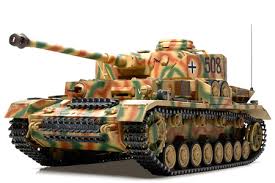
Panzer tank
But the tanks soon faced unexpected difficulties. Most roads in Russia were unpaved, so the tanks raised huge dust clouds almost everywhere they went. The dust clogged their engines and brought many tanks to a halt. Repair crews worked themselves to exhaustion so that the lightning-fast advance could continue.
Another drawback not evident at the outset of the invasion: Summer uniforms. For a war that began on June 22, 1941, these were entirely appropriate. But as the months quickly passed, the notorious Russian winter season loomed ever closer.

Germans in summer uniforms
The German command underestimated the campaign’s duration, expecting a victory by autumn 1941, and prioritized ammunition and fuel over winter equipment. Although winter gear existed, it was stuck in supply depots in the West, and transport lines were too strained by the Soviets’ “scorched earth” tactics to move it to the front.
Without proper greatcoats or insulated boots, soldiers suffered from extreme cold, with temperatures dropping far below zero. Many resorted to stealing blankets from civilians or using blankets as makeshift clothing.
In its war with Iran, American’s air force completely dominated the skies. But then both American planes and ground forces faced an unexpected enemy: Mass-produced drones.
The same weapons—some of them supplied by Iran to Russia—have been used since 2022 in Ukraine. Unmanned and remotely-controlled, Ukrainian and Russian drones have transformed the battlefield. They’re estimated to inflict around 80% of combat casualties on both sides.
The technology—like that forged in Germany’s Blitzkrieg tactics—is revolutionizing warfare and evolving rapidly. To adapt to the new era, the U.S. military is learning lessons from Ukraine.

Iranian drone
Student News Agency, Attribution, via Wikimedia Commons
Not only are American military forces being targeted, so are those Gulf nations that have allied themselves with the United States: The United Arab Emirates, Saudi Arabia, Kuwait, Bahrain, Qatar and Oman.
Primarily targeted: Energy infrastructure, airports and sites hosting American military personnel.
For Iran, the drones are relatively cheap. For the United States, the costs of countering this threat are steadily mounting. A typical Shahed-136 costs Tehran roughly $20,000 to $50,000, while interceptor missiles, such as the Patriot and Terminal High Altitude Area Defense (THAAD), cost millions.
On August 22, 1939—the eve of his invasion of Poland, which would ignite World War II—Adolf Hitler delivered a secret address to his supreme commanders and generals. Its climax:
“Close your hearts to pity. Act brutally. Eighty million people must obtain what is their right. Their existence must be made secure. The stronger man is right. The greatest harshness.”
Hitler urged his generals to act similarly toward the Russians, whom he regarded as subhumans.
The results of this policy soon became obvious when the Wehrmacht invaded Ukraine. Ukrainians, long suffering under the yoke of Stalin, greeted the invaders with bread and salt, the traditional greeting of comrades.
Within a month, they realized that the tyranny of Stalin had been replaced by an all-out extermination campaign of Hitler. For every Ukrainian the Germans killed, 10 more emerged to seek revenge.
Eighty-five years later, Donald Trump and officials of his administration are celebrating the indiscriminate slaughter of Iranians, whether civilian or military.
“We totally demolished Kharg Island, but we may hit it a few more times just for fun,” Trump said on NBC News.
On March 22, Secretary of Defense Pete Hegseth, hosting his monthly Christian worship service at the Pentagon, prayed: “Let every round find its mark against the enemies of righteousness and our great nation.
“Give them wisdom in every decision, endurance for the trial ahead, unbreakable unity, and overwhelming violence of action against those who deserve no mercy.”

Pete Hegseth
“I pursued my enemies and overtook them, and did not turn back till they were consumed,” he read from Psalms 18:37. “Those who hated me I destroyed. They cried to the Lord, but He did not answer them.”
Former House speaker and Trump advisor Newt Gingrich posted on X: “Instead of fighting over a 21-mile-wide bottleneck [Strait of Hormuz] forever, we [could] cut a new channel through friendly territory. A dozen thermonuclear detonations and you’ve got a waterway wider than the Panama Canal, deeper than the Suez, and safe from Iranian attacks.”
This would produce countless numbers of casualties and cover the Middle East with radioactive fallout.
It remains to be seen if such exhortations will lead American soldiers to act as barbarically as those of the Wehrmacht and SS—and inspire similar barbarism in return.
ABC NEWS, ADOLF HITLER, ALI HOSSEINI KHAMENEI, ALTERNET, AMERICABLOG, AP, AYATOLLAH ALI KHAMENEI, BABY BOOMER RESISTANCE, BAHRAIN, BBC, BERLIN, BLOOMBERG, BLOOMBERG NEWS, BLUESKY, BUZZFEED, CBS NEWS, CNN, CROOKS AND LIARS, DAILY KOS, DONALD TRUMP, DRONES, FINLAND, FIVETHIRTYEIGHT, FRANCE, GREAT BRITAIN, HARPER’S MAGAZINE, HUFFINGTON POST, IRAN, ISRAEL, ITALY, JAPAN, JOACHIM VON RIBBENTROP, JOSEPH STALIN, KIEV, KUWAIT, LENINGRAD, LUFTWAFFE, MEDIA MATTERS, MOJTABA KHAMENEI, MOSCOW, MOTHER JONES, MOVEON, MSNBC, NAZI GERMANY, NBC NEWS, NEW REPUBLIC, NEWSDAY, NEWSWEEK, NEWT GINGRICH, NPR, NUCLEAR WEAPONS, OIL FIELDS, OMAN, OPERATION BARBAROSSA, PBS NEWSHOUR, PETE HEGSETH, POLAND, POLITICO, POLITICUSUSA, QATAR, QATER, RAW STORY, REUTERS, SALON, SAUDI ARABIA, SEATTLE TIMES, SLATE, SOVIET UNION, SS, TALKING POINTS MEMO, THE ATLANTIC, THE CHICAGO SUN-TIMES, THE CHICAGO TRIBUNE, THE DAILY BEAST, THE DAILY BLOG, THE GUARDIAN, THE HILL, THE HUFFINGTON POST, THE INTERCEPT, THE LONGEST DAY (MOVIE, THE LOS ANGELES TIMES, THE NATION, THE NEW REPUBLIC, THE NEW YORK TIMES, THE NEW YORKER, THE PENTAGON, THE UNITED ARAB EMIRATES, THE VILLAGE VOICE, THE WASHINGTON POST, THINKPROGRESS, THIRD REICH, TIME, TRUTHDIG, TRUTHOUT, TWO POLITICAL JUNKIES, U.S. NEWS & WORLD REPORT, UKRAINE, UNIFORMS, UPI, USA TODAY, VYACHESLAV MOLOTOV, WEHRMACHT, WONKETTE, WORLD WAR 11, X
In Bureaucracy, History, Military, Politics, Social commentary on March 31, 2026 at 12:48 am
The city: Berlin.
The date: November 12–13, 1940.
The event: A meeting between German Fuhrer Adolf Hitler and Soviet Foreign Minister Vyacheslav Molotov.
The purposes: To discuss:
- Soviet expansion and control over Finland, Bulgaria, and the Turkish Straits; and
- Germany’s desire for the USSR to attack British interests in India and Iran.
Hitler wanted the USSR to join the Axis (Germany, Italy, and Japan) and expand “southward” toward the Indian Ocean to avoid conflict in Europe.
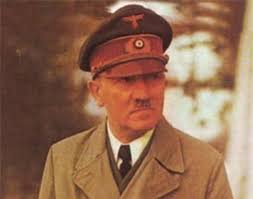
Adolf Hitler
Molotov ignored the talk of India and instead demanded control over Finland, Bulgaria, and the Turkish Straits.
Hitler adamantly opposed Soviet control over Finland, which he considered a strategic ally. He feared a Soviet expansion into Scandinavia would threaten German iron ore supplies from Sweden and northern interests.
And he deeply feared that the Soviet Union would cut off Germany’s vital Romanian oil supplies. Romania provided roughly 75% of German oil in 1941. A late 1940 Soviet attack on the Ploiești oil fields would render Germany helpless and force an end to the war.
On a personal level, Molotov and Hitler grated on each other’s nerves. Molotov was blunt in his remarks and didn’t spare Hitler at all. He seldom smiled and refused to compromises on Russia’s demands for control of Finland, Bulgaria, and the Turkish Straits.
At one point, Molotov asked: “Is last year’s agreement [between Germany and Russia] still valid?”
Hitler replied that it was.
“I asked this question,” said Molotov, “because of the Finns. You are on very friendly relations with the Finns. You invite people from Finland to Germany and you send missions there. And the Finns are very dangerous people. They undermine our security and we’ll have to do something about that and we are going to do something about that.”

Vyacheslav Molotov
“I understand you very well,” exploded Hitler. “You want to wage war against Finland and that is quite out of the question. Do you hear me? It’s impossible because my supplies of iron, nickel and other important raw materials would be cut.”
During the talks, British Royal Air Force (RAF) bombers appeared overhead, forcing the leaders to move to an air raid shelter.
German Foreign Minister Joachim von Ribbentrop had been trying to convince Molotov that Great Britain was “beaten” and that the British Empire was a “gigantic world-wide estate in bankruptcy” ready for partition.
Molotov sarcastically replied: “If England is beaten, why are we in this shelter and whose are the bombs that are falling?”
Even while Molotov was still in Berlin, Hitler ordered his generals to attack the Soviet Union on May 15, 1941.
Within a month they responded with a detailed plan code-named “Operation Barbarossa.”
Less than one year later—on June 22, 1941—with 134 divisions at full fighting strength and 73 more divisions for deployment behind the front, the German Wehrmacht invaded the Soviet Union.
Now the two most ruthless dictators on earth—Adolf Hitler and Joseph Stalin—were locked in a fight to the death.
At the outset, the odds clearly favored the Germans.
The invasion caught the Soviet Union by surprise. Joseph Stalin had received Intelligence reports from Great Britain that Germany was preparing to attack. But Stalin, who believed the British were trying to drive a wedge between him and Hitler, put his faith in Hitler, whose guarantees had long proved worthless.

German army units
From June to September, the Wehrmacht captured vast territories and encircled hundreds of thousands of Red Army troops. German forces quickly advanced toward Leningrad, Moscow, and Kiev, inflicting massive casualties.
The Luftwaffe destroyed much of the Soviet air force on the ground.
In June and July, German panzers quickly advanced, capturing over 300,000 Soviet prisoners in the Minsk-Bialystok pocket. By late September, Army Group South captured Kiev, resulting in the largest encirclement in history, with roughly 600,000 Soviet soldiers trapped.
By the end of 1941, more than three million Soviet soldiers were captured or killed. Still, the Soviet Union did not collapse and continued to commit new field armies to the conflict.
By December, the Wehrmacht, besieging Moscow, were literally freezing to death in their summer uniforms. Then, on December 5-6, the Soviets launched their decisive counter-offensive before Moscow, forcing German forces into a retreat.
It marked the first major land defeat for the Wehrmacht since its September 1, 1939 invasion of Poland, which ignited World War II.
Now, fast-forward 85 years. Substitute President Donald Trump for Fuhrer Adolf Hitler and Mojtaba Khamenei for Joseph Stalin—and Iran for the Soviet Union.
Donald Trump and Adolf Hitler
Just as Hitler launched his attack on the Soviet Union without warning, so did Trump launch his on Iran—on February 28.
Hitler’s attack didn’t kill Joseph Stalin, the all-powerful dictator of the Soviet Union. But Trump’s airstrikes killed Ali Hosseini Khamenei, who had ruled Iran as its supreme leader from 1989.

Ayatollah Ali Khamenei
Still, the Iranians quickly elevated his son, Mojtaba Khamenei, to the same position—and went on fighting.
Hitler—and numerous members of the Wehrmacht—believed that Germany’s mechanized panzers would succeed where Napoleon Bonaparte had failed in 1812. And that they could conquer the Soviet Union in only three months.
They were wrong.
ABC NEWS, ADOLF HITLER, ALTERNET, AMERICABLOG, AP, BABY BOOMER RESISTANCE, BBC, BLOOMBERG NEWS, BUZZFEED, CBS NEWS, CNN, CROOKS AND LIARS, DAILY KOS, FIVETHIRTYEIGHT, GAZA, HAMAS, HARPER’S MAGAZINE, HUFFINGTON POST, INSIDER, ISRAELI DEFENSE FORCES, ISREAL, MEDIA MATTERS, MISSILES, MOTHER JONES, MOVEON, MSNBC, NAZI GERMANY, NBC NEWS, NEW REPUBLIC, NEWSDAY, NEWSWEEK, NPR, OPERATION BARBAROSSA, OPERATION PROTECTIVE EDGE, PALESTINIANS, PBS NEWSHOUR, POLITICO, POLITICUSUSA, RAW STORY, REUTERS, SALON, SEATTLE TIMES, SLATE, SOVIET UNION, STALINGRAD, TALKING POINTS MEMO, THE ATLANTIC, THE CHICAGO SUN-TIMES, THE CHICAGO TRIBUNE, THE DAILY BEAST, THE DAILY BLOG, THE GUARDIAN, THE HILL, THE HUFFINGTON POST, THE INTERCEPT, THE LOS ANGELES TIMES, THE NATION, THE NEW REPUBLIC, THE NEW Y ORK TIMES, THE NEW YORK TIMES, THE NEW YORKER, THE VILLAGE VOICE, THE WASHINGTON POST, THINKPROGRESS, TIME, TRUTHDIG, TRUTHOUT, TWO POLITICAL JUNKIES, U.S. NEWS & WORLD REPORT, UPI, USA TODAY, WILHELM HOFFMAN, WONKETTE, WORLD WAR 11, X
In Bureaucracy, History, Military, Politics, Social commentary on May 9, 2025 at 12:06 am
On June 22, 1941, three million soldiers of Adolf Hitler’s Wehrmacht charged into the Soviet Union, destroying or capturing one Red Army after another.
The Fuehrer, ecstatic, had waited decades to launch this invasion: “We have only to kick in the door and the whole rotten structure will come crashing down.”
That expectation proved to be false.
But then Hitler made a comment whose truth should still be noted: “At the beginning of each campaign, one pushes a door into a dark, unseen room. One can never know what is hiding inside.”
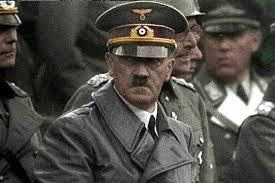
Adolf Hitler
Such proved to be the case in his campaign to destroy the Soviet Union.
By December 1941, the Wehrmacht had killed 360,000 Soviet soldiers, wounded one million, and captured two million more.
Red Army losses totaled around 3.4 million.
In six months, German troops and their allies had advanced 600 miles and occupied more than 500,000 square miles of Soviet territory.
And yet, in the end, Operation Barbarossa—-the code name for the invasion—proved Hitler’s fatal mistake.
By the time Hitler committed suicide on April 30, 1945, Germany lay in ruins and the Wehrmacht had suffered 85% of its losses on the dreaded “Eastern front.”
Similarly, the militant group Hamas opened hostilities with Israel on October 7, 2023.
Under the cover of thousands of rockets fired from Gaza, an estimated 1,200 men, women and children were slaughtered by Hamas terrorists in streets, houses, kibbutz communities and at a rave music festival.
About 250 others were kidnapped and taken into Gaza. Most of those hostages have since been murdered.
Israel responded by declaring a state of war—pounding Gaza with bombs, missiles. tanks and soldiers. Palestinian health authorities claim that Israel’s ground and air campaign has killed more than 50,000 people.

A Hamas rocket streaks toward Israel
Liberal Democrats demanded that President Joseph Biden stop shipping military equipment to Israel.
Across the United States, scores of university students protested Israel’s retaliation against Gaza. Among the universities targeted: Columbia, Harvard, Yale, the University of Texas at Austin, the University of Southern California, Emory University in Atlanta, Boston’s Emerson College.
Clashes erupted between pro-Palestinian and pro-Israeli students. Jewish students were threatened with death. This forced universities to call on police to clear pro-Palestinian encampments and arrest demonstrators who make it impossible for serious-minded students to get an education.
Columbia University, Barnard College and the University of Southern California (USC) canceled their graduation ceremonies owing to fears of violent protests by terrorism-sympathizing students.
Meanwhile, Hamas has behaved as if it is the victor in demanding peace terms:
- Initially releasing 33 hostages in exchange for Israel releasing 30–50 Palestinians for every Israeli released.
- Demanding that Israel fully end its assault on Gaza under any deal to release hostages.
- Demanding a “clear written commitment” that Israel will withdraw from the Gaza Strip—which would allow Hamas to continue building its arsenal and planning its next attack on Israel.
The mindset displayed by Hamas reflects that of the Wehrmacht during the titanic battle of Stalingrad, which lasted from August, 1942, to February, 1943.
At first it appeared that the Wehrmacht would take the city and seize the Russian oil fields of the Caucuses. Instead, it became bogged down in deadly inner-city fighting.
More than 150,000 Germans died in the battle and the rest of the Sixth Army was forced to surrender.

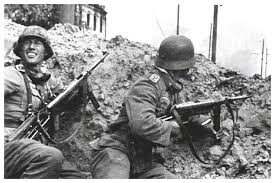
German soldiers at Stalingrad
The diary of private Wilhelm Hoffman vividly reveals how a would-be conqueror can quickly turn from arrogant euphoria in triumph to self-righteous anger and self-pity when faced by unyielding opposition.
The diary remains as relevant today for Hamas as it does for students of Nazi Germany.
July 29, 1942: The company commander says the Russian troops are completely broken, and cannot hold out any longer. To reach the Volga and take Stalingrad is not so difficult for us. The Fuehrer knows where the Russian weak point is. Victory is not far away.
August 10: The Fuehrer’s orders were read out to us. He expects victory of us. We are all convinced that they can’t stop us.
August 12: This morning outstanding soldiers were presented with decorations. Will I really go back to Elsa without a decoration? I believe that for Stalingrad the Fuehrer will decorate even me.
September 13:The Russians are fighting desperately like wild beasts, don’t give themselves up, but come up close and then throw grenades. Lieutenant Kraus was killed yesterday, and there is no company commander.
September 16: Our battalion, plus tanks, is attacking the [grain storage] elevator, from which smoke is pouring—the grain in it is burning, the Russians seem to have set light to it themselves. Barbarism. The battalion is suffering heavy losses.
There are not more than 60 men left in each company. The elevator is occupied not by men but by devils that no flames or bullets can destroy.
September 18: Fighting is still going on inside the elevator….If all the buildings of Stalingrad are defended like this then none of our soldiers will get back to Germany.
September 26: You don’t see them at all, they have established themselves in houses and cellars and are firing on all sides, including from our rear—barbarians, they use gangster methods.
ABC NEWS, ADOLF HITLER, ALTERNET, AMERICABLOG, AP, BABY BOOMER RESISTANCE, BBC, BLOOMBERG NEWS, BUZZFEED, CBS NEWS, CNN, CROOKS AND LIARS, DAILY KOS, FIVETHIRTYEIGHT, GAZA, HAMAS, HARPER’S MAGAZINE, HUFFINGTON POST, INSIDER, ISRAELI DEFENSE FORCES, ISREAL, MEDIA MATTERS, MISSILES, MOTHER JONES, MOVEON, MSNBC, NAZI GERMANY, NBC NEWS, NEW REPUBLIC, NEWSDAY, NEWSWEEK, NPR, OPERATION BARBAROSSA, OPERATION PROTECTIVE EDGE, PALESTINIANS, PBS NEWSHOUR, POLITICO, POLITICUSUSA, RAW STORY, REUTERS, SALON, SEATTLE TIMES, SLATE, SOVIET UNION, STALINGRAD, TALKING POINTS MEMO, THE ATLANTIC, THE CHICAGO SUN-TIMES, THE CHICAGO TRIBUNE, THE DAILY BEAST, THE DAILY BLOG, THE GUARDIAN, THE HILL, THE HUFFINGTON POST, THE INTERCEPT, THE LOS ANGELES TIMES, THE NATION, THE NEW REPUBLIC, THE NEW Y ORK TIMES, THE NEW YORK TIMES, THE NEW YORKER, THE VILLAGE VOICE, THE WASHINGTON POST, THINKPROGRESS, TIME, TRUTHDIG, TRUTHOUT, TWITTER, TWO POLITICAL JUNKIES, U.S. NEWS & WORLD REPORT, UPI, USA TODAY, WILHELM HOFFMAN, WONKETTE, WORLD WAR 11
In Bureaucracy, History, Military, Politics, Social commentary on October 31, 2023 at 1:35 am
On June 22, 1941, three million soldiers of Adolf Hitler’s Wehrmacht charged into the Soviet Union, destroying or capturing one Red Army after another.
The Fuehrer, ecstatic, had waited decades to launch this invasion: “We have only to kick in the door and the whole rotten structure will come crashing down.”
That expectation proved to be false.
But then Hitler made a comment whose truth should still be noted: “At the beginning of each campaign, one pushes a door into a dark, unseen room. One can never know what is hiding inside.”
Adolf Hitler
Such proved to be the case in his campaign to destroy the Soviet Union.
By December 1941, the Wehrmacht had killed 360,000 Soviet soldiers, wounded one million, and captured two million more.
Red Army losses totaled around 3.4 million.
In six months, German troops and their allies had advanced 600 miles and occupied more than 500,000 square miles of Soviet territory.
And yet, in the end, Operation Barbarossa—-the code name for the invasion—proved Hitler’s fatal mistake.
By the time Hitler committed suicide on April 30, 1945, Germany lay in ruins and the Wehrmacht had suffered 85% of its losses on the dreaded “Eastern front.”
Similarly, the militant group Hamas opened hostilities with Israel on July 7, apparently confident that it could defeat the awesome power of an unleashed Israeli Defense Force (IDF).
In June, 2014, three Israeli teenagers were kidnapped and murdered. Israeli authorities suspected the culprits were members of Hamas, the terrorist organization that’s long called for Israel’s destruction.
In a desperate search for the missing teens, Israeli forces killed 10 Palestinians, injured 130 and arrested 500 to 600 others.
Hamas, in turn, began launching rocket attacks on Israel from the Gaza Strip, which it has controlled since June, 2007. By July 7, 100 rockets had been fired at Israel.
Israeli planes retaliated by attacking 50 targets in Gaza.
On July 8, during a 24-hour period, Hamas fired more than 140 rockets into Israel from Gaza. Saboteurs also tried to infiltrate Israel from the sea, but were intercepted.
A Hamas rocket streaks toward Israel
That same day–July 8, 2014—Israel launched Operation Protective Edge, a full-scale military attack on Gaza.
Hamas then announced that it considered “all Israelis”—including women, children, the elderly and disabled—to be legitimate targets.
On July 8, Hamas—acting as though it were laying down peace terms to an already defeated Israel—issued the following demands:
- End all attacks on Gaza;
- Release Palestinians arrested during the crackdown on the West Bank;
- Lift the blockade on Gaza; and
- Return to the cease-fire conditions of 2012.
Only then would Hamas be open to a ceasefire agreement.
Egypt offered a cease-fire proposal. Israel quickly accepted it, temporarily stopping hostilities on July 15.
But Hamas claimed that it had not been consulted and rejected the agreement.
Palestinians continued to blithely launch hundreds of rockets at Israel—but went into ecstasies of grief before television cameras when one of their own was killed by Israeli return fire.
The mindset displayed by Hamas reflected that of the Wehrmacht during the titanic battle of Stalingrad, which lasted from August, 1942, to February, 1943.
At first it appeared that the Wehrmacht would take the city and seize the Russian oil fields of the Caucuses. Instead, it became bogged down in deadly inner-city fighting.
More than 150,000 Germans died in the battle and the rest of the Sixth Army was taken prisoner.

Germans at Stalingrad
The diary of private Wilhelm Hoffman vividly reveals how a would-be conqueror can quickly turn from arrogant euphoria in triumph to self-righteous anger and self-pity when faced by unyielding opposition.
The diary remains as relevant today for Hamas as it does for students of Nazi Germany.
July 29, 1942: The company commander says the Russian troops are completely broken, and cannot hold out any longer. To reach the Volga and take Stalingrad is not so difficult for us. The Fuehrer knows where the Russian weak point is. Victory is not far away.
August 10: The Fuehrer’s orders were read out to us. He expects victory of us. We are all convinced that they can’t stop us.
August 12: This morning outstanding soldiers were presented with decorations. Will I really go back to Elsa without a decoration? I believe that for Stalingrad the Fuehrer will decorate even me.
September 13:The Russians are fighting desperately like wild beasts, don’t give themselves up, but come up close and then throw grenades. Lieutenant Kraus was killed yesterday, and there is no company commander.
September 16: Our battalion, plus tanks, is attacking the [grain storage] elevator, from which smoke is pouring—the grain in it is burning, the Russians seem to have set light to it themselves. Barbarism. The battalion is suffering heavy losses.
There are not more than 60 men left in each company. The elevator is occupied not by men but by devils that no flames or bullets can destroy.
September 18: Fighting is still going on inside the elevator….If all the buildings of Stalingrad are defended like this then none of our soldiers will get back to Germany.
September 26: You don’t see them at all, they have established themselves in houses and cellars and are firing on all sides, including from our rear—barbarians, they use gangster methods.
ABC NEWS, ADOLF HITLER, CBS NEWS, CNN, FACEBOOK, GAZA, HAMAS, ISRAELI DEFENSE FORCES, ISREAL, MISSILES, NAZI GERMANY, NBC NEWS, OPERATION BARBAROSSA, OPERATION PROTECTIVE EDGE, PALESTINIANS, SOVIET UNION, STALINGRAD, THE LOS ANGELES TIMES, THE NEW Y ORK TIMES, THE WASHINGTON POST, TWITTER, WILHELM HOFFMAN, WORLD WAR 11
In History, Military, Social commentary on July 22, 2014 at 12:07 pm
The mindset displayed by Hamas, the Palestinian terrorist group, reflects that of the German Wehrmacht during the titanic battle of Stalingrad, which raged from August, 1942, to February, 1943.
This mindset was vividly captured in the diary of Wilhelm Hoffman, one of the 150,000 Germans who died in the battle.
The document reveals how a would-be conqueror can quickly turn from arrogant euphoria in triumph to self-righteous anger and self-pity when faced by unyielding opposition.
Hamas has reacted similarly. When its rockets blasted Israel, that was in accordance with the Will of Allah. But when the Israelis returned fire with planes and missiles, Hamas members rushed to TV cameras to shed copious tears and wail about the barbarity of their intended victims.

A Hamas funeral
Wilhelm Hoffman was a member of the elite Sixth Army, which had scored impressive victories over Poland in 1939 and France in 1940.
After Adolf Hitler launched the invasion of the Soviet Union on June 22, 1941, it had destroyed one Soviet army after another. By August, 1942, it was poised to strike the city of Stalingrad and seize the Russian oil fields of the Caucuses.
Instead, it became bogged down in deadly inner-city fighting. Then a Russian counteroffensive trapped the Sixth army and, through attrition and starvation, forced it to surrender on February 2, 1943. It was a major turning point in World War 11.

German soldiers besieging Stalingrad
Hoffman’s diary reflects the euphoria of those early months, when yet another Nazi victory seemed in sight. But as his fellow Germans took increasingly heavy losses, Hoffman grew resentful at the Russians’ refusal to meekly surrender.
September 13: An unlucky number. This morning “katyushi” [multiple rocket launchers] attacks caused the company heavy losses: 27 dead and 50 wounded.
The Russians are fighting desperately like wild beasts, don’t give themselves up, but come up close and then throw grenades. Lieutenant Kraus was killed yesterday, and there is no company commander.
September 16: Our battalion, plus tanks, is attacking the [grain storage], from which smoke is pouring–the grain in it is burning, the Russians seem to have set light to it themselves. Barbarism. The battalion is suffering heavy losses.
There are not nore than 60 men left in each company. The elevator is occupied not by men but by devils that no flames or bullets can destroy.
September 18: Fighting is still going on inside the elevator….If all the buildings of Stalingrad are defended like this then none of our soldiers will get back to Germany.
September 26: Our regiment is involved in constant heavy fighting. After the elevator was taken the Russians continued to defend themselves just as stubbornly.
You don’t see them at all, they have established themselves in houses and cellars and are firing on all sides, including from our rear–barbarians, they use gangster methods.
The Russians have stopped surrendering at all. If we take any prisoners it’s because they are hopelessly wounded, and can’t move by themselves. Stalingrad is hell.
Those who are merely wounded are lucky; they will doubtless be at home and celebrate victory with their families.
October 3: We have entered a new area. It was night but we saw many crosses with our helmets on top. Have we really lost so many men? Damn this Stalingrad!
October 14: It has been fantastic since morning; our aeroplanes and artillery have been hammering the Russian positions for hours on end; everything in sight is being blotted from the face of the earth.
October 22: Our regiment has failed to break into the factory. We have lost many men; every time you move you have to jump over bodies. You can scarcely breathe in the daytime; there is nowhere and no one to remove the bodies, so they are left there to rot.
Who would have thought three months ago that instead of the joy of victory we would have to endure such sacrifice and torture, the end of which is nowhere in sight.
October 27: Our troops have captured the whole of the Barrikady factory, but we cannot break through to the Volga. The Russians are not men, but some kind of cast-iron creatures; they never get tired and are not afraid to die.
We are absolutely exhausted; our regiment now has barely the strength of a company. The Russian artillery on the other side of the Volga won’t let you lift your head.

German prisoners taken at Stalingrad
December 11: Three questions are obsessing every soldier and officer:
When will the Russians stop firing and let us sleep in peace, if only for one night? How and with what are we going to fill our empty stomachs, which, apart from the 3%-7 ozs of bread, receive virtually nothing at all? And when will Hitler take any decisive steps to free our armies from encirclement?
December 26: The horses have already been eaten. I would eat a cat; they say the meat is also tasty. The soldiers took like corpses or lunatics, looking for something to put in their mouths.
They no longer take cover from Russian shells; they haven’t the strength to walk, run away and hide. A curse on this war!
ABC NEWS, ADOLF HITLER, ALTERNET, AMERICABLOG, AP, BABY BOOMER RESISTANCE, BBC, BLOOMBERG NEWS, BUZZFEED, CBS NEWS, CNN, CROOKS AND LIARS, DAILY KOS, FACEBOOK, FIVETHIRTYEIGHT, GAZA, HAMAS, HARPER’S MAGAZINE, HUFFINGTON POST, ISRAELI DEFENSE FORCES, ISREAL, MEDIA MATTERS, MISSILES, MOTHER JONES, MOVEON, MSNBC, NAZI GERMANY, NBC NEWS, NEW REPUBLIC, NEWSDAY, NEWSWEEK, NPR, OPERATION BARBAROSSA, OPERATION PROTECTIVE EDGE, PALESTINIANS, PBS NEWSHOUR, POLITICO, POLITICUSUSA, RAW STORY, REUTERS, SALON, SEATTLE TIMES, SLATE, SOVIET UNION, STALINGRAD, TALKING POINTS MEMO, THE ATLANTIC, THE CHICAGO SUN-TIMES, THE CHICAGO TRIBUNE, THE DAILY BEAST, THE DAILY BLOG, THE GUARDIAN, THE HILL, THE HUFFINGTON POST, THE INTERCEPT, THE LOS ANGELES TIMES, THE NATION, THE NEW REPUBLIC, THE NEW Y ORK TIMES, THE NEW YORK TIMES, THE NEW YORKER, THE VILLAGE VOICE, THE WASHINGTON POST, THINKPROGRESS, TIME, TRUTHDIG, TRUTHOUT, TWITTER, U.S. NEWS & WORLD REPORT, UPI, WILHELM HOFFMAN, WORLD WAR 11
In History, Military, Social commentary on July 21, 2014 at 11:43 am
On June 22, 1941, three million soldiers of Adolf Hitler’s Wehrmacht charged into the Soviet Union, destroying or capturing one Red Army after another.
The Fuehrer, ecstatic, had waited decades to launch this invasion: “We have only to kick in the door and the whole rotten structure will come crashing down.”
That expectation proved to be false.
But then Hitler made a comment whose truth should still be noted: “At the beginning of each campaign, one pushes a door into a dark, unseen room. One can never know what is hiding inside.”
Adolf Hitler
Such proved to be the case in his campaign to destroy the Soviet Union.
By December 1941, the Wehrmacht had killed 360,000 Soviet soldiers, wounded one million, and captured two million more. Red Army losses totaled around 3.4 million.
In six months, German troops and their allies had advanced 600 miles and occupied more than 500,000 square miles of Soviet territory.
And yet, in the end, Operation Barbarossa—the code name for the invasion—proved Hitler’s fatal mistake.
By the time Hitler committed suicide on April 30, 1945, Germany lay in ruins and the Wehrmacht had suffered 85% of its losses on the dreaded “Eastern front.”
Similarly, the militant group Hamas opened hostilities with Israel on July 7, apparently confident that it could defeat the awesome power of an unleashed Israeli Defense Force (IDF).
In June, 2014, three Israeli teenagers were kidnapped and murdered. Israeli authorities suspected the culprits were members of Hamas, the terrorist organization that’s long called for Israel’s destruction.
In a desperate search for the missing teens, Israeli forces killed 10 Palestinians, injured 130 and arrested 500 to 600 others.
Hamas, in turn, began launching rocket attacks on Israel from the Gaza Strip, which it has controlled since June, 2007. By July 7, 100 rockets had been fired at Israel.
Israeli planes retaliated by attacking 50 targets in Gaza.
On July 8, during a 24-hour period, Hamas fired more than 140 rockets into Israel from Gaza. Saboteurs also tried to infiltrate Israel from the sea, but were intercepted.
A Hamas rocket streaks toward Israel
That same day–July 8, 2014–Israel launched Operation Protective Edge, a full-scale military attack on Gaza.
Hamas then announced that it considered “all Israelis”—including women, children, the elderly and disabled—to be legitimate targets.
On July 8, Hamas—acting as though it were laying down peace terms to an already defeated Israel—issued the following demands:
- End all attacks on Gaza;
- Release Palestinians arrested during the crackdown on the West Bank;
- Lift the blockade on Gaza; and
- Return to the cease-fire conditions of 2012.
Only then would Hamas be open to a ceasefire agreement.
Egypt offered a cease-fire proposal. Israel quickly accepted it, temporarily stopping hostilities on July 15. But Hamas claimed that it had not been consulted and rejected the agreement.
Palestinians continued to blithely launch hundreds of rockets at Israel—but went into ecstasies of grief before television cameras when one of their own was killed by Israeli return fire.
The mindset displayed by Hamas reflects that of the Wehrmacht during the titanic battle of Stalingrad, which lasted from August, 1942, to February, 1943.
German soldiers at Stalingrad
This mindset was vividly captured in the diary of Wilhelm Hoffman, one of the 150,000 Germans who died in the battle.
The document reveals how a would-be conqueror can quickly turn from arrogant euphoria in triumph to self-righteous anger and self-pity when faced by unyielding opposition.
July 29, 1942: The company commander says the Russian troops are completely broken, and cannot hold out any longer. To reach the Volga and take Stalingrad is not so difficult for us. The Fuehrer knows where the Russian weak point is. Victory is not far away.
August 10: The Fuehrer’s orders were read out to us. He expects victory of us. We are all convinced that they can’t stop us.
August 12: We are advancing toward Stalingrad along the railway line. Yesterday Russian “katush” [small rocket launchers] and then tanks halted our regiment.
“The Russians are throwing in their last forces,” Captain Werner explained to me. Large-scale help is coming up to us, and the Russians will be beaten.
This morning outstanding soldiers were presented with decorations. Will I really go back to Elsa without a decoration? I believe that for Stalingrad the Fuehrer will decorate even me.
August 27: A continuous cannonade on all sides. We are slowly advancing. Less than 20 miles to go to Stalingrad. In the daytime we can see the smoke of fires, at nighttime the bright glow.
They say that the city is on fire. On the Fuehrer’s orders our Luftwaffe [air force] has sent it up in flames. That’s what the Russians need, to stop them from resisting.
September 5: Our regiment has been ordered to attack Sadovaya station–that’s nearly in Stalingrad. Are the Russians really thinking of holding out in the city itself?
We had no peace all night from the Russian artilery and aeroplanes. Lots of wounded are being brought by. God protect me.
September 8: Two days of non-stop fighting. The Russians are defending themselves with insane stubbornness. Our regiment has lost many men from the “katyushi” [Soviet multiple rocket launchers] which belch out terrible fire.
 Bureaucracybuster's Blog
ABC NEWS, ADOLF HITLER, ALI HOSSEINI KHAMENEI, ALTERNET, AMERICABLOG, AP, AYATOLLAH ALI KHAMENEI, BABY BOOMER RESISTANCE, BAHRAIN, BBC, BERLIN, BLOOMBERG, BLOOMBERG NEWS, BLUESKY, BUZZFEED, CBS NEWS, CNN, CROOKS AND LIARS, DAILY KOS, DONALD TRUMP, DRONES, FINLAND, FIVETHIRTYEIGHT, FRANCE, GREAT BRITAIN, HARPER’S MAGAZINE, HUFFINGTON POST, IRAN, ISRAEL, ITALY, JAPAN, JOACHIM VON RIBBENTROP, JOSEPH STALIN, KIEV, KUWAIT, LENINGRAD, LUFTWAFFE, MEDIA MATTERS, MOJTABA KHAMENEI, MOSCOW, MOTHER JONES, MOVEON, MSNBC, NAZI GERMANY, NBC NEWS, NEW REPUBLIC, NEWSDAY, NEWSWEEK, NEWT GINGRICH, NPR, NUCLEAR WEAPONS, OIL FIELDS, OMAN, OPERATION BARBAROSSA, PBS NEWSHOUR, PETE HEGSETH, POLAND, POLITICO, POLITICUSUSA, QATAR, QATER, RAW STORY, REUTERS, SALON, SAUDI ARABIA, SEATTLE TIMES, SLATE, SOVIET UNION, SS, TALKING POINTS MEMO, THE ATLANTIC, THE CHICAGO SUN-TIMES, THE CHICAGO TRIBUNE, THE DAILY BEAST, THE DAILY BLOG, THE GUARDIAN, THE HILL, THE HUFFINGTON POST, THE INTERCEPT, THE LONGEST DAY (MOVIE, THE LOS ANGELES TIMES, THE NATION, THE NEW REPUBLIC, THE NEW YORK TIMES, THE NEW YORKER, THE PENTAGON, THE UNITED ARAB EMIRATES, THE VILLAGE VOICE, THE WASHINGTON POST, THINKPROGRESS, THIRD REICH, TIME, TRUTHDIG, TRUTHOUT, TWO POLITICAL JUNKIES, U.S. NEWS & WORLD REPORT, UKRAINE, UNIFORMS, UPI, USA TODAY, VYACHESLAV MOLOTOV, WEHRMACHT, WONKETTE, WORLD WAR 11, X
THE DICTATORS’ DANCE–PAST AND PRESENT: PART TWO (END)
In Bureaucracy, History, Military, Politics, Social commentary on April 1, 2026 at 12:17 amNow, fast-forward 85 years—from 1941 to 2026. Substitute President Donald Trump for Fuhrer Adolf Hitler and Mojtaba Khamenei for Joseph Stalin—and Iran for the Soviet Union.
Just as Hitler launched his attack on the Soviet Union without warning, so did Trump launch his on Iran—on February 28.
Hitler—and numerous members of the Wehrmacht—believed that Germany’s mechanized panzers would quickly subdue Soviet armies.
“We were fast,” recalled Panzer Lieutenant Hans-Erdmann Schonbeck. “And our tank forces could cover huge distances. And once we broke through the enemy’s defenses, our orders were not to worry about threats to our right or left but to keep going, deep into Russian territory.”
Panzer tank
But the tanks soon faced unexpected difficulties. Most roads in Russia were unpaved, so the tanks raised huge dust clouds almost everywhere they went. The dust clogged their engines and brought many tanks to a halt. Repair crews worked themselves to exhaustion so that the lightning-fast advance could continue.
Another drawback not evident at the outset of the invasion: Summer uniforms. For a war that began on June 22, 1941, these were entirely appropriate. But as the months quickly passed, the notorious Russian winter season loomed ever closer.
Germans in summer uniforms
The German command underestimated the campaign’s duration, expecting a victory by autumn 1941, and prioritized ammunition and fuel over winter equipment. Although winter gear existed, it was stuck in supply depots in the West, and transport lines were too strained by the Soviets’ “scorched earth” tactics to move it to the front.
Without proper greatcoats or insulated boots, soldiers suffered from extreme cold, with temperatures dropping far below zero. Many resorted to stealing blankets from civilians or using blankets as makeshift clothing.
In its war with Iran, American’s air force completely dominated the skies. But then both American planes and ground forces faced an unexpected enemy: Mass-produced drones.
The same weapons—some of them supplied by Iran to Russia—have been used since 2022 in Ukraine. Unmanned and remotely-controlled, Ukrainian and Russian drones have transformed the battlefield. They’re estimated to inflict around 80% of combat casualties on both sides.
The technology—like that forged in Germany’s Blitzkrieg tactics—is revolutionizing warfare and evolving rapidly. To adapt to the new era, the U.S. military is learning lessons from Ukraine.
Iranian drone
Student News Agency, Attribution, via Wikimedia Commons
Not only are American military forces being targeted, so are those Gulf nations that have allied themselves with the United States: The United Arab Emirates, Saudi Arabia, Kuwait, Bahrain, Qatar and Oman.
Primarily targeted: Energy infrastructure, airports and sites hosting American military personnel.
For Iran, the drones are relatively cheap. For the United States, the costs of countering this threat are steadily mounting. A typical Shahed-136 costs Tehran roughly $20,000 to $50,000, while interceptor missiles, such as the Patriot and Terminal High Altitude Area Defense (THAAD), cost millions.
On August 22, 1939—the eve of his invasion of Poland, which would ignite World War II—Adolf Hitler delivered a secret address to his supreme commanders and generals. Its climax:
“Close your hearts to pity. Act brutally. Eighty million people must obtain what is their right. Their existence must be made secure. The stronger man is right. The greatest harshness.”
Hitler urged his generals to act similarly toward the Russians, whom he regarded as subhumans.
The results of this policy soon became obvious when the Wehrmacht invaded Ukraine. Ukrainians, long suffering under the yoke of Stalin, greeted the invaders with bread and salt, the traditional greeting of comrades.
Within a month, they realized that the tyranny of Stalin had been replaced by an all-out extermination campaign of Hitler. For every Ukrainian the Germans killed, 10 more emerged to seek revenge.
Eighty-five years later, Donald Trump and officials of his administration are celebrating the indiscriminate slaughter of Iranians, whether civilian or military.
“We totally demolished Kharg Island, but we may hit it a few more times just for fun,” Trump said on NBC News.
On March 22, Secretary of Defense Pete Hegseth, hosting his monthly Christian worship service at the Pentagon, prayed: “Let every round find its mark against the enemies of righteousness and our great nation.
“Give them wisdom in every decision, endurance for the trial ahead, unbreakable unity, and overwhelming violence of action against those who deserve no mercy.”
Pete Hegseth
“I pursued my enemies and overtook them, and did not turn back till they were consumed,” he read from Psalms 18:37. “Those who hated me I destroyed. They cried to the Lord, but He did not answer them.”
Former House speaker and Trump advisor Newt Gingrich posted on X: “Instead of fighting over a 21-mile-wide bottleneck [Strait of Hormuz] forever, we [could] cut a new channel through friendly territory. A dozen thermonuclear detonations and you’ve got a waterway wider than the Panama Canal, deeper than the Suez, and safe from Iranian attacks.”
This would produce countless numbers of casualties and cover the Middle East with radioactive fallout.
It remains to be seen if such exhortations will lead American soldiers to act as barbarically as those of the Wehrmacht and SS—and inspire similar barbarism in return.
Share this: