bureaucracybusters

Posts Tagged ‘JAMES MADISON’

GEEZERS FOR GOVERNMENT

In Bureaucracy, History, Medical, Politics, Social commentary on November 24, 2025 at 12:06 am

On November 2, New York City mayoral candidate Zohran Mamdani surprised patrons at a gay night club when he stopped by to campaign at 1 am.     

Five hours later, he walked across the Brooklyn Bridge at 6 am. 

On the social media platform, Bluesky, a post took notice of this: 

“To anyone who’s been awestruck by Zohran’s campaigning stamina in being able to end his night at a gay bar at 1 am and then walk across the Brooklyn Bridge at 6 am….

“This is what happens when you don’t have 76 year old candidates running for office.”

Zohran Mamdani is 34.

Zohran Mamdani

Dmitryshein, CC BY-SA 4.0 <https://creativecommons.org/licenses/by-sa/4.0&gt;, via Wikimedia Commons

On July 4, 1776, representatives of the original Thirteen Colonies met in Philadelphia, Pennsylvania, to affix their signatures to Thomas Jefferson’s Declaration of Independence. 

In July, 1776, the ages of key American Revolutionary figures were:

  • Marquis de Lafayette, 18
  • James Monroe, 18
  • Aaron Burr, 20
  • John Marshall, 20
  • Nathan Hale, 21
  • Alexander Hamilton, 21
  • James Madison, 25
  • John Paul Jones, 28
  • Thomas Jefferson, 33
  • Benedict Arnold, 35
  • Ethan Allen, 38
  • John Hancock, 39
  • Thomas Paine, 39
  • Paul Revere, 41
  • George Washington, 44
  • Samuel Adams, 53
  • Benjamin Franklin, 70

Signing of the Declaration of Independence

Youth was a commonplace among the signers of the Declaration. Their average age was 44.

In the hit play (and later movie) 1776, several members of Congress—including Thomas Jefferson—are surprised to learn that John Adams—who’s 41—still “burns” for his wife Abigail, who’s waiting for him in Boston, Massachusetts.

Today, a nation that once prized youth among its leaders is now moving toward government by gerontocracy.

The average age of members of the House of Representatives is 57.9 years. In the Senate, it’s 64.3.

During 2024, the major Presidential contenders were: 

  • President Joseph Biden, 81
  • Donald Trump, 78
  • Robert F. Kennedy Jr, 70
  • Jill Stein, 74
  • Asa Hutchinson, 72
  • Chris Christie, 61
  • Doug Burgum, 67
  • Marianne Williamson, 71
  • Cornel West, 71
  • Kamala Harris, 60

A visit to the Soviet Union in the twilight of its 74-year existence reveals where the United States is heading.

In May 1982, 75-year-old General Secretary Leonid Brezhnev, suffered a severe stroke. He had ruled the U.S.S.R. since 1964, but by the early 1980s he was essentially a figurehead. On November 10, 1982, he finally died of a heart attack.

Related image

The Kremlin

Succeeding Brezhnev was Yuri Andropov, 69, who until May, 1982, had been chief of the KGB. 

Andropov suffered from kidney failure and was often on dialysis. By December, 1983, after barely more than a year in office, he was totally bedridden. On February 9, 1984, he joined Brezhnev at the great Party Congress in the sky. 

Andropov had realized that the Soviet Union needed a younger and more energetic ruler. Not long before he died he suggested that Mikhail Gorbachev, his aide, succeed him.

But the Central Committee instead chose Konstantin Chernenko, who, at 72, was older than Andropov. On February 13, 1984, he became the U.S.S.R.’s third leader in a year and a half. 

Suffering from emphysema, occasional heart failure and liver disease from alcohol, Chernenko died on March 10, 1985.

Only then did Kremlin rulers decide to choose a General Secretary who was likely to live more than one or two years. One day after Chernenko died, the Politburo chose Gorbachev, a relatively young 54.

Head shot of Gorbachev speaking and facing right

Mikhail Gorbachev

RIA Novosti archive, image #850809 / Vladimir Vyatkin / CC-BY-SA 3.0, CC BY-SA 3.0 <https://creativecommons.org/licenses/by-sa/3.0&gt;, via Wikimedia Commons

Gorbachev survived to retire as President of the Soviet Union on December 25, 1991.

So what does this mean for old men and women seeking the White House?

According to Dr. Michael Roizen, Presidents effectively age twice as fast while in office. Roizen, a chief wellness officer at the Cleveland Clinic and co-founder of RealAge.com, bases his opinion on his research of medical records of previous presidents, back to Theodore Roosevelt.

“The main cause is what we call unrequited stress—they don’t have enough friends to mitigate the stress. The major way most of us handle stress is through a number of techniques, but the most prominent way is to discuss it with friends.  

“The problem with presidents is, some of them lose friends, and the closest friend they have is usually the spouse.”

Thus, a person who has been president eight years has the risk of disability or dying of someone who is 16 years older.  When you’re already in your late 60s or early 70s, that doesn’t give you much room for risk-taking. 

Of course, given America’s Politically Correct social norms, pointing out the disadvantages of combing extreme age with extreme pressure is taboo for many persons. 

Julian Castro found this out when, in a debate, he questioned Joseph Biden’s mental acuity. 

“In a cultural way, it shocked me,” said Gerson Borrero, a New York City political commentator. “We respect our elders—there may be a point where we smile at their ‘disparates’ (gaffes), but at the same time we stay respectful.”

As the United States approaches the 2028 Presidential election, the perils of gerontocracy loom even larger: Donald Trump has “hinted” he wants to run for a third term in 2028.

Even if he weren’t barred from a third term by the Constitution’s 22nd Amendment, he would be 82 years old when he took office in 2029.

FBI agents have a mandatory retirement age of 57. Airplane pilots must retire at 65. Air traffic controllers must leave at 56.

It’s past time to bring a mandatory retirement age to members of Congress and the Presidency.

ALL HAIL THE AMERICAN GERONTOCRACY!

In Bureaucracy, History, Medical, Politics, Social commentary on January 29, 2024 at 12:14 am

“Congress has become the most privileged nursing home in the country,” said Republican Presidential candidate Nikki Haley at a rally in Conway, S.C., on January 28. 

American voters, she added, deserved to know that those charged with protecting the nation were “at the top of their game.”

“Don’t you think we need to have mental competency tests for anyone over the age of 75?” asked Haley, 52.

On July 4, 1776, representatives of the original Thirteen Colonies met in Philadelphia, Pennsylvania, to affix their signatures to Thomas Jefferson’s Declaration of Independence. 

Signing of the Declaration of Independence

The ages of key American Revolutionary figures in July. 1776, were:

  • Marquis de Lafayette, 18
  • James Monroe, 18
  • Aaron Burr, 20
  • John Marshall, 20
  • Nathan Hale, 21
  • Alexander Hamilton, 21
  • George Rodgers Clark, 23
  • James Madison, 25
  • Edward Rutledge, 26
  • John Paul Jones, 28
  • Thomas Jefferson, 33
  • James Wilson, 34
  • Benedict Arnold, 35
  • Samuel Chase, 35
  • Ethan Allen, 38
  • John Hancock, 39
  • Thomas Paine, 39
  • Patrick Henry, 40
  • John Adams, 41
  • Paul Revere, 41
  • Richard Henry Lee, 44
  • George Washington, 44
  • Josiah Bartlett, 46
  • Lyman Hall, 52
  • Samuel Adams, 53
  • Roger Sherman, 55
  • Benjamin Franklin, 70

Youth was a commonplace among the signers of the Declaration. Their average age was 44.

In the hit play (and later movie) 1776, several members of Congress—including Thomas Jefferson—are surprised to learn that John Adams—who’s 41—“burns” for his wife Abigail, who’s waiting for him in Boston, Massachusetts.

1776-musical.jpg

Today, a nation that once prized youth among its leaders is now moving toward government by gerontocracy.

The average age of members of the House of Representatives is 58.4 years. In the Senate, it’s 64.3.

During 2020, the major Democratic Presidential contenders were: 

  • Vermont United States Senator Bernie Sanders: 79
  • Former Vice President Joe Biden: 78
  • Massachusetts United States Senator Elizabeth Warren: 71
  • Minnesota United States Senator Amy Klobuchar: 60

Image result for elderly men walking

Opposing them was President Donald Trump, 73, as he sought re-election. On Election Day, he would be 74. 

A visit to the Soviet Union in the twilight of its 74-year existence reveals where the United States is heading.

In May 1982, 75-year-old General Secretary Leonid Brezhnev, suffered a severe stroke. He had ruled the U.S.S.R. since 1964, but by the early 1980s he was essentially a figurehead. On November 10, 1982, he finally died of a heart attack.

Related image

The Kremlin

Succeeding Brezhnev was Yuri Andropov, 69, who until May, 1982, had been chief of the KGB. 

Andropov suffered from kidney failure and was often on dialysis. By December, 1983, after barely more than a year in office, he was totally bedridden. On February 9, 1984, he joined Brezhnev at the great Party Congress in the sky. 

Andropov had realized that the Soviet Union needed a younger and more energetic ruler. Not long before he died he suggested that Mikhail Gorbachev, his aide, succeed him.

But the Central Committee instead chose Konstantin Chernenko, who, at 72, was older than Andropov. On February 13, 1984, he became the U.S.S.R.’s third leader in a year and a half. 

Suffering from emphysema, occasional heart failure and liver disease from alcohol, Chernenko died on March 10, 1985.

Only then did Kremlin rulers decide to choose a General Secretary who was likely to live more than one or two years. One day after Chernenko died, the Politburo chose Gorbachev, a relatively young 54.

Mikhail Gorbachev

Gorbachev survived to retire as President of the Soviet Union on December 25, 1991.

So what does this mean for old men and women seeking the White House?

According to Dr. Michael Roizen, Presidents effectively age twice as fast while in office. Roizen, a chief wellness officer at the Cleveland Clinic and co-founder of RealAge.com, bases his opinion on his research of medical records of previous presidents, back to Theodore Roosevelt.

“The main cause is what we call unrequited stress—they don’t have enough friends to mitigate the stress. The major way most of us handle stress is through a number of techniques, but the most prominent way is to discuss it with friends.  

“The problem with presidents is, some of them lose friends, and the closest friend they have is usually the spouse.”

Thus, a person who has been president eight years has the risk of disability or dying of someone who is 16 years older.  When you’re already in your late 60s or early 70s, that doesn’t give you much room for risk-taking. 

Of course, given America’s Politically Correct social norms, pointing out the disadvantages of combing extreme age with extreme pressure is taboo for many persons. 

Julian Castro found this out when, in a debate, he questioned Joseph Biden’s mental acuity. 

“In a cultural way, it shocked me,” said Gerson Borrero, a New York City political commentator. “We respect our elders—there may be a point where we smile at their ‘disparates’ (gaffes), but at the same time we stay respectful.”

As the United States approaches the 2024 Presidential election, the perils of gerontocracy loom even larger.

Biden turned 81 on November 20, 202. If re-elected in 2024, he would be 82. If he lived out his full term, he would be 86

Trump, who still lusts to be President, is 77. If re-elected President in 2024, he would be 78 upon taking office in 2025.

FBI agents have a mandatory retirement age of 57. Airplane pilots must retire at 65

It’s past time to bring a mandatory retirement age to members of Congress and the Presidency.
BRING ON THE WHEELCHAIRS! ALL HAIL THE AMERICAN GERONTOCRACY!

In Bureaucracy, History, Politics, Social commentary on April 17, 2023 at 12:52 am

“Many Founding Fathers Were Shockingly Young When the Declaration of Independence Was Signed in 1776.”       

So read the headline of a July 5, 2014 story in Business Insider.

On July 4, 1776, representatives of the original Thirteen Colonies met in Philadelphia, Pennsylvania, to affix their signatures to Thomas Jefferson’s Declaration of Independence. 

Signing of the Declaration of Independence

Below is a list of the ages of key American Revolutionary figures on July 4, 1776. (Those who signed the Declaration are listed in red.)

  • Marquis de Lafayette, 18
  • James Monroe, 18
  • Henry Lee III, 20
  • Aaron Burr, 20
  • John Marshall, 20
  • Nathan Hale, 21
  • Alexander Hamilton, 21
  • George Rodgers Clark, 23
  • James Madison, 25
  • Edward Rutledge, 26
  • John Paul Jones, 28
  • Abigail Adams, 31
  • Thomas Jefferson, 33
  • James Wilson, 34
  • Benedict Arnold, 35
  • Samuel Chase, 35
  • Ethan Allen, 38
  • John Hancock, 39
  • Thomas Paine, 39
  • Patrick Henry, 40
  • John Adams, 41
  • Paul Revere, 41
  • Richard Henry Lee, 44
  • George Washington, 44
  • Martha Washington, 45
  • Josiah Bartlett, 46
  • Caesar Rodney, 47
  • Lyman Hall, 52
  • Samuel Adams, 53
  • Roger Sherman, 55
  • Philip Livingston, 60
  • Stephen Hopkins, 69
  • Benjamin Franklin, 70

Youth was a commonplace among the signers of the Declaration. Their average age was 44.

In the hit play (and later movie) 1776, several members of Congress—including Thomas Jefferson—are surprised to learn that John Adams—who’s 41—“burns” for his wife Abigail, who’s waiting for him in Boston, Massachusetts.

1776-musical.jpg

Today, a nation that once prized youth among its leaders is now moving toward government by gerontocracy.

The average age of members of the House of Representatives is 58.4 years. In the Senate, it’s 64.3.

On Election Day, 2020, the following Democratic contenders were: 

  • Vermont United States Senator Bernie Sanders: 79
  • Former Vice President Joe Biden: 78
  • Massachusetts United States Senator Elizabeth Warren: 71
  • Minnesota United States Senator Amy Klobuchar: 60
  • California United States Senator Kamala Harris: 56
  • Former Texas Congressman Beto O’Rourke: 48

Of these candidates, the oldest ones—Sanders, Warren and Biden—were considered the frontrunners for the Democratic nomination. 

Image result for elderly men walking

Opposing them was President Donald Trump, 73, as he sought re-election. On Election Day, he would be 74. 

To get an idea of where the United States is heading, let’s revisit the Soviet Union in the twilight of its 74-year existence.

In May 1982, 75-year-old General Secretary Leonid Brezhnev, suffered a severe stroke. He had ruled the U.S.S.R. since 1964, but by the early 1980s he was essentially a figurehead. On November 10, 1982, he finally died of a heart attack.

Related image

The Kremlin

Succeeding Brezhnev was Yuri Andropov, 69, who until May, 1982, had been chief of the KGB. 

Andropov suffered from kidney failure and was often on dialysis. By December, 1983, after barely more than a year in office, he  was totally bedridden. On February 9, 1984, he joined Brezhnev at the great Party Congress in the sky. 

Andropov had realized that the Soviet Union needed a younger and more energetic ruler. Not long before he died he suggested that Mikhail Gorbachev, his aide, succeed him.

But the Central Committee instead chose Konstantin Chernenko, who, at 72, was older than Andropov. On February 13, 1984, he became the U.S.S.R.’s third leader in a year and a half. 

Suffering from emphysema, occasional heart failure and liver disease from alcohol, Chernenko died on March 10, 1985.

Only then did Kremlin rulers decide to choose a General Secretary who was likely to live more than one or two years. One day after Chernenko died, the Politburo chose Gorbachev, a relatively young 54.

Mikhail Gorbachev

Gorbachev survived to retire as President of the Soviet Union on December 25, 1991.

So what does this mean for old men and women seeking the White House?

According to Dr. Michael Roizen, Presidents effectively age twice as fast while in office. Roizen, a chief wellness officer at the Cleveland Clinic and co-founder of RealAge.com, bases his opinion on his research of medical records of previous presidents, back to Theodore Roosevelt.

“The main cause is what we call unrequited stress—they don’t have enough friends to mitigate the stress. The major way most of us handle stress is through a number of techniques, but the most prominent way is to discuss it with friends.  

“The problem with presidents is, some of them lose friends, and the closest friend they have is usually the spouse.”

Thus, a person who has been president eight years has the risk of disability or dying of someone who is 16 years older.  When you’re already in your late 60s or early 70s, that doesn’t give you much room for risk-taking. 

Of course, given America’s Politically Correct social norms, pointing out the disadvantages of combing extreme age with extreme pressure is taboo for many persons. 

Julian Castro found this out when, in a debate, he questioned Joseph Biden’s mental acuity. 

“In a cultural way, it shocked me,” said Gerson Borrero, a New York City political commentator. “We respect our elders—there may be a point where we smile at their ‘disparates’ (gaffes), but at the same time we stay respectful.”

That does not, however, make such truths magically disappear. 

As the United States approaches the 2024 Presidential election, the perils of gerontocracy loom even larger.

Biden turned 80 on November 20. If re-elected in 2024, he would be 82. If he lived out his full term, he would be 86

Trump, who still lusts to be President, is 76. If re-elected President in 2024, he would be 77, taking office at 78.

FBI agents have a mandatory retirement age of 57. Airplane pilots must retire at 65

It’s past time to bring a mandatory retirement age to members of Congress and the Presidency.

YOUTH IS OUT! ALL HAIL THE GERONTOCRACY!

In Bureaucracy, History, Politics, Social commentary on September 25, 2019 at 1:03 am

“Many Founding Fathers Were Shockingly Young When the Declaration of Independence Was Signed in 1776.”  

So read the headline of a July 5, 2014 story in Business Insider. 

On July 4, 1776, representatives of the original Thirteen Colonies met in Philadelphia, Pennsylvania, to affix their signatures to Thomas Jefferson’s Declaration of Independence. 

Signing of the Declaration of Independence

Below is a list of the ages of key American Revolutionary figures on July 4, 1776.

  • Marquis de Lafayette, 18
  • James Monroe, 18
  • Henry Lee III, 20
  • Aaron Burr, 20
  • John Marshall, 20
  • Nathan Hale, 21
  • Alexander Hamilton, 21
  • George Rodgers Clark, 23
  • James Madison, 25
  • Thomas Lynch, Jr., 26
  • Edward Rutledge, 26
  • John Paul Jones, 28
  • John Jay, 30
  • Abigail Adams, 31
  • Anthony Wayne, 31
  • Thomas Jefferson, 33
  • James Wilson, 34
  • Benedict Arnold, 35
  • Samuel Chase, 35
  • William Paca, 35
  • Ethan Allen, 38
  • John Hancock, 39
  • Daniel Morgan, 39
  • Thomas Paine, 39
  • Patrick Henry, 40
  • John Adams, 41
  • Paul Revere, 41
  • Richard Henry Lee, 44
  • George Washington, 44
  • Martha Washington, 45
  • Josiah Bartlett, 46
  • Caesar Rodney, 47
  • Lyman Hall, 52
  • Samuel Adams, 53
  • Roger Sherman, 55
  • Philip Livingston, 60
  • Stephen Hopkins, 69
  • Benjamin Franklin, 70

Youth was a commonplace among the signers of the Declaration.

In the hit play (and later movie) 1776, several members of Congress—including Thomas Jefferson—are surprised to learn that John Adams—who’s 41—“burns” for his wife Abigail, who’s waiting for him in Boston, Massachusetts.

1776-musical.jpg

Today, a nation that once prized youth among its leaders is now moving toward government by gerontocracy.

The average age of members of the House of Representatives is 57.8 years. In the Senate, it’s 61.8—among the oldest in U.S. history.

With the 2020 Presidential contest now in full swing, the advanced age of most of the candidates has become a central concern for millions of Americans.

On Election Day, 2020, the following Democratic contenders will be: 

  • Vermont United States Senator Bernie Sanders: 79
  • Former Vice President Joe Biden: 77
  • Massachusetts United States Senator Elizabeth Warren: 71
  • Minnesota United States Senator Amy Klobuchar: 60
  • California United States Senator Kamala Harris: 56
  • New York United States Senator Kirsten Gillibrand: 53
  • New Jersey United States Senator Cory Booker: 51
  • Former Texas Congressman Beto O’Rourke: 48
  • Former mayor and HUD Secretary Julian Castro: 46
  • Hawaii Congresswoman Tulsi Gabbard: 39
  • South Bend Mayor Pete Buttigieg: 38 

Of these candidates, the oldest ones—Sanders, Warren and Biden—are most likely to win the Democratic nomination. 

Image result for elderly men walking

Opposing them will be President Donald Trump as he seeks re-election. On Election Day, he will be 74. 

To get an idea of where the United States is heading, let’s revisit the Soviet Union in the twilight of its 74-year existence.

In May 1982, 75-year-old General Secretary Leonid Brezhnev, suffered a severe stroke. He had ruled the U.S.S.R. since 1964, but by the early 1980s he was essentially a figurehead. On November 10, 1982, he finally died of a heart attack.

Related image

The Kremlin

Succeeding Brezhnev was Yuri Andropov, 69, who until May had been chief of the KGB. 

Andropov suffered from kidney failure and was often on dialysis. By December, 1983, after barely more than a year in office, he  was totally bedridden. On February 9, 1984, he joined Brezhnev at the great Party Congress in the sky. 

Andropov had realized that the Soviet Union needed a younger and more energetic ruler. Not long before he died he suggested that Mikhail Gorbachev, his aide, succeed him.

But the Central Committee instead chose Konstantin Chernenko, who, at 72, was older than Andropov. On February 13, 1984, he became the U.S.S.R.’s third leader in a year and a half. 

Suffering from emphysema, occasional heart failure and liver disease from alcohol, Chernenko died on March 10, 1985.

Only then did the Kremlin rulers decide to choose a General Secretary who was likely to live more than one or two years. One day after Chernenko died, the Politburo chose Gorbachev, a relatively young 54.

Gorbachev survived to retire as President of the Soviet Union on December 25, 1991.

So what does this mean for old men and women seeking the White House?

According to Dr. Michael Roizen, presidents effectively age twice as fast while in office. Roizen, a chief wellness officer at the Cleveland Clinic and co-founder of RealAge.com, bases his opinion on his research of medical records of previous presidents, back to Theodore Roosevelt.

“The main cause is what we call unrequited stress– they don’t have enough friends to mitigate the stress. The major way most of us handle stress is through a number of techniques, but the most prominent way is to discuss it with friends.  

“The problem with presidents is, some of them lose friends, and the closest friend they have is usually the spouse.”

Thus, a person who has been president eight years has the risk of disability or dying of someone who is 16 years older.  When you’re already in your late 60s or early 70s, that doesn’t give you much room for risk-taking. 

Of course, given America’s Politically Correct social norms, pointing out the disadvantages of combing extreme age with extreme pressure is taboo for many persons. 

Julian Castro found this out when, in a recent debate, he questioned Joe Biden’s mental acuity. 

“In a cultural way, it shocked me,” said Gerson Borrero, a New York City political commentator. “We respect our elders—there may be a point where we smile at their ‘disparates’ (gaffes), but at the same time we stay respectful.”

That does not, however, make such truths magically disappear.

TRUMP’S INSULTS COME BACK TO HAUNT HIM

In Bureaucracy, History, Politics, Social commentary on June 26, 2019 at 12:06 am

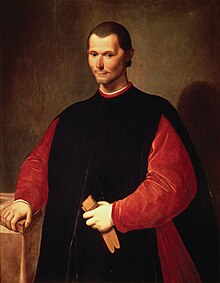
Niccolo Machiavelli (1469 – 1527) was an Italian Renaissance historian, diplomat and writer. Two of his books continue to profoundly influence modern politics: The Prince and The Discourses on the First Ten Books of Titus Livy.

The Prince has often been damned as a dictator’s guide on how to gain and hold power. Adolf Hitler, Benito Mussolini and John Gotti have effusively praised its teachings.

But The Discourses outlines how citizens in a republic can maintain their liberty.

Machiavelli’s writings on republicanism greatly influenced the political thinking of America’s own Founding Fathers. For example: Benjamin Franklin, James Madison, and Thomas Jefferson feared that Alexander Hamilton was creating an American aristocracy through the Federalist Party. And they moved vigorously to oppose him.

Portrait of Niccolò Machiavelli by Santi di Tito.jpg

Niccolo Machiavelli

In Chapter 26 of The Discourses, Machiavelli advises:

I hold it to be a proof of great prudence for men to abstain from threats and insulting words towards any one, for neither the one nor the other in any way diminishes the strength of the enemy—but the one makes him more cautious, and the other increases his hatred of you, and makes him more persevering in his efforts to injure you.

If Donald Trump has read Machiavelli, he’s clearly forgotten the Florentine statesman’s advice. Or he decided long ago that it simply didn’t apply to him.

On November 18, 2018, Trump hurled a scatological insult at Rep. Adam Schiff (D-CA), one of his frequent critics.

Trump’s was furious that Schiff had said on ABC’s “This Week” that the President’s appointment of Acting Attorney General Matt Whitaker was “unconstitutional” because he wasn’t confirmed by the Senate.

So, true to form, Trump responded with a tweet: “So funny to see little Adam Schitt (D-CA) talking about the fact that Acting Attorney General Matt Whitaker was not approved by the Senate, but not mentioning the fact that Bob Mueller (who is highly conflicted) was not approved by the Senate!”

Special counsel Robert Mueller was appointed by Deputy Attorney General Rod Rosenstein in May, 2017, after Trump suddenly fired FBI Director James Comey. Mueller didn’t require Senate confirmation for the position.

Schiff was quick to respond on Twitter: “Wow, Mr. President, that’s a good one. Was that like your answers to Mr. Mueller’s questions, or did you write this one yourself?”

What made Trump’s insult not only infantile but self-destructive was that, on November 6, the Democrats had retaken the House of Representatives. 

For Trump, this spelled real danger. Even before taking office in 2017, he had been haunted by charges of conspiring with Russian Intelligence agents to subvert the 2016 Presidential election.

And in six weeks, Schiff would become Chairman of the House Intelligence Committee when Democrats returned in January. This would arm him with investigative powers even greater than those possessed by Mueller.

Adam Schiff official portrait.jpg

Adam Schiff

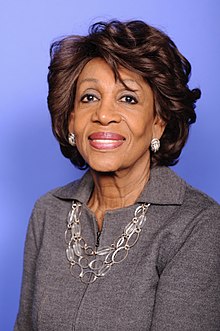
Trump similarly relishes tossing insults at another longtime critic—Rep. Maxime Waters (D-CA). On June 25, 2018, he tweeted: “Congresswoman Maxine Waters, an extraordinarily low IQ person, has become, together with Nancy Pelosi, the Face of the Democrat Party.” 

This also proved a mistake. After voters returned Democrats to running the House, Waters was slated to become Chairwoman of the House Financial Services Committee.

For Trump, this had to be a nightmare come true. Throughout the 2016 Presidential race, Trump had refused to release his tax returns—which every Presidential candidate has done since Ronald Reagan in 1980.

Trump’s longstanding ties to Russian oligarchs and subservience to Vladimir Putin have fueled speculation that his returns could reveal some truly unscrupulous financial dealings.

Waters would now have the power to subpoena Trump’s tax returns and delve into the long-standing mystery of what he’s hiding.

Congresswoman Waters official photo.jpg

Maxine Waters

As both a Presidential candidate and President, Trump has repeatedly attacked hundreds of real and imagined enemies in politics, journalism, TV and films.

From June 15, 2015, when he launched his Presidential campaign, until October 24, 2016, Trump fired almost 4,000 angry, insulting tweets at 281 people and institutions that had somehow offended him.  The New York Times needed two full pages of its print edition to showcase them.

As President, he has bullied and insulted even White House officials and his own handpicked Cabinet officers:

  • Trump waged a Twitter-laced feud against Jeff Sessions, his Attorney General. Sessions’ “crime”? Recusing himself from investigations into well-established ties between Russian Intelligence agents and members of Trump’s Presidential campaign. Trump fired him on November 7, 2018, the day after Democrats retook the House of Representatives in the mid-term elections.
  • Trump humiliated his Chief of Staff, Reince Priebus—at one point ordering him to kill a fly that was buzzing about. On July 28, 2017, six months after taking the job, Priebus resigned.
  • Trump similarly tongue-lashed Priebus’ replacement, former Marine Corps General John Kelly. Trump was angered by Kelly’s efforts to limit the number of advisers who had unrestricted access to him. Kelly told colleagues he had never been spoken to like that during 35 years of military service—and wouldn’t tolerate it again.

With Adam Schiff and Maxine Waters now heading powerful House investigative committees, Trump will undoubtedly come to regret the fury his ill-advised insults have raised up against him.

Which leads to a final warning by Machiavelli: Unwise princes cannot be wisely advised.