bureaucracybusters

Posts Tagged ‘GUANTANAMO’

DOES TORTURE WORK?: PART TWO (END)

In Bureaucracy, History, Law, Law Enforcement, Military, Politics, Social commentary on June 26, 2024 at 12:11 am

Donald Trump made a return to waterboarding terrorism suspects a prime issue in his campaign for the 2016 Republican Presidential nomination.  

And a March 30, 2016 Reuters/lpsos poll showed that nearly two-thirds of Americans believed that the use of torture could be justified to force suspected terrorists to talk.    

A growing fear by Americans of Islamic terrorism had been ignited by a series of deadly Islamic terrorist attacks in Europe and the United States. 

Frightening a prisoner in Iraq

In fact, however, torture, generally, and waterboarding in particular, have proven worthless at obtaining reliable information.  

Victims will say anything they think their captors want to hear to stop the agony.   

Yoshia Chee, a Special Forces veteran of Vietnam, recalled his use of torture against suspected Vietcong:

“One of the favorite things was popping one of their eyeballs out with a spoon….

“If I had one of my eyeballs hanging out, I’d say I killed Kennedy. I’d agree to anything in the whole world.  

“We would do that, and they still wouldn’t talk….You rarely got anything out of them. Just more hatred. More reason to fight back.” 

Click here: Strange Ground: An Oral History Of Americans In Vietnam, 1945-1975: Harry Maurer: 9780306808395: Amazon.com: Books 

During the George W. Bush Presidency, the CIA relied on harsh physical punishments—beatings, humiliations and waterboarding—to convince suspects to talk. These were euphemistically referred to as “enhanced interrogation techniques.”  

File:Seal of the Central Intelligence Agency.svg - Wikipedia

Upon assuming the Presidency in 2009, Barack Obama ordered an immediate halt to such methods. Since then, Republicans generally and their Presidential aspirants in particular have harshly criticized Obama’s decision.  

Like Trump, they claimed that Obama had endangered American security in the name of Political Correctness. In turn, Obama argued that the use of torture produces unreliable information and inflames Muslim hatred of America.

Meanwhile, the FBI applied its traditional “kill them with kindness” approach to interrogation. And agents found this yielded far greater results.

For one thing, most Al Qaeda members relished appearing before grand juries.

Unlike organized crime members, they were talkative—and even tried to proselytize to the jury members. They were proud of what they had done—and wanted to talk.

Symbols of the Federal Bureau of Investigation - Wikipedia

“This is what the FBI does,” said Mike Rolince, an FBI expert on counter-terrorism. “Nearly 100% of the terrorists we’ve taken into custody have confessed. The CIA wasn’t trained. They don’t do interrogations.”

According to The Threat Matrix: The FBI at War in the Age of Global Terror (2011) jihadists had been taught to expect severe torture at the hands of American interrogators. 

Writes Author Garrett M. Graff:

“Often, in the FBI’s experience, their best cooperation came when detainees realized they weren’t going to get tortured, that the United States wasn’t the Great Satan. Interrogators were figuring out…that not playing into Al Qaeda’s propaganda could produce victories.”

And the FBI isn’t alone in believing that acts of simple humanity can turn even sworn enemies into allies.

No less an authority on “real-politick” than Niccolo Machiavelli reached the same conclusion more than 500 years ago.

In his small and notorious book, The Prince, he writes about the methods a ruler must use to gain power. But in his larger and lesser-known masterwork, The Discourses, he outlines the ways that liberty can be maintained in a republic.

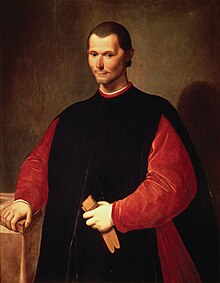
Niccolo Machiavelli

For Machiavelli, only a well-protected state can hope for peace and prosperity. Toward that end, he wrote at length about the best ways to succeed militarily. And in war, humanity can prevail at least as often as inhumanity.

Consider the following example from The Discourses:

Camillus [a Roman general] was besieging the city of the Faliscians, and had surrounded it….A teacher charged with the education of the children of some of the noblest families of that city [to ingratiate himself] with Camillus and the Romans, led these children…into the Roman camp. 

And presenting them to Camillus [the teacher] said to him: “By means of these children as hostages, you will be able to compel the city to surrender.”     

Camillus not only declined the offer but had the teacher stripped and his hands tied behind his back….[Then Camillus] had a rod put into the hands of each of the children…[and] directed them to whip [the teacher] all the way back to the city. 

Upon learning this fact, the citizens of Faliscia were so much touched by the humanity and integrity of Camillus, that they surrendered the place to him without any further defense.  

This example shows that an act of humanity and benevolence will at all times have more influence over the minds of men than violence and ferocity.

It also proves that provinces and cities which no armies…could conquer, have yielded to an act of humanity, benevolence, chastity or generosity.

This truth should be remembered whenever Right-wingers brag about their patriotism and willingness to “get tough“ with America’s enemies.

Many—like Newt Gingrich,  Rudolph Giuliani, Rick Santorum, Eduardo “Ted” Cruz and Donald Trump—strenuously avoided military service. These “chickenhawks” talk tough and are always ready to send others into battle—but keep themselves well out of harm’s way.

Such men are not merely contemptible; they are dangerous.

DOES TORTURE WORK?: PART ONE (OF TWO)

In Bureaucracy, History, Law, Law Enforcement, Military, Politics, Social commentary on June 25, 2024 at 12:10 am

As Donald Trump campaigned for the Presidency in 2016, nearly two-thirds of Americans endorsed the use of torture to force suspected terrorists to talk, according to a March 30, 2016 Reuters/lpsos poll.    

A growing fear by Americans of Islamic terrorism had been ignited by a series of deadly Islamic terrorist attacks in Europe and the United States.

  • On November 13, 2015 in Paris, France, terrorists belonging to the Islamic State of Iraq and Syria (ISIS) killed more than 100 people.  
  • On December 2, 2015, a married Islamic couple shot and killed 14 people at the Department of Public Health in San Bernardino, California.  
  • And on  March 22, 2016, a series of ISIS attacks struck Brussels, Belgium. Two explosions at the city’s main international airport and a third in a subway station killed 31 persons and injured 270 more.

Click here: Most Americans Say Torturing Suspected Terrorists Is Justifiable 

And the chief beneficiary of this growing fear among Americans proved to be Donald Trump.

Donald Trump August 19, 2015 (cropped).jpg

Donald Trump

Since declaring his candidacy for the 2016 Republican nomination for President in June, 2015, Trump made the use of torture a major campaign issue. He promised to end the waterboarding ban that President Barack Obama declared at the start of his term in 2009. 

During a campaign event at Arizona’s Sun City retirement community, Trump said he would reinstate waterboarding and techniques that are “so much worse” and “much stronger.”  

“Don’t tell me it doesn’t work—torture works,” Trump said. “Okay, folks? Torture—you know, half these guys [say]: ‘torture doesn’t work.’ Believe me, it works. Okay?” 

How he knew it worked remained unclear, since he had never served in the military or law enforcement.

And in a February 15. 2016 Op-Ed piece for USA Today, Trump declared: “I will do whatever it takes.

“I have made it clear in my campaign that I would support and endorse the use of enhanced interrogation techniques if the use of these methods would enhance the protection and safety of the nation,” he wrote.

“Though the effectiveness of many of these methods may be in dispute, nothing should be taken off the table when American lives are at stake.

“The enemy is cutting off the heads of Christians and drowning them in cages, and yet we are too politically correct to respond in kind.”

Water Boarding Is How.. Patch With Hook & Loop Morale Funny Emblem White | eBay

The Reuters/lpsos online poll of 1,976 Americans occurred between March 22 and 28, 2016.  Among its findings:

  • About 25% said that the use of torture can “often” be justified against suspected terrorists. 
  • Another 38% said such tactics were “sometimes” appropriate in order to obtain information. 
  • Only 15% opposed torture under all circumstances.

Past surveys found Americans less comfortable with the controversial tactic. 

In 2014, a poll by Amnesty International revealed that about 45% of Americans supported the use of torture against terrorism suspects.

Unfortunately for Americans, the truth about torture generally—and waterboarding in particular—-is that it doesn’t work.

Victims will say anything they think their captors want to hear to stop the agony. And, in fact, subsequent investigations have shown that just that happened with Al Qaeda suspects.
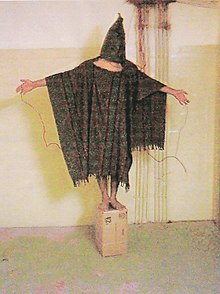
Humiliating a captive at Abu Ghraib Prison

Shortly after the invasion of Afghanistan in October, 2001, hundreds of Al Qaeda members started falling into American hands. And so did a great many others who were simply accused by rival warlords of being Al Qaeda members.

The only way to learn if Al Qaeda was planning any more 9/11-style attacks on the United States was to interrogate those suspected captives. The question was: How?

The CIA and the Pentagon quickly took the “gloves off” approach. Their methods included such “stress techniques” as playing loud music and flashing strobe lights to keep detainees awake.

Some were “softened up” prior to interrogation by “third-degree” beatings. And still others were waterboarded.

In 2003, an FBI agent observing a CIA “interrogation” at Guantanamo, Cuba, was stunned to see a detainee sitting on the floor, wrapped in an Israeli flag. Nearby, music blared and strobe slights flashed.

In Osama bin Laden’s 1998 declaration of war against America, he had accused the country of being controlled by the Jews, saying the United States “served the Jews’ petty state.”

Draping an Islamic captive with an Israeli flag could only confirm such propaganda.

The FBI, on the other hand, followed its traditional “kill them with kindness” approach to interrogation.

Pat D’Amuro, a veteran FBI agent who had led the Bureau’s investigation into the 1998 bombing of the American embassy in Nairobi, Kenya, warned FBI Director Robert Mueller III:

The FBI should not be a party in the use of “enhanced interrogation techniques.” They wouldn’t work and wouldn’t produce the dramatic results the CIA hoped for.

But there was a bigger danger, D’Amuro warned: “We’ll be handing every future defense attorney Giglio material.”

The Supreme Court had ruled in Giglio vs. the United States (1972) that the personal credibility of a government official was admissible in court.

Any FBI agent who made use of extra-legal interrogation techniques could potentially have that issue raised every time he testified in court on any other matter.

It was a defense attorney’s dream-come-true recipe for impeaching an agent’s credibility—and thus ruin his investigative career.
FEAR–AND ITS POLITICAL LEGACY

In Bureaucracy, History, Politics, Social commentary on March 10, 2017 at 10:38 am

Dick Cheney left office as co-President of the United States on January 20, 2009. During the last four years, he has had time to write his memoirs and reflect on the legacies of the George W. Bush Presidency.

His book, In My Time, was published in 2012. And, in March, 2013, Cheney appeared in the Showtime-produced documentary, “The World According to Dick Cheney.”

Dick Cheney

Throughout the program, Cheney showed no interest in introspection.

“I don’t go around thinking, ‘Gee, I wish we’d done this, or I wish I’d done that,’” said Cheney. “The world is as you find it, and you’ve got to deal with that….You don’t get do-overs.

“I did what I did, and it’s all part of the public record and I feel very good about it.  If I had it to do over again, I’d do it in a minute.”

When the interviewer, R.J. Cutler, raised how the administration altered privacy rights, tortured detainees and pushed for an unnecessary war in Iraq, Cheney replied:

“Tell me what terrorist acts you would let go forward because you didn’t want to be a mean and nasty fella?”

Perhaps the most telling moment came when Cheney outlined his overall views on Realpolitick:

“Are you going to trade the lives of a number of people because you want to preserve your honor?” asked Cheney. “This was a wartime situation and it was more important to be successful than it was to be loved.”

Perhaps Cheney was thinking of Niccolo Machiavelli’s famous quote about love versus fear in The Prince, his primer on how to attain political power:

From this arises the question whether it is better to be loved than feared, or feared more than loved.  The reply is, that one ought to be both feared and loved, but as it is difficult for the two to go together, it is much safer to be feared than loved. 

For it may be said of men in general that they are ungrateful, voluble, dissemblers, anxious to avoid danger and covetous of gain; as long as you benefit them, they are entirely yours: they offer you their blood, their goods, their life and their children, when the necessity is remote, but when it approaches, they revolt….

Portrait of Niccolò Machiavelli by Santi di Tito.jpg

Niccolo Machiavelli

And men have less scruple in offending one who makes himself loved than one who makes himself feared; for love is held by a chain of obligations which, men being selfish, is broken whenever it serves their purpose; but fear is maintained by a dread of punishment which never fails.

Cheney appears to belileve that it’s better to be feared than loved.

In that, he has plenty of company among his fellow politicians–in the United States and elsewhere. But there is more to Machiavelli’s teaching, and this is usually overlooked–as it most certainly was by Cheney:

Still, a prince should make himself feared in such a way that if he does not gain love, he at any rate avoids hatred: for fear and the absence of hatred may well go together…. 

If Cheney considers himself a student of Machiavelli, then he utterly ignored this last offering of cautionary advice.

By authorizing the use of torture, the administration made itself–in the eyes of its Western European allies as well as its Islamic enemies–an epicenter of evil. “Guantanamo”–the Marine base in Cuba that had been largely forgotten over the decades–became a synonym for Auschwitz.

And after photographs emerged of the tortures and humiliations of detainees at Abu Garib Prison in Iraq, the United States sank even lower in the world’s estimation.

Among the human rights violations committed upon prisoners held by U.S. Army military police and assorted CIA agents:

  • physical abuse
  • psychological abuse
  • torture
  • rape
  • sodomy
  • homicide.

Of the ultimate legacy of George W. Bush and Dick Cheney, historian Nigel Hamilton wrote in his 2010 book, American Caesars: Lives of the Presidents from Franklin D. Roosevelt to George W. Bush:

“…arguably the worst of all the American Caesars, who willfully and recklessly destroyed so much of the moral basis of American leadership in the modern world.”

Soviet dictator Joseph Stalin believed, above all, in the brutal use of force–whether applied by prison torturers or legions of soldiers unrestrained by the Geneva Convention.

Once, when told that a certain policy he wanted to pursue would be heavily criticized by the Pope, he famously asked: “How many divisions does the Pope have?”

Stalin died in 1953. Had he lived on into the 1980s, he would have found out.

It was then that Pope John Paul II showed the power of an aroused spirituality.

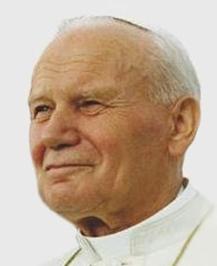
John Paul II on 12 August 1993 in Denver, Colorado

John Paul II

When the Soviet Union seemed about to invade his native Poland as it had Hungary in 1956 and Czechoslovakia in 1968, the Pope reportedly sent the Kremlin a message: He would fly to Warsaw and place himself directly in the line of fire.

The Soviets never dared launch their planned invasion.

It is a lesson utterly lost on the likes of men like Dick Cheney.

DOES TORTURE WORK?: PART TWO (END)

In Bureaucracy, History, Law, Law Enforcement, Military, Politics, Social commentary on April 5, 2016 at 12:11 am

Donald Trump has made a return to waterboarding terrorism suspects a prime issue in his campaign for the 2016 Republican Presidential nomination.  

And a recent Reuters/lpsos poll shows that nearly two-thirds of Americans believe that the use of torture can be justified to force suspected terrorists to talk.  

A growing fear by Americans of Islamic terrorism has been ignited by a series of deadly Islamic terrorist attacks in Europe and the United States. 

Humiliating a prisoner in Iraq

In fact, however, torture, generally, and waterboarding in particular, have proven worthless at obtaining reliable information.  

Victims will say anything they think their captors want to hear to stop the agony.   

Yoshia Chee, a Special Forces veteran of Vietnam, recalled his use of torture against suspected Vietcong:

“One of the favorite things was popping one of their eyeballs out with a spoon….

“If I had one of my eyeballs hanging out, I’d say I killed Kennedy.  I’d agree to anything in the whole world.  

“We would do that, and they still wouldn’t talk….You rarely got anything out of them. Just more hatred. More reason to fight back.” 

Click here: Strange Ground: An Oral History Of Americans In Vietnam, 1945-1975: Harry Maurer: 9780306808395: Amazon.com: Books 

During the George W. Bush Presidency, the CIA relied on harsh physical punishments–beatings, humiliations and waterboarding–to convince suspects to talk. These were euphemistically referred to as “enhanced interrogation techniques.”  

Upon assuming the Presidency in 2009, Barack Obama ordered an immediate halt to such methods. Since then, Republicans generally and their Presidential aspirants in particular have harshly criticized Obama’s decision.  

Like Trump, they claim that Obama has endangered American security in the name of Political Correctness. In turn, Obama has argued that the use of torture produces unreliable information and inflames Muslim hatred of America.

Meanwhile, the FBI has applied its traditional “kill them with kindness” approach to interrogation. And agents found this yielded far greater results.

For one thing, most Al Qaeda members relished appearing before grand juries.

Unlike organized crime members, they were talkative–and even tried to proselytize to the jury members. They were proud of what they had done–and wanted to talk.

“This is what the FBI does,” said Mike Rolince, an FBI expert  on counter-terrorism. “Nearly 100% of the terrorists we’ve taken into custody have confessed. The CIA wasn’t trained. They don’t do interrogations.”

According to The Threat Matrix: The FBI at War in the Age of Global Terror (2011) jihadists had been taught to expect severe torture at tha hands of American interrogators. 

Writes Author  Garrett M. Graff:

“Often, in the FBI’s experience, their best cooperation came when detainees realized they weren’t going to get tortured, that the United States wasn’t the Great Satan. Interrogators were figuring out…that not playing into Al Qaeda’s propaganda could produce victories.”

And the FBI isn’t alone in believing that acts of simple humanity can turn even sworn enemies into allies.

No less an authority on “real-politick” than Niccolo Machiavelli reached the same conclusion more than 500 years ago.

In his small and notorious book, The Prince, he writes about the methods a ruler must use to gain power. But in his larger and lesser-known work, The Discourses, he outlines the ways that liberty can be maintained in a republic.

Niccolo Machiavelli

For Machiavelli, only a well-protected state can hope for peace and prosperity.  Toward that end, he wrote at length about the best ways to succeed militarily.  And in war, humanity can prevail at least as often as severity.

Consider the following example from The Discourses:

Camillus [a Roman general] was besieging the city of the Faliscians, and had surrounded it….A teacher charged with the education of the children of some of the noblest families of that city [to ingratiate himself] with Camillus and the Romans, led these children…into the Roman camp. 

And presenting them to Camillus [the teacher] said to him, “By means of these children as hostages, you will be able to compel the city to surrender.”         

Camillus not only declined the offer but had the teacher stripped and his hands tied behind his back….[Then Camillus] had a rod put into the hands of each of the children…[and] directed them to whip [the teacher] all the way back to the city. 

Upon learning this fact, the citizens of Faliscia were so much touched by the humanity and integrity of Camillus, that they surrendered the place to him without any further defense.  

This example shows that an act of humanity and benevolence will at all times have more influence over the minds of men than violence and ferocity.

It also proves that provinces and cities which no armies…could conquer, have yielded to an act of humanity, benevolence, chastity or generosity.

This truth should be kept firmly in mind whenever Right-wingers start bragging about their own patriotism and willingness to get “down and dirty” with America’s enemies.

Many–like Newt Gingrich,  Rudolph Giuliani, Rick Santorum, Eduardo “Ted” Cruz and Donald Trump–did their heroic best to avoid military service. These “chickenhawks” talk tough and are always ready to send others into battle–but keep themselves well out of harm’s way.

Such men are not merely contemptible; they are dangerous.

DOES TORTURE WORK?: PART ONE (OF TWO)

In Bureaucracy, History, Law, Law Enforcement, Military, Politics, Social commentary on April 4, 2016 at 12:09 am

Nearly two-thirds of Americans believe that the use of torture can be justified to force suspected terrorists to talk, according to a March 30 Reuters/lpsos poll. 

A growing fear by Americans of Islamic terrorism has been ignited by a series of deadly Islamic terrorist attacks in Europe and the United States.

  • On November 13, 2015 in Paris, France, terrorists belonging to the Islamic State of Iraq and Syria (ISIS) killed more than 100 people.  
  • On December 2, a married Islamic couple shot and killed 14 people at the Department of Public Health in San Bernardino, California.  
  • And on  March 22, a series of ISIS attacks struck Brussels, Belgium. Two explosions at the city’s main international airport and a third in a subway station killed 31 persons and injured 270 more.

Click here: Most Americans Say Torturing Suspected Terrorists Is Justifiable 

And the chief beneficiary of this growing fear among Americans is likely to be Donald Trump.

Donald Trump August 19, 2015 (cropped).jpg

Donald Trump

Since declaring his candidacy for the 2016 Republican nomination for President in June, 2015, Trump has made the use of torture a major campaign issue. He has promised to end the waterboarding ban that President Barack Obama declared at the start of his term in 2009. 

During a campaign event at Arizona’s Sun City retirement community, Trump said he would reinstate waterboarding and techniques that are “so much worse” and “much stronger.”  

“Don’t tell me it doesn’t work–torture works,” Trump said. “Okay, folks? Torture–you know, half these guys [say]: ‘torture doesn’t work.’ Believe me, it works. Okay?”  

And in a February 15 Op-Ed piece for USA Today, Trump declared: “I will do whatever it takes.

“I have made it clear in my campaign that I would support and endorse the use of enhanced interrogation techniques if the use of these methods would enhance the protection and safety of the nation,” he wrote.

“Though the effectiveness of many of these methods may be in dispute, nothing should be taken off the table when American lives are at stake.

“The enemy is cutting off the heads of Christians and drowning them in cages, and yet we are too politically correct to respond in kind.”

The Reuters/lpsos online poll of 1,976 Americans occurred between March 22 and 28.  Among its findings:

  • About 25% said that the use of torture can “often” be justified against suspected terrorists. 
  • Another 38% said such tactics were “sometimes” appropriate in order to obtain information. 
  • Only 15% opposed torture under all circumstances.

Past surveys found Americans less comfortable with the controversial tactic. 

In 2014, a poll by Amnesty International revealed that about 45% of Americans supported the use of torture against terrorism suspects.

Unfortunately for Americans, the truth about torture generally–and waterboarding in particular–is that it doesn’t work.

Victims will say anything they think their captors want to hear to stop the agony.  And, in fact, subsequent investigations have shown that just that happened with Al Qaeda suspects.

Waterboarding a captive

Shortly after the invasion of Afghanistan in October, 2001, hundreds of Al Qaeda members started falling into American hands.  And so did a great many others who were simply accused by rival warlords of being Al Qaeda members.

The only way to learn if Al Qaeda was planning any more 9/11-style attacks on the United States was to interrogate those suspected captives.  The question was: How?

The CIA and the Pentagon quickly took the “gloves off” approach.  Their methods included such “stress techniques” as playing loud music and flashing strobe lights to keep detainees awake.

Some were “softened up” prior to interrogation by “third-degree” beatings.  And still others were waterboarded.

In 2003, an FBI agent observing a CIA “interrogation” at Guantanamo was stunned to see a detainee sitting on the floor, wrapped in an Israeli flag.  Nearby, music blared and strobe slights flashed.

In Osama bin Laden’s 1998 declaration of war against America, he had accused the country of being controlled by the Jews, saying the United States “served the Jews’ petty state.”

Draping an Islamic captive with an Israeli flag could only confirm such propaganda.

The FBI, on the other hand, followed its traditional “kill them with kindness” approach to interrogation.

Pat D’Amuro, a veteran FBI agent who had led the Bureau’s investigation into the 1998 bombing of the American embasy in Nairobi, Kenya, warned FBI Director Robert Mueller III:

The FBI should not be a party in the use of “enhanced intrrogation techniques.” They wouldn’t work and wouldn’t produce the dramatic results the CIA hoped for.

But there was a bigger danger, D’Amuro warned: “We’ll be handing every future defense attorney Giglio material.”

The Supreme Court had ruled in Giglio vs. the United States (1972) that the personal credibility of a government official was admissible in court.

Any FBI agent who made use of extra-legal interrogation techniques could potentially have that issue raised every time he testified in court on any other matter.

It was a defense attorney’s dream-come-true recipe for impeaching an agent’s credibility–and thus ruin his investigative career.

CHENEY VS. MACHIAVELLI

In Bureaucracy, History, Military, Politics on October 9, 2014 at 1:21 am

Dick Cheney left office as co-President of the United States on January 20, 2009.  Since then, he has had time to write his memoirs and reflect on the legacies of the George W. Bush Presidency.

His book, In My Time, was published in 2012.  And, in March, 2013, Cheney appeared in the Showtime-produced documentary, “The World According to Dick Cheney.”

Dick Cheney

Throughout the program, Cheney showed no interest in introspection.

“I don’t go around thinking, ‘Gee, I wish we’d done this, or I wish I’d done that,’” said Cheney.  “The world is as you find it, and you’ve got to deal with that….You don’t get do-overs.

“I did what I did, and it’s all part of the public record and I feel very good about it.  If I had it to do over again, I’d do it in a minute.”

When the interviewer, R.J. Cutler, raised how the Bush administration had altered privacy rights, tortured detainees and pushed for an unnecessary war in Iraq, Cheney replied:

“Tell me what terrorist acts you would let go forward because you didn’t want to be a mean and nasty fella?”

Perhaps the most telling moment came when Cheney outlined his overall views on Realpolitick:

“Are you going to trade the lives of a number of people because you want to preserve your honor?” asked Cheney.  “This was a wartime situation and it was more important to be successful than it was to be loved.”

Perhaps Cheney was thinking of the famous quote about love versus fear in The Prince, Niccolo Machiavelli’s primer on how to attain political power:

From this arises the question whether it is better to be loved than feared, or feared more than loved.  The reply is, that one ought to be both feared and loved.

But as it is difficult for the two to go together, it is much safer to be feared than loved. 

For it may be said of men in general that they are ungrateful, voluble, dissemblers, anxious to avoid danger and covetous of gain.

As long as you benefit them, they are entirely yours: they offer you their blood, their goods, their life and their children, when the necessity is remote, but when it approaches, they revolt….

Niccolo Machiavelli

And men have less scruple in offending one who makes himself loved than one who makes himself feared.  

For love is held by a chain of obligations which, men being selfish, is broken whenever it serves their purpose; but fear is maintained by a dread of punishment which never fails.

Cheney appears to belileve that it’s better to be feared than loved.

In that, he has plenty of company among his fellow politicians–in the United States and elsewhere.  But there is more to Machiavelli’s teaching, and this is usually overlooked–as it most certainly was by Cheney:

Still, a prince should make himself feared in such a way that if he does not gain love, he at any rate avoids hatred.

For fear and the absence of hatred may well go together, and will always be attained by one who abstains from interfering with the property of his citizens and subjects or with their women. 

If Cheney considers himself a student of Machiavelli, then he utterly ignored this last offering of cautionary advice.

By authorizing the use of torture, the Bush administration made itself–in the eyes of its Western European allies as well as its Islamic enemies–an epicenter of evil.  “Guantanamo”–the Marine base in Cuba that had been largely forgotten over the decades–became a synonym for torture.

And after photographs emerged of the tortures and humiliataions of detainees at Abu Garib Prison in Iraq, the United States sank even lower in the world’s estimation.

Among the human rights violations committed upon prisoners held by U.S. Army military police and assorted CIA agents:

  • physical abuse
  • psychological abuse
  • torture
  • rape
  • sodomy
  • homicide.

In his 2010 book, American Caesars: Lives of the Presidents from Franklin D. Roosevelt to George W. Bush, historian Nigel Hamilton wrote:

“[George Bush and Dick Cheney were] arguably the worst of all the American Caesars, who willfully and recklessly destroyed so much of the moral basis of American leadership in the modern world.”

Joseph Stalin once famously asked: “How many divisions does the Pope have?”  Stalin died in 1953.  Had he lived on into the 1980s, he would have found out.

It was then that Pope John Paul II showed the power of an aroused spirituality.

John Paul II

In 1981, the Soviet Union seemed about to invade his native Poland–as it had Hungary in 1956 and Czechoslavakia in 1968.  That was when the Pope reportedly sent the Kremlin a message:

If the Soviets invaded, he would fly to Warsaw and place himself directly in the line of fire.

The Soviets never dared launch their planned invasion.

It is a lesson utterly lost on the likes of men like Dick Cheney.

LOVE VS. FEAR

In History, Politics on April 11, 2013 at 12:02 am

Dick Cheney left office as co-President of the United States on January 20, 2009.  During the last four years, he has had time to write his memoirs and reflect on the legacies of the George W. Bush Presidency.

His book, In My Time, was published in 2012.  And, in March, Cheney appeared in the Showtime-produced documentary, “The World According to Dick Cheney.”

Dick Cheney

Throughout the program, Cheney showed no interest in introspection.

“I don’t go around thinking, ‘Gee, I wish we’d done this, or I wish I’d done that,'” said Cheney.  “The world is as you find it, and you’ve got to deal with that….You don’t get do-overs.

“I did what I did, and it’s all part of the public record and I feel very good about it.  If I had it to do over again, I’d do it in a minute.”

When the interviewer, R.J. Cutler, raised how the administration altered privacy rights, tortured detainees and pushed for an unnecessary war in Iraq, Cheney replied:

“Tell me what terrorist acts you would let go forward because you didn’t want to be a mean and nasty fella?”

Perhaps the most telling moment came when Cheney outlined his overall views on Realpolitick:

“Are you going to trade the lives of a number of people because you want to preserve your honor?” asked Cheney.  “This was a wartime situation and it was more important to be successful than it was to be loved.”

Perhaps Cheney was thinking of Niccolo Machiavelli’s famous quote about love versus fear in The Prince, his primer on how to attain political power:

From this arises the question whether it is better to be loved than feared, or feared more than loved.  The reply is, that one ought to be both feared and loved, but as it is difficult for the two to go together, it is much safer to be feared than loved. 

For it may be said of men in general that they are ungrateful, voluble, dissemblers, anxious to avoid danger and covetous of gain; as long as you benefit them, they are entirely yours: they offer you their blood, their goods, their life and their children, when the necessity is remote, but when it approaches, they revolt….

Niccolo Machiavelli

And men have less scruple in offending one who makes himself loved than one who makes himself feared; for love is held by a chain of obligations which, men being selfish, is broken whenever it serves their purpose; but fear is maintained by a dread of punishment which never fails.

Cheney appears to belileve that it’s better to be feared than loved.

In that, he has plenty of company among his fellow politicians–in the United States and elsewhere.  But there is more to Machiavelli’s teaching, and this is usually overlooked–as it most certainly was by Cheney:

Still, a prince should make himself feared in such a way that if he does not gain love, he at any rate avoids hatred: for fear and the absence of hatred may well go together, and will always be attained by one who abstains from interfering with the property of his citizens and subjects or with their women. 

If Cheney considers himself a student of Machiavelli, then he utterly ignored this last offering of cautionary advice.

By authorizing the use of torture, the administration made itself–in the eyes of its Western European allies as well as its Islamic enemies–an epicenter of evil.  “Guantanamo”–the Marine base in Cuba that had been largely forgotten over the decades–became a synonym for Auschwitz.

And after photographs emerged of the tortures and humiliataions of detainees at Abu Garib Prison in Iraq, the United States sank even lower in the world’s estimation.

Among the human rights violations committed upon prisoners held by U.S. Army military police and assorted CIA agents:

  • physical abuse
  • psychological abuse
  • torture
  • rape
  • sodomy
  • homicide.

Of the ultimate legacy of George W. Bush and Dick Cheney, historian Nigel Hamilton wrote in his 2010 book, American Caesars: Lives of the Presidents from Franklin D. Roosevelt to George W. Bush:

“…arguably the worst of all the American Caesars, who willfully and recklessly destroyed so much of the moral basis of American leadership in the modern world.”

Joseph Stalin once famously asked: “How many divisions does the Pope have?”  Stalin died in 1953.  Had he lived on into the 1980s, he would have found out.

It was then that Pope John Paul II showed the power of an aroused spirituality.

John Paul II

When the Soviet Union seemed about to invade his native Poland as it had Hungary and Czechoslavakia, the Pope reportedly sent the Kremlin a message: He would fly to Warsaw and place himself directly in the line of fire.

The Soviets never dared launch their planned invasion.

It is a lesson utterly lost on the likes of men like Dick Cheney.