bureaucracybusters

Posts Tagged ‘GLADIATORS’

AN ORIGINAL APPROACH TO GANGBUSTING

In Bureaucracy, Business, History, Law, Law Enforcement, Politics, Social commentary on June 30, 2025 at 12:27 am

There is a phrase that’s well-known south of the border: “Pan, o palo.” Or, in English: “Bread or the stick.”           

And this, in turn, comes down to: Do as I say and you’ll get this nice reward. Disobey me and you’ll get your head bashed in.

According to the FBI’s website, “some 33,000 violent street gangs, motorcycle gangs, and prison gangs are criminally active in the U.S. today.

“Many are sophisticated and well organized; all use violence to control neighborhoods and boost their illegal money-making activities, which include robbery, drug and gun trafficking, prostitution and human trafficking, and fraud. Many gang members continue to commit crimes even after being sent to jail.” 

Gangs are responsible for an average of 48% of violent crime in most jurisdictions and up to 90% in others. 

Federal Bureau of Investigation Logo and symbol, meaning, history, PNG, brand

FBI seal

These gangs aren’t going to disappear, no matter how many of their members die or wind up in prison.

For decades, the rhetoric of the Cold War has carried over into the debate over policing. “Hawks” on the Right have demanded a “hard” approach to law enforcement, emphasizing punishment.  “Doves” on the Left have pursued a “soft” line, stressing social programs and rehabilitation.

But it isn’t enough to be “hard” or “soft” in pursuing the goal of a safe, law-abiding society. It’s necessary to be “smart” above all.

If you can’t eradicate evil, then you should try to direct at least some of its elements onto a safer path. 

So it’s clearly time for an innovative approach to gangbusting.

Instead of merely using “the stick,” state and federal governments should use a combination of rewards and punishments to reduce gang membership and protect innocent citizens who are often the victims of gangland violence.

Each state should invite its resident gang members to take part in a series of competition for the title of “State Gang Champion.” These would be modeled on competitions now existing within the National Football League—a series of playoffs to determine which two gangs will duke it out in the “Super Rumble.” 

These competitions would be completely voluntary, thus eliminating any charges of State coercion. They would be modeled on the country’s current mania for “Ultimate Warrior” contests for kickboxers and bare-knuckled fighters.

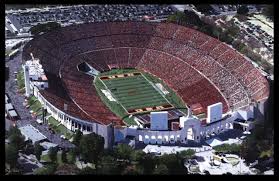
Contestants—from at least 10 opposing gangs—would meet in a football-sized arena.

No firearms would be allowed, thus ensuring safety for spectators. Contestants could otherwise arm themselves with whatever weapons they desired—such as baseball bats, swords, axes, spears or chains.

Everyone who agreed to participate would automatically be guaranteed full immunity for whatever carnage they inflicted.

The object of these contests would be to officially determine which State gang was the “baddest” for the year. Tickets could be purchased by fans looking for an afternoon’s festival of gore.

Television networks could—-and no doubt would—vie for rights to film the events, just as they now do for streaming wrestling or boxing matches.

So why would hardcore gangs even consider participating in such a series of contests?

Photographing LA's Gang Wars | Gang culture, 18th street gang, Gang tattoos

L.A. gang

For a multitude of reasons. 

First, they would be able to eliminate members of rival gangs without risk of prosecution and imprisonment. 

Second, they would be able to gauge—through the heat of combat—the toughness of their enemies and their own members.

Third, they would gain at least temporary stardom—just as successful gladiators did under the Roman Empire and winning football quarterbacks do today.

Fourth, the winning gang would gain official status as “The Baddest” gang in the State for that year.

On this last point: Napoleon Bonaparte created the Order of the Legion of Honor, distributed 15,000 crosses to his soldiers and called his troops the “Grand Army.” When someone criticized him for giving “toys” to his war-hardened veterans, Napoleon replied: “Men are ruled by toys.”

And for the State there would be gains as well.

First, these contests would literally eliminate a great many gang members who could not be removed any other way.

Second, police and prosecutors could concentrate their limited resources on gangs that refused to participate and/or were deemed to pose the greatest threat.

Third, millions of dollars in State revenues would be generated through ticket sales and the selling of streaming rights.

Fourth, for Republican politicians, there would be an added bonus: Their constituents would find this an especially attractive way to fight crime because it would adhere to the two concepts most precious to Right-wingers: Killing people and making money.

Admittedly, many law-abiding citizens would be repulsed by the carnage that would result from implementing this proposal. But these are generally the people who disdain boxing or wrestling contests anyway.

Given our increasingly jaded and violence-prone society, however, even most of these people would eventually tolerate these contests as an effective way to simultaneously raise badly-needed tax revenues and reduce the size of criminal gangs.

In short: With sufficient creativity and ruthlessness, it should be possible to reclaim control of our streets from the evils of gang violence.

AN ORIGINAL APPROACH TO GANGBUSTING

In Bureaucracy, Business, History, Law, Law Enforcement, Politics, Social commentary on March 13, 2024 at 12:10 am

There is a phrase that’s well-known south of the border: “Pan, o palo.” Or, in English: “Bread or  stick.”     

And this, in turn, comes down to: Do as I say and you’ll get this nice reward. Disobey me and you’ll get your head bashed in.

According to the FBI’s website, “some 33,000 violent street gangs, motorcycle gangs, and prison gangs are criminally active in the U.S. today.

“Many are sophisticated and well organized; all use violence to control neighborhoods and boost their illegal money-making activities, which include robbery, drug and gun trafficking, prostitution and human trafficking, and fraud. Many gang members continue to commit crimes even after being sent to jail.” 

Gangs are responsible for an average of 48% of violent crime in most jurisdictions and up to 90% in others. 

Federal Bureau of Investigation Logo and symbol, meaning, history, PNG, brand

FBI seal

These gangs aren’t going to disappear, no matter how many of their members die or wind up in prison.

For decades, the rhetoric of the Cold War has carried over into the debate over policing. “Hawks” on the Right have demanded a “hard” approach to law enforcement, emphasizing punishment.  “Doves” on the Left have pursued a “soft” line, stressing social programs and rehabilitation.

But it isn’t enough to be “hard” or “soft” in pursuing the goal of a safe, law-abiding society. It’s necessary to be “smart” above all.

If you can’t eradicate evil, then you should try to direct at least some of its elements into a safer path. 

So it’s clearly time for an innovative approach to gangbusting.

Instead of merely using “the stick,” state and federal governments should use a combination of rewards and punishments to reduce gang membership and protect innocent citizens who are often the victims of gangland violence.

Each state should invite its resident gang members to take part in a series of competition for the title of “State Gang Champion.” These would be modeled on competitions now existing within the National Football League—a series of playoffs to determine which two gangs will duke it out in the “Super Rumble.” 

These competitions would be completely voluntary, thus eliminating any charges of State coercion. They would be modeled on the country’s current mania for “Ultimate Warrior” contests for kickboxers and bare-knuckled fighters.

Contestants—from at least 10 opposing gangs—would meet in a football-sized arena.

No firearms would be allowed, thus ensuring safety for spectators. Contestants could otherwise arm themselves with whatever weapons they desired—such as baseball bats, swords, axes, spears or chains.

Everyone who agreed to participate would automatically be guaranteed full immunity for whatever carnage they inflicted.

The object of these contests would be to officially determine which State gang was the “baddest” for the year. Tickets could be purchased by fans looking for an afternoon’s festival of gore.

Television networks could—-and no doubt would—vie for rights to film the events, just as they now do for streaming wrestling or boxing matches.

So why would hardcore gangs even consider participating in such a series of contests?

Photographing LA's Gang Wars | Gang culture, 18th street gang, Gang tattoos

L.A. gang

For a multitude of reasons. 

First, they would be able to eliminate members of rival gangs without risk of prosecution and imprisonment. 

Second, they would be able to gauge—through the heat of combat—the toughness of their enemies and their own members.

Third, they would gain at least temporary stardom—just as successful gladiators did under the Roman Empire and winning football quarterbacks do today.

Fourth, the winning gang would gain official status as “The Baddest” gang in the State for that year.

On this last point: Napoleon Bonaparte created the Order of the Legion of Honor, distributed 15,000 crosses to his soldiers and called his troops the “Grand Army.”  When someone criticized him for giving “toys” to his war-hardened veterans, Napoleon replied: “Men are ruled by toys.”

And for the State there would be gains as well.

First, these contests would literally eliminate a great many gang members who could not be removed any other way.

Second, police and prosecutors could concentrate their limited resources on gangs that refused to participate and/or were deemed to pose the greatest threat.

Third, millions of dollars in State revenues would be generated through ticket sales and the buying of streaming rights.

Fourth, for Republican politicians, there would be an added bonus: Their constituents would find this an especially attractive way to fight crime because it would adhere to the two concepts most precious to Right-wingers: Killing people and making money.

Admittedly, many law-abiding citizens would be repulsed by the carnage that would result from implementing this proposal. But these are generally the people who disdain boxing or wrestling contests anyway.

Given our increasingly jaded and violence-prone society, however, even most of these people would eventually tolerate these contests as an effective way to simultaneously raise badly-needed tax revenues and reduce the size of criminal gangs.

In short: With sufficient creativity and ruthlessness, it should be possible to reclaim control of our streets from the evils of gang violence.

ANCIENT ROME COMES TO AMERICAN POLITICS

In Bureaucracy, Business, History, Military, Politics, Social commentary on September 5, 2022 at 12:10 am

The 1960 Kirk Douglas epic, Spartacus, has proven to be more than great entertainment. It has turned out to be a prophecy of the end of the American Republic.

In the movie, Spartacus (Douglas), a Roman slave, entertains Marcus Crassus (Laurence Oliver) the richest man in Rome. He does so by fighting to the death as a gladiator.

Poster for Spartacus

While Spartacus and his fellow gladiator/friend, Draba (Woody Strode), slash and stab at each other in the arena, Crassus idly chats with his crony, Marcus Glabrus (Jon Dall).

Crassus has just secured Glabrus’ appointment as commander of the garrison of Rome. Glabrus is grateful, but curious as to how he did it.

After all, Gaius Gracchus (Charles Laughton), the leader of the Roman Senate, hates Crassus, and vigorously opposes his every move.

“I fought fire with oil,” says Crassus. “I purchased the Senate behind his back.”  

Just as Crassus bought the Roman Senate in Spartacus, billionaires similarly bought the 2016 Presidential election.

In 2016, Newt Gingrich, former Speaker of the House of Representatives, ran as the pet candidate of casino billionaire Sheldon G. Adelson.

Since 2007, Adelson had spent millions in support of Gingrich and his causes.

Newt Gingrich

Adelson put up seed money and, ultimately, $7.7 million between 2006 and 2010 for a nonprofit group that served as a precursor to Gingrich’s presidential campaign.

Related image

Sheldon Adelson

Such a contribution is beyond the means of the average American. But Adelson is listed by Forbes as the eighth-wealthiest American, with a net worth of $21.5 billion.

Adelson denied any selfish motives for giving millions to a candidate for the most powerful office in the world:

“My motivation for helping Newt is simple and should not be mistaken for anything other than the fact that my wife Miriam and I hold our friendship with him very dear and are doing what we can as private citizens to support his candidacy.”

Former Massachusetts Governor Mitt Romney also relied heavily on a small group of millionaires and billionaires for support.

By February, 2012, a quarter of the money amassed by Romney’s campaign came from just 41 people. Each contributor gave more than $100,000, according to a Washington Post analysis of disclosure data. Nearly a dozen of the donors had contributed $1 million or more.

Related image

Some of Romney’s biggest supporters included executives at Bain Capital, his former firm; bankers at Goldman Sachs; and a hedge fund mogul who made billions betting on the housing crash.

Four years later, in May, 2016, Adelson met privately with Republican Presidential nominee-in-waiting Donald Trump. 

Adelson promised to contribute more to secure Trump’s election than he had contributed to any previous campaign—up to and exceeding $100 million.  

Meanwhile, Trump bragged that he was “not beholden” to any “special interests” because “I’m really rich.”  This falsehood proved a main reason for his popularity as a candidate.

Related image

Donald Trump

Fast forward another three years—and a December 4, 2019 story in Fortune: “2020 Presidential Campaign Fundraising (and Spending) Are on Track to Smash Records.”

By then, Trump had raised $165.3 million.

But Democrats altogether had outstripped him with $475.6 million raised.

Among the largest Democratic money-raisers (in millions):

  • Bernie Sanders: $74.5
  • Elizabeth Warren: $60.3
  • Pete Buttigieg: $51.5
  • Tom Steyer: $49.6
  • Joe Biden: $37.8 

Former New York Mayor Michael Bloomberg entered the race on November 24, 2019. Within a week he paid $57 million for TV ads.

His fellow billionaire Tom Steyer spent over $60 million since July, 2019.

The 2020 Presidential election proved the most expensive in American history—so far.

Joe Biden raised $1.06 billion. Donald Trump raised $0.80 billion.

All of this can be directly traced to the 2010 “Citizens United” decision by the U.S. Supreme Court that ended limits in corporate contributions to political campaigns. The decision is so named for the group that successfully sued over federal campaign finance laws.

The 5-4 decision led to the rise of Super PACs—outside groups affiliated with candidates that can take in unlimited contributions as long as they don’t directly coordinate with the candidate. The overwhelming majority of this money goes for negative ads—that slander opponents without saying anything about what a candidate proposes to do.

Former U.S. Supreme Court Justice Antonin Scalia brushed aside criticism of the corrupting role money played in politics: Change the channel or turn off the TV.

“I don’t care who is doing the speech—the more the merrier,” Scalia said. “People are not stupid. If they don’t like it, they’ll shut it off.”

On the contrary: A fundamental principle of propaganda holds that most people are stupid—or can be made to behave stupidly. If they are ceaselessly bombarded with mind-numbing lies, they will eventually substitute these for reality.  

During the early 1960s a series of movies about the Roman Empire—like Spartacus and Cleopatra—hit the big screen. In these, rich criminals like Marcus Crassus openly bought the favors of ambitious politicians like Julius Caesar.

No doubt millions of moviegoers thought, “Boy, I’m glad that couldn’t happen here.”

But it has happened here—and it’s happening right now.

ANCIENT ROME COMES TO AMERICAN POLITICS

In Bureaucracy, Business, History, Military, Politics, Social commentary on December 10, 2019 at 12:08 am

The 1960 Kirk Douglas epic, Spartacus, has proven to be more than great entertainment. It has turned out to be a prophecy of the end of the American Republic.

In the movie, Spartacus (Douglas), a Roman slave, entertains Marcus Crassus (Laurence Oliver) the richest man in Rome. He does so by fighting to the death as a gladiator.

Poster for Spartacus

While Spartacus and his fellow gladiator/friend, Draba (Woody Strode), slash and stab at each other in the arena, Crassus idly chats with his crony, Marcus Glabrus (Jon Dall).

Crassus has just secured Glabrus’ appointment as commander of the garrison of Rome. Glabrus is grateful, but curious as to how he did it.

After all, Gaius Gracchus (Charles Laughton), the leader of the Roman Senate, hates Crassus, and vigorously opposes his every move.

“I fought fire with oil,” says Crassus. “I purchased the Senate behind his back.”  

Just as Crassus bought the Roman Senate in Spartacus, billionaires similarly bought the 2016 Presidential election.

In 2016, Newt Gingrich, former Speaker of the House of Representatives, ran as the pet candidate of casino billionaire Sheldon G. Adelson. Since 2007, Adelson had spent millions in support of Gingrich and his causes.

Newt Gingrich

Adelson put up seed money and, ultimately, $7.7 million between 2006 and 2010 for a nonprofit group that served as a precursor to Gingrich’s presidential campaign.

Related image

Sheldon Adelson

Such a contribution is beyond the means of the average American. But Adelson is listed by Forbes as the eighth-wealthiest American, with a net worth of $21.5 billion.

Adelson denied any selfish motives for giving millions to a candidate for the most powerful office in the world:

“My motivation for helping Newt is simple and should not be mistaken for anything other than the fact that my wife Miriam and I hold our friendship with him very dear and are doing what we can as private citizens to support his candidacy.”

Former Massachusetts Governor Mitt Romney also relied heavily on a small group of millionaires and billionaires for support.

By February, 2012, a quarter of the money amassed by Romney’s campaign came from just 41 people. Each contributor gave more than $100,000, according to a Washington Post analysis of disclosure data. Nearly a dozen of the donors had contributed $1 million or more.

Related image

Some of Romney’s biggest supporters included executives at Bain Capital, his former firm; bankers at Goldman Sachs; and a hedge fund mogul who made billions betting on the housing crash.

Four years later, in May, 2016, Adelson met privately with Republican Presidential nominee-in-waiting Donald Trump. 

Adelson promised to contribute more to secure Trump’s election than he had contributed to any previous campaign—up to and exceeding $100 million.  

Meanwhile, Trump bragged that he was “not beholden” to any “special interests” because “I’m really rich.”  This falsehood proved a main reason for his popularity as a candidate.

Related image

Donald Trump

Fast forward another three years—and a December 4, 2019 story in Fortune: “2020 Presidential Campaign Fundraising (and Spending) Are on Track to Smash Records.”

Trump, as President, has so far raised $165.3 million.

But Democrats altogether have far outstripped him with $475.6 million raised.

Among the largest Democratic money-raisers (in millions):

  • Bernie Sanders: $74.5
  • Elizabeth Warren: $60.3
  • Pete Buttigieg: $51.5
  • Tom Steyer: $49.6
  • Joe Biden: $37.8 

Former New York Mayor Michael Bloomberg entered the race on November 24. Within a week he paid $57 million for TV ads.

His fellow billionaire Tom Steyer has spent over $60 million since July,

All of this can be directly traced to the 2010 “Citizens United” decision by the U.S. Supreme Court that ended limits in corporate contributions to political campaigns. The decision is so named for the group that successfully sued over federal campaign finance laws.

The 5-4 decision led to the rise of Super PACs—outside groups affiliated with candidates that can take in unlimited contributions as long as they don’t directly coordinate with the candidate. The overwhelming majority of this money goes for negative ads—that slander opponents without saying anything about what a candidate proposes to do.

Former U.S. Supreme Court Justice Antonin Scalia brushed aside criticism of the corrupting role money played in politics: Change the channel or turn off the TV.

“I don’t care who is doing the speech—the more the merrier,” Scalia said. “People are not stupid. If they don’t like it, they’ll shut it off.”

On the contrary: A fundamental principle of propaganda holds that most people are stupid—or can be made to behave stupidly. If they are ceaselessly bombarded with mind-numbing lies, they will eventually substitute these for reality.  

In Mein Kampf, Adolf Hitler laid out his formula for successful propaganda: “All effective propaganda must be confined to a few bare essentials.  

“These must be expressed as far as possible in stereotypical formulas. These slogans should be persistently repeated until the very last individual has come to grasp the idea that has been put forward.”

During the early 1960s a series of movies about the Roman Empire—like Spartacus and Cleopatra—hit the big screen. In these, rich criminals like Marcus Crassus openly bought the favors of ambitious politicians like Julius Caesar.

No doubt millions of moviegoers thought, “Boy, I’m glad that couldn’t happen here.”

But it has happened here—and it’s happening right now.

ANCIENT ROME IS AMERICA’S PRESENT–AND FUTURE

In Bureaucracy, History, Law, Military, Politics, Social commentary on November 17, 2017 at 12:07 am

The 1960 Kirk Douglas epic, Spartacus may soon prove to be more than great entertainment. It may also turn out to be a prophecy of the end of the American Republic.

In the movie, Spartacus (Douglas), a Roman slave, entertains Marcus Crassus (Laurence Oliver) the richest man in Rome. He does so by fighting to the death as a gladiator.

Poster for Spartacus

While Spartacus and his fellow gladiator/friend, Draba, slash and stab at each other in the arena, Crassus idly chats with his crony, Marcus Glabrus.

Crassus has just secured Glabrus’ appointment as commander of the garrison of Rome.  Glabrus is grateful, but curious as to how he did it.

After all, Gaius Gracchus, the leader of the Roman Senate, hates Crassus, and stands ever ready to oppose his every move.

“I fought fire with oil,” says Crassus. “I purchased the Senate behind his back.”  

Draba defeats Spartacus in their gladiatorial bout, but refuses to kill him. Instead, he throws his spear at Crassus—and is immediately slaughtered by Roman guards.  

Soon afterward, Spartacus leads 70 other gladiators  against their Roman masters, forms an army of freed slaves, and marches against Rome.

Just as Crassus bought the Roman Senate in Spartacus, billionaires similarly bought the 2016 Presidential election.

In 2016, Newt Gingrich, former Speaker of the House of Representatives, ran as the pet candidate of casino billionaire Sheldon G. Adelson. Since 2007, Adelson had spent millions in support of Gingrich and his causes.

Newt Gingrich

Adelson put up seed money and, ultimately, $7.7 million between 2006 and 2010 for a nonprofit group that served as a precursor to Gingrich’s presidential campaign.

Related image

Sheldon Adelson

Such a contribution is no small amount to the average American. But Adelson is listed by Forbes as the eighth-wealthiest American, with a net worth of $21.5 billion.

Naturally, Adelson denied he had any selfish motives for shelling out so much money to a candidate for the most powerful office in the world:

“My motivation for helping Newt is simple and should not be mistaken for anything other than the fact that my wife Miriam and I hold our friendship with him very dear and are doing what we can as private citizens to support his candidacy.”

Unfortunately, Gingrich was not the only candidate of the rich, by the rich and for the rich seeking the Presidency.

Former Massachusetts Governor Mitt Romney relied heavily on a small group of millionaires and billionaires for support.

By February, 2012, a quarter of the money amassed by Romney’s campaign came from just 41 people. Each contributor gave more than $100,000, according to a Washington Post analysis of disclosure data. Nearly a dozen of the donors had contributed $1 million or more.

Related image

Some of Romney’s biggest supporters included executives at Bain Capital, his former firm; bankers at Goldman Sachs; and a hedge fund mogul who made billions betting on the housing crash.

Like Adelson, Bain has directly profited from the losses of others.  

Fast forward to 2016:

In early May, Adelson met privately with Republican Presidential nominee-in-waiting Donald Trump. Nevertheless, at least this much has leaked: 

Adelson promised to contribute more to secure Trump’s election than he had contributed to any previous campaign—up to and exceeding $100 million.  

Meanwhile, Trump bragged that he was “not beholden” to any “special interests” because “I’m really rich.”  This myth proved a main reason for his popularity as a candidate.

Related image

Donald Trump

All of this can be directly traced to the 2010 “Citizens United” decision by the U.S. Supreme Court that ended limits in corporate contributions to political campaigns. The decision is so named for the group that successfully sued over federal campaign finance laws.

The 5-4 decision led to the rise of Super PACs—outside groups affiliated with candidates that can take in unlimited contributions as long as they don’t directly coordinate with the candidate. The overwhelming majority of this money goes for negative ads—that slander opponents without saying anything about what a candidate proposes to do.

Former U.S. Supreme Court Justice Antonin Scalia brushed aside criticism of the corrupting role money played in politics: Change the channel or turn off the TV.

“I don’t care who is doing the speech—the more the merrier,” Scalia said. “People are not stupid. If they don’t like it, they’ll shut it off.”

On the contrary: A fundamental principle of propaganda holds that most people are stupid—or can be made to behave stupidly. If they are ceaselessly bombarded with mind-numbing lies, they will eventually substitute these for reality.  

In Mein Kampf, Adolf Hitler laid out his formula for successful propaganda: “All effective propaganda must be confined to a few bare essentials.  

“These must be expressed as far as possible in stereotypical formulas.  These slogans should be persistently repeated until the very last individual has come to grasp the idea that has been put forward.”

During the early 1960s a series of movies about the Roman Empire—like Spartacus and Cleopatra—hit the big screen. In these, rich criminals like Marcus Crassus openly bought the favors of ambitious politicians like Julius Caesar.

No doubt millions of moviegoers thought, “Boy, I’m glad that couldn’t happen here.”

But it has happened here—and it’s happening right now.

ROME IS U.S.

In Bureaucracy, Business, History, Law, Politics, Social commentary on May 24, 2016 at 12:56 am

The 1960 Kirk Douglas epic, Spartacus may soon prove to be more than great entertainment. It may also turn out to be a prophecy of the end of the American Republic.

In the movie, Spartacus (Douglas), a Roman slave, entertains Marcus Crassus (Laurence Oliver) the richest man in Rome. He does so by fighting to the death as a gladiator.

Poster for Spartacus

While Spartacus and his fellow gladiator/friend, Draba, slash and stab at each other in the arena, Crassus idly chats with his crony, Marcus Glabrus.

Crassus has just secured Glabrus’ appointment as commander of the garrison of Rome.  Glabrus is grateful, but curious as to how he did it.

After all, Gaius Gracchus, the leader of the Roman Senate, hates Crassus, and stands ever ready to oppose his every move.

“I fought fire with oil,” says Crassus. “I purchased the Senate behind his back.”  

Draba defeats Spartacus in their gladiatorial bout, but refuses to kill him. Instead, he throws his spear at Crassus and is immediately slaughtered by Roman guards.  

Soon afterward, Spartacus leads 70 other gladiators  against their Roman masters, forms an army of freed slaves, and marches against Rome.

Just as Crassus bought the Roman Senate in Spartacus, so, too, are billionaires now buying the 2016 Presidential election.

In 2016, Newt Gingrich, former Speaker of the House of Representatives, ran as the pet candidate of casino billionaire Sheldon G. Adelson. Since 2007, Adelson had spent millions in support of Gingrich and his causes.

Newt Gingrich

Adelson put up seed money and, ultimately, $7.7 million between 2006 and 2010 for a nonprofit group that served as a precursor to Gingrich’s presidential campaign.

Related image

Sheldon Adelson

Such a contribution is no small amount to the average American. But Adelson is listed by Forbes as the eighth-wealthiest American, with a net worth of $21.5 billion.

Naturally, Adelson denied he had any selfish motives for shelling out so much money to a candidate for the most powerful office in the world:

“My motivation for helping Newt is simple and should not be mistaken for anything other than the fact that my wife Miriam and I hold our friendship with him very dear and are doing what we can as private citizens to support his candidacy.”

Unfortunately, Gingrich was not the only candidate of the rich, by the rich and for the rich seeking the Presidency.

Former Massachusetts Governor Mitt Romney relied heavily on a small group of millionaires and billionaires for support.

By February, 2012, a quarter of the money amassed by Romney’s campaign came from just 41 people. Each contributor gave more than $100,000, according to a Washington Post analysis of disclosure data. Nearly a dozen of the donors had contributed $1 million or more.

Related image

Some of Romney’s biggest supporters included executives at Bain Capital, his former firm; bankers at Goldman Sachs; and a hedge fund mogul who made billions betting on the housing crash.

Like Adelson, Bain has directly profited from the losses of others.  

Fast forward to 2016:

In early May, Adelson met privately with Republican Presidential nominee-in-waiting Donald Trump. Nevertheless, at least this much has leaked: 

Adelson promised to contribute more to secure Trump’s election than he had contributed to any previous campaign. This could exceed $100 million.  

Meanwhile, Trump is bragging that he’s “not beholden” to any “special interests” because “I’m really rich.”  This myth has been a main reason for his popularity as a candidate.

Donald Trump

All of this can be directly traced to the 2010 “Citizens United” decision by the U.S. Supreme Court that ended limits in corporate contributions to political campaigns. The decision is so named for the group that successfully sued over federal campaign finance laws.

The 5-4 decision led to the rise of Super PACs–outside groups affiliated with candidates that can take in unlimited contributions as long as they don’t directly coordinate with the candidate. The overwhelming majority of this money goes for negative ads–that slander opponents without saying anything about what a candidate proposes to do.

Former U.S. Supreme Court Justice Antonin Scalia brushed aside criticism of the corrupting role money played in politics: Change the channel or turn off the TV.

“I don’t care who is doing the speech–the more the merrier,” Scalia said. “People are not stupid. If they don’t like it, they’ll shut it off.”

On the contrary: A fundamental principle of propaganda holds that most people are stupid–or can be made to behave stupidly. If they are ceaselessly bombarded with mind-numbing lies, they will eventually substitute these for reality.  

In Mein Kampf, Adolf Hitler laid out his formula for successful propaganda: “All effective propaganda must be confined to a few bare essentials.  

“These must be expressed as far as possible in stereotypical formulas.  These slogans should be persistently repeated until the very last individual has come to grasp the idea that has been put forward.”

During the early 1960s a series of movies about the Roman Empire–like Spartacus and Cleopatra–hit the big screen. In these, rich criminals like Marcus Crassus openly bought the favors of ambitious politicians like Julius Caesar.

No doubt millions of moviegoers thought, “Boy, I’m glad that couldn’t happen here.” But it has happened here–and it’s happening right now.