Posts Tagged ‘AL QAEDA’
ABC NEWS, ADOLF HITLER, AL QAEDA, ARTHUR M. CUMMINGS, BARACK OBAMA, BOKO HARAM, BOSTON MARATHON BOMBING, CANADA, CBS NEWS, CNN, DAVID CAMERON, DONALD TRUMP, FACEBOOK, FBI, HATE CRIMES, ISLAM, ISLAMIC STATE OF IRAQ AND SYRIA, MOHAMMED, NAZI GERMANY, NBC NEWS, POLITICAL CORRECTNESS, RELIGION, ROBERT MEULLER III, RONALD KESSLER, SAMUEL HUNTINGTON, STEVEN EMERSON, TALIBAN, TERRORISM, THE CLASH OF CIVILIZATIONS, THE INVESTIGATIVE PROJECT ON TERRORISM, THE LOS ANGELES TIMES, THE NEW YORK TIMES, THE SECRETS OF THE FBI, THE WALL STREET JOURNAL, THE WASHINGTON POST, THE WHITE CLIFFS OF DOVER, TWITTER, VERA LYNN, WORLD TRADE CENTER, WORLD WAR ii
In Bureaucracy, History, Military, Politics, Social commentary on March 29, 2016 at 12:08 am
During World War II, British singer Vera Lynn comforted her war-weary fellow citizens with a poignant rendition of “The White Cliffs of Dover.”
The appeal of the song lay in its promise that, once Nazi Germany was defeated, peace and normality would return.
Click here: Vera Lynn: The White Cliffs of Dover – YouTube
And despite being threatened with invasion in 1940 and devastated by massive bombing raids in 1940-41, citizens of Great Britain could take heart in the following:
- Nazi Germany had a capitol–Berlin–and a single, all-powerful leader–Adolf Hitler. Once Berlin was occupied and Hitler dead or captured, the war would be over.
- And, for all their ferocity, German soldiers were easy to recognize: They wore gray uniforms, spoke German and waved flags emblazoned with swastikas or imperial eagles.
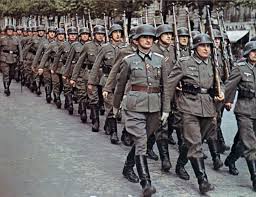
Wehrmacht soldiers marching through conquered France
Today, Western nations under attack by Islamic “holy warriors” face none of those advantages. Islam has no single capitol city–or leader.
Nor do Islam’s jihadist legions wear uniforms. Many of them don’t speak Arabic or wear clothing associated with Arabs, such as flowing robes and headdresses.
More ominously, millions of Islam’s potential “warriors” live within the very Western nations they despise. They can get all the instruction and inspiration they need to wreck havoc simply by going to the Internet.
Or, if they have the money, by traveling overseas to such terrorist-recruiting centers as in Syria or Afghanistan.
And yet, faced with an unprecedented threat to their security, many Western leaders refuse to publicly acknowledge this fundamental truth:
Even if the West isn’t at war with Islam, Islam is at war with the West.
Leaders like President Barack Obama, who insisted, at a White House Summit on Countering Violent Extremism in February, 2015: “We are not at war with Islam. We are at war with people who have perverted Islam.”

David Cameron
And leaders like British Prime Minister David Cameron, who said on August 29, 2014: “Islam is a religion observed peacefully by over a billion people. Islamist extremism is a poisonous ideology observed by a minority.”
It was at this same press conference that Cameron announced that United Kingdom authorities would soon begin revoking the passports of British citizens traveling to Syria.
Arthur M. Cummings, the FBI’s executive assistant director for national security, has no use for such Politically Correct terms as “man-caused disasters” to refer to terrorism. Nor does he shy away from terms such as “jihadists” or “Islamists.”
“Of course Islamists dominate the terrorism of today,” he says bluntly.
In May, 2014, Steven Emerson, a nationally recognized expert on terrorism, posted an ad in The New York Times, warning about the dangers of PC-imposed censorship:
“Our nation’s security and its cherished value of free speech has been endangered by the bullying campaigns of radical Islamic groups, masquerading as ‘civil rights’ organizations, to remove any reference to the Islamist motivation behind Islamic terrorist attacks.
“These groups have pressured or otherwise colluded with Hollywood, the news media, museums, book publishers, law enforcement and the Obama Administration in censoring the words ‘Islamist’, ‘Islamic terrorism’, ‘radical Islam’ and ‘jihad’ in discussing or referencing the threat and danger of Islamic terrorism.
“This is the new form of the jihadist threat we face. It’s an attack on one of our most sacred freedoms—free speech—and it endangers our very national security. How can we win the war against radical Islam if we can’t even name the enemy?”
He has a point–and a highly legitimate one.
Imagine the United States fighting World War II–and President Franklin Roosevelt banning the use of “fascist” in referring to Nazi Germany or “imperialist” in describing Imperial Japan.
Imagine CNN-like coverage of the Nazi extermination camps, with their piles of rotting corpses and smoking gas ovens, while a commentator reminds us that “Nazism is an ideology of peace.”
Then consider these Islamic terrorist outrages of our own time:
- The 9/11 attacks on the World Trade Center in New York City and the Pentagon in Washington, D.C., which snuffed out the lives of 3,000 Americans.
- The 2004 bombing of Madrid’s commuter train system.
- The attack on the London subway in 2005.
- The killing of 13 U.S. Army personnel at Fort Hood, Texas, by a Muslim army major in 2009.
- The bombing of the Boston Marathon in 2013.
- The kidnapping of 300 Nigerian schoolgirls by Boko Haram in 2014.
- The slaughter of 12 people at a Paris satirical magazine that had published cartoons about the Prophet Mohammed in 2015.
- The murders of more than 100 people in ISIS attacks across Paris in 2015.
- A series of deadly terrorist attacks in Brussels, killing 31 and injuring 270 in 2016.
In every one of these attacks, the perpetrators openly announced that their actions had been motivated by their Islamic beliefs.
In his groundbreaking book, The Clash of Civilizations (1996) Samuel Huntington, the late political scientist at Harvard University, noted:
“The fundamental problem for the West is not Islamic fundamentalism. It is Islam, a different civilisation whose people are convinced of the superiority of their culture and are obsessed with the inferiority of their power.”
The West may not be at war with Islam–as countless Western politicians repeatedly assert. But Islamics have no qualms about declaring that they are at war with the West.
ABC NEWS, ADOLF HITLER, AL QAEDA, ARTHUR M. CUMMINGS, BARACK OBAMA, BOKO HARAM, BOSTON MARATHON BOMBING, CANADA, CBS NEWS, CNN, DAVID CAMERON, DENMARK, DONALD TRUMP, FACEBOOK, FBI, HATE CRIMES, INVESTIGATIVE PROJECT ON TERRORISM, ISLAM, ISLAMIC STATE OF IRAQ AND SYRIA, MOHAMMED, NAZI GERMANY, NBC NEWS, NIGER, POLITICAL CORRECTNESS, RELIGION, ROBERT MEULLER III, RONALD KESSLER, SAMUEL HUNTINGTON, STEVEN EMERSON, TALIBAN, TERRORISM, THE CHICAGO SUN-TIMES, THE CHICAGO TRIBUNE, THE CLASH OF CIVILIZATIONS, THE LOS ANGELES TIMES, THE SECRETS OF THE FBI, THE WALL STREET JOURNAL, THE WASHINGTON POST, THE WHITE CLIFFS OF DOVER, TWITTER, VERA LYNN, WORLD TRADE CENTER, WORLD WAR ii
In Bureaucracy, History, Military, Politics, Social commentary on March 27, 2016 at 11:58 pm
The headline on the CNN website said it all–or seemed to: “Religion’s Week From Hell.”
Then came the first paragraph: “Whether you believe that religious violence is fueled by faith or is a symptom of larger factors–political instability, poverty, cultural chaos–one thing seems clear: Last week was hellish for religion.”
The story–published on the CNN website on February 18, 2015–then outlined a series of atrocities committed in the name of religion:
“Across several continents, including North America, Europe, Central Asia and Africa, scores of religious believers suffered and died in brutal attacks over the past seven days.”
Click here: Religion’s week from hell – CNN.com
And here was the day-by-day chronicle of slaughter:
Monday–February 9:
- Boko Haram, the Islamic group based in Nigeria, attacked several towns in Cameroon, kidnapping 20 people. They also exploded a car bomb in Niger. At the time, the death toll was unclear.
Tuesday–February 10:
- Craig Hicks, an athiest who ranted against religion on the Internet, was charged with killing three young Muslim students in Chapel Hill, North Carolina.
Wednesday–February 11:
- The Islamic State of Iraq and Syria (ISIS) attacked Kurdish forces in northern Iraq and Iraqi civilians in Baghdad. At least 31 people were killed in Baghdad by ISIS bombs.
Thursday–February 12:
- Al Qaeda seized a key military base in Baihan, Yemen, killing four Yemeni soldiers. They then took control of the town’s weaponry.
- With the United States’ having already closed its embassy in Yemen, Italy, Germany and Saudi Arabia did the same.
Friday–February 13:
- Boko Haram killed 21 people in attacks on Mbuta and Akida villages in Nigeria.
- The Islamic terror group also killed four civilians and a soldier in neighboring Chad.
- In Peshawar, Pakistan, the Taliban attacked a Shia mosque, killing 19 and wounding dozens.
Saturday–February 14:
- In Copenhagen, Denmark, an Islamic gunman fired at attendees of a free-speech forum, where a Swedish cartoonist was scheduled to speak. His alleged crime: Depicting the Prophet Mohammed. Casualties: Three officers wounded and one 55-year-old man killed.
- Hours later, the same terrorist visited a Copenhagen synagogue. Opening fire, he wounded two officers and killed a private security guard.
Sunday–February 15:
- ISIS released a video showing its members beheading more than a dozen members of Egypt’s Coptic Christian minority on a Libyan beach.
So much for “religion’s week from hell.”
Except that the title of this story was completely misleading. It would have been more accurately entitled: “Islamic Religion’s Week of Hell.”

ISIS member beheading a helpless captive
Of the 13 atrocities detailed above, all but one showcased Islamics as the murderers.
The single exception was that of Craig Hicks, an athiest who was charged with shooting three Muslim college students in Chapel Hill, North Carolina.
It was this case–and not any of the others–that brought Muslims to demand “justice.” Muslims immediately urged the Obama administration to investigate the murders as a hate crime.
Suzanne Barakat, the sister of one of the victims, said the students had been murdered because they were Muslims. She said that the killings should be considered an act of terrorism: “It’s time people call it what it is.”
But getting Islamics to label other Islamics as terrorists is an entirely different matter.
According to author Ronald Kessler, this has caused serious problems for the FBI. In his 2011 book, The Secrets of the FBI, Kessler notes the refusal of the Islamic community to identify known or potential terrorists within its ranks.
Says Arthur M. Cummings, the Bureau’s executive assistant director for national security: “I had this discussion with the director of a very prominent Muslim organization here in [Washington] D.C. And he said, ‘Why are you guys always looking at the Muslim community?’”
“I can name the homegrown cells, all of whom are Muslim, all of whom were seeking to kill Americans,” replied Cummings. “It’s not the Irish, it’s not the French, it’s not the Catholics, it’s not the Protestants. It’s the Muslims.”
Occasionally, Muslims will condemn Al Qaeda. But “rarely do we have them coming to us and saying, ‘There are three guys in the community that we’re very concerned about.’” said Cummings.
“They don’t want anyone to know they have extremists in their community. Well, beautiful. Except do you read the newspapers? Everybody already knows it. The horse has left the barn.
“So there’s a lot of talk about engagement. But, realistically, we’ve got a long, long way to go.”
At one community meeting, an Islamic leader suggested to Cummings that then-FBI director Robert Meuller III should pose for a picture with his group’s members. The reason: To show that Islamics are partners in the “war on terror.”
“When you bring to my attention real extremists who are here to plan and do something, who are here supporting terrorism,” said Cummings, “then I promise you, I will have the director stand up on the stage with you.”
“That could never happen,” replied the Islamic leader. “We would lose our constituency. We could never admit to bringing someone to the FBI.”
Donald Trump–alone of the Republican and Democratic candidates for President–has dared to say the un-sayable: Islam is at war with us.
And this candor–coupled with repeated Islamic atrocities–has propelled him to the front of Republican candidates.
9/11 ATTACKS, ABC NEWS, AFGHANISTAN, AL QAEDA, ALTERNET, AMERICABLOG, AP, BABY BOOMER RESISTANCE, BARACK OBAMA, BLOOMBERG, BOLIVIA, BUZZFEED, CBS NEWS, CIA, CNN, COMMUNISM, CROOKS AND LIARS, CUBA, CUBAN MISSILE CRISIS, DAILY KOZ, DRUDGE REPORT, ERNESTO "CHE" GUEVARA, FACEBOOK, FIDEL CASTRO, FIVETHIRTYEIGHT, GEORGE W. BUSH, GREEN BERETS, HARPER’S MAGAZINE, HUFFINGTON POST, IRAQ, ISLAM, JOHN F. KENNEDY, MEDIA MATTERS, MOTHER JONES, MOVEON, MSNBC, NAVY SEALS, NBC NEWS, NEWSWEEK, NIKITA KHRUSHCHEV, NPR, OSAMA BIN LADEN, PAKISTAN, PBS NEWSHOUR, POLITICO, POLITICUSUSA, RAW STORY, REUTERS, SALON, SEATTLE TIMES, SLATE, SOVIET UNION, TALIBAN, TALKING POINTS MEMO, THE ATLANTIC, THE CHICAGO SUN-TIMES, THE CHICAGO TRIBUNE, THE DAILY BEAST, THE DAILY BLOG, THE GUARDIAN, THE HILL, THE HUFFINGTON POST, THE LOS ANGELES TIMES, THE NATION, THE NEW REPUBLIC, THE NEW YORK TIMES, THE VILLAGE VOICE, THE WASHINGTON POST, THINKPROGRESS, TIME, TRUTHDIG, TRUTHOUT, TWITTER, TWO POLITICAL JUNKIES, U.S. NEWS & WORLD REPORT, UPI, USA TODAY, WONKETTE
In Bureaucracy, History, Military, Politics on February 16, 2016 at 12:10 am
When Osama bin Laden died, two weapons were within easy reach–an AK-47 assault rifle and a Russian-made nine-millimeter Makarov pistol.
But according to his wife, Amal, he was shot by Navy SEALS before he could reach either one.
A SEAL flashed coded news of bin Laden’s death to the Pentagon and the White House Situation Room, where President Barack Obama and the topmost officials of his administration anxiously followed events via a closed-circuit television.
“Geronimo E-KIA” read the message: “Geronimo [bin Laden] E-KIA [Enemy Killed in Action].”
The entire raid–including Intelligence sweeps of the compound–was over in less than 40 minutes. The SEALS moved quickly because they rightly feared that the Pakistani army would intervene to protect bin Laden.
Bin Laden had been living undisturbed at a large compound in Abbottabad for at least five years, just a short distance from Pakistan’s version of West Point.
Furthermore, the ISI–Pakistan’s Intelligence agency–had long been riddled with Al-Qaeda sympathizers, if not agents.
Within 24 hours of his death, Bin Laden’s body was transported to the aircraft carrier USS Carl Vinson for final rites and burial at sea.
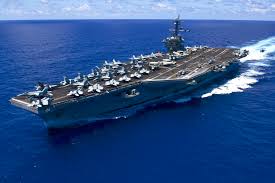
U.S.S. Carl Vinson
President Obama and other U.S. officials feared that his grave site would become a memorial for members of Al-Qaeda and other Islamic terrorist organizations.
In the late evening of May 1, 2011, the White House surprised major television networks by informing them that the President had a major announcement to make.
At 11:35 P.M. Eastern Standard Time, the President appeared at a podium in the East Room of the White House.
“Good evening. Tonight I can report to the American people and to the world that the United States had conducted an operation that killed Osama bin Laden, the leader of Al-Qaeda, and a terrorist who’s responsible for the murder of thousands of innocent men, women and children….
“For over two decades, bin Laden has been Al-Qaeda’s leader and symbol, and has continued to plot attacks against our country and our friends and allies. The death of bin Laden marks the most significant achievement to date in our nation’s efforts to defeat Al-Qaeda.”
He added that “no Americans were harmed” in the raid and that the SEALS had taken care to avoid civilian casualties.

President Barack Obama announcing Osama bin Laden’s death
Like Ernesto “Che” Guevara, bin Laden had become a pale, largely irrelevant figure by the time of his death.
Knowing he was the world’s most wanted man, he imprisoned himself within a fortified compound–which he never left.
Afraid to use a phone or the Internet, he relayed orders–which were often ignored–via the cumbersome use of couriers. All trash generated by the inhabitants of the compound was burned within its walls.
Ironically, the lack of Internet and phone lines to the compound–and the burning of its trash–had led CIA officials to suspect that Osama bin Laden might be hiding there.
Pakistan was outraged. Officially an American ally, its territory had been secretly invaded by American military forces. Even more embarrassing: For years, Pakistani Intelligence had denied knowing bin Laden’s whereabouts.
Meanwhile, leaders of Islamic expansionist groups rallied to praise the dead bin Laden. Among these was his son, Omar, who denounced his father’s killing as a “criminal” act, and his burial at sea as demeaning to the Islamic faith.
In a letter published on the website of Islamic ideologue Abu Walid al-Masri, the younger bin Laden said the former Al-Qaeda leader’s children reserved the right to take legal action in the United States and internationally to “determine the true fate of our vanished father.”
Bin Laden’s death drew protests from hundreds of people in the city of Quetta, in southwestern Pakistan, who burned American flags and paid homage to the late terrorist leader.
On May 13, a pair of Taliban suicide bombers attacked paramilitary police recruits eagerly heading home for a break after months of training, killing 80 people. It was the first act of retaliation for the killing of bin Laden.
Americans reacted differently.
Almost as Obama was addressing the nation, cheering crowds gathered outside the White House and in New York City’s Times Square. Many of them shouted “USA! USA! USA!” and waved American flags in celebration.
Celebration also broke out at the site of the former World Trade Center, the primary victim of the September 11 attacks.
For the next two weeks, Americans continued to rejoice. Much of their feelings were best expressed in grisly humor on websites and late night comedy shows such as “Tonight” and “Late Night With David Letterman.”
Killing Osama bin Laden removed Al-Qaeda’s most important member. But its treasury of secret materials–such as computer hard-drives, DVDs, notebooks, diaries–proved even more important to American military and Intelligence officials.
During the late 1960s and early 1970s, many Vietnam protesters marched carrying blown-up photos of Ernesto “Che” Guevara or tacked them to the walls of their dormitory rooms.
Most of these college students were members of the middle-class which Guevara had so despised.
Going on five years since the death of bin Laden, his poster has been noticeably absent from American college campuses–and everywhere else in the United States.
It remains to be seen whether, decades from now, Osama bin Laden will attain the iconic status of Ernesto “Che” Guevara.
9/11 ATTACKS, ABC NEWS, AFGHANISTAN, AL QAEDA, ALTERNET, AMERICABLOG, AP, BABY BOOMER RESISTANCE, BARACK OBAMA, BLOOMBERG, BOLIVIA, BUZZFEED, CBS NEWS, CIA, CNN, COMMUNISM, CROOKS AND LIARS, CUBA, CUBAN MISSILE CRISIS, DAILY KOZ, DRUDGE REPORT, ERNESTO "CHE" GUEVARA, FACEBOOK, FIDEL CASTRO, FIVETHIRTYEIGHT, GEORGE W. BUSH, GREEN BERETS, HARPER’S MAGAZINE, HUFFINGTON POST, IRAQ, ISLAM, JOHN F. KENNEDY, MEDIA MATTERS, MOTHER JONES, MOVEON, MSNBC, NAVY SEALS, NBC NEWS, NEWSWEEK, NIKITA KHRUSHCHEV, NPR, OSAMA BIN LADEN, PAKISTAN, PBS NEWSHOUR, POLITICO, POLITICUSUSA, RAW STORY, REUTERS, SALON, SEATTLE TIMES, SLATE, SOVIET UNION, TALIBAN, TALKING POINTS MEMO, THE ATLANTIC, THE CHICAGO SUN-TIMES, THE CHICAGO TRIBUNE, THE DAILY BEAST, THE DAILY BLOG, THE GUARDIAN, THE HILL, THE HUFFINGTON POST, THE LOS ANGELES TIMES, THE NATION, THE NEW REPUBLIC, THE NEW YORK TIMES, THE VILLAGE VOICE, THE WASHINGTON POST, THINKPROGRESS, TIME, TRUTHDIG, TRUTHOUT, TWITTER, TWO POLITICAL JUNKIES, U.S. NEWS & WORLD REPORT, UPI, USA TODAY, WONKETTE
In Bureaucracy, History, Military, Politics on February 15, 2016 at 12:00 am
Ernesto “Che” Guevara was dead. But that wasn’t enough for the Bolivian government that had authorized his execution. His corpse was disappear from the face of the earth.
On October 10, 1967, Guavara’s body was flown to nearby Vallegrande, where photographs were taken of him lying on a concrete slab in the laundry room of the Nuestra Senora de Malta.

Che Guevara in death
Several witnesses were called in to confirm that it was indeed Guevara. As hundreds of local residents filed past the corpse, men of them felt Guevara resembled images of a bearded, long-haired Jesus Christ. Some of them even surreptitiously clipped locks of his hair as divine relics.
After a military doctor amputated his hands, Bolivian army officers transferred Guevara’s body to an undisclosed location. The government refused to say whether his remains had been buried or cremated.
Che’s hands were preserved in formaldehyde and sent to Buenos Aires, Argentina, for fingerprint identification. (His prints were on file with the Argentine police)
On October 15, Fidel Castro acknowledged that Guevara was dead and proclaimed three days of public mourning throughout Cuba.
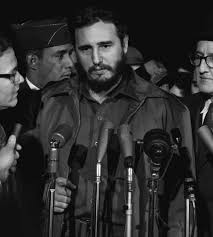
Fidel Castro
Che, in one sense, was lucky to die as he did–and when he did. He was only 39, but he was already running to fat and increasingly troubled by his lifelong asthma.
His Don Quixote-like venture into Bolivia proved a failure from first to last. Peasants didn’t flock to his banner; in fact, some of them betrayed his movements to the Bolivian army.
And 24 years after Guevara’s execution, Communism, his secular religion, died a violent death in its birthplace–the Soviet Union. It wasn’t killed off by invading capitalist forces, but thrown off by the Russian people themselves.
Nor would Che be pleased with the course of “revolutionary” events in Cuba. Until the death of the Soviet Union, the island remained dependent on what amounted to Soviet welfare.
Since then, Cubans have supported themselves by turning their island into a privileged playground for the rich–especially rich Americans.
On October 17, 1997–30 years after their deaths–Guevara and six of his fellow combatants were buried with full military honors in a specially built mausoleum in Santa Clara, Cuba. It was there in 1958 that he had commanded the decisive military victory of the Cuban Revolution.
Having described, in Part One, how Ernesto “Che” Guevara met his end, it’s time to examine how Osama bin Laden earned his 72 willing virgins.
After the September 11, 2001 attacks on the Pentagon and the World Trade Center, the United States quickly established that bin laden had plotted them.
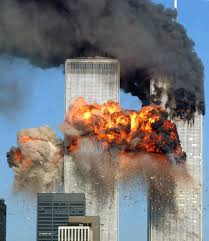
World Trade Center on 9/11/01
But bin Laden was then living in Afghanistan and protected by its Islamic rulers, the Taliban. President George W. Bush gave the Taliban an ultimatum: Surrender bin Laden–or else.
The Taliban refused.
On October 7, 2001, the United States’ new allies, the Northern Alliance, supported by American airstrikes, began a ground campaign against the Taliban.
Taliban resistance quickly vanished. Bin Laden retreated to Tora Bora, a series of bunkers in a mountainous region near the Pakistani border. With the mountains literally shaking under a rain of “bunker-busting” bombs, bin Laden decided to move on.
Suddenly, in December, 2001, he seemed to vanish from the earth.
Reports circulated that he was living in a cave in the no-man’s-land lying between Afghanistan and Pakistan.
Strangely, the Bush administration lost interest in locating him. Increasing numbers of American troops were quietly transferred from Afghanistan to staging areas near Iraq–for Bush’s long-planned overthrow of its dictator, Saddam Hussein.
Only when Barack Obama took office as President in 2009 was the CIA ordered to make finding bin Laden its top priority. Over the next two years, CIA agents sifted through a conflicting series of reports about bin Laden’s possible whereabouts.
Finally, the agency tracked a courier linked to bin Laden to a large, high-walled compound in Abbottabad, Pakistan.
On April 28, 2011, President Obama authorized a U.S. military raid on the compound, dubbed “Operation Neptune Spear.” On May 1, 2011, two teams of 12 U.S. Navy SEALS, working with the CIA, traveled in two helicopters to the compound.
The helicopters were specially outfitted to emit little noise. But an accident resulted when the tail rotor of one helicopter grazed the compound’s stone wall.
The damaged aircraft was “hard-landed” and then destroyed on-site to protect its technological secrets. Back-up forces were immediately available, and another helicopter was brought in to retrieve the commandos and relevant contents.
All combined, a total of 79 commandos and a dog (believed to have explosive-detection training) were involved in the raid.
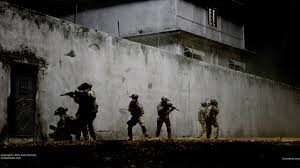
SEALS attacking bin Laden’s compound in the 2012 movie, “Zero Dark Thirty”
Abu Ahmed al-Kuwaiti, bin Laden’s courier, opened fire on the SEALS from the guesthouse with an AK-47 assault rifle. He and his wife were killed by return fire.
A male relative of the courier was shot and killed by the SEALS before he could reach a weapon lying nearby.
Bin Laden’s 22-year-old son rushed toward the SEALS on the staircase of the main house. SEAL gunfire instantly killed him.
Osama bin Laden, standing at the top of a staircase, retreated into his room–where SEALS followed and shot him in the head and chest.
9/11 ATTACKS, ABC NEWS, AFGHANISTAN, AL QAEDA, ALTERNET, AMERICABLOG, AP, BABY BOOMER RESISTANCE, BARACK OBAMA, BLOOMBERG, BOLIVIA, BUZZFEED, CBS NEWS, CIA, CNN, COMMUNISM, CROOKS AND LIARS, CUBA, CUBAN MISSILE CRISIS, DAILY KOZ, DRUDGE REPORT, ERNESTO "CHE" GUEVARA, FACEBOOK, FIDEL CASTRO, FIVETHIRTYEIGHT, GEORGE W. BUSH, GREEN BERETS, HARPER’S MAGAZINE, HUFFINGTON POST, IRAQ, ISLAM, JOHN F. KENNEDY, MEDIA MATTERS, MOTHER JONES, MOVEON, MSNBC, NAVY SEALS, NBC NEWS, NEWSWEEK, NIKITA KHRUSHCHEV, NPR, OSAMA BIN LADEN, PAKISTAN, PBS NEWSHOUR, POLITICO, POLITICUSUSA, RAW STORY, REUTERS, SALON, SEATTLE TIMES, SLATE, SOVIET UNION, TALIBAN, TALKING POINTS MEMO, THE ATLANTIC, THE CHICAGO SUN-TIMES, THE CHICAGO TRIBUNE, THE DAILY BEAST, THE DAILY BLOG, THE GUARDIAN, THE HILL, THE HUFFINGTON POST, THE LOS ANGELES TIMES, THE NATION, THE NEW REPUBLIC, THE NEW YORK TIMES, THE VILLAGE VOICE, THE WASHINGTON POST, THINKPROGRESS, TIME, TRUTHDIG, TRUTHOUT, TWITTER, TWO POLITICAL JUNKIES, U.S. NEWS & WORLD REPORT, UPI, USA TODAY, WONKETTE
In Bureaucracy, History, Military, Politics, Social commentary on February 12, 2016 at 12:12 am
They both had beards. They both saw military action. They both passionately hated the United States.
And they both died in a hail of bullets.
And immediately after their deaths, both seemed to disappear from the face of the earth.
Ernesto “Che” Guevara and Osama bin Laden.
Two men who inspired widespread admiration among their supporters–and fear among their enemies.
Guevara, an Argentinian doctor-turned-Cuban revolutionary, sought to destroy the United States’ power to fight Communism. Bin Laden sought to destroy its power to intervene in the Middle East.
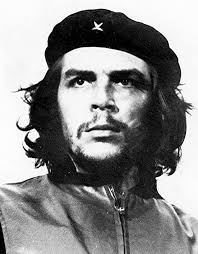
Ernesto “Che” Guevara
Guevara’s most optimistic hope was that Americans would eventually see the error of their capitalistic ways and convert to Communism. His last words were: “Tell Fidel [Castro] that he will soon see a triumphant revolution in America.”
But he was prepared to fight to the death–as indeed he did–to force revolutionary change upon the United States.
For Bin Laden, the cause was Islam, not Communism. His most optimistic hope was that Christian and Jewish Americans would eventually convert to Islam.
But if that didn’t happen, he, too, was prepared to attack Americans anywhere and in any way he could–as his private diary and documents have revealed.
Guevara died on October 9, 1967, at the hands of a CIA-directed operation run by the Bolivian army.
Bin Laden, creator of the Al-Qaeda (“The Base” terrorist network, met his end on May 1, 2011, during a raid by U.S. Navy SEALS on his compound in Pakistan.
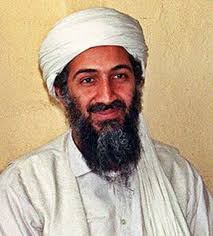
Osama bin Laden
One man–Guevara–has since attained secular sainthood in the eyes of millions of Communists and their sympathizers.
The other–bin Laden–has attained instant “martyr” status in the eyes of untold numbers of Islamic terrorists and their sympathizers.
Both men plotted constantly against the United States and eagerly sought its destruction.
In November, 1962, during an interview with the Communist newspaper, the London Daily Worker, Guevara raged against the Soviet Union’s recent withdrawal of nuclear missiles from Cuba.
Those “thirteen days” of the Cuban Missile Crisis that October had brought the world to the brink of nuclear destruction.
“If the missiles had remained, we would have used them against the very heart of the United States, including New York,” said Guevara.
“We must never establish peaceful coexistence. We must walk the path of victory even if it costs millions of atomic victims.”
Similarly, until the end of his life, bin Laden demanded more attacks like the one on September 11, 2001, that snuffed out the lives of 3,000 Americans.
This brought him into conflict with other Al-Qaeda members who wanted to launch assaults on more vulnerable targets outside the United States.
Guevara died as he had lived–violently.
In late October, 1966, he slipped out of Cuba. On November 3, he secretly arrived in La Paz, Bolivia, intent on re-staging the Cuban revolution among the Bolivian peasantry.

But the peasants showed no interest in his aims and in fact reported his movements to the Bolivian army.
The army, in turn, was being advised by United States Green Berets under the direction of the CIA.
On October 7, 1967, an informant tipped off the Bolivian Special Forces to the location of Guevara’s guerrilla camp in the Yuro ravine.
On October 8, they encircled the area with 1,800 soldiers. In the shootout that followed, Guevara was wounded and taken prisoner while leading a detachment.
His rifle broken by a lucky shot, a twice-wounded Guevara shouted: “Do not shoot! I am Che Guevara and worth more to you alive than dead.”
Quickly informed of Guevara’s capture, the Bolivian government debated his fate: Should he be immediately executed or placed on trial?
On the morning of October 9, Bolivian President Rene Barrientos ordered that Guevara be executed. Barrientos feared that placing him on trial would create an international media circus and/or render Bolivia vulnerable to efforts to free him.
The Bolivian government planned to declare that Guevara had been killed in action during a clash with the nation’s armed forces. Special instructions were thus issued.
These came from Felix Rodrieguez, a CIA agent acting as advisor to the Bolivians.
The executioner would be Mario Teran, a Bolivian army sergeant who had lost three of his friends in an earlier firefight with Guevara’s band of guerrillas.
Rodriguez ordered Teran to aim carefully to make it appear that Guevara had been killed in action.
To his surprise, Rodriguez found himself highly impressed with Guevara’s courage. When informed of his imminent execution, Guevara blanched, then quickly got control of himself.

Felix Rodriguez, left, Che, center
“It is better like this,” he said. “I should never have been captured alive.”
Rodriguez asked if he had any messages for his family. Guevara replied: “Tell Fidel [Castro, the president/dictator of Cuba] that he will soon see a triumphant revolution in America.
“And tell my wife to remarry and try to be happy.”
When Sergeant Teran entered the hut, Guevara told his executioner: “I know you’ve come to kill me. Shoot, coward! You are only going to kill a man!”
Teran hesitated, then opened fire with his semiautomatic rifle, hitting Guevara in his arms and legs.
Guevara writhed on the ground, apparently biting one of his wrists to avoid crying out. Teran then fired several more times, finally killing him with a shot in the chest.
9/11 ATTACKS, ABC NEWS, ADOLF HITLER, AFGHANISTAN, AL QAEDA, BARACK OBAMA, BASHAR AL-ASSAD, CARLOS THE JACKAL, CBS NEWS, CHEMICAL WARFARE, CHINA, CNN, CONGRESS, FACEBOOK, GEORGE H.W. BUSH, GEORGE W. BUSH, HARRY S. TRUMAN, HIZBOLLAH, IRAN, IRAQ, ISLAM, ISRAEL, NAZI GERMANY, NBC NEWS, OSAMA BIN LADEN, RELIGION, RUSSIA, SADDAM UISSEIN, SHIITE MUSLIMS, SUNNI MUSLIMS, SYRIA, SYRIAN OBSERVATORY FOR HUMAN RIGHTS, TERRORISM, THE CHICAGO SUN-TIMES, THE CHICAGO TRIBUNE, THE LOS ANGELES TIMES, THE NEW YORK TIMES, THE SYRIAN OBSERVATORY FOR HUMAN RIGHTS, THE WASHINGTON POST, THE WORLD POST, TWITTER, VLADIMIR PUTIN, WORLD WAR 1
In Bureaucracy, History, Military, Politics on February 11, 2016 at 12:01 am
Sometimes your worst enemies aid you unintentionally–and in ways you could never help yourself. That’s what America’s Islamic enemies are now doing throughout the Middle East.
Contrary to the propaganda of Republican militarists and Democratic do-gooders, Americans should be thrilled at the mutual destruction of their most dedicated enemies.
In the first installment of this series, three reasons were given for why the United States should not intervene in the Syrian conflict. This will offer the remaining seven.
Fourth: Since 1979, Syria has been listed by the U.S. State Department as a sponsor of terrorism.
Among the terrorist groups it supports: Hizbollah and Hamas. For many years, Syria provided a safe-house in Damascus for Illich Ramirez Sanchez–the notorious international terrorist known as Carlos the Jackal.
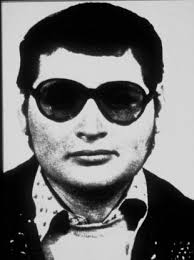
Ilich Ramírez Sánchez–“Carlos the Jackal”
Fifth: The United States had no part in creating or supporting the decades-long dictatorship of the Assad regime–which has long been hostile to America.
After a long series of political maneuverings, Hafez al-Assad seized power in 1970 and was proclaimed “president” next year. With aid from the Soviet Union, he built up the Syrian army. Using arrest, torture and execution, he ruled Syria as a dictator until he died in 2000.
His son, Bashar, then took command of Syria. Like his father, he has supported Palestinian and Lebanese militant groups. And, like his father, he continues to receive financial and military support from the successor to the Soviet Union, the Russian Federation.
Thus, America has no moral obligation of any kind to Syria–or Syrians.
Sixth: Intervening in Syria could lead to Syrian attacks against Israel.
An American military strike on Syrian government forces could lead the country’s dictator, Bashar al-Assad, to attack Israel–perhaps even with chemical weapons. Assad could do this simply because he hates Jews–or to lure Israel into attacking Syria.
If that happened, the Islamic world–which lusts to destroy Israelis even more than “apostate” Muslims–would rally to Syria against the United States, Israel’s chief ally.
Seventh: Committing American ground forces to Syria or just continuing to bomb targets there could lead to Islamic terrorism against the United States–at home or abroad.
This has already happened with Russia, which, on September 30, 2015, began bombing airstrikes on forces trying to overthrow Assad.
On October 31, Airbus A321, a Russian airliner, broke up in mid-air, then crashed in Egypt’s Sinai Peninsula, killing all 224 people on board.
In Egypt, a militant group affiliated to the Islamic State of Iraq and Syria (ISIS) claimed it had brought down the plane “in response to Russian airstrikes that killed hundreds of Muslims on Syrian land.”
The same fate could well befall American civilians and/or soldiers.
Eighth: China and Russia are supporting the Assad dictatorship–and the brutalities it commits against its own citizens.
This reflects badly on them–not the United States. And any move by the United States to directly attack the Assad regime could ignite an all-out war with Russia and/or China.
What happens if Russian and American forces start trading salvos? Or if Russian President Vladimir Putin orders an attack on America’s ally, Israel, in return for America’s attack on Russia’s ally, Syria?
It was exactly that scenario–Great Powers going to war over conflicts between their small-state allies–that triggered World War I.
Ninth: The United States cannot defeat ISIS through air power alone–thus making commitment of ground troops inevitable.
President Barack Obama authorized airstrikes against ISIS in September, 2014. The United States Air Force has since dropped thousands of bombs on ISIS convoys.
This has not destroyed ISIS. And its failure to do so has only led to demands by hawkish Republicans and Democrats for “boots on the ground.”
Tenth–and most importantly: While Islamic nations like Syria, Iraq and Egypt wage war within their own borders, they will lack the resources–and incentive–to attack the United States.
Every dead Hizbollah and Al-Qaeda and ISIS member makes the United States that much safer. So does the death of every sympathizer of Hizbollah, Al-Qaeda and ISIS.
The peoples of the Middle East have long memories for those who commit brutalities against them. In their veins, the cult of the blood feud runs deep.
When Al-Qaeda blows up civilians in Beirut, their relatives will urge Hizbollah to take brutal revenge. And Hizbollah will do so. Similarly, when Hizbollah does, those who support Al-Qaeda will demand even more brutal reprisals against Hizbollah.

Al-Qaeda terrorists–now taking aim at Hezbollah terrorists
No American could instill such hatred in Al-Qaeda for Hizbollah–or vice versa. This is entirely a war of religious and sectarian hatred.
In fact, this conflict could easily become the Islamic equivalent of “the Hundred Years War” that raged from 1337 to 1453 between England and France.
When Adolf Hitler invaded the Soviet Union in 1941, then-Senator Harry S. Truman said: “I hope the Russians kill lots of Nazis–and vice versa.”
That should be America’s position whenever its sworn enemies start killing off each other. Americans should welcome such self-slaughters, not become entrapped in them.
9/11 ATTACKS, ABC NEWS, ADOLF HITLER, AFGHANISTAN, AL QAEDA, BARACK OBAMA, BASHAR AL-ASSAD, CARLOS THE JACKAL, CBS NEWS, CHEMICAL WEAPONS, CHINA, CNN, CONGRESS, FACEBOOK, GEORGE H.W. BUSH, GEORGE W. BUSH, HARRY S. TRUMAN, HIZBOLLAH, IRAQ, ISLAM, ISRAEL, NAZI GERMANY, NBC NEWS, OSAMA BIN LADEN, RELIGION, RUSSIA, SADDAM HUSSEIN, SHIITE MUSLIMS, SUNNI MUSLIMS, SYRIA, TERRORISM, THE CHICAGO SUN-TIMES, THE CHICAGO TRIBUNE, THE LOS ANGELES TIMES, THE NEW YORK TIMES, THE SYRIAN OBSERVATORY FOR HUMAN RIGHTS, THE WASHINGTON POST, THE WORLD POST, TWITTER, VLADIMIR PUTIN, WORLD WAR 1
In Bureaucracy, History, Military, Politics on February 10, 2016 at 12:01 am
The headline in the February 6, 2016 edition of The World Post said it all: “Geneva III: The Stillborn Conference and the Endemic Failure of the International Community.”
And just what was it that the international community had failed to achieve?
“While approaching the fifth anniversary of the Syrian civil war on March 15 — which claimed more than 300,000 lives, approximately 700,000 wounded, 4 million fled the country, and another 6 million displaced within Syria — the international community has failed to put an end to bloodshed in this war-torn country.”
Put another way: More than 300,000 potential or actual Islamic terrorists will never pose a threat to the United States or Western Europe.
The Syrian conflict began on March 15, 2011, triggered by protests demanding political reforms and the ouster of dictator Bashar al-Assad.
According to the Syrian Observatory for Human Rights–which is safely located in Great Britain–the total number of dead is now more than 310,000.

And who does the Observatory–and The World Post–blame for this Islamic self-slaughter?
Why, the West, of course.
According to the Observatory:
“The silence of the International community for the war crimes and crimes against humanity committed in Syria encourages the criminals to kill more and more Syrian people because they have not found anyone that deter them from continuing their crimes that cause to wound more than 1500000 people; some of them with permanent disabilities, make hundreds of thousands children without parents, displace more than half of Syrian people and destroy infrastructure, private and public properties.”
And according to the Post:
“It is disgraceful that the international community has successfully concluded an agreement with the regime in a very short period of time to remove its chemical weapons while completely failed to save the lives of millions of innocent children, women, and elderly people throughout Syria in the past five years!”
Got that? It’s the duty of non-Muslims to bring civilized behavior to Islamics.
And why are all these murderers eagerly slaughtering one another?
Because of a Muslim religious dispute that traces back to the fourth century.
Yes, it’s Sunni Muslims, who make up a majority of Islamics, versus Shiite Muslims, who comprise a minority. Each group considers the other takfirs–that is, “apostates.”
And, in Islam, being labeled an apostate can easily get you murdered.
There is, however, an optimistic way to view this conflict:
- At least 310,000 actual or potential enemies of Western civilization–and especially the United States–have chosen to slaughter one another.
- Additional thousands are certain to follow their example.
- And the United States cannot be held in any way responsible for it.
Yet, Left-wing do-gooders and Right-wing militarists demand that the United States thrust itself into a conflict that doesn’t threaten America in any way.
In fact, it’s in America’s best interests that this conflict last as long as possible and spread as widely as possible throughout the Islamic community.
Here’s why:
First: In Syria, two of America’s most deadly enemies are waging war on each other.
Yes, it’s Hizbollah (Party of God) vs. Al-Qaeda (The Base).
Hizbollah is comprised of Shiite Muslims. A sworn enemy of Israel, it has kidnapped scores of Americans suicidal enough to visit Lebanon and truck-bombed the Marine barracks in Beirut in 1983, killing 299 Americans.
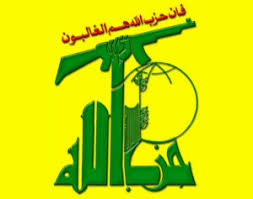
Flag of Hezbollah
Al Qaeda, on the other hand, is made up of Sunni Muslims. It is intolerant of Shiites and has instigated violence against them. It denounces them as takfirs–“apostates”–and thus worthy of extermination.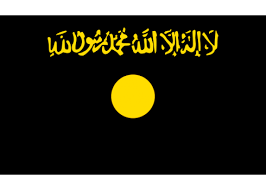
Flag of Al-Qaeda
Al Qaeda has attacked the mosques and gatherings of liberal Muslims, Shiites, Suffis and other non-Sunnis. Examples of sectarian attacks include the Sadr City bombings, the 2004 Ashoura massacre and the April, 2007 Baghdad bombings.
On one side of this conflict is the Ba’ath regime of Bashar al-Assad, whose allies include Russia, Iran, Hizbollah and elements of the Iraqi government.
On the other side are a host of Syrians and thousands of foreign Sunni fighters, some of whom are affiliated with Al-Qaeda.
Second: The United States has been at war in the Middle East for 14 years–since the terror attacks of September 11, 2001.
In October, 2011, America first committed its forces to Afghanistan, in pursuit of Osama bin Laden, the 9/11 mastermind. Failing to find him, its forces nevertheless stayed on in that country, hoping–and failing–to bring civilization to its barbaric population.
Then, in March, 2003, President George W. Bush invaded Iraq to settle a personal score with its dictator, Saddam Hussein.
After Bush’s father, George H.W. Bush, launched the 1991 Gulf War, Hussein had had the bad grace to not topple from power. When the elder Bush lost a second term as President to Bill Clinton in 1992, his son blamed Hussein.
Third, the United States is still fighting a brutal war in Afghanistan.
America originally intended to withdraw all but a small embassy-based force of 1,000 troops by the end of 2016.
But as the Taliban re-emerged as a threat, President Barack Obama announced he would maintain 9,800 troops there for most of 2016. About 5,500 troops will still be in Afghanistan by 2017.
ABC NEWS, AL QAEDA, BASHIR AL-ASSAD, CBS NEWS, CHARLES GEORGE GORDON, CHARLTON HESTON, CNN, FACEBOOK, GEORGE W. BUSH, GREAT BRITAIN, HIZBOLLAH, IRAQ, ISLAM, KHARTOUM, LAURENCE OLIVER, NBC NEWS, NEOCONS, PRESIDENT BARACK OBAMA, REPUBLICAN PARTY, SHIITE MUSLIMS, SUDAN, SUNNI MUSLIMS, SYRIA, THE CHICAGO SUN-TIMES, THE CHICAGO TRIBUNE, THE LOS ANGELES TIMES, THE MADHI, THE NEW YORK TIMES, THE WALL STREET JOURNAL, THE WASHINGTON POST, TWITTER, USA TODAY, WILLIAM GLADSTONE
In Bureaucracy, History, Military on January 28, 2016 at 10:05 pm
January 26, 2016, marked the 131st anniversary of the fall of Khartoum, the Sudanese city that sits on the banks of the White and Blue Nile Rivers.
The siege and fall of Khartoum is one of the truly epic stories of military history.
From March 18, 1884, to January 26, 1885, the charisma and military genius of one man–British General Charles George Gordon–held at bay an army of thousands of fanatical Islamics intent on slaughtering everyone in the city.

Khartoum in the 1800s
At stake were the lives of Khartoum’s 30,000 residents.
By comparison: The defenders of the Alamo–a far better-known battle, in 1836–numbered no more than 250. And the siege of the San Antonio mission lasted only 13 days against an army of about 2,000 Mexicans.
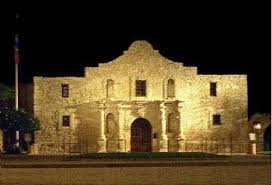
The Alamo
Gordon’s story may seem antiquated. But it bears close inspection as Republicans press the Obama administration to commit ground forces to “freeing” Syria of its longtime dictator, “President” Bashir al-Assad.
The neocons of the George W. Bush Administration plunged the United States into an unprovoked war against Iraq in 2003. After Baghdad quickly fell, Americans cheered, thinking the war was over and the troops would soon return home.
Suddenly, American soldiers found themselves waging a two-front war in the same country: Fighting an Iraqi insurgency to throw them out, while trying to suppress growing sectarian warfare between Sunni and Shia Muslims.
And now, with Syria, Americans are being urged to plunge headfirst into a conflict they know nothing about–and in which they have absolutely no stake.
On one side is the Ba’ath regime of Bashir al-Assad, supported by Russia, Iran, Hizbollah and elements in the Iraqi government. Hizbollah is comprised of Chiite Muslims, who form a minority of Islamics.
A sworn enemy of Israel, it has kidnapped scores of Americans suicidal enough to visit Lebanon and truck-bombed the Marine barracks in Beirut in 1983, killing 299 Americans.
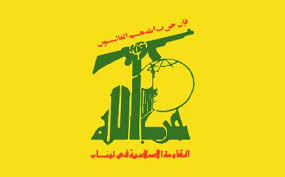
Flag of Hizbollah
Al-Qaeda, on the other hand, is made up of Sunni Muslims, who form the majority of that religion.
It is intolerant of non-Sunni Muslims and has instigated violence against them. It denounces them as “takfirs”–heretics–and thus worthy of extermination.
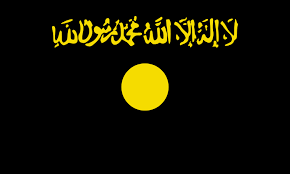
Flag of Al-Qaeda
In short, it’s a Muslim-vs.Muslim “holy war.
It’s all very reminiscent of events in the 1966 epic film, Khartoum, starring Charlton Heston as British General Charles George Gordon.

Charlton Heston (left); Charles George Gordon (right)
In 1884, the British government sends Gordon, a real-life hero of the Victorian era, to evacuate the Sudanese city of Khartoum.
Mohammed Achmed, a previously anonymous Sudanese, has proclaimed himself “The Madhi” (“The Expected One”) and raised the cry of jihad.

Laurence Oliver (left); Mohammed Achmed (“The Madhi”)
The Madhi (played by Lawrence Olivier) intends to drive all foreigners (of which the English are the largest group) out of Sudan and exterminate all those Muslims who do not practice his “pure” version of Islam.

Movie poster for “Khartoum”
Gordon arrives in Khartoum to find he’s not fighting a rag-tag army of peasants. Instead, the Madhi is a highly intelligent military strategist.
And Gordon, an evangelical Christian, also finds he has underestimated the Madhi’s religious fanaticism: “I seem to have suffered from the delusion that I had a monopoly on God.”
A surprised Gordon finds himself and 30,000 Sudanese trapped in Khartoum when the Madhi’s forces suddenly appear. He sends off messengers and telegrams to the British Government, begging for a military relief force.
But the British Government wants nothing to do with the Sudan. it has sent Gordon there as a cop to British public opinion that “something” had to be done to quell the Madhist uprising.
The siege continues and tightens.
In Britain, the public hails Gordon as a Christian hero and demands that the Government send a relief expedition to save him.
Prime Minister Willilam Gladstone finally sends a token force–which arrives in Khartoum two days after the city has fallen to the Madhi’s forces.
Gordon, standing at the top of a staircase and coolly facing down his dervish enemies, is speared to death.
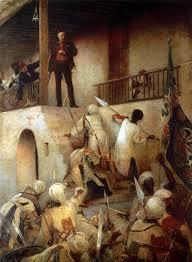
George W. Joy’s famous–and romanticized–painting of “The Death of Gordon”
(Actually, the best historical evidence indicates that Gordon fought to the last with pistol and sword before being overwhelmed by his dervish enemies.)
When the news reaches England, Britons mourn–and then demand vengeance for the death of their hero.
The Government, which had sought to wash its hands of the poor, military unimportant Sudan, suddenly has to send an army to avenge Gordon.
As the narrator of Khartoum intones at the close of the film: “For 15 years the British paid the price with shame and war.”
There is a blunt lesson for Americans to learn from this episode–and from the 1966 movie Khartoum itself.
Americans have been fighting in the Middle East since 2001–first in Afghanistan to destroy Al-Qaeda, and then in Iraq, to pursue George W. Bush’s vendetta against Saddam Hussein.
The United States faces a crumbling infastructure, record high unemployment and trillions of dollars in debt.
It’s time for Americans to clean up their own house before worrying about the messes in other nations–especially those wholly alien to American values.
ABC NEWS, AFGHANISTAN, AIRBUS A321, AL QAEDA, BARACK OBAMA, BASHAR AL-ASSAD, CBS NEWS, CNN, FACEBOOK, IRAQ, ISLAM, ISLAMIC STATE OF IRAQ AND SYRIA, JOHN F. KENNEDY, MALAYSIA FLIGHT 17, MUSLIMS, NATO, NBC NEWS, ROBERT FROST, RUSSIA, SOVIET UNION, STINGER MISSILES, SYRIA, TERRORISM, THE CHICAGO TIMES, THE CHICAGO TRIBUNE, THE LOS ANGELES TIMES, THE NEW YORK TIMES, THE WASHINGTON POST, TURKEY, TWITTER, USA TODAY, VLADIMIR PUTIN
In Bureaucracy, History, Military, Politics on November 25, 2015 at 12:17 pm
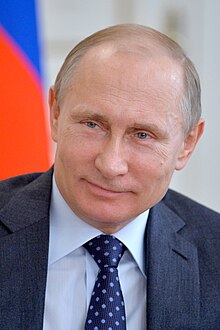
Russian President Vladimir Putin is no admirer of President John F. Kennedy.
Yet he would no doubt agree with the spirit of the poem that Robert Frost intended to read at Kennedy’s 1961 inaugural.
Entitled “Dedication,” the poem went unread because the sunlight reflecting off snow blinded the elderly poet. So Frost relied on memory to recite an earlier creation: “The Gift Outright.”
“Dedication,” however, was far more in keeping with the upcoming aggressive hubris of the Kennedy years:
It makes the prophet in us all presage
The glory of a next Augustan age
Of a power leading from its strength and pride,
Of young ambition eager to be tried,
Firm in our free beliefs without dismay
In any game the nations want to play.
On September 30, Putin embarked on a game of big-power politics. He started launching airstrikes against Syria.
The objective: To bolster the dictatorship of Russia’s ally, Syrian President Bashar al-Assad, who is now caught up in civil war.
This began on March 15, 2011, triggered by protests demanding political reforms and the ouster of al-Assad. More than 310,000 people have been killed in the fighting.
The Obama administration is worried about Russian intentions. And Republicans are furious, demanding that American military forces directly confront those of Russia.
Yet despite Right-wing fears about Russia, there is no reason for alarm–by Americans.
Putin’s intervention in Syria’s civil war offers three possible outcomes for the United States. And they’re all positive.
Vladimir Putin
First, the Russians will kill thousands of America’s sworn enemies.
Russians are well-known for their disregard for human life. During their invasion of Germany in 1945, Russian soldiers literally nailed civilians to barn doors, squashed them under their tanks, and raped countless women of all ages.
In Syria, they will slaughter everyone who gets in their way. Thus, they will kill far more of America’s Islamic enemies than even our own military–hamstrung by do-gooder “rules of engagement”–could possibly eliminate.
Second, Russia will replace the United States as “The Great Satan” in the eyes of most Islamics.
The Soviet Union waged a ruthless war against Afghanistan from 1979 to 1989. Out of that war grew Al-Qaeda. Millions of Islamics still hate Russians for their brutalities.
From 1999 to 2009, Russia fought a brutal war against Islamics in Chechnya. Chechens responded with terrorism across Russia.
Russia’s intervention in Syria will only harden its image as an enemy of Islam–even if it’s supporting one group of Islamics (the Assad regime) against others.
If Islamic terrorism starts raging throughout Russia, Putin may be forced to back down from his military moves against Syria and Ukraine.
Third, if Russian planes get shot down or Russian soldiers killed, Russia will suffer the casualties–not the United States.
The Soviet Union never fully recovered from its losses in Afghanistan–13,310 soldiers killed, 35,478 wounded.
If Russia starts taking heavy losses in Syria or at home through terrorism, this could lead to widespread unrest. Even Vladimir Putin could find himself in danger of being replaced.
And for Russia, the chicken Kiev has already come home to roost.
On October 31, Airbus A321, a Russian airliner, broke up in mid-air, then crashed in Egypt’s Sinai Peninsula, killing all 224 people on board.
The plane was carrying holidaymakers from the Red Sea resort of Sharm el-Sheikh to St Petersburg when it crashed into a mountainous area of central Sinai.
In Egypt, a militant group affiliated to the Islamic State of Iraq and Syria (ISIS) claimed that it had brought down the plane “in response to Russian airstrikes that killed hundreds of Muslims on Syrian land.”
On November 19, ISIS published an online photo of a soft drink can and two components–a detonator and a switch–that it claimed brought down the plane.
The crash has proved emotionally wrenching for Russians.
Flags across Russia flew at half-staff and Russian Orthodox priests conducted services to pray for the victims.
President Putin declared a nationwide day of mourning. In St. Petersburg, home to most of the victims, authorities ordered the mourning to last for three days.

Flag of ISIS
And, on November 24, another such loss occurred: A Russian fighter was shot down on the Turkish-Syrian border by two Turkish F-16s.
Turkish officials claimed that it had violated Turkish airspace 10 times within a five-minute period.
This marked the first time in a half-century that a member of NATO–in this case, Turkey–has downed a Russian plane.
Vladimir Putin quickly called the shootdown a “stab in the back committed by accomplices of terrorists.”
And he warned: “The tragic event will have serious consequences for Russian-Turkish relations.”
With the armed forces of so many Great Powers–France, Russia, Britain and America–now crowding into Syria, such an outcome was probably inevitable.
It was exactly that scenario–Great Powers going to war over conflicts involving their small-state allies/clients–that triggered World War I.
A conflict between Russia and Turkey–a member of NATO–could easily trigger World War III.
9/11 ATTACKS, ABC NEWS, ADOLF HITLER, AFGHANISTAN, AL QAEDA, BARACK OBANA, BARCK OBAMA, BASHAR AL-ASSAD, CARL VON CLAUSEWITZ, CARLOS THE JACKAL, CBS NEWS, CHEMICAL WEAPONS, CHINA, CNN, CONGRESS, EGYPT, FACEBOOK, HARRY S. TRUMAN, HARRY TRUMAN, IRAN, IRAQ, ISLAM, ISRAEL, KORAN, MUSLIMS, NAZI GERMANY, NBC NEWS, OSAMA BIN LADEN, RUSSIA, SADDAM HUSSEIN, SOVIET UNION, SYRIA, TALIBAN, TERRORISM, THE LOS ANGELES TIMES, THE NEW YORK TIMES, THE WASHINGTON POST, TWITTER, UNITED NATIONS, WEAPONS OF MASS DESTRUCTION, WORLD WAR 1
In Bureaucracy, History, Military, Politics, Social commentary on November 23, 2015 at 12:04 am
Americans had a good reason to welcome the coming of 2014: Al-Qaeda and Hezbollah had gone to war–with each other.
Al-Qaeda terrorists–now taking aim at Hezbollah terrorists
This is an event the United States could not have predicted or instigated. But it is definitely one in which Americans can take hope.
In Part One, two of those reasons for this were outlined. Here are the remaining eight:
Third, the United States is still fighting a brutal war in Afghanistan.
Following the 9/11 attacks on New York and Washington, D.C., the Taliban was ousted in Afghanistan by American and Afghan forces in 2001.
The initial goal of this war was to quickly destroy Al Qaeda–especially its leader, Osama Bin Laden–and its Taliban protectors.
But, over time, Washington policy-makers embarked on a “nation-building” effort. And U.S. forces wound up occupying the country for the next ten years.
This increasingly brought them into conflict with primitive, xenophobic Afghans, whose mindset remains that of the sixth century.
The United States originally intended to withdraw all but a small embassy-based force of 1,000 troops by the end of 2016.
But as the Taliban re-emerged as a threat, President Barack Obama announced he would maintain 9,800 troops there for most of 2016. About 5,500 troops will still be in Afghanistan by 2017.
Fourth, intervening in Syria could produce similar unintended consequences for American forces–and make the United States a target for more Islamic terrorism.
Fifth, since 1979, Syria has been listed by the U.S. State Department as a sponsor of terrorism. Among the terrorist groups it supports are Hezbollah and Hamas.
For many years, Syria provided a safe-house in Damascus to Ilich Ramírez Sánchez–the notorious terrorist better known as Carlos the Jackal.
Ilich Ramírez Sánchez–“Carlos the Jackal”
Sixth, according to U.S. defense reports, Syria has weapons of mass destruction–and the ballistic missiles to deliver them.
Syria has an active chemical weapons program, including significant reserves of the deadly nerve agent sarin.
The recent destruction of much of Syria’s WMD stockpile–at the demand of President Barack Obama–doesn’t erase its ability to create more. And this is likely to re-occur as soon as the United States becomes preoccupied with other concerns.
Seventh, the United States had no part in creating the Assad regime.
Thus, Americans have no moral obligation to support those Syrians trying to overthrow it.
Moreover, Syria has never been an American ally–and has, in fact, directed terrorism against American forces stationed in Beirut, Lebanon.
On October 23, 1983, Syrian suicide bombers drove trucks into two buildings housing American and French military forces. Total killed: 299.
In short, the United States owes Syria nothing.
Eighth, China and Russia are fully supporting the Assad dictatorship–and the brutalities it commits against its own citizens.
This reflects badly on them–not the United States. America should focus world outrage against these longtime brutal dictatorships for propping up another one.
Ninth, the United States could find itself in a shooting war with Russia and/or China.
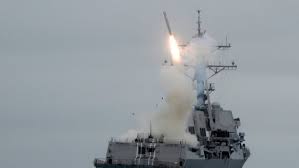
The Russians sent two warships to Syria in 2013 in response to President Obama’s threat to “punish” Assad for using chemical weapons against insurgents.
What happens if American and Russian warships start trading salvos? Or if Russian President Vladimir Putin orders an attack on Israel, in return for America’s attack on Russia’s ally, Syria?
U.S. warship firing Tomahawk Cruise missile
It was exactly that scenario–Great Powers going to war over conflicts between their small-state allies–that triggered World War l.
Tenth, while Islamic nations like Syria and Egypt wage war within their own borders, they will lack the resources–and incentive–to launch attacks against the United States.
Every dead Hezbollah and Al-Qaeda member makes the United States that much safer. Every dead supporter of Hezbollah or Al-Qaeda makes the United States that much safer.
The peoples of the Middle East have long memories for those who commit brutalities against them. In their veins, the cult of the blood feud runs deep.
When Al-Qaeda blows up civilians in Beirut, it’s certain that their relatives will urge Hezbollah to take brutal revenge. And it’s equally certain that Hezbollah will do so.
Similarly, when Hezbollah does, those who support Al-Qaeda will demand even more brutal reprisals against Hezbollah.
No American could instill such hatred in Al-Qaeda for Hezbollah–or vice versa. This is entirely a war of religious and sectarian hatred.
This conflict could easily become the Islamic equivalent of “the Hundred Years’ War” that raged from 1337 to 1453 between England and France.
When Adolf Hitler invaded the Soviet Union in 1941, then-Senator Harry Truman said: “I hope the Russians kill lots of Nazis and vice versa.”
That should be America’s view whenever its sworn enemies start killing off each other. Americans should welcome such self-slaughters, not become entrapped in them.


_underway_in_the_Pacific_Ocean_on_31_May_2015.JPG&imgrefurl=https%3A%2F%2Fen.wikipedia.org%2Fwiki%2FUSS_Carl_Vinson&docid=_CVahKI_7obrGM&tbnid=5YNeIda1dVcZQM%3A&w=3451&h=2301&ved=0ahUKEwid67qv7PvKAhVL7WMKHUoVBEUQxiAIAg&iact=c&ictx=1)


 Bureaucracybuster's Blog
ABC NEWS, ADOLF HITLER, AL QAEDA, ARTHUR M. CUMMINGS, BARACK OBAMA, BOKO HARAM, BOSTON MARATHON BOMBING, CANADA, CBS NEWS, CNN, DAVID CAMERON, DONALD TRUMP, FACEBOOK, FBI, HATE CRIMES, ISLAM, ISLAMIC STATE OF IRAQ AND SYRIA, MOHAMMED, NAZI GERMANY, NBC NEWS, POLITICAL CORRECTNESS, RELIGION, ROBERT MEULLER III, RONALD KESSLER, SAMUEL HUNTINGTON, STEVEN EMERSON, TALIBAN, TERRORISM, THE CLASH OF CIVILIZATIONS, THE INVESTIGATIVE PROJECT ON TERRORISM, THE LOS ANGELES TIMES, THE NEW YORK TIMES, THE SECRETS OF THE FBI, THE WALL STREET JOURNAL, THE WASHINGTON POST, THE WHITE CLIFFS OF DOVER, TWITTER, VERA LYNN, WORLD TRADE CENTER, WORLD WAR ii
UNDER ISLAMIC ATTACK BUT REFUSING TO ADMIT IT: PART TWO (END)
In Bureaucracy, History, Military, Politics, Social commentary on March 29, 2016 at 12:08 amDuring World War II, British singer Vera Lynn comforted her war-weary fellow citizens with a poignant rendition of “The White Cliffs of Dover.”
The appeal of the song lay in its promise that, once Nazi Germany was defeated, peace and normality would return.
Click here: Vera Lynn: The White Cliffs of Dover – YouTube
And despite being threatened with invasion in 1940 and devastated by massive bombing raids in 1940-41, citizens of Great Britain could take heart in the following:
Wehrmacht soldiers marching through conquered France
Today, Western nations under attack by Islamic “holy warriors” face none of those advantages. Islam has no single capitol city–or leader.
Nor do Islam’s jihadist legions wear uniforms. Many of them don’t speak Arabic or wear clothing associated with Arabs, such as flowing robes and headdresses.
More ominously, millions of Islam’s potential “warriors” live within the very Western nations they despise. They can get all the instruction and inspiration they need to wreck havoc simply by going to the Internet.
Or, if they have the money, by traveling overseas to such terrorist-recruiting centers as in Syria or Afghanistan.
And yet, faced with an unprecedented threat to their security, many Western leaders refuse to publicly acknowledge this fundamental truth:
Even if the West isn’t at war with Islam, Islam is at war with the West.
Leaders like President Barack Obama, who insisted, at a White House Summit on Countering Violent Extremism in February, 2015: “We are not at war with Islam. We are at war with people who have perverted Islam.”
David Cameron
And leaders like British Prime Minister David Cameron, who said on August 29, 2014: “Islam is a religion observed peacefully by over a billion people. Islamist extremism is a poisonous ideology observed by a minority.”
It was at this same press conference that Cameron announced that United Kingdom authorities would soon begin revoking the passports of British citizens traveling to Syria.
Arthur M. Cummings, the FBI’s executive assistant director for national security, has no use for such Politically Correct terms as “man-caused disasters” to refer to terrorism. Nor does he shy away from terms such as “jihadists” or “Islamists.”
“Of course Islamists dominate the terrorism of today,” he says bluntly.
In May, 2014, Steven Emerson, a nationally recognized expert on terrorism, posted an ad in The New York Times, warning about the dangers of PC-imposed censorship:
“Our nation’s security and its cherished value of free speech has been endangered by the bullying campaigns of radical Islamic groups, masquerading as ‘civil rights’ organizations, to remove any reference to the Islamist motivation behind Islamic terrorist attacks.
“These groups have pressured or otherwise colluded with Hollywood, the news media, museums, book publishers, law enforcement and the Obama Administration in censoring the words ‘Islamist’, ‘Islamic terrorism’, ‘radical Islam’ and ‘jihad’ in discussing or referencing the threat and danger of Islamic terrorism.
“This is the new form of the jihadist threat we face. It’s an attack on one of our most sacred freedoms—free speech—and it endangers our very national security. How can we win the war against radical Islam if we can’t even name the enemy?”
He has a point–and a highly legitimate one.
Imagine the United States fighting World War II–and President Franklin Roosevelt banning the use of “fascist” in referring to Nazi Germany or “imperialist” in describing Imperial Japan.
Imagine CNN-like coverage of the Nazi extermination camps, with their piles of rotting corpses and smoking gas ovens, while a commentator reminds us that “Nazism is an ideology of peace.”
Then consider these Islamic terrorist outrages of our own time:
In every one of these attacks, the perpetrators openly announced that their actions had been motivated by their Islamic beliefs.
In his groundbreaking book, The Clash of Civilizations (1996) Samuel Huntington, the late political scientist at Harvard University, noted:
“The fundamental problem for the West is not Islamic fundamentalism. It is Islam, a different civilisation whose people are convinced of the superiority of their culture and are obsessed with the inferiority of their power.”
The West may not be at war with Islam–as countless Western politicians repeatedly assert. But Islamics have no qualms about declaring that they are at war with the West.
Share this: