Posts Tagged ‘AFGHANISTAN’
9/11 ATTACKS, ABC NEWS, AFGHANISTAN, AL QAEDA, ALTERNET, AMERICABLOG, AP, BABY BOOMER RESISTANCE, BARACK OBAMA, BLOOMBERG, BOLIVIA, BUZZFEED, CBS NEWS, CIA, CNN, COMMUNISM, CROOKS AND LIARS, CUBA, CUBAN MISSILE CRISIS, DAILY KOZ, DRUDGE REPORT, ERNESTO "CHE" GUEVARA, FACEBOOK, FIDEL CASTRO, FIVETHIRTYEIGHT, GEORGE W. BUSH, GREEN BERETS, HARPER’S MAGAZINE, HUFFINGTON POST, IRAQ, ISLAM, JOHN F. KENNEDY, MEDIA MATTERS, MOTHER JONES, MOVEON, MSNBC, NAVY SEALS, NBC NEWS, NEWSWEEK, NIKITA KHRUSHCHEV, NPR, OSAMA BIN LADEN, PAKISTAN, PBS NEWSHOUR, POLITICO, POLITICUSUSA, RAW STORY, REUTERS, SALON, SEATTLE TIMES, SLATE, SOVIET UNION, TALIBAN, TALKING POINTS MEMO, THE ATLANTIC, THE CHICAGO SUN-TIMES, THE CHICAGO TRIBUNE, THE DAILY BEAST, THE DAILY BLOG, THE GUARDIAN, THE HILL, THE HUFFINGTON POST, THE LOS ANGELES TIMES, THE NATION, THE NEW REPUBLIC, THE NEW YORK TIMES, THE VILLAGE VOICE, THE WASHINGTON POST, THINKPROGRESS, TIME, TRUTHDIG, TRUTHOUT, TWITTER, TWO POLITICAL JUNKIES, U.S. NEWS & WORLD REPORT, UPI, USA TODAY, WONKETTE
In Bureaucracy, History, Military, Politics, Social commentary on February 12, 2016 at 12:12 am
They both had beards. They both saw military action. They both passionately hated the United States.
And they both died in a hail of bullets.
And immediately after their deaths, both seemed to disappear from the face of the earth.
Ernesto “Che” Guevara and Osama bin Laden.
Two men who inspired widespread admiration among their supporters–and fear among their enemies.
Guevara, an Argentinian doctor-turned-Cuban revolutionary, sought to destroy the United States’ power to fight Communism. Bin Laden sought to destroy its power to intervene in the Middle East.
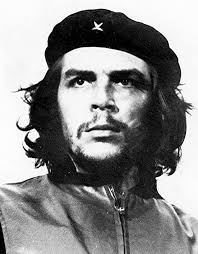
Ernesto “Che” Guevara
Guevara’s most optimistic hope was that Americans would eventually see the error of their capitalistic ways and convert to Communism. His last words were: “Tell Fidel [Castro] that he will soon see a triumphant revolution in America.”
But he was prepared to fight to the death–as indeed he did–to force revolutionary change upon the United States.
For Bin Laden, the cause was Islam, not Communism. His most optimistic hope was that Christian and Jewish Americans would eventually convert to Islam.
But if that didn’t happen, he, too, was prepared to attack Americans anywhere and in any way he could–as his private diary and documents have revealed.
Guevara died on October 9, 1967, at the hands of a CIA-directed operation run by the Bolivian army.
Bin Laden, creator of the Al-Qaeda (“The Base” terrorist network, met his end on May 1, 2011, during a raid by U.S. Navy SEALS on his compound in Pakistan.
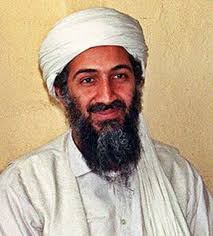
Osama bin Laden
One man–Guevara–has since attained secular sainthood in the eyes of millions of Communists and their sympathizers.
The other–bin Laden–has attained instant “martyr” status in the eyes of untold numbers of Islamic terrorists and their sympathizers.
Both men plotted constantly against the United States and eagerly sought its destruction.
In November, 1962, during an interview with the Communist newspaper, the London Daily Worker, Guevara raged against the Soviet Union’s recent withdrawal of nuclear missiles from Cuba.
Those “thirteen days” of the Cuban Missile Crisis that October had brought the world to the brink of nuclear destruction.
“If the missiles had remained, we would have used them against the very heart of the United States, including New York,” said Guevara.
“We must never establish peaceful coexistence. We must walk the path of victory even if it costs millions of atomic victims.”
Similarly, until the end of his life, bin Laden demanded more attacks like the one on September 11, 2001, that snuffed out the lives of 3,000 Americans.
This brought him into conflict with other Al-Qaeda members who wanted to launch assaults on more vulnerable targets outside the United States.
Guevara died as he had lived–violently.
In late October, 1966, he slipped out of Cuba. On November 3, he secretly arrived in La Paz, Bolivia, intent on re-staging the Cuban revolution among the Bolivian peasantry.

But the peasants showed no interest in his aims and in fact reported his movements to the Bolivian army.
The army, in turn, was being advised by United States Green Berets under the direction of the CIA.
On October 7, 1967, an informant tipped off the Bolivian Special Forces to the location of Guevara’s guerrilla camp in the Yuro ravine.
On October 8, they encircled the area with 1,800 soldiers. In the shootout that followed, Guevara was wounded and taken prisoner while leading a detachment.
His rifle broken by a lucky shot, a twice-wounded Guevara shouted: “Do not shoot! I am Che Guevara and worth more to you alive than dead.”
Quickly informed of Guevara’s capture, the Bolivian government debated his fate: Should he be immediately executed or placed on trial?
On the morning of October 9, Bolivian President Rene Barrientos ordered that Guevara be executed. Barrientos feared that placing him on trial would create an international media circus and/or render Bolivia vulnerable to efforts to free him.
The Bolivian government planned to declare that Guevara had been killed in action during a clash with the nation’s armed forces. Special instructions were thus issued.
These came from Felix Rodrieguez, a CIA agent acting as advisor to the Bolivians.
The executioner would be Mario Teran, a Bolivian army sergeant who had lost three of his friends in an earlier firefight with Guevara’s band of guerrillas.
Rodriguez ordered Teran to aim carefully to make it appear that Guevara had been killed in action.
To his surprise, Rodriguez found himself highly impressed with Guevara’s courage. When informed of his imminent execution, Guevara blanched, then quickly got control of himself.

Felix Rodriguez, left, Che, center
“It is better like this,” he said. “I should never have been captured alive.”
Rodriguez asked if he had any messages for his family. Guevara replied: “Tell Fidel [Castro, the president/dictator of Cuba] that he will soon see a triumphant revolution in America.
“And tell my wife to remarry and try to be happy.”
When Sergeant Teran entered the hut, Guevara told his executioner: “I know you’ve come to kill me. Shoot, coward! You are only going to kill a man!”
Teran hesitated, then opened fire with his semiautomatic rifle, hitting Guevara in his arms and legs.
Guevara writhed on the ground, apparently biting one of his wrists to avoid crying out. Teran then fired several more times, finally killing him with a shot in the chest.
9/11 ATTACKS, ABC NEWS, ADOLF HITLER, AFGHANISTAN, AL QAEDA, BARACK OBAMA, BASHAR AL-ASSAD, CARLOS THE JACKAL, CBS NEWS, CHEMICAL WARFARE, CHINA, CNN, CONGRESS, FACEBOOK, GEORGE H.W. BUSH, GEORGE W. BUSH, HARRY S. TRUMAN, HIZBOLLAH, IRAN, IRAQ, ISLAM, ISRAEL, NAZI GERMANY, NBC NEWS, OSAMA BIN LADEN, RELIGION, RUSSIA, SADDAM UISSEIN, SHIITE MUSLIMS, SUNNI MUSLIMS, SYRIA, SYRIAN OBSERVATORY FOR HUMAN RIGHTS, TERRORISM, THE CHICAGO SUN-TIMES, THE CHICAGO TRIBUNE, THE LOS ANGELES TIMES, THE NEW YORK TIMES, THE SYRIAN OBSERVATORY FOR HUMAN RIGHTS, THE WASHINGTON POST, THE WORLD POST, TWITTER, VLADIMIR PUTIN, WORLD WAR 1
In Bureaucracy, History, Military, Politics on February 11, 2016 at 12:01 am
Sometimes your worst enemies aid you unintentionally–and in ways you could never help yourself. That’s what America’s Islamic enemies are now doing throughout the Middle East.
Contrary to the propaganda of Republican militarists and Democratic do-gooders, Americans should be thrilled at the mutual destruction of their most dedicated enemies.
In the first installment of this series, three reasons were given for why the United States should not intervene in the Syrian conflict. This will offer the remaining seven.
Fourth: Since 1979, Syria has been listed by the U.S. State Department as a sponsor of terrorism.
Among the terrorist groups it supports: Hizbollah and Hamas. For many years, Syria provided a safe-house in Damascus for Illich Ramirez Sanchez–the notorious international terrorist known as Carlos the Jackal.
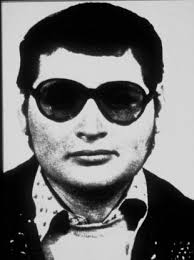
Ilich Ramírez Sánchez–“Carlos the Jackal”
Fifth: The United States had no part in creating or supporting the decades-long dictatorship of the Assad regime–which has long been hostile to America.
After a long series of political maneuverings, Hafez al-Assad seized power in 1970 and was proclaimed “president” next year. With aid from the Soviet Union, he built up the Syrian army. Using arrest, torture and execution, he ruled Syria as a dictator until he died in 2000.
His son, Bashar, then took command of Syria. Like his father, he has supported Palestinian and Lebanese militant groups. And, like his father, he continues to receive financial and military support from the successor to the Soviet Union, the Russian Federation.
Thus, America has no moral obligation of any kind to Syria–or Syrians.
Sixth: Intervening in Syria could lead to Syrian attacks against Israel.
An American military strike on Syrian government forces could lead the country’s dictator, Bashar al-Assad, to attack Israel–perhaps even with chemical weapons. Assad could do this simply because he hates Jews–or to lure Israel into attacking Syria.
If that happened, the Islamic world–which lusts to destroy Israelis even more than “apostate” Muslims–would rally to Syria against the United States, Israel’s chief ally.
Seventh: Committing American ground forces to Syria or just continuing to bomb targets there could lead to Islamic terrorism against the United States–at home or abroad.
This has already happened with Russia, which, on September 30, 2015, began bombing airstrikes on forces trying to overthrow Assad.
On October 31, Airbus A321, a Russian airliner, broke up in mid-air, then crashed in Egypt’s Sinai Peninsula, killing all 224 people on board.
In Egypt, a militant group affiliated to the Islamic State of Iraq and Syria (ISIS) claimed it had brought down the plane “in response to Russian airstrikes that killed hundreds of Muslims on Syrian land.”
The same fate could well befall American civilians and/or soldiers.
Eighth: China and Russia are supporting the Assad dictatorship–and the brutalities it commits against its own citizens.
This reflects badly on them–not the United States. And any move by the United States to directly attack the Assad regime could ignite an all-out war with Russia and/or China.
What happens if Russian and American forces start trading salvos? Or if Russian President Vladimir Putin orders an attack on America’s ally, Israel, in return for America’s attack on Russia’s ally, Syria?
It was exactly that scenario–Great Powers going to war over conflicts between their small-state allies–that triggered World War I.
Ninth: The United States cannot defeat ISIS through air power alone–thus making commitment of ground troops inevitable.
President Barack Obama authorized airstrikes against ISIS in September, 2014. The United States Air Force has since dropped thousands of bombs on ISIS convoys.
This has not destroyed ISIS. And its failure to do so has only led to demands by hawkish Republicans and Democrats for “boots on the ground.”
Tenth–and most importantly: While Islamic nations like Syria, Iraq and Egypt wage war within their own borders, they will lack the resources–and incentive–to attack the United States.
Every dead Hizbollah and Al-Qaeda and ISIS member makes the United States that much safer. So does the death of every sympathizer of Hizbollah, Al-Qaeda and ISIS.
The peoples of the Middle East have long memories for those who commit brutalities against them. In their veins, the cult of the blood feud runs deep.
When Al-Qaeda blows up civilians in Beirut, their relatives will urge Hizbollah to take brutal revenge. And Hizbollah will do so. Similarly, when Hizbollah does, those who support Al-Qaeda will demand even more brutal reprisals against Hizbollah.

Al-Qaeda terrorists–now taking aim at Hezbollah terrorists
No American could instill such hatred in Al-Qaeda for Hizbollah–or vice versa. This is entirely a war of religious and sectarian hatred.
In fact, this conflict could easily become the Islamic equivalent of “the Hundred Years War” that raged from 1337 to 1453 between England and France.
When Adolf Hitler invaded the Soviet Union in 1941, then-Senator Harry S. Truman said: “I hope the Russians kill lots of Nazis–and vice versa.”
That should be America’s position whenever its sworn enemies start killing off each other. Americans should welcome such self-slaughters, not become entrapped in them.
9/11 ATTACKS, ABC NEWS, ADOLF HITLER, AFGHANISTAN, AL QAEDA, BARACK OBAMA, BASHAR AL-ASSAD, CARLOS THE JACKAL, CBS NEWS, CHEMICAL WEAPONS, CHINA, CNN, CONGRESS, FACEBOOK, GEORGE H.W. BUSH, GEORGE W. BUSH, HARRY S. TRUMAN, HIZBOLLAH, IRAQ, ISLAM, ISRAEL, NAZI GERMANY, NBC NEWS, OSAMA BIN LADEN, RELIGION, RUSSIA, SADDAM HUSSEIN, SHIITE MUSLIMS, SUNNI MUSLIMS, SYRIA, TERRORISM, THE CHICAGO SUN-TIMES, THE CHICAGO TRIBUNE, THE LOS ANGELES TIMES, THE NEW YORK TIMES, THE SYRIAN OBSERVATORY FOR HUMAN RIGHTS, THE WASHINGTON POST, THE WORLD POST, TWITTER, VLADIMIR PUTIN, WORLD WAR 1
In Bureaucracy, History, Military, Politics on February 10, 2016 at 12:01 am
The headline in the February 6, 2016 edition of The World Post said it all: “Geneva III: The Stillborn Conference and the Endemic Failure of the International Community.”
And just what was it that the international community had failed to achieve?
“While approaching the fifth anniversary of the Syrian civil war on March 15 — which claimed more than 300,000 lives, approximately 700,000 wounded, 4 million fled the country, and another 6 million displaced within Syria — the international community has failed to put an end to bloodshed in this war-torn country.”
Put another way: More than 300,000 potential or actual Islamic terrorists will never pose a threat to the United States or Western Europe.
The Syrian conflict began on March 15, 2011, triggered by protests demanding political reforms and the ouster of dictator Bashar al-Assad.
According to the Syrian Observatory for Human Rights–which is safely located in Great Britain–the total number of dead is now more than 310,000.

And who does the Observatory–and The World Post–blame for this Islamic self-slaughter?
Why, the West, of course.
According to the Observatory:
“The silence of the International community for the war crimes and crimes against humanity committed in Syria encourages the criminals to kill more and more Syrian people because they have not found anyone that deter them from continuing their crimes that cause to wound more than 1500000 people; some of them with permanent disabilities, make hundreds of thousands children without parents, displace more than half of Syrian people and destroy infrastructure, private and public properties.”
And according to the Post:
“It is disgraceful that the international community has successfully concluded an agreement with the regime in a very short period of time to remove its chemical weapons while completely failed to save the lives of millions of innocent children, women, and elderly people throughout Syria in the past five years!”
Got that? It’s the duty of non-Muslims to bring civilized behavior to Islamics.
And why are all these murderers eagerly slaughtering one another?
Because of a Muslim religious dispute that traces back to the fourth century.
Yes, it’s Sunni Muslims, who make up a majority of Islamics, versus Shiite Muslims, who comprise a minority. Each group considers the other takfirs–that is, “apostates.”
And, in Islam, being labeled an apostate can easily get you murdered.
There is, however, an optimistic way to view this conflict:
- At least 310,000 actual or potential enemies of Western civilization–and especially the United States–have chosen to slaughter one another.
- Additional thousands are certain to follow their example.
- And the United States cannot be held in any way responsible for it.
Yet, Left-wing do-gooders and Right-wing militarists demand that the United States thrust itself into a conflict that doesn’t threaten America in any way.
In fact, it’s in America’s best interests that this conflict last as long as possible and spread as widely as possible throughout the Islamic community.
Here’s why:
First: In Syria, two of America’s most deadly enemies are waging war on each other.
Yes, it’s Hizbollah (Party of God) vs. Al-Qaeda (The Base).
Hizbollah is comprised of Shiite Muslims. A sworn enemy of Israel, it has kidnapped scores of Americans suicidal enough to visit Lebanon and truck-bombed the Marine barracks in Beirut in 1983, killing 299 Americans.
Flag of Hezbollah
Al Qaeda, on the other hand, is made up of Sunni Muslims. It is intolerant of Shiites and has instigated violence against them. It denounces them as takfirs–“apostates”–and thus worthy of extermination.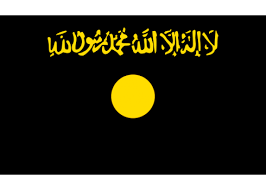
Flag of Al-Qaeda
Al Qaeda has attacked the mosques and gatherings of liberal Muslims, Shiites, Suffis and other non-Sunnis. Examples of sectarian attacks include the Sadr City bombings, the 2004 Ashoura massacre and the April, 2007 Baghdad bombings.
On one side of this conflict is the Ba’ath regime of Bashar al-Assad, whose allies include Russia, Iran, Hizbollah and elements of the Iraqi government.
On the other side are a host of Syrians and thousands of foreign Sunni fighters, some of whom are affiliated with Al-Qaeda.
Second: The United States has been at war in the Middle East for 14 years–since the terror attacks of September 11, 2001.
In October, 2011, America first committed its forces to Afghanistan, in pursuit of Osama bin Laden, the 9/11 mastermind. Failing to find him, its forces nevertheless stayed on in that country, hoping–and failing–to bring civilization to its barbaric population.
Then, in March, 2003, President George W. Bush invaded Iraq to settle a personal score with its dictator, Saddam Hussein.
After Bush’s father, George H.W. Bush, launched the 1991 Gulf War, Hussein had had the bad grace to not topple from power. When the elder Bush lost a second term as President to Bill Clinton in 1992, his son blamed Hussein.
Third, the United States is still fighting a brutal war in Afghanistan.
America originally intended to withdraw all but a small embassy-based force of 1,000 troops by the end of 2016.
But as the Taliban re-emerged as a threat, President Barack Obama announced he would maintain 9,800 troops there for most of 2016. About 5,500 troops will still be in Afghanistan by 2017.
"EXCALIBUR", ABC NEWS, AFGHANISTAN, ALEXANDER THE GREAT, CBS NEWS, CNN, GEORGE W. BUSH, IRAQ, JOHN BOORMAN, KING ARTHUR, MSNBC, NBC NEWS, STEVEN PRESSFIELD, THE AFGHAN CAMPAIGN, THE CHICAGO SUN-TIMES, THE CHICAGO TRIBUNE, THE HUFFINGTON POST, THE LOS ANGELES TIMES, THE NEW YORK TIMES, THE VIRTUES OF WAR, THE WASHINGTON POST, U.S. MARINE CORPS
In History, Military, Politics, Social commentary on December 25, 2015 at 3:26 pm
In “Excalibur,” director John Boorman’s brilliant 1981 telling of the King Arthur legends, Merlin warns Arthur’s knights–and us: “For it is the doom of men that they forget.”
Not so Steven Pressfield, who repeatedly holds up the past as a mirror to our present. Case in point: His 2006 novel, The Afghan Campaign.

By 2006, Americans had been fighting in Afghanistan for five years. And today, almost ten years into the same war, there remains no clear end in sight–to our victory or withdrawal.
Pressfield’s novel, although set 2,000 years into the past, has much to teach us about what are soldiers are facing today in that same alien, unforgiving land.
Matthias, a young Greek seeking glory and opportunity, joins the army of Alexander the Great. But the Persian Empire has fallen, and the days of conventional, set-piece battles–where you can easily tell friend from foe–are over.
Alexander next plans to conquer India, but first he must pacify its gateway–Afghanistan. Here that the Macedonians meet a new–and deadly–kind of enemy.
“Here the foe does not meet us in pitched battle,” warns Alexander. “Even when we defeat him, he will no accept our dominion. He comes back again and again. He hates us with a passion whose depth is exceeded only by his patience and his capacity for suffering.”

Alexander the Great
Matthias learns this early. In his first raid on an Afghan village, he’s ordered to execute a helpless prisoner. When he hesitates, he’s brutalized until he strikes out with his sword–and botches the job.
But, soon, exposed to an unending series of atrocities–committed by himself and his comrades, as well as the enemy–he finds himself transformed.
And he hates it. He agonizes over the gap between the ideals he embraced when he became a soldier–and the brutalities that have drained him of everything but a grim determination to survive at any cost.
Pressfield, a former Marine himself, repeatedly contrasts how civilians see war as a kind of “glorious” child’s-play with how soldiers actually experience it.
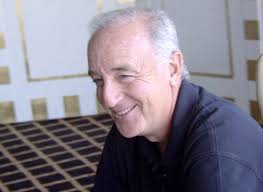
He creates an extraordinary exchange between Costas, an ancient-world version of a CNN war correspondent, and Lucas, a soldier whose morality is outraged at how Costas and his ilk routinely prettify the indescribable.
And we know the truth of this exchange immediately. For we know there are doubtless brutalities inflicted by our troops on the enemy–and atrocities inflicted by the enemy upon them–that never make the headlines, let alone the TV cameras.
We also know that, decades from now, thousands of our former soldiers will carry horrific memories to their graves. These memories will remain sealed from public view, allowing their fellow but unblooded Americans to sleep peacefully, unaware of the terrible price that others have paid on their behalf.
Like the Macedonians (who call themselves “Macks”), our own soldiers find themselves serving in an all-but-forgotten land among a populace whose values could not be more alien from our own if they came from Mars.
Instincitvely, they turn to one another–not only for physical security but to preserve their last vestiges of humanity. As the war-weary veteran, Lucas, advises:
“Never tell anyone except your mates. Only you don’t need to tell them. They know. They know you. Better than a man knows his wife, better than he knows himself. They’re bound to you and you to them, like wolves in a pack. It’s not you and them. You are them. The unit is indivisible. One dies, we all die.”
Put conversely: One lives, we all live.
Pressfield has reached into the past to reveal fundamental truths about the present that most of us could probably not accept if contained in a modern-day memoir.
These truths take on an immediate poignancy owing to our own current war in Afghanistan. But they will remain just as relevant decades from now, when our now-young soldiers are old and retired.
This book has been described as a sequel to Pressfield’s The Virtues of War: A Novel of Alexander the Great, which appeared in 2004. But it isn’t.
Virtues showcased the brilliant and luminous (if increasingly dark and explosive) personality of Alexander the Great, whose Bush-like, good-vs.-evil rhetoric inspired men to hurl themselves into countless battles on his behalf.
But Afghan thrusts us directly into the flesh-and-blood realities created by that rhetoric: The horrors of men traumatized by an often unseen but always menacing enemy, and the horrors they must inflict in return if they are to survive in a hostile and alien world.
ABC NEWS, AFGHANISTAN, AIRBUS A321, AL QAEDA, BARACK OBAMA, BASHAR AL-ASSAD, CBS NEWS, CNN, FACEBOOK, IRAQ, ISLAM, ISLAMIC STATE OF IRAQ AND SYRIA, JOHN F. KENNEDY, MALAYSIA FLIGHT 17, MUSLIMS, NATO, NBC NEWS, ROBERT FROST, RUSSIA, SOVIET UNION, STINGER MISSILES, SYRIA, TERRORISM, THE CHICAGO TIMES, THE CHICAGO TRIBUNE, THE LOS ANGELES TIMES, THE NEW YORK TIMES, THE WASHINGTON POST, TURKEY, TWITTER, USA TODAY, VLADIMIR PUTIN
In Bureaucracy, History, Military, Politics on November 25, 2015 at 12:17 pm
Russian President Vladimir Putin is no admirer of President John F. Kennedy.
Yet he would no doubt agree with the spirit of the poem that Robert Frost intended to read at Kennedy’s 1961 inaugural.
Entitled “Dedication,” the poem went unread because the sunlight reflecting off snow blinded the elderly poet. So Frost relied on memory to recite an earlier creation: “The Gift Outright.”
“Dedication,” however, was far more in keeping with the upcoming aggressive hubris of the Kennedy years:
It makes the prophet in us all presage
The glory of a next Augustan age
Of a power leading from its strength and pride,
Of young ambition eager to be tried,
Firm in our free beliefs without dismay
In any game the nations want to play.
On September 30, Putin embarked on a game of big-power politics. He started launching airstrikes against Syria.
The objective: To bolster the dictatorship of Russia’s ally, Syrian President Bashar al-Assad, who is now caught up in civil war.
This began on March 15, 2011, triggered by protests demanding political reforms and the ouster of al-Assad. More than 310,000 people have been killed in the fighting.
The Obama administration is worried about Russian intentions. And Republicans are furious, demanding that American military forces directly confront those of Russia.
Yet despite Right-wing fears about Russia, there is no reason for alarm–by Americans.
Putin’s intervention in Syria’s civil war offers three possible outcomes for the United States. And they’re all positive.
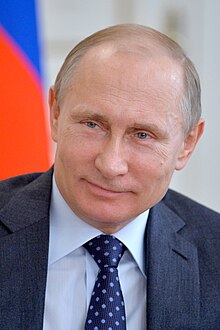
Vladimir Putin
First, the Russians will kill thousands of America’s sworn enemies.
Russians are well-known for their disregard for human life. During their invasion of Germany in 1945, Russian soldiers literally nailed civilians to barn doors, squashed them under their tanks, and raped countless women of all ages.
In Syria, they will slaughter everyone who gets in their way. Thus, they will kill far more of America’s Islamic enemies than even our own military–hamstrung by do-gooder “rules of engagement”–could possibly eliminate.
Second, Russia will replace the United States as “The Great Satan” in the eyes of most Islamics.
The Soviet Union waged a ruthless war against Afghanistan from 1979 to 1989. Out of that war grew Al-Qaeda. Millions of Islamics still hate Russians for their brutalities.
From 1999 to 2009, Russia fought a brutal war against Islamics in Chechnya. Chechens responded with terrorism across Russia.
Russia’s intervention in Syria will only harden its image as an enemy of Islam–even if it’s supporting one group of Islamics (the Assad regime) against others.
If Islamic terrorism starts raging throughout Russia, Putin may be forced to back down from his military moves against Syria and Ukraine.
Third, if Russian planes get shot down or Russian soldiers killed, Russia will suffer the casualties–not the United States.
The Soviet Union never fully recovered from its losses in Afghanistan–13,310 soldiers killed, 35,478 wounded.
If Russia starts taking heavy losses in Syria or at home through terrorism, this could lead to widespread unrest. Even Vladimir Putin could find himself in danger of being replaced.
And for Russia, the chicken Kiev has already come home to roost.
On October 31, Airbus A321, a Russian airliner, broke up in mid-air, then crashed in Egypt’s Sinai Peninsula, killing all 224 people on board.
The plane was carrying holidaymakers from the Red Sea resort of Sharm el-Sheikh to St Petersburg when it crashed into a mountainous area of central Sinai.
In Egypt, a militant group affiliated to the Islamic State of Iraq and Syria (ISIS) claimed that it had brought down the plane “in response to Russian airstrikes that killed hundreds of Muslims on Syrian land.”
On November 19, ISIS published an online photo of a soft drink can and two components–a detonator and a switch–that it claimed brought down the plane.
The crash has proved emotionally wrenching for Russians.
Flags across Russia flew at half-staff and Russian Orthodox priests conducted services to pray for the victims.
President Putin declared a nationwide day of mourning. In St. Petersburg, home to most of the victims, authorities ordered the mourning to last for three days.

Flag of ISIS
And, on November 24, another such loss occurred: A Russian fighter was shot down on the Turkish-Syrian border by two Turkish F-16s.
Turkish officials claimed that it had violated Turkish airspace 10 times within a five-minute period.
This marked the first time in a half-century that a member of NATO–in this case, Turkey–has downed a Russian plane.
Vladimir Putin quickly called the shootdown a “stab in the back committed by accomplices of terrorists.”
And he warned: “The tragic event will have serious consequences for Russian-Turkish relations.”
With the armed forces of so many Great Powers–France, Russia, Britain and America–now crowding into Syria, such an outcome was probably inevitable.
It was exactly that scenario–Great Powers going to war over conflicts involving their small-state allies/clients–that triggered World War I.
A conflict between Russia and Turkey–a member of NATO–could easily trigger World War III.
9/11 ATTACKS, ABC NEWS, ADOLF HITLER, AFGHANISTAN, AL QAEDA, BARACK OBANA, BARCK OBAMA, BASHAR AL-ASSAD, CARL VON CLAUSEWITZ, CARLOS THE JACKAL, CBS NEWS, CHEMICAL WEAPONS, CHINA, CNN, CONGRESS, EGYPT, FACEBOOK, HARRY S. TRUMAN, HARRY TRUMAN, IRAN, IRAQ, ISLAM, ISRAEL, KORAN, MUSLIMS, NAZI GERMANY, NBC NEWS, OSAMA BIN LADEN, RUSSIA, SADDAM HUSSEIN, SOVIET UNION, SYRIA, TALIBAN, TERRORISM, THE LOS ANGELES TIMES, THE NEW YORK TIMES, THE WASHINGTON POST, TWITTER, UNITED NATIONS, WEAPONS OF MASS DESTRUCTION, WORLD WAR 1
In Bureaucracy, History, Military, Politics, Social commentary on November 23, 2015 at 12:04 am
Americans had a good reason to welcome the coming of 2014: Al-Qaeda and Hezbollah had gone to war–with each other.
Al-Qaeda terrorists–now taking aim at Hezbollah terrorists
This is an event the United States could not have predicted or instigated. But it is definitely one in which Americans can take hope.
In Part One, two of those reasons for this were outlined. Here are the remaining eight:
Third, the United States is still fighting a brutal war in Afghanistan.
Following the 9/11 attacks on New York and Washington, D.C., the Taliban was ousted in Afghanistan by American and Afghan forces in 2001.
The initial goal of this war was to quickly destroy Al Qaeda–especially its leader, Osama Bin Laden–and its Taliban protectors.
But, over time, Washington policy-makers embarked on a “nation-building” effort. And U.S. forces wound up occupying the country for the next ten years.
This increasingly brought them into conflict with primitive, xenophobic Afghans, whose mindset remains that of the sixth century.
The United States originally intended to withdraw all but a small embassy-based force of 1,000 troops by the end of 2016.
But as the Taliban re-emerged as a threat, President Barack Obama announced he would maintain 9,800 troops there for most of 2016. About 5,500 troops will still be in Afghanistan by 2017.
Fourth, intervening in Syria could produce similar unintended consequences for American forces–and make the United States a target for more Islamic terrorism.
Fifth, since 1979, Syria has been listed by the U.S. State Department as a sponsor of terrorism. Among the terrorist groups it supports are Hezbollah and Hamas.
For many years, Syria provided a safe-house in Damascus to Ilich Ramírez Sánchez–the notorious terrorist better known as Carlos the Jackal.
Ilich Ramírez Sánchez–“Carlos the Jackal”
Sixth, according to U.S. defense reports, Syria has weapons of mass destruction–and the ballistic missiles to deliver them.
Syria has an active chemical weapons program, including significant reserves of the deadly nerve agent sarin.
The recent destruction of much of Syria’s WMD stockpile–at the demand of President Barack Obama–doesn’t erase its ability to create more. And this is likely to re-occur as soon as the United States becomes preoccupied with other concerns.
Seventh, the United States had no part in creating the Assad regime.
Thus, Americans have no moral obligation to support those Syrians trying to overthrow it.
Moreover, Syria has never been an American ally–and has, in fact, directed terrorism against American forces stationed in Beirut, Lebanon.
On October 23, 1983, Syrian suicide bombers drove trucks into two buildings housing American and French military forces. Total killed: 299.
In short, the United States owes Syria nothing.
Eighth, China and Russia are fully supporting the Assad dictatorship–and the brutalities it commits against its own citizens.
This reflects badly on them–not the United States. America should focus world outrage against these longtime brutal dictatorships for propping up another one.
Ninth, the United States could find itself in a shooting war with Russia and/or China.
The Russians sent two warships to Syria in 2013 in response to President Obama’s threat to “punish” Assad for using chemical weapons against insurgents.
What happens if American and Russian warships start trading salvos? Or if Russian President Vladimir Putin orders an attack on Israel, in return for America’s attack on Russia’s ally, Syria?
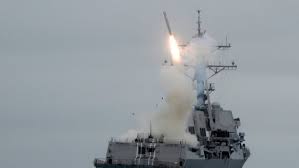
U.S. warship firing Tomahawk Cruise missile
It was exactly that scenario–Great Powers going to war over conflicts between their small-state allies–that triggered World War l.
Tenth, while Islamic nations like Syria and Egypt wage war within their own borders, they will lack the resources–and incentive–to launch attacks against the United States.
Every dead Hezbollah and Al-Qaeda member makes the United States that much safer. Every dead supporter of Hezbollah or Al-Qaeda makes the United States that much safer.
The peoples of the Middle East have long memories for those who commit brutalities against them. In their veins, the cult of the blood feud runs deep.
When Al-Qaeda blows up civilians in Beirut, it’s certain that their relatives will urge Hezbollah to take brutal revenge. And it’s equally certain that Hezbollah will do so.
Similarly, when Hezbollah does, those who support Al-Qaeda will demand even more brutal reprisals against Hezbollah.
No American could instill such hatred in Al-Qaeda for Hezbollah–or vice versa. This is entirely a war of religious and sectarian hatred.
This conflict could easily become the Islamic equivalent of “the Hundred Years’ War” that raged from 1337 to 1453 between England and France.
When Adolf Hitler invaded the Soviet Union in 1941, then-Senator Harry Truman said: “I hope the Russians kill lots of Nazis and vice versa.”
That should be America’s view whenever its sworn enemies start killing off each other. Americans should welcome such self-slaughters, not become entrapped in them.
ABC NEWS, AFGHANISTAN, AL QAEDA, BARACK OBANA, BASHAR AL-ASSAD, BENJAMIN NETANYAHU, CARLOS THE JACKAL, CBS NEWS, CHINA, CNN, CONGRESS, EGYPT, FACEBOOK, HARRY S. TRUMAN, HEZBOLLAH, IRAN, IRAQ, IRAQ WAR, ISLAM, ISRAEL, KORAN, NAZI GERMANY, NBC NEWS, OSAMA BIN LADEN, PRESIDENT BARACK OBAMA, RUSSIA, SADDAM HUSSEIN, SHIA MUSLIMS, SOVIET UNION, SUNNI MUSLIMS, SYRIA, TALIBAN, TERRORISM, THE LOS ANGELES TIMES, THE NEW YORK TIMES, THE WASHINGTON POST, TWITTER, UNITED NATIONS, WEAPONS OF MASS DESTRUCTION
In Bureaucracy, History, Military, Politics, Social commentary on November 20, 2015 at 1:00 am
Sometimes your worst enemies aid you in ways you could never help yourself.
From July 10 to October 31, 1940, hundreds of badly-outnumbered pilots of the British Royal Air Force (RAF) fought off relentless attacks by Germany’s feared Luftwaffe.
For Germany’s Fuhrer, Adolf Hitler, it was a major setback.
He was forced to concede that he lacked the strength to destroy the British air force–thus making it possible for his navy to land German troop on English soil.
But Hitler wasn’t prepared to give up. He believed he could so terrorize Britons that they would demand that their government submit to German surrender demands.
From September 7, 1940 to May 21, 1941, the Luftwaffe subjected England–and especially London–to a ruthless bombing campaign that became known as The Blitz.
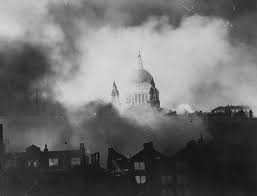
The undamaged St. Paul’s Cathredal, December, 1940
More than 100 tons of high explosives were dropped on 16 British cities. During 267 days (almost 37 weeks):
- London was attacked 71 times;
- Birmingham, Plymouth and Liverpool were attacked eight times;
- Bristol was attacked six times; Glasgow, five; Southampton four; and
- There was also at least one large raid on another eight cities.
Between 40,000 and 43,000 British civilians were killed. About 139,000 others were wounded.
“London can take it” went the British slogan. But, in the United States, Americans–including President Franklin D. Roosevelt–wondered: For how much longer?
Clearly, what Great Britain desperately needed most was a miracle.
Exactly that happened on June 22, 1941.
With 134 Divisions at full fighting strength and 73 more divisions for deployment behind the front, the German Wehrmacht invaded the Soviet Union.
Joseph Stalin, the longtime Soviet dictator, was stunned. The invasion had come less than two years after Germany had signed a non-aggression pact with the Soviet Union.
Hitler had turned on his partner-in-crime. The two dictators had greedily split Poland between them when Hitler launched his invasion on September 1, 1939.
Now they were locked in a fight to the death.
People in England were also surprised–but also suddenly hopeful. Britain now had an ally whose resources might tip the balance against Hitler.
In the United States, then-Senator Harry S. Truman spoke for many Americans when he said: “I hope the Russians kill lots of Nazis and vice versa.”
Today the United States faces just such an opportunity.
In Syria, two of America’s most deadly enemies are now waging war–with each other.
Yes, it’s Hezbollah (Party of God) vs. Al-Qaeda (The Base).
United Nations officials estimate that more than 70,000 people have died in Syria’s civil war since conflict began on March 15, 2011. The trigger: Protests demanding political reforms and the ouster of dictator Bashar al-Assad.
Hezbollah is comprised of Shiite Muslims, who form a minority of Islamics. A sworn enemy of Israel, it has kidnapped scores of Americans suicidal enough to visit Lebanon and truck-bombed the Marine Barracks in Beirut in 1983, killing 299 Americans.
Flag of Hezbollah
Al-Qaeda, on the other hand, is made up of Sunni Muslims, who form the majority of that religion. It is intolerent of non-Sunni Muslims and has instigated violence against them. It denounces them as “takfirs”–heretics–and thus worthy of extermination.
Al-Qaeda has attacked the mosques and gatherings of liberal Muslims, Shias, Sufis and other non-Sunnis. Examples of sectarian attacks include the Sadr City bombings, the 2004 Ashoura massacre and the April, 2007 Baghdad bombings.
Flag of Al-Qaeda
On one side is the Ba’ath regime of Bashir al-Assad, whose allies include Russia, Iran, Hezbullah, and elements in the Iraqi government.
On the other side are a host of Syrians and thousands of foreign Sunni fighters some of whom have affiliated with Al-Qaeda.
And now that civil war has spread into neighborhing Lebanon.
On January 2, 2014, at least four people were killed and 77 injured when a car bomb exploded in a residential neighborhood in southern Beirut.
The Shiite-dominated district, Haret Hreik, is known as a Hezbollah stronghold.
Two days later, an Al-Qaeda linked group claimed responsibility for the attack.
At a press conference for President Barack Obama on March 20, 2013, a reporter asked:
“Morally, how is it possible that for the last two years, tens of thousands of innocent civilians [in Syria] are being massacred and no one–the world, the United States and you–are doing anything to stop it immediately?”
That is entirely the wrong way to view this conflict.
There are solidly practical reasons why the United States should avoid this bloodfest–while cheering on each of its mortal enemies to do its worst.
First, the United States only recently disengaged from Iraq.
On Dec. 15, 2011, the American military formally ended its mission there. The war–begun in 2003–had cost the lives of 4,487 service members, with another 32,226 wounded.
Second, the war in Iraq fell victim to the law of unintended consequences.
The Bush administration invaded Iraq to turn it into a base–from which to intimidate its neighboring states: Jordan, Saudi Arabia, Kuwait, Turkey, Syria and Iran.
But while Saddam Hussein’s Iraq had been a counter-weight to the regional ambitions of Iran, the destruction of the Iraqi military created a power vacuum. Into this–eagerly–stepped the Iranian mullahs.
60 MINUTES, 9/11 ATTACKS, ABC NEWS, ADOLF HITLER, AFGHANISTAN, AL QAEDA, AYATOLLAH RUHOLLAH KHOMEINI, BARACK OBAMA, BASHAR AL-ASSAD, CARL VON CLAUSEWITZ, CARLOS THE JACKAL, CBS NEWS, CIA, CNN, FACEBOOK, HARRY TRUMAN, IMPERIAL HUBRIS, IRAN, ISLAM, ISLAMIC STATE OF IRAQ AND THE LEVANT, ISRAEL, MARCHING TOWARD HELL, MICHAEL SCHEUER, MUSLIMS, NAZI GERMANY, NBC NEWS, OSAMA BIN LADEN, RUSSIA, SHAH OF IRAN, SOVIET UNION, SYRIA, TERRORISM, THE CHICAGO TIMES, THE CHICAGO TRIBUNE, THE LOS ANGELES TIMES, THE NEW YORK TIMES, THE WASHINGTON POST, TWITTER, USA TODAY, VIETNAM WAR, VLADIMIR PUTIN, WORLD WAR 1
In Bureaucracy, History, Military, Politics, Social commentary, Uncategorized on November 19, 2015 at 12:14 am
According to Micheal Scheuer, America needs to end its role as Israel’s permanent bodyguard.
Scheuer is a 20-year CIA veteran–as well as an author, historian, foreign policy critic and political analyst.
Testifying before the House Committee on Homeland Security on October 9, 2013, Scheuer warned:
“If it was up to me, I’d dump the Israelis tomorrow. All I worry about is that continuing preaching of American politicians to the American people that our relationship with the Israelis doesn’t cause us to have dead Americans and extraordinary expenses in fighting the Muslim world.”
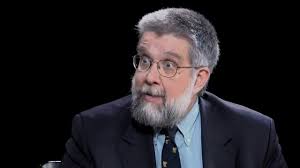
Michael Scheuer
For decades, the United States has pursued two policies in the Middle East, one based on relations with the Arab world and the other based on relations with Israel.
Policy 1: Maintaining access to vast amounts of Arab oil at low prices.
Policy 2: Maintaining the security of Israel.
Since the Arabs and Israelis hate each other, each side constantly tries to sway American support in its direction.
Every step the United States takes to defend Israel–diplomatically or militarily–ignites hatred of Americans among Islamics.
And every step–diplomatically or militarily–the United States takes to improve its relations with Islamic countries convinces Israelis that they’re being “sold out.”
President George W. Bush tilted strongly toward Israel. That convinced Israelis to go on building settlements in occupied Arab territory–and alienated the Arabs.
President Barack Obama, seeking a balanced approach, leaned heavily on Israel to stop building settlements. Israel has continued doing so–thus alienating the Israelis while leaving the Arabs enraged.
In short: The United States is like a giant who has one foot stuck in Israel and the other stuck in any Islamic country–leaving his private parts fully exposed to whichever side wants to take a shot at them.
This is not to deny that Israel has a right to exist. Every nation--including Israel–has the absolute right to defend itself from aggression.
But no nation–including Israel–should have the right to expect another nation to act as its permanent bodyguard.
Millions of Americans believe they are morally obligated to defend Israel owing to the barbarism of the Holocaust. America, however, was never a party to this, and has nothing to atone for.
But there is another reason many Americans feel committed to Israel. And it has nothing to do with concern for the fates of Israelis.
It lies in the mythology of the Christian Right: Many fundamentalist Christians believe that, for Jesus Christ to awaken from his 2,000-year slumber, Israel must first re-conquer every inch of territory it supposedly held during the reign of Kings David and Solomon.

Right-wing Christian fantasy: Dead man hovering
After Christ returns, they believe, the Jews will face a choice: Become Christians or go to hell. For evangelical Christians, Jews remain the eternal “Christ killers.”
And if Jews must assume temporary control of the Middle East to bring about the return of a man who died 2,000 years ago, so be it.
This is also the view of many Right-wing members of the House of Representatives and Senate. Clearly, people who hold such totally irrational views shouldn’t be allowed to hold public office.
Unfortunately, such unbalanced views are shared by millions of equally irrational evangelical Christians.
During his appearance before the House Committee on Homeland Security, Michael Scheuer absolutely rejected the conservatives’ assertion that jihadists wage war on us because they “hate us for our freedoms.”
SCHEUER: These people are fighting for something substantive, for something religious. ….They are not going to fight us because we have women in the workplace.
That is an insanity. What they are fighting us about is what we do.
…I would draw your attention to the reality that, to the best of my knowledge, neither we nor any of our NATO partners have yet to capture a Western Islamist fighter whose words or documents have shown a motivation to attack based on hatred for liberty, elections or gender equality.
Invariably, they attribute their motivation to U.S. and Western military intervention and support for Israel and Muslim tyrannies.
Scheuer’s take on Israel brought him into direct conflict with Rep. Peter T. King (R-New York).
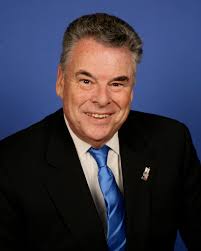
Congressman Peter T. King
KING: I would just say we would have more dead Americans if we didn’t stand by our allies in the Middle East. We would just be encourage al-Qaeda to take advantage of us.
SCHEUER: You know, you are presiding over a bankruptcy. What can be worse? What has been the goal of al-Qaeda since it was formed? To bankrupt the United States.
Who is winning today, sir? We are done like dinner.
KING: We are winning and we will continue to win unless we take the advice of people like you.
SCHEUER: Sir, you are exactly wrong. We are losing. Two U.S. field armies were defeated by men in the field with weapons from the Korean War.
KING: The fact is we have not been successfully attacked since September 11.
SCHEUER: The fact is, sir, we have had two military defeats overseas, which is far more important.
And, warns Scheuer, more defeats–domestic and international–lie ahead unless the United States radically changes its policies toward the Middle East.
60 MINUTES, 9/11 ATTACKS, ABC NEWS, ADOLF HITLER, AFGHANISTAN, AL QAEDA, AYATOLLAH RUHOLLAH KHOMEINI, BARACK OBAMA, BASHAR AL-ASSAD, CARL VON CLAUSEWITZ, CARLOS THE JACKAL, CBS NEWS, CHEMICAL WEAPONS, CHINA, CIA, CNN, FACEBOOK, HARRY TRUMAN, IMPERIAL HUBRIS, IRAN, ISLAM, ISLAMIC STATE OF IRAQ AND THE LEVANT, ISRAEL, MARCHING TOWARD HELL, MICHAEL SCHEUER, MUSLIMS, NAZI GERMANY, NBC NEWS, OSAMA BIN LADEN, RUSSIA, SHAH OF IRAN, SOVIET UNION, SYRIA, TERRORISM, THE CHICAGO TIMES, THE CHICAGO TRIBUNE, THE LOS ANGELES TIMES, THE NEW YORK TIMES, THE WASHINGTON POST, TWITTER, USA TODAY, VIETNAM WAR, VLADIMIR PUTIN, WORLD WAR 1
In Bureaucracy, History, Military, Politics, Social commentary on November 18, 2015 at 12:16 am
For America to avoid permanent military entanglements in the Middle East, it must learn to mind its own business.
So says Michael Scheuer, a 20-year CIA veteran who, from 1996 to 1999, headed Alec Station, the CIA’s unit assigned to track Osama bin Laden at the agency’s Counterterrorism Center.
He’s also the author of two seminal works on America’s fight against terrorism:Imperial Hubris: Why the West is Losing the War on Terror (2003) and Marching Toward Hell: America and Islam after Iraq (2008).
Scheuer has repeatedly warned: The United States must not deploy troops in Syria.
More than 310,000 people have been killed in Syria’s uprising-turned-civil war. The conflict began on March 15, 2011, triggered by protests demanding political reforms and the ouster of dictator Bashar al-Assad.
And many members of Congress are demanding that “we must do something” to stop all that killing.
Three reasons have already been given for why America should steer clear of the Syrian tar-baby. Among the others:
Fourth, the Assad regime is backed by–-among others–the Iranian-supported terrorist group, Hezbollah (Party of God). Its enemies include another terrorist group–Al Qaeda.
Hezbollah is comprised of Shiite Muslims. A sworn enemy of Israel, it has kidnapped scores of Americans suicidal enough to visit Lebanon and truck-bombed the Marine Barracks in Beirut in 1983, killing 299 Americans.
Flag of Hezbollah
Al-Qaeda, on the other hand, is made up of Sunni Muslims. Besides plotting 9/11, It has attacked the mosques and gatherings of liberal Muslims, Shias, Sufis and other non-Sunnis.
Examples of these sectarian attacks include the Sadr City bombings, the 2004 Ashoura massacre and the April, 2007 Baghdad bombings.
Flag of Al Qaeda
When your enemies are intent on killing each other, it’s best to stand aside and let them do it.
Fifth, intervening in Syria could produce unintended consequences for American forces–and make the United States a target for more Islamic terrorism.
President Obama has repeatedly said American warplanes are targeting the Islamic State of Iraq and the Levant (ISIL). But bombing is never as accurate as its proponents insist.
An accidental American strike on Syrian government forces could lead the country’s dictator, Bashar al-Assad, to attack Israel–perhaps even with chemical weapons.
Assad could do this simply because he hates Jews–or to lure Israel into attacking Syria.
If that happened, the Islamic world–which lusts to destroy Israelis even more than “apostate” Muslims–would rally to Syria against the United States, Israel’s chief ally.
Sixth, the United States cannot defeat ISIL through air power alone.
President Barack Obama authorized airstrikes against ISIL in September, 2014. Since then, the United States Air Force has dropped thousands of bombs on ISIL convoys.
This has not, however, destroyed ISIL. And its failure to do so has only led to demands by hawkish Republicans and Democrats for “boots on the ground.”
This was in fact predictable. Air power alone failed to secure victory over Nazi Germany during World War II and Vietnam during the Vietnam war. Nor did it “shock and awe” the Iraqis into surrendering during the 2003 Iraq war.
Seventh, while Islamic nations like Syria and Iraq wage war within their own borders, they will lack the resources to launch attacks against the United States.
When Adolf Hitler invaded the Soviet Union in 1941, then-Senator Harry Truman said: “I hope the Russians kill lots of Nazis and vice versa.”
That should be America’s view whenever its sworn enemies start killing themselves off. Americans should welcome such self-slaughters, not become entrapped in them.
Eighth, China and Russia are fully supporting the Assad dictatorship–-and the brutalities it commits against its own citizens.
Any move by the United States to directly attack the Assad regime could ignite an all-out war with Russia and/or China.
What happens if American and Russian forces start trading salvos? Or if Russian President Vladimir Putin orders an attack on Israel, in return for America’s attack on Russia’s ally, Syria?
It was exactly that scenario–Great Powers going to war over conflicts between their small-state allies–-that triggered World War l.
Ninth, America’s past efforts in the Middle East have usually gone horribly awry.
Two examples should suffice:
Iran: Mohammad Mosaddegh was the democratically elected prime minister of Iran from 1951 until 1953. His decision to nationalize the Iranian oil industry led to his overthrow in a CIA coup.
He was replaced by Shah Mohammad Reza Pahlavi, who ruled until 1979 when a national upheaval forced him to flee. Iranians have never forgiven the United States for subjecting them to the 25-year reign of a brutal despot.
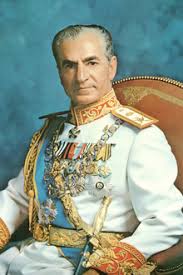
Shah of Iran
Afghanistan: In 1979, the Soviet Union invaded Afghanistan. America began supplying shoulder-fired Stinger anti-aircraft missiles to the Afghan Mujahideen fighters. These shifted the balance of the war to the Afghans, who brought down countless Soviet airplanes and helicopters.
Deprived of air supremacy, the Soviet army lost 14,453 killed and 53,753 wounded, and withdrew by 1989.
Americans congratulated themselves on their Realpolitic. But many of the Stingers remained in the hands of jihadists–who decided that America was now “The Great Satan.” One of those jihadists: Osama bin Laden.
60 MINUTES, 9/11 ATTACKS, ABC NEWS, ADOLF HITLER, AFGHANISTAN, AL QAEDA, BARACK OBAMA, BASHAR AL-ASSAD, CARL VON CLAUSEWITZ, CARLOS THE JACKAL, CBS NEWS, CHEMICAL WEAPONS, CHINA, CIA, CNN, FACEBOOK, HARRY TRUMAN, IMPERIAL HUBRIS, IRAN, ISLAM, ISLAMIC STATE OF IRAQ AND THE LEVANT, ISRAEL, MARCHING TOWARD HELL, MICHAEL SCHEUER, MUSLIMS, NAZI GERMANY, NBC NEWS, OSAMA BIN LADEN, RUSSIA, SOVIET UNION, SYRIA, TERRORISM, THE CHICAGO TIMES, THE CHICAGO TRIBUNE, THE LOS ANGELES TIMES, THE NEW YORK TIMES, THE WASHINGTON POST, TWITTER, USA TODAY, VIETNAM WAR, VLADIMIR PUTIN, WORLD WAR 1
In Bureaucracy, History, Military, Politics, Social commentary, Uncategorized on November 17, 2015 at 12:30 am
According to Micheal Scheuer, for all their ideological differences, Republicans and Democrats share one belief in common:
“An unquenchable ardor to have the United States intervene abroad in all places, situations and times.”
Scheuer is a 20-year CIA veteran–as well as an author, historian, foreign policy critic and political analyst.
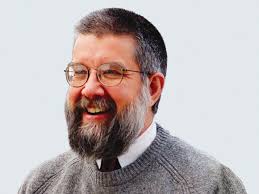
Michael Scheuer
From 1996 to 1999 he headed Alec Station, the CIA’s unit assigned to track Osama bin Laden at the agency’s Counterterrorism Center.
He is currently an adjunct professor at Georgetown University’s Center for Peace and Security Studies.
And he’s convinced that if America wants peace, it must learn to mind its own business.
He’s also the author of two seminal works on America’s fight against terrorism: Imperial Hubris: Why the West is Losing the War on Terror (2003) and Marching Toward Hell: America and Islam after Iraq (2008).
Scheuer says that Islamics don’t hate Americans because of “our way of life”–with its freedoms of speech and worship and its highly secular, commercialized culture.
Instead, Islamic hatred toward the United States stems from America’s six longstanding policies in the Middle East:
- U.S. support for apostate, corrupt, and tyrannical Muslim governments;
- U.S. and other Western troops on the Arabian Peninsula;
- U.S. support for Israel that keeps Palestinians in the Israelis’ thrall;
- U.S. pressure on Arab energy producers to keep oil prices low;
- U.S. occupation of Iraq and Afghanistan; and
- U.S. support for Russia, India, and China against their Muslim militants.
Scheuer contends that no amount of American propaganda will win “the hearts and minds” of Islamics who can “see, hear, experience, and hate” these policies firsthand.
But there is another danger facing America, says Scheuer, one that threatens “the core of our social and civil institutions.”
And in Marching Toward Hell he bluntly indicts that threat: The “profound and willful ignorance” of America’s “bipartisan governing elite.”

Scheuer defines this elite as “the inbred set of individuals who have influenced…drafted and conducted U.S. foreign policy” since 1973.
Within that group are:
- politicians
- journalists
- academics
- preachers
- civil servants
- military officers
- philanthropists.
“Some are Republicans, others Democrats; some are evangelicals, others atheists; some are militarists, others pacifists; some are purveyors of Western civilization, others are multiculturalists,” writes Scheuer.
But for all their political and/or philosophical differences, the members of this governing elite share one belief in common: “An unquenchable ardor to have the United States intervene abroad in all places, situations and times.”
And he warns that this “bipartisan governing elite” must radically change its policies–such as unconditional support for Israel and corrupt, tyrannical Muslim governments.
Otherwise, Americans will be locked in an endless “hot war” with the Islamic world.
On September 28, 2014, President Barack Obama provided an example of this “unquenchable ardor to have the United States intervene abroad in all places, situations and times.”
In an appearance on 60 Minutes, Obama spoke about his recent decision to commit American troops to fighting the Islamic State of Iraq and the Levant (ISIL).
Steve Kroft: I think everybody applauds the efforts that you’ve made and the size of the coalition that has been assembled.
But most of them are contributing money or training or policing the borders, not getting particularly close to the contact. It looks like once again we are leading the operation. We are carrying…
President Obama: Steve, that’s always the case. That’s always the case. America leads. We are the indispensable nation. We have capacity no one else has. Our military is the best in the history of the world.
And when trouble comes up anywhere in the world, they don’t call Beijing. They don’t call Moscow. They call us. That’s the deal.

President Barack Obama
Steve Kroft: I mean, it looks like we are doing 90%.
President Obama: Steve…when there’s an earthquake in Haiti, take a look at who’s leading the charge making sure Haiti can rebuild. That’s how we roll. And that’s what makes this America.
Scheuer believes that this mindset shouldn’t be what “makes this America.” And that the place to start is by not deploying troops to Syria.
More than 310,000 people have been killed in Syria’s uprising-turned-civil war. The conflict began on March 15, 2011, triggered by protests demanding political reforms and the ouster of dictator Bashar al-Assad.
Among the reasons why America should steer clear of the Syrian bloodbath:
First, since 1979, Syria has been listed by the U.S. State Department as a sponsor of terrorism.
Among the terrorist groups it supports are Hizbollah and Hamas. For years, Syria provided a safehouse in Damascus to Ilich Ramírez Sánchez–-the notorious terrorist better known as Carlos the Jackal.
Ilich Ramírez Sánchez–“Carlos the Jackal”
Second, there are no “good Syrians” for the United States to support–-only murderers who have long served a tyrant and other murderers who now wish to become the next tyrant.
Third, the United States doesn’t know what it wants to do in Syria, other than “send a message.”
Carl von Clausewitz, the Prussian military theorist, wrote: “War is the continuation of state policy by other means.” But President Barack Obama hasn’t stated what his “state policy” is toward Syria–or what he intends to gain by attacking it.
Obama has said he’s “not after regime-change.” If true, that would leave Assad in power–-and free to go on killing those who resist his rule.


9/11 ATTACKS, ABC NEWS, AFGHANISTAN, AL QAEDA, ALTERNET, AMERICABLOG, AP, BABY BOOMER RESISTANCE, BARACK OBAMA, BLOOMBERG, BOLIVIA, BUZZFEED, CBS NEWS, CIA, CNN, COMMUNISM, CROOKS AND LIARS, CUBA, CUBAN MISSILE CRISIS, DAILY KOZ, DRUDGE REPORT, ERNESTO "CHE" GUEVARA, FACEBOOK, FIDEL CASTRO, FIVETHIRTYEIGHT, GEORGE W. BUSH, GREEN BERETS, HARPER’S MAGAZINE, HUFFINGTON POST, IRAQ, ISLAM, JOHN F. KENNEDY, MEDIA MATTERS, MOTHER JONES, MOVEON, MSNBC, NAVY SEALS, NBC NEWS, NEWSWEEK, NIKITA KHRUSHCHEV, NPR, OSAMA BIN LADEN, PAKISTAN, PBS NEWSHOUR, POLITICO, POLITICUSUSA, RAW STORY, REUTERS, SALON, SEATTLE TIMES, SLATE, SOVIET UNION, TALIBAN, TALKING POINTS MEMO, THE ATLANTIC, THE CHICAGO SUN-TIMES, THE CHICAGO TRIBUNE, THE DAILY BEAST, THE DAILY BLOG, THE GUARDIAN, THE HILL, THE HUFFINGTON POST, THE LOS ANGELES TIMES, THE NATION, THE NEW REPUBLIC, THE NEW YORK TIMES, THE VILLAGE VOICE, THE WASHINGTON POST, THINKPROGRESS, TIME, TRUTHDIG, TRUTHOUT, TWITTER, TWO POLITICAL JUNKIES, U.S. NEWS & WORLD REPORT, UPI, USA TODAY, WONKETTE
A TALE OF TWO KILLINGS: PART ONE (OF THREE)
In Bureaucracy, History, Military, Politics, Social commentary on February 12, 2016 at 12:12 amThey both had beards. They both saw military action. They both passionately hated the United States.
And they both died in a hail of bullets.
And immediately after their deaths, both seemed to disappear from the face of the earth.
Ernesto “Che” Guevara and Osama bin Laden.
Two men who inspired widespread admiration among their supporters–and fear among their enemies.
Guevara, an Argentinian doctor-turned-Cuban revolutionary, sought to destroy the United States’ power to fight Communism. Bin Laden sought to destroy its power to intervene in the Middle East.
Ernesto “Che” Guevara
Guevara’s most optimistic hope was that Americans would eventually see the error of their capitalistic ways and convert to Communism. His last words were: “Tell Fidel [Castro] that he will soon see a triumphant revolution in America.”
But he was prepared to fight to the death–as indeed he did–to force revolutionary change upon the United States.
For Bin Laden, the cause was Islam, not Communism. His most optimistic hope was that Christian and Jewish Americans would eventually convert to Islam.
But if that didn’t happen, he, too, was prepared to attack Americans anywhere and in any way he could–as his private diary and documents have revealed.
Guevara died on October 9, 1967, at the hands of a CIA-directed operation run by the Bolivian army.
Bin Laden, creator of the Al-Qaeda (“The Base” terrorist network, met his end on May 1, 2011, during a raid by U.S. Navy SEALS on his compound in Pakistan.
Osama bin Laden
One man–Guevara–has since attained secular sainthood in the eyes of millions of Communists and their sympathizers.
The other–bin Laden–has attained instant “martyr” status in the eyes of untold numbers of Islamic terrorists and their sympathizers.
Both men plotted constantly against the United States and eagerly sought its destruction.
In November, 1962, during an interview with the Communist newspaper, the London Daily Worker, Guevara raged against the Soviet Union’s recent withdrawal of nuclear missiles from Cuba.
Those “thirteen days” of the Cuban Missile Crisis that October had brought the world to the brink of nuclear destruction.
“If the missiles had remained, we would have used them against the very heart of the United States, including New York,” said Guevara.
“We must never establish peaceful coexistence. We must walk the path of victory even if it costs millions of atomic victims.”
Similarly, until the end of his life, bin Laden demanded more attacks like the one on September 11, 2001, that snuffed out the lives of 3,000 Americans.
This brought him into conflict with other Al-Qaeda members who wanted to launch assaults on more vulnerable targets outside the United States.
Guevara died as he had lived–violently.
In late October, 1966, he slipped out of Cuba. On November 3, he secretly arrived in La Paz, Bolivia, intent on re-staging the Cuban revolution among the Bolivian peasantry.
But the peasants showed no interest in his aims and in fact reported his movements to the Bolivian army.
The army, in turn, was being advised by United States Green Berets under the direction of the CIA.
On October 7, 1967, an informant tipped off the Bolivian Special Forces to the location of Guevara’s guerrilla camp in the Yuro ravine.
On October 8, they encircled the area with 1,800 soldiers. In the shootout that followed, Guevara was wounded and taken prisoner while leading a detachment.
His rifle broken by a lucky shot, a twice-wounded Guevara shouted: “Do not shoot! I am Che Guevara and worth more to you alive than dead.”
Quickly informed of Guevara’s capture, the Bolivian government debated his fate: Should he be immediately executed or placed on trial?
On the morning of October 9, Bolivian President Rene Barrientos ordered that Guevara be executed. Barrientos feared that placing him on trial would create an international media circus and/or render Bolivia vulnerable to efforts to free him.
The Bolivian government planned to declare that Guevara had been killed in action during a clash with the nation’s armed forces. Special instructions were thus issued.
These came from Felix Rodrieguez, a CIA agent acting as advisor to the Bolivians.
The executioner would be Mario Teran, a Bolivian army sergeant who had lost three of his friends in an earlier firefight with Guevara’s band of guerrillas.
Rodriguez ordered Teran to aim carefully to make it appear that Guevara had been killed in action.
To his surprise, Rodriguez found himself highly impressed with Guevara’s courage. When informed of his imminent execution, Guevara blanched, then quickly got control of himself.
Felix Rodriguez, left, Che, center
“It is better like this,” he said. “I should never have been captured alive.”
Rodriguez asked if he had any messages for his family. Guevara replied: “Tell Fidel [Castro, the president/dictator of Cuba] that he will soon see a triumphant revolution in America.
“And tell my wife to remarry and try to be happy.”
When Sergeant Teran entered the hut, Guevara told his executioner: “I know you’ve come to kill me. Shoot, coward! You are only going to kill a man!”
Teran hesitated, then opened fire with his semiautomatic rifle, hitting Guevara in his arms and legs.
Guevara writhed on the ground, apparently biting one of his wrists to avoid crying out. Teran then fired several more times, finally killing him with a shot in the chest.
Share this: