Archive for the ‘Politics’ Category
ABC NEWS, CHRIS WALLACE, CNN, DEBATE, EVASION, FACEBOOK, FOX NEWS NETWORK, GOP DEBATE, JOHN KASICH, LYING, MEGYN KELLY, NBC NEWS, NICCOLO MACHIAVELLI, REPUBLICAN PARTY, SCOTT WALKER, THE CHICAGO SUN-TIMES, THE CHICAGO TRIBUNE, THE LOS ANGELES TIMES, THE NEW YORK TIMES, THE PRINCE, THE WALL STREET JOURNAL, THE WASHINGTON POST, TWITTER, USA TODAY
In Bureaucracy, History, Politics, Social commentary on August 14, 2015 at 12:30 am
Most politicians are masters at evading questions they don’t want to answer. And they are equally adept at giving answers that seem to be candid but in fact say nothing.
These skills were on full display during the August 6 GOP debate hosted by the Fox News Network.
For example:
Business Executive Donald Trump had just slammed the Federal Government’s failure to control illegal immigration.
And Fox News Moderator Chris Wallace wanted to know if Ohio Governor John Kasich agreed with him:
“When you say that the American government is stupid, that the Mexican government is sending criminals, that we’re being bamboozled, is that an adequate response to the question of illegal immigration?”
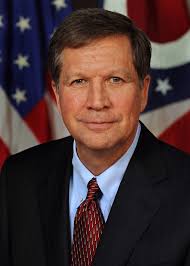
John Kasich
KASICH: “Now, he’s got his solutions. Some of us have other solutions. You know, look, I balanced the federal budget as one of the chief architects when I was in Washington. Hasn’t been done since.
“I was a military reformer. I took the state of Ohio from an $8 billion hole and a 350,000 job loss to a $2 billion surplus and a gain of 350,000 jobs.”
[Kasich, more liberal-minded than his fellow Republicans, didn’t want to condemn Trump’s hawkish views. If he did, he would lose support from the anti-immigrant Republican base. So he changed the subject to his economic policies as governor of Ohio.]
WALLACE: “Respectfully, can we talk about illegal immigration?”
KASICH: “But the point is that we all have solutions. Mr. Trump is touching a nerve because people want the wall to be built. They want to see an end to illegal immigration.
“They want to see it, and we all do. But we all have different ways of getting there. And you’re going to hear from all of us tonight about what our ideas are.”
[Kasich totally evaded the question. He said that “we all have solutions” to illegal immigration. But he never offered his.]
Fox News Moderator Megyn Kelly to Florida Governor Jeb Bush: “…For days on end in this campaign, you struggled to answer a question about whether knowing what we know now…we would’ve invaded Iraq….
“You finally said ‘No.'”
“To the families of those who died in that war who say they liberated and deposed a ruthless dictator, how do you look at them now and say that your brothers war was a mistake?”
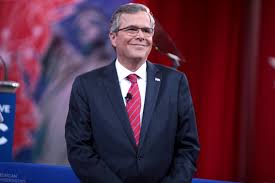
Jeb Bush
BUSH: “Knowing what we know now, with faulty intelligence, and not having security be the first priority when — when we invaded, it was a mistake. I wouldn’t have gone in.”
[Bush’s reply totally ignored that his brother, President George W. Bush, deliberately ignored all evidence that Saddam Hussein did not pose a threat to the United States.
[He also ignored the fact that his brother provoked a needless, bloody and financially ruinous war in Iraq.]
BUSH: “…As governor of the state of Florida, I called every one of [the families who had lost members in Iraq and expressed his condolences].
“…And, every one of them said that their child did not die in vain, or their wife, of their husband did not die in vain. So, why it was difficult for me to do it was based on that.”
[This sounded plausible. But then Bush moved to shift the blame from his brother to President Barack Obama.]
BUSH: “Here’s the lesson that we should take from this, which relates to this whole subject, Barack Obama became president, and he abandoned Iraq.
“He left, and when he left Al Qaida was done for. ISIS was created because of the void that we left, and that void now exists as a caliphate the size of Indiana.”
[In fact, “ISIS was created because of the void” that emerged when Bush toppled Saddam Hussein. Hussein’s dictatorial rule had suppressed religious-based terror organizations like Al Qaeda and ISIS.]
For News Moderator Megyn Kelly asked Dr. Benjamin Carson: “Your critics say that your [foreign policy] inexperience shows.
“You’ve suggested that the Baltic States are not a part of NATO, just months ago you were unfamiliar with the major political parties and government in Israel, and domestically, you thought Alan Greenspan had been treasury secretary instead of federal reserve chair.
“Aren’t these basic mistakes, and don’t they raise legitimate questions about whether you are ready to be president?”
CARSON: “So, you know, experience comes from a large number of different arenas, and America became a great nation early on not because it was flooded with politicians, but because it was flooded with people who understood the value of personal responsibility, hard work, creativity, innovation, and that’s what will get us on the right track now, as well.”
[Carson totally evaded the question. He implied that other qualities–such as “hard work, creativity, innovation”–would make up for his lack of foreign policy experience and knowledge.]
ABC NEWS, CHRIS WALLACE, CNN, DEBATE, EVASION, FACEBOOK, FOX NEWS NETWORK, GOP DEBATE, JOHN KASICH, LYING, MEGYN KELLY, NBC NEWS, NICCOLO MACHIAVELLI, REPUBLICAN PARTY, SCOTT WALKER, THE CHICAGO SUN-TIMES, THE CHICAGO TRIBUNE, THE LOS ANGELES TIMES, THE NEW YORK TIMES, THE PRINCE, THE WALL STREET JOURNAL, THE WASHINGTON POST, TWITTER, USA TODAY
In Bureaucracy, History, Politics, Social commentary on August 13, 2015 at 12:58 am
“For men in general judge more by the eyes than by the hands, for every one can see, but very few have to feel. Everyone sees what you appear to be, few feel what you are.”
So wrote Niccolo Machiavelli, the father of modern politics, in his infamous book, The Prince.
It’s a sentment that voters should constantly keep in mind–especially when watching televised debates between opposing candidates.
The August 6 GOP debate offered many examples of men appearing to address questions put to them. In fact, they generally refused to directly address the issues raised by the three Fox News Network commentators.
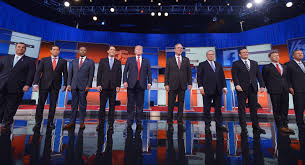
The candidates of the Fox News GOP debate
The evasions began early.
Fox News Moderator Megyn Kelly to Media Mogul Donald Trump: “Mr. Trump…you’ve called women you don’t like “fat pigs, dogs, slobs, and disgusting animals.”
“Your Twitter account has several disparaging comments about women’s looks. You once told a contestant on Celebrity Apprentice it would be a pretty picture to see her on her knees.
“Does that sound to you like the temperament of a man we should elect as president, and how will you answer the charge from Hillary Clinton, who was likely to be the Democratic nominee, that you are part of the war on women?
TRUMP: “I think the big problem this country has is being politically correct.”

Donald Trump
[Trump did not refute that he had made insulting remarks about women. He simply claimed that he was the victim of Political Correctness. And Kelly did not call him on his evasiveness.]
Then Kelly moved on to the subject of abortion–and Wisconsin Governor Scott Walker.
KELLY: “Governor Walker, you’ve consistently said that you want to make abortion illegal even in cases of rape, incest, or to save the life of the mother.
“You recently signed an abortion law in Wisconsin that does have an exception for the mother’s life, but you’re on the record as having objected to it.
“Would you really let a mother die rather than have an abortion, and with 83% of the American public in favor of a life exception, are you too out of the mainstream on this issue to win the general election?
WALKER: “Well, I’m pro-life, I’ve always been pro-life, and I’ve got a position that I think is consistent with many Americans out there in that…
“…in that I believe that that is an unborn child that’s in need of protection out there, and I’ve said many a time that that unborn child can be protected, and there are many other alternatives that can also protect the life of that mother. That’s been consistently proven.”

Scott Walker
[Clearly, Walker did not want to admit that he would allow a woman to die rather than have an abortion. Nor did he want to admit that he would force a victim of rape or incest to carry to full term the fetus of that victimizer.
[So he simply claimed that “there are many other alternatives that can also protect the life of that mother” without offering any evidence to prove it.]
Fox News Moderator Chris Wallace to Donald Trump:
“…You have repeatedly said that you have evidence that the Mexican government is doing this, but you have evidence you have refused or declined to share.
“Why not use this first Republican presidential debate to share your proof with the American people?”
TRUMP: “Border Patrol, I was at the border last week. Border Patrol, people that I deal with, that I talk to, they say this is what’s happening….”
[Trump’s “evidence” was strictly anecdotal. He cited unmamed “Border Patrol” sources for his general statement and offered nothing more.]
Fox News Moderator Chris Wallace to Ohio Governor John Kasich on illegal immigration:
WALLACE: “Governor Kasich, I know you don’t like to talk about Donald Trump. But I do want to ask you about the merit of what he just said.
“When you say that the American government is stupid, that the Mexican government is sending criminals, that we’re being bamboozled, is that an adequate response to the question of illegal immigration?
KASICH: “Chris, first of all, I was just saying to Chris Christie, they say we’re outspoken, we need to take lessons from Donald Trump if we’re really going to learn it. Here is the thing about Donald Trump.
“Donald Trump is hitting a nerve in this country. He is. He’s hitting a nerve. People are frustrated. They’re fed up. They don’t think the government is working for them. And for people who want to just tune him out, they’re making a mistake.
[Kasich was avoiding giving a direct answer. More liberal-minded than most Republicans, he didn’t want to alienate their Right-wing base by opposing his party’s “deport them all” position.
[He needed time to think of a response that wouldn’t cost him votes–and bought it by throwing cheap flattery at Trump.]
ABC NEWS, ABORTION, ADOLF HITLER, ALTERNET, AMERICABLOG, ANDREW JACKSON, AP, BABY BOOMER RESISTANCE, BARACK OBAMA, BBC, BLOOMBERG NEWS, BUZZFEED, CBS NEWS, CHRIS MATTHEWS, CNN, CNN'S "STARTING POINT", CROOKS AND LIARS, CUBAN MISSILE CRISIS, DAILY KOS, DEBT CEILING, EXTORTION, FACEBOOK, FIVETHIRTYEIGHT, GEORGE W. BUSH, HARPER’S MAGAZINE, HOUSE SPEAKER JOHN BOEHNER, HUFFINGTON POST, JOHN F. KENNEDY, MAFIA, MEDIA MATTERS, MOTHER JONES, MOVEON, MSNBC, MSNBC'S "HARDBALL", MUNICH CONFERENCE, NBC NEWS, NEGOTIATING, NEVILLE CHAMBERLAIN, NEW REPUBLIC, NEWSDAY, NEWSWEEK, NICCOLO MACHIAVELLI, NPR, OBAMACARE, PAP SMEARS, PATRIOT ACT, PBS NEWSHOUR, PLANNED PARENTHOOD, POLITICO, POLITICUSUSA, R.I.CO. ACT, RAW STORY, REPUBLICAN PARTY, REPUBLICANS, REUTERS, SALON, SEATTLE TIMES, SLATE, TALKING POINTS MEMO, TED CRUZ, THE AFFORDABLE CARE ACT, THE ATLANTIC, THE CHICAGO SUN-TIMES, THE CHICAGO TRIBUNE, THE DAILY BEAST, THE DAILY BLOG, THE GUARDIAN, THE HILL, THE HUFFINGTON POST, THE INTERCEPT, THE LOS ANGELES TIMES, THE NATION, THE NEW REPUBLIC, THE NEW YORK TIMES, THE NEW YORK TIMES THE WASHINGTON POST, THE NEW YORKER, THE PRINCE, THE VILLAGE VOICE, THE WASHINGTON POST, THINKPROGRESS, TIME, TRUTHDIG, TRUTHOUT, TWITTER, TWO POLITICAL JUNKIES, U.S. NEWS & WORLD REPORT, UPI, USA TODAY, WINSTON CHURCHILL, WORLD WAR 11, X
In Bureaucracy, History, Law, Politics, Social commentary on August 10, 2015 at 12:41 am
On August 1, 2011, Chris Matthews, host of MSNBC’s “Hardball,” wrapped up his program with a search for “options” to avoid another round of Republican extortion tactics:
“I want to know what steps the president [Barack Obama] ‘could’ have taken to avoid this hostage-taking [over raising the debt-ceiling].
“…Is there another way than either buckling to the Republicans or letting the government and the country crash?
“How does he use the power of the presidency, the logic, emotion and basic patriotism of the people to thwart those willing to threaten, disrupt, even possibly destroy to get their way?”
And the answer to his questions–then and now–is: Replace the law of fear with the rule of law.
As Niccolo Machiavelli, the father of modern politics, instructed future leaders in The Prince:

Niccolo Machiavelli
“And men have less scruple in offending one who makes himself loved than one who makes himself feared; for love is held by a chain of obligations which, men being selfish, is broken whenever it serves their purpose; but fear is maintained by a dread of punishment which never fails….
“I conclude, therefore, with regard to being loved and feared, that men love at their own free will, but fear at the will of the prince, and that a wise prince must rely on what is in his power and not on what is in the power of others….”
Instead, in 2011, President Barack Obama surrendered to Republican extortion demands. As a result, the United States suffered a massive loss to its international credit rating.
But there were two other ways Obama could have stood up to Republican extortionists:
- Invoke the Racketeer Influenced Corrupt Organizations Act (RICO) and/or the USA Patriot Act;
- Rally the American people against this criminal threat to the security of the Nation.
And these remain available to him now–if only he has the courage to act.
Second Option: Calling upon the American people for their support
President John F. Kennedy did just that–successfully–during the most deadly crisis of his administration.
Addressing the Nation on October 22, 1962, Kennedy shocked his fellow citizens by revealing that the Soviet Union had placed offensive nuclear missiles in Cuba.
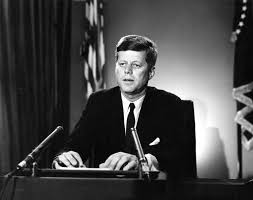
President John F. Kennedy
After outlining a series of steps he had taken to end the crisis, Kennedy sought to reassure and inspire his audience. His words are worth remembering today:
“The cost of freedom is always high, but Americans have always paid it. And one path we shall never choose, and that is the path of surrender or submission.”
Just as President Kennedy called on his fellow Americans for support against a foreign enemy, President Obama could rally his countrymen against an equally ruthless domestic enemy.
During such a national address, President Obama could reveal such blunt truths as:
- Republicans have adopted the same my-way-or-else “negotiating” stance as Adolf Hitler.
- Like the Nazis, they are determined to gain absolute power–or destroy the Nation they claim to love.
- And, once again, they are threatening to shut down the government–and deny essential services to millions of Americans–unless they get their way.
Finally, President Obama could end his speech by directly calling for the active support of his fellow Americans. Something like this:
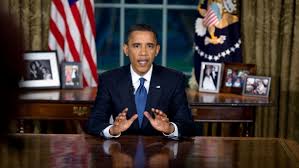
President Barack Obama
“My fellow Americans, I have taken an oath to ‘preserve, protect and defend the Constitution of the United States.’
“But I cannot do this on my own. As citizens of a Republic, each of us carries that burden. We must each do our part to protect the land and the liberties we love.
“Tonight, I’m asking for your help.
“We stand on the edge of economic and social disaster. Therefore, I am asking each of you to stand up for America tonight–by demanding the recall of the entire membership of the Republican Party.”
* * * * *
The 1938 Munich Conference taught an invaluable lesson in foreign affairs: Caving in to the demands of insatiable thugs leads to only more demands.
That was what British Prime Minister Neville Chamberlain learned when he sought to appease Adolf Hitler, Germany’s war-intent Fuehrer.
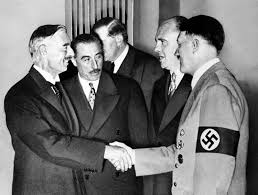
Neville Chamberlain greets Adolf Hitler
Chamberlain believed that by giving in to Hitler’s demands for the “German part” of Czechoslovakia known as the Sudetenland he could avoid war.
On September 29, Chamberlain and French Prime Minister Edouard Daladier met with Hitler and signed the Munich Agreement, resulting in the immediate German occupation of part of Czechoslovakia.
The Czechoslovakian government had not been a party to the talks. Their “allies” had sold them out.
In a matter of weeks, Hitler turned his attention–and demands–to Poland.
When his generals balked, warning that invading Poland would trigger a war with France and Britain, Hitler brushed aside their fears: “Our enemies are little worms. I saw them at Munich.”
Chamberlain returned to England a hero. Holding aloft a copy of the worthless agreement he had signed with Hitler, he told cheering crowds in London: “I believe it is peace for our time.”
Winston Churchill knew better, predicting: “Britain and France had to choose between war and dishonor. They chose dishonor. They will have war.”
And so they did.
It is not too late for President Barack Obama to apply this lesson from history.
ABC NEWS, ABORTION, ADOLF HITLER, ALTERNET, AMERICABLOG, ANDREW JACKSON, AP, BABY BOOMER RESISTANCE, BARACK OBAMA, BBC, BLOOMBERG NEWS, BUZZFEED, CBS NEWS, CHRIS MATTHEWS, CNN, CNN'S "STARTING POINT", CROOKS AND LIARS, CUBAN MISSILE CRISIS, DAILY KOS, DEBT CEILING, EXTORTION, FIVETHIRTYEIGHT, GEORGE W. BUSH, HARPER’S MAGAZINE, HOUSE SPEAKER JOHN BOEHNER, HUFFINGTON POST, JOHN F. KENNEDY, MAFIA, MEDIA MATTERS, MOTHER JONES, MOVEON, MSNBC, MSNBC'S "HARDBALL", MUNICH CONFERENCE, NBC NEWS, NEGOTIATING, NEVILLE CHAMBERLAIN, NEW REPUBLIC, NEWSDAY, NEWSWEEK, NICCOLO MACHIAVELLI, NPR, OBAMACARE, PAP SMEARS, PATRIOT ACT, PBS NEWSHOUR, PLANNED PARENTHOOD, POLITICO, POLITICUSUSA, R.I.CO. ACT, RAW STORY, REPUBLICAN PARTY, REPUBLICANS, REUTERS, SALON, SEATTLE TIMES, SLATE, TALKING POINTS MEMO, TED CRUZ, THE AFFORDABLE CARE ACT, THE ATLANTIC, THE CHICAGO SUN-TIMES, THE CHICAGO TRIBUNE, THE DAILY BEAST, THE DAILY BLOG, THE GUARDIAN, THE HILL, THE HUFFINGTON POST, THE INTERCEPT, THE LOS ANGELES TIMES, THE NATION, THE NEW REPUBLIC, THE NEW YORK TIMES, THE NEW YORK TIMES THE WASHINGTON POST, THE NEW YORKER, THE PRINCE, THE VILLAGE VOICE, THE WASHINGTON POST, THINKPROGRESS, TIME, TRUTHDIG, TRUTHOUT, TWITTER, TWO POLITICAL JUNKIES, U.S. NEWS & WORLD REPORT, UPI, USA TODAY, WINSTON CHURCHILL, WORLD WAR 11, X
In Bureaucracy, History, Law, Politics, Social commentary on August 7, 2015 at 8:58 am
On July 9, 2011-–Republican extortionists again threatened the Nation with financial ruin and international disgrace unless their demands were met.
President Obama had offered to make historic cuts in the Federal Government and the social safety net–on which millions of Americans depend for their most basic needs.
And the Republican response?
Said Rep. Darrell Issa, chairman of the Oversight and Government Reform Committee:“Quite frankly, [Republican] members of Congress are getting tired of what the president won’t do and what the president wants.”
Noted political analyst Chris Matthews summed up the sheer criminality of what happened within the House of Representatives.
Speaking on MSNBC’s “Hardball,” on July 28–five days before Congress reached its August 2 deadline to raise the debt-ceiling–Matthews noted:
“The first people to bow to the demands of those threatening to blow up the economy were the Republicans in the House, the leaders. The leaders did what the followers told them to do: meet the demands, hold up the country to get their way.
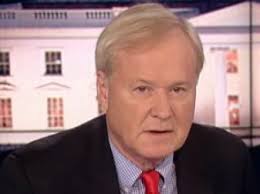
Chris Matthews
“Those followers didn’t win the Senate, or the Presidency, just the House.
“But by using the House they were able to hold up the entire United States government. They threatened to blow things up economically and it worked.
“They said they were willing to do that–just to get their way–not by persuasion, not by politics, not by democratic government, but by threatening the destruction of the country’s finances.
“Right. So what’s next? The power grid? Will they next time threaten to close down the country’s electricity and communications systems?”
With the United States teetering on the brink of national bankruptcy, President Obama faced three choices:
- Counter Republican extortion attempts via RICO–the Racketeer Influenced Corrupt Organizations Act.
- Make a “Cuban Missile Crisis”-style address to the American people, seeking to rally them against a criminal threat to the financial security of the Nation.
- Cave in to Republican demands.
Unfortunately for Obama and the Nation, he chose Number Three.
The results were easily predictable: Emboldened by success, the extortionists continue to make even greater demands.
Such as those now being made: De-fund Planned Parenthood or we’ll destroy the country.
But this is a nightmare that doesn’t have to be.
There are, in fact, two ways to avoid it.
Assuming that President Obama doesn’t once again surrender to Republican extortion demands, he has two formidable weapons he can deploy:
First Option: RICO to the rescue
The Racketeer Influenced Corrupt Organizations (RICO) Act is a provision of the Organized Crime Control Act of 1970. It authorizes prosecution for acts performed as part of an ongoing criminal organization.
It has been applied to not only the Mafia but to individuals, businesses, political protest groups, and terrorist organizations. In short, a RICO claim can arise in almost any context.
Such as the one President Barack Obama faced in 2011 when Republicans threatened to destroy the credit rating of the United States unless their budgetary demands were met.
And such as the present case when Republicans are again threatening the security of the Nation with extortionate demands.
RICO opens with a series of definitions of “racketeering activity” which can be prosecuted by Justice Department attorneys. Among those crimes: Extortion.

Extortion is defined as “a criminal offense which occurs when a person unlawfully obtains either money, property or services from a person(s), entity, or institution, through coercion.”
The RICO Act defines “a pattern of racketeering activity” as “at least two acts of racketeering activity, one of which occurred after the effective date of this chapter and the last of which occurred within ten years…after the commission of a prior act of racketeering activity.”
And if President Obama believes that RICO is not sufficient to deal with extortionate behavior, he can rely on the USA Patriot Act of 2001, passed in the wake of 9/11.
In Section 802, the Act defines domestic terrorism. Among the behavior that is defined as criminal:
“Activities that…appear to be intended…to influence the policy of a government by intimidation or coercion [and]…occur primarily within the territorial jurisdiction of the United States.”
Republicans are now demanding that Democrats de-fund Planned Parenthood or be forced to shut down essential services needed by millions of Americans.
That clearly falls within the legal definition of “activities…intended…to influence the policy of a government by intimidation or coercion.”
The remedies for punishing such criminal behavior are now legally in place. President Obama need only direct the Justice Department to apply them.
President Obama can direct Attorney General Loretta E. Lynch to investigate whether Republican Congressman—and their Tea Party cohorts—have violated Federal anti-racketeering and/or anti-terrorism laws.
- Lynch can order the FBI to conduct such an investigation.
- If the FBI finds sufficient evidence that these laws had been violated, Holder can empanel criminal grand juries to indict those violators.
Criminally investigating and indicting members of Congress would not violate the separation-of-powers principle. Congressmen have in the past been investigated, indicted and convicted for various criminal offenses.
Such indictments and prosecutions–and especially convictions–would serve a truly cleansing function.
They would serve notice on current and future members of Congress that the safety and fortunes of American citizens may not be held hostage as part of a negotiated settlement.
ABC NEWS, ABORTION, ADOLF HITLER, ALTERNET, AMERICABLOG, ANDREW JACKSON, AP, BABY BOOMER RESISTANCE, BARACK OBAMA, BBC, BLOOMBERG NEWS, BUZZFEED, CBS NEWS, CHRIS MATTHEWS, CNN, CNN'S "STARTING POINT", CROOKS AND LIARS, CUBAN MISSILE CRISIS, DAILY KOS, DEBT CEILING, EXTORTION, FACEBOOK, FIVETHIRTYEIGHT, GEORGE W. BUSH, HARPER’S MAGAZINE, HOUSE SPEAKER JOHN BOEHNER, HUFFINGTON POST, JOHN F. KENNEDY, MAFIA, MEDIA MATTERS, MOTHER JONES, MOVEON, MSNBC, MSNBC'S "HARDBALL", MUNICH CONFERENCE, NBC NEWS, NEGOTIATING, NEVILLE CHAMBERLAIN, NEW REPUBLIC, NEWSDAY, NEWSWEEK, NICCOLO MACHIAVELLI, NPR, OBAMACARE, PAP SMEARS, PATRIOT ACT, PBS NEWSHOUR, PLANNED PARENTHOOD, POLITICO, POLITICUSUSA, R.I.CO. ACT, RAW STORY, REPUBLICAN PARTY, REPUBLICANS, REUTERS, SALON, SEATTLE TIMES, SLATE, TALKING POINTS MEMO, TED CRUZ, THE AFFORDABLE CARE ACT, THE ATLANTIC, THE CHICAGO SUN-TIMES, THE CHICAGO TRIBUNE, THE DAILY BEAST, THE DAILY BLOG, THE GUARDIAN, THE HILL, THE HUFFINGTON POST, THE INTERCEPT, THE LOS ANGELES TIMES, THE NATION, THE NEW REPUBLIC, THE NEW YORK TIMES, THE NEW YORK TIMES THE WASHINGTON POST, THE NEW YORKER, THE PRINCE, THE VILLAGE VOICE, THE WASHINGTON POST, THINKPROGRESS, TIME, TRUTHDIG, TRUTHOUT, TWITTER, TWO POLITICAL JUNKIES, U.S. NEWS & WORLD REPORT, UPI, USA TODAY, WINSTON CHURCHILL, WORLD WAR 11
In History, Law, Law Enforcement, Politics, Social commentary on August 6, 2015 at 2:04 pm
Republicans love fetuses.
In fact, they love them so much they’re willing to shut down the Federal Government and deny vital public services to millions of their fellow Americans.
That shutdown could be coming as early as September, when Congress returns from its summer break.
The reasons are two-fold:
First, the fast-approaching 2016 Presidential election; and
Second, Republicans’ long-standing desire to de-fund Planned Parenthood (PP).

This upcoming effort will be fueled by a highly emotional charge: That PP sells fetal tissue and organs.
Anti-abortion organizations Operation Rescue and the Center for Medical Progress recently released videos purporting to show PP officials discussing such sales.
In response, PP said that they may donate fetal tissue at the request of a patient, but that fetal organs and tissues are never sold.
Three Congressional committees are now making inquiries into PP practices.
On August 3, 2015, a Republican bill to defund PP failed to pass in the Senate. Currently, the organization receives $528 million in Federal funding each year.
Since the 1980s, Congressional Republicans have tried to de-fund PP. Their efforts almost led to a government shutdown in 2011.
PP has consistently claimed that it does not use its Federal funding to pay for abortion services. But anti-abortionists argue that Federal monies free up other resources that are used to provide abortions.
Abortions represent three percent of total services provided by PP, and are provided to about 10% of its clients.

The other 97% of services are for contraception, treatment and tests for sexually transmitted diseases, cancer screenings, and other women’s health services.
Click here: Planned Parenthood
PP estimates that its contraceptive services prevent approximately 612,000 unintended pregnancies–and 291,000 abortions–annually.
According to Politico, Republican Senators plan to attach a provision to the current omnibus spending bill–which funds all Federal agencies for 2015-2016.
The provision will ban funding for all Federal agencies–unless PP’s funding is cut.
Leading the call for a government shutdown is Texas Senator Ted Cruz, who tried to de-fund PP in 2013. That attempt led to a two-week government shutdown.
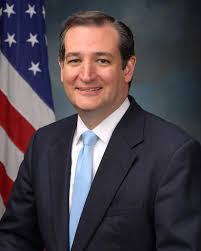
Senator Ted Cruz
Joining Cruz are Republicans in the House and Senate—not enough to defund PP, but enough to deny vitally-needed services to millions of Americans.
The reason for the 2013 government shutdown? Republicans were enraged that millions of uninsured Americans might receive medical care on a par with that given members of the House and Senate.
It was, in short, yet another Right-wing effort to eliminate the Affordable Care Act, better-known as “Obamacare.”
So on September 20, 2013, the House of Representatives voted on a short-term government funding bill that included a provision to de-fund Obamacare.
That provision was a no-go for Senate Democrats and President Barack Obama. When the House and Senate couldn’t reach a compromise, many functions of the Federal government shut down on Oct. 1.
The shutdown lasted for 16 days and cost the United States economy $2 to $6 billion in economic output, according to the Office of Management and Budget.
It ended when President Obama and Senate Democrats refused to submit to Republican blackmail. Medical care still remained available to millions of poor and middle-class Americans.
Republicans have repeatedly threatened to shut down the government unless their constantly escalating demands were met.
In November, 1995, Newt Gingrich, then Speaker of the House of Representatives, carried out this threat.
The official reason: Republicans objected to Democratic President Bill Clinton’s budgetary requests for funding Medicare, education, the environment and public health in the 1996 Federal budget.
The real reason: Gingrich unwisely admitted that he was angry because Clinton had put him in the back of Air Force One during a recent trip to Israel.
The shutdown proved a disaster for Republicans. Clinton was handily re-elected in 1996 and Gingrich suddenly resigned from Congress in 1998.
In April, 2011, the United States government almost shut down again over Republican demands about subsidized pap smears.
During a late-night White House meeting with President Obama and key Congressional leaders, Republican House Speaker John Boehner made this threat:
His conference would not approve funding for the government if any money were allowed to flow to Planned Parenthood through Title X legislation.
Facing an April 8 deadline, negotiators worked day and night to strike a compromise–and finally reached one.
Three months later–-on July 9, 2011-–Republican extortionists again threatened the Nation with financial ruin and international disgrace unless their demands were met.

Sign of The Black Hand extortion group
President Obama had offered to make historic cuts in the Federal Government and the social safety net–on which millions of Americans depend for their most basic needs.
But House Speaker John Boehner rejected that offer. He could not agree to the tax increases that Democrats wanted to impose on the wealthiest 1% as part of the bargain.
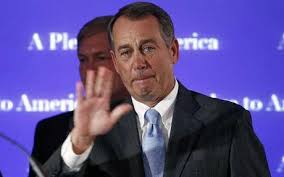
John Boehner
As the calendar moved ever closer to the fateful date of August 2, Republican leaders continued to insist: Any deal that includes taxes “can’t pass the House.”
President Obama had previously insisted on extending the debt ceiling through 2012. But in mid-July, he simply asked congressional leaders to review three options with their members:
- The “Grand Bargain” choice—favored by Obama–would cut deficits by about $4 trillion, including spending cuts and new tax revenues.
- A medium-range plan would aim to reduce the deficit by about $2 trillion.
- The smallest option would cut between $1 trillion and $1.5 trillion, without increased tax revenue or any Medicare and Medicaid cuts.
And the Republican response?
ABC NEWS, CBS NEWS, DR. BENJAMIN CARSON, FACEBOOK, GUN VIOLENCE, NATIONAL RIFLE ASSOCIATION, NBC NEWS, PBS NEWSHUR, POLICE CHIEF EDWARD FLYNN, POLICE CHIEF SAMUEL DOTSON, THE CHICAGO SUN-TIMES, THE CHICAGO TRIBUNE, THE LOS ANGELES TIMES, THE NEW YORK TIMES, THE WASHINGTON POST, TWITTER, USA TODAY
In History, Law, Law Enforcement, Politics, Social commentary on August 5, 2015 at 12:53 am
The total divide–between spiraling rates of firearms-violence and Republicans’ unwillingness to address its chief cause–was recently highlighted on the PBS Newshour.
The segment, shown on August 4, featured two entirely different stories that nevertheless fed into each other.
The top story focused on “What Caused the Dramatic Tipping Point in Deadly Shootings?”
And the second was an interview with the only black Republican 2016 Presidential candidate: “Ben Carson Talks ‘All Lives Matter,’ Immigration Reform.”
From “Deadly Shootings”:
JUDY WOODRUFF: We turn now to two police chiefs dealing with this every day, Chief Edward Flynn from Milwaukee and Chief Samuel Dotson, the police chief of Saint Louis….
Chief Flynn, to you first. Milwaukee, an 88% — in homicides just since last year. What is going on?
EDWARD FLYNN, Chief, Mailwaukee Police Department: Well, we’re seeing a number of different dynamics playing out.

Edward Flynn
Certainly, one of the things we have seen is a dramatic increase in the use of firearms, particularly semiautomatic pistols, in our violent deaths. We have seen that our shootings are up significantly, our homicides are up dramatically.
Click here: What caused the dramatic tipping point in deadly shootings?
Over 85% of our homicides are committed with firearms, and, of those, over 85% are committed with semiautomatic pistols.

We have recently passed a ludicrously weak gun law that allowed basically concealed carry permits to be granted to people who meet the statutory definition of career criminals.
We have also got a situation where no matter how many times you are arrested for carrying a gun illegally, it remains a misdemeanor, even though a second offense for carrying marijuana can be prosecuted as a felony.
So very weak and relatively recent gun laws are certainly a major contributor to our dramatic spike in firearms-related violence.
From “Ben Carson”:
GWEN IFILL: Another question for you as a physician: There has been much discussion recently around the country about the Black Lives Matter movement. And you have made clear that you believe that all lives matter.
Click here: Ben Carson talks ‘all lives matter,’ immigration reform
So, as a physician who has dealt with gun violence, who has obviously worked in emergency rooms, who has dealt with the fallout from that, what should we be doing about gun violence in this country, and does it disproportionately affect one population over another?
DR. BENJAMIN CARSON: Well, certainly, you see a lot more gun violence in inner cities.
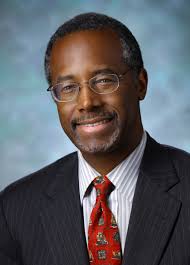
Dr. Benjamin Carson
I have spent many, many a night, you know, working on the heads of people who have been shot in the head, you know, black people primarily, but white people as well. And it’s devastating. And of course those lives matter.
And I believe what we’re going to have to do is really concentrate on, where is all this violence coming from? And it’s not all coming from one specific area. But it’s coming from a general lack of respect for life, and, you know, this person pissed me off, and I got a gun, I’m going to kill them.
I mean, when did we get like that and the values that used to be put into people? And I think a lot of it stems from the fact that we don’t really like to talk about values anymore, because whose values are they, we ask?
You know, it’s all relative. There is no right there. There is no wrong. You know, it’s all relative.
That’s the same thing that the Romans did.
From “Deadly Shootings”:
JUDY WOODRUFF: Chief Dotson, what about in Saint Louis, a 64% increase over last year? Is it all about guns?
COL. SAM DOTSON, Chief, St. Louis Metropolitan Police Department: I’m seeing exactly the same thing that they’re seeing in Milwaukee, the availability of guns.
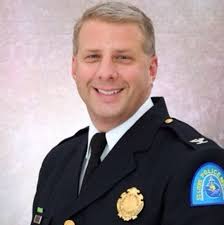
Sam Dotson
We have a constitutional amendment in our state that was passed within the last year that makes it an inalienable right to have a gun. We have had courts that have declined to prosecute convicted felons that we arrest with guns.
I’m seeing exactly the same thing, high-capacity magazines, a willingness to use the guns, and a judiciary that sometimes doesn’t follow through on the prosecution.
We had research done from a university here. Of about 250 cases of unlawful use of a weapon, over 61% of those cases got probation. That means those people are right back out on the street committing crimes.
From “Ben Carson”:
GWEN IFILL: But that’s not the same thing as a solution to the problem.
DR. BENJAMIN CARSON: No.
The solution to the problem is, we have to start teaching values again, teaching people to respect one another again, and to understand that human life is valuable. Even if somebody disagrees with you, their life is still valuable.
* * * * *
Police Chiefs Edward Flynn and Samuel Dotson bluntly stated the devastating results of unrestricted access to high-powered firearms.
And they offered a concrete solution: Drastically restrict that access.
The “solution” offered by Dr. Ben Carson, on the other hand, came down to: “Start teaching values again.”
A “solution” that will appease the religious Right–and not arouse the fury of the National Rifle Association.
Nor will it prevent a single murder.
ABC NEWS, BACKGROUND CHECKS, BULLETPROOF VESTS, CBS NEWS, CNN, COP KILLER BULLETS, CRIME, FACEBOOK, FBI, GUN CONTROL, GUN VIOLENCE, MASS SHOOTINGS, NATIONAL RIFLE ASSOCIATION, NBC NEWS, SECOND AMENDMENT, THE CHICAGO SUN-TIMES, THE CHICAGO TRIBUNE, THE NEW YORK TIMES, THE WASHINGTON POST, TOBACCO INDUSTRY, TWITTER, U.S. CONSTITUTION, USA TODAY, WAYNE LAPIERRE
In Bureaucracy, Business, History, Law, Law Enforcement, Politics, Social commentary on July 27, 2015 at 12:10 am
According to The Mass Shooting Tracker, a project of Guns Are Cool, there have been 204 mass shooting events in the United States so far in 2015.
There have been 204 mass shootings — and 204 days — in 2015 so far – The Washington Post
There were
- 18 mass shootings in April;
- 39 in May;
- and 41 in June.
July has been a particularly busy month for those seeking the title of “NRA Poster Boy”: 34 mass shootings so far–and the month isn’t over yet.
So what should the surviving victims of these rampages do to seek redress?
And how can the relatives and friends of those who didn’t survive seek justice for those they loved?
Three things:
First, don’t count on politicians to support a ban on assault weapons.
Politicians–-with rare exceptions–-have only two goals:
- Get elected to office, and
- Stay in office.
And too many of them fear the economic and voting clout of the National Rifle Association (NRA) to risk its wrath.
Second, don’t expect the mental health profession to prevent such future tragedies.
There is simply no definitive way to predict who is likely to commit mass murder.
And even if such a method were developed, it would likely be ruled unconstitutional. A person can’t be jailed or hospitalized for fear of what he might do.
Third, those who survived these rampages–-and the relatives and friends of those who didn’t–-should file wrongful death, class-action lawsuits against the NRA.
There is sound, legal precedent for this.
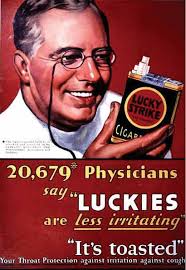
For decades, the American tobacco industry peddled death and disability to millions and reaped billions of dollars in profits.
- The industry vigorously claimed there was no evidence that smoking caused cancer, heart disease, emphysema or any other ailment.
- Tobacco companies spent billions on slick advertising campaigns to win new smokers and attack medical warnings about the dangers of smoking.
- Tobacco companies spent millions to elect compliant politicians and block anti-smoking legislation.
- From 1954 to 1994, over 800 private lawsuits were filed against tobacco companies in state courts. But only two plaintiffs prevailed, and both of those decisions were reversed on appeal.
- In 1994, amidst great pessimism, Mississippi Attorney General Mike Moore filed a lawsuit against the tobacco industry. But other states soon followed, ultimately growing to 46.
- Their goal: To seek monetary, equitable and injunctive relief under various consumer-protection and anti-trust laws.
- The theory underlying these lawsuits was: Cigarettes produced by the tobacco industry created health problems among the population, which badly strained the states’ public healthcare systems.
- In 1998, the states settled their Medicaid lawsuits against the tobacco industry for recovery of their tobacco-related, health-care costs. In return, they exempted the companies from private lawsuits for tobacco-related injuries.
- The companies agreed to curtail or cease certain marketing practices. They also agreed to pay, forever, annual payments to the states to compensate some of the medical costs for patients with smoking-related illnesses.
The parallels with the NRA are obvious:
- For decades, the NRA has peddled deadly weapons to millions, reaped billions of dollars in profits and refused to admit the carnage those weapons have produced: “Guns don’t kill people. People kill people.” With guns.
- The NRA has steadfastly defended the right to own Teflon-coated “cop killer” bullets,” whose only purpose is to penetrate bullet-resistant vests worn by law enforcement officers.
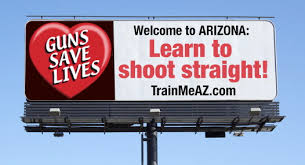
- The NRA has bitterly fought background checks on gun-buyers, in effect granting even criminals, terrorists and the mentally ill the right to own arsenals of death-dealing weaponry.
- The NRA has spent millions on slick advertising campaigns to win new members and frighten them into buying guns.
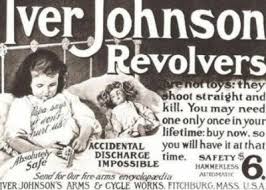
- The NRA has spent millions on political contributions to block gun-control legislation.
- The NRA has spent millions attacking political candidates and elected officials who warned about the dangers of unrestricted access to assault and/or concealed weapons.

- The NRA has spent millions pushing “Stand Your Ground” laws in more than half the states, which potentially give every citizen a “license to kill.”
- The NRA receives millions of dollars from online sales of ammunition, high-capacity ammunition magazines, and other accessories through its point-of-sale Round-Up Program–thus directly profiting by selling a product that kills about 30,288 people a year.
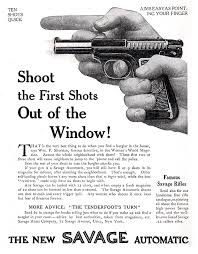
- Firearms made indiscriminately available through NRA lobbying have filled hospitals with casualties, and have thus badly strained the states’ public healthcare systems.
It will take a series of highly expensive and well-publicized lawsuits to significantly weaken the NRA, financially and politically.
The first ones will have to be brought by the surviving victims of gun violence–and by the friends and families of those who did not survive it. Only they will have the courage and motivation to take such a risk.
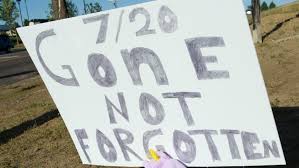
As with the cases first brought against tobacco companies, there will be losses. And the NRA will rejoice with each one.
But, in time, state Attorneys General will see the clear parallels between lawsuits filed against those who peddle death by cigarette and those who peddle death by armor-piercing bullet.
And then the NRA–-like the tobacco industry–-will face an adversary wealthy enough to stand up for the rights of the gun industry’s own victims.
Only then will those politicians supporting reasonable gun controls dare to stand up for the victims of slaughters that could have been prevented.
2012 PRESIDENTIAL RACE, ABC NEWS, AFFORDABLE CARE ACT, BARACK OBAMA, CBS NEWS, CIA, CNN, CONTRAS, FACEBOOK, FRANKLIN D. ROOSEVELT, FUNDRAISING, IRAN-CONTRA SCANDAL, MITT ROMNEY, NBC NEWS, NEW DEAL, NICARAGUA, OBAMACARE, OLIVER NORTH, PAPA JOHN'S PIZZA, Ronald Reagan, THE CHICAGO SUN-TIMES, THE CHICAGO TRIBUNE, THE LOS ANGELES TIMES, THE NEW YORK TIMES, THE WASHINGTON POST, TWITTER, USA TODAY, WHITE CASTLE HAMBURGER CHAIN, WILLIAM J. CASEY
In Bureaucracy, Business, History, Law, Law Enforcement, Politics, Social commentary on July 24, 2015 at 12:24 pm
When William J. Casey was a young attorney during the Great Depression, he learned an important lesson.
Jobs were hard to come by, so Casey thought himself lucky to land one at the Tax Research Institute of America in New York.
His task was to closely read New Deal legislation and write reports explaining it to corporate chieftains.
At first, he thought they wanted detailed legal commentary on the meaning of the new legislation.
But then he quickly learned a blunt truth: Businessmen neither understood nor welcomed Franklin D. Roosevelt’s efforts to reform American capitalism. And they didn’t want legal commentary.
Instead, they wanted to know: “What must we do to achieve minimum compliance with the law?”
In short: How do we get by FDR’s new programs?
Fifty years later, Casey would bring a similar mindset to his duties as director of the Central Intelligence Agency for President Ronald Reagan.

William J. Casey
Congress had banned the Reagan administration from funding the “Contras,” the Right-wing death squads of Nicaragua.
Casey gave lip service to the demands of Congress. But privately, he and Marine Lieutenant Colonel Oliver North set up an “off-the-shelf” operation to overthrow the leftist government of Daniel Ortega.
For three years the operation stayed secret. Then it blew up in November, 1986, as the Iran-Contra scandal.
But the “Casey Doctrine” of minimum compliance didn’t die with Casey (who expired of a brain tumor in 1987).
It’s very much alive among the American business community as President Barack Obama seeks to give medical coverage to all Americans, and not simply the ultra-wealthy.
The single most important provision of the Affordable Care Act (ACA)–-better known as Obamacare–-requires large businesses to provide insurance to full-time employees who work more than 30 hours a week.
For part-time employees, who work fewer than 30 hours, a company isn’t penalized for failing to provide health insurance coverage.
Obama prides himself on being a tough-minded practitioner of “Chicago politics.” So it’s easy to assume that he took the “Casey Doctrine” into account when he shepherded the ACA through Congress.
But he didn’t.
The result was predictable. And its consequences are daily becoming more clear.
Employers feel motivated to move fulltime workers into part-time positions–-and thus avoid
- providing their employees with medical insurance and
- a fine for non-compliance with the law.
Some employers have openly shown their contempt for President Obama–-and the idea that employers actually have an obligation to those who make their profits a reality.

The White Castle hamburger chain is considering hiring only part-time workers in the future to escape its obligations under Obamacare.
No less than Jamie Richardson, its vice president, admitted this in an interview.
“If we were to keep our health insurance program exactly like it is with no changes, every forecast we’ve looked at has indicated our costs will go up 24%.”
Richardson claimed the profit per employee in restaurants is only $750 per year. So, as he sees it, giving health insurance to all employees who work over 30 hours isn’t feasible.
Nor is Richardson the only corporate executive determined to shirk his responsibility to his employees.
John Schnatter, CEO of Papa John’s Pizza, has been quoted as saying:
- The prices of his pizzas will go up–by 11 to 14 cents per pizza, or 15 to 20 cents per order; and
- He will pass along these costs to his customers.
“If Obamacare is in fact not repealed,” Schnatter told Politico, “we will find tactics to shallow out any Obamacare costs and core strategies to pass that cost onto consumers in order to protect our shareholders’ best interests.”
Consider:
- Papa John’s is the third-largest pizza takeout and delivery chain in the United States.
- Its 2012 revenues were $318.6 million, an 8.5 percent increase from 2011 revenues of $293.5 million.
- Its 2012 net income was $14.8 million, compared to its 2012 net income of $12.1 million.
Had Obama been the serious student of Realpolitick that he claims to be, he would have predicted that most businesses would seek to avoid compliance with his law.
To counter that, he need only have required all employers to provide insurance coverage for all of their employees—regardless of their fulltime or part-time status.
This, in turn, would have produced two substantial benefits:
- All employees would have been able to obtain medical coverage; and
- Employers would have been encouraged to provide fulltime positions rather than part-time ones; they would feel: “Since I’m paying for fulltime insurance coverage, I should be getting fulltime work in return.”
The “Casey Doctrine” needs to be kept constantly in mind when reformers try to protect Americans from predatory employers.
ABC NEWS, BUREAUCRACIES, BUREAUCRACY, CATHOLIC CHURCH, CBS NEWS, CHILD ABUSE, CNN, COLLEGE FOOTBALL, FACEBOOK, FBI, J. EDGAR HOOVER, JERRY SANDUSKY, JOE PATERNO, LOUIS J. FREEH, NBC NEWS, PENN STATE UNIVERSITY, PRIESTS, THE CHICAGO SUN-TIMES, THE CHICAGO TRIBUNE, THE LOS ANGELES TIMES, THE NEW YORK TIMES, THE WASHINGTON POST, THOMAS JEFFERSON, TWITTER, USA TODAY
In Bureaucracy, History, Law Enforcement, Politics, Social commentary on July 23, 2015 at 12:02 pm
After spending years of his life sexually abusing boys entrusted into his care, Jerry Sandusky will likely spend the rest of his life as a prison inmate.
On October 9, 2012, a Pennsylvania judge sentenced the 68-year-old former Penn State assistant football coach to at least 30 years in prison. And he may spend as many as 60 years behind bars.
Following his conviction on June 22, 2012, he had faced a maximum of 400 years’ imprisonment for his sexual abuse of 10 boys over a 15-year period.
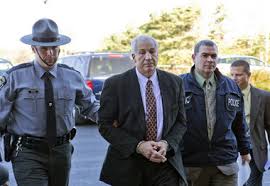
Jerry Sandusky (middle) in police custody
After the sentencing decision was announced, Penn State University President Rodney Erickson released a statement:
“Our thoughts today, as they have been for the last year, go out to the victims of Jerry Sandusky’s abuse.
“While today’s sentence cannot erase what has happened, hopefully it will provide comfort to those affected by these horrible events and help them continue down the road to recovery.”
No doubt Erickson–and the rest of Penn State–waned to move on from this shameful page in the university’s history. And the university desperately tried to sweep the sordid scandal out of sight of the ticket-paying public–-and of history.
Among the steps it took:
- Firing Joe Paterno, the legendary head football coach who had led Penn State to a staggering 112 victories;
- Ousting Graham Spanier, the university’s longtime president; and
- Removing the iconic statue of Paterno–long held in worshipful esteem by almost everyone at the football-obsessed institution.
So what remains to be learned from this sordid affair?
A great deal, it turns out.
To begin at the beginning:
In 2002, assistant coach Mike McQueary, then a Penn State graduate assistant, walked in on Sandusky anally raping a 10-year-old boy. The next day, McQueary reported the incident to head coach Joe Paterno.
“You did what you had to do,” said Paterno. “It is my job now to figure out what we want to do.”

Joe Paterno
Paterno’s idea of “what we want to do” consisted of reporting the incident to three other top Penn State officials:
Their idea of “what we want to do” was to close ranks around Sandusky and engage in a diabolical “code of silence.”
As former FBI Director Louis J. Freeh summed up in an internal investigative report compiled at the request of Penn State and released on July 12, 2012:
“Four of the most powerful people at the Pennsylvania State University–-President Graham B. Spanier, Senior Vice President-Finance and Business Gary C. Schultz, Athletic Director Timothy M. Curley and Head Football Coach Joseph V. Paterno–-failed to protect against a child sexual predator harming children for over a decade.
“These men concealed Sandusky’s activities from the board of trustees, the university community and authorities.

Louis J. Freeh
“They exhibited a striking lack of empathy for Sandusky’s victims by failing to inquire as to their safety and well-being, especially by not attempting to determine the identity of the child who Sandusky assaulted in the Lasch Building in 2001.
“… In order to avoid the consequences of bad publicity, the most powerful leaders at the University….repeatedly concealed critical facts relating to Sandusky’s child abuse from the authorities, the University’s Board of Trustees, the Penn State community, and the public at large.
“The avoidance of the consequences of bad publicity is the most significant, but not the only, cause for this failure to protect child victims and report to authorities.”
If there is a fundamental truth to be learned from this sordid affair, it is this:
The first rule of any and every bureaucracy is: Above all else, the institution must be protected.
And this holds true:
- At the level of local / state / Federal government;
- For-profit organizations;
- Non-profit organizations; or
- Religious institutions
During the 48-year reign of FBI Director J. Edgar Hoover, agents had their own version of this: Do not embarrass the Bureau.
Those who did were fired ot shipped to Hoover’s version of Siberia: A posting in remote Butte, Montana.
Within the Catholic Church, countless Catholic priests abusing young boys entrusted to their protection were repeatedly protected by their high-ranking superiors.
In private industry, whistleblowers who report rampant safety violations in nuclear power plants are often ignored by the very regulatory agencies the public counts on to prevent catastrophic accidents.
Imperfect institutions staffed by perfect men obsessed with power, money and fame–-and fearful of losing one or all of these–-can never be expected to act otherwise.
And those who do expect ordinary mortals to behave like extraordinary saints will be forever disappointed.
So how can we at least minimize such outrages in the future?
“Eternal vigilance is the price of freedom,” warned Thomas Jefferson. And it remains as true today as it did more than 200 years ago.
Add to this the more recent adage: “Sunlight is the best disinfectant.”
The more we know about how our institutions actually work–-as opposed to how they want us to believe they work–-the more chance we have to control their behavior.
And to check their abuses when they occur.
Which they will.
2003 IRAQ WAR, 2016 REPUBLICAN PRESIDENTIAL CANDIDATES, ABC NEWS, ADOLF HITLER, AL QAEDA, ALBERT SPEER, BARACK OBAMA, CBS NEWS, CHRIS CHRISTIE, CNN, DICK CHENEY, DONALD RUMSFELD, FACEBOOK, GEORGE W. BUSH, GERMAN ARMY, INSIDE THE THIRD REICH, INVASION OF POLAND, ISLAMIC STATE OF IRAQ AND SYRIA, JEB BUSH, NAZI GERMANY, NBC NEWS, OSAMA BIN LADEN, PROPAGANDA, SADDAM HUSSEIN, TED CRUZ, THE CHICAGO TRIBUNE, THE LOS ANGELES TIMES, THE NEW YORK TIMES, THE WASHINGTON POST, TWITTER, WHITE HOUSE CORRESPONDENTS DINNER, WMDS, WORLD WAR 11
In Bureaucracy, History, Military, Politics, Social commentary on July 17, 2015 at 1:27 am
Naturally the common people don’t want war, neither in Russia nor in England nor in America, nor for that matter in Germany. That is understood.
But, after all, it’s the leaders of the country who determine the policy, and it’s always a simple matter to drag the people along….
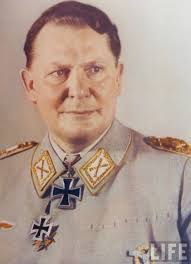
All you have to do is tell them that they are being attacked, and denounce the pacifists for lack of patriotism and exposing the country to greater danger. It works the same way in any country.
–Rcichsmarshall Hermann Goering
Much of the moral basis for American leadership was destroyed by the dark parallels between Adolf Hitler’s invasion of Poland in 1939 and George W. Bush’s invasion of Iraq in 2003.
Among these:
ADOLF HITLER
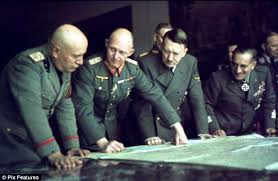
Adolf Hitler (third from left) with his generals
In 1970, Albert Speer, Adolf Hitler’s former architect and Minister of Aramaments, published his bestselling postwar memoirs, Inside the Third Reich. In a striking passage, he revealed how the Fuehrer really felt about German soldiers who were suffering and dying in a war he had provoked.
One evening during the middle of the war, Speer was traveling with Hitler on the Fuehrer’s private train. Late at night, they enjoyed a lavish dinner in the elegant rosewood-paneled dining car.
As they ate, Hitler’s train slowed down and passed a freight train halted on a side track.
From their open cattle car, recalled Speer, wounded German soldiers from the Russian Front–starved, their uniforms in rags–stared across the few yards to their Fuehrer’s dining-car window.
Hitler recoiled at seeing these injured men intently watching him–and he sharply ordered an adjutant to lower the window shades.
Hitler had served as a frontline soldier in World War 1 and had won the Iron Cross for bravery as a dispatch runner.
As Fuehrer, he often boasted of his affinity with the average German soldier. He claimed that “my whole life has been one long struggle for Germany.”
Yet throughout the six years of World War II, he refused to visit German cities ravaged by British and American bombs.
Hitler’s Minister of Propaganda, Joseph Goebbels, despaired at this.
Winston Churchill, prime minister of Great Britain, often visited cities hit by German bombers, and Goebbels knew these visits greatly boosted British morale.
Goebbels urged Hitler to make similar visits to bombed-out German cities, but theFuehrer refused.
Albert Speer believed that Hitler couldn’t bear to see the carnage wrought by his decision to provoke a needless war.

George W. Bush “looking” for WMDs in the White House
GEORGE W. BUSH
Similarly, Bush showed his contempt for the soldiers suffering and dying in his own unprovoked war.
On March 24, 2004, at a White House Correspondents dinner, he joked publicly about the absence of Weapons of Mass Destruction (WMDs).
To Bush, the non-existent WMDs were nothing more than the butt of a joke that night. While an overhead projector displayed photos of a puzzled-looking Bush searching around the Oval Office, Bush recited a comedy routine.
“Those weapons of mass destruction have gotta be somewhere,” Bush laughed, while a photo showed him poking around the corners in the Oval Office.
“Nope-–no weapons over there! Maybe they’re under here,” he said, as a photo showed him looking under a desk.
In a scene that could have occurred under the Roman emperor Nero, an assembly of wealthy, pampered men and women–-the elite of America’s media and political classes–-laughed heartily during Bush’s performance.
Only later did the criticism come, from Democrats and Iraqi war veterans–especially those veterans who had suffered grievous wounds to protect America from WMDs.
Click here: Bush laughs at no WMD in Iraq – YouTube
In his Presidential memoirs, Decision Points, Bush failed to mention his joking about the “missing WMDs” at the correspondents dinner.
In writing about discovering insights into the human character, the ancient historian, Plutarch, said it best:
“And the most glorious exploits do not always furnish us with the clearest discoveries of virtue or vice in men.
“Sometimes a matter of less moment, an expression or a jest, informs us better of their characters and inclinations, than the most famous sieges, the greatest armaments, or the bloodiest battles whatsoever.”
* * * * *
So add it all up:
- Two all-powerful leaders.
- Two nations lied into unprovoked wars.
- Adolf Hitler’s war costs the lives of 4.5 million German soldiers.
- George W. Bush’s war costs the lives of 4,484 Americans.
- Germany’s war results in the deaths of millions of Europeans and Russians.
- America’s war results in the deaths of an estimated 655,000 Iraqis, according to a 2006 study in the Lancet medical journal.
- America’s foray into Iraq costs its treasury at least $2 trillion.
- Hitler is literally driven underground by his enemies and commits suicide to avoid capture, trial and certain execution for war crimes.
- Bush retires from office with a lavish pension and full Secret Service protection. He writes his memoirs and is paid $7 million for the first 1.5 million copies.
No world leader publicly claims to model himself upon Adolf Hitler.
How many Republicans look to George W. Bush as their ideal in Presidential leadership?


ABC NEWS, CHRIS WALLACE, CNN, DEBATE, EVASION, FACEBOOK, FOX NEWS NETWORK, GOP DEBATE, JOHN KASICH, LYING, MEGYN KELLY, NBC NEWS, NICCOLO MACHIAVELLI, REPUBLICAN PARTY, SCOTT WALKER, THE CHICAGO SUN-TIMES, THE CHICAGO TRIBUNE, THE LOS ANGELES TIMES, THE NEW YORK TIMES, THE PRINCE, THE WALL STREET JOURNAL, THE WASHINGTON POST, TWITTER, USA TODAY
SPOTTING EVASIONS: PART TWO (OF THREE)
In Bureaucracy, History, Politics, Social commentary on August 14, 2015 at 12:30 amMost politicians are masters at evading questions they don’t want to answer. And they are equally adept at giving answers that seem to be candid but in fact say nothing.
These skills were on full display during the August 6 GOP debate hosted by the Fox News Network.
For example:
Business Executive Donald Trump had just slammed the Federal Government’s failure to control illegal immigration.
And Fox News Moderator Chris Wallace wanted to know if Ohio Governor John Kasich agreed with him:
“When you say that the American government is stupid, that the Mexican government is sending criminals, that we’re being bamboozled, is that an adequate response to the question of illegal immigration?”
John Kasich
KASICH: “Now, he’s got his solutions. Some of us have other solutions. You know, look, I balanced the federal budget as one of the chief architects when I was in Washington. Hasn’t been done since.
“I was a military reformer. I took the state of Ohio from an $8 billion hole and a 350,000 job loss to a $2 billion surplus and a gain of 350,000 jobs.”
[Kasich, more liberal-minded than his fellow Republicans, didn’t want to condemn Trump’s hawkish views. If he did, he would lose support from the anti-immigrant Republican base. So he changed the subject to his economic policies as governor of Ohio.]
WALLACE: “Respectfully, can we talk about illegal immigration?”
KASICH: “But the point is that we all have solutions. Mr. Trump is touching a nerve because people want the wall to be built. They want to see an end to illegal immigration.
“They want to see it, and we all do. But we all have different ways of getting there. And you’re going to hear from all of us tonight about what our ideas are.”
[Kasich totally evaded the question. He said that “we all have solutions” to illegal immigration. But he never offered his.]
Fox News Moderator Megyn Kelly to Florida Governor Jeb Bush: “…For days on end in this campaign, you struggled to answer a question about whether knowing what we know now…we would’ve invaded Iraq….
“You finally said ‘No.'”
“To the families of those who died in that war who say they liberated and deposed a ruthless dictator, how do you look at them now and say that your brothers war was a mistake?”
Jeb Bush
BUSH: “Knowing what we know now, with faulty intelligence, and not having security be the first priority when — when we invaded, it was a mistake. I wouldn’t have gone in.”
[Bush’s reply totally ignored that his brother, President George W. Bush, deliberately ignored all evidence that Saddam Hussein did not pose a threat to the United States.
[He also ignored the fact that his brother provoked a needless, bloody and financially ruinous war in Iraq.]
BUSH: “…As governor of the state of Florida, I called every one of [the families who had lost members in Iraq and expressed his condolences].
“…And, every one of them said that their child did not die in vain, or their wife, of their husband did not die in vain. So, why it was difficult for me to do it was based on that.”
[This sounded plausible. But then Bush moved to shift the blame from his brother to President Barack Obama.]
BUSH: “Here’s the lesson that we should take from this, which relates to this whole subject, Barack Obama became president, and he abandoned Iraq.
“He left, and when he left Al Qaida was done for. ISIS was created because of the void that we left, and that void now exists as a caliphate the size of Indiana.”
[In fact, “ISIS was created because of the void” that emerged when Bush toppled Saddam Hussein. Hussein’s dictatorial rule had suppressed religious-based terror organizations like Al Qaeda and ISIS.]
For News Moderator Megyn Kelly asked Dr. Benjamin Carson: “Your critics say that your [foreign policy] inexperience shows.
“You’ve suggested that the Baltic States are not a part of NATO, just months ago you were unfamiliar with the major political parties and government in Israel, and domestically, you thought Alan Greenspan had been treasury secretary instead of federal reserve chair.
“Aren’t these basic mistakes, and don’t they raise legitimate questions about whether you are ready to be president?”
CARSON: “So, you know, experience comes from a large number of different arenas, and America became a great nation early on not because it was flooded with politicians, but because it was flooded with people who understood the value of personal responsibility, hard work, creativity, innovation, and that’s what will get us on the right track now, as well.”
[Carson totally evaded the question. He implied that other qualities–such as “hard work, creativity, innovation”–would make up for his lack of foreign policy experience and knowledge.]
Share this: