Spend any amount of time in California, and a new foreign word will enter your vocabulary: Untermenschen.
In German, this means “subhumans.”
Or “Unters,” for short.
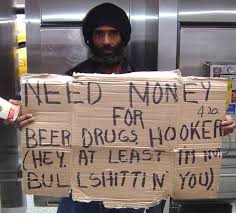
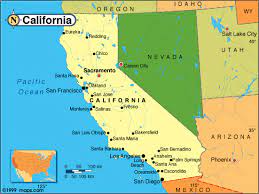
California has a population of nearly 40 million people—and has nearly one-third of the nation’s “homeless” population. The majority of that population consists of hardcore drug addicts, hardcore alcoholics, the mentally ill, and those who refuse to work for a living.
In short: Druggies, Drunks, Mentals and Bums—or DDMBs.
And their numbers are growing much faster in California than in other states, according to an analysis of federal data by the Public Policy Institute of California.
Tent encampments block pedestrians (especially those with canes or in wheelchairs) from walking along sidewalks. And when pedestrians aren’t contending with tents, they’re forced to navigate around empty beer cans, empty wine bottles, piles of human feces, pools of human urine and used hypodermic syringes.
On October 4, 2024, California’s Governor Gavin Newsom awarded $131 million to 18 local communities to to clear homeless encampments and provide shelter, care, and support. It’s projected to help an additional 3,364 people currently living in encampments and permanently house 1,565 people.
But 1,565 is essentially meaningless when the numbers of Untermenschen in California are estimated at 171,000.
And how much has Newsom committed to spend on people who make absolutely no positive contribution to society? More than $27 billion.
The money partially comes from general obligation bonds that go toward construction of “campus-style” facilities along with smaller homes and long-term residential settings.

Gavin Newsom
This is a difficult time for California. The state has an estimated $22.5 billion deficit, with state revenues falling as the stock market slows.
According to the U.S. Census Bureau, California’s total population declined by more than 500,000 between April 2020 and July 2022. California is one of only 18 states that saw its numbers decline and had the fourth biggest drop as a share of its population.
And a major reason for their unhappiness: The state’s intractable “homeless” problem.
Fortunately, the United States Supreme Court has finally supplied at least a partial answer to this problem.
On June 28, 2024, the Court handed down its opinion in City of Grants Pass vs. Johnson. Voting six to three along ideological lines, the Justices empowered cities to enforce laws prohibiting camping and vagrancy.
On September 28, 2018, a three-judge panel of the Ninth Circuit Court of Appeals had issued Martin v. City of Boise. This held that “the Eighth Amendment prohibits the imposition of criminal penalties for sitting, sleeping, or lying outside on public property for homeless individuals who cannot obtain shelter.” People could be evicted only if beds or shelter were available to those who were being evicted.
The Supreme Court’s decision overrules that decision, stating that the Eighth Amendment does not prevent a municipality from evicting homeless people from public spaces.
It’s a win for the small Oregon city of Grants Pass, which brought the case, and dozens of Western cities that needed more enforcement powers as they grappled with record high rates of homelessness. The lower court rulings had prevented them from keeping public spaces open and safe for everyone.
The Court’s ruling makes it easier for communities nationwide to fine, ticket or arrest DDMBs—Druggies, Drunks, Mentals and Bums—who make up 80% of the “homeless.” But it doesn’t force communities to take any specific actions or to actively engage in criminal punishment.
Decades ago, being “homeless” meant you lost your home due to fire, flood or earthquake. For a few weeks or months, you lived with friends or family as you searched for a new residence. Then you resumed your former life as a productive citizen.
Today, being “homeless” means living for years—even decades—on the street. Selling drugs, using drugs, getting drunk, staying drunk, living in filth, refusing treatment for drug and/or alcohol addiction, refusing even shelter from the cold, rain and terrors of street life—these are the realities of most of today’s “homeless” population.
To fully understand the consequences of this, one needs only to look at what this population has done to San Francisco.
In 2022, the San Francisco “homeless” population was officially estimated to be 7,754. Of these, 3,357 were staying in shelter. Many of those who could find shelter refused to make use of it—or were refused entry due to their rampant drug and/or alcohol addictions.
In his 2021 bestseller, San Fransicko: Why Progressives Ruin Cities, author Michael Shellenberger provides the answer.
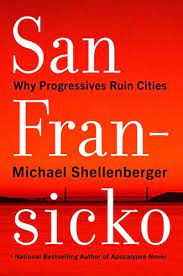
According to its dust jacket:
“Progressives claimed they knew how to solve homelessness, inequality, and crime. But in cities they control, progressives made those problems worse.
“Michael Shellenberger has lived in the San Francisco Bay Area for thirty years. During that time, he advocated for the decriminalization of drugs, affordable housing, and alternatives to jail and prison.
“But as homeless encampments spread, and overdose deaths skyrocketed, Shellenberger decided to take a closer look at the problem. What he discovered shocked him. The problems had grown worse not despite but because of progressive policies.”
 Bureaucracybuster's Blog
ABC NEWS, ALCOHOLISM, ALTERNET, AMERICABLOG, AP, BABY BOOMER RESISTANCE, BBC, BLOOMBERG NEWS, BUMS, BUZZFEED, CBS NEWS, CITY OF GRANTS PASS V. JOHNSON, CNN, COVID-19, CROOKS AND LIARS, CVS, DAILY KOS, DRUG ADDICTION, FIVETHIRTYEIGHT, GAVIN NEWSOM, HARPER’S MAGAZINE, HOMELESSNESS, HUFFINGTON POST, IPS SECURITY, LOS ANGELES, MEDIA MATTERS, MENTAL ILLNESS, MICHAEL SHELLENBERGER, MOTHER JONES, MOVEON, MSNBC, NAVIGATION CENTERS, NBC NEWS, NEIL GORSUCH, NEW REPUBLIC, NEWSDAY, NEWSWEEK, NPR, ORACLE, PBS NEWSHOUR, POLITICO, POLITICUSUSA, PORTLAND, PROPOSITION 36, RAW STORY, REUTERS, SALON, SAN FRANCISCO, SAN FRANCISCO BOARD OF SUPERVISORS, SAN FRANCISCO MAYOR'S OFFICE, SAN FRANSICKO: WHY PROGRESSIVES RUIN CITIES (BOOK), SEATLE, SEATTLE TIMES, SLATE, TALKING POINTS MEMO, THE ATLANTIC, THE CHICAGO SUN-TIMES, THE CHICAGO TRIBUNE, THE DAILY BEAST, THE DAILY BLOG, THE GUARDIAN, THE HILL, THE HUFFINGTON POST, THE INTERCEPT, THE LOS ANGELES TIMES, THE NATION, THE NEW REPUBLIC, THE NEW YORK TIMES, THE NEW YORKER, THE VILLAGE VOICE, THE WASHINGTON POST, THINKPROGRESS, TIME, TRUTHDIG, TRUTHOUT, U.S. NEWS & WORLD REPORT, UNITED STATE SUPREME COURT, UPI, USA TODAY, VMWARE, WALGREENS, X
UNTERS, AWAY!–PART ONE (OF FOUR)
In Bureaucracy, Business, History, Law, Law Enforcement, Medical, Politics, Social commentary on April 17, 2025 at 12:06 amSpend any amount of time in California, and a new foreign word will enter your vocabulary: Untermenschen.
In German, this means “subhumans.”
Or “Unters,” for short.
California has a population of nearly 40 million people—and has nearly one-third of the nation’s “homeless” population. The majority of that population consists of hardcore drug addicts, hardcore alcoholics, the mentally ill, and those who refuse to work for a living.
In short: Druggies, Drunks, Mentals and Bums—or DDMBs.
And their numbers are growing much faster in California than in other states, according to an analysis of federal data by the Public Policy Institute of California.
Tent encampments block pedestrians (especially those with canes or in wheelchairs) from walking along sidewalks. And when pedestrians aren’t contending with tents, they’re forced to navigate around empty beer cans, empty wine bottles, piles of human feces, pools of human urine and used hypodermic syringes.
On October 4, 2024, California’s Governor Gavin Newsom awarded $131 million to 18 local communities to to clear homeless encampments and provide shelter, care, and support. It’s projected to help an additional 3,364 people currently living in encampments and permanently house 1,565 people.
But 1,565 is essentially meaningless when the numbers of Untermenschen in California are estimated at 171,000.
And how much has Newsom committed to spend on people who make absolutely no positive contribution to society? More than $27 billion.
The money partially comes from general obligation bonds that go toward construction of “campus-style” facilities along with smaller homes and long-term residential settings.
Gavin Newsom
This is a difficult time for California. The state has an estimated $22.5 billion deficit, with state revenues falling as the stock market slows.
According to the U.S. Census Bureau, California’s total population declined by more than 500,000 between April 2020 and July 2022. California is one of only 18 states that saw its numbers decline and had the fourth biggest drop as a share of its population.
And a major reason for their unhappiness: The state’s intractable “homeless” problem.
Fortunately, the United States Supreme Court has finally supplied at least a partial answer to this problem.
On June 28, 2024, the Court handed down its opinion in City of Grants Pass vs. Johnson. Voting six to three along ideological lines, the Justices empowered cities to enforce laws prohibiting camping and vagrancy.
On September 28, 2018, a three-judge panel of the Ninth Circuit Court of Appeals had issued Martin v. City of Boise. This held that “the Eighth Amendment prohibits the imposition of criminal penalties for sitting, sleeping, or lying outside on public property for homeless individuals who cannot obtain shelter.” People could be evicted only if beds or shelter were available to those who were being evicted.
The Supreme Court’s decision overrules that decision, stating that the Eighth Amendment does not prevent a municipality from evicting homeless people from public spaces.
It’s a win for the small Oregon city of Grants Pass, which brought the case, and dozens of Western cities that needed more enforcement powers as they grappled with record high rates of homelessness. The lower court rulings had prevented them from keeping public spaces open and safe for everyone.
The Court’s ruling makes it easier for communities nationwide to fine, ticket or arrest DDMBs—Druggies, Drunks, Mentals and Bums—who make up 80% of the “homeless.” But it doesn’t force communities to take any specific actions or to actively engage in criminal punishment.
Decades ago, being “homeless” meant you lost your home due to fire, flood or earthquake. For a few weeks or months, you lived with friends or family as you searched for a new residence. Then you resumed your former life as a productive citizen.
Today, being “homeless” means living for years—even decades—on the street. Selling drugs, using drugs, getting drunk, staying drunk, living in filth, refusing treatment for drug and/or alcohol addiction, refusing even shelter from the cold, rain and terrors of street life—these are the realities of most of today’s “homeless” population.
To fully understand the consequences of this, one needs only to look at what this population has done to San Francisco.
In 2022, the San Francisco “homeless” population was officially estimated to be 7,754. Of these, 3,357 were staying in shelter. Many of those who could find shelter refused to make use of it—or were refused entry due to their rampant drug and/or alcohol addictions.
In his 2021 bestseller, San Fransicko: Why Progressives Ruin Cities, author Michael Shellenberger provides the answer.
According to its dust jacket:
“Progressives claimed they knew how to solve homelessness, inequality, and crime. But in cities they control, progressives made those problems worse.
“Michael Shellenberger has lived in the San Francisco Bay Area for thirty years. During that time, he advocated for the decriminalization of drugs, affordable housing, and alternatives to jail and prison.
“But as homeless encampments spread, and overdose deaths skyrocketed, Shellenberger decided to take a closer look at the problem. What he discovered shocked him. The problems had grown worse not despite but because of progressive policies.”
Share this: