On October 7, the Hamas terrorist organization launched a coordinated surprise attack on Israel.
The attack opened with a barrage of at least 3,000 rockets launched from the Hamas-controlled Gaza Strip. About 2,500 Palestinian militants breached the Gaza-Israel barrier, attacking military bases and massacring civilians in neighboring Israeli communities.
At least 1,400 Israelis were slaughtered.
And even more unnerving for Israelis, an estimated 100-150 hostages—men, women and children—were kidnapped and whisked into Gaza.
As Israeli airstrikes pound Gaza and Israeli ground forces mass for what appears to be an upcoming all-out ground assault, Israelis wonder: “Will we ever see our loved ones again? And is there a way to safely rescue them?”
Complicating the situation: Gaza is honeycombed with tunnels built by Hamas, allowing terrorists to store arms, food and munitions (including rockets) and to move about freely. An additional advantage: They provide living shelter for the terrorists.
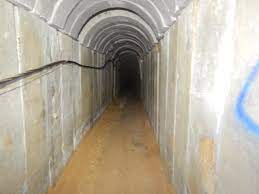
A Hamas tunnel
American law enforcement has had long and usually successful experience in negotiating an end to hostage-taking situations.
During the late 1960s and early 1970s, American law enforcement agencies began creating Special Weapons and Tactics (SWAT) teams. These units were armed with automatic weapons and trained to enter barricaded buildings. They were also given special training in hostage negotiation.
Their men came from the most physically and mentally fit officers of those departments. And the police departments whose SWAT teams were universally recognized as the best were the LAPD and NYPD.
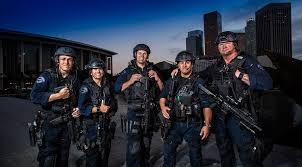
A SWAT team
The first commandment for American SWAT teams—local, state and Federal—is: Don’t try to enter a barricaded area unless (1) hostages’ lives are directly at risk; and (2) there is no other way to effect their rescue.
Even if hostages are murdered before a SWAT team arrives on the scene, officers will usually try to enter into negotiations with their captors. They will send in food and other comfort items in hopes of persuading the criminals to surrender peacefully.
These negotiations can last for hours or days—so long as police feel there’s a chance of success. If, however, police feel that hostages are about to be killed, they will storm the enclosure.
But there is another way agencies can try to rescue hostages. It might be called, “The KGB Method.”
The KGB served as a combination secret police/paramilitary force throughout the 74-year life of the Soviet Union. Its name (“Committee for State Security”) has changed several times since its birth in 1917: Cheka, NKVD, MGB, KGB.
After the collapse of the Soviet Union in 1991 and the establishment of the Russian Federation, its name was officially changed to the FSB (Federal Security Service).
By any name, this is an agency known for its brutality and ruthlessness. The numbers of its victims literally run into the millions.
On September 30 1985, four attaches from the Soviet Embassy in Beirut, Lebanon, were kidnapped by men linked to Hizbollah (“Party of God”), the Iranian-supported terrorist group.
The kidnappers sent photos of the four men to Western news agencies. Each captive was shown with an automatic pistol pressed to his head.
The militants demanded that Moscow pressure pro-Syrian militiamen to stop shelling the pro-Iranian militia in Lebanon’s northern port city of Tripoli.
And they threatened to execute the four Soviet captives, one by one, unless this demand was met.
The Soviet Union began negotiations with the kidnappers, but could not secure a halt to the shelling of Tripoli.
Only two days after the kidnappings, the body of Arkady Katov, a 30-year-old consular secretary, was found in a Beirut trash dump. He had been shot through the head.
That was when the KGB took over negotiations.
Insignia of the KGB
They kidnapped a man known to be a close relative of a prominent Hizbollah leader. Then they castrated him, stuffed his testicles in his mouth, shot him in the head, and sent the body back to Hizbollah.
With the body was a note: We know the names of other close relatives of yours, and the same will happen to them if our diplomats are not released immediately.
Soon afterward, the remaining three Soviet attaches were released only 150 yards from the Soviet Embassy.
Hizbollah telephoned a statement to news agencies claiming that the release was a gesture of “goodwill.”
In Washington, D.C., then-CIA Director William Casey decided that the Soviets knew the language of Hizbollah.
Both the United States and Israel—the two nations most commonly targeted for terrorist kidnappings—have elite Special Forces units.
Military hostage-rescue units operate differently from civilian ones. They don’t care about taking alive hostage-takers for later trials. The result is usually a pile of dead hostage-takers.
These Special Forces could be ordered to similarly kidnap the relatives of whichever Islamic terrorist leaders are responsible for the latest outrages.
Ordering such action would instantly send an unmistakable message to Islamic terrorist groups: Screw with us at your own immediate peril. And at the peril of those you most hold dear.
In the United States, such elite units as the U.S. Navy SEALS, Green Berets and Delta Force stand ready. They require only the orders.
 Bureaucracybuster's Blog
ABC NEWS, ALTERNET, AMERICABLOG, AP, BABY BOOMER RESISTANCE, BBC, BLOOMBERG NEWS, BUZZFEED, CBS NEWS, CIA, CNN, CROOKS AND LIARS, DAILY KOS, FIVETHIRTYEIGHT, FOX & FRIENDS, GAZA, GREEN BERETS, HAMAS, HARPER’S MAGAZINE, HIZBOLLAH, HOSTAGE NEGOTIATION, HOSTAGE-TAKING, HUFFINGTON POST, ISLAMIC TERRORISM, ISRAEL, KGB, KIDNAPPING, LOS ANGELES POLICE DEPARTMENT, MEDIA MATTERS, MOTHER JONES, MOVEON, MSNBC, NBC NEWS, NEW REPUBLIC, NEW YORK POLICE DEPARTMENT, NEWSDAY, NEWSWEEK, NPR, PBS NEWSHOUR, POLITICO, POLITICUSUSA, RAW STORY, REUTERS, SALON, SEATTLE TIMES, SLATE, SOVIET UNION, SPECIAL WEAPONS AND TACTICS TEAMS (SWAT), TALKING POINTS MEMO, TERRORISM, THE ATLANTIC, THE CHICAGO SUN-TIMES, THE CHICAGO TRIBUNE, THE DAILY BEAST, THE DAILY BLOG, THE GUARDIAN, THE HILL, THE HUFFINGTON POST, THE INTERCEPT, THE LOS ANGELES TIMES, THE NATION, THE NEW REPUBLIC, THE NEW YORK TIMES, THE NEW YORKER, THE VILLAGE VOICE, THE WALL STREET JOURNAL, THE WASHINGTON POST, THINKPROGRESS, TIME, TRUTHDIG, TRUTHOUT, TUNNELS, TWITTER, U.S. NAVY SEALS, U.S. NEWS & WORLD REPORT, UPI, USA TODAY, WILLIAM CASEY
HOSTAGE NEGOTIATING, KGB STYLE
In Bureaucracy, History, Law Enforcement, Military, Politics, Social commentary on October 17, 2023 at 12:08 amOn October 7, the Hamas terrorist organization launched a coordinated surprise attack on Israel.
The attack opened with a barrage of at least 3,000 rockets launched from the Hamas-controlled Gaza Strip. About 2,500 Palestinian militants breached the Gaza-Israel barrier, attacking military bases and massacring civilians in neighboring Israeli communities.
At least 1,400 Israelis were slaughtered.
And even more unnerving for Israelis, an estimated 100-150 hostages—men, women and children—were kidnapped and whisked into Gaza.
As Israeli airstrikes pound Gaza and Israeli ground forces mass for what appears to be an upcoming all-out ground assault, Israelis wonder: “Will we ever see our loved ones again? And is there a way to safely rescue them?”
Complicating the situation: Gaza is honeycombed with tunnels built by Hamas, allowing terrorists to store arms, food and munitions (including rockets) and to move about freely. An additional advantage: They provide living shelter for the terrorists.
A Hamas tunnel
American law enforcement has had long and usually successful experience in negotiating an end to hostage-taking situations.
During the late 1960s and early 1970s, American law enforcement agencies began creating Special Weapons and Tactics (SWAT) teams. These units were armed with automatic weapons and trained to enter barricaded buildings. They were also given special training in hostage negotiation.
Their men came from the most physically and mentally fit officers of those departments. And the police departments whose SWAT teams were universally recognized as the best were the LAPD and NYPD.
A SWAT team
The first commandment for American SWAT teams—local, state and Federal—is: Don’t try to enter a barricaded area unless (1) hostages’ lives are directly at risk; and (2) there is no other way to effect their rescue.
Even if hostages are murdered before a SWAT team arrives on the scene, officers will usually try to enter into negotiations with their captors. They will send in food and other comfort items in hopes of persuading the criminals to surrender peacefully.
These negotiations can last for hours or days—so long as police feel there’s a chance of success. If, however, police feel that hostages are about to be killed, they will storm the enclosure.
But there is another way agencies can try to rescue hostages. It might be called, “The KGB Method.”
The KGB served as a combination secret police/paramilitary force throughout the 74-year life of the Soviet Union. Its name (“Committee for State Security”) has changed several times since its birth in 1917: Cheka, NKVD, MGB, KGB.
After the collapse of the Soviet Union in 1991 and the establishment of the Russian Federation, its name was officially changed to the FSB (Federal Security Service).
By any name, this is an agency known for its brutality and ruthlessness. The numbers of its victims literally run into the millions.
On September 30 1985, four attaches from the Soviet Embassy in Beirut, Lebanon, were kidnapped by men linked to Hizbollah (“Party of God”), the Iranian-supported terrorist group.
The kidnappers sent photos of the four men to Western news agencies. Each captive was shown with an automatic pistol pressed to his head.
The militants demanded that Moscow pressure pro-Syrian militiamen to stop shelling the pro-Iranian militia in Lebanon’s northern port city of Tripoli.
And they threatened to execute the four Soviet captives, one by one, unless this demand was met.
The Soviet Union began negotiations with the kidnappers, but could not secure a halt to the shelling of Tripoli.
Only two days after the kidnappings, the body of Arkady Katov, a 30-year-old consular secretary, was found in a Beirut trash dump. He had been shot through the head.
That was when the KGB took over negotiations.
Insignia of the KGB
They kidnapped a man known to be a close relative of a prominent Hizbollah leader. Then they castrated him, stuffed his testicles in his mouth, shot him in the head, and sent the body back to Hizbollah.
With the body was a note: We know the names of other close relatives of yours, and the same will happen to them if our diplomats are not released immediately.
Soon afterward, the remaining three Soviet attaches were released only 150 yards from the Soviet Embassy.
Hizbollah telephoned a statement to news agencies claiming that the release was a gesture of “goodwill.”
In Washington, D.C., then-CIA Director William Casey decided that the Soviets knew the language of Hizbollah.
Both the United States and Israel—the two nations most commonly targeted for terrorist kidnappings—have elite Special Forces units.
Military hostage-rescue units operate differently from civilian ones. They don’t care about taking alive hostage-takers for later trials. The result is usually a pile of dead hostage-takers.
These Special Forces could be ordered to similarly kidnap the relatives of whichever Islamic terrorist leaders are responsible for the latest outrages.
Ordering such action would instantly send an unmistakable message to Islamic terrorist groups: Screw with us at your own immediate peril. And at the peril of those you most hold dear.
In the United States, such elite units as the U.S. Navy SEALS, Green Berets and Delta Force stand ready. They require only the orders.
Share this:
Related