Given that the law–and the Congressmen who create it–are still mostly owned by the airlines, you, as a customer, are forced to make do with the weapons at hand.
These essentially boil down to two:
- Threatening the airlines with bad publicity; and
- Threatening the airlines with a private or class-action lawsuit.
In both cases, it’s best to first contact the highest-ranking officials in the airline company.
There are two reasons for this:
- They have the most to lose, and
- They have the power to redress your complaint.
You can try to reach the CEO or one of his assistants during the time of the incident. But, most likely, this will happen afterwards.
If a mini-Hitler of an airline steward decides to eject you because s/he doesn’t like your clothes or request for help, there’s nothing you can do about it.
If you physically resist, you will certainly be arrested and charged with some version of domestic terrorism. You’ll be shipped off to jail and forced to defend yourself against the bogus charge.

Even if the authorities decide to not prosecute, you’ll have to spend at least several hundred dollars on legal representation.
And, of course, the airlines won’t care. They won’t be spending a dime on your prosecution–that will be paid for by the local U.S. Attorney’s (federal prosecutor’s) office.
Niccolo Machiavelli, the father of political science, wisely advised in The Prince:
“A prince…must imitate the fox and the lion, for the lion cannot protect himself from traps, and the fox cannot defend himself from wolves. One must therefore be a fox to avoid traps, and a lion to frighten wolves.”
This is definitely the time to take on the trappings of a fox. However painful it is to swallow the insult at the time it’s given, don’t give the airlines an excuse to have you arrested.
Take your revenge afterward. That’s what musician Dave Carroll did.
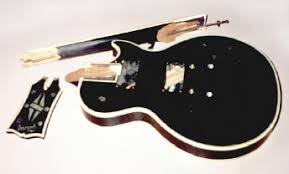
Carroll alleged that, in 2008, he and fellow passengers saw United Airlines’ baggage-handling crew throwing guitars on the tarmac in Chicago O’Hare. He arrived at Omaha, Nebraska, his destination to discover that the neck of his $3,500 Taylor guitar had been broken.
Carroll complained to three United employees, but they proved indifferent. He filed a claim with the airline–but was told he was ineligible for compensation.
The reason? He had not filed the claim within the company’s stipulated “standard 24-hour timeframe.” Carroll turned to his musical roots for a remedy.
He wrote a song, “United Breaks Guitars,” and turned it into a music video which he posted on YouTube and iTunes in July, 2009.
Click here: United Breaks Guitars – YouTube
The song went viral, and became a public relations nightmare for the airline.
The Sunday Times reported that, four days after the video’s posting, United Airlines’ stock price fell 10% costing stockholders about $180 million in value.
Most customers, admittedly, aren’t musicians. For them–short of suing–the weapons of choice will be:
- The phone
- Letters
- The Internet
- Consumer protection organizations that can be enlisted
Let’s start with the first: The phone.
Most customers assume the place to take their anger is the airline Customer Service desk. And the airlines encourage people to do just that.
Don’t do it.
Customer Service is staffed by people who may ooze compassion but who aren’t authorized to do anything on your behalf. And of course they’ll be well-versed in the standard airline excuses for why your request is denied.
(Think of Dave Carroll and the excuse United’s reps offered him: You didn’t file your complaint within 24 hours.)
Even if they truly want to help you, they’ll find themselves outranked at every level.
So take your complaint to someone who has the authority to resolve it. This means, preferably, the CEO of the airline, or at least one of his executive colleagues.
 Bureaucracybuster's Blog
ABC NEWS, AIRLINE PASSENGER RIGHTS, AIRLINES, AIRTRAN, ALTERNET, AMERICAN AIRLINES, AMERICAN CUSTOMER SATISFACTION INDEX, AP, BBC, BUSINESS INSIDER, BUZZFEED, CBS NEWS, CNN, COMPLAINT LETTERS, CONSUMER RIGHTS, DAILY KOS, DAVE CARROLL, DELTA AIRLINES, FACEBOOK, ITUNES, JETBLUE AIRWAYS, KGB, LEISHA HAILEY, MOTHER JONES, MOVEON, NBC NEWS, NEWSWEEK, NICCOLO MACHIAVELLI, NPR, POLITICO, RALPH NADER, RAW STORY, REUTERS, SALON, SEATTLE TIMES, SLATE, SOUTHWEST AIRLINES, THE ATLANTIC, THE CHICAGO SUN-TIMES, THE CHICAGO TRIBUNE, THE DAILY BEAST, THE GUARDIAN, THE HILL, THE HUFFINGTON POST, THE LOS ANGELES TIMES, THE NEW YORK TIMES, THE PRINCE, THE WALL STREET JOURNAL, THE WASHINGTON POST, TIME, TWITTER, U.S. AIRWAYS, U.S. NEWS & WORLD REPORT, UNITED BREAKS GUITARS, UPI, US AIRWAYS, USA TODAY, YOUTUBE
TAKING ON KGB AIRWAYS: PART FOUR (OF EIGHT)
In Bureaucracy, Business, History, Law, Law Enforcement, Politics, Self-Help, Social commentary on April 14, 2017 at 1:25 amUnder Federal law, as enforced by the Federal Aviation Administration (FAA) airline passengers have only the following guaranteed rights:
If your flight is delayed (such as by bad weather) and you’re stuck on the tarnac:
In addition, the U.S. government mandates these “rights” for air travelers:
Beyond those, all you can claim is what’s in each airline’s “contract of carriage.” Those contracts are written by and entirely biased toward airlines–not customers.
Given that the law–and the Congressmen who create it–are still mostly owned by the airlines, you, as a customer, are forced to make do with the weapons at hand.
These essentially boil down to two:
In both cases, it’s best to first contact the highest-ranking officials in the airline company.
There are two reasons for this:
You can try to reach the CEO or one of his assistants during the time of the incident. But, most likely, this will happen afterwards.
If a mini-Hitler of an airline steward decides to eject you because s/he doesn’t like your clothes or request for help, there’s nothing you can do about it.
If you physically resist, you will certainly be arrested and charged with some version of domestic terrorism. You’ll be shipped off to jail and forced to defend yourself against the bogus charge.
Even if the authorities decide to not prosecute, you’ll have to spend at least several hundred dollars on legal representation.
And, of course, the airlines won’t care. They won’t be spending a dime on your prosecution–that will be paid for by the local U.S. Attorney’s (federal prosecutor’s) office.
Niccolo Machiavelli, the father of political science, wisely advised in The Prince:
“A prince…must imitate the fox and the lion, for the lion cannot protect himself from traps, and the fox cannot defend himself from wolves. One must therefore be a fox to avoid traps, and a lion to frighten wolves.”
This is definitely the time to take on the trappings of a fox. However painful it is to swallow the insult at the time it’s given, don’t give the airlines an excuse to have you arrested.
Take your revenge afterward. That’s what musician Dave Carroll did.
Carroll alleged that, in 2008, he and fellow passengers saw United Airlines’ baggage-handling crew throwing guitars on the tarmac in Chicago O’Hare. He arrived at Omaha, Nebraska, his destination to discover that the neck of his $3,500 Taylor guitar had been broken.
Carroll complained to three United employees, but they proved indifferent. He filed a claim with the airline–but was told he was ineligible for compensation.
The reason? He had not filed the claim within the company’s stipulated “standard 24-hour timeframe.” Carroll turned to his musical roots for a remedy.
He wrote a song, “United Breaks Guitars,” and turned it into a music video which he posted on YouTube and iTunes in July, 2009.
Click here: United Breaks Guitars – YouTube
The song went viral, and became a public relations nightmare for the airline.
The Sunday Times reported that, four days after the video’s posting, United Airlines’ stock price fell 10% costing stockholders about $180 million in value.
Most customers, admittedly, aren’t musicians. For them–short of suing–the weapons of choice will be:
Let’s start with the first: The phone.
Most customers assume the place to take their anger is the airline Customer Service desk. And the airlines encourage people to do just that.
Don’t do it.
Customer Service is staffed by people who may ooze compassion but who aren’t authorized to do anything on your behalf. And of course they’ll be well-versed in the standard airline excuses for why your request is denied.
(Think of Dave Carroll and the excuse United’s reps offered him: You didn’t file your complaint within 24 hours.)
Even if they truly want to help you, they’ll find themselves outranked at every level.
So take your complaint to someone who has the authority to resolve it. This means, preferably, the CEO of the airline, or at least one of his executive colleagues.
This is the single most important lesson in bureaucracy-busting: If you want action, seek out those who are empowered to make it happen.
Share this: