As Americans vacation their way through yet another observance of Presidents’ Day, it’s well to remember the man whose name defines modern politics.
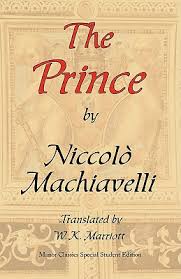
In 1513, Niccolo Machiavelli, the Florentine statesman who has been called the father of modern political science, published his best-known work: The Prince.

Niccolo Machiavelli
Among the issues he confronted was how to preserve liberty within a republic. And key to this was mediating the eternal struggle between the wealthy and the poor and middle class.
Machiavelli deeply distrusted the nobility because they stood above the law. He saw them as a major source of corruption because they could buy influence through patronage, favors or nepotism.
Successful political leaders must attain the support of the nobility or general populace. But since these groups have conflicting interests, the safest course is to choose the latter.
….He who becomes prince by help of the [wealthy] has greater difficulty in maintaining his power than he who is raised by the populace. He is surrounded by those who think themselves his equals, and is thus unable to direct or command as he pleases.
But one who is raised to leadership by popular favor finds himself alone, and has no one, or very few, who are not ready to obey him. [And] it is impossible to satisfy the [wealthy] by fair dealing and without inflicting injury upon others, whereas it is very easy to satisfy the mass of the people in this way.
For the aim of the people is more honest than that of the [wealthy], the latter desiring to oppress, and the former merely to avoid oppression. [And] the prince can never insure himself against a hostile population on account of their numbers, but he can against the hostility of the great, as they are but few.
The worst that a prince has to expect from a hostile people is to be abandoned, but from hostile nobles he has to fear not only desertion but their active opposition. And as they are more far seeing and more cunning, they are always in time to save themselves and take sides with the one who they expect will conquer.
The prince is, moreover, obliged to live always with the same people, but he can easily do without the same nobility, being able to make and unmake them at any time, and improve their position or deprive them of it as he pleases.
Unfortunately, political leaders throughout the world–including the United States–have ignored this sage advice.
The results of this wholesale favoring of the wealth and powerful have been brilliantly documented in a recent investigation of tax evasion by the world’s rich.
In 2012, Tax Justice Network, which campaigns to abolish tax havens, commissioned a study of their effect on the world’s economy.
The study was entitled, “The Price of Offshore Revisited: New Estimates for ‘Missing’ Global Private Wealth, Income, Inequality and Lost Taxes.”
http://www.taxjustice.net/cms/upload/pdf/Price_of_Offshore_Revisited_120722.pdf
The research was carried out by James Henry, former chief economist at consultants McKinsey & Co. Among its findings:
Summing up this situation, the report notes: “We are up against one of society’s most well-entrenched interest groups. After all, there’s no interest group more rich and powerful than the rich and powerful.”
Fortunately, Machiavelli has supplied a timeless remedy to this increasingly dangerous situation:
- Assume evil among men–and most especially among those who possess the greatest concentration of wealth and power.
- Carefully monitor their activities–the way the FBI now regularly monitors those of the Mafia and major terrorist groups.
- Ruthlessly prosecute the treasonous crimes of the rich and powerful–and, upon their conviction, impose severe punishment.
 Bureaucracybuster's Blog
ABC NEWS, BUSINESS, CBS NEWS, CNN, FACEBOOK, FBI, INCOME INEQUALITY, MAFIA, NBC NEWS, NICCOLO MACHIAVELLI, POLITICS, TAX HAVENS, TAX JUSTICE NETWORK, THE CHICAGO SUN-TIMES, THE CHICAGO TRIBUNE, THE LOS ANGELES TIMES, THE NEW YORK TIMES, THE PRINCE, THE WALL STREET JOURNAL, THE WASHINGTON POST, TWITTER, USA TODAY, WEALTH
MACHIAVELLI WAS RIGHT: DISTRUST THE RICH
In Business, History, Law, Law Enforcement, Politics, Social commentary on February 16, 2015 at 2:04 amAs Americans vacation their way through yet another observance of Presidents’ Day, it’s well to remember the man whose name defines modern politics.
In 1513, Niccolo Machiavelli, the Florentine statesman who has been called the father of modern political science, published his best-known work: The Prince.
Niccolo Machiavelli
Among the issues he confronted was how to preserve liberty within a republic. And key to this was mediating the eternal struggle between the wealthy and the poor and middle class.
Machiavelli deeply distrusted the nobility because they stood above the law. He saw them as a major source of corruption because they could buy influence through patronage, favors or nepotism.
Successful political leaders must attain the support of the nobility or general populace. But since these groups have conflicting interests, the safest course is to choose the latter.
….He who becomes prince by help of the [wealthy] has greater difficulty in maintaining his power than he who is raised by the populace. He is surrounded by those who think themselves his equals, and is thus unable to direct or command as he pleases.
But one who is raised to leadership by popular favor finds himself alone, and has no one, or very few, who are not ready to obey him. [And] it is impossible to satisfy the [wealthy] by fair dealing and without inflicting injury upon others, whereas it is very easy to satisfy the mass of the people in this way.
For the aim of the people is more honest than that of the [wealthy], the latter desiring to oppress, and the former merely to avoid oppression. [And] the prince can never insure himself against a hostile population on account of their numbers, but he can against the hostility of the great, as they are but few.
The worst that a prince has to expect from a hostile people is to be abandoned, but from hostile nobles he has to fear not only desertion but their active opposition. And as they are more far seeing and more cunning, they are always in time to save themselves and take sides with the one who they expect will conquer.
The prince is, moreover, obliged to live always with the same people, but he can easily do without the same nobility, being able to make and unmake them at any time, and improve their position or deprive them of it as he pleases.
Unfortunately, political leaders throughout the world–including the United States–have ignored this sage advice.
The results of this wholesale favoring of the wealth and powerful have been brilliantly documented in a recent investigation of tax evasion by the world’s rich.
In 2012, Tax Justice Network, which campaigns to abolish tax havens, commissioned a study of their effect on the world’s economy.
The study was entitled, “The Price of Offshore Revisited: New Estimates for ‘Missing’ Global Private Wealth, Income, Inequality and Lost Taxes.”
http://www.taxjustice.net/cms/upload/pdf/Price_of_Offshore_Revisited_120722.pdf
The research was carried out by James Henry, former chief economist at consultants McKinsey & Co. Among its findings:
Summing up this situation, the report notes: “We are up against one of society’s most well-entrenched interest groups. After all, there’s no interest group more rich and powerful than the rich and powerful.”
Fortunately, Machiavelli has supplied a timeless remedy to this increasingly dangerous situation:
Share this: