Today’s “lamestream media,” as Sarah Palin likes to refer to the press, are often accused of liberal bias.
But the Right has more often gotten a free ride due to media cowardice or indifference in reporting the truth about its lies and slanders.
Consider the case of Wisconsin U.S. Senator “Tail Gunner” Joseph R. McCarthy, the spiritual Godfather of today’s Republican party.
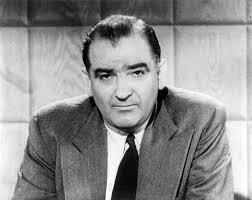
Joseph R. McCarthy
According to David Halberstam, Pulitzer-Prize-winning author of The Best and the Brightest: With the help of a compliant or even willing press, McCarthy successfully exploited America’s postwar fears and uncertainties.
And the reason: After four lackluster years in office, McCarthy desperately needed an issue to ensure his re-election. He saw rising fears of Communism as his ticket to not only that but vastly increased power.
“Around the country he flew,” wrote Halberstam, “reckless and audacious, stopping long enough to make a new charge…a good newsworthy press conference at the airport, hail-fellow well met with the reporters….
“The emptiness of the charge never [caught] up with him, the American press [was] exploited in its false sense of objectivity (if a high official said something, then it was news, if not fact, and the role of the reporter was to print it straight without commenting, without assailing the credibility of the incredulous, that was objectivity).”
McCarthy was always on the attack, always looking for new targets. His charges didn’t stick–they couldn’t being utterly false.
But they left a lasting legacy of poison: “Where there was smoke, there must be fire. He wouldn’t be saying those things if there wasn’t something to it” wrote Halberstam of how most Americans reacted during the “golden age” many now think of as the 1950s.
Not being content with small-fry targets, McCarthy accused high-ranking officials of the Truman administration of being Communists or at least Communist sympathizers.
Among these: Secretary of State Dean Acheson and Secretary of Defense (and later of State) George C. Marshall, the man considered by military historians as the “architect of victory” for American forces in World War II.
And how did the Republican party react? With elation.
“The real strength of McCarthy was not his own force or brilliance,” wrote Halberstam. “It was the acquiescence of those who should have known better….The press was willfully exploited by him; very few stood and fought.”
Halberstam pointedly observed that the famous “See It Now” anti-McCarthy broadcast by legendary newscaster Edward R. Murrow happened in 1954–four years after McCarthy began his Red-baiting career.
The Democrats refused to confront and refute his false charges. And the Republicans were thrilled at the huge voter turnouts his charges were arousing–to vote Republican.
“When he had gone too far, then [Republicans] would turn on him, which they did.”
“Going to far” in this case meant “that he had begun to attack the Republicans themselves”–such as no less a figure than President Dwight D. Eisenhower himself.
Meanwhile, “the more he assaulted the Democrats, the better for [Republicans]. The Democrats were on the defensive, and the Republicans were the beneficiaries.” An observer compared McCarthy to being “a pig in a minefield for [Republicans].”
McCarthy was by no means the only Republican to rise to influence by playing on Americans’ fears of the Red Menace. Another was California U.S. Senator Richard M. Nixon, who claimed to be a “moderate” between McCarthy and more “respectable” Republicans.
Eventually McCarthy destroyed himself: He accused the top leadership of the U.S. Army of being a cabal of Communist traitors.
The televised “Army-McCarthy hearings” finally revealed him as the bully and liar he had always been, and his credibility vanished overnight. His Senate colleagues at last found the courage to censure him.
While he was allowed to keep his seat, he was shunned–by reporters who had rushed to cover his every press conference and by Republicans who had fought to have their picture taken with him.
Increasingly taking to alcohol, he fell into depression and had to be hospitalized at Bethesda Naval Hospital, ultimately dying of alcoholism in 1957.
President Eisenhower, commenting upon McCarthy’s fall from grace, reportedly said that “McCarthyism” was now “McCarthywasm.”
Many Democrats sighed with relief, believing that the worst was now over. But it wasn’t.
Republicans had learned that Red-baiting was politically profitable. Their fear- and slander-mongering had put Eisenhower in the White House for eight years and elected and re-elected scores of Republicans to the House and Senate.
It had also put the Democrats on the defensive–especially on matters of foreign policy. The false right-wing charge that President Harry S. Truman had “lost China” would haunt the Democratic party for decades to come.
America had not “lost China.”
Generalissimo Chaing Kai-Shek lost out in a duel for power with Mao tse Tung. Americans, powerless to change the outcome, could only watch as spectators.
As a result, Presidents John F. Kennedy and Lyndon B. Johnson felt they must commit U.S. forces to a backward and insignificant country called Vietnam–to forestall the Republican charge: “Who lost Vietnam?”
 Bureaucracybuster's Blog
2012 PRESIDENTIAL CAMPAIGN, ABC NEWS, ARMY-MCCARTHY HEARINGS, BARACK OBAMA, CBS NEWS, CHAING KAI-SHEK, CHINA, CHRIS MATTHEWS, CNN, DAVID HALBERSTAM, DWIGHT D. EISENHOWER, EDWARD R. MURROW, FACEBOOK, GENERAL MOTORS, HARDBALL, INHERIT THE WIND, JEEP, JOHN F. KENNEDY, LYNDON B. JOHNSON, MAO TSE-TUNG, MITT ROMNEY, NBC NEWS, NORMAN ORNSTEIN, OSAMA BIN LADEN, PRESS, REPUBLICAN PARTY, RICHARD M. NIXON, RIGHT-WING, Sarah Palin, SENATOR JOSEPH R. MCCARTHY, SUN MYUNG MOON, THE BEST AND THE BRIGHTEST, THE LOS ANGELES TIMES, THE NEW YORK TIMES, THE WASHINGTON POST, THE WASHINGTON TIMES, THOMAS MANN, TWITTER, UNIFICATION CHURCH, VIETNAM WAR
THE MEDIA: WIMPS ON THE LEFT, BULLIES ON THE RIGHT: PART TWO (OF FIVE)
In History, Politics, Social commentary on February 19, 2013 at 12:00 amToday’s “lamestream media,” as Sarah Palin likes to refer to the press, are often accused of liberal bias.
But the Right has more often gotten a free ride due to media cowardice or indifference in reporting the truth about its lies and slanders.
Consider the case of Wisconsin U.S. Senator “Tail Gunner” Joseph R. McCarthy, the spiritual Godfather of today’s Republican party.
Joseph R. McCarthy
According to David Halberstam, Pulitzer-Prize-winning author of The Best and the Brightest: With the help of a compliant or even willing press, McCarthy successfully exploited America’s postwar fears and uncertainties.
And the reason: After four lackluster years in office, McCarthy desperately needed an issue to ensure his re-election. He saw rising fears of Communism as his ticket to not only that but vastly increased power.
“Around the country he flew,” wrote Halberstam, “reckless and audacious, stopping long enough to make a new charge…a good newsworthy press conference at the airport, hail-fellow well met with the reporters….
“The emptiness of the charge never [caught] up with him, the American press [was] exploited in its false sense of objectivity (if a high official said something, then it was news, if not fact, and the role of the reporter was to print it straight without commenting, without assailing the credibility of the incredulous, that was objectivity).”
McCarthy was always on the attack, always looking for new targets. His charges didn’t stick–they couldn’t being utterly false.
But they left a lasting legacy of poison: “Where there was smoke, there must be fire. He wouldn’t be saying those things if there wasn’t something to it” wrote Halberstam of how most Americans reacted during the “golden age” many now think of as the 1950s.
Not being content with small-fry targets, McCarthy accused high-ranking officials of the Truman administration of being Communists or at least Communist sympathizers.
Among these: Secretary of State Dean Acheson and Secretary of Defense (and later of State) George C. Marshall, the man considered by military historians as the “architect of victory” for American forces in World War II.
And how did the Republican party react? With elation.
“The real strength of McCarthy was not his own force or brilliance,” wrote Halberstam. “It was the acquiescence of those who should have known better….The press was willfully exploited by him; very few stood and fought.”
Halberstam pointedly observed that the famous “See It Now” anti-McCarthy broadcast by legendary newscaster Edward R. Murrow happened in 1954–four years after McCarthy began his Red-baiting career.
The Democrats refused to confront and refute his false charges. And the Republicans were thrilled at the huge voter turnouts his charges were arousing–to vote Republican.
“When he had gone too far, then [Republicans] would turn on him, which they did.”
“Going to far” in this case meant “that he had begun to attack the Republicans themselves”–such as no less a figure than President Dwight D. Eisenhower himself.
Meanwhile, “the more he assaulted the Democrats, the better for [Republicans]. The Democrats were on the defensive, and the Republicans were the beneficiaries.” An observer compared McCarthy to being “a pig in a minefield for [Republicans].”
McCarthy was by no means the only Republican to rise to influence by playing on Americans’ fears of the Red Menace. Another was California U.S. Senator Richard M. Nixon, who claimed to be a “moderate” between McCarthy and more “respectable” Republicans.
Eventually McCarthy destroyed himself: He accused the top leadership of the U.S. Army of being a cabal of Communist traitors.
The televised “Army-McCarthy hearings” finally revealed him as the bully and liar he had always been, and his credibility vanished overnight. His Senate colleagues at last found the courage to censure him.
While he was allowed to keep his seat, he was shunned–by reporters who had rushed to cover his every press conference and by Republicans who had fought to have their picture taken with him.
Increasingly taking to alcohol, he fell into depression and had to be hospitalized at Bethesda Naval Hospital, ultimately dying of alcoholism in 1957.
President Eisenhower, commenting upon McCarthy’s fall from grace, reportedly said that “McCarthyism” was now “McCarthywasm.”
Many Democrats sighed with relief, believing that the worst was now over. But it wasn’t.
Republicans had learned that Red-baiting was politically profitable. Their fear- and slander-mongering had put Eisenhower in the White House for eight years and elected and re-elected scores of Republicans to the House and Senate.
It had also put the Democrats on the defensive–especially on matters of foreign policy. The false right-wing charge that President Harry S. Truman had “lost China” would haunt the Democratic party for decades to come.
America had not “lost China.”
Generalissimo Chaing Kai-Shek lost out in a duel for power with Mao tse Tung. Americans, powerless to change the outcome, could only watch as spectators.
As a result, Presidents John F. Kennedy and Lyndon B. Johnson felt they must commit U.S. forces to a backward and insignificant country called Vietnam–to forestall the Republican charge: “Who lost Vietnam?”
Share this: