Posts Tagged ‘WATERGATE’
2016 PRESIDENTIAL CAMPAIGN, 9/11 ATTACKS, ABC NEWS, ACADEMY AWARDS, ASSOCIATED PRESS, BARACK OBAMA, BEST ACTRESS, BEST SUPPORTING ACTRESS, BIRTHERS, BULLYING, CBS NEWS, CENSORSHIP, CHRIS CUOMO, CNN, CREDIBILITY GAP, DAVID BROOKS, DAVID HALBERSTAM, DISABILITY, DONALD TRUMP, FACEBOOK, FOX AND FRIENDS, FRANK STANTON, FULL METAL JACKET, GEORGE MCGOVERN, GOLDEN GLOBES, HILLARY CLINTON, JOHN F. KENNEDY, KELLEYANNE CONWAY, KRAMER VS. KRAMER, LYNDON B. JOHNSON, MARK SHIELDS, MERYL STREEP, MORLEY SAFER, MOTHER JONES, MOVEON, NAVY SEALS, NBC NEWS, NEEWSWEEK, NEW DAY, NPR, OSAMA BIN LADEN, PBS NEWSHOUR, PETER ARNETT, POLITICO, RICHARD NIXON, RONALD ZIEGLER, SALON, SERGE KOVALESKI, SLATE, SOPHIE'S CHOICE, STANLEY KUBRICK, THE CHICAGO SUN-TIMES, THE CHICAGO TRIBUNE, THE HUFFINGTON POST, THE IRON LADY, THE LOS ANGELES TIMES, THE NEW YORK TIMES, THE WALL STREET JOURNAL, THE WASHINGTON POST, TIME, TWITTER, U.S. NEWS & WORLD REPORT, USA TODAY, VIETNAM WAR, WATERGATE
In Bureaucracy, History, Law, Law Enforcement, Military, Politics, Social commentary on January 16, 2017 at 12:14 am
After being presented with the Cecil B. DeMille Lifetime Achievement Award, Meryl Streep criticized Donald Trump’s mocking of disabled New York Times reporter Serge Kovaleski.
Kovaleski suffers from arthrogryposis, a congenital condition that restricts the movement of the muscles in his arms.
At a South Carolina rally on November 24, 2015, Trump claimed that Kovaleski was backing away from an article he had written four years earlier.
Trump had earlier said the article proved that New Jersey Muslims had celebrated the September 11, 2001 terror attacks. Kovaleski had insisted there was no credible proof of such celebrations.
Angered at being contradicted, Trump mocked Kovaleski: He flopped his right arm around with his hand held at an odd angle while imitating the reporter: “Now, the poor guy, you’ve got to see this guy: ‘Uhh, I don’t know what I said. Uhh, I don’t remember,’ he’s going like ‘I don’t remember. Maybe that’s what I said.'”
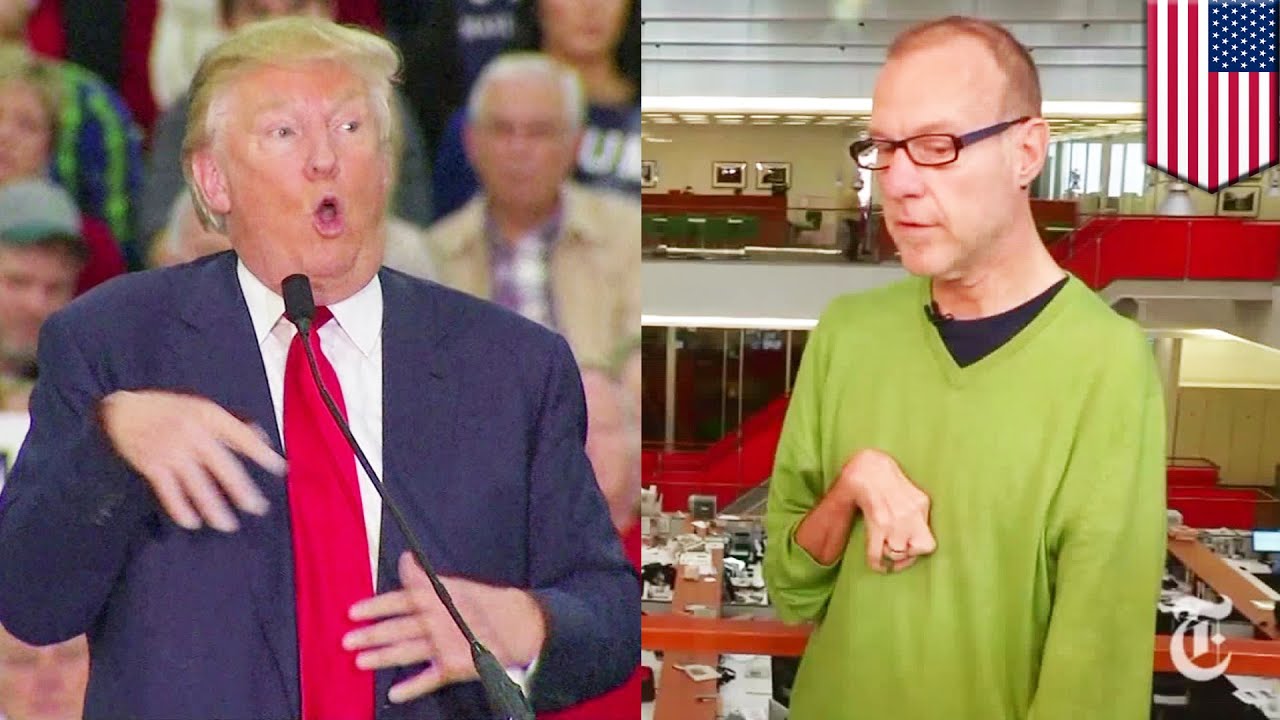
Trump mocking Kovaleski, left; Kovaleski, right
At the Golden Globe Awards on January 8, Streep denounced this behavior that “broke my heart.”
“And this instinct to humiliate, when it’s modeled by someone in the public platform, by someone powerful, it filters down into everybody’s life, because it kind of gives permission for other people to do the same thing.
“Disrespect invites disrespect. Violence incites violence. When the powerful use their position to bully others, we all lose.”
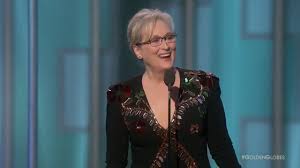
Meryl Streep at the Golden Globes
Streep’s words outraged Trump’s supporters–especially his mouthpiece, Kelleyanne Conway.
Appearing on Right-wing Fox and Friends the next morning, she said: “We have to now form a government, and I’m concerned that somebody with a platform like Meryl Streep is also, I think, inciting people’s worst instincts.
“When she won’t get up there and say, ‘I don’t like it, but let’s try to support him and see where we can find some common ground with him, which [Trump] has actually done from moment one.”
Conway didn’t say what common ground Streep should find with Trump. Perhaps agreeing on mocking the disabled?

Kelleyanne Conway
Then Conway visited CNN’s “New Day,” where she offered a “black-is-white” defense for Trump’s videotaped ridiculing of Kovaleski: It didn’t happen.
The host, Chris Cuomo, having seen the video, wasn’t buying it.
CUOMO: But is [Streep] wrong? Is she wrong that it was wrong for Trump to make gestures like that about a man with disabilities?
CONWAY: He didn’t–but that is not what he did and he has said that a thousand times. As he tweeted out today–
CUOMO: He can say it a million. Look at the video.
CONWAY: Why can’t you–wait, excuse me. Why can’t you give him the benefit of the doubt the way the benefit of the doubt was given to CNN’s polling, all of its analysts?
CUOMO: Because he’s making a disgusting gesture on video talking about Serge.
CONWAY: Not about that reporter and that’s just a fact. That is what he’s said. You should give him–
CUOMO: But how is it not about the reporter?
CONWAY: –the deference and respect if he says that it was–he was not mocking, he was mocking the groveling. He said it again this morning. He has three tweets out about it.
CUOMO: But he’s doing a gesture that goes right to the guy’s vulnerability.
CONWAY: You’re saying you don’t believe him. You’re calling him a liar and you shouldn’t.
CUOMO: Look, Kellyanne, to me that’s like you’re trying to scare me off the point and we both know it’s a waste of time.
CONWAY: I’m not going to scare you off anything.
CUOMO: He’s making a gesture that is so keenly tuned to what Serge’s vulnerability is.
CONWAY: And now you’re giving oxygen to what Meryl Streep said.
CUOMO: Forget about Meryl Streep. This happened before her. If our kids did that, could you imagine what we would say to them?
Conway said she would not bring her children into the discussion.
CUOMO: I will. If my kid did something like that, it’d be a really tough day.
CONWAY: You have to listen to what the president has said about that. Why don’t you believe him?
Conway tried to change the subject to Hillary Clinton: “She was given the benefit of the doubt here constantly.”
When Cuomo asked for specifics, she refused to give them. Then she returned to claiming that Trump had never mocked Kovaleski:
CONWAY: You can’t give him the benefit of the doubt on this, when he’s telling you what was in his heart? You always want to go by what’s come out of his mouth, rather than look at what’s in his heart.
* * * * *
Previously, politicians had defended themselves with arguments like: “You can see right here on the tape, I did (or, I didn’t)….”
Trump has cast aside that logic–and the taped evidence–by demanding: “Believe what I’m telling you, not what you’ve just seen.”
By that rationale, if a security camera shows Trump robbing a bank at gunpoint, we’re supposed to believe him if he says: “No, I didn’t rob that bank. I was simply checking my bank balance.”
Such “logic” holds appeal for paid shills like Kelleyanne Conway. But most people will continue to judge by the evidence.
2016 PRESIDENTIAL CAMPAIGN, 9/11 ATTACKS, ABC NEWS, ACADEMY AWARDS, ASSOCIATED PRESS, BARACK OBAMA, BEST ACTRESS, BEST SUPPORTING ACTRESS, BIRTHERS, BULLYING, CBS NEWS, CENSORSHIP, CHRIS CUOMO, CNN, CREDIBILITY GAP, DAVID BROOKS, DAVID HALBERSTAM, DISABILITY, DONALD TRUMP, FACEBOOK, FOX AND FRIENDS, FRANK STANTON, FULL METAL JACKET, GEORGE MCGOVERN, GOLDEN GLOBES, HILLARY CLINTON, JOHN F. KENNEDY, KELLEYANNE CONWAY, KRAMER VS. KRAMER, LYNDON B. JOHNSON, MARK SHIELDS, MERYL STREEP, MORLEY SAFER, MOTHER JONES, MOVEON, NAVY SEALS, NBC NEWS, NEEWSWEEK, NEW DAY, NPR, OSAMA BIN LADEN, PBS NEWSHOUR, PETER ARNETT, POLITICO, RICHARD NIXON, RONALD ZIEGLER, SALON, SERGE KOVALESKI, SLATE, SOPHIE'S CHOICE, STANLEY KUBRICK, THE CHICAGO SUN-TIMES, THE CHICAGO TRIBUNE, THE HUFFINGTON POST, THE IRON LADY, THE LOS ANGELES TIMES, THE NEW YORK TIMES, THE WALL STREET JOURNAL, THE WASHINGTON POST, TIME, TWITTER, U.S. NEWS & WORLD REPORT, USA TODAY, VIETNAM WAR, WATERGATE
In Bureaucracy, History, Law, Law Enforcement, Military, Politics, Social commentary on January 13, 2017 at 12:02 am
For five years, Donald Trump, more than anyone else, popularized the slander that Barack Obama was born in Kenya–and was therefore an illegitimate President.
For more than a year during his 2016 Presidential campaign, Trump continued doing so.
As his popularity fell to less than 1% among blacks, the managers of his campaign urged: Put the “birther” issue behind you.
So, on September 16, 2016–10 days before his scheduled first debate with Democratic Presidential nominee Hillary Clinton–Trump made his version of a reversal.
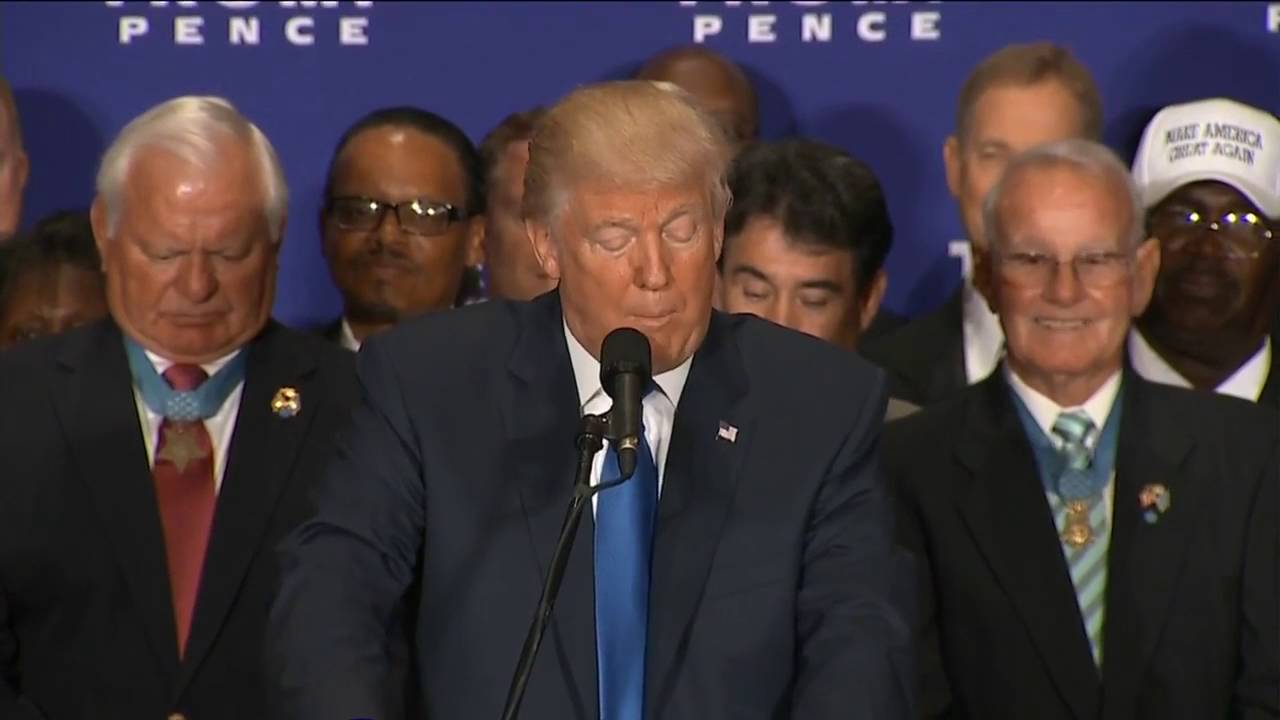
Donald Trump: “President Barack Obama was born in the United States.”
He did so in about seven seconds and 40 words–after spending a half hour paying tribute to the military and promoting his new upscale hotel in Washington, D.C.:
“Now, not to mention her in the same breath, but Hillary Clinton and her campaign of 2008 started the birther controversy.
“I finished it. I finished it. You know what I mean.
“President Barack Obama was born in the United States, period. Now we all want to get back to making America strong and great again.”
His tone made it clear that he felt uneasy making that statement–and wanted to get it over with as fast as possible.
He refused to take questions from reporters covering the event. Nor did he apologize for his five-year campaign of slander.
On the evening of September 16, Hillary Clinton strongly responded to Trump’s comments:
“For five years, he has led the birther movement to de-legitimize our first black president. His campaign was founded on this outrageous lie. There is no erasing it in history.”
And First Lady Michelle Obama slammed Trump for his “birther” claims:
“Then, of course, there were those who questioned, and who continue to question for the past eight years, and up to this very day, whether my husband was even born in this country.
“Well, during his time in office, I think Barack has answered those questions with the examples he set, by going high when they go low. And he’s answered these questions with the progress we’ve achieved together.”
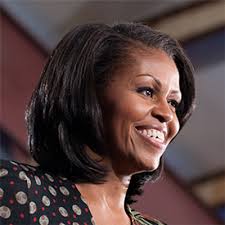
Michelle Obama
But perhaps the best perspective on this event was provided by syndicated columnist Mark Shields and New York Times columnist David Brooks. Each Friday they appear on the PBS Newshour to review the week’s major political events.
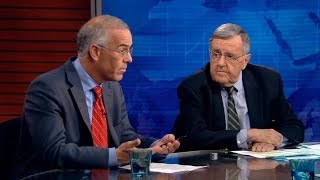
David Brooks and Mark Shields
On September 16, Shields (a liberal) and Brooks (a conservative) addressed Trump’s about-face on birtherism.
MARK SHIELDS: “I think it’s important to establish right at the outset that [Trump] wasn’t only the loudest and the highest-profile and the most persistent and the most well-publicized birther, he, Donald Trump. He lied. He lied consistently and persistently.
“And, today, without explanation or excuse, he just changed his position and tried to absolutely falsely shift the blame onto Hillary Clinton.
“And this was an appeal to–he debased democracy. He debased the national debate. He appealed to that which is most ignoble or least noble in all of us.”
DAVID BROOKS: “Usually, there’s some tangential relationship to the truth, but a corroding relationship to the truth, frankly, as politics has gone on over the years.
“But now we’re in a reverse, Orwellian inversion of the truth with this. And so we have a team of staffers and then the candidate himself who have taken the normal spin and smashed all the rules.
“And so we are really in Orwell land. We are in 1984. And it’s interesting that an authoritarian personality type comes in at the same time with a complete disrespect for even tangential relationship to the truth that words are unmoored.
“And so I do think this statement sort of shocked me with the purification of a lot of terrible trends that have been happening. And so what’s white is black, and what is up is down, what is down is up. And that really is something new in politics.
“And the fact that there is no penalty for it, apparently–he’s doing fantastic in the last two weeks in the polls–is just somehow where we have gotten.”
Less than two months later, Trump won the Presidency.
Since then, Trump has continued to inhabit what David Brooks called “Orwell land.”
The most recent example of this occurred on January 9, 2017.
The night before, Meryl Streep had enraged Trump and his mouthpiece, Kelleyanne Conway, at the Golden Globes Awards ceremony.
While being presented with the Cecil B. DeMille Lifetime Achievement Award, she had criticized Trump’s mocking, on November 25, 2015, of disabled New York Times reporter Serve Kovaleski:
“There was one performance this year that stunned me. It sank its hooks in my heart. Not because it was good. There was nothing good about it. But it was effective, and it did its job. It made its intended audience laugh and show their teeth.
“It was that moment when the person asking to sit in the most respected seat in our country imitated a disabled reporter. Someone he outranked in privilege, power and the capacity to fight back. It kind of broke my heart when I saw it. I still can’t get it out of my head because it wasn’t in a movie. It was real life.”
2016 PRESIDENTIAL CAMPAIGN, 9/11 ATTACKS, ABC NEWS, ACADEMY AWARDS, ASSOCIATED PRESS, BARACK OBAMA, BEST ACTRESS, BEST SUPPORTING ACTRESS, BIRTHERS, BULLYING, CBS NEWS, CENSORSHIP, CHRIS CUOMO, CNN, CREDIBILITY GAP, DAVID BROOKS, DAVID HALBERSTAM, DISABILITY, DONALD TRUMP, FACEBOOK, FOX AND FRIENDS, FRANK STANTON, FULL METAL JACKET, GEORGE MCGOVERN, GOLDEN GLOBES, HILLARY CLINTON, JOHN F. KENNEDY, KELLEYANNE CONWAY, KRAMER VS. KRAMER, LYNDON B. JOHNSON, MARK SHIELDS, MERYL STREEP, MORLEY SAFER, MOTHER JONES, MOVEON, NAVY SEALS, NBC NEWS, NEEWSWEEK, NEW DAY, NPR, OSAMA BIN LADEN, PBS NEWSHOUR, PETER ARNETT, POLITICO, RICHARD NIXON, RONALD ZIEGLER, SALON, SERGE KOVALESKI, SLATE, SOPHIE'S CHOICE, STANLEY KUBRICK, THE CHICAGO SUN-TIMES, THE CHICAGO TRIBUNE, THE HUFFINGTON POST, THE IRON LADY, THE LOS ANGELES TIMES, THE NEW YORK TIMES, THE WALL STREET JOURNAL, THE WASHINGTON POST, TIME, TWITTER, U.S. NEWS & WORLD REPORT, USA TODAY, VIETNAM WAR, WATERGATE
In Bureaucracy, History, Law, Law Enforcement, Military, Politics, Social commentary on January 11, 2017 at 12:02 am
“Credibility gap” is a term that came into use during the mid-1960s to describe public and journalistic distrust of President Lyndon B. Johnson. In particular, the term was applied to his administration’s conduct of the Vietnam war.
It was, in short, a euphemism for accusing government officials of outright lying.
An example of the credibility gap in full swing appeared in Stanley Kubrick’s classic 1987 Vietnam war movie, Full Metal Jacket.
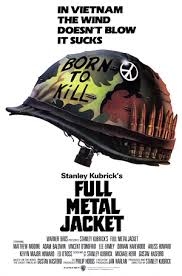
Vietnam was a war where military and political officials spewed a gung-ho version of constant American progress against a tough enemy.
And where civilian reporters like David Halberstam and Walter Cronkite saw–and labeled–the war as a brutal, wasteful and ultimately doomed effort.
Midway through the film, there’s an editorial meeting of The Sea Tiger, the official Marine newspaper.
Lieutenant Lockhart is presiding–and he is determined to give his superiors an endless stream of “all-systems-go” propaganda reports. He reads a series of stories that have been published:
Story #1: DIPLOMATS IN DUNGAREES–MARINE ENGINEERS LEND A HELPING HAND REBUILDING DONG PHUC VILLAGES.
LOCKHART: “Chili, “if we move Vietnamese, they are evacuees. If they come to us to be evacuated, they are refugees.”
Story #2: N.V.A. SOLDIER DESERTS AFTER READING PAMPHLETS.
LOCKHART: “A young North Vietnamese Army regular, who realized his side could not win the war, deserted from his unit after reading Open Arms program pamphlets.”
Story #3: NOT WHILE WE’RE EATING: N.V.A. LEARN MARINES ON A SEARCH AND DESTROY MISSION DON’T LIKE TO BE INTERRUPTED WHILE EATING CHOW.
LOCKHART: “‘Search and destroy.’ Uh, we have a new directive on this. In the future, in place of ‘search and destroy,’ substitute the phrase ‘sweep and clear.’ Got it?”
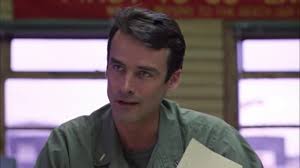
Lt. Lockhart, editor of The Sea Tiger
LOCKHART: “And, Joker–where’s the weenie?”
JOKER: “Sir?”
LOCKHART “The Kill, Joker. I mean, all that fire, the grunts must’ve hit something.”
JOKER: “Didn’t see ’em.”
LOCKHART: “Joker, I’ve told you, we run two basic stories here: Grunts who give half their pay to buy gooks toothbrushes and deodorants–winning of hearts and Minds–okay? And combat action that results in a kill–Winning the War. Now you must have seen blood trails … drag marks?”
JOKER: “It was raining, sir.”
LOCKHART: “Well, that’s why God passed the law of probability. Now rewrite it and give it a happy ending–say, uh, one kill. Make it a sapper or an officer. Grunts like reading about dead officers.”
JOKER: “Okay, an officer. How about a general?”
LOCKHART: “Joker, maybe you’d like our guys to read the paper and feel bad. I mean, in case you didn’t know it, this is not a particularly popular war. Now, it is our job to report the news that these why-are-we-here civilian newsmen ignore.”
So great became the divide between truth and lies during military “press briefings” that reporters started calling them “The Five O’clock Follies.” And even some soldiers took to wearing buttons that said: “Ambushed at Credibility Gap.”
Reporters who dared to write truthfully about the military’s crimes and failures–like David Halberstam of the New York Times and Peter Arnett of the Associated Press–were regarded as traitors by military and political officials.
In 1963, President John F. Kennedy became enraged by Halberstam’s reporting on the corruption of the South Vietnamese government. He pressured New York Times publisher Arthur Ochs Sulzberger to transfer Halberstam to another locale. Sulzberger politely refused–and then extended Halberstam’s stay in Vietnam another six months.
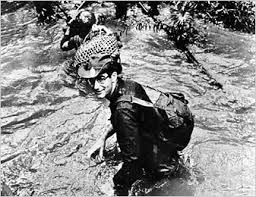
David Halberstam
In 1965, when CBS Correspondent Morley Safer filmed Marines setting fire to the village of Cam Ne with Zippo lighters, President Lyndon B. Johnson was similarly outraged.
He placed an early-morning call to CBS News President Frank Stanton and shouted: “Your boys shat on the American flag!”
The trail of deceit and attempted censorship continued right up to the end of the war–in April, 1975. That was when North Vietnamese forces invaded the South and quickly overwhelmed the incompetent defenses arrayed against them.
And while America was still bogged down in Vietnam, the Watergate scandal erupted on June 17, 1972.
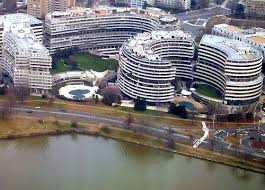
Watergate Hotel
Members of the Nixon administration’s secret “Plumbers Unit” burglarized the offices of the Democratic National Committee at the Watergate Hotel.
Obsessed with re-electing Richard Nixon, they sought incriminating information to discredit U.S. Senator George McGovern, the Democrats’ nominee for President.
When the burglars were caught, President Richard M. Nixon and his topmost officials lied and stonewalled both reporters and investigators seeking the truth.
Nixon’s press secretary, Ronald Ziegler, repeatedly slandered the integrity of The Washington Post for its coverage of the mushrooming Watergate scandal. He called the Watergate break-in “a third-rate burglary” and attacked the Post for “shabby journalism.”
Finally, on April 17, 1973, Ziegler, announced at a press conference: “This is the operative statement. The others are inoperative.”
In short: We’ve been lying to you for the last 10 months. But now we’re telling the truth.
Like Vietnam, the Watergate scandal destroyed the reputations of many of its chief architects. Forty government officials were indicted or jailed.
Vietnam and Watergate were seminal events for Americans coming of age in the late 1960s and early 1970s. They taught an entire generation: Don’t trust the government. Its officials routinely lie, and their lies can be deadly.
9/11 ATTACKS, ABC NEWS, ASSOCIATED PRESS, BARACK OBAMA, BIRTHERS, CBS NEWS, CENSORSHIP, CNN, CREDIBILITY GAP, DAVID BROOKS, DAVID HALBERSTAM, DONALD TRUMP, FACEBOOK, FRANK STANTON, FULL METAL JACKET, GEORGE MCGOVERN, HILLARY CLINTON, JOHN F. KENNEDY, LYNDON B. JOHNSON, MARK SHIELDS, MORLEY SAFER, NAVY SEALS, NBC NEWS, OSAMA BIN LADEN, PBS NEWSHOUR, PETER ARNETT, RICHARD NIXON, RONALD ZIEGLER, STANLEY KUBRICK, THE CHICAGO SUN-TIMES, THE CHICAGO TRIBUNE, THE HUFFINGTON POST, THE LOS ANGELES TIMES, THE NEW YORK TIMES, THE WALL STREET JOURNAL, THE WASHINGTON POST, TWITTER, VIETNAM WAR, WATERGATE
In Bureaucracy, History, Law, Law Enforcement, Military, Politics, Social commentary on September 30, 2016 at 1:31 am
For five years, Donald Trump, more than anyone else, popularized the slander that President Barack Obama was born in Kenya–and was therefore not an American citizen.
In April, 2011, Obama released the long-form version of his Hawaiian birth certificate. Still, Trump questioned its–and Obama’s–legitimacy.
For more than a year during his 2016 Presidential campaign, Trump continued doing so.
Meanwhile, Trump’s popularity steadily fell among blacks. In June, 2016, a Quinnipiac poll revealed that Trump had 1% of support from black voters–while 91% of black voters backed Hillary Clinton.
Even the managers of Trump’s campaign urged him to put the “birther” issue behind him.
And so, on September 16, 2016–10 days before his scheduled first debate with Democratic Presidential nominee Hillary Clinton–Trump made his version of a reversal.
Donald Trump: “President Barack Obama was born in the United States.”
He did so in about seven seconds and 40 words–after spending a half hour paying tribute to the military and promoting his new upscale hotel in Washington, D.C.:
“Now, not to mention her in the same breath, but Hillary Clinton and her campaign of 2008 started the birther controversy.
“I finished it. I finished it. You know what I mean.
“President Barack Obama was born in the United States, period. Now we all want to get back to making America strong and great again.”
His tone made it clear that he felt uneasy making that statement–and wanted to get it over with as fast as possible.
He refused to take questions from reporters covering the event. Nor did he apologize for his five-year campaign of slander.
On the evening of September 16, Hillary Clinton strongly responded to Trump’s comments:
“For five years, he has led the birther movement to delegitimize our first black president. His campaign was founded on this outrageous lie. There is no erasing it in history.”
And First Lady Michelle Obama slammed Trump for his “birther” claims:
“Then, of course, there were those who questioned, and who continue to question for the past eight years, and up to this very day, whether my husband was even born in this country.
“Well, during his time in office, I think Barack has answered those questions with the examples he set, by going high when they go low. And he’s answered these questions with the progress we’ve achieved together.”
Michelle Obama
But perhaps the best perspective on this event was provided by syndicated columnist Mark Shields and New York Times columnist David Brooks. Each Friday they appear on the PBS Newshour to review the week’s major political events.
David Brooks and Mark Shields
On September 16, Shields (a liberal) and Brooks (a conservative) addressed Trump’s about-face on birtherism.
MARK SHIELDS: “I think it’s important to establish right at the outset that [Trump] wasn’t only the loudest and the highest-profile and the most persistent and the most well-publicized birther, he, Donald Trump. He lied. He lied consistently and persistently.
“And, today, without explanation or excuse, he just changed his position and tried to absolutely falsely shift the blame onto Hillary Clinton.
“And this was an appeal to–he debased democracy. He debased the national debate. He appealed to that which is most ignoble or least noble in all of us.”
DAVID BROOKS: “Usually, there’s some tangential relationship to the truth, but a corroding relationship to the truth, frankly, as politics has gone on over the years.
“But now we’re in a reverse, Orwellian inversion of the truth with this. And so we have a team of staffers and then the candidate himself who have taken the normal spin and smashed all the rules.
“And so we are really in Orwell land. We are in 1984. And it’s interesting that an authoritarian personality type comes in at the same time with a complete disrespect for even tangential relationship to the truth that words are unmoored.
“And so I do think this statement sort of shocked me with the purification of a lot of terrible trends that have been happening. And so what’s white is black, and what is up is down, what is down is up. And that really is something new in politics.
“And the fact that there is no penalty for it, apparently–he’s doing fantastic in the last two weeks in the polls–is just somehow where we have gotten.”
* * * * *
Americans were slow to recognize the dangers of their government’s committing armed forces to South Vietnam. But when the record of government lies reached critical mass, Americans demanded an end to the war.
Similarly, Americans were reluctant to brand Richard Nixon, their newly-re-elected President, a criminal worthy of impeachment. But when the evidence of his criminality steadily mounted, they demanded his ouster.
Today, Americans are flooded with overwhelming evidence of Donald Trump’s unfitness to become President. His narcissism, vindictiveness, ignorance and hair-trigger temper have been on public display for more than a year.
Yet millions of ignorant, hate-filled, Right-wing Americans plan to catapult this man–who “debased democracy, debased the national debate, appealed to that which is most ignoble or least noble in all of us”–to the Presidency.
If that happens, future historians–if there are any–may similarly condemn those Americans who stood by like “good Germans” and allowed their country to fall into the hands of a ruthless tyrant.
9/11 ATTACKS, ABC NEWS, ASSOCIATED PRESS, BARACK OBAMA, BIRTHERS, CBS NEWS, CENSORSHIP, CNN, CREDIBILITY GAP, DAVID BROOKS, DAVID HALBERSTAM, DONALD TRUMP, FACEBOOK, FRANK STANTON, FULL METAL JACKET, GEORGE MCGOVERN, HILLARY CLINTON, JOHN F. KENNEDY, LYNDON B. JOHNSON, MARK SHIELDS, MORLEY SAFER, NAVY SEALS, NBC NEWS, OSAMA BIN LADEN, PBS NEWSHOUR, PETER ARNETT, RICHARD NIXON, RONALD ZIEGLER, STANLEY KUBRICK, THE CHICAGO SUN-TIMES, THE CHICAGO TRIBUNE, THE HUFFINGTON POST, THE LOS ANGELES TIMES, THE NEW YORK TIMES, THE WALL STREET JOURNAL, THE WASHINGTON POST, TWITTER, VIETNAM WAR, WATERGATE
In Bureaucracy, History, Law, Law Enforcement, Military, Politics, Social commentary on September 29, 2016 at 12:01 am
In 2011, Donald Trump, host of NBC’s “The Apprentice,” was thinking of running for President against Barack Obama.
Seeking to gain popularity among America’s Right-wing, Trump almost singlehandedly created the popular fiction that the President was born in Kenya–and was not an American citizen.
His motive: To convince Americans that Obama was an illegitimate President.
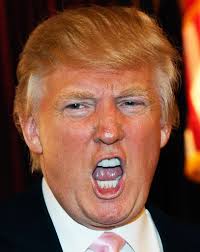
Donald Trump
Among the statements Trump made:
February 10, 2011: “Our current president came out of nowhere. Came out of nowhere. In fact, I’ll go a step further: The people that went to school with him, they never saw him, they don’t know who he is. It’s crazy.”
March 23, 2011: “I want him to show his birth certificate. I want him to show his birth certificate. … There’s something on that birth certificate that he doesn’t like.”
March 28, 2011: “I am really concerned” [that Obama wasn’t born in the United States]. He said that the birth announcement for Obama in a Hawaii newspaper could have been planted “for whatever reason.”
March 30, 2011: “If you are going to be president of the United States you have to be born in this country. And there is a doubt as to whether or not he was. … He doesn’t have a birth certificate. He may have one, but there’s something on that, maybe religion, maybe it says he is a Muslim. I don’t know. Maybe he doesn’t want that. Or he may not have one. But I will tell you this. If he wasn’t born in this country, it’s one of the great scams of all time.”
April 7, 2011: “I have people that have been studying it, and they cannot believe what they’re finding. You are not allowed to be a president if you’re not born in this country. Right now I have real doubts.”
April 25, 2011: “I’ve been told very recently…that the birth certificate is missing. I’ve been told that it’s not there or it doesn’t exist. And if that’s the case, it’s a big problem.”
On April 27, President Obama released his original, long-form Hawiian birth certificate.
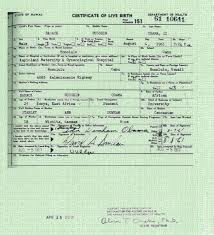
The long-form version of President Obama’s birth certificate
“We do not have time for this kind of silliness,” said Obama at a press conference, speaking as a father might to a roomful of spiteful children. “We have better stuff to do. I have got better stuff to do. We have got big problems to solve.
“We are not going to be able to do it if we are distracted, we are not going to be able to do it if we spend time vilifying each other…if we just make stuff up and pretend that facts are not facts, we are not going to be able to solve our problems if we get distracted by side shows and carnival barkers.”
And on May 1, he announced the solving of one of those “big problems”: Osama bin Laden, mastermind of the September 11, 2001 terrorist attacks, had been tracked down and shot dead by elite U.S. Navy SEALS in Pakistan.
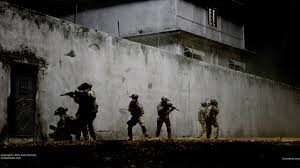
SEALS attacking bin Laden’s compound in the 2012 movie, “Zero Dark Thirty”
And how did Trump respond? With the following series of Tweets on Twitter:
May 18, 2012: “Let’s take a closer look at that birth certificate.@BarackObama was described in 2003 as being “born in Kenya.” http://bit.ly/Klc9Uu
August 6, 2012: “An ‘extremely credible source’ has called my office and told me that @BarackObama‘s birth certificate is a fraud.”
August 27, 2012: “Why do the Republicans keep apologizing on the so called “birther” issue? No more apologies–take the offensive!”
September 13, 2012: “Wake Up America! See article: “Israeli Science: Obama Birth Certificate is a Fake”
June 30, 2013: “@davidrhythmguit: @realDonaldTrump @Chuffman48 Mark Cuban accepts the fact that the President of the United States was born here. Doubt it”
August 22, 2013: “Why are people upset w/ me over Pres Obama’s birth certificate? I got him to release it, or whatever it was, when nobody else could!”
December 12, 2013: “How amazing, the State Health Director who verified copies of Obama’s “birth certificate” died in plane crash today. All others lived”
November 23, 2014: “@futureicon: @pinksugar61 Obama also fabricated his own birth certificate after being pressured to produce one by @realDonaldTrump“
Even after declaring his candidacy for President on June 16, 2015, Trump continued to insist that Barack Obama was an illegitimate President.
Meanwhile, Trump’s popularity among blacks had steadily fallen. In June, 2016, a Quinnipiac poll revealed that Trump had 1% of support from black voters. By comparison, 91% of black voters backed Hillary Clinton.
Among the reasons for this:
- His enthusiastic support by racist white supremacist organizations such as the Ku Klux Klan and the American Nazi Party.
- His “birther” attacks on President Obama as a non-citizen from Kenya–and thus ineligible to hold the Presidency.
- His attacks on the Black Lives Matter movement and calling on his supporters at rallies to rough up minority protesters.
Even the managers of Trump’s campaign urged him to put the “birther” issue behind him.
And so, on September 16–10 days before his scheduled first debate with Democratic Presidential nominee Hillary Clinton–Trump made his version of a reversal.
9/11 ATTACKS, ABC NEWS, ASSOCIATED PRESS, BARACK OBAMA, BIRTHERS, CBS NEWS, CENSORSHIP, CNN, CREDIBILITY GAP, DAVID BROOKS, DAVID HALBERSTAM, DONALD TRUMP, FACEBOOK, FRANK STANTON, FULL METAL JACKET, GEORGE MCGOVERN, HILLARY CLINTON, JOHN F. KENNEDY, LYNDON B. JOHNSON, MARK SHIELDS, MORLEY SAFER, NAVY SEALS, NBC NEWS, OSAMA BIN LADEN, PBS NEWSHOUR, PETER ARNETT, RICHARD NIXON, RONALD ZIEGLER, STANLEY KUBRICK, THE CHICAGO SUN-TIMES, THE CHICAGO TRIBUNE, THE HUFFINGTON POST, THE LOS ANGELES TIMES, THE NEW YORK TIMES, THE WALL STREET JOURNAL, THE WASHINGTON POST, TWITTER, VIETNAM WAR, WATERGATE
In Bureaucracy, History, Law, Law Enforcement, Military, Politics, Social commentary on September 28, 2016 at 12:09 am
“Credibility gap” is a term that came into use during the mid-1960s to describe public and journalistic distrust of President Lyndon B. Johnson. In particular, the term was applied to his administration’s conduct of the Vietnam war.
It was, in short, a euphemism for accusing government officials of outright lying.
An example of the credibility gap in full swing appeared in Stanley Kubrick’s classic 1987 Vietnam war movie, Full Metal Jacket.
Vietnam was a war where military and political officials spewed a gung-ho version of constant American progress against a tough enemy.
And where civilian reporters like David Halberstam and Walter Cronkite saw–and labeled–the war as a brutal, wasteful and ultimately doomed effort.
Midway through the film, there’s an editorial meeting of The Sea Tiger, the official Marine newspaper.
Lieutenant Lockhart is presiding–and he is determined to give his superiors an endless stream of “all-systems-go” propaganda reports. He reads a series of stories that have been published:
Story #1: DIPLOMATS IN DUNGAREES–MARINE ENGINEERS LEND A HELPING HAND REBUILDING DONG PHUC VILLAGES.
LOCKHART: “Chili, “if we move Vietnamese, they are evacuees. If they come to us to be evacuated, they are refugees.”
Story #2: N.V.A. SOLDIER DESERTS AFTER READING PAMPHLETS.
LOCKHART: “A young North Vietnamese Army regular, who realized his side could not win the war, deserted from his unit after reading Open Arms program pamphlets.”
Story #3: NOT WHILE WE’RE EATING: N.V.A. LEARN MARINES ON A SEARCH AND DESTROY MISSION DON’T LIKE TO BE INTERRUPTED WHILE EATING CHOW.
LOCKHART: “‘Search and destroy.’ Uh, we have a new directive on this. In the future, in place of ‘search and destroy,’ substitute the phrase ‘sweep and clear.’ Got it?”
Lt. Lockhart, editor of The Sea Tiger
LOCKHART: “And, Joker–where’s the weenie?”
JOKER: “Sir?”
LOCKHART “The Kill, Joker. I mean, all that fire, the grunts must’ve hit something.”
JOKER: “Didn’t see ’em.”
LOCKHART: “Joker, I’ve told you, we run two basic stories here: Grunts who give half their pay to buy gooks toothbrushes and deodorants–winning of hearts and Minds–okay? And combat action that results in a kill–Winning the War. Now you must have seen blood trails … drag marks?”
JOKER: “It was raining, sir.”
LOCKHART: “Well, that’s why God passed the law of probability. Now rewrite it and give it a happy ending–say, uh, one kill. Make it a sapper or an officer. Grunts like reading about dead officers.”
JOKER: “Okay, an officer. How about a general?”
LOCKHART: “Joker, maybe you’d like our guys to read the paper and feel bad. I mean, in case you didn’t know it, this is not a particularly popular war. Now, it is our job to report the news that these why-are-we-here civilian newsmen ignore.”
So great became the divide between truth and lies during military “press briefings” that reporters started calling them “The Five O’clock Follies.” And even some soldiers took to wearing buttons that said: “Ambushed at Credibility Gap.”
Reporters who dared to write truthfully about the military’s crimes and failures–like David Halberstam of the New York Times and Peter Arnett of the Associated Press–were regarded as traitors by military and political officials.
In 1963, President John F. Kennedy became enraged by Halberstam’s reporting on the corruption of the South Vietnamese government. He pressured New York Times publisher Arthur Ochs Sulzberger to transfer Halberstam to another locale. Sulzberger politely refused–and then extended Halberstam’s stay in Vietnam another six months.
David Halberstam
In 1965, when CBS Correspondent Morley Safer filmed Marines setting fire to the village of Cam Ne with Zippo lighters, President Lyndon B. Johnson was similarly outraged.
He placed an early-morning call to CBS News President Frank Stanton and shouted: “Your boys shat on the American flag!”
The trail of deceit and attempted censorship continued right up to the end of the war–in April, 1975. That was when North Vietnamese forces invaded the South and quickly overwhelmed the incompetent defenses arrayed against them.
And while America was still bogged down in Vietnam, the Watergate scandal erupted on June 17, 1972.
Watergate Hotel
Members of the Nixon administration’s secret “Plumbers Unit” burglarized the offices of the Democratic National Committee at the Watergate Hotel.
Obsessed with re-electing Richard Nixon, they sought incriminating information to discredit U.S. Senator George McGovern, the Democrats’ nominee for President.
When the burglars were caught, President Richard M. Nixon and his topmost officials lied and stonewalled both reporters and investigators seeking the truth.
Nixon’s press secretary, Ronald Ziegler, repeatedly slandered the integrity of The Washington Post for its coverage of the mushrooming Watergate scandal. He called the Watergate break-in “a third-rate burglary” and attacked the Post for “shabby journalism.”
Finally, on April 17, 1973, Ziegler, announced at a press conference: “This is the operative statement. The others are inoperative.”
In short: We’ve been lying to you for the last 10 months. But now we’re telling the truth.
Like Vietnam, the Watergate scandal destroyed the reputations of many of its chief architects. Forty government officials were indicted or jailed.
Vietnam and Watergate were seminal events for Americans coming of age in the late 1960s and early 1970s. They taught an entire generation: Don’t trust the government. Its officials routinely lie, and their lies can be deadly.
9/11 ATTACKS, ABC NEWS, ASSOCIATED PRESS, BARACK OBAMA, BIRTHERS, CBS NEWS, CENSORSHIP, CNN, CREDIBILITY GAP, DAVID BROOKS, DAVID HALBERSTAM, DONALD TRUMP, FACEBOOK, FRANK STANTON, FULL METAL JACKET, GEORGE MCGOVERN, HILLARY CLINTON, JOHN F. KENNEDY, LYNDON B. JOHNSON, MARK SHIELDS, MORLEY SAFER, NAVY SEALS, NBC NEWS, OSAMA BIN LADEN, PBS NEWSHOUR, PETER ARNETT, RICHARD NIXON, RONALD ZIEGLER, STANLEY KUBRICK, THE CHICAGO SUN-TIMES, THE CHICAGO TRIBUNE, THE HUFFINGTON POST, THE LOS ANGELES TIMES, THE NEW YORK TIMES, THE WALL STREET JOURNAL, THE WASHINGTON POST, TWITTER, VIETNAM WAR, WATERGATE
In Bureaucracy, History, Law, Law Enforcement, Military, Politics, Social commentary on September 26, 2016 at 3:03 pm
For five years, Donald Trump, more than anyone else, popularized the slander that President Barack Obama was born in Kenya–and was therefore not an American citizen.
In April, 2011, Obama released the long-form version of his Hawaiian birth certificate. Still, Trump questioned its–and Obama’s–legitimacy.
For more than a year during his 2016 Presidential campaign, Trump continued doing so.
Meanwhile, Trump’s popularity steadily fell among blacks. In June, 2016, a Quinnipiac poll revealed that Trump had 1% of support from black voters–while 91% of black voters backed Hillary Clinton.
Even the managers of Trump’s campaign urged him to put the “birther” issue behind him.
And so, on September 16, 2016–10 days before his scheduled first debate with Democratic Presidential nominee Hillary Clinton–Trump made his version of a reversal.
Donald Trump: “President Barack Obama was born in the United States.”
He did so in about seven seconds and 40 words–after spending a half hour paying tribute to the military and promoting his new upscale hotel in Washington, D.C.:
“Now, not to mention her in the same breath, but Hillary Clinton and her campaign of 2008 started the birther controversy.
“I finished it. I finished it. You know what I mean.
“President Barack Obama was born in the United States, period. Now we all want to get back to making America strong and great again.”
His tone made it clear that he felt uneasy making that statement–and wanted to get it over with as fast as possible.
He refused to take questions from reporters covering the event. Nor did he apologize for his five-year campaign of slander.
On the evening of September 16, Hillary Clinton strongly responded to Trump’s comments:
“For five years, he has led the birther movement to delegitimize our first black president. His campaign was founded on this outrageous lie. There is no erasing it in history.”
And First Lady Michelle Obama slammed Trump for his “birther” claims:
“Then, of course, there were those who questioned, and who continue to question for the past eight years, and up to this very day, whether my husband was even born in this country.
“Well, during his time in office, I think Barack has answered those questions with the examples he set, by going high when they go low. And he’s answered these questions with the progress we’ve achieved together.”
Michelle Obama
But perhaps the best perspective on this event was provided by syndicated columnist Mark Shields and New York Times columnist David Brooks. Each Friday they appear on the PBS Newshour to review the week’s major political events.
David Brooks and Mark Shields
On September 16, Shields (a liberal) and Brooks (a conservative) addressed Trump’s about-face on birtherism.
MARK SHIELDS: “I think it’s important to establish right at the outset that [Trump] wasn’t only the loudest and the highest-profile and the most persistent and the most well-publicized birther, he, Donald Trump. He lied. He lied consistently and persistently.
“And, today, without explanation or excuse, he just changed his position and tried to absolutely falsely shift the blame onto Hillary Clinton.
“And this was an appeal to–he debased democracy. He debased the national debate. He appealed to that which is most ignoble or least noble in all of us.”
DAVID BROOKS: “Usually, there’s some tangential relationship to the truth, but a corroding relationship to the truth, frankly, as politics has gone on over the years.
“But now we’re in a reverse, Orwellian inversion of the truth with this. And so we have a team of staffers and then the candidate himself who have taken the normal spin and smashed all the rules.
“And so we are really in Orwell land. We are in 1984. And it’s interesting that an authoritarian personality type comes in at the same time with a complete disrespect for even tangential relationship to the truth that words are unmoored.
“And so I do think this statement sort of shocked me with the purification of a lot of terrible trends that have been happening. And so what’s white is black, and what is up is down, what is down is up. And that really is something new in politics.
“And the fact that there is no penalty for it, apparently–he’s doing fantastic in the last two weeks in the polls–is just somehow where we have gotten.”
* * * * *
Americans were slow to recognize the dangers of their government’s committing armed forces to South Vietnam. But when the record of government lies reached critical mass, Americans demanded an end to the war.
Similarly, Americans were reluctant to brand Richard Nixon, their newly-re-elected President, a criminal worthy of impeachment. But when the evidence of his criminality steadily mounted, they demanded his ouster.
Today, Americans are flooded with overwhelming evidence of Donald Trump’s unfitness to become President. His narcissism, vindictiveness, ignorance and hair-trigger temper have been on public display for more than a year.
Yet millions of ignorant, hate-filled, Right-wing Americans plan to catapult this man–who “debased democracy, debased the national debate, appealed to that which is most ignoble or least noble in all of us”–to the Presidency.
If that happens, future historians–if there are any–may similarly condemn those Americans who stood by like “good Germans” and allowed their country to fall into the hands of a ruthless tyrant.
ABC NEWS, BILL CLINTON, CBS NEWS, CNN, COLIN POWELL, CONDOLEEZA RICE, DAVID GERGEN, EYEWITNESS TO POWER, FACEBOOK, HILLARY CLINTON, IMPEACHMENT, KENNETH STARR, MONICA LEWINSKY, NBC NEWS, REPUBLICANS, RICHARD NIXON, Ronald Reagan, SECRECY, SOREN KIERKEGAARD, STONEWALLING, THE CHICAGO SUN-TIMES, THE CHICAGO TRIBUNE, THE LOS ANGELES TIMES, THE NEW YORK TIMES, THE WASHINGTON POST, TWITTER, WATERGATE, WHITEWATER
In Bureaucracy, History, Law, Politics on August 9, 2016 at 12:20 am
The Washington Post was angry.
Its reporters and editors believed they had been stonewalled by the 1992 Bill Clinton Presidential campaign.
And now that he had been elected President, they wanted access to a treasury of documents relating to potential irregularities in Whitewater and a gubernatorial campaign.
David Gergen, a conservative adviser to Republican Presidents Richard Nixon, Gerald Ford and Ronald Reagan, had been hired by Clinton in 1993 to provide a counterbalancing perspective to his liberal team members.

Gergen had served in the Nixon White House during Watergate. He knew firsthand the political dangers of stonewalling–or merely appearing to stonewall.
So he advised Clinton: Give the Post the documents. Yes, it will be temporarily embarrassing. But in a little while the bad stories will blow over and you can get on with the job.
If you don’t hand over the documents, you’ll look like you’re hiding something. The press will raise a stink. The Republicans will demand a Special Prosecutor. And there will be no end to it.
Clinton agreed with Gergen. But there was a catch: He didn’t feel he could make the decision alone. Hillary had been a partner in the Whitewater land transactions.
“You’ll have to speak to Hillary and get her agreement,” he told Gergen. “If she agrees, we’ll do it.”
Gergen promised to see her.
Two days later, Gergen called Hillary Clinton’s office and asked for an appointment.
“We’ll get back to you,” her secretary promised.
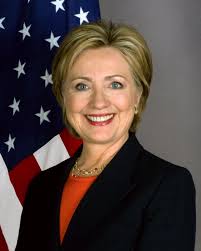
Hillary Clinton
Hillary never did. Finally, two weeks after the canceled December 10 meeting with the Clintons, Gergen got the news he had been dreading: Bruce Lindsay, Clinton’s trusted adviser, would deliver a one-paragraph letter to the Post, essentially saying; “Screw you.”
Events quickly unfolded exactly as Gergen had predicted:
- The Post’s executive editor, Leonard Downie, called the White House: “Nothing personal, but we’re going to pursue this story relentlessly.”
- The New York Times and Newsweek–among other news outlets–joined the journalistic investigation.
- Coverage of Whitewater intensified.
- Republicans began demanding that Attorney General Janet Reno appoint an independent counsel.
- On January 20, 1994–exactly a year after Clinton took the oath as President–Edward Fiske, a former federal prosecutor, was named independent counsel.
- In August, Fiske was dismissed by a Federal judge who considered him too liberal and replaced with Kenneth Starr, a former solicitor general and federal appeals court judge.
- Starr unearthed Clinton’s salacious affair with White House intern Monica Lewinsky, which culminated in an unsuccessful Republican impeachment attempt in 1998.
- Starr resigned in 1999, and was replaced by Robert W. Ray.
- The investigation continued until 2002, but no criminal charges were ever filed against either Clinton.
In his 2001 book, Eyewitness to Power, Gergen summarizes the meaning of this episode:
If the Clintons had turned over the Whitewater documents to the Washington Post in December 1993, their history–and that of the United States–would have been entirely different.
Disclosure would have brought embarrassing revelations–such as Hillary’s investment in commodity futures.
“But we know today that nothing in those documents constituted a case for criminal prosecution of either one of the Clintons in their Whitewater land dealings…
“Edward Fiske and Kenneth Starr would never have arrived on the scene, we might never have heard of Monica Lewinsky (who had nothing to do with the original Whitewater matter) and there would have been no impeachment.
“The country would have been spared that travail, and the President himself could have had a highly productive second term.”
Gergen blames President Clinton rather than Hillary for refusing to disclose the documents. Voters elected him–not her–to run the government. He–not she–ultimately bears the responsibility.
Still, his comments about Hillary are telling, considering:
- That she is likely to win election to the White House this November; and
- That she continues to reflexively stonewall instead of opt for transparency when facing questions.
As Gergen puts it: “She should have said yes [to disclosure] from the beginning, accepting short-term embarrassment in exchange for long-term protection of both herself and her husband.
“She listened too easily to the lawyers and to her own instincts as a litigator, instincts that told her never to give an inch to the other side. Whitewater was always more a political than a legal problem.”
The same might be said of her lingering credibility problem with the use of a private email server as Secretary of State.
Both of her predecessors, Colin Powell and Condoleeza Rice, used private servers, and neither has been subjected to Republican inquisition.
She could have easily avoided the turmoil that has dogged her for years by simply admitting at the outset: “Yes, I used a private server–just like my two Republican predecessors did. Everyone knows government servers are compromised.”
Instead, she fell back on Nixonian stonewalling tactics–which proved fatal to Richard Nixon and almost fatal to her husband.
This is, in short, a woman who has learned nothing from the past–her own nor that of her husband.
It’s a safe bet that as President Hillary Clinton will continue to stonewall over matters whose disclosure is embarrassing only in the short-term–thus jeopardizing her tenure as Chief Executive.
ABC NEWS, BILL CLINTON, CBS NEWS, CNN, COLIN POWELL, CONDOLEEZA RICE, DAVID GERGEN, EYEWITNESS TO POWER, FACEBOOK, HILLARY CLINTON, IMPEACHMENT, KENNETH STARR, MONICA LEWINSKY, NBC NEWS, REPUBLICANS, RICHARD NIXON, Ronald Reagan, SECRECY, SOREN KIERKEGAARD, STONEWALLING, THE CHICAGO SUN-TIMES, THE CHICAGO TRIBUNE, THE LOS ANGELES TIMES, THE NEW YORK TIMES, THE WASHINGTON POST, TWITTER, WATERGATE, WHITEWATER
In Bureaucracy, History, Law, Politics on August 8, 2016 at 10:30 am
“History can only be understood backwards, but it must be lived forwards.”
So wrote the philosopher Soren Kierkegaard. And with history–in the form of a second Clinton Presidency–about to repeat itself, useful lessons may be found by studying the first one.
Since her debut as a potential First Lady in 1992, Hillary Clinton has aroused strong passions–for and against.
David Gergen is one former staffer who has viewed her up close and yet offers a balanced perspective of her strengths and weaknesses.
He did so in his 2001 book, Eyewitness to Power, in which he chronicled his experiences as an adviser to Republican Presidents Richard Nixon, Gerald Ford, Ronald Reagan–and a Democratic one: Bill Clinton.
In 1993, then a conservative political commentator, Gergen returned to the White House.
The liberal Clinton, sensitive to criticism on the Right, wanted Gergen’s advice on how to defuse it.

David Gergen
In December, 1993, Gergen got a call from Bob Kaiser, the managing editor of the Washington Post: “We’re getting the runaround over there on Whitewater and I want you to know about it.”
“Whitewater” encompassed the Arkansas real estate investments of Bill and Hillary Clinton and their associates, Jim and Susan McDougal in the Whitewater Development Corporation, a failed business venture in the 1970s and 1980s.
A Post reporter had sent a letter to Bruce Lindsay, a trusted Clinton adviser, raising questions about the finances of the Clintons in the years before they came to Washington.
Two weeks had passed, and there had been no reply.
Gergen assured Kaiser that this was the first time he had heard about the letter: “I’ll look into it and get back to you.”
Gergen and Kaiser shared a Watergate past–Gergen had worked in the Nixon White House, Kaiser at the Washington Post, whose reporting had ultimately brought Nixon down.
Both men, Gergen later wrote, “remembered how destructive the stonewalling of those days had been.” And Gergen respected Kaiser, believing him “fair but tough–and, if misled, very tough.”
Gergen immediately consulted with Thomas F. “Mack” McLarty, Clinton’s White House Chief of Staff. He advised McLarty that a trio of White House officials should visit the Post and find out what the reporters wanted.
McLarty agreed.
When the White House officials arrived at the Post, they were met by a chorus of hostile reporters.
They felt they had been stonewalled throughout the 1992 Presidential race. And now they wanted access to a treasury of documents relating to potential irregularities in Whitewater and a gubernatorial campaign.
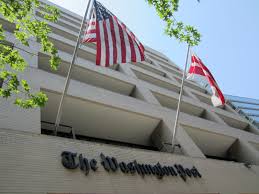
The Washington Post
Gergen and Mark Gearan, the White House director of communications, agreed that the best course was to give the Post all the documents it was requesting.
The next day, Gergen laid out his case to Chief of Staff McLarty:
The Post should be allowed to view the documents and report on them. Then the papers should be made available to the entire White House press corps.
Yes, said Gergen, a lot of negative stories would probably result. But if Watergate had taught any lesson, it was that it was better to admit mistakes and not try to hide them. Stonewalling only brought on criminal investigations–and potential criminal charges.
McLarty agreed to set up a meeting with President Clinton where Gergen and Gearan could make their case.
On December 10, Gergen and Gearan were scheduled to meet with President Clinton, his wife, and possibly their lawyers.
But when the appointed hour arrived, they found that the meeting had been scrubbed.
The Clintons had had their lawyers come in early for a private discussion of the documents, had heard their arguments, and had decided not to discuss anything. They didn’t even want to hear a case for disclosure.
Gergen was furious. He had been hired months earlier with the promise of full access to the President. And now he insisted on it.
McLarty arranged for him to see Clinton the next morning.
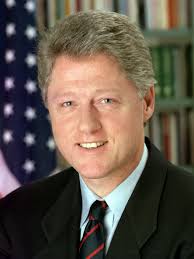
Bill Clinton
Gergen laid out three reasons why the Post should be given the documents it wanted.
First, he believed the paper had tried to be fair in its coverage of the Clintons.
Second, Watergate proved that it was politically lethal to be accused of a cover-up.
And, third, having won international renown with Watergate, the Post would never back down on Whitewater.
Gergen warned that the Post “would sic a big team of investigative reporters on the White House” and that would lead other news organizations to follow.
“I agree with you,” said Clinton. “I think we should turn over all of the documents.”
But there was a catch: He didn’t feel he could make the decision alone. Hillary had been a partner in the Whitewater land transactions.
“You’ll have to speak to Hillary and get her agreement,” he told Gergen. “If she agrees, we’ll do it.”
Gergen promised to see her.
Two days later, Gergen called Hillary Clinton’s office and asked for an appointment.
“We’ll get back to you,” her secretary promised.
ABC NEWS, BARACK OBAMA, BENJAMIN C. BRADLEE, BILL CLINTON, CBSNEWS, CNN, FACEBOOK, JASON ROBARDS, JOHN F. KENNEDY, JOURNALISM, NBC NEWS, PENTAGON PAPERS, REPUBLICAN PARTY, REPUBLICANS, RICHARD NIXON, THE CHICAGO SUN-TIMES, THE CHICAGO TRIBUNE, THE LOS ANGELES TIMES, THE NEW YORK TIMES, THE PENTAGON PAPERS, THE WALL STREET JOURNAL, THE WASHINGTONPOST, TWITTER, USA TODAY, WATERGATE
In Bureaucracy, History, Politics, Social commentary on August 24, 2015 at 12:32 am
Benjamin C. Bradlee and Richard M. Nixon.
Both men were driven to succeed. And both achieved fame and power in doing so.
Bradlee made his name in journalism.
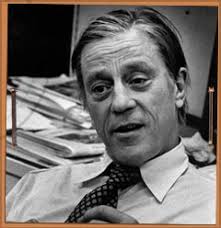
Benjamin C. Bradlee
Nixon made his in politics.
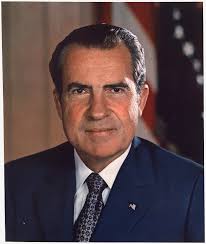
Richard M. Nixon
Both served in the United States Navy in the Pacific during World War II.
Both had strong connections to John F. Kennedy.
- Bradlee knew him as a friend and reporter during JFK’s years as a Senator and President.
- Nixon–as a Senator and later Vice President–knew Kennedy as a Senatorial colleague and as a political adversary, unsuccessfully contesting him for the Presidency in 1960.
For both, 1948 was a pivotal year.
- Bradlee joined The Washington Post as a reporter.
- Nixon, as a U.S. Representative, accused Algier Hiss, a former State Department official, of having been a Communist spy. Hiss was eventually convicted of perjury and sent to prison.
Both attained their positions of maximum power in 1968.
- Bradlee became executive editor of The Washington Post.
- Nixon became the 37th President of the United States.
Bradlee made it his business to dig up the truth. Nixon made it his business to distort the truth–or to conceal it when distortion wasn’t enough.
Nixon and Bradlee had their first major clash in 1971 with the Pentagon Papers, a secret government study of how the United States became enmeshed in the Vietnam war.
- Although the Papers concerned events that had occurred during the Presidencies of John F. Kennedy and Lyndon B. Johnson, Nixon was outraged at their release by a former Defense Department analyst named Daniel Ellsburg.
- Nixon ordered his Attorney General, John Mitchell, to enjoin The New York Times–which had begun publishing the study–from continuing to publish its revelations.
- Bradlee, as executive editor of The Washington Post, urged his publisher, Katherine Graham, to take over where the Times had left off.
- The controversey ended when the Supreme Court ruled, 6–3, that the government failed to meet the burden of proof required for prior restraint of the press.
In 1972, Bradlee and Nixon squared off for their most important battle–a “third-rate burglary” of the Democratic National Committee headquarters at the Watergate Hotel.
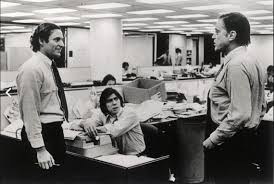
Bob Woodward, Carl Bernstein and Benjamin C. Bradlee
- Bradlee backed two young, aggressive reporters named Bob Woodward and Carl Bernstein, as they probed the burglary.
- This led to their discovering a series of illegal dirty tricks the Nixon re-election campaign had aimed at various Democratic opponents.
- The Post’s revelations led to the formation of the Senate Watergate Committee, the discovery of Nixon’s tape-recordings of his private–and criminal–conversations, and, finally, to Nixon’s own resignation in disgrace on August 9, 1974.
- Bradlee was one of only four men who knew the identity of “Deep Throat,” Woodward and Bernstein’s famous undercover source, then-FBI Associate Director W. Mark Felt. Felt outed himself in 2005.
- Nixon, who died in 1994, never learned the identity of the most famous whistleblower in history.
Bradlee became an advocate for education and the study of history.
Nixon entered history as the only American President forced to resign from office.
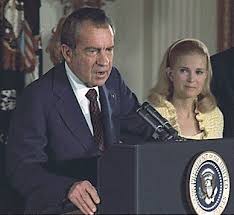
Richard Nixon saying farewell at the White House
Bradlee became a media celebrity. Nixon became a media target.
- Bradlee was portrayed by Jason Robards in the hit 1976 film, All the President’s Men (for which he won an Academy Award for Best Supporting Actor).
- Nixon was portrayed–in Oliver Stone’s 1995 drama, Nixon–by Anthony Hopkins.
Bradlee and Nixon each published a series of books.
- Bradlee’s: That Special Grace and Conversations With Kennedy focused on his longtime friendship with John F. Kennedy. A Good Life: Newspapering and Other Adventures was Bradlee’s memoirs.
- Nixon’s: Among his 11 titles: Six Crises; RN: The Memoirs of Richard Nixon; The Real War; Leaders; Real Peace; No More Vietnams; Beyond Peace.
After leaving the White House, Nixon worked hard behind-the-scenes to refashion himself into an elder statesman of the Republican Party.
- Throughout the 1980s, he traveled the lecture circuit, wrote books, and met with many foreign leaders, especially those of Third World countries.
- He supported Ronald Reagan for president in 1980, making television appearances portraying himself as the senior statesman above the fray.
- For the rest of his life, he fought ferociously through the courts to prevent the release of most of the infamous “Watergate tapes” that chronicled his crimes as President.
- Only since his death have many of these been made public.
Nixon died on April 22, 1994.
- Eulogists at his funeral included President Bill Clinton and former Presidents Gerald Ford, Ronald Reagan and George H.W. Bush, California Governor Pete Wilson and the Reverend Billy Graham.
- Despite his efforts to portray himself as an elder statesman, Nixon could never erase his infamy as the only President to resign in disgrace.
- To this day, he remains a nonperson within the Republican Party. While numerous Republican Presidential candidates quote and identify themselves with Ronald Reagan, none has done the same with Nixon.
Bradlee remained executive editor of The Washington Post until retiring in 1991. But he continued to serve as vice president-at-large until his death on October 21, 2014.
- In 2007, he received the French Legion of Honor, the highest award given by the French government, at a ceremony in Paris.
- In 2013, he was named as a recipient of the Presidential Medal of Freedom by President Barack Obama. He was presented the medal at a White House ceremony on November 20, 2013.


.jpeg&imgrefurl=http%3A%2F%2Fwww.whataboutclients.com%2Farchives%2F2014%2F09%2Famerican_authen.html&docid=boFt4L_sotcfWM&tbnid=ouxiHfzJFvsrwM%3A&w=240&h=248&ei=NhtPVKT3GJX6oQSa7YKgDg&ved=0CAIQxiAwAA&iact=c)


 Bureaucracybuster's Blog
2016 PRESIDENTIAL CAMPAIGN, 9/11 ATTACKS, ABC NEWS, ACADEMY AWARDS, ASSOCIATED PRESS, BARACK OBAMA, BEST ACTRESS, BEST SUPPORTING ACTRESS, BIRTHERS, BULLYING, CBS NEWS, CENSORSHIP, CHRIS CUOMO, CNN, CREDIBILITY GAP, DAVID BROOKS, DAVID HALBERSTAM, DISABILITY, DONALD TRUMP, FACEBOOK, FOX AND FRIENDS, FRANK STANTON, FULL METAL JACKET, GEORGE MCGOVERN, GOLDEN GLOBES, HILLARY CLINTON, JOHN F. KENNEDY, KELLEYANNE CONWAY, KRAMER VS. KRAMER, LYNDON B. JOHNSON, MARK SHIELDS, MERYL STREEP, MORLEY SAFER, MOTHER JONES, MOVEON, NAVY SEALS, NBC NEWS, NEEWSWEEK, NEW DAY, NPR, OSAMA BIN LADEN, PBS NEWSHOUR, PETER ARNETT, POLITICO, RICHARD NIXON, RONALD ZIEGLER, SALON, SERGE KOVALESKI, SLATE, SOPHIE'S CHOICE, STANLEY KUBRICK, THE CHICAGO SUN-TIMES, THE CHICAGO TRIBUNE, THE HUFFINGTON POST, THE IRON LADY, THE LOS ANGELES TIMES, THE NEW YORK TIMES, THE WALL STREET JOURNAL, THE WASHINGTON POST, TIME, TWITTER, U.S. NEWS & WORLD REPORT, USA TODAY, VIETNAM WAR, WATERGATE
“AMBUSH AT CREDIBILITY GAP”: PART FOUR (END)
In Bureaucracy, History, Law, Law Enforcement, Military, Politics, Social commentary on January 16, 2017 at 12:14 amAfter being presented with the Cecil B. DeMille Lifetime Achievement Award, Meryl Streep criticized Donald Trump’s mocking of disabled New York Times reporter Serge Kovaleski.
Kovaleski suffers from arthrogryposis, a congenital condition that restricts the movement of the muscles in his arms.
At a South Carolina rally on November 24, 2015, Trump claimed that Kovaleski was backing away from an article he had written four years earlier.
Trump had earlier said the article proved that New Jersey Muslims had celebrated the September 11, 2001 terror attacks. Kovaleski had insisted there was no credible proof of such celebrations.
Angered at being contradicted, Trump mocked Kovaleski: He flopped his right arm around with his hand held at an odd angle while imitating the reporter: “Now, the poor guy, you’ve got to see this guy: ‘Uhh, I don’t know what I said. Uhh, I don’t remember,’ he’s going like ‘I don’t remember. Maybe that’s what I said.'”
Trump mocking Kovaleski, left; Kovaleski, right
At the Golden Globe Awards on January 8, Streep denounced this behavior that “broke my heart.”
“And this instinct to humiliate, when it’s modeled by someone in the public platform, by someone powerful, it filters down into everybody’s life, because it kind of gives permission for other people to do the same thing.
“Disrespect invites disrespect. Violence incites violence. When the powerful use their position to bully others, we all lose.”
Meryl Streep at the Golden Globes
Streep’s words outraged Trump’s supporters–especially his mouthpiece, Kelleyanne Conway.
Appearing on Right-wing Fox and Friends the next morning, she said: “We have to now form a government, and I’m concerned that somebody with a platform like Meryl Streep is also, I think, inciting people’s worst instincts.
“When she won’t get up there and say, ‘I don’t like it, but let’s try to support him and see where we can find some common ground with him, which [Trump] has actually done from moment one.”
Conway didn’t say what common ground Streep should find with Trump. Perhaps agreeing on mocking the disabled?
Kelleyanne Conway
Then Conway visited CNN’s “New Day,” where she offered a “black-is-white” defense for Trump’s videotaped ridiculing of Kovaleski: It didn’t happen.
The host, Chris Cuomo, having seen the video, wasn’t buying it.
CUOMO: But is [Streep] wrong? Is she wrong that it was wrong for Trump to make gestures like that about a man with disabilities?
CONWAY: He didn’t–but that is not what he did and he has said that a thousand times. As he tweeted out today–
CUOMO: He can say it a million. Look at the video.
CONWAY: Why can’t you–wait, excuse me. Why can’t you give him the benefit of the doubt the way the benefit of the doubt was given to CNN’s polling, all of its analysts?
CUOMO: Because he’s making a disgusting gesture on video talking about Serge.
CONWAY: Not about that reporter and that’s just a fact. That is what he’s said. You should give him–
CUOMO: But how is it not about the reporter?
CONWAY: –the deference and respect if he says that it was–he was not mocking, he was mocking the groveling. He said it again this morning. He has three tweets out about it.
CUOMO: But he’s doing a gesture that goes right to the guy’s vulnerability.
CONWAY: You’re saying you don’t believe him. You’re calling him a liar and you shouldn’t.
CUOMO: Look, Kellyanne, to me that’s like you’re trying to scare me off the point and we both know it’s a waste of time.
CONWAY: I’m not going to scare you off anything.
CUOMO: He’s making a gesture that is so keenly tuned to what Serge’s vulnerability is.
CONWAY: And now you’re giving oxygen to what Meryl Streep said.
CUOMO: Forget about Meryl Streep. This happened before her. If our kids did that, could you imagine what we would say to them?
Conway said she would not bring her children into the discussion.
CUOMO: I will. If my kid did something like that, it’d be a really tough day.
CONWAY: You have to listen to what the president has said about that. Why don’t you believe him?
Conway tried to change the subject to Hillary Clinton: “She was given the benefit of the doubt here constantly.”
When Cuomo asked for specifics, she refused to give them. Then she returned to claiming that Trump had never mocked Kovaleski:
CONWAY: You can’t give him the benefit of the doubt on this, when he’s telling you what was in his heart? You always want to go by what’s come out of his mouth, rather than look at what’s in his heart.
* * * * *
Previously, politicians had defended themselves with arguments like: “You can see right here on the tape, I did (or, I didn’t)….”
Trump has cast aside that logic–and the taped evidence–by demanding: “Believe what I’m telling you, not what you’ve just seen.”
By that rationale, if a security camera shows Trump robbing a bank at gunpoint, we’re supposed to believe him if he says: “No, I didn’t rob that bank. I was simply checking my bank balance.”
Such “logic” holds appeal for paid shills like Kelleyanne Conway. But most people will continue to judge by the evidence.
Share this: