Posts Tagged ‘UP’
2016 PRESIDENTIAL ELECTION, 9/11, ABC NEWS, ADOLF HITLER, AFGHANISTAN, ALTERNET, AMERICABLOG, AP, ASIANS, BABY BOOMER RESISTANCE, BARACK OBAMA, BBC, BLACKS, BLOOMBERG, BULLYING, BUZZFEED, CBS NEWS, CNN, COMMUNISM, CROOKS AND LIARS, DAILY KOS, DAILY KOZ, DONALD TRUMP, FACEBOOK, FASCISM, FIVETHIRTYEIGHT, GEORGE W. BUSH, GREAT DEPRESSION, HARPER’S MAGAZINE, HILLARY CLINTON, HISPANICS, HUFFINGTON POST, IRAQ, JEWS, MEDIA MATTERS, MOTHER JONES, MOVEON, MSNBC, MUSLIMS, NAZI GERMANY, NAZI PARTY, NBC NEWS, NEW REPUBLIC, NEWSDAY, NEWSWEEK, NPR, PAUL VON HINDENBURG, PBS NEWSHOUR, POLITICO, POLITICUSUSA, RACISM, RAW STORY, REPUBLICANS, REUTERS, ROBERT PAYNE, Ronald Reagan, SALON, SEATTLE TIMES, SLATE, TALKING POINTS MEMO, THE ATLANTIC, THE CHICAGO SUN-TIMES, THE CHICAGO TRIBUNE, THE DAILY BEAST, THE DAILY BLOG, THE GUARDIAN, THE HILL, THE HUFFINGTON POST, THE INTERCEPT, THE LIFE AND DEATH OF ADOLF HITLER, THE LOS ANGELES TIMES, THE LOS ANGELS TIMES, THE NATION, THE NEW REPUBLIC, THE NEW YORK TIMES, THE NEW YORKER, THE VILLAGE VOICE, THE WASHINGTON POST, THINKPROGRESS, TIME, TRUMP EFFECT, TRUTHDIG, TRUTHOUT, TWITTER, TWO POLITICAL JUNKIES, U.S. NEWS & WORLD REPORT, UP, UPI, USA TODAY, WORLD WAR 11
In Bureaucracy, History, Politics, Social commentary on November 14, 2016 at 12:05 am
In his bestselling 1973 biography, The Life and Death of Adolf Hitler, British historian Robert Payne harshly condemned the German people for the rise of the Nazi dictator.
“[They] allowed themselves to be seduced by him and came to enjoy the experience….[They] followed him with joy and enthusiasm because he gave them license to pillage and murder to their hearts’ content. They were his servile accomplices, his willing victims….
“If he answered their suppressed desires, it was not because he shared them, but because he could make use of them. He despised the German people, for they were merely the instruments of his will.”
On November 8, millions of ignorant, hate-filled, Right-wing Americans elected Donald Trump—a man reflecting their own hate and ignorance—to the Presidency.
Yet, in some ways, Americans have fewer excuses for turning to a Fascistic style of government than the Germans did.
Adolf Hitler, joined the National Socialist German Workers (Nazi) Party in 1919—the year after World War 1 ended.
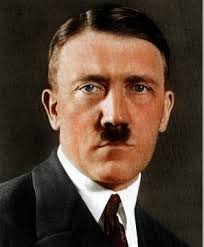
Adolf Hitler
It took him 14 years to win appointment to Chancellor (the equivalent of Attorney General) of Germany in 1933.
In 1923, he staged a coup attempt in Bavaria—which was quickly and brutally put down by police. He was arrested and sentenced to less than a year in prison.
After that, Hitler decided that winning power through violence was no longer an option. He must win it through election—or appointment.
He repeatedly ran for the highest office in Germany—President—but never got a clear majority in a free election.
When the 1929 Depression struck Germany, the fortunes of Hitler’s Nazi party rose as the life savings of ordinary Germans fell. Streets echoed with bloody clashes between members of Hitler’s Nazi Stormtroopers and those of the German Communist Party.
Germany seemed on the verge of collapsing.
Germans desperately looked for a leader—a Fuhrer–who could somehow deliver them from the threat of financial ruin and Communist takeover.
In early 1933, members of his own cabinet persuaded aging German president, Paul von Hindenburg, that only Hitler’s appointment as Chancellor could do this.
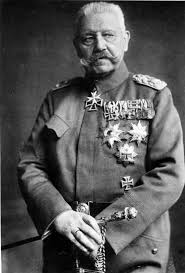
Paul von Hindenburg
Hindenburg was reluctant to do so. He considered Hitler a dangerous radical. But he allowed himself to be convinced that, by putting Hitler in the Cabinet, he could be “boxed in” and thus controlled.
So, on January 30, 1933, he appointed Adolf Hitler Chancellor of Germany.
On August 2, 1934, Hindenberg died, and Hitler immediately assumed the titles—and duties—of the offices of Chancellor and President. His rise to total power was now complete.
It had taken him 14 years to do so.
In 2015, Donald Trump declared his candidacy for President.
Now, consider this:
- The country was technically at war in the Middle East—but the fate of the United States was not truly threatened, as it had been during the Civil War.
- There was no draft; if you didn’t know someone in the military, you didn’t care about the casualties taking place.
- Nor were these conflicts—in Iraq and Afghanistan–imposing domestic shortages on Americans, as World War II had.
- Thanks to government loans from President Barack Obama, American capitalism had been saved from its own excesses during the George W. Bush administration.
- Employment was up. CEOs were doing extremely well.
- In contrast to the corruption that had plagued the administration of Ronald Reagan, whom Republicans idolize, there had been no such scandals during the Obama Presidency.
- Nor had there been any large-scale terrorist attacks on American soil—as there had on 9/11 under President George W. Bush.
Yet—not 17 months after announcing his candidacy for President—enough Americans fervently embraced Donald Trump to give him the most powerful position in the country and the world.
.jpg/220px-Donald_Trump_August_19,_2015_(cropped).jpg)
Donald Trump
The message of Barack Obama’s 2008 campaign had been one of hope—“Yes, We Can!”
That of Donald Trump’s campaign was one of hatred toward everyone who was not an avid Trump supporter: “No, You Can’t!”
Whites comprised the overwhelming majority of the audiences at Trump rallies. Not all were racists, but many of those who were advertised it on T-shirts: “MAKE AMERICA WHITE AGAIN.”
They knew that demographics were steadily working against them. Birthrates among non-whites were rising. By 2045, whites would make up less than 50 percent of the American population.
The 2008 election of the first black President had shocked whites. His 2012 re-election had deprived them of the hope that 2008 had been an accident.
Then came 2016—and the possibility that a black President might actually be followed by a woman: Hillary Clinton.
And the idea of a woman dictating to men was strictly too much to bear.
Since Trump’s election, educators have reported a surge in bullying among students of all ages, from elementary- to high-school. Those doing the bullying are mostly whites, and the victims are mostly blacks, Muslims, Jews, Hispanics, Asians.
It even has a name: “The Trump Effect.”
And this is where matters stand more than two months before Trump takes the oath as President.
All of this should be remembered the next time an American blames Germans for their embrace of Adolf Hitler.
ABC NEWS, ABORTION, ADOLF HITLER, ALTERNET, AMERICABLOG, AP, ATHEISTS, BABY BOOMER RESISTANCE, BBC, BLOOMBERG NEWS, BUZZFEED, CBS NEWS, CNN, CROOKS AND LIARS, DAILY KOZ, DONALD TRUMP, FACEBOOK, FAITH AND FREEDOM COALITION, FIVETHIRTYEIGHT, GAYS, HARPER’S MAGAZINE, HOMOSEXUALITY, HOMOSEXUALS, HUFFINGTON POST, INDIANA, ISLAM, JERRY FALWELL JR., JEWS, LESBIANS, LIBERALS, LIBERTY UNIVERSITY, MEDIA MATTERS, MIKE PENCE, MOTHER JONES, MOVEON, MSNBC, MUSLIMS, NBC NEWS, NEW REPUBLIC, NEWSDAY, NEWSWEEK, NON-CHRISTIANS, NPR, PBS NEWSHOUR, POLITICO, POLITICUSUSA, RALPH REED, RAW STORY, RELIGION, RELIGIOUS FREEDOM RESTORATION ACT, REPUBLICAN PARTY, REUTERS, SALON, SCIENCE, SEATTLE TIMES, SHARIA, SLATE, SOVIET UNION, TALKING POINTS MEMO, THE ATLANTIC, THE CHICAGO SUN-TIMES, THE CHICAGO TRIBUNE, THE DAILY BEAST, THE DAILY BLOG, THE GUARDIAN, THE HILL, THE HUFFINGTON POST, THE LOS ANGELES TIMES, THE NATION, THE NEW REPUBLIC, THE NEW YORK TIMES, THE NEW YORKER, THE VILLAGE VOICE, THE WASHINGTON POST, THINKPROGRESS, TIME, TRUTHDIG, TRUTHOUT, TWITTER, TWO POLITICAL JUNKIES, U.S. NEWS & WORLD REPORT, UP, UPI, USA TODAY, WOMEN, WOMEN'S RIGHTS
In History, Law, Law Enforcement, Politics, Social commentary on November 10, 2016 at 3:34 pm
During the 2016 Presidential campaign, many pundits–and ordinary citizens–repeatedly asked: “Why are so many evangelical leaders supporting Donald Trump?”
Evangelical leaders like:
- Jerry Falwell, Jr., president of Liberty University: “Well, I think Jesus said we’re all sinners.
- “When they ask [if Trump’s personal life is relevant] I always talk about the story of the woman at the well who had had five husbands and she was living with somebody she wasn’t married to, and they wanted to stone her. And Jesus said he’s–he who is without sin cast the first stone. I just see how Donald Trump treats other people, and I’m impressed by that.”
- Ralph Reed, founder and chairman of the Faith & Freedom Coalition: “People of faith are voting on issues like who will protect unborn life, defend religious freedom, grow the economy, appoint conservative judges and oppose the Iran nuclear deal.”
- Mike Pence, Trump’s Vice President-elect. who identifies as an evangelical Catholic.
Donald Trump
After all, evangelicals have long portrayed themselves as champions of “family values.”
And these aren’t exactly consistent with a man who brags: “You know I’m automatically attracted to beautiful–I just start kissing them. It’s like a magnet. Just kiss. I don’t even wait. And when you’re a star they let you do it. You can do anything. Grab them by the pussy.”
So why are they backing Trump?
Power.
Power to control the lives of those they have long hated and despised.
Among these:
- Atheists
- Jews
- Women
- Homosexuals
- Lesbians
- Non-Christians
- Liberals
They expect Trump to sponsor legislation that will–by force of law–make their brand of Christianity supreme above all other religions.
A foretaste of what’s to come occurred on March 26, 2015.
That was when Mike Pence, then Governor of Indiana, signed into law the Religious Freedom Restoration Act.
This allows any individual or corporation to cite its religious beliefs as a defense when sued by a private party.
Officially, its intent is to prevent the government from forcing business owners to violate their religious beliefs.
Unofficially, its intent is to appease the hatred of gays and lesbians by the religious Right, a key constituency of the Republican party.
Thus, a bakery that doesn’t want to make a cake for a gay wedding or a restaurant that doesn’t want to serve lesbian patrons now has the legal right to refuse to do so.
And a hospital can legally turn away a gay patient if it wants to.
The bill passed overwhelmingly by both chambers of the Republican-controlled state legislature. And was signed into law by the governor who is now Vice President-elect.
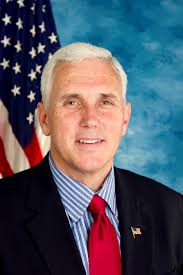
Indiana Governor Mike Pence
“Today I signed the Religious Freedom Restoration Act, because I support the freedom of religion for every Hoosier of every faith,” Mike Pence said in a statement on the day he signed the bill.
“The Constitution of the United States and the Indiana Constitution both provide strong recognition of the freedom of religion but today, many people of faith feel their religious liberty is under attack by government action.”
Bill-signing ceremonies are usually highly public events. Governors–and Presidents–normally want their constituents to see them creating new legislation.
Yet for all his praise for the bill, Pence signed it in a ceremony closed to the public and the press.
On June 22, 1941, German dictator Adolf Hitler ordered the invasion of the Soviet Union. Shortly afterward, he appeared to have second thoughts.
Turning to an aide, he said: “At the beginning of each campaign, one pushes a door into a dark, unseen room. One can never know what is hiding inside.”
Maybe Pence, like Hitler, sensed that he was pushing open “a door into a dark, unseen room.”
And this may well be the case.
Through that door has already marched the First Church of Cannabis, founded by Bill Levin. Its registration has been officially approved by the Indiana Secretary of State, and the IRS has granted the church tax-exempt status.
A mural in the church in the style of “The Creation of Adam” features two hands–where one is passing a joint to the other.
No doubt many Indiana legislators are furious that their effort to attack gays may have brought legal marijuana to their highly conservative state.
But worse may be to come.
Since 9/11, Right-wingers such as Rush Limbaugh and Sean Hannity have warned that Muslims are trying to impose Sharia (Islamic law) on America.
And now Indiana’s legislators, in elevating religion above the law, have pushed upon that door “into a dark, unseen room.”
Actually, both the leaders of the Republican party and adherents of Sharia agree:
- Women should have fewer rights than men.
- Abortion should be illegal.
- There should be no separation between church and state.
- Religion should be taught in school.
- Religious doctrine trumps science.
- Government should be based on religious doctrine.
- Homosexuality should be outlawed.
Eventually, some Muslims in Indiana will claim their rights–guaranteed in Islamic religious law. One of these is to have as many as four wives.
And they will claim that the Religious Freedom Restoration Act protects those rights.
Imagine this happening on a national scale–and you’ll have the America that’s swiftly approaching.
ABC NEWS, ABRAHAM LINCOLN, ALTERNET, ANDREW JACKSON, AP, BARACK OBAMA, BREITBART NEWS, BUZZFEED, CBS NEWS, CIVIL WAR, CNN, CROOKS AND LIARS, DAILY KOZ, DONALD TRUMP, FACEBOOK, HILLARY CLINTON, HUFFINGTON POST, JOHN C. CALHOUN, MARCHING THROUGH GEORGIA, MIKE PENCE, MOTHER JONES, MOVEON, MSNBC, NBC NEWS, NEWSWEEK, NPR, POLITICO, RAW STORY, REPUBLICAN PARTY, REUTERS, ROBERT E. LEE, ROBERT HAYNE, ROGER STONE, SALON, SEATTLE TIMES, SECCESSION, SLATE, THE ATLANTIC, THE CHICAGO SUN-TIMES, THE CHICAGO TRIBUNE, THE DAILY BEAST, THE GUARDIAN, THE HILL, THE HUFFINGTON POST, THE LOS ANGELES TIMES, THE NATION, THE NEW YORK TIMES, THE WALL STREET JOURNAL, THE WASHINGTON POST, THOMAS HART BENTON, TIME, TREASON, TWITTER, U.S. NEWS & WORLD REPORT, UP, UPI, USA TODAY, WILLIAM TECUMSEH SHERMAN
In Bureaucracy, History, Law, Law Enforcement, Military, Politics, Social commentary on October 27, 2016 at 12:09 am
When Andrew Jackson, seventh President of the United States from 1829 to 1837, was close to death, he asked his doctor: “What act of my administration will be most severely condemned by future Americans?”
“Perhaps the removal of the bank deposits,” said the doctor–referring to Jackson’s withdrawal of U.S. Government monies from the first Bank of the United States.
That act had destroyed the bank, which Jackson had believed was a source of political corruption.
“Oh, no!” said Jackson.
“Then maybe the specie circular,” said the doctor. He was referring to an 1836 executive order Jackson had issued, requiring payment for government land to be in gold and silver.
“Not at all!” said Jackson.
Then, his eyes blazing, Jackson raged: “I can tell you. Posterity will condemn me more because I was persuaded not to hang John C. Calhoun as a traitor than for any other act in my life!”
John C. Calhoun had once been Vice President under Jackson and later a United States Senator from South Carolina. His fiery rhetoric and radical theories of “nullification” played a major part in bringing on the Civil War (1861-1865).
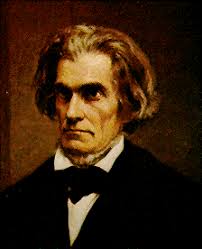
John C. Calhoun
Calhoun was an outspoken proponent of slavery, which he declared to be a “positive good” rather than a “necessary evil.” He supported states’ rights and nullification–by which states could declare null and void federal laws they deemed unconstitutional.
Historians have not condemned Jackson for failing to hang the senator. But perhaps he was right–and perhaps he should have hanged Calhoun.
It might have prevented the Civil War–or at least delayed its coming.
Over time, Southern states’ threats of “nullification” turned to threats of “secession” from the Union.
Jackson died in 1845–16 years before the Civil War erupted.
The resulting carnage slaughtered as many as 620,000 lives. More Americans died in that war than have been killed in all the major wars fought by the United States since.
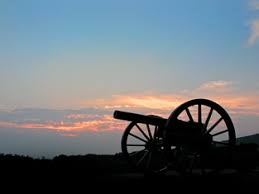
When it ended, America was reinvented as a new, unified nation–and one where slavery was now banned by the 13th Amendment to the United States Constitution.
Equally important, the Federal Government had now set a precedent for using overwhelming military power to force states to remain in the Union.
But in 2012, within days of Barack Obama’s decisive winning of another four years as President, residents across the country raised the call of treason.
They did done so by filing secession petitions to the Obama administration’s “We the People” program, which is featured on the White House website.
States whose residents filed secession petitions included:
Alabama, Alaska, Arizona, Arkansas, California, Colorado, Connecticut, Delaware, Florida, Georgia, Hawaii, Idaho, Illinois, Indiana, Iowa, Kansas, Kentucky, Louisiana, Maine, Maryland, Massachusetts, Michigan, Minnesota, Mississippi, Missouri, Montana, Nebraska, New Hampshire, New Jersey, New Mexico, New York, Nevada, North Carolina, North Dakota, Ohio, Oklahoma, Oregon, Pennsylvania, Rhode Island, South Carolina, South Dakota, Tennessee, Texas, Utah, Virginia, Washington (state), West Virginia, Wisconsin and Wyoming.
The reason: Thousands–if not millions–of Americans couldn’t abide a moderately-liberal black man winning a second term as President.
Abraham Lincoln dedicated his Presidency–and sacrificed his life–to ensure the preservation of a truly United States.
And Robert E. Lee–the defeated South’s greatest general–spent the last five years of his life trying to put the Civil War behind him and persuade his fellow Southerners to accept their place in the Union.
But today avowed racists, Fascists and other champions of treason are working hard to destroy that union–and unleash a second Civil War.
Yet no official in Washington, D.C.–from President Obama on down–has so far dared to openly confront this menace. This failure to do so has only emboldened Trump’s Fascistic supporters and dismayed those who would oppose them.
President Obama should follow Andrew Jackson’s example–before treasonous talk becomes treasonous action.
He should make clear that if treasonous violence erupts during his last two months in office, he will act decisively to crush it, using whatever level of force is necessary.
President Obama should warn these 21st-century would-be traitors that the FBI and U.S. Marshals Service are prepared to combat any threats to national security.
And if these agencies aren’t sufficient, the United States Army, Navy, Air Force and Marines stand ready to send modern-day counterparts of Union General William Tecumseh Sherman to wherever they are needed.
In 1864, Sherman’s 62,000 soldiers marched more than 650 miles in less than 100 days, ravaged Georgia, burned Atlanta to the ground–and ended the Civil War.
President Obama’s attitude should be: “Let them hate me, so long as they fear me.”
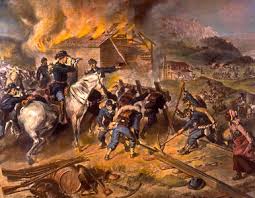
Sherman’s March through Georgia
Similarly, Hillary Clinton–if she is elected–should issue a similar statement: That her coming administration will not tolerate the outbreak of widespread violence from any section of the population, whatever the excuse.
And she should bluntly warn that “Marching Through Georgia” is a song that can be played wherever treason dares to show its face:
So we made a thoroughfare for freedom and her train
Sixty miles of latitude, three hundred to the main.
Treason fled before us, for resistance was in vain
While we were marching through Georgia.
ABC NEWS, ABRAHAM LINCOLN, ALTERNET, ANDREW JACKSON, AP, BARACK OBAMA, BREITBART NEWS, BUZZFEED, CBS NEWS, CIVIL WAR, CNN, CROOKS AND LIARS, DAILY KOZ, DONALD TRUMP, FACEBOOK, HILLARY CLINTON, HUFFINGTON POST, JOHN C. CALHOUN, MARCHING THROUGH GEORGIA, MIKE PENCE, MOTHER JONES, MOVEON, MSNBC, NBC NEWS, NEWSWEEK, NPR, POLITICO, RAW STORY, REPUBLICAN PARTY, REUTERS, ROBERT E. LEE, ROBERT HAYNE, ROGER STONE, SALON, SEATTLE TIMES, SECCESSION, SLATE, THE ATLANTIC, THE CHICAGO SUN-TIMES, THE CHICAGO TRIBUNE, THE DAILY BEAST, THE GUARDIAN, THE HILL, THE HUFFINGTON POST, THE LOS ANGELES TIMES, THE NATION, THE NEW YORK TIMES, THE WALL STREET JOURNAL, THE WASHINGTON POST, THOMAS HART BENTON, TIME, TREASON, TWITTER, U.S. NEWS & WORLD REPORT, UP, UPI, USA TODAY, WILLIAM TECUMSEH SHERMAN
In Bureaucracy, History, Law, Law Enforcement, Military, Politics, Social commentary on October 26, 2016 at 12:19 am
They cannot be made to love us, but they may be made to fear us.
–William Tecumseh Sherman speaking of the Southern Confederacy
If Hillary Clinton is elected President, she may soon face the same crisis that confronted Abraham Lincoln more than a century ago: Mass treason.
Americans haven’t even voted yet. But, already, hard-core supporters of Republican Presidential nominee Donald Trump believe a sinister international cabal has “rigged” the 2016 election for Clinton.
There is absolutely no evidence for this–other than what Trump himself has loudly and repeatedly told them: That there is a massive conspiracy to take him down.
At one town hall meeting where his Vice Presidential running mate, Mike Pence, appeared, a woman named Rhonda stood up and announced: “One of the things that I can tell you that a lot of us are scared of is this voter fraud.
“There’s a lot of out here saying that when we vote, we’re going to wear red. Our lives depend on this election. Our kids’ futures depend on this election.
“For me personally, if Hillary Clinton gets in, I myself am ready for a revolution.”
In Cincinnati, a Trump supporter threatened to forcibly remove Clinton from the White House if she won the Presidential race: “I feel like Hillary needs to be taken out if she gets in the government. I’ll do everything in my power to take her out of power–which, if I have to be a patriot, I will.”
When asked if he was physically threatening Clinton, Dan Bowman, 50, told CNN: “I don’t know, is it?”

Officially, the Trump campaign claimed: “We reject violence in any form and will not allow it to be a part of our campaign.”
But on August 9, Trump told a rally in Wilmington, North Carolina that Clinton intended to abolish the Second Amendment: “If she gets to pick her judges, there’s nothing you can do, folks. Although the Second Amendment people–maybe there is, I don’t know.”
The Clinton camp instantly saw it as a “dog-whistle” solicitation for political assassination. The Trump campaign issued a statement denying that he had meant any such thing.
On July 19, Trump clinched the Republican Presidential nomination. By early August, Roger Stone, a longtime Right-wing political consultant and now Trump strategist, was already predicting “widespread voter fraud” in the coming election.
This despite the fact that a 2014 Washington Post analysis of 14 years of voter fraud found 31 possible incidents of in-person voter fraud, comprised of approximately 241 fraudulent ballots.
In an interview with the Right-wing Breitbart News website, Stone said:
“The first thing that Trump needs to do is begin talking about [voter fraud] constantly. If there’s voter fraud, this election will be illegitimate, the election of the winner will be illegitimate, we will have a constitutional crisis, widespread civil disobedience, and the government will no longer be the government.”
_(cropped).jpg)
Roger Stone
Stone added that Trump should keep drumming up his supporters against the “rigged” system, and promise that the government would be shut down if Clinton was pronounced the victor in November.
“I think he’s gotta put them on notice that their inauguration will be a rhetorical, and when I mean civil disobedience, not violence, but it will be a bloodbath… We will not stand for it.”
Yet no official in Washington, D.C.–from President Barack Obama on down–has so far dared to openly acknowledge–let alone confront–this menace.
If Hillary Clinton is elected President, she would do well to review how Andrew Jackson, America’s seventh President from 1829 to 1837, reacted to threats of secession.

Andrew Jackson
In 1830, South Carolina was threatening to secede from the Union. A South Carolina Congressman who was returning home visited Jackson and asked: “Do you have a message you want me to give to your friends in the state?”
Jackson questioned him about the recent mass meetings in Charleston.
The friend warned him that South Carolina’s fire-eaters believed “the Army and Navy aren’t big enough to collect a penny” of Federal taxes.
“Do they realize what their words mean?” asked Jackson.
“I’m afraid they do, General.”
“Then tell them from me that they can talk and write resolutions and print threats to their hearts’ content.
“But if one drop of blood is shed there in opposition to the laws of the United States, I will hang the first man I can lay my hands on engaged in such treasonable conduct, from the first tree I can reach.”
News of Jackson’s threat quickly spread throughout Washington, D.C.
Senator Robert Hayne of South Carolina told his fellow Senator, Thomas Hart Benton, of Missouri, that he couldn’t believe that Jackson would send an army to invade a sovereign state.
Benton replied: “I tell you, Hayne, when Jackson starts talking about hanging, they can begin to look for the ropes.”
Jackson later issued a proclamation to the people of South Carolina and threatened to hang Hayne’s successor, Senator John C. Calhoun. He also warned that he would himself lead an army into the state to enforce Federal law.
The treasonous rumblings stopped–for the moment.
2016 PRESIDENTIAL RACE, ABC NEWS, ADOLF HITLER, ALTERNET, AP, BUZZFEED, CBS NEWS, CNN, CROOKS AND LIARS, DAILY KOZ, DAVID BROOKS, DONALD TRUMP, EDUARDO "TED" CRUZ, FACEBOOK, FOX NEWS, HEINZ GUDERIAN, MARK SHIELDS, MEGYN KELLY, MOTHER JONES, MOVEON, NBC NEWS, NEWSWEEK, NPR, PBS NEWSHOUR, POLITICO, RAW STORY, REPUBLICANS, REUTERS, ROBERT PAYNE, SALON, SEATTLE TIMES, SLATE, THE ATLANTIC, THE CHICAGO SUN-TIMES, THE CHICAGO TRIBUNE, THE DAILY BEAST, THE GUARDIAN, THE HILL, THE HUFFINGTON POST, THE LIFE AND DEATH OF ADOLF HITLER, THE LOS ANGELES TIMES, THE NATION, THE NEW YORK TIMES, THE WASHINGTON POST, TIME, TWITTER, U.S. NEWS & WORLD REPORT, UP, UPI, USA TODAY, WOMEN
In Bureaucracy, History, Military, Politics, Social commentary on August 18, 2016 at 12:05 am
Syndicated columnist Mark Shields and New York Times columnist David Brooks appear every Friday on the PBS Newshour to review the week’s major political events.
On March 25, Shields–a liberal, and Brooks, a conservative–came to some disturbingly similar conclusions about Donald Trump.
Eerily, their conclusions echoed those reached by former Panzer General Heinz Guderian about German dictator Adolf Hitler.
Guderian created the concept of motorized blitzkrieg warfare, whereby masses of tanks and planes moved in coordination to strike at the vital nerve centers of an enemy.
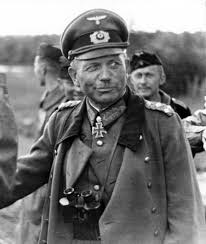
Heinz Guderian
Guderian thus enabled Hitler to conquer France in only six weeks in 1940, and to come to the brink of crushing the Soviet Union in 1941. He recounted his career as the foremost tank commander of the Third Reich in his 1950 autobiography, Panzer Leader.
On the PBS Newshour, moderator Judy Woodruff noted that “polls show Trump’s standing with women voters had worsened in recent months.”
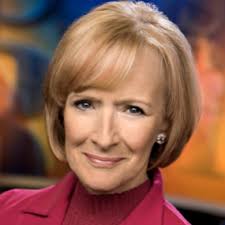
Judy Woodruff
David Brooks said that Trump had displayed “a consistent misogynistic view of women as arm candy, as pieces of meat. It’s a consistent attitude toward women which is the stuff of a diseased adolescent.”
MARK SHIELDS: “She just asked him tough questions and was totally fair, by everybody else’s standards.”
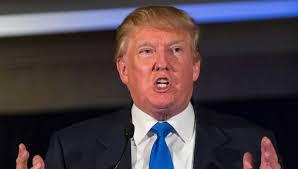
Donald Trump
HEINZ GUDERIAN: Once in power, Hitler quickly–and violently–eliminated his opposition. He make no attempt to disguise this aspect of his character, because the opposition was weak and divided and soon collapsed after the first violent attack. This allowed Hitler to pass laws which destroyed the safeguards enacted by the Weimar Republic against the the dangers of dictatorship.
MARK SHIELDS: “And I don’t know at what point it becomes…politically, he’s still leading. And I would have to say he’s the overwhelming favorite for the Republican nomination.”
HEINZ GUDERIAN: Hitler promised to “make Germany great again” both domestically and internationally. And this won him many followers. In time he controlled the largest party in the land and this allowed him, by democratic procedure, to assume power.
DAVID BROOKS: “The odd thing about [Trump’s] whole career and his whole language, his whole world view is there is no room for love in it. You get a sense of a man who received no love, can give no love, so his relationship with women, it has no love in it. It’s trophy.”
HEINZ GUDERIAN: [Hitler] was isolated as a human being. He had no real friend. There was nobody who was really close to him.
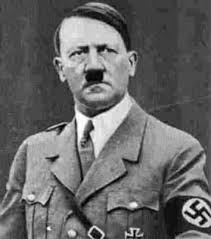
Adolf Hitler
There was nobody he could talk to freely and openly. And just as he never found a true friend, he was denied the ability to deeply love a woman.
DAVID BROOKS: “And [Trump’s] relationship toward the world is one of competition and beating, and as if he’s going to win by competition what other people get by love.”
HEINZ GUDERIAN: Everything on this earth that casts a glow of warmth over our life as mortals–friendship with fine men, the pure love for a wife, affection for one’s own children–all this was and forever remained unknown to him.
DAVID BROOKS: “And so you really are seeing someone who just has an odd psychology unleavened by kindness and charity, but where it’s all winners and losers, beating and being beat. And that’s part of the authoritarian personality, but it comes out in his attitude towards women.”
HEINZ GUDERIAN: He lived alone, cherishing his loneliness, with only his gigantic plans for company. His relationship with Eva Braun may seem to contradict what I have written. But it is obvious that she could not have had any influence over him. And this is unfortunate, for it could only have been a softening one.”
* * * * *
In his bestselling 1973 biography, The Life and Death of Adolf Hitler, British historian Robert Payne harshly condemned the German people for the rise of the Nazi dictator:
“[They] allowed themselves to be seduced by him and came to enjoy the experience….[They] followed him with joy and enthusiasm because he gave them license to pillage and murder to their hearts’ content. They were his servile accomplices, his willing victims.”
There is a very real danger that millions of ignorant, hate-filled, Right-wing Americans will catapult Donald Trump–a man with an “odd psychology unleavened by kindness and charity”–into the Presidency.
And that this man–“who received no love, can give no love”–will assume all the awesome power that goes with that office.
If that happens, future historians–if there are any–may similarly condemn those Americans who stood by like “good Germans” and allowed their country to fall into the hands of a ruthless tyrant.
2016 PRESIDENTIAL RACE, ABC NEWS, ADOLF HITLER, ALTERNET, AP, BUZZFEED, CBS NEWS, CNN, CROOKS AND LIARS, DAILY KOZ, DAVID BROOKS, DONALD TRUMP, EDUARDO "TED" CRUZ, FACEBOOK, FOX NEWS, HEINZ GUDERIAN, MARK SHIELDS, MEGYN KELLY, MOTHER JONES, MOVEON, NBC NEWS, NEWSWEEK, NPR, PBS NEWSHOUR, POLITICO, RAW STORY, REPUBLICANS, REUTERS, ROBERT PAYNE, SALON, SEATTLE TIMES, SLATE, THE ATLANTIC, THE CHICAGO SUN-TIMES, THE CHICAGO TRIBUNE, THE DAILY BEAST, THE GUARDIAN, THE HILL, THE HUFFINGTON POST, THE LIFE AND DEATH OF ADOLF HITLER, THE LOS ANGELES TIMES, THE NATION, THE NEW YORK TIMES, THE WASHINGTON POST, TIME, TWITTER, U.S. NEWS & WORLD REPORT, UP, UPI, USA TODAY, WOMEN
In Bureaucracy, History, Military, Politics, Social commentary on August 17, 2016 at 1:00 am
Syndicated columnist Mark Shields and New York Times columnist David Brooks appear every Friday on the PBS Newshour to review the week’s major political events.
On March 25, Shields–a liberal, and Brooks, a conservative–came to some disturbingly similar conclusions about the character of Republican Presidential front-runner Donald Trump.
As the business magnate moved ever closer to winning the 2016 Republican Presidential nomination, both columnists appeared increasingly dismayed.
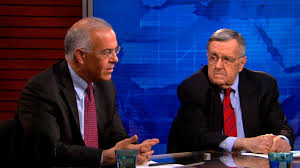
David Brooks and Mark Shields
Eerily, their conclusions about Trump’s character echoed those reached by former Panzer General Heinz Guderian about German dictator Adolf Hitler.
Guderian created the concept of motorized blitzkrieg warfare, whereby masses of tanks and planes moved in coordination to strike at the vital nerve centers of an enemy.
As a result, Guderian enabled Hitler to conquer France in only six weeks in 1940, and to come to the brink of crushing the Soviet Union in 1941. He recounted his career as the foremost tank commander of the Third Reich in his 1950 autobiography, Panzer Leader.

Heinz Guderian
Bundesarchiv, Bild 101I-139-1112-17 / Knobloch, Ludwig / CC-BY-SA 3.0 [CC BY-SA 3.0 de (https://creativecommons.org/licenses/by-sa/3.0/de/deed.en)%5D
Moderator Judy Woodruff opened the discussion by alluding to the blood feud then raging between Trump and his fellow Republican, Texas U.S. Senator Eduardo “Ted” Cruz.
Both were seeking their party’s Presidential nomination–and both were ruthlessly determined to attain it.
Cruz accused Trump of being behind a recent National Enquirer story charging him with having a series of extramarital affairs.
An anti-Trump Super PAC posted on Facebook a photo of a scantily-clad Melania Trump–his wife. The photo had been taken 16 years ago when, as a model, she posed for British GQ. Its publication came just ahead of the primary caucuses in sexually conservative Utah, which Cruz won.
Trump quickly responded on Twitter, accusing the Cruz campaign of leaking the photo, warning Cruz: “Be careful or I will spill the beans on your wife.”
Cruz struck back, defending his wife, Heidi, and calling Trump a coward. The next day, Trump retweeted an unflattering image of Mrs. Cruz.

This “war of the wives” had cost Trump dearly in his standing with American women. In March, a Washington Post/ABC News poll showed that 64% of women felt highly unfavorably disposed toward him.
DAVID BROOKS: “The Trump comparison of the looks of the wives, he does have, over the course of his life, a consistent misogynistic view of women as arm candy, as pieces of meat.
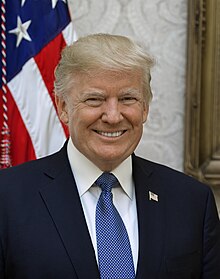
Donald Trump
“It’s a consistent attitude toward women which is the stuff of a diseased adolescent. And so we have seen a bit of that show up again.
“But if you go back over his past, calling into radio shows bragging about his affairs, talking about his sex life in public, he is childish in his immaturity. And his–even his misogyny is a childish misogyny….
“He’s of a different order than your normal candidate. And this whole week is just another reminder of that.”
HEINZ GUDERIAN: As Hitler’s self-confidence grew, and as his power became more firmly established both inside and outside Germany, he became overbearing and arrogant. Everyone appeared to him unimportant compared to himself.
Previously, Hitler had been open to practical considerations, and willing to discuss matters with others. But now he became increasingly autocratic.
Judy Woodruff asked Mark Shields if the uproar over Donald Trump’s disdain for women could really hurt his candidacy.
MARK SHIELDS: The ad featuring a scantily-clad Melania Trump “elicited from Donald Trump the worst of his personality, the bullying, the misogyny, as David has said, brought it out.
“But I think it’s more than childish and juvenile and adolescent. There is something creepy about this, his attitude toward women.
“Take Megyn Kelly of FOX News, who he just has an absolute obsession about, and he’s constantly writing about, you know, how awful she is and no talent and this and that.
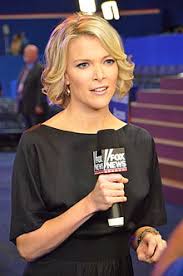
Megyn Kelly
“And I don’t know if he’s just never had women–strong, independent women in his life who have spoken to him. It doesn’t seem that way….”
Judy Woodruff noted that Kelly “has asked him tough questions” in a recent debate.
MARK SHIELDS: “She just asked him tough questions and was totally fair, by everybody else’s standards.”
HEINZ GUDERIAN: Hitler’s most outstanding quality was his will power. It was by this that he compelled men to follow him. When Hitler spoke to a small group he closely observed each person to determine how his words were affecting each man present.
If he noticed that some member of the group was not being swayed by his speech, he spoke directly to that person until he believed he had won him over. But if the target of his persuasive effort still remained obstinate, Hitler would exclaim: “I haven’t convinced that man!”
His immediate reaction was to get rid of such people. As he grew increasingly successful, he grew increasingly intolerant.
ABC NEWS, ADOLF HITLER, ALTERNET, ANDREW JACKSON, AP, BUZZFEED, CBS NEWS, CNN, COLLEGE FOOTBALL, CROOKS AND LIARS, DAILY KOZ, DREW PEARSON, DWIGHT EISENHOWER, EDWARD R. MURROW, FACEBOOK, GEORGE C. MARSHALL, HARRY S. TRUMAN, JERRY SANDUSKY, JOE PATERNO, JOSEPH MCCARTHY, JOSEPH STALIN, LOUIS FREEH, MOTHER JONES, MOVEON, NBC NEWS, NEWSWEEK, NIKE, NIKITA KHRUSHCHEV, NPR, PENN STATE UNIVERSITY, POLITICO, RAW STORY, REUTERS, SALON, SEATTLE TIMES, SLATE, SOVIET UNION, THE ATLANTIC, THE CHICAGO SUN-TIMES, THE CHICAGO TRIBUNE, THE DAILY BEAST, THE GUARDIAN, THE HILL, THE HUFFINGTON POST, THE LOS ANGELES TIMES, THE NATION, THE NEW YORK TIMES, THE WASHINGTON POST, THIRD REICH, TIME, TWITTER, U.S. NEWS & WORLD REPORT, UP, UPI, USA TODAY, YEVGENEY YEVTUSHENKO
In Bureaucracy, History, Law, Politics, Social commentary on July 1, 2016 at 12:16 am
“One man with courage,” said frontier general Andrew Jackson, “makes a majority.”
Yet it’s amazing how many “heroes” come out of the woodwork only after the danger is safely past.
Joseph Stalin dominated the Soviet Union from 1928 to 1953. He held absolute power twice as long as Adolf Hitler–whose Third Reich lasted only 12 years.
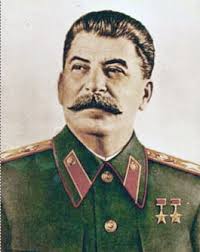
Joseph Stalin
Above all, he was responsible for the deaths of at least 20,000,000 men, women and children:
- At the hands of the executioners of the NKVD (later named the KGB).
- In exile–usually in Siberia–in Soviet penal camps.
- Of man-made starvation brought on by Stalin’s forced “collective-farm” policies.
Then, the unthinkable happened: Stalin finally died on March 5, 1953.
Almost three years later–on February 25, 1956–Stalin’s successor, Nikita Khrushchev, shocked the 20th Party Congress of the Soviet Union with a bombshell announcement:
Stalin–the “Wise Leader and Teacher”–had been a murderous despot.
Among his crimes:
- He had created a regime based on “suspicion, fear and terror.”
- His massive purges of the officer corps had almost destroyed the Red Army–thus inviting Hitler’s 1941 invasion, which killed at least 20 million Soviet citizens.
- He had allied himself with Hitler in 1939 and ignored repeated warnings of the coming Nazi invasion.
Naturally, Khrushchev didn’t advertise the role he had played as one of Stalin’s most trusted and brutal henchmen.
Over the ensuing years, many of the statues and portraits of Stalin that had dotted the Soviet Union like smallpox scars were quietly taken down. The city of Stalingrad–which Stalin had renamed from its original name of Tsaritsyn–became Volgograd.
Then, in 1961, Stalin’s corpse was removed from its prominent spot in the Lenin mausoleum and reburied in a place for lesser heroes of the Russian Revolution.
The young poet, Yevgeney Yevtushenko, noted the occasion in his famous poem, “The Heirs of Stalin.” Its gist: Stalin the tyrant was dead, but his followers still walked the earth–and lusted for a return to power.
Something similar happened in the United States around the same time.
From 1950 to 1954, Wisconsin Republican Senator Joseph R. McCarthy terrorized the nation, accusing anyone who disagreed with him of being a Communist–and leaving ruined lives in his wake.

Joseph R. McCarthy
Among those civilians and government officials he slandered as Communists were:
- President Harry S. Truman
- President Dwight D. Eisenhower
- Broadcast journalist Edward R. Murrow
- Secretary of State George C. Marshall
- Columnist Drew Pearson
Finally, in 1954, McCarthy overreached himself and accused the U.S. Army of being a hotbed of Communist traitors. Joseph Welch, counsel for the Army, destroyed McCarthy’s credibility in a now-famous retort:
“Senator, may we not drop this?….You’ve done enough. Have you no sense of decency, sir? At long last, have you left no sense of decency?”
Later that year, the Senate censured McCarthy, and he rapidly declined in power and health.
Senatorial colleagues who had once courted his support now avoided him.
They left the Senate when he rose to speak. Reporters who had once fawned on him for his latest sensational slander now ignored him.
Eisenhower–who had sought McCarthy’s support during his 1952 race for President–joked that “McCarthyism” was now “McCarthywasm.”
Fast-forward to July 12, 2012–and the release of former FBI Director Louie Freeh’s report on serial pedophile Jerry Sandusky. As the assistant football coach at Penn State University (PSU), he had used the football facilities to sexually attack numerous young boys.

Jerry Sandusky
But Sandusky was regarded as more than a second-banana. He received Assistant Coach of the Year awards in 1986 and 1999, and authored several books about his coaching experiences.
In 1977, Sandusky founded The Second Mile, a non-profit charity serving underprivileged, at-risk youth.
“Our most saddening and sobering finding is the total disregard for the safety and welfare of Sandusky’s child victims by the most senior leaders at Penn State,” Freeh stated.
College football is a $2.6 billion-a-year business. And Penn State is one of its premiere brands, with revenue of $70 million in 2010.
PSU’s seven-month internal investigation, headed by Freeh, revealed:
- Joe Paterno, head coach of the Penn State Nittany Lions, was aware of a 1998 criminal investigation of Sandusky.
- So was president Graham Spanier, athletic director Tim Curley and vice president Gary Schultz.
- In 2001, then-graduate assistant Mike McQueary reported to Paterno that he’d seen Sandusky attacking a boy in the shower.
- Paterno, Spanier, Curley and Schultz then conspired to cover up for Sandusky.
- The rapes of these boys occurred in the Lasch Building–where Paterno had his office.
- A janitor who had witnessed a rape in 2000 said he had feared losing his job if he told anyone about it. “It would be like going against the President of the United States,” Freeh said at a press conference.
In 2011, Sandusky was arrested and charged with sexually abusing young boys over a 15-year period. On June 22, 2012, he was convicted on 45 of the 48 charges. He will likely spend the rest of his life in prison.
On the day the Freeh report was released, Nike–a longtime sponsor for Penn State–announced that it would remove Paterno’s name from the child care center at its world headquarters in Beaverton, Oregon.
9/11, A FEW GOOD MEN, ABC NEWS, ALTERNET, AP, BUZZFEED, CBS NEWS, CENSORSHIP, CNN, CROOKS AND LIARS, DAILY KOZ, DONALD TRUMP, EARL BUTZ, FACEBOOK, FEDERAL COMMUNICATIONS COMMISSION, JACK NICHOLSON, MOTHER JONES, MOVEON, NBC NEWS, NEWSWEEK, NPR, PAT BOONE, PLUTARCH, POLITICO, RAW STORY, REUTERS, ROLLING STONE, SALON, SEATTLE TIMES, SEX, SLATE, THE ATLANTIC, THE CHICAGO SUN-TIMES, THE CHICAGO TRIBUNE, THE DAILY BEAST, THE GUARDIAN, THE HILL, THE HUFFINGTON POST, THE LOS ANGELES TIMES, THE NATION, THE NEW YORK TIMES, THE WASHINGTON POST, TIME, TOM CRUISE, TWITTER, U.S. NEWS & WORLD REPORT, UP, UPI, USA TODAY
In Bureaucracy, History, Politics, Social commentary on February 18, 2016 at 12:15 am
In the 1992 courtroom drama, “A Few God Men,” Jack Nicholson, as Marine Colonel Nathan Jessup, utters a line that has since become famous.
When his prosecutor, Lieutenant Daniel Kaffee (Tom Cruise) demands the truth about the murder of a fellow Marine, Jessup shouts: “You can’t handle the truth!”
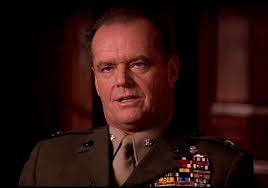
Jack Nicholson in “A Few Good Men”
Apparently, many of those who work in the television news business feel the same way about their audience.
[WARNING: This column contains some words that some readers may find offensive. Read on at your own risk.]
On February 9, businessman Donald Trump scored a new blow at his Rafael “Ted” Cruz, his closest rival for the Republican Presidential nomination.
Speaking at a rally in Manchester, New Hampshire, Trump attacked Cruz, the United States Senator from Texas, for being unwilling to support the widespread use of torture against America’s Islamic enemies.
“He’s a pussy!” yelled a woman in the crowd.
Apparently a certain portion of the attendees didn’t hear–or misheard–the insult. So Trump–pretending to be shocked–repeated it for them:
“She said–I never expect to hear that from you again! She said: ‘He’s a pussy.’ That’s terrible.”
“What kind of people do I have here?” joked Trump, clearly playing to the boisterous crowd.
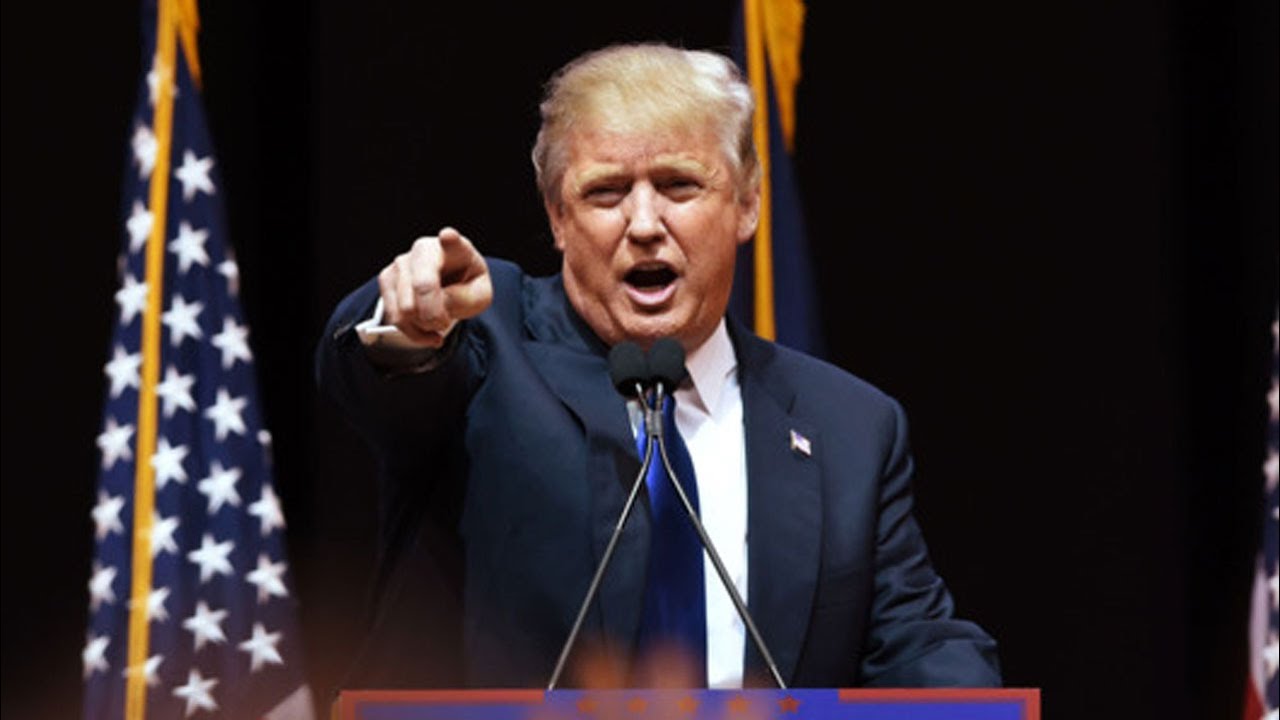
Donald Trump
The incident went viral on social media. But all the major TV news outlets–for ABC, CBS, CNN and NBC–bleeped the word and/or coyly referred to it as “the P-word.”
It was as if they assumed their viewers would of course know what had been said despite the networks’ censorship of it. And if viewers didn’t already know what the woman–and Trump–had said, the networks weren’t going to enlighten them.
Of course, “the P-word” could just as easily have been “prick” or “pervert.” So it’s understandable that many viewers might have thought a very different word had been used.
No doubt the networks hoped to avoid offending large numbers of viewers.
But when the use of certain words becomes central to a news story, editors and reporters should have the courage to reveal just what was said. It should then be up to the audience to decide if the language was offensive–and, if so, if its user deserves condemnation.
The evening news is–supposedly–aimed at voting-age adults. And adults need–and deserve–the hard truth about the world they live in. Only then do they have a chance to reform it–if, in fact, they decide it needs reforming.
Those who wanted to learn–rather than guess–what Trump had repeated had to turn to the Internet or to a handful of news source such as Vox: Policy and Politics.
In their defense, the networks could argue that the Federal Communications Commission, which regulates radio and television, does not usually permit the word “pussy” to be aired between 6 am and 10 pm.
On the other hand, immediately after the 9/11 terror attacks, all the major TV networks endlessly replayed the destruction of the World Trade Center, with the resulting deaths of hundreds of men and women.
Censorship, then, tends to center on two types of subject material:
- Sex, or “obscenity,” which is sex-related; and
- Race, meaning racial slurs that would offend some minority group.
An example of race-related censorship occurred during the short-lived administration of President Gerald R. Ford.
During a lull in the 1976 Republican convention, entertainer Pat Boone asked Earl Butz, then Secretary of Agriculture: Why was the party of Lincoln having so much trouble winning black votes for its candidates?
“I’ll tell you what the coloreds want,” said Butz. “It’s three things: first, a tight pussy; second, loose shoes; and third, a warm place to shit.”

Earl Butz
Unknown to Butz, a Rolling Stone reporter was standing nearby. When his comments became public, Butz was quickly forced to resign.
Meanwhile, most TV and print media struggled to protect their audiences from the truth of Butz’ racism. Many newspapers simply reported that Butz had said something too obscene to print. Some invited their readers to contact the editors if they wanted more information.
TV newsmen generally described Butz’ firing as stemming from “a racially-offensive remark,” which they refused to explain.
In short: A high-ranking government official had been fired, but audiences were not allowed to judge whether his language justified that termination.
Forty years later, TV news viewers were again prevented from reaching their own conclusions about Trump’s repetition of the slur aimed at his rival.
Nor is there any guarantee that such censorship will not occur again.
Censoring the truth has always been a hallmark of dictatorships. It has no place in a democracy–despite the motives of those doing the censoring.
The ancient historian, Plutarch, sounded a warning that remains timely:
“And the most glorious exploits do not always furnish us with the clearest discoveries of virtue or vice in men; sometimes a matter of less moment, an expression or a jest, informs us better of their characters and inclinations, than the most famous sieges, the greatest armaments, or the bloodiest battles whatsoever.”
In a democracy, citizens must be alert for those tell-tale expressions or jests. And this demands that the media, in turn, have the courage to bring those truths to their attention.
ABC NEWS, ALTERNET, AP, BUZZFEED, CALIFORNIA DEPARTMENT OF INSURANCE, CALIFORNIA INSURANCE COMMISSION, CALIFORNIA STATE ASSEMBLY, CALIFORNIA STATE SENATE, CBS NEWS, CNN, COBRA INSURANCE PLANS, CROOKS AND LIARS, DAILY KOZ, FACEBOOK, MEDIA, MEDICAL INSURANCE, MOTHER JONES, MOVEON, MSNBC, NBC NEWS, NEWSWEEK, NPR, POLITICO, RAW STORY, REUTERS, SALON, SEATTLE TIMES, SELF-HELP, SLATE, THE ATLANTIC, THE CHICAGO SUN-TIMES, THE CHICAGO TRIBUNE, THE DAILY BEAST, THE GUARDIAN, THE HILL, THE HUFFINGTON POST, THE LOS ANGELES TIMES, THE NATION, THE NEW YORK TIMES, THE WASHINGTON POST, TIME, TWITTER, U.S. NEWS & WORLD REPORT, UP, UPI, USA TODAY
In Bureaucracy, Business, Law, Law Enforcement, Social commentary on January 6, 2016 at 1:58 pm
An insurance company suspends your medical coverage for months—or longer.
You’ve faithfully paid all premiums for your medical insurance—and have the records to prove it. But the company doesn’t care.
Think it can’t happen to you? It did to a couple I’ll call Diane and Mike.
Mike worked as a paralegal for a Los Angeles law firm. He was getting health insurance for himself and his wife, Diane, under a COBRA arrangement.
COBRA stands for Consolidated Omnibus Budget Reconciliation Act of 1985. It’s a Federal law that was passed by Congress and signed by President Ronald Reagan.
One of its provisions creates an insurance program giving some employees the ability to continue health insurance coverage after leaving employment.
But a COBRA can sometimes act the same way the deadly poisonous snake does—with unpredictable and lethal results for those depending on it.

In this case, after Mike left his law firm to work at another, he found the COBRA didn’t operate as it was supposed to.
A snafu developed, involving
- the COBRA management company,
- the hospital where Mike and Diane had long been patients, and
- Mike’s former employer.
Each of these institutions blamed the other for failing to provide appropriate information.
So the insurance company suspended Mike and Diane’s health insurance–completely ignoring their medical needs.
Of course, for most people who have dealt with an insurance company, this won’t come as a surprise. Insurance companies aren’t in business to do good. They’re in business to make money.
Then, one day, Diane called me on an unrelated matter. During the conversation, she let slip the suspension of her medical insurance.
I was stunned at the news–and outraged when she said this had been going on for six months.
At once, I offered my services as a troubleshooter. She accepted.
I decided to call the office of my State Assemblyman. In California, the 80 members of the Assembly serve two-year terms, and are limited to being elected three times.
The 40 members of the State Senate serve four-year terms, and can be elected twice.
Because they face re-election sooner, members of the Assembly must stay closely attuned to resolving their constituents’ problems. That’s why they employ staffers who are experts at navigating through the maze of State agencies.

California State Capitol Building
And State Senators make certain their offices are equally well-staffed with such experts.
When I called my Assemblyman’s office, I didn’t ask to speak with him. I knew I was too politically unimportant to rate a direct chat at that level. And I didn’t need to talk with him, anyway.
I simply told the secretary that I wanted to speak with the office’s specialist on insurance.
California has an Insurance Commissioner who directs the state’s Department of Insurance. The mandate of this agency is to license, regulate and examine insurance companies.
Soon I was speaking with Frank, the Assemblyman’s expert on insurance matters. I quickly explained the problem my friends were having. And, to my surprise, I found that he and I hit it off right away.
Frank said he had a friend–Steve–who worked as an investigator for the Department of Insurance. Then he generously offered to put me through to him. I thankfully accepted.
Soon Steve and I quickly found ourselves getting along well. Then he asked me: “What’s your friend’s number?”
Diane hadn’t authorized me to give her number to anyone, but I decided to forward it. If Steve was that interested in examining their problem, I wasn’t going to throw a damper on his enthusiasm.
Soon Steve and Diane were discussing the situation.
The insurance company Mike and Diane were relying on was, like many such companies, registered in Florida. But, in order to legally do business in California, it had to obey the laws of the State of California.
And California laws forbade exactly the sort of behavior this company was engaging in.

And shortly after that conversation, Diane’s insurance company got an unexpected call from the Insurance Commissioner’s office.
The message was simple–and blunt: Restore that coverage–now.
And, within 48 hours, it had been fully restored.
There are several important lessons to be learned here:
- Maintain accurate records of all your premium payments. And keep them accessible–as in file folders, a safe deposit box or an online file.
- Don’t let your insurance company victimize you. Once you’ve paid your premium, you’ve lived up to your part of the arrangement. Now it’s their obligation to provide the medical care you need.
- Know the names, addresses and phone numbers of your representatives–at local, state and Federal levels. Websites such as http://www.govspot.com/ and http://www.capweb.net/ will instantly provide this information–and a great deal more.
- Know the name, address and phone number of your state Insurance Commissioner.
- If your elected representatives can’t or won’t assist you, complain to the news media. Start with the local newspapers and TV stations. If that doesn’t work, try the Internet.
- If the agencies that are supposed to help consumers won’t aid you, make them part of your complaint to the media.
- If you’re disabled and/or have children who are affected by the insurance cut-off, play up this angle in your contacts with public agencies and/or the media.
- If all else fails, consider filing a lawsuit against the insurance company.


 Bureaucracybuster's Blog
2016 PRESIDENTIAL ELECTION, 9/11, ABC NEWS, ADOLF HITLER, AFGHANISTAN, ALTERNET, AMERICABLOG, AP, ASIANS, BABY BOOMER RESISTANCE, BARACK OBAMA, BBC, BLACKS, BLOOMBERG, BULLYING, BUZZFEED, CBS NEWS, CNN, COMMUNISM, CROOKS AND LIARS, DAILY KOS, DAILY KOZ, DONALD TRUMP, FACEBOOK, FASCISM, FIVETHIRTYEIGHT, GEORGE W. BUSH, GREAT DEPRESSION, HARPER’S MAGAZINE, HILLARY CLINTON, HISPANICS, HUFFINGTON POST, IRAQ, JEWS, MEDIA MATTERS, MOTHER JONES, MOVEON, MSNBC, MUSLIMS, NAZI GERMANY, NAZI PARTY, NBC NEWS, NEW REPUBLIC, NEWSDAY, NEWSWEEK, NPR, PAUL VON HINDENBURG, PBS NEWSHOUR, POLITICO, POLITICUSUSA, RACISM, RAW STORY, REPUBLICANS, REUTERS, ROBERT PAYNE, Ronald Reagan, SALON, SEATTLE TIMES, SLATE, TALKING POINTS MEMO, THE ATLANTIC, THE CHICAGO SUN-TIMES, THE CHICAGO TRIBUNE, THE DAILY BEAST, THE DAILY BLOG, THE GUARDIAN, THE HILL, THE HUFFINGTON POST, THE INTERCEPT, THE LIFE AND DEATH OF ADOLF HITLER, THE LOS ANGELES TIMES, THE LOS ANGELS TIMES, THE NATION, THE NEW REPUBLIC, THE NEW YORK TIMES, THE NEW YORKER, THE VILLAGE VOICE, THE WASHINGTON POST, THINKPROGRESS, TIME, TRUMP EFFECT, TRUTHDIG, TRUTHOUT, TWITTER, TWO POLITICAL JUNKIES, U.S. NEWS & WORLD REPORT, UP, UPI, USA TODAY, WORLD WAR 11
AMERICA’S NOW IN THE DOCK WITH GERMANY
In Bureaucracy, History, Politics, Social commentary on November 14, 2016 at 12:05 amIn his bestselling 1973 biography, The Life and Death of Adolf Hitler, British historian Robert Payne harshly condemned the German people for the rise of the Nazi dictator.
“[They] allowed themselves to be seduced by him and came to enjoy the experience….[They] followed him with joy and enthusiasm because he gave them license to pillage and murder to their hearts’ content. They were his servile accomplices, his willing victims….
“If he answered their suppressed desires, it was not because he shared them, but because he could make use of them. He despised the German people, for they were merely the instruments of his will.”
On November 8, millions of ignorant, hate-filled, Right-wing Americans elected Donald Trump—a man reflecting their own hate and ignorance—to the Presidency.
Yet, in some ways, Americans have fewer excuses for turning to a Fascistic style of government than the Germans did.
Adolf Hitler, joined the National Socialist German Workers (Nazi) Party in 1919—the year after World War 1 ended.
Adolf Hitler
It took him 14 years to win appointment to Chancellor (the equivalent of Attorney General) of Germany in 1933.
In 1923, he staged a coup attempt in Bavaria—which was quickly and brutally put down by police. He was arrested and sentenced to less than a year in prison.
After that, Hitler decided that winning power through violence was no longer an option. He must win it through election—or appointment.
He repeatedly ran for the highest office in Germany—President—but never got a clear majority in a free election.
When the 1929 Depression struck Germany, the fortunes of Hitler’s Nazi party rose as the life savings of ordinary Germans fell. Streets echoed with bloody clashes between members of Hitler’s Nazi Stormtroopers and those of the German Communist Party.
Germany seemed on the verge of collapsing.
Germans desperately looked for a leader—a Fuhrer–who could somehow deliver them from the threat of financial ruin and Communist takeover.
In early 1933, members of his own cabinet persuaded aging German president, Paul von Hindenburg, that only Hitler’s appointment as Chancellor could do this.
Paul von Hindenburg
Hindenburg was reluctant to do so. He considered Hitler a dangerous radical. But he allowed himself to be convinced that, by putting Hitler in the Cabinet, he could be “boxed in” and thus controlled.
So, on January 30, 1933, he appointed Adolf Hitler Chancellor of Germany.
On August 2, 1934, Hindenberg died, and Hitler immediately assumed the titles—and duties—of the offices of Chancellor and President. His rise to total power was now complete.
It had taken him 14 years to do so.
In 2015, Donald Trump declared his candidacy for President.
Now, consider this:
Yet—not 17 months after announcing his candidacy for President—enough Americans fervently embraced Donald Trump to give him the most powerful position in the country and the world.
Donald Trump
The message of Barack Obama’s 2008 campaign had been one of hope—“Yes, We Can!”
That of Donald Trump’s campaign was one of hatred toward everyone who was not an avid Trump supporter: “No, You Can’t!”
Whites comprised the overwhelming majority of the audiences at Trump rallies. Not all were racists, but many of those who were advertised it on T-shirts: “MAKE AMERICA WHITE AGAIN.”
They knew that demographics were steadily working against them. Birthrates among non-whites were rising. By 2045, whites would make up less than 50 percent of the American population.
The 2008 election of the first black President had shocked whites. His 2012 re-election had deprived them of the hope that 2008 had been an accident.
Then came 2016—and the possibility that a black President might actually be followed by a woman: Hillary Clinton.
And the idea of a woman dictating to men was strictly too much to bear.
Since Trump’s election, educators have reported a surge in bullying among students of all ages, from elementary- to high-school. Those doing the bullying are mostly whites, and the victims are mostly blacks, Muslims, Jews, Hispanics, Asians.
It even has a name: “The Trump Effect.”
And this is where matters stand more than two months before Trump takes the oath as President.
All of this should be remembered the next time an American blames Germans for their embrace of Adolf Hitler.
Share this: