Posts Tagged ‘U.S. MARSHALS SERVICE’
ABC NEWS, ADOLF HITLER, AFFORDABLE HEALTHCARE ACT, ALTERNET, ANN COULTER, AP, ARIZONA SHOOTINGS, ASSASSINATION, BARACK OBAMA, BILL CLINTON, BIRTHERS, BUZZFEED, CBS NEWS, CHRISTINA-TAYLOR GREEN, CNN, CONFEDERATE FLAG, CROOKS AND LIARS, DAILY KOZ, DEVIN NUNES, DICK ARMEY, DICK MORRIS, DYLANN ROOF, FACEBOOK, FBI, FRANKLIN D. ROOSEVELT, GABRIELLE GIFFORDS, GEORGE H.W. BUSH, GEORGE W. BUSH, GLENN BECK, HARRY S. TRUMAN, HATE CRIMES, HEALTHCARE, JOSEPH MCCARTHY, MEIN KAMPF, MICHAEL SAVAGE, MICHELE BACHMANN, MOTHER JONES, MOVEON, MSNBC, NBC NEWS, NEWSWEEK, NEWT GINGRICH, NPR, OBAMACARE, PHIL GRAMM, POLITICO, RAW STORY, REP. GABRIELLE GIFFORDS, REPUBLICAN PARTY, REPUBLICANS, REUTERS, RICHARD NIXON, RICK SANTORUM, RODNEY KING RIOTS, ROLLING STONE MAGAZINE, RUSH LIMBAUGH, SALON, Sarah Palin, SEAN HANNITY, SEATTLE TIMES, SLATE, SOVIET UNION, SPIRO AGNEW, TEA PARTY, TERRORISM, THE ATLANTIC, THE CHICAGO SUN-TIMES, THE CHICAGO TRIBUNE, THE DAILY BEAST, THE GUARDIAN, THE HILL, THE HUFFINGTON POST, THE LOS ANGELES TIMES, THE NATION, THE NEW YORK TIMES, THE WASHINGTON POST, TIME, TWITTER, U.S. DISTRICT JUDGE JOHN ROLL, U.S. MARSHALS SERVICE, U.S. NEWS & WORLD REPORT, UPI, USA TODAY
In Bureaucracy, History, Law, Law Enforcement, Politics, Social commentary on July 9, 2018 at 12:10 am
“The Republican Party has weaponized its supporters, made violence a virtue and, with almost every pronouncement for 50 years, given them an enemy politicized, radicalized and indivisible.”
So wrote Rolling Stone writer in a blistering June 19 editorial. The touchstone was the slaughter of nine black worshipers by a white supremacist at a South Carolina black church.
But the proof of Republican culpability in political violence goes back much further.
Consider:
Gabrille Giffords, 40, is a moderate Democrat who narrowly wins re-election in November, 2010, against a Republican Tea Party candidate.
Her support of President Obama’s health care reform law has made her a target for violent rhetoric–-especially from former Alaska Governor Sarah Palin.
In March, 2010, Palin releases a map featuring 20 House Democrats that uses cross-hairs images to show their districts. In case her supporters don’t get the message, she later writes on Twitter: “Don’t Retreat, Instead – RELOAD!”

Sarah Palin’s “Crosshairs” Map
As the campaign continues, Giffords finds her Tucson office vandalized after the House passes the healthcare overhaul in March.
Giffords senses that she has become a target for removal–in more than political terms. In an interview after the vandalizing of her office, she refers to the animosity against her by conservatives.
She specifically cites Palin’s decision to list her seat as one of the top “targets” in the midterm elections.
“For example, we’re on Sarah Palin’s targeted list, but the thing is, that the way that she has it depicted has the cross-hairs of a gun sight over our district. When people do that, they have to realize that there are consequences to that action,” Giffords tells MSNBC.
At one of her rallies, her aides call the police after an attendee drops a gun.
Giffords may have seen the spectre of violence closing in on her. In April, 2010, she supported Rep. Raúl Grijalva after he had to close two offices when he and his staff received threats.
He had called for a boycott of Arizona businesses in opposition to the state’s controversial immigration law.
“I am deeply troubled about reports that Congressman Grijalva and members of his staff have been subjected to death threats,” Giffords said.
“This is not how we, as Americans, express our political differences. Intimidation has no place in our representative democracy. Such acts only make it more difficult for us to resolve our differences.”
But intimidation—-and worse—-does have a place among the tactics used by influential Republicans in the pursuit of absolute power.
Increasingly, Republicans have repeatedly aimed violent—-and violence-arousing—-rhetoric at their Democratic opponents. This is not a case of careless language that is simply misinterpreted, with tragic results.
Republicans like Sarah Palin fully understand the constituency they are trying to reach: Those masses of alienated, uneducated Americans who live only for their guns and hardline religious beliefs—and who can be easily manipulated by perceived threats to either.
If a “nutcases” assaults a Democratic politician and misses, then the Republican establishment claims to be shocked—-shocked!—that such a thing could have happened.
And if the attempt proves successful—as the January 8, 2011 Tucson shootings did—then Republicans weep crocodile tears for public consumption.
The difference is that, in this case, they rejoice in knowing that Democratic ranks have been thinned and their opponents are even more on the defensive, for fear of the same happening to them.
Consider the following:
- Rep. Randy Neugebauer (R-Tex.) yelled “baby killer” at Bart Stupak (D-Mich.) on the House floor.
- Florida GOP Congressional candidate Allen West, referring to his Democratic opponent, Rep. Ron Klein, told Tea Party activists: You’ve got to make the fellow scared to come out of his house. That’s the only way that you’re going to win. That’s the only way you’re going to get these people’s attention.”
- Rep. Devin Nunes (R-CA) said Tea Partiers had “every right” to use racist and homophobic slurs against Democrats, justifying it via Democrats’ “totalitarian tactics.”
- Rep. Michelle Bachmann (R-Minn.) said she wanted her constituents “armed and dangerous” against the Obama administration.
- Sarah Palin told her supporters: “Get in their face and argue with them. No matter how tough it gets, never retreat, instead RELOAD!”
- Right-wing pundit Ann Coulter: “My only regret with Timothy McVeigh is he did not go to the New York Times building.”
- Senator Phil Gramm (R-Tex.) “We’re going to keep building the party until we’re hunting Democrats with dogs.”
- Rep. Louisa M. Slauter (D-NY) received a phone message threatening sniper attacks against lawmakers and their families.
Since the end of World War 11, Republicans have regularly hurled the charge of “treason” against anyone who dared to run against them for office or think other than Republican-sponsored thoughts.
Republicans had been locked out of the White House from 1933 to 1952, during the administrations of Franklin D. Roosevelt and Harry S. Truman.
Determined to regain the Presidency by any means, they found that attacking the integrity of their fellow Americans a highly effective tactic.
During the 1950s, Wisconsin Senator Joseph R. McCarthy rode a wave of paranoia to national prominence–by attacking the patriotism of anyone who disagreed with him.
The fact that McCarthy never uncovered one actual case of treason was conveniently overlooked during his lifetime.
ABC NEWS, ADOLF HITLER, AFFORDABLE HEALTHCARE ACT, ALTERNET, ANN COULTER, AP, ARIZONA SHOOTINGS, ASSASSINATION, BARACK OBAMA, BILL CLINTON, BIRTHERS, BUZZFEED, CBS NEWS, CHRISTINA-TAYLOR GREEN, CNN, CONFEDERATE FLAG, CROOKS AND LIARS, DAILY KOZ, DEVIN NUNES, DICK ARMEY, DICK MORRIS, DYLANN ROOF, FACEBOOK, FBI, FRANKLIN D. ROOSEVELT, GABRIELLE GIFFORDS, GEORGE H.W. BUSH, GEORGE W. BUSH, GLENN BECK, HARRY S. TRUMAN, HATE CRIMES, HEALTHCARE, JOSEPH MCCARTHY, MEIN KAMPF, MICHAEL SAVAGE, MICHELE BACHMANN, MOTHER JONES, MOVEON, MSNBC, NBC NEWS, NEWSWEEK, NEWT GINGRICH, NPR, OBAMACARE, PHIL GRAMM, POLITICO, RAW STORY, REP. GABRIELLE GIFFORDS, REPUBLICAN PARTY, REPUBLICANS, REUTERS, RICHARD NIXON, RICK SANTORUM, RODNEY KING RIOTS, ROLLING STONE MAGAZINE, RUSH LIMBAUGH, SALON, Sarah Palin, SEAN HANNITY, SEATTLE TIMES, SLATE, SOVIET UNION, SPIRO AGNEW, TEA PARTY, TERRORISM, THE ATLANTIC, THE CHICAGO SUN-TIMES, THE CHICAGO TRIBUNE, THE DAILY BEAST, THE GUARDIAN, THE HILL, THE HUFFINGTON POST, THE LOS ANGELES TIMES, THE NATION, THE NEW YORK TIMES, THE WASHINGTON POST, TIME, TWITTER, U.S. DISTRICT JUDGE JOHN ROLL, U.S. MARSHALS SERVICE, U.S. NEWS & WORLD REPORT, UPI, USA TODAY
In Bureaucracy, History, Law, Law Enforcement, Politics, Social commentary on July 6, 2018 at 12:11 am
On June 17, 2015, Dylann Roof, a white high school dropout, gunned down three black men and six black women at Emanuel African Methodist Episcopal Church in Charleston, South Carolina.
At 21, Roof was unemployed, dividing his time between playing video games and taking drugs.
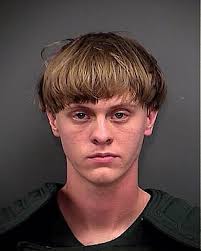
Dylann Roof
The signs of Roof’s malignant racism were evident long before he turned mass murderer:
- He had posed for a photo sitting on the hood of his parents’ car—whose license plate bore a Confederate flag.
- He had posed for pictures wearing a jacket sporting the white supremacist flags of Rhodesia and apartheid South Africa.
- He told a friend that he hoped “to start a civil war” between the black and white races.
- Roof reportedly told friends and neighbors of his plans to kill people.
- In the midst of his massacre of unarmed worshipers, he told one of his victims: “You’ve raped our women, and you are taking over the country.” Then Roof shot him.
The evidence makes clear that Roof’s slaughter was racially motivated. Yet no 2016 Republican Presidential candidate dared acknowledge it:
- Jeb Bush, former governor of Florida: “I don’t know what was on the mind or the heart of the man who committed these atrocious crimes.”
- Rick Santorum, former United States Senator from Pennsylvania: “You talk about the importance of prayer in this time and we’re now seeing assaults on our religious liberty we’ve never seen before. It’s a time for deeper reflection beyond this horrible situation.”
- Bobby Jindal, former governor of Louisiana: “I don’t think we’ll ever know what was going on in his mind.”
But Rolling Stone magazine writer Jeb Lund left no doubt as to what—and who—was ultimately responsible for this crime: Racism and Republicans.
In a June 19, 2015 editorial—published two days after the massacre—Lund noted: “This [crime] is political because American movement conservatism has already made these kinds of killings political.
“The Republican Party has weaponized its supporters, made violence a virtue and, with almost every pronouncement for 50 years, given them an enemy politicized, racialized and indivisible.
“Movement conservatives have fetishized a tendentious and ahistorical reading of the Second Amendment to the point that the Constitution itself somehow paradoxically ‘legitimizes’ an armed insurrection against the government created by it.
“Those leading said insurrection are swaddled by the blanket exculpation of patriotism. At the same time, they have synonymized the Democratic Party with illegitimacy and abuse of the American order.
“This is no longer an argument about whether one party’s beliefs are beneficial or harmful, but an attitude that labels leftism so antithetical to the American idea that empowering it on any level is an act of usurpation.”
Click here: The Charleston Shooter: Racist, Violent, and Yes – Political | Rolling Stone
On December 15, 2016, Dylann Roof was convicted of 33 Federal hate crime charges. On January 11, 2017, he was sentenced to death. He remains on Death Row to this day.
Yet the leadership of the Republican party whose hate-filled rhetoric inspired Root escaped indictment—and even widespread condemnation.
The evidence that Republicans have weaponized hatred—with deadly results—was on display long before Dylann Roof opened fire on “uppity blacks” praying in their own church.
Consider:
On January 8, 2011, Democratic Rep. Gabrielle Giffords was shot in the head while meeting with constituents outside a grocery store in Tucson, Arizona. After a miraculous recovery, she continues to struggle with language and has lost 50% of her vision in both eyes.
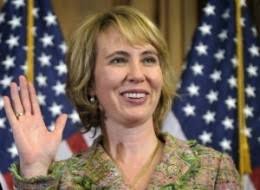
Rep. Gabrielle Giffords
She vowed to return to her former Congressional duties, but was forced to resign for health reasons in 2012.
Giffords was only one victim of a shooting spree that claimed the lives of six people and left 13 others wounded.
Also killed was Arizona’s chief U.S. District judge, John Roll, who had just stopped by to see his friend Giffords after celebrating Mass.
Although the actual shooter, Jared Lee Loughner, was immediately arrested, those who fanned the flames of political violence that consumed 19 people that day have remained unpunished.
Consider the circumstances behind the shootings:
John Roll is Arizona’s chief federal judge. Appointed in 2006, he wins acclaim as a respected jurist and leader who pushes to beef up the court’s strained bench to handle a growing number of border crime-related cases.
In 2009, he becomes a target for threats after allowing a $32 million civil-rights lawsuit by illegal aliens to proceed against a local rancher. The case arouses the fury of local talk radio hosts, who encourage their audiences to threaten Roll’s life.
In one afternoon, Roll logs more than 200 threatening phone calls. Callers threaten the judge and his family. They post personal information about Roll online.
Roll and his wife are placed under fulltime protection by deputy U.S. marshals. Roll finds living under security “unnerving and invasive.”
Authorities identify four men believed responsible for the threats. But Roll declines to press charges on the advice of the Marshals Service.
ABC NEWS, ALTERNET, AMERICABLOG, AP, BABY BOOMER RESISTANCE, BBC, BIG BEAR LAKE, BLOOMBERG, BLUESKY, BUZZFEED, CARLOS THE JACKAL, CBS NEWS, CHARLES DE GAULLE, CHRISTOPHER DORNER, CNN, CROOKS AND LIARS, DAILY KOS, DAILY KOZ, DAY OF THE JACKAL, FACEBOOK, FBI, FIVETHIRTYEIGHT, FREDERICK FORSYTH, HARPER’S MAGAZINE, HAWAII FIVE-O, HUFFINGTON POST, JACK LORD, LOS ANGELES POLICE DEPARTMENT, MEDIA MATTERS, MILITARY DRONES, MOTHER JONES, MOVEON, MSNBC, NBC NEWS, NEW REPUBLIC, NEWSDAY, NEWSWEEK, NPR, PBS NEWSHOUR, POLITICO, POLITICUSUSA, RAW STORY, REUTERS, SALON, SEATTLE TIMES, SLATE, SWAT TEAMS, TALKING POINTS MEMO, THE ATLANTIC, THE CHICAGO SUN-TIMES, THE CHICAGO TRIBUNE, THE DAILY BEAST, THE DAILY BLOG, THE GUARDIAN, THE HILL, THE HUFFINGTON POST, THE INTERCEPT, THE LOS ANGELES TIMES, THE NATION, THE NEW REPUBLIC, THE NEW YORK TIMES, THE NEW YORKER, THE VILLAGE VOICE, THE WASHINGTON POST, THINKPROGRESS, TIME, TRUTHDIG, TRUTHOUT, TWITTER, TWO POLITICAL JUNKIES, U.S. MARSHALS SERVICE, U.S. NEWS & WORLD REPORT, UPI, USA TODAY, X
In Bureaucracy, History, Law Enforcement, Politics, Social commentary on February 7, 2018 at 12:24 am
The unprecedented manhunt for cop-killer Christopher Dorner has important—and brutal—lessons to teach.
First, above everyone else, police look out for each other.
Robert Daley bluntly revealed this truth in his 1971 bestseller, Target Blue: An Insider’s View of the N.Y.P.D. A police reporter for the New York Times, he served for one year as a deputy police commissioner.
“The murderers of all patrolmen almost invariably were identified at once and caught soon after,” wrote Daley. “Organized crime was too smart to get involved in the type of investigation that followed a cop killing.
“A great many solvable crimes in the city were never solved, because not enough men were assigned to the case, or because those assigned were lazy or hardly cared or got sidetracked.
“But when a cop got killed, no other cop got sidetracked. Detectives worked on the case night and day….Cops were all ears as far as murdered patrolmen were concerned; they heard details all over the city…and fed all this into the detectives who had the case.
“In effect, the citizen who murdered his wife’s lover was sought by a team of detectives, two men. But he who killed a cop was sought by 32,000.”
Although Dorner targeted only local police officers, the Federal Government quickly poured resources into the manhunt. These included the FBI, the U.S. Marshals Service and even unmanned military drones.
Second, don’t expect the police to do for you what they’ll do for one another.
The LAPD assigned security and surveillance details to at least 50 threatened officers and their families. A typical detail consists of two to five or more guards. And those guards must be changed every eight to 12 hours.
And those details stayed in place long after Dorner was killed in a firefight on February 12.
But if your bullying neighbor threatens to kill you, don’t expect the police to send a guard detail over. They’ll claim: “We can’t do anything until he does something. If he does, give us a call.”
And if your loved one is murdered, don’t expect the mayor’s office to offer a $1 million reward or the military to deploy drones to find the killer.
Third, the more status and wealth you command, the more likely the police are to address your complaint or solve your case.
Police claim to enforce the law impartially, “without fear or favor.” But that happens only in TV crime shows.
If you’re rich, your complaint will likely get top priority and the best service the agency can provide.
But if you’re poor or even middle-class without high-level political or police connections, your case will almost certainly wind up in “the round file” (a wastebasket).
And it works the other way, too. Anthony Bouza, former chief of the Minneapolis Police Department, notes in his 1990 book, The Police Mystique: “When cops deal with the poor (blacks, Hispanics, the homeless and the street people) the rubber of power meets the road of abuse.”
Fourth, don’t expect your police department to operate with the vigor or efficiency of TV police agencies.
“I want this rock [Hawaii] sealed off,” Steve McGarrett (Jack Lord) routinely ordered when pursuing criminals on “Hawaii Five-O.”
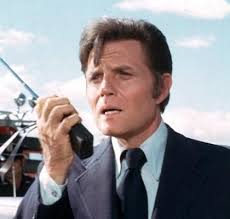
Jack Lord as Steve McGarrett
But in San Jose—a city close to bankruputpsy—residents can’t get police to respond to break-ins because the police department is dangerously understaffed.
And neighbors in Oakland, fed up with a slow police response—or none at all—are banding together to protect their properties by hiring private security officers.
In San Francisco, if you’re assaulted and can’t give police “a named suspect,” they won’t assign the case. As far as they’re concerned, the solvability rate is too low.
Fifth, the result of all this can only be increased disrespect for law enforcement from a deservedly–and increasingly–cynical public.
Surveys reveal that those who don’t need to call the police have a higher opinion of their integrity and efficiency than those who are the victims of crime. Among those reasons:
- Many police departments lack state-of-the-art crime labs to analyze evidence.
- Files often get lost or accidentally destroyed.
- Some officers are lazy, indifferent, incompetent—or corrupt.
- Police are notoriously competitive, generally refusing to share information with other officers or other police departments—and thus making it easier for criminals to run amok.
- Even when police “solve” a crime, that simply means making an arrest. The perpetrator may cop to a lesser offense and serve only a token sentence—or none at all. Or he might be found not guilty by a judge or jury.
But it is the witnessing of blatant inequities and hypocrisies such as those displayed in the Christopher Dorner manhunt that most damages public support for police at all levels.
When citizens believe police care only about themselves, and lack the ability—or even the willingness—to protect them or avenge their victimization by arresting the perpetrators, that is a deadly blow to law enforcement.
Police depend on citizens for more than crime tips. They depend upon them to support hiring more cops and buying state-of-the-art police equipment. When public support vanishes, so does much of that public funding.
The result can only be a return to the days of the lawless West, where citizens looked only to themselves for protection.
ABC NEWS, ALTERNET, AMERICABLOG, AP, BABY BOOMER RESISTANCE, BBC, BIG BEAR LAKE, BLOOMBERG, BLUESKY, BUZZFEED, CARLOS THE JACKAL, CBS NEWS, CHARLES DE GAULLE, CHRISTOPHER DORNER, CNN, CROOKS AND LIARS, DAILY KOS, DAILY KOZ, DAY OF THE JACKAL, FACEBOOK, FBI, FIVETHIRTYEIGHT, FREDERICK FORSYTH, HARPER’S MAGAZINE, HAWAII FIVE-O, HUFFINGTON POST, JACK LORD, LOS ANGELES POLICE DEPARTMENT, MEDIA MATTERS, MILITARY DRONES, MOTHER JONES, MOVEON, MSNBC, NBC NEWS, NEW REPUBLIC, NEWSDAY, NEWSWEEK, NPR, PBS NEWSHOUR, POLITICO, POLITICUSUSA, RAW STORY, REUTERS, SALON, SEATTLE TIMES, SLATE, SWAT TEAMS, TALKING POINTS MEMO, THE ATLANTIC, THE CHICAGO SUN-TIMES, THE CHICAGO TRIBUNE, THE DAILY BEAST, THE DAILY BLOG, THE GUARDIAN, THE HILL, THE HUFFINGTON POST, THE INTERCEPT, THE LOS ANGELES TIMES, THE NATION, THE NEW REPUBLIC, THE NEW YORK TIMES, THE NEW YORKER, THE VILLAGE VOICE, THE WASHINGTON POST, THINKPROGRESS, TIME, TRUTHDIG, TRUTHOUT, TWITTER, TWO POLITICAL JUNKIES, U.S. MARSHALS SERVICE, U.S. NEWS & WORLD REPORT, UPI, USA TODAY, X
In Bureaucracy, History, Law Enforcement, Politics, Social commentary on February 6, 2018 at 1:20 am
Christopher Dorner—33, black, powerfully-built, standing six feet and weighing 270 pounds—seemed to have vanished from the face of the earth.
This despite an unprecedented manhunt by local and Federal law enforcement agencies and the lure of a $1 million reward for information leading to his arrest.
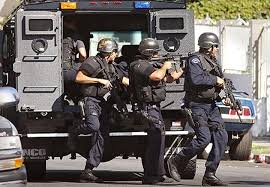
LAPD SWAT team
But Dorner made several major errors in his one-man crusade for vengeance against the agency he blamed for ending his “dream job” police career.
First, shortly before or after he began his murderous rampage, Dorner posted an 11-page “manifesto” of his intentions on his Facebook page.
In this, he spewed contempt for the LAPD and declared his intention to wage war against it.
I will bring unconventional and asymmetrical warfare to those in LAPD uniform whether on or off duty….You will now live the life of the prey….You have misjudged a sleeping giant.
Dorner’s online rant forewarned police that he intended to put them literally in the cross-hairs of his anger. As a result, his intended targets remained on hair-trigger alert for his attacks.
Second, in that “manifesto,” he specifically named many of the officers he intended to kill.
This allowed the LAPD to rush bodyguards to the homes of those he had threatened. The LAPD would have been at a great disadvantage if it hadn’t known where he might strike next.
Third, Dorner boasted of the weaponry he had available.
In my cache you will find several small arms. In the cache, Bushmaster firearms, Remington precision rifles, and AAC Suppressors (silencers)….As you know I also own Barrett .50′s so your APC are defunct and futile.
A Barrett .50 is a sniper’s rifle whose five-inch bullets can penetrate bulletproof vests, steel and concrete. An APC is military shorthand for Armored Personnel Carrier.
Dorner should have kept this information to himself—and allowed the LAPD to discover the truth only in a firefight. By bragging about it, he allowed his enemies to design strategies and deploy resources (such as unmanned drones) to neutralize his powerful weapons.
Fourth, he posted not simply his biography but his psychology for his enemies to exploit.
He sees himself as all-powerful:
I am here to change and make policy…I am here to correct and calibrate your morale compasses to true north….
I know your TTP’s, (techniques, tactics, and procedures). Any threat assessments you generate will be useless…. I will mitigate any of your attempts at preservation.
Besides assailing the LAPD, he plays political analyst—Wayne La Pierre is “a vile and inhumane piece of shit”—and even movie critic, calling Charlie Sheen “awesome.”
And fashion critic: Off the record, I love your new bangs, Mrs. Obama.
He clearly has a high opinion of himself:
I lived a good life and though not a religious man I always stuck to my own personal code of ethics, ethos and always stuck to my shoreline and true North. I didn’t need the US Navy to instill Honor, Courage, and Commitment in me but I thank them for re-enforcing it. It’s in my DNA.
And he reveals a clear history of anger at what he considers racial animosity directed against him, citing incidents as far back as high school.
No doubt psychologists who design behavioral profiles thoroughly analyzed Dorner’s self-portrait and advised police on the best ways to counter his threats.
Fifth, Dorner, sought refuge in a mountainous, snow-covered tourist resort.
This made it impossible for him—a black—to blend in against an almost totally white population.
And once his truck broke down, he was at a severe disadvantage. He was temporarily stranded and forced to abandon many of the high-powered weapons and other supplies he had brought. This gave him less firepower to use in his war on police.
He would have blended in with the majority black population had he fled to South Central Los Angeles. And he might well have found allies there to supply him with tips or equipment.
More importantly, police would have been hard-pressed during a firefight with him in a congested urban setting: They would have had to worry about civilian casualties.
And the proximity of the site to local TV stations would have meant far greater media scrutiny of police tactics.
Sixth, Dorner set fire to his Nissan Titan truck when it broke down near snow-covered Big Bear Lake, California, on February 7.
This quickly attracted the attention of an army of lawmen who were searching for any clue to his whereabouts.
There was no need to burn the vehicle. If Dorner had covered the truck with snow it might well have stayed concealed for days or longer. This would have given him more time to evacuate the area.
Seventh, he took refuge in a cabin when police closed in.
Once he did this, the game was over. Dorner, of all people, should have known how “barricaded suspect” sieges always end: With the death or surrender of the besieged.
His best bet for at least temporary safety was to stay in the open and on the move.
If his skills as a marksman had kept police at a distance long enough, the coming of night could have allowed him to escape their dragnet—at least for the moment.
In the end, however, his death or capture was certain. There were simply too many lawmen determined to hunt him down.
ABC NEWS, ALTERNET, AMERICABLOG, AP, BABY BOOMER RESISTANCE, BBC, BIG BEAR LAKE, BLOOMBERG, BLUESKY, BUZZFEED, CARLOS THE JACKAL, CBS NEWS, CHARLES DE GAULLE, CHRISTOPHER DORNER, CNN, CROOKS AND LIARS, DAILY KOS, DAILY KOZ, DAY OF THE JACKAL, FACEBOOK, FBI, FIVETHIRTYEIGHT, FREDERICK FORSYTH, HARPER’S MAGAZINE, HAWAII FIVE-O, HUFFINGTON POST, JACK LORD, LOS ANGELES POLICE DEPARTMENT, MEDIA MATTERS, MILITARY DRONES, MOTHER JONES, MOVEON, MSNBC, NBC NEWS, NEW REPUBLIC, NEWSDAY, NEWSWEEK, NPR, PBS NEWSHOUR, POLITICO, POLITICUSUSA, RAW STORY, REUTERS, SALON, SEATTLE TIMES, SLATE, SWAT TEAMS, TALKING POINTS MEMO, THE ATLANTIC, THE CHICAGO SUN-TIMES, THE CHICAGO TRIBUNE, THE DAILY BEAST, THE DAILY BLOG, THE GUARDIAN, THE HILL, THE HUFFINGTON POST, THE INTERCEPT, THE LOS ANGELES TIMES, THE NATION, THE NEW REPUBLIC, THE NEW YORK TIMES, THE NEW YORKER, THE VILLAGE VOICE, THE WASHINGTON POST, THINKPROGRESS, TIME, TRUTHDIG, TRUTHOUT, TWITTER, TWO POLITICAL JUNKIES, U.S. MARSHALS SERVICE, U.S. NEWS & WORLD REPORT, UPI, USA TODAY, X
In Bureaucracy, History, Law Enforcement, Politics, Social commentary on February 5, 2018 at 12:15 am
The LAPD’s leadership were terrified after they read Christopher Dorner’s 11-page “manifesto” published on his Facebook page.
Clearly, he intended to take revenge on the agency he blamed for the 2008 termination of his police career.
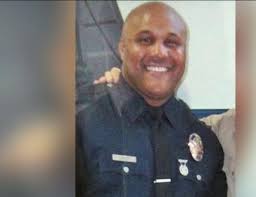
Christopher Dorner
As a result, the LAPD rushed to provide security and surveillance details to more than 50 endangered police officers and their families.
The agency also declared a “tactical alert,” forcing officers to remain on their shifts as long as needed.
Shortly after 1 a.m. on February 7, in Corona, California, Dorner fired at Los Angeles police officers who had been assigned to protect someone connected to threats he had posted in an online “manifesto.”
One officer was grazed in the head, but the wound was not life-threatening. The officers returned fire, and Dorner fled.
Then, at about 1:35 a.m., Dorner struck again, shooting two Riverside police officers who had stopped at a red light during a routine patrol. One officer was killed and the other wounded. The injured officer was taken to a hospital and was reported to be in stable condition.
Word instantly spread through the police grapevine about the shootings. And officers decided it was better to shoot first and ask questions later.
At 5:30 a.m. on February 7, LAPD officers were patrolling a Torrance neighborhood to guard yet another target named in Dorner’s manifesto.
They spotted a car they thought was Dorner’s and opened fire, injuring two women. One suffered a minor bullet wound, and the other was shot twice. Taken to a hospital, the latter was reported to be in stable condition.
Sometime after the Torrance shooting, a passer-by found a wallet with an LAPD badge and a picture ID of Dorner on a street near San Diego International Airport.
This was only a short distance from the naval base motel where he had reportedly checked in on February 7—but had never checked out.
Amid frantic TV news reports that Dorner was barricaded inside, police swarmed the hotel. But the soon learned that he hadn’t been there after all.
The FBI and U.S. Marshals Service, meanwhile, were seeking the public’s help in providing information about Dorner or his whereabouts.
At about noon on February 7, a burning truck was located in the snow-covered woods near Big Bear Lake, 80 miles east of Los Angeles.
The San Bernardino Sheriff’s Department later confirmed that the vehicle was Dorner’s Nissan Titan. No one was in the truck.
SWAT teams from the LAPD, San Bernardino Sheriff’s deputies, FBI agents and deputy U.S. marshals flooded the area. All were heavily armed, carrying assault rifles or machine guns.
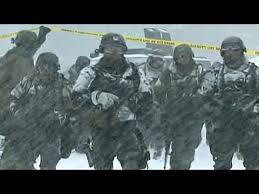
 A SWAT team
Dorner, in his manifesto, had boasted of owning assault rifles and even a Barrett .50 caliber sniper rifle whose bullets can pierce bulletproof vests and even tanks, airplanes and concrete. A marksman with a Barrett could easily hit a target from a mile away.
Police initially searched 400 homes in the area, but found no trace of Dorner.
The manhunt was slowed down by a heavy snowfall, but police, determined to find Dorner, pressed on.
Meanwhile, FBI SWAT teams and local police served a search warrant at a Las Vegas home belonging to Dorner. The lawmen carried out boxes of his possessions. No weapons were found.
After issuing a search warrant, Irvine police combed through the La Pama house belonging to Christopher Dorner’s mother. Investigators removed from the home seven grocery bags of evidence and several electronic items.
On February 9, at a late afternoon press conference, authorities announced the creation of a joint task force to search for Dorner. The task force comprised the Los Angeles, Irvine and Riverside police departments, the FBI and U.S. Marshals, and other affiliated law enforcement agencies.
“We will look under every rock, around every corner, we will search mountain tops for him,” said Riverside Police Assistant Chief Chris Vicino at the press conference.
Underscoring this point, LAPD Chief Charlie Beck said: “This is an act–and make no mistake about it–of domestic terrorism. This is a man who has targeted those that we entrust to protect the public. His actions cannot go unanswered.”
Besides manpower and technology, police employed psychology. That same day, the LAPD announced that it would reopen the investigation into Dorner’s firing.
“I do this not to appease a murderer,” LAPD Chief Beck said in a statement. “I do it to reassure the public that their police department is transparent and fair in all the things we do.”
Clearly police hoped this would lead Dorner to back off or even surrender.
On February 10, at 11:46 a.m., Los Angeles County Supervisors Michael D. Antonovich and Mark Ridley-Thomas announced they were offering a $100,000 reward for information leading to the arrest of Dorner.
Later that day, at 1 p.m., a joint task force offered a $1 million reward for information leading to Dorner’s arrest.
Federal authorities were also relentlessly hunting Dorner—and not only through the FBI and U.S. Marshals Service. The Bureau of Customs and Border Protection deployed unmanned drone aircrafts to find him.
As in The Day of the Jackal, despite a widespread dragnet and all-out search, law enforcement’s Number One fugitive had vanished.
ABC NEWS, ALTERNET, AMERICABLOG, AP, BABY BOOMER RESISTANCE, BBC, BIG BEAR LAKE, BLOOMBERG, BLUESKY, BUZZFEED, CARLOS THE JACKAL, CBS NEWS, CHARLES DE GAULLE, CHRISTOPHER DORNER, CNN, CROOKS AND LIARS, DAILY KOS, DAILY KOZ, DAY OF THE JACKAL, FACEBOOK, FBI, FIVETHIRTYEIGHT, FREDERICK FORSYTH, HARPER’S MAGAZINE, HAWAII FIVE-O, HUFFINGTON POST, JACK LORD, LOS ANGELES POLICE DEPARTMENT, MEDIA MATTERS, MILITARY DRONES, MOTHER JONES, MOVEON, MSNBC, NBC NEWS, NEW REPUBLIC, NEWSDAY, NEWSWEEK, NPR, PBS NEWSHOUR, POLITICO, POLITICUSUSA, RAW STORY, REUTERS, SALON, SEATTLE TIMES, SLATE, SWAT TEAMS, TALKING POINTS MEMO, THE ATLANTIC, THE CHICAGO SUN-TIMES, THE CHICAGO TRIBUNE, THE DAILY BEAST, THE DAILY BLOG, THE GUARDIAN, THE HILL, THE HUFFINGTON POST, THE INTERCEPT, THE LOS ANGELES TIMES, THE NATION, THE NEW REPUBLIC, THE NEW YORK TIMES, THE NEW YORKER, THE VILLAGE VOICE, THE WASHINGTON POST, THINKPROGRESS, TIME, TRUTHDIG, TRUTHOUT, TWITTER, TWO POLITICAL JUNKIES, U.S. MARSHALS SERVICE, U.S. NEWS & WORLD REPORT, UPI, USA TODAY, X
In Bureaucracy, History, Law Enforcement, Politics, Social commentary on February 2, 2018 at 12:04 am
The Day of the Jackal is a 1971 thriller by the English writer Frederick Forsyth. Its intricate plot centers on the efforts of a professional assassin to kill Charles de Gaulle, the President of France.
His motive: A reward of $500,000, paid by the OAS, a right-wing French paramilitary organization determined to that France should retain its Algerian colony.
The actual name of the assassin is never revealed. He is simply known by his code name: The Jackal.
But a great deal else about him is revealed before the novel reaches its shattering climax:
He is calculating, a crack shot, skilled in unarmed combat, quick-witted in emergencies and utterly ruthless in pursuing his goal of eliminating his chosen targets.
In 1973, director Fred Zinnemann (“High Noon”) brought Jackal to the big screen. Edward Fox starred as the assassin, and Michael Lonsdale played Claude Lebel, the police inspector who leads the hunt for him.


The book and movie proved commercial successes.
Then fate lifted the fictional Jackal into the world of real-life international terrorism.
In 1975, Ilich Ramírez Sánchez, the international terrorist now known as “Carlos,” gained notoriety by shooting two French detectives and an informer in Paris.
Barry Woodhams, an Englishman whose girlfriend had once dated Carlos, found a bag of weapons belonging to the terrorist in their London apartment. Not trusting the police, he called The Guardian newspaper, whose reporter Peter Niesewand quickly showed up.
Rummaging through the apartment, Niesewand found a copy of The Day Of The Jackal on a bookshelf, and assumed that Carlos had read it. The next day, in its front-page world scoop, the Guardian dubbed Carlos: “The Jackal.”
Only one thing was wrong: The book didn’t belong to Carlos at all; it belonged to Woodhams. “Carlos The Jackal” had probably never even read the book he was named after.
Nevertheless, the nickname stuck.
(In 1994, the government of Sudan betrayed Carlos—then seeking refuge there—to French intelligence agents. He was flown to France, tried for murder, and given a life sentence.)
But The Jackal was far from dead. In 2013, he took up residence in Los Angeles.
This time his name was known: Christopher Jordan Dorner.
And his target wasn’t the President of France or the leader of any other country. It was the officers of the Los Angeles Police Department (LAPD).
It’s an organization Dorner knew well, since he had belonged to it from 2005 to 2008.
In July, 2007, he reported excessive force by a fellow police officer against a handcuffed prisoner.
The LAPD charged that he had slandered the accused policewoman in a falsified report and relieved him of his duties.
Dorner claimed he was the victim of police retaliation for breaking the “code of silence.”
Dorner tried to reclaim his job in 2008, but LAPD’s Board of Rights rejected his appeal. He took the case to court, but a judge ruled against his appeal in October, 2011.

Christopher Jordan Dorner
That seemed to be the end of Dorner’s association with the LAPD.
Then, on February 3, 2013, Dorner’s long-suppressed rage exploded.
Monica Quan, 27, and her fiancee, Keith Lawrence, were shot dead in Irvine, California, while sitting in their white Kia in the parking lot of their new apartment building.
Quan was the daughter of former LAPD officer Randal Quan, who had represented Dorner at his termination appeal.
At the time, there seemed to be no motive for the murders. But on February 6, police named Dorner a suspect in the Irvine murders.
He had posted an 11-page “manifesto” on his Facebook page, implicating himself in the slayings. He accused Randal Quan of bungling his termination appeal.
And he repeatedly complained about his treatment in the LAPD.
I lost my position as a Commanding Officer of a Naval Security Forces reserve unit at NAS Fallon because of the LAPD, wrote Dorner.
I’ve lost a relationship with my mother and sister because of the LAPD. I’ve lost a relationship with close friends because of the LAPD.
In essence, I’ve lost everything because the LAPD took my name and new [sic] I was INNOCENT!!!
And he vowed vengeance on those he believed had wronged him:
I will conduct DA operations to destroy, exploit and seize designated targets. If unsuccessful or unable to meet objectives in these initial small scale offensive actions, I will reassess my BDA and re-attack until objectives are met.
I have nothing to lose. My personal casualty means nothing….You can not prevail against an enemy combatant who has no fear of death.
An enemy who embraces death is a lose, lose situation for their enemy combatants.
It wasn’t enough for Dorner to attack police officers. He would target their families as well:
I know your significant others routine, your children’s best friends and recess. I know Your Sancha’s gym hours and routine.
For police generally, it was their worst nightmare come true.
A cop-killer was on the loose. Worse, he had once been one of their own.
He knew their tactics, and now threatened to use that knowledge to murder not only cops but even their families.
For the LAPD, it was a declaration of war. And the department responded accordingly.
9-1-1-, ABC NEWS, BEVERAGES, CBS NEWS, CNN, FACEBOOK, FBI, HOMELESS, Kamala Harris, NBC NEWS, PROPOSITION V, SAN FRANCISCO, SAN FRANCISCO DISTRICT ATTORNEY'S OFFICE, SAN FRANCISCO FIRE DEPARTMENT, SODA TAX, TAXES, THE CHICAGO SUN-TIMES, THE CHICAGO TRIBUNE, THE HUFFINGTON POST, THE LOS ANGELES TIMES, THE NEW YORK TIMES, THE SAN FRANCISCO CHRONICLE, THE SAN FRANCISCO POLICE DEPARTMENT, THE WALL STREET JOURNAL, THE WASHINGTON POST, TWITTER, U.S. MARSHALS SERVICE, USA TODAY
In Bureaucracy, Business, History, Law, Law Enforcement, Politics, Social commentary on November 1, 2016 at 6:20 am
The budget for the City and County of San Francisco for 2016-17 is $9.6 billion. Its proposed budget for 2017-18 is $9.7 billion.
San Francisco occupies 46.87 miles and has a population of 837,442.
Roughly half of the budget goes toward city-related business operations–such as the Port, the bus line, the Airport and the Public Utilities Commission.
The other half of the budget goes toward such public services as Public Health, Police and Fire Services, Recreation and Parks.
As the November 8 election quickly approaches, the most controversial issue on the city ballot is Proposition V.
Specifically, this calls for a tax of one cent per ounce from the distributors of sugar-sweetened beverages.
Currently, San Francisco does not impose a tax on the distribution of sugar-sweetened beverage.
The initiative defines “a sugar-sweetened beverage” as “a beverage that contains added sugar and 25 or more calories per 12 ounces.
“These include some soft drinks, sports drinks, iced tea, juice drinks and energy drinks. The tax would also apply to syrups and powders that can be made into sugar-sweetened beverages, for example, fountain drinks from beverage-dispensing machines.”
Supporters of the initiative are trying to sell it via the “save our kids” argument. The Vote Yes on V campaign states:
“On November 8th, the health of children in San Francisco relies on us.
“Proposition V will tax distributors of soda and other sugary drinks that have direct links to obesity and chronic diseases such as diabetes, heart and liver disease.”
Left unsaid is how putting more money into city coffers would lead children to show more restraint in buying “sugar-sweetened beverages.”
Perhaps the real reason why many city officials enthusiastically back this measure can be found in a statement by the San Francisco Controller:
“Should this ordinance be approved, in my opinion, it would result in an annual tax revenue increase to the City of approximately $7.5 million in fiscal year (FY) 2017–2018 and $15 million in FY 2018–19. The tax is a general tax and proceeds would be deposited into the General Fund.”
San Francisco Controller’s Office
San Francisco takes in more than $9 billion in taxes every year. But for many San Francisco officials this just isn’t enough.
Yet for many San Francisco residents, it is. In 2014, they defeated a similar soda tax.
Opponents of the tax have attacked it as a “grocery tax.” They argue that grocers–especially those running the mom-and-pop stores popular in San Francisco–will pass on the costs to their customers by raising prices on groceries altogether.
Proposition V supporters claim this is a lie. Rebecca Kaplan, a member of the Oakland Council, told the Huffington Post: “People worry about having to pay for their groceries. To threaten that their groceries are going to be taxed when it’s not true is a totally despicable tactic from the soda industry.”
Actually, there is nothing in the measure to prevent grocers from passing the tax on to consumers.
Meanwhile, what are San Franciscans getting for the $9 billion in taxes City Hall collects?
- Call the general number of the police or fire department–and chances are you’ll get a recorded message telling you to wait your turn in line.
Call even 9-1-1 and the odds are great that you’ll get the same message. And if you complain to a city official about it, you’ll likely be told: “Well, we have only so many operators.”
The last thing someone calling police or the fire department in a crisis wants to hear is: “We’ll get back to you when we feel like it.”
- Or wander into downtown Market Street, a major thoroughfare into the heart of San Francisco.
You’ll find its red-brick blocks filled with stinking, disease-ridden, drug- or alcohol-addicted, often psychotic men and women whom city officials politely call “the homeless.”
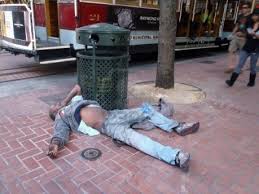
In 2016, the city spent $241 million on “homeless” services. But the population surges between 7,000 and 10,000. Of these, 3,000 to 5,000 refuse shelter.
City officials admit that San Francisco ranks second to New York in homelessness. What they won’t admit is that they are largely responsible for it.
The city’s mild climate and social programs that dole out cash payments to virtually anyone with no residency requirement draw rootless, unstable persons like a magnet.
- The problems affecting the San Francisco Police Department (SFPD) aren’t as obvious as the homeless infesting the city’s streets. But they are nevertheless real.
In 2002, the San Francisco Chronicle found that the city’s violent criminals had a better chance of escaping punishment than predators in any other large American city.
The SFPD had the lowest violent crime “clearance rate” among the nation’s 20 largest cities. Among Federal law enforcement agencies like the FBI and the U.S. Marshals Service, the SFPD is considered a joke.
- At the San District Attorney’s Office, prosecutors often can’t decide if they want to lock up criminals–or defend them.
From 2004 to 2011, Kamala Harris served as the city’s District Attorney. In total defiance of the law, she set up a secret unit to keep even convicted illegal aliens out of prison.

Kamala Harris
Her program, called Back on Track, trained them for jobs they could not legally hold. This was a flagrant violation of Federal immigration law. It is not the duty of local law enforcement, she said, to enforce Federal immigration laws.
In San Francisco, you don’t necessarily get what you pay for.
ABC NEWS, ALTON STERLING, ANTHONY CORNELIUS HARRIS, BLACK LIVES MATTER, BLACK MUSLIMS, CBS NEWS, CNN, CRIME, FACEBOOK, ISLAM, J.C. SIMON, JESSIE LEE COOKS, JOSEPH ALIOTO, LARRY CRAIG GREEN, MALCOM X, MANUEL mOORE, MICHAH XAVIER JOHNSON, NAACP, NATION OF ISLAM, NBC NEWS, PHILANDO CASTILE, POLICE BRUTALITY, SAN FRANCISCO, SAN FRANCISCO POLICE DEPARTMENT, THE CHICAGO SUN-TIMES, THE CHICAGO TRIBUNE, THE LOS ANGELES TIMES, THE NEW YORK TIMES, THE WASHINGTON POST, TWITTER, U.S. MARSHALS SERVICE, WITNESS SECURITY PROGRAM, ZEBRA KILLERS
In Bureaucracy, History, Law Enforcement, Politics, Social commentary on July 18, 2016 at 12:05 am
On April 22, 1974, a break finally came in the “Zebra killers” case.
Anthony Cornelius Harris, a member of the Nation of Islam–otherwise known as the Black Muslims–came forward as a police witness.
Before doing so, he visited the parents of his close friend, Larry Craig Green–who was one of the “Zebra” killers. He hoped that, through Green’s mother, he could persuade his comrade to go with him to the police as a witness against the other three Death Angels.
While at the home of Green’s parents, he called Green.
“I knew right there it was impossible to get him to admit to doing anything,” Harris later testified. “He told me to get the hell out of his house and never to come back.”
Later, Harris phoned the Black Self-Help moving and storage company where he had been working for the last six months.
One of the Muslims he spoke with was Green, who warned him: “Man, they’ve got a contract out to kill you, your wife and the baby.”
It was then that Harris realized that he, his wife, Debra, and their newborn son had been marked for death by his former friends. There was nowhere else to go but the police if he wanted to stay alive.
So, on April 22, 1974, he came forward as a police witness.
Many police believed Harris had been one of the killers himself. He bore a strong resemblance to the suspect in a police artist’s sketch: A young black man with a short Afro and pointed chin.
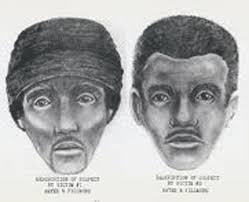
Police composite sketch of “the Zebra killer”
But Harris insisted that he hadn’t murdered anyone, and that he had resisted efforts by his friends to enlist him in their murder spree. He claimed to fear for his life at the hands of his fellow Muslims.
The police immediately placed Harris and his family under round-the-clock guard.
At 5 a.m. on the morning of May 1, 1974, more than 100 police officers assembled at the San Francisco Hall of Justice. They were heavily armed–with shotguns, submachineguns and automatic rifles.
Their assignment: Arrest seven men believed responsible for the brutal series of murders known as the “Zebra” case.
At a given signal, police charged into the various homes and apartments where the suspects lay sleeping. None of the wanted men offered any resistance.
Three of the seven were soon release for lack of evidence. The remaining three–Larry Craig Green, Manuel Moore and J.C. Simon–were held at high bond.
A fourth suspect, Jessie Lee Cooks, was already serving a life sentence in prison for his admitted murder of Frances Rose, a physical therapist, on October 30, 1973.
Cooks would be charged with other “Zebra” murders by a San Francisco grand jury on May 16, 1974.
Chief Assistant District Attorney W.H. Guibbini asked for high bail for three of the suspects after their indictment. Presiding Superior Court Judge Clayton V. Horn raised it to $300,000 each.
The accused killers remained in jail before and during their trial.
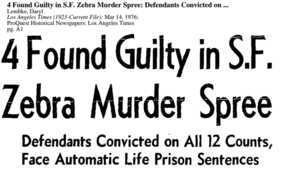
The trial began on March 3, 1975, and lasted longer than any previous one in the history of California–376 days. Testimony from 181 witnesses–115 for the prosecution–filled 13,331 pages of trial transcript.

San Francisco Superior Court
The Nation of Islam paid for the legal representation of every one of the defendants except Cooks, who had admitted to murdering Frances Rose.
During his testimony as a prosecution witness, Harris was guarded constantly by San Francisco police.
When the SFPD’s resources began to be strained, Harris was placed on the Witness Security Program, operated by the U.S. Marshals Service for the Justice Department. Originally created to safeguard Mafia witnesses, it offers protection, relocation and new identities to those who testify against organized crime groups.
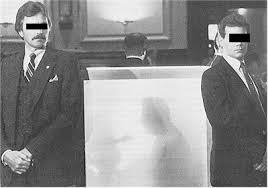
Deputy U.S. marshals guarding a witness while testifying before Congress
Harris was flown to Houston, Texas, and kept under the watchful eye of the local police. From there he moved to El Paso, and then on to Las Vegas.
He proved a difficult witness to protect. Refusing to take a job suitable for his menial work skills, he demanded ever-increasing amounts of subsistence money from, first, the SFPD, and, later, the U.S. Marshals Service. At times he threatened to recant his testimony unless he got more subsistence payments.
After the trial, Harris received a portion of the $30,000 reward. Eventually he turned up in Oakland, and then ultimately disappeared.
On March 13, 1976, Larry Craig Green, Manuel Moore, Jessie Lee Cooks and J.C. Simon were convicted of multiple murders. All were sentenced to life in state prison, where they remain today.
The toll of victims taken by the “Zebra” killers had been staggering:
- Sixteen murdered
- Five wounded
- One raped
- The attempted kidnapping of three children
At the time of sentencing, San Francisco Superior Court Judge Joseph Karesh turned to a wall map showing where each of the murders had taken place.
“As I look at this map and see all these dots,” said Karesh, “I hope we do not forget all these people who have been reduced to dots.”
ABC NEWS, ALTON STERLING, ANTHONY CORNELIUS HARRIS, BLACK LIVES MATTER, BLACK MUSLIMS, CBS NEWS, CNN, CRIME, FACEBOOK, ISLAM, J.C. SIMON, JESSIE LEE COOKS, JOSEPH ALIOTO, LARRY CRAIG GREEN, MALCOM X, MANUEL mOORE, MICHAH XAVIER JOHNSON, NAACP, NATION OF ISLAM, NBC NEWS, PHILANDO CASTILE, POLICE BRUTALITY, SAN FRANCISCO, SAN FRANCISCO POLICE DEPARTMENT, THE CHICAGO SUN-TIMES, THE CHICAGO TRIBUNE, THE LOS ANGELES TIMES, THE NEW YORK TIMES, THE WASHINGTON POST, TWITTER, U.S. MARSHALS SERVICE, WITNESS SECURITY PROGRAM, ZEBRA KILLERS
In Bureaucracy, History, Law Enforcement, Politics, Social commentary on July 15, 2016 at 12:05 am
The slayings of the “Zebra killers” were always proceeded by elaborate safety precautions. These included disguises, escape routes and the use of safehouses.
“In case you kill someone in that area,” Harris later testified that his Muslim friends were told, “you can automatically go to that house. There won’t be any questions asked about it at all.
“They made that clear all the time, every Saturday, at the Fruit of Islam (FOI) meetings. The FOI was the enforcement and disciplinary arm of the Nation of Islam.
“They said that if you’re going to kill someone, come right out and say it. Let us know ahead of time so we can set up a good alibi.”
Recruiting poster for the Fruit of Islam, the elite guard of the Nation of Islam
Non-Muslims were not to be trusted or used in any way.
“Our own attorneys,” the listeners were told at these weekend meetings, “will lie for you,” Harris quoted one of the Muslim speakers as saying.
On the night of January 28, 1974, J.C. Simon, Larry Green and Manuel Moore launched their most spectacular assault on San Francisco whites.
Shots and screams echoed throughout the city as the killers, cruising in a fast-moving black Cadillac, literally turned the streets into a shooting gallery:
- Tana Smith, a secretary, was slain while waiting at a bus stop.
- A derelict, John Bambic, was murdered as he rummaged in a garbage can.
- Vincent Wollin, a pensioner, was walking down the street when one of the gunmen fatally overtook him.
- A housewife named Jane Holly was killed in a Laundromat while she removed clothes from a dryer.
- And Roxanne McMillan, another housewife, was critically wounded and left paralyzed from the waist down as she walked down a flight of stairs to her apartment.
Each of these victims had been shot twice in the back by a black gunman using a .32 automatic pistol.
Just hours before the murder spree, Anthony Harris had asked his friend, Larry Green, why their comrade, J.C. Simon, was so depressed and irritable.
“He’s pretty pissed off because he didn’t make lieutenant,” Green had replied. “He didn’t have enough kills on his record.”
The killings continued up to mid-April, 1974.
On April 20, 1974, San Francisco’s liberal mayor, Joseph L. Alioto, authorized a city-wide police dragnet to flush out the still-supposed lone gunman.
Throughout the city, roving squads of specially-assigned officers stopped and questioned over 600 young black men. Those stopped were thought by police to resemble a vague description of the “killer,” as given by witnesses and surviving victims.
Some blacks were stopped so many times they were issued special identification cards to prevent future police interrogations.
The dragnet failed to flush out the Zebra Killers, but it touched off an uproar within the black community. Mayor Alioto was heatedly denounced by civil rights and religious activists.
The National Association for the Advancement of Colored People filed a suit in federal court for the Northern District of California to halt the stops.
On April 26–six days after the dragnet began–San Francisco’s U.S. District Judge Alfonzo J. Zirpoli acted on the NAACP’s suit. He declared the stops an unconstitutional violation of blacks’ civil rights.
In the future, ordered Zirpoli, police would need specific information leading them to believe that whoever they stopped had committed a crime or was in the process of doing so.
In San Francisco, the sudden collapse of the citywide police dragnet brought new shivers of panic to an already frightened citizenry.
Many whites stopped going outdoors after dark. Even police officers frequently looked over their shoulders as evening approached.
Some whites–especially in the heavily Italian North Beach area–began talking about spreading vigilante terror among blacks.
And the murder-spree affected the city financially: The tourist trade–on which San Francisco depended for so much of its revenue–sharply declined.
The reaction of blacks was entirely different.
During the manhunt for the notorious “Zodiac” serial killer in the late 1960s, San Francisco police had relied heavily on dragnets and interrogations of young white men resembling a composite sketch.
But blacks charged racism when the same tactic was used to hunt for the supposed lone “Zebra” gunman.
Many blacks blamed “unemployment” and “oppression” for the attacks. When interviewed by the San Francisco Examiner, none condemned the murders or expressed sympathy for their victims.
Then, on April 22, 1974, a break finally came in the case.
Anthony Cornelius Harris decided to tell the police what he knew about the men responsible for the murders.
The killings, said Harris, weren’t the work of a crazed loner. They were being carried out by a group of militant Black Muslims who made use of elaborate security precautions.
Harris’ intimate knowledge of the killers stemmed from their having been among his closest friends for over six months.
Harris claimed that the killers had repeatedly tried to enlist him as an accomplice. He insisted that he could not bring himself to commit cold-blooded murder. This led his friends to suspect that Harris might be a police informer or agent.
Harris began fearing for his life. He also wanted the $30,000 reward being offered for the capture of the still-supposed lone gunman.
On May 1, 1974, police–acting on Harris’ information–arrested seven suspects.
ABC NEWS, ALTON STERLING, ANTHONY CORNELIUS HARRIS, BLACK LIVES MATTER, BLACK MUSLIMS, CBS NEWS, CNN, CRIME, FACEBOOK, ISLAM, J.C. SIMON, JESSIE LEE COOKS, JOSEPH ALIOTO, LARRY CRAIG GREEN, MALCOM X, MANUEL mOORE, MICHAH XAVIER JOHNSON, NAACP, NATION OF ISLAM, NBC NEWS, PHILANDO CASTILE, POLICE BRUTALITY, SAN FRANCISCO, SAN FRANCISCO POLICE DEPARTMENT, THE CHICAGO SUN-TIMES, THE CHICAGO TRIBUNE, THE LOS ANGELES TIMES, THE NEW YORK TIMES, THE WASHINGTON POST, TWITTER, U.S. MARSHALS SERVICE, WITNESS SECURITY PROGRAM, ZEBRA KILLERS
In Bureaucracy, History, Law Enforcement, Politics, Social commentary on July 14, 2016 at 12:00 am
The “Zebra killers” were on a rampage–one that showed no signs of ending.
On November 25, 1973, Salem Erakat, a grocer, was found shot in the back of the head in his mom-and-pop market, which lay across the street from the San Francisco Federal Building.
On December 11, a San Francisco resident named Paul Dancik was fatally shot three times as he used a public telephone.

On December 13, Arthur Agnos, a former administrative aide to San Francisco Assemblyman Leo T. McCarthy, was shot and wounded while standing on a street corner, talking to two friends.
He would survive and later serve as Mayor of San Francisco from 1988 to 1992.
On Christmas Eve, Larry Craig Green and J.C. Simon asked Anthony Harris to help them take some packages to a nearby beach.
“When I unloaded the truck, I recall getting a lot of blood on my hands,” Harris later testified as a witness for the prosecution. He asked Simon and Green what was in the packages.
“They said, it was probably a dog or a cat,” said Harris. Later, he learned that the package had held a human body. But he never learned whose.
Harris helped to dispose of similar packages “about 40-some times.”
Harris was taken along by the “Zebra” killers on several shootings. Later, Harris reasoned: “I guess they thought that, sooner or later, I would join their little clique.”
One night, Harris, J.C. Simon and Manuel Moore parked their black Cadillac near an apartment complex. Simon and Moore got out, leaving Harris in the vehicle.
“The next thing I knew,” said Harris, “I heard a gunshot. Manuel started running from the same area that the gunshot came from.”
Moore and Simon jumped into the car. As the vehicle sped off, Harris saw “what appeared to be a body” lying on the sidewalk.
On another occasion, Harris asked his comrades what had happened after he heard shots ring out.
“Just watch television or listen to the radio, and you’ll see what happened,” one of them said.
Harris learned from the news later on that “somebody had been shot and killed.”
Between killings, Harris and his friends attended regular meetings at the Black Self-Help, the Muslim-owned furniture-moving company in San Francisco.
At some of these meetings, as many as 40 to 50 or more Muslims were present.
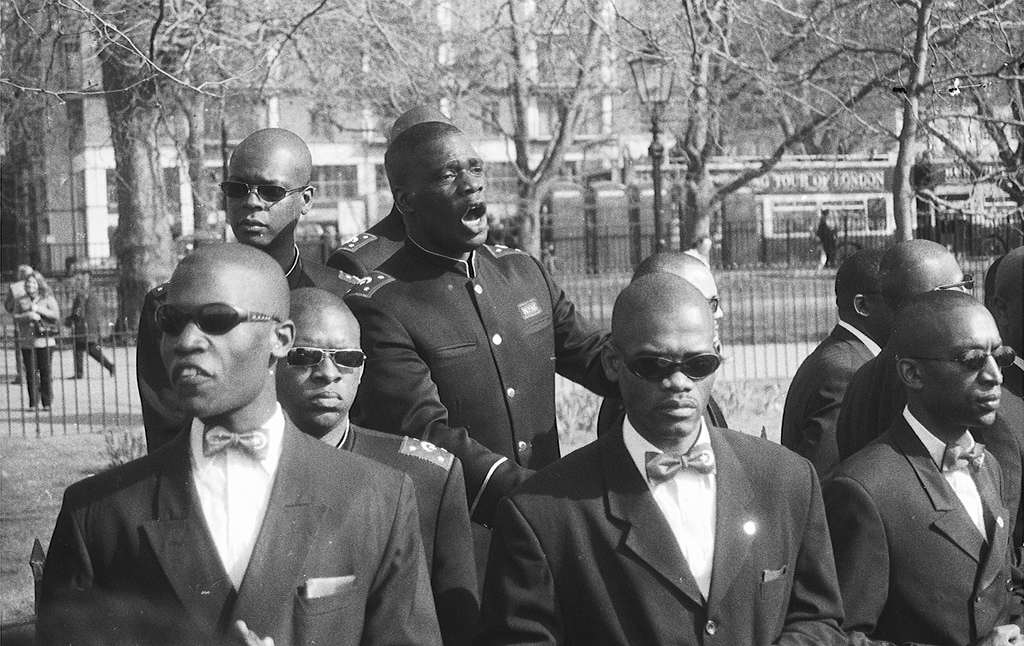
Members of the Nation of Islam
“They were talking about killing people,” Harris later testified. Films were shown “of the Watts riots [in 1965] and different riots taking place throughout the past, black people being beaten down by the police and shot.”
The meetings’ participants were asked, “Could we allow this to continue? They said the only way to stop it was to act and be vicious…like the police department.
“That you had to…be able to go out and just deliberately take a baby and smash his head against the wall and kill him and, if you have to, even drink the blood to show how vicious you are.
“And they showed us a large number of pictures” on a bulletin board “of a lot of bald-headed men with little white wings on their necks, and identified each guy as being members of the Death Angels.”
Harris was told that “if I wanted to be a member of the Death Angels, that I’d have to go out and kill people to get some wings.”
Not only was the wearing of a pair of white wings a symbol of belonging to the Death Angels, so was a shaved head.
Only certified members of the Death Angels could enter Muslim temples with shaved heads. Anyone else who entered such a temple with a shaved head “can be killed or put out of the temple for coming in like that.”
“[The Death Angels] is supposed to be a pretty high branch of the Nation of Islam, supposed to be 2,000 people inside it,” Harris later testified.
“And every time you kill a person, you’re supposed to have somebody witness your killing the person for verification when you go back to Chicago,” the national headquarters for the Nation of Islam.

Chicago Headquarters of the Nation of Islam
It was there, said Harris, that the photographs or eyewitnesses had to appear before the prospective Death Angel could receive his winged badge of membership.
“And after you get to killing people,” the Death Angels “give you a pair of wings to put on your neck, and they take a picture,” testified Harris.
“They say you kill four children, you automatically become a captain, or a lieutenant. If you kill five or six women, you become a lieutenant. Or kill nine men, the number of completion, and they give you a rank.”
Extra status was attached to Death Angels who mutilated the bodies of their victims.
“If you cut their heads off, and cut the legs and arms off and cut them open wide with a lot of blood, it’s supposed to symbolize you’re very vicious and that you could be well trusted.
“The killing was so, if they see you do it, they know for a fact you’re not a police officer and you’re not involved” as an informer,” testified Harris.


 Bureaucracybuster's Blog
ABC NEWS, ADOLF HITLER, AFFORDABLE HEALTHCARE ACT, ALTERNET, ANN COULTER, AP, ARIZONA SHOOTINGS, ASSASSINATION, BARACK OBAMA, BILL CLINTON, BIRTHERS, BUZZFEED, CBS NEWS, CHRISTINA-TAYLOR GREEN, CNN, CONFEDERATE FLAG, CROOKS AND LIARS, DAILY KOZ, DEVIN NUNES, DICK ARMEY, DICK MORRIS, DYLANN ROOF, FACEBOOK, FBI, FRANKLIN D. ROOSEVELT, GABRIELLE GIFFORDS, GEORGE H.W. BUSH, GEORGE W. BUSH, GLENN BECK, HARRY S. TRUMAN, HATE CRIMES, HEALTHCARE, JOSEPH MCCARTHY, MEIN KAMPF, MICHAEL SAVAGE, MICHELE BACHMANN, MOTHER JONES, MOVEON, MSNBC, NBC NEWS, NEWSWEEK, NEWT GINGRICH, NPR, OBAMACARE, PHIL GRAMM, POLITICO, RAW STORY, REP. GABRIELLE GIFFORDS, REPUBLICAN PARTY, REPUBLICANS, REUTERS, RICHARD NIXON, RICK SANTORUM, RODNEY KING RIOTS, ROLLING STONE MAGAZINE, RUSH LIMBAUGH, SALON, Sarah Palin, SEAN HANNITY, SEATTLE TIMES, SLATE, SOVIET UNION, SPIRO AGNEW, TEA PARTY, TERRORISM, THE ATLANTIC, THE CHICAGO SUN-TIMES, THE CHICAGO TRIBUNE, THE DAILY BEAST, THE GUARDIAN, THE HILL, THE HUFFINGTON POST, THE LOS ANGELES TIMES, THE NATION, THE NEW YORK TIMES, THE WASHINGTON POST, TIME, TWITTER, U.S. DISTRICT JUDGE JOHN ROLL, U.S. MARSHALS SERVICE, U.S. NEWS & WORLD REPORT, UPI, USA TODAY
REPUBLICANS: WEAPONIZING HATRED: PART TWO (OF THREE)
In Bureaucracy, History, Law, Law Enforcement, Politics, Social commentary on July 9, 2018 at 12:10 am“The Republican Party has weaponized its supporters, made violence a virtue and, with almost every pronouncement for 50 years, given them an enemy politicized, radicalized and indivisible.”
So wrote Rolling Stone writer in a blistering June 19 editorial. The touchstone was the slaughter of nine black worshipers by a white supremacist at a South Carolina black church.
But the proof of Republican culpability in political violence goes back much further.
Consider:
Gabrille Giffords, 40, is a moderate Democrat who narrowly wins re-election in November, 2010, against a Republican Tea Party candidate.
Her support of President Obama’s health care reform law has made her a target for violent rhetoric–-especially from former Alaska Governor Sarah Palin.
In March, 2010, Palin releases a map featuring 20 House Democrats that uses cross-hairs images to show their districts. In case her supporters don’t get the message, she later writes on Twitter: “Don’t Retreat, Instead – RELOAD!”
Sarah Palin’s “Crosshairs” Map
As the campaign continues, Giffords finds her Tucson office vandalized after the House passes the healthcare overhaul in March.
Giffords senses that she has become a target for removal–in more than political terms. In an interview after the vandalizing of her office, she refers to the animosity against her by conservatives.
She specifically cites Palin’s decision to list her seat as one of the top “targets” in the midterm elections.
“For example, we’re on Sarah Palin’s targeted list, but the thing is, that the way that she has it depicted has the cross-hairs of a gun sight over our district. When people do that, they have to realize that there are consequences to that action,” Giffords tells MSNBC.
At one of her rallies, her aides call the police after an attendee drops a gun.
Giffords may have seen the spectre of violence closing in on her. In April, 2010, she supported Rep. Raúl Grijalva after he had to close two offices when he and his staff received threats.
He had called for a boycott of Arizona businesses in opposition to the state’s controversial immigration law.
“I am deeply troubled about reports that Congressman Grijalva and members of his staff have been subjected to death threats,” Giffords said.
“This is not how we, as Americans, express our political differences. Intimidation has no place in our representative democracy. Such acts only make it more difficult for us to resolve our differences.”
But intimidation—-and worse—-does have a place among the tactics used by influential Republicans in the pursuit of absolute power.
Increasingly, Republicans have repeatedly aimed violent—-and violence-arousing—-rhetoric at their Democratic opponents. This is not a case of careless language that is simply misinterpreted, with tragic results.
Republicans like Sarah Palin fully understand the constituency they are trying to reach: Those masses of alienated, uneducated Americans who live only for their guns and hardline religious beliefs—and who can be easily manipulated by perceived threats to either.
If a “nutcases” assaults a Democratic politician and misses, then the Republican establishment claims to be shocked—-shocked!—that such a thing could have happened.
And if the attempt proves successful—as the January 8, 2011 Tucson shootings did—then Republicans weep crocodile tears for public consumption.
The difference is that, in this case, they rejoice in knowing that Democratic ranks have been thinned and their opponents are even more on the defensive, for fear of the same happening to them.
Consider the following:
Since the end of World War 11, Republicans have regularly hurled the charge of “treason” against anyone who dared to run against them for office or think other than Republican-sponsored thoughts.
Republicans had been locked out of the White House from 1933 to 1952, during the administrations of Franklin D. Roosevelt and Harry S. Truman.
Determined to regain the Presidency by any means, they found that attacking the integrity of their fellow Americans a highly effective tactic.
During the 1950s, Wisconsin Senator Joseph R. McCarthy rode a wave of paranoia to national prominence–by attacking the patriotism of anyone who disagreed with him.
The fact that McCarthy never uncovered one actual case of treason was conveniently overlooked during his lifetime.
Share this: