bureaucracybusters

Posts Tagged ‘MITT ROMNEY’

NANCY REAGAN’S RASPUTIN

In Bureaucracy, History, Politics, Social commentary on March 10, 2016 at 12:20 am

Nancy Reagan, widow of Ronald Reagan, the 40th President of the United States, died on March 6, at age 94, in Los Angeles, California.

She had survived her husband–who died of Alzheimer’s in 2004–by almost 12 years. Republicans–who have deified Ronald since he left the White House in 1989–rushed to pay tribute to her:  

  • Mitt Romney, 2012 Presidential candidate: “With the passing of Nancy Reagan, God and Ronnie have finally welcomed a choice soul home.”
  • Former President George W. Bush: “Mrs Reagan was fiercely loyal to her beloved husband and that devotion was matched only by her devotion to our country. Her influence on the White House was complete and lasting.”  

Democrats also pitched in: 

  • President Barack Obama: “We remain grateful for Nancy Reagan’s life.”
  • Former President Bill Clinton: “Nancy was an extraordinary woman: a gracious first lady, proud mother and devoted wife to President Reagan – her Ronnie.”  

The Presidency of Ronald W. Reagan consumed eight years of American history: 1981 – 1989. But its legacies continue to haunt us.

On October 21, 2014, Joan Quigley, the woman responsible for one of its most bizarre legacies–government by astrologer–passed away at age 87.

Quigley was the court astrologer to Ronald and Nancy Reagan.

Related image

Ronald and Nancy Reagan

Nancy met Quigley on “The Merve Griffin Show” in 1973.  Quigley gave Nancy–and through her, Reagan himself–astrological advice during the latter’s campaign for the Republican Presidential nomination in 1976.

That effort failed to unseat President Gerald Ford–who was defeated that November by Jimmy Carter. But four years later, in 1980, Reagan defeated Carter to become the 40th President of the United States.

On March 30, 1981, a mentally-disturbed loner named John W. Hinckley shot and critically wounded Reagan. Fixiated on actress Jodie Foster, he believed that by shooting the President he could gain her affection.

For Nancy, the assassination attempt proved a watershed.

Shortly after the shooting, Merv Griffin told her that Quigley had told him: If Nancy had called her on that fateful day, she–Quigley–could have warned that the President’s astrological charts had foretold a bad day.

From that moment on, Nancy made sure to regularly consult Quigley on virtually everything that she and the President intended to do.

When Reagan learned of Nancy’s consultations with Quigley, he warned her: Be careful, because it might look odd if it came out.

Many–if not most–of these calls from the White House to Quigley’s office in San Francisco were made on non-secure phone lines.  

Joan Quigley

This meant that foreign powers–most notably the Soviet Union and Communist China–could have been privy to Reagan’s most secret intentions.

Nancy passed on Quigley’s suggestions as commands to Donald Regan, chief of the White House staff.

As a result, Regan kept a color-coded calendar on his desk to remember when the astrological signs were good for the President to speak, travel, or negotiate with foreign leaders: Green ink highlighted “good” days; red ink “bad” days; yellow ink “iffy” days.

Donald Regan, no fan of Nancy’s, chafed under such restrictions: “Obviously, this list of dangerous or forbidden dates left very little latitude for scheduling,” he later wrote.

Forced out of the White House in 1987 by Nancy, Regan struck back in a 1988 tell-all memoir: For the Record: From Wall Street to Washington.

In 1988, after her secret role in the Reagan White House was revealed, Quigley told the Associated Press that she was a “serious, scientific astrologer.”

Regan’s book revealed, for the first time, how Ronald Reagan had actually made his Presidential decisions.

All–including decisions to risk nuclear war with the Soviet Union–were based on a court astrologer’s horoscopesRationality and the best military intelligence available played a lesser, secondary role.

The last major world leader to turn to the supernatural for advice had been Russian Czar Nicholas II. His adviser had been Grigori Rasputin, a Siberian peasant whom Empress Alexandra believed was the only man who could save her hemophiliac son–and heir to the throne.

Related image

Grigori Rasputin

In 1990, Quigley confirmed the allegations in an autobiography, What Does Joan Say?: My Seven Years As White House Astrologer to Nancy and Ronald Reagan.

The title came from the question that Ronald Reagan asked Nancy before making important decisions–including those that could risk the destruction of the United States.

Among the successes Quigley took credit for: 

  • Strategies for winning the Presidential elections of 1980 and 1984;
  • Helping Nancy Reagan overhaul her image as a spoiled rich girl;
  • Defusing the controversy over Reagan’s visiting a graveyard for SS soldiers in Bitburg, Germany;
  • Pursuing “Star Wars” as a major part of his strategy against the Soviet Union;
  • The Intermediate-Range Nuclear Forces Treaty;
  • Protecting Reagan from would-be assassins through timely warnings to Nancy; and
  • Moving Reagan from seeing the Soviet Union as the “Evil Empire” to accepting Mikhail Gorbachev as a peace-seeking leader.

Thirty-five years after he became President, Ronald Reagan remains the most popular figure among Republicans. His name is constantly invoked by Right-wing candidates, while his deliberately-crafted myth is held up as the example of Presidential greatness.

Still, a number of precedents of the Reagan administration–like government by astrologer–might lend themselves to easy abuse. Thus, voters should consider this carefully before elevating “another Reagan” to the Presidency.  

TRUMPING–AND DUMPING: PART THREE (END)

In Bureaucracy, Business, History, Politics, Social commentary on March 9, 2016 at 2:14 pm

The Donald Trump-Mitt Romney bromance began with an insult, courtesy of Trump: 

“He’d buy companies, he’d close companies.  He’d get rid of jobs.  I’ve built a great company.  I’m a much bigger businessman and have a much, much bigger net worth.  I mean, my net worth is many, many, many times Mitt Romney.”  

Then Trump had a change of heart: “Mitt is tough.  He’s smart.  He’s sharp. He’s not going to allow bad things to continue to happen to this country that we all love. So, Governor Romney, go out and get ’em.  You can do it.”

And Romney swooned with delight: “I’m so honored to have his endorsement. There are some things that you just can’t imagine in your life. This is one of them.”    

Related image

Mitt Romney and Donald Trump

But now the bromance is over, courtesy of a rousing, anti-Trump speech given by Romney at the University of Utah: 

“Mr. Trump is directing our anger for less than noble purposes. He creates scapegoats of Muslims and Mexican immigrants, he calls for the use of torture and for killing the innocent children and family members of terrorists. He cheers assaults on protesters.

“He applauds the prospect of twisting the Constitution to limit First Amendment freedom of the press. This is the very brand of anger that has led other nations into the abyss.” 

So how is Trump taking all this? “I don’t know what happened to him. You can see how loyal he is.

“He was begging for my endorsement. I could have said ‘Mitt, drop to your knees.’ He would have dropped to his knees.”  

Fortunately for Trump, as his bromance with Romney has ended, another has emerged–with New Jersey Governor Chris Christie.

On February 26, Christie through his (political) weight behind Trump at a hastily-announced press conference in Fort Worth, Texas.  

Related image

Chris Christie

Christie had not always been on such wonderful terms with the egocentric businessman. In fact, for months, the two had been rivals for the Presidency.  

In a January speech before the New Hampshire primary, Christie said:

“Showtime is over. We are not electing an entertainer-in-chief. Showmanship is fun, but it is not the kind of leadership that will truly change America…. 

“If we are going to turn our frustration and anger with the D.C. insiders, the politicians of yesterday and the carnival barkers of today into something that will actually change American lives for the better, we must elect someone who has been tested.”  

Then, without warning, Christie announced a sudden change of mind at a press conference in Fort Worth, Texas.  

The previous night, Trump had been mauled by a surprisingly aggressive Marco Rubio during a CNN-hosted debate among the Presidential candidates. As a result, reporters gasped when Christie endorsed Trump and attacked Rubio:

“Part of his talking points now is to be entertaining and smile a lot now.  Listen, it’s one act after another.”

Christie obviously felt it necessary to explain why he had gone from attacking Trump to promoting him: 

“As a Republican I feel strongly about making sure that [Democratic front-runner] Hillary Clinton does not become president of the United states, and I believe Donald Trump is the best person–of those remaining–to do that.”

As for the attack made on Trump by former Massachusetts Governor Mitt Romney:

“I understand the things that Gov. Romney is saying, and he’s objected to. That’s his opinion, and I respect him as I always have, and he’s welcome to his view. I just happen to disagree with the conclusion that he comes to.”  

By endorsing Trump, Christie became the first major establishment figure to validate the fitness of the former “reality TV star” to serve as President.

Considering Trump’s remaining opponents, it was not hard for Christie to reach that conclusion.

Texas United States Senator Rafael Cruz is an ideologue–and totally opposed to the pragmatic approach Christie brings to politics. And Christie genuinely dislikes Rubio.  

In addition, Christie believed that Ohio Governor John Kasich–a moderate by Republican standards–could never secure his party’s Presidential nomination.  

Ditto for neurosurgeon Ben Carson, who apparently believed his Right-wing party would elect another black man to succeed President Obama.

As for Trump: “This was an endorsement that really meant a lot. Chris is an outstanding man with an outstanding family, and this is the one endorsement that I’m really happy to get.”

While Christie and Trump share an innate aggressiveness and willingness to bully, that is not all they share.

In Never Enough, auhor Michael D’Antonio portrays Trump as a man with an insatiable appetite for wealth, attention, power, and conquest. The same can be said of Christie.

By taking on the role of Trump’s attack dog, Christie positions himself for the same role as vice presidential nominee. Or for a position such as Attorney General or Secretary of Homeland Security.

For those wishing to understand the realities of American political leaders, the best insight comes in a song popularized in George Orwell’s novel, 1984

Under the spreading chestnut tree
I sold you and you sold me:
There lie they, and here lie we
Under the spreading chestnut tree.

TRUMPING–AND DUMPING: PART TWO (OF THREE)

In Bureaucracy, Business, History, Politics, Social commentary on March 8, 2016 at 12:17 am

During the 2012 Presidential campaign, Donald Trump endorsed Mitt Romney as the Republican nominee to defeat President Barack Obama.

But that was before Trump decided to run for President in 2016. And the relationship between Trump and Romney has taken a considerably different turn.

On June 16, 2015, Trump declared his candidacy for the 2016 Republican Presidential nomination. Since then, he has been the first choice among the Republican base.  

At first, he was dismissed as a bad joke–by Republican Presidential candidates as well as Democrats. Surely voters would reject a bombastic, thrice-married “reality show” host who had filed for corporate bankruptcy four times.

Yet from the outset Trump dominated the field–and a series of Republican debates. The other Republican candidates watched him with envy–and desperately tried to steal some of his limelight.

Related image

 Donald Trump 

Making  one inflammatory statement after another, he offended one group of potential voters after another. These insults delighted his white, under-educated followers. But they alienated millions of other Americans who might have voted for him.

Among these:  

  • Mexicans: “They’re bringing drugs. They’re bringing crime. They’re rapists.” He’s also promised to “build a great, great wall on our southern border and I will have Mexico pay for that wall.”
  • Blacks: Trump retweeted an image of a masked, dark-skinned man with a handgun and a series of alleged crime statistics, including: “Blacks killed by whites – 2%”; “Whites killed by blacks – 81%.” The image cites the “Crime Statistics Bureau – San Francisco”–an agency that doesn’t exist.
  • Illegal Aliens: Trump has threatened to forcibly deport millions of mostly Mexican and Central American residents.
  • Muslims: Trump has boasted he would ban them from entering the United States–and revive waterboarding of terrorist suspects. He would require Muslims to register with the Federal Government. And he would close “some mosques” if he felt they were being used by Islamic terrorists.
  • POWs: Speaking of Arizona U.S. Senator John McCain: “He’s a war hero because he was captured. I like people who weren’t captured.” [Trump avoided military service–and Vietnam]

Many Republican members of Congress share–privately–Trump’s views on Hispanics, blacks and Muslims. But they realize that giving voice to such opinions can be politically suicidal.

Increasingly, the Republican party has become the bastion of aging white males. Even former President George W. Bush worked to win over Hispanics as Republican voters.

But the party’s increasingly strident anti-immigration rhetoric has alienated millions of Hispanics. And its open contempt for the nation’s first black President drove millions of blacks to the polls, where they handed Obama the White House–first in 2008, and again in 2012.

As a result, many Republicans now fear that Trump will gain their party’s Presidential nomination–and then lose in November, most likely to Hillary Clinton.  

Even worse from their perspective: He might cost Republicans–who now dominate the House of Representatives and the Senate–one or both legislative bodies.

So many Republicans are now desperately trying to deny Trump the nomination. And one of these is Mitt Romney–the man Trump endorsed in 2012 as the best candidate to remove Obama from the White House.  

Related image

Mitt Romney

On March 3, in a speech at the University of Utah, Romney outlined why a Trump Presidency would be a disaster for the nation (not to mention the Republicans).

Among his comments:

“If we Republicans choose Donald Trump as our nominee, the prospects for a safe and prosperous future are greatly diminished….

“If Donald Trump’s plans were ever implemented, the country would sink into prolonged recession….

“Donald Trump is a phony, a fraud. His promises are as worthless as a degree from Trump University….

“But you say, wait, wait, wait, isn’t he a huge business success? Doesn’t he know what he’s talking about? No, he isn’t and no he doesn’t.

“Look, his bankruptcies have crushed small businesses and the men and women who work for them. He inherited his business, he didn’t create it.

“And whatever happened to Trump Airlines? How about Trump University? And then there’s Trump Magazine and Trump Vodka and Trump Steaks and Trump Mortgage. A business genius he is not…. 

“Now let me turn to national security and the safety of our homes and loved ones. Mr. Trump’s bombast is already alarming the allies and fueling the enmity of our enemies.

“Insulting all Muslims will keep many of them from fully engaging with us in the urgent fight against ISIS, and for what purpose? Muslim terrorists would only have to lie about their religion to enter the country….

“Now, I’m far from the first to conclude that Donald Trump lacks the temperament to be president.

“After all, this is an individual who mocked a disabled reporter, who attributed a reporter’s questions to her menstrual cycle, who mocked a brilliant rival who happened to be a woman due to her appearance, who bragged about his marital affairs, and who laces his public speeches with vulgarity.

“Donald Trump says he admires Vladimir Putin, at the same time he has called George W. Bush a liar. That is a twisted example of evil trumping good.”

Thus Mitt Romney on the man who once endorsed him for President. In the next column, we’ll see what Trump thinks of the man he once endorsed for President.

TRUMPING–AND DUMPING: PART ONE (OF THREE)

In Bureaucracy, Business, History, Politics, Social commentary on March 7, 2016 at 12:23 am

In 2011, Donald Trump, the egocentric businessman and “reality star” of NBC’s “The Apprentice,” was toying with the idea of running for President in 2012.

On April 17, 2011, Trump said this about Mitt Romney, a possible rival and the former Massachusetts governor and front-runner GOP candidate: 

“He’d buy companies, he’d close companies. He’d get rid of jobs. I’ve built a great company. I’m a much bigger businessman and have a much, much bigger net worth. I mean, my net worth is many, many, many times Mitt Romney. 

“Mitt Romney is a basically small-business guy, if you really think about it. He was a hedge fund.  He was a funds guy. He walked away with some money from a very good company that he didn’t create. He worked there. He didn’t create it.”  

Donald Trump

Trump added that Bain Capital, the hedge fund where Romney made millions of dollars before running for governor, didn’t create any jobs. Whereas Trump claimed that he–Trump–had created “hundreds of thousands of jobs.”

So at least some observers must have been puzzled when Trump announced, on February 2, 2012: “It’s my honor, real honor and privilege, to endorse Mitt Romney” for President.

“Mitt is tough. He’s smart. He’s sharp. He’s not going to allow bad things to continue to happen to this country that we all love. So, Governor Romney, go out and get ’em. You can do it,” said Trump. 

And Romney, in turn, had his own swooning-girl moment: 

“I’m so honored to have his endorsement. There are some things that you just can’t imagine in your life. This is one of them.”  

Mitt Romney

Throughout the 2012 Presidential race, Trump continued to “help” Romney–by repeatedly accusing President Barack Obama of not being an American citizen.

Had that been true, Obama would not have had the right to be President–since the Constitution says that only an American citizen can hold this position.

Of course, that was entirely what Trump wanted people to believe– that Obama was an illegitimate President, and deserved to be thrown out.

Come election night–and disaster for Romney–and Trump.

When it became clear that Romney was not going to be America’s 45th President, Trump went ballistic on Twitter. 

Among his tweets:

  • More votes equals a loss…revolution! 
  • Lets fight like hell and stop this great and disgusting injustice!  The world is laughing at us.
  • We can’t let this happen.  We should march on Washington and stop this travesty.  Our nation is totally divided! 
  • The phoney electoral college made a laughing stock out of our nation.  The loser one! 
  • He lost the popular vote by a lot and won the election.  We should have a revolution in this country! 

To put Trump’s rants into real-world perspective:

According to Trump, the electoral process works when a Republican wins the Presidency. It only doesn’t work when a Democrat wins.

We should march on Washington” conjures up images of another Fascist–Benito Mussolini–marching on Rome at the head of his Blackshirts to seize power. 

“The phoney electoral college made a laughing stock out of our nation. The loser one!” 

This is startling, on three counts:

First, the 2012 Republican Platform spoke lovingly about the need for preserving the Electoral College: “We oppose the National Popular Vote Interstate Compact or any other scheme to abolish or distort the procedures of the Electoral College.

“We recognize that an unconstitutional effort to impose ‘national popular vote’ would be a mortal threat to our federal system and a guarantee of corruption as every ballot box in every state would become a chance to steal the presidency.”

Second, the loser didn’t win: He lost.  With votes still being counted (as of November 8) Obama got 60,652,238. Romney got 57,810,407.

Third, in 2000, Al Gore won the popular vote (50,999,897) to George W. Bush’s 50,456,002. But Bush trounced Gore in the Electoral College (271 to 266).

Still, that meant Bush–not Gore–would head the country for the next eight years. And that was perfectly OK with Right-wingers like Trump.

It was only when Obama won the Electoral College count by 332 to 206 that this was–according to Trump–a “travesty.”

And Trump’s solution if voters dare to elect someone other than Trump’s pet choice: “Revolution!”

This comes perilously close to advocating violent overthrow of the government. Otherwise known as treason–a crime traditionally punished by execution, or at least lengthy imprisonment.

Fast forward, to 2016–and the relationship between Trump and Romney looks considerably different.

On June 16, 2015, Trump declared his candidacy for the 2016 Republican Presidential nomination. Since then, he has been the first choice among the Republican base.  

At first, he was dismissed as a bad joke–by Republican Presidential candidates as well as Democrats. Surely voters would reject a bombastic, thrice-married “reality show” host who had filed for corporate bankruptcy four times.

Yet from the outset Trump dominated the field–and a series of Republican debates. The other Republican candidates watched him with envy–and desperately tried to steal some of his limelight.  

Making made one inflammatory statement after another, he offended one group of potential voters after another.  

These insults delighted his white, under-educated followers. But they alienated millions of other Americans who might have voted for him.

WHO IS REMEMBERED–AND WHO IS FORGOTTEN?

In Business, History, Military, Politics, Social commentary on February 23, 2016 at 10:58 am

March 6, 2016, will mark the 180th anniversary of the fall of the Alamo, a crumbling former Spanish mission in the heart of San Antonio, Texas.

It’s one of those battles like Thermopylae that have passed from history into legend.

It’s been the subject of novels, movies, biographies, histories and TV dramas (most notably Walt Disney’s 1955 “Davy Crockett: King of the Wild Frontier”).

The Alamo 

By Mattstone911 – Own work, CC BY-SA 3.0, 

Perhaps the most extraordinary scene in any Alamo movie or book occurs in the 1993 novel, Crockett of Tennessee, by Cameron Judd. 

And it is no less affecting for its being–-so far as we know–-entirely fictional.  

It’s March 5, 1836–the last night of life for the Alamo garrison. The night before the 2,000 men of the Mexican Army hurl themselves at the former mission and slaughter its 200 “Texian” defenders. Image result for Images of the "Crockett of Tennessee"The fort’s commander, William Barret Travis, has drawn his “line in the sand” and invited the garrison to choose: To surrender, to try to escape, or to stay and fight to the death.  

And the garrison–except for one man–chooses to stay and fight. 

For the garrison, immortality lies only hours away. Or does it?  

An hour after deciding to stand and die in the Alamo, wrapped in the gloom of night, Crockett is seized with paralyzing fear. 

“We’re going to die here,” he chokes out to his longtime friend, Persius Tarr. “You understand that, Persius?  We’re going to die!”  Related image

“I know, Davy.  But there ain’t no news in that,” says Tarr. “We’re born to die. Every one of us. Only difference between us and most everybody else is we know when and where it’s going to be.” 

“But I can’t be afraid–not me. I’m Crockett. I’m Canebrake Davy. I’m half-horse, half-alligator.” 

“I know you are, Davy,” says Tarr. “So do all these men here. That’s why you’re going to get past this. 

“You’re going to put that fear behind you and walk back out there and fight like the man you are. The fear’s come and now it’s gone. This is our time, Davy.” 

“The glory-time,” says Crockett. 

“That’s right, David.  The glory-time.” 

And then Tarr delivers a sentiment wholly alien to money-obsessed men like Mitt Romney and Donald Trump–who comprise the richest and most privileged 1% of today’s Americans. 

“There’s men out there with their eyes on you.  You’re the only thing keeping the fear away from them. You’re joking and grinning and fiddling-–it gives them courage they wouldn’t have had without you. 

Maybe that’s why you’re here, Davy–to make the little men and the scared men into big and brave men. You’ve always cared about the little men, Davy. Remember who you are. 

“You’re Crockett of Tennessee, and your glory-time has come.  Don’t you miss a bit of it.”

The next morning, the Mexicans assault the Alamo. Crockett embraces his glory-time-–and becomes a legend for all-time. 

David Crockett (center) at the fall of the Alamo

David Crockett (1786-1836) lived–and died–a poor man.  But this did not prevent him from trying to better the lives of his family and fellow citizens–and even his former enemies. 

David Crockett portrait by Chester Harding.jpg

David Crockett

During the war of 1812, he served as a scout under Andrew Jackson. His foes were the Creek Indians, who had massacred 500 settlers at Fort Mims, Alabama–and threatened to do the same to Crockett’s family and neighbors in Tennessee.

As a Congressman from Tennessee, he championed the rights of poor whites. And he opposed then-President Jackson’s efforts to force the same defeated Indians to depart the lands guaranteed them by treaty. 

To Crockett, a promise was sacred–whether given by a single man or the United States Government. 

And his presence during the 13-day siege of the Alamo did cheer the spirits of the vastly outnumbered defenders. It’s a matter of historical record that he and a Scotsman named MacGregor often staged musical “duels” to see who could make the most noise. 

It was MacGregor with his bagpipes against Crockett and his fiddle. 

Contrast this devotion of Crockett to the rights of “the little men,” as Persius Tarr called them, with the attitude of Donald Trump, the front runner for the 2016 Republican Presidential nomination. 

Donald Trump

On June 16, while announcing his candidacy, Trump said: 

  • “…I don’t need anybody’s money. It’s nice. I don’t need anybody’s money. I’m using my own money. I’m not using lobbyists, I’m not using donors. I don’t care. I’m really rich.” 
  • “I did a lot of great deals and I did them early and young, and now I’m building all over the world….” 
  • “So I have a total net worth, and now with the increase, it’ll be well-over $10 billion.”  
  • “But here, a total net worth of–net worth, not assets, not–a net worth, after all debt, after all expenses, the greatest assets–Trump Tower, 1290 Avenue of the Americas, Bank of America building in San Francisco, 40 Wall Street, sometimes referred to as the Trump building right opposite the New York–many other places all over the world. So the total is $8,737,540,000.” 

Those who give their lives for others are rightly loved and remembered as heroes. Those who dedicate their lives solely to their wallets and egos are rightly soon forgotten.

NO SENSE OF DECENCY

In Bureaucracy, History, Social commentary on January 29, 2016 at 12:53 am

“Senator, may we not drop this?…You’ve done enough.  Have you no sense of decency, sir?  At long last, have you left no sense of decency?”

The speaker was Joseph N. Welch, chief counsel for the United States Army–then under investigation by Joseph McCarthy’s Senate Permanent Subcommittee on Investigations for alleged Communist activities.

It was June 9, 1954, the 30th day of the Army-McCarthy hearings.

And it was the pivotal moment that finally destroyed the career of the Wisconsin Senator whose repeated slanders of Communist subversion had bullied and frightened Americans for four years.

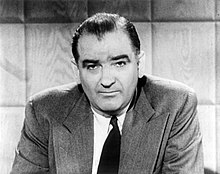
Joseph McCarthy

When the Senate gallery erupted in applause, McCarthy–totally surprised at his sudden reversal of fortune–was finished.

Today, however, other Americans should be asking themselves the question asked by Welch: “At long last, have you left no sense of decency?”

Americans like Rick Santorum, Republican Presidential candidate in 2016.

Rick Santorum

As a United States Senator from Pennsylvania (1997-2005) and a 2012 Presidential candidate, Santorum fervently sought to ban legalized abortion–even in rape cases. Also on his list of banned items: birth control.

Abortion and birth control, said Santorum, were an affront to “the way things ought to be.”  As decided, of course, by Santorum.

But this did not stop him from marrying, in 1990, a woman–Karen Garver–who had spent six years as the unmarried bedmate of an OBGYN-abortionist named Tom Allen, who was 40 years her senior.

Today, as Mrs. Santorum, she has totally reversed her view on abortion and wants to see it banned.

Then there’s 2016 Presidential candidate Ted Cruz.

U.S. Senator Ted Cruz (R-Texas) 

As a Republican United States Senator from Texas, Cruz voted–three times–against providing federal aid for the victims of Hurricane Sandy.

The October, 2012, hurricane killed about 150 people and caused an estimated $75 billion worth of damages across the Northeast.

But when a fertilizer plant exploded in West, McLennan County, Texas, on April 17, 2013, Cruz vowed that he would seek “all available resources” to assist its victims.

The blast killed 13 people, wounded about 200 others, and caused extensive damage to surrounding homes.

It didn’t matter to Cruz that:

  • The facility hadn’t been expected by the Labor Department’s Occupational Safety and Health Administration (OSHA) since 1985, when the company was find $30; and
  • The plant had been storing 1,350 times the amount of ammonium nitrate that would normally trigger safety oversight by the U.S. Department of Homeland Security (DHS.).

Then there’s Donald Trump, the egocentric businessman and “reality star of NBC’s “The Apprentice,” who, likewise, has thrown his hat into the 2016 Presidential race.

Donald Trump

On April 17, 2011, toying with the idea of entering the 2012 Presidential race, Trump said this about Mitt Romney, the former Massachusetts governor and front-runner GOP candidate:

“He’d buy companies, he’d close companies.  He’d get rid of jobs.  I’ve built a great company.  I’m a much bigger businessman and have a much, much bigger net worth.  I mean, my net worth is many, many, many times Mitt Romney.

“Mitt Romney is a basically small-business guy, if you really think about it. He was a hedge fund.  He was a funds guy.  He walked away with some money from a very good company that he didn’t create.  he worked there.  He didn’t create it.”

Trump added that Bain Capital, the hedge fund where Romney made millions of dollars before running for governor, didn’t create any jobs. Whereas Trump claimed that he–Trump–had created “hundreds of thousands of jobs.”

So at least some observers must have been puzzled when Trump announced, on February 2, 2012: “It’s my honor, real honor and privilege, to endorse Mitt Romney” for President.

“Mitt is tough.  He’s smart.  He’s sharp. He’s not going to allow bad things to continue to happen to this country that we all love.  So, Governor Romney, go out and get ’em.  You can do it,” said Trump.

Mitt Romney

And Romney, in turn, had his own swooning-girl moment: “I’m so honored to have his endorsement.  There are some things that you just can’t imagine in your life. This is one of them.”

Clearly, the word “hypocrisy” means nothing to Santorum, Cruz and Trump. But it should mean something to the rest of us.

In samurai Japan, officials who publicly disgraced themselves knew what to do. The samurai code of Bushido told them when they had crossed the line into eternal damnation.

And it gave them a way to redeem their lost honor–seppuku.  With a small “belly-cutting” knife and the help of a trusted assistant who sliced off their head to spare them the agonizing pain of disembowelment.

Seppuku 

In the armies of America and Europe, the method was slightly different: A pistol in a private room.

Considering the ready availability of firearms among Right-wing Republicans, redeeming lost honor shouldn’t be a problem for any of these men.

But of course it will be.  It takes more than a trigger pull to “do the right thing.  It takes insight to recognize that you’ve “done the wrong thing.”  And it takes courage to act on that insight.

In men who live only for their own egos and wallets, such insight and courage will be forever missing.  They are beyond redemption.

Their lives give proof to the warning offered in Matthew 7:17-20:

“Even so every good tree bringeth forth good fruit; but a corrupt tree bringeth forth evil fruit.  A good tree cannot bring forth evil fruit, neither can a corrupt tree bring forth good fruit.

“Every tree that bringeth not forth good fruit is hewn down, and cast into the fire. Wherefore by their fruits ye shall know them.”

THE CASEY DOCTRINE

In Bureaucracy, Business, Law, Politics on January 22, 2016 at 12:18 am

When William J. Casey was a young attorney during the Great Depression, he learned an important lesson.

Jobs were hard to come by, so Casey thought himself lucky to land one at the Tax Research Institute of America in New York.

His task was to closely read New Deal legislation and write reports explaining it to corporate chieftains.

At first, he thought they wanted detailed legal commentary on the meaning of the new legislation.

But the he quickly learned a blunt truth: Businessmen neither understood nor welcomed President Franklin D. Roosevelt’s efforts at reforming American capitalism. And they didn’t want legal commentary.

Instead, they wanted to know: “What is the minimum we have to do to achieve compliance with the law?”

In short: How do we get by FDR’s new programs?

Fifty years later, Casey would bring the same mindset to his duties as director of the Central Intelligence Agency (CIA) for President Ronald Reagan.

William J. Casey 

He was presiding over the CIA when it deliberately violated Congress’ ban on funding the “Contras,” the Right-wing death squads of Nicaragua.

Casey gave lip service to the demands of Congress.  But privately, with the help of Marine Lieutenant Colonel Oliver North, he set up an “off-the-shelf” operation to provide arms to overthrow the leftist government of Daniel Ortega.

It was what President Ronald Reagan wanted.  So Casey felt he had a duty to get it done, and Congress be damned.

When news of Casey’s–and Reagan’s–illegal behavior leaked, in November, 1986, it almost destroyed the Reagan administration.

Especially damning: Much of the funding directed to the “Contras” had come from Iran, America’s mortal enemy.

To ransom a handful of American hostages who had been kidnapped in Lebanon, Reagan sold them our most sophisticated missiles in a weak-kneed exchange for American hostages.

Then he went on television and brazenly denied that any such “arms for hostages” trade had ever happened.  

Ronald Reagan

But the “Casey Doctrine” of minimum compliance with the law didn’t die with Casey (who expired of a brain tumor in 1987).

It was very much alive within the American business community as President Barack Obama sought to bring medical coverage to all Americans, and not simply the ultra-wealthy.

The single most important provision of the Affordable Care Act (ACA)–better-known as Obamacare–requires large businesses to provide insurance to fulltime employees who work more than 30 hours a week.

For part-time employees, who work fewer than 30 hours, a company isn’t penalized for failing to provide health insurance coverage.

Obama’s enemies have long slandered him as a ruthless practitioner of Chicago politics.”  So it’s easy to assume that he took “the Casey Doctrine” into account when he shepherded the ACA through Congress.

But he didn’t.

The result was predictable.  And its consequences are daily becoming more clear.

Employers feel motivated to move fulltime workers into part-time positions, and thus avoid

  • providing their employees with medical insurance;
  • and a fine for non-compliance with the law.

Some employers have openly shown their contempt for President Obama–and the idea that employers actually have any obligation to those who make their profits a reality.  

John Schnatter, CEO of Papa John’s Pizza, has been quoted as saying:

  • The price of his pizzas will go up–by 11 to 14 cents per pizza, of 15 to 20 cents per order; and
  • He will pass along these costs to his customers.

“If Obamacare is in fact not repealed,” Schnatter told Politico, “we will find tactics to shallow out any Obamacare costs and core strategies to pass that cost onto consumers in order to protect our shareholders’ best interests.”

After all, why should a multimillion dollar company show any concern for those who make its profits a reality?

Consider:  

  • Papa John’s is the third-largest pizza takeout and delivery chain in the United States.  
  • Its 2014 revenues were $1.60 billion, an increase of 11.1% over 2013 revenues of $1.44 billion.  
  • Its 2014 net income was $73.3 million, compared to 2013 net income of $69.5 million.  

In May, 2012, Schnatter hosted a fundraising event for Republican Presidential candidate Mitt Romney at his own Louisville, Kentucky, mansion.

“What a home this is,” gushed Romney.  “What grounds these are, the pool, the golf course.

“You know, if a Democrat were here he’d look around and say no one should live like this. Republicans come here and say everyone should live like this.”

Of course, Romney conveniently ignored a brutally ugly fact:

For the vast majority of Papa John’s minimum-wage-earning employees-–many of them working only part-time-–the odds of their owning a comparable estate are non-existent.

Had  Obama been the serious student of Realpolitick that his enemies claim he is, he would have predicted that most businesses would seek to avoid compliance with his law.

To counter that, he need only have required employers to provide insurance coverage for all of their employees–regardless of their fulltime or part-time status.

This, in turn, would have produced two substantial benefits:

  • All employees would have been able to obtain medical coverage; and
  • Employers would have been encouraged to provide fulltime positions rather than part-time ones, since they would feel, “I’m paying for fulltime insurance coverage, so I should be getting fulltime work in return.”

The “Casey Doctrine” needs to be kept constantly in mind when reformers try to protect Americans from predatory employers. 


BLACK IS AN IMPEACHABLE OFFENSE: PART ONE (OF TWO)

In Bureaucracy, History, Politics, Social commentary on January 15, 2016 at 12:08 am

Since the end of World War II in 1945, Republicans have regularly hurled the charge of “treason” against anyone who dared to run against them for office or think other than Republican-sponsored thoughts.

Republicans had been locked out of the White House from 1933 to 1952, during the administrations of Franklin D. Roosevelt and Harry S. Truman.

Determined to regain the Presidency by any means, they found that attacking the integrity of their fellow Americans a highly effective tactic.

During the 1950s, Wisconsin Senator Joseph R. McCarthy rode a wave of paranoia to national prominence. On February 9, 1950, he claimed:

“The State Department is infested with communists. I have here in my hand a list of 205—a list of names that were made known to the Secretary of State as being members of the Communist Party and who nevertheless are still working and shaping policy in the State Department.”

Joseph McCarthy

After four years of such frenzied attacks on Congress, the State Department and respected journalists such as Edward R. Murrow, McCarthy finally overstepped himself. He accused the United States Army of being an active hotbed for Communists.

At the Army-McCarthy hearings, McCarthy’s credibility was forever destroyed. He was finally censured by his fellow Senators and disappeared into anonymity, alcoholism and death in 1957.

But Right-wingers ignored the truth that McCarthy never uncovered one actual case of treason.

And today, right-wing columnists like Ann Coulter try to rehabilitate his memory–just as right-wingers in Russia still try to rehabilitate the memory of Soviet dictator Joseph Stalin.

The reason: Republicans have found that attacking the patriotism of their opponents is an effective vote-getter:

  • It elected Dwight Eisenhower President and turned Congress Republican in 1952 and 1956.
  • It elected Richard Nixon President in 1968 and 1972.
  • It elected Ronald Reagan President in 1980 and 1984.
  • It elected George H.W. Bush President in 1988.
  • It gave Republicans control of the Congress in 1994 (although Bill Clinton had been elected President in 1992).
  • It elected George W. Bush President in 2000 and 2004.
  • It gave control of the House to Republicans in 2010 and the Senate in 2014.

The election of Barack Obama pushed the “treason chorus” to new heights of infamy. With no political scandal (such as Bill Clinton’s affair with Monica Lewinsky) to fasten on, the bureaucracy of the Republican Party deliberately promoted the slander that Obama was not an American citizen.

From this there could be only one conclusion: That he was an illegitimate President, and should be removed from office.

During the 2008 Presidential campaign, Republicans charged that Obama was really a Muslim non-citizen who intended to sell out America’s security to his Muslim “masters.”

And this smear campaign continued throughout his Presidency.

To the dismay of his enemies, Obama–in the course of a single week–dramatically proved the falsity of both charges.

On April 27, 2011, he released the long-form of his Hawaii birth certificate.

The long-form version of President Obama’s birth certificate

“We do not have time for this kind of silliness,” said Obama at a press conference, speaking as a father might to a roomful of spiteful children. “We have got big problems to solve….

“We are not going to be able to do it if we are distracted, we are not going to be able to do it if we spend time vilifying each other…if we just make stuff up and pretend that facts are not facts, we are not going to be able to solve our problems if we get distracted by side shows and carnival barkers.”

And on May 1, he announced the solving of one of those “big problems”: Osama bin Laden, mastermind of the September 11, 2001 terrorist attacks, had been tracked down and shot dead by elite U.S. Navy SEALS in Pakistan.

Since the 2008 election of Barack Obama as President, Republicans have coupled their traditional “Treason!” slander with both subtle and outright appeals to racism.

Most Republicans refuse to acknowledge this, but author Will Bunch does so in his 2010 book, The Backlash:

“…The year that had [conservatives] so terrified was 2050. In that year, according to the U.S. Census Bureau, the U.S. population would grow to some 399 million people–but only 49.8% would be white….”

The Backlash: Right-Wing Radicals, High-Def Hucksters, and Paranoid Politics in the Age of Obama

Then came the 2008 election of Barack Obama.

“The Democratic upstart–and his legion of supporters among the nonwhite as well as the young–was a 9/11-sized jolt to the white masses already so worried about the cultural implications of immigration.

“The year 2050 suddenly wasn’t two generations away but right here knocking on the front door, with a dark face and that scary name: Barack Hussein Obama.

“Like a fire spreading across dry sagebrush, it took no effort for fear of The Other to leap from the Mexicans in front of the Wal-Mart to the man now inside the Oval Office.”

A fictional author who predicted this very scenario was the best-selling novelist, Irving Wallace.

His 1964 novel, The Man, positing the ascent of the first black President, appeared 44 years before Obama’s election.

The plot: The President and Speaker of the House are killed in an overseas building collapse, and the Vice-President declines the office due to age and ill-health. As a result, Senate President pro tempore Douglas Dilman suddenly becomes the first black man to occupy the Oval Office.

DAVY CROCKETT VS. DONALD TRUMP

In History, Politics, Social commentary on November 26, 2015 at 8:58 am

It’s a scene you couldn’t imagine seeing in John Wayne’s 1960 film, “The Alamo.”  Especially with The Duke playing a hard-drinking, two-fisted Davy Crockett.

John Wayne as Davy Crockett

But it occurs in the novel, Crockett of Tennessee, by Cameron Judd.  And it is no less affecting for its being–so far as we know–entirely fictional.

It’s the last night of life for the Alamo garrison–the night before the 2,000 men of the Mexican Army hurl themselves at the former mission and slaughter its 200 Texian defenders.

The fort’s commander, William Barret Travis, has drawn his “line in the sand” and invited the garrison to choose: To surrender, to try to escape, or to stay and fight to the death.

And the garrison–except for one man–chooses to stay and fight.  That man is Louis “Moses” Rose, a Frenchman who has served in Napoleon’s Grande Armee and survived the frightful retreat from Moscow.

He vaults a low wall of the improvised fort, flees into the moonless desert, and eventually makes his way to the home of a family who give him shelter.

But for the garrison, immortality lies only hours away.  Or does it?

An hour after deciding to stand and die in the Alamo, wrapped in the dark of night, Crockett is seized with paralyzing fear.

“We’re going to die here,” he chokes out to his longtime friend, Persius Tarr.  “You understand that, Persius?  We’re going to die!”

Related image

“I know, Davy.  But there ain’t no news in that,” says Tarr.  “We’re born to die.  Every one of us.  Only difference between us and most everybody else is we know when and where it’s going to be.”

“But I can’t be afraid–not me.  I’m Crockett.  I’m Canebrake Davy.  I’m half-horse, half-alligator.”

“I know you are, Davy,” says Tarr. ”So do all these men here.  That’s why you’re going to get past this.

“You’re going to put that fear behind you and walk back out there and fight like the man you are.  The fear’s come and now it’s gone.  This is our time, Davy.”

“The glory-time,” says Crockett.

“That’s right, David.  The glory-time.”

And then Tarr delivers a sentiment wholly alien to money-obsessed men like Mitt Romney and Donald Trump–who comprise the richest and most privileged 1% of today’s Americans.

“There’s men out there with their eyes on you.  You’re the only thing keeping the fear away from them.  You’re joking and grinning and fiddling-–it gives them courage they wouldn’t have had without you.

Maybe that’s why you’re here, Davy–to make the little men and the scared men into big and brave men.  You’ve always cared about the little men, Davy.  Remember who you are.

“You’re Crockett of Tennessee, and your glory-time has come.  Don’t you miss a bit of it.”

The next morning, the Mexicans assault the Alamo.  Crockett embraces his glory-time-–and becomes a legend for all-time.

David Crockett (center) at the fall of the Alamo

David Crockett (1786-1836) lived–and died–a poor man.  But this did not prevent him from trying to better the lives of his family and fellow citizens–and even his former enemies.

David Crockett

During the War of 1812, he served as a scout under Andrew Jackson.  His foes were the Creek Indians, who had massacred 500 settlers at Fort Mims, Alabama–and threatened to do the same to Crockett’s neighbors in Tennessee.

As a Congressman from Tennessee, he championed the rights of poor whites.  And he opposed then-President Jackson’s efforts to force the same defeated Indians to depart the lands guaranteed them by treaty.

To Crockett, a promise was sacred–whether given by a single man or the United States Government.

And his presence during the 13-day siege of the Alamo did cheer the spirits of the vastly outnumbered defenders.

It’s a matter of historical record that he and a Scotsman named MacGregor often staged musical “duels” to see who could make the most noise.

It was MacGregor with his bagpipes against Crockett and his fiddle.

Contrast this devotion of Crockett to the rights of “the little men,” as Persius Tarr called them, with the attitude of Donald Trump, the currently-favored Republican candidate for President in 2016.

Donald Trump

On June 16, while announcing his candidacy, Trump said:

  • “…I don’t need anybody’s money. It’s nice. I don’t need anybody’s money. I’m using my own money. I’m not using lobbyists, I’m not using donors. I don’t care. I’m really rich.”
  • “I did a lot of great deals and I did them early and young, and now I’m building all over the world….”
  • “So I have a total net worth, and now with the increase, it’ll be well-over $10 billion.”
  • “But here, a total net worth of–net worth, not assets, not–a net worth, after all debt, after all expenses, the greatest assets–Trump Tower, 1290 Avenue of the Americas, Bank of America building in San Francisco, 40 Wall Street, sometimes referred to as the Trump building right opposite the New York–many other places all over the world. So the total is $8,737,540,000.”

Those who give their lives for others are rightly loved as heroes.  Those who dedicate their lives only to their wallets are rightly soon forgotten.

THE FAULT LIES IN US

In Bureaucracy, History, Politics, Self-Help, Social commentary on September 25, 2015 at 12:01 am

During a GOP primary debate on June 13, 2011, CNN moderator John King noted that FEMA–the Federal Emergency Management Agency–was about to run out of money.

And so he asked Republican Presidential candidate Mitt Romney:

“There are some people who say do it on a case-by-case basis and some people who say, you know, maybe we’re learning a lesson here that the states should take on more of this role.

“How do you deal with something like that?”

“Absolutely,” Romney replied. “Every time you have an occasion to take something from the federal government and send it back to the states, that’s the right direction.

“And if you can go even further, and send it back to the private sector, that’s even better.

“Instead of thinking in the federal budget, what we should cut–we should ask ourselves the opposite question: What should we keep?

“We should take all of what we’re doing at the federal level and say, what are the things we’re doing that we don’t have to do?

“And those things we’ve got to stop doing, because we’re borrowing $1.6 trillion more this year than we’re taking in.”

FLIP!

Mitt Romney vs. FEMA

On October 30, 2012, one day after Hurricane Sandy lashed the densely-populated East Coast of the United States, reporters wanted to know if Romney still wanted to eliminate FEMA.

And, as he had on so many other issues, Mitt Romney once again refused to answer questions.

“Governor, are you going to eliminate FEMA?” a pool eporter shouted to Romney.

Hurricane Sandy

Romney refused to answer.

The reporter asked Romney at least five times: “If you’re elected President, would you eliminate FEMA?” and “What would you do with FEMA?”

No reply.

Another reporter asked: “Governor, are you going to see some storm damage?”

Again, no answer.

“Governor,. has Chris Christie invited you to come survey storm damage?”

No answer.

“Governor, you’ve been asked 14 times, why are you refusing to answer the question?”

Again, Romney refused to reply.

Finally, under mounting public pressure, he gave this reply:

FLOP!

Mitt Romney pro-FEMA

“I believe that FEMA plays a key role in working with states and localities to prepare for and respond to natural disasters.

“As president, I will ensure FEMA has the funding it needs to fulfill its mission, while directing maximum resources to the first responders who work tirelessly to help those in need.”

In a court of law, a defendant has the right to refuse to take the witness stand and answer questions.  And jurors are told by the judge they should not assume the defendant is guilty for doing so.

Courtrooms are often places for a game of let’s-pretend:

  • Let’s pretend that a man who’s accused of rape or murder is innocent–even if he refuses to answer legitimate questions; and
  • Let’s pretend that a truly innocent man wouldn’t want to clear himself from a totally false charge

But this is the real world.

And, in it, unlike a courtroom, experience teaches that:

  • People who are honest want to testify to that truth; and
  • People who refuse to answer legitimate questions usually do have something to hide.

Think of Richard Nixon refusing to answer questions about Watergate.

Think of Ronald Reagan refusing to take questions about Iran-Contra.

Think of George W. Bush refusing to take questions about why he ignored months of terrorism warnings before 9/11.

And think of Mitt Romney refusing to answer questions on any number of subjects.

So it’s natural to distrust those who refuse to give specific answers to specific questions–especially when those questions apply to matters that direclty affect people’s lives.

For millions of Americans who profess to be deeply religious, Jesus’ words in Matthew 7:7-8 should have been instructive:

Ask, and it shall be given you.  Seek, and ye shall find.  Knock, and it shall be opened unto you.

For every one that asketh receiveth.  And he that seeketh findeth. And to him that knocketh it shall be opened.

In a democracy, those words are a call to citizen action:

Ask.

Seek.

Knock.

In the Soviet Union, the truth about the workings of government and the realities of everyday life was carefully guarded.

Only those who gained special access to the Kremlin’s hidden archives could learn at least some of that truth.

Everyone else had to settle for the official, self-serving, lie-filled pronouncements of the Soviet leadership.

But Americans have no such excuse.

They do have access to a wide range of news from differing sources–ranging from the far left to the far right.  At least 1,382 daily newspapers–both domestic and foreign– provide information on a wide range of national and international issues.

More than 20 nationwide broadcasting networks exist.  Among these: ABC, CBS, CNN, Fox, NBC, PBS, Telemundo, The CW.

Nevertheless, millions of Americans remain ignorant of the well-revealed truth about the issues that most affect their lives.

As a result, Cassius’ words to Brutus in William Shakespeare’s Julius Caesar apply to them:

“The fault, dear Brutus, is not in our stars but in ourselves that we are underlings.”