Posts Tagged ‘JUSTICE DEPARTMENT’
ABC NEWS, ADOLF HITLER, ALTERNET, AP, BAVARIA, BBC, BEER HALL PUTSCH, BREITBART NEWS, BUZZFEED, CBS NEWS, CHRISTOPHER S. MURPHY, CIA, CNN, DAILY KOS, DEMOCRATIC NATIONAL COMMITTEE, DEMOCRATIC PARTY, DONALD TRUMP, EDMUND BURKE, EXTORTION, FACE THE NATION, FACEBOOK, FERGUS CULLEN, FOX NEWS SUNDAY, GREG ABBOTT, HACKING, HILLARY CLINTON, HITLER: ASCENT, IRS, JAMES B. COMEY, JAMES R. CLAPPER, JEWS, JOHN KASICH, JUSTICE DEPARTMENT, KEN PAXTON, LEON PANETTA, MEIN KAMPF, MICHAEL ROGERS, MIKE PENCE, MOTHER JONES, MOVEON, MUNICH, NATIONAL SECURITY AGENCY, NAZI PARTY, NBC NEWS, NEW HAMPSHIRE REPUBLICAN PARTY, NEWSWEEK, NPR, PAM BONDI, PAUL RYAN, PHILIP KLEIN, POLITICO, Racketeer Influenced Corrupt Organizations (RICO) Act, RAW STORY, REPUBLICAN NATIONAL COMMITTEE, REPUBLICAN NATIONAL CONVENTION, REPUBLICAN PARTY, REUTERS, ROGER STONE, SALON, SEATTLE TIMES, SLATE, SOVIET UNION, THE ATLANTIC, THE CHICAGO SUN-TIMES, THE CHICAGO TRIBUNE, THE DAILY BEAST, THE GUARDIAN, THE HILL, THE HUFFINGTON POST, THE LOS ANGELES TIMES, THE NEW YORK TIMES, THE WALL STREET JOURNAL, THE WASHINGTON EXAMINER, THE WASHINGTON POST, THREATS, TIME, TREASON, TRUMP UNIVERSITY, TWITTER, U.S. NEWS & WORLD REPORT, U.S. SECRET SERVICE, UPI, USA PATRIOT ACT, USA TODAY, VLADIMIR PUTIN, VOLKER ULLRICH, WEIMAR REPUBLIC
In Bureaucracy, History, Law, Law Enforcement, Politics, Social commentary on May 29, 2017 at 12:01 am
Future historians may one day write that it’s what didn’t happen that played at least as great a role in electing Donald Trump President as what actually did.
There were at least four instances where intervention by Federal law enforcement authorities could have utterly changed the outcome of the 2016 election.
Two of these dealt with purely domestic issues–the Trump University scandal and Trump’s repeated threats of violence against Republican and Democratic opponents.
The third and fourth ones dealt with events directly affecting the security of the United States.
It is unprecedented for an American Presidential candidate to repeatedly bestow fulsome praise on the leader of a foreign power hostile to the United States. And to receive equally fawning compliments in return from that leader.
Yet that is precisely what has happened between Donald Trump and Vladimir Putin.
Thus Putin on Trump: “He is a bright personality, a talented person, no doubt about it. It is not up to us to appraise his positive sides, it is up to the U.S. voters. but, as we can see, he is an absolute leader in the presidential race.”

Vladimir Putin
And Trump on Putin: “It is always a great honor to be so nicely complimented by a man so highly respected within his own country and beyond. He’s running his country, and at least he’s a leader. Unlike what we have in this country”–a clear attack on President Barack Obama.
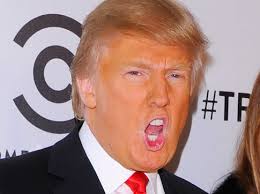
Donald Trump
Case #3: The Justice Department did not invalidate the results of the 2016 election, despite overwhelming evidence that Russia intervened to elect Trump as Vladimir Putin’s chosen candidate.
- Admiral Michael Rogers, director of the National Security Agency (NSA) and US Cyber Command, said in mid-November that Russia made “a conscious effort” to sway the results of the Presidential election by the hacking of 20,000 emails from the Democratic National Committee.
- “There shouldn’t be any doubt in anybody’s mind,” said Rogers. “This was not something that was done casually. This was not something that was done by chance. This was not a target that was selected purely arbitrarily. This was a conscious effort by a nation-state to attempt to achieve a specific effect.”

- The Russians hacked the Democratic committee’s servers–but not those of the Republican National Committee.
- On December 16, FBI Director James B. Comey and Director of National Intelligence James R. Clapper Jr. agreed with a CIA assessment that Russia intervened in the 2016 election in part to help Donald Trump win the White House.

Trump, however, has steadfastly denied any such role by Russia: “I think it’s ridiculous,” he told “Fox News Sunday.” “I think it’s just another excuse. I don’t believe it. No, I don’t believe it at all.”
Case #4: The Justice Department did not prosecute Trump for treason, even though he solicited aid from Russia, a nation hostile to the United States. And no major official of the government–including President Obama–publicly condemned him as a traitor.
At a news conference in Doral, Florida, on July 27, 2016, Trump publicly exhorted “Russia”–i.e., Vladimir Putin–to hack Hillary Clinton’s emails: “I will tell you this, Russia: If you’re listening, I hope you’re able to find the 30,000 emails that are missing. I think you will probably be rewarded mightily by our press.”
This was essentially treason–calling on a hostile foreign power to interfere directly in an American Presidential election. And it was seen as such by both Democrats and even some Republicans.
- “This has to be the first time that a major presidential candidate has actively encouraged a foreign power to conduct espionage against his political opponent,” Hillary for America policy adviser Jake Sullivan said in a statement. “That’s not hyperbole, those are just the facts. This has gone from being a matter of curiosity, and a matter of politics, to being a national security issue.”
- “I find those kinds of statements to be totally outrageous because you’ve got now a presidential candidate who is, in fact, asking the Russians to engage in American politics,” said former CIA Director Leon Panetta, a Clinton surrogate. “I just think that’s beyond the pale.”
- Brendan Buck, a spokesman for House Speaker Paul Ryan, said: “Russia is a global menace led by a devious thug. Putin should stay out of this election.”
- Trump’s Vice Presidential running mate, Mike Pence, said: “If it is Russia and they are interfering in our elections, I can assure you both parties and the United States government will ensure there are serious consequences.”
FBI Director James Comey believed that Hillary Clinton’s emails on a private server were so dangerous to national security that he announced–11 days before the election–that he was re-opening an investigation he had closed.
That announcement erased widespread outrage over Trump’s unintended admissions of predatory behavior toward women–“Grab them by the pussy”–and reversed Clinton’s growing lead in the polls.
Yet the Bureau did not issue any such statements about the continuing reports of close ties between Trump and Putin, and Trump’s possible investments in Russia.
To their shame, the federal agencies charged with safeguarding America failed to take action against these abuses. And, to their shame, the news media, to date, has failed to indict them for their negligence.
ABC NEWS, ADOLF HITLER, ALTERNET, AP, BAVARIA, BBC, BEER HALL PUTSCH, BREITBART NEWS, BUZZFEED, CBS NEWS, CHRISTOPHER S. MURPHY, CIA, CNN, DAILY KOS, DEMOCRATIC NATIONAL COMMITTEE, DEMOCRATIC PARTY, DONALD TRUMP, EDMUND BURKE, EXTORTION, FACE THE NATION, FACEBOOK, FERGUS CULLEN, FOX NEWS SUNDAY, GREG ABBOTT, HACKING, HILLARY CLINTON, HITLER: ASCENT, IRS, JAMES B. COMEY, JAMES R. CLAPPER, JEWS, JOHN KASICH, JUSTICE DEPARTMENT, KEN PAXTON, LEON PANETTA, MEIN KAMPF, MICHAEL ROGERS, MIKE PENCE, MOTHER JONES, MOVEON, MUNICH, NATIONAL SECURITY AGENCY, NAZI PARTY, NBC NEWS, NEW HAMPSHIRE REPUBLICAN PARTY, NEWSWEEK, NPR, PAM BONDI, PAUL RYAN, PHILIP KLEIN, POLITICO, Racketeer Influenced Corrupt Organizations (RICO) Act, RAW STORY, REPUBLICAN NATIONAL COMMITTEE, REPUBLICAN NATIONAL CONVENTION, REPUBLICAN PARTY, REUTERS, ROGER STONE, SALON, SEATTLE TIMES, SLATE, SOVIET UNION, THE ATLANTIC, THE CHICAGO SUN-TIMES, THE CHICAGO TRIBUNE, THE DAILY BEAST, THE GUARDIAN, THE HILL, THE HUFFINGTON POST, THE LOS ANGELES TIMES, THE NEW YORK TIMES, THE WALL STREET JOURNAL, THE WASHINGTON EXAMINER, THE WASHINGTON POST, THREATS, TIME, TREASON, TRUMP UNIVERSITY, TWITTER, U.S. NEWS & WORLD REPORT, U.S. SECRET SERVICE, UPI, USA PATRIOT ACT, USA TODAY, VLADIMIR PUTIN, VOLKER ULLRICH, WEIMAR REPUBLIC
In Bureaucracy, History, Law, Law Enforcement, Politics, Social commentary on May 26, 2017 at 12:36 am
Threatening his Republican and Democratic opponents with violence played a major role in Donald Trump’s campaign for President.
No other candidate–Republican or Democrat–had ever made such repeated and brutal use of threats of physical assault in pursuing the Presidency.
- Philip Klein, the managing editor of the Washington Examiner, wrote on the eve of the Republican National Convention in July: “Political commentators now routinely talk about the riots that would break out in Cleveland if Trump were denied the nomination, about how his supporters have guns and all hell could break loose, that they would burn everything to the ground. It works to Trump’s advantage to not try too hard to dispel these notions.”
- On August 9, Trump told a rally in Wilmington, North Carolina: “Hillary [Clinton] wants to abolish, essentially abolish, the Second Amendment. If she gets to pick her [Supreme Court] judges, nothing you can do folks. Although the Second Amendment people, maybe there is, I don’t know.”
- “Don’t treat this as a political misstep,” Senator Christopher S. Murphy of Connecticut, who has called for stiffer gun laws, wrote on Twitter. “It’s an assassination threat, seriously upping the possibility of a national tragedy & crisis.”
- “Well, let me say if someone else said that outside of the hall, he’d be in the back of a police wagon now, with the Secret Service questioning him,” said Michael Hayden, former head of the CIA and National Security Agency (NSA).
Making threats against anyone under protection by the U.S. Secret Service is a felony. Yet Donald Trump was never held legally accountable by the Justice Department.

Michael Hayden
Threats of this type continued to be made by Trump supporters right up to the day of the election.
- On July 29, Roger Stone, a notorious Right-wing political consultant acting as a Trump strategist, told Breitbart News: “The first thing Trump needs to do is begin talking about [voter fraud] constantly. If there’s voter fraud, this election will be illegitimate, the election of the winner will be illegitimate, we will have a constitutional crisis, widespread civil disobedience, and the government will no longer be the government.”
- At a town hall meeting where Trump’s Vice Presidential nominee Mike Pence appeared, a woman named Rhonda said: “For me personally, if Hillary Clinton gets in, I myself am ready for a revolution.”
- In Cincinnati, a Trump supporter threatened to forcibly remove Clinton from the White House if she won the race: “If she’s in office, I hope we can start a coup. She should be in prison or shot. That’s how I feel about it,” Dan Bowman, a 50-year-old contractor, said of Hillary Clinton, the Democratic nominee. “We’re going to have a revolution and take them out of office if that’s what it takes. There’s going to be a lot of bloodshed. But that’s what it’s going to take….I would do whatever I can for my country.”
Even Fergus Cullen, former chairman of the New Hampshire GOP, expressed fear of what might happen if Trump lost the election:

Fergus Cullen
“That’s really scary,” Cullen said, recounting the violence at Trump rallies around the country leading up to the Republican National Convention. “In this country, we’ve always had recriminations after one side loses. But we haven’t had riots. We haven’t had mobs that act out with violence against supporters of the other side.
“There’s no telling what his supporters would be willing to do at the slightest encouragement from their candidate,” he said.
Trump even began encouraging his mostly white supporters to sign up online to be “election observers” to stop “Crooked Hillary from rigging this election.” He urged them to act as poll watchers in “other” [non-white] communities to ensure that things are “on the up and up.”
Many of his supporters promised to do so.
“Trump said to watch your precincts. I’m going to go, for sure,” said Steve Webb, a 61-year-old carpenter from Fairfield, Ohio.
“I’ll look for…well, it’s called racial profiling. Mexicans. Syrians. People who can’t speak American,” he said. “I’m going to go right up behind them. I’ll do everything legally. I want to see if they are accountable. I’m not going to do anything illegal. I’m going to make them a little bit nervous.”
Knowing that large numbers of angry–and possibly armed–Right-wingers planned to descend on polling places could only have had a chilling effect on untold numbers of Democratic voters. And this would have been especially true in heavily conservative states.
Both the USA Patriot Act and the Racketeer Influenced Corrupt Organizations (RICO) Act have statutes dealing with making terrorist threats against government institutions to influence their members.
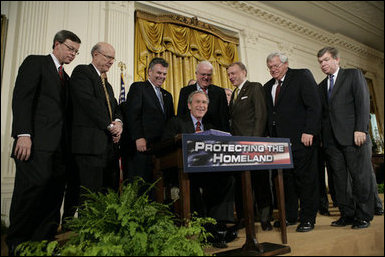
President George W. Bush signing the USA Patriot Reauthorization Act of 2005
Thus, the Justice Department could have cited the Patriot Act in indicting Trump and/or any number of his followers for “activities that…appear to be intended…to influence the policy of a government by intimidation or coercion [and]…occur primarily within the territorial jurisdiction of the United States.”
The Justice Department could have also demanded that the results of the election be invalidated on the basis that widespread voter and candidate intimidation played a massive role in it.
But of course this did not happen.
ABC NEWS, ADOLF HITLER, ALTERNET, AP, BAVARIA, BBC, BEER HALL PUTSCH, BREITBART NEWS, BUZZFEED, CBS NEWS, CHRISTOPHER S. MURPHY, CIA, CNN, DAILY KOS, DEMOCRATIC NATIONAL COMMITTEE, DEMOCRATIC PARTY, DONALD TRUMP, EDMUNC BURKE, EXTORTION, FACE THE NATION, FACEBOOK, FERGUS CULLEN, FOX NEWS SUNDAY, GREG ABBOTT, HACKING, HILLARY CLINTON, HITLER: ASCENT, IRS, JAMES B. COMEY, JAMES R. CLAPPER, JEWS, JOHN KASICH, JUSTICE DEPARTMENT, KEN PAXTON, LEON PANETTA, MEIN KAMPF, MICHAEL ROGERS, MIKE PENCE, MOTHER JONES, MOVEON, MUNICH, NATIONAL SECURITY AGENCY, NAZI PARTY, NBC NEWS, NEW HAMPSHIRE REPUBLICAN PARTY, NEWSWEEK, NPR, PAM BONDI, PAUL RYAN, PHILIP KLEIN, POLITICO, Racketeer Influenced Corrupt Organizations (RICO) Act, RAW STORY, REPUBLICAN NATIONAL COMMITTEE, REPUBLICAN NATIONAL CONVENTION, REPUBLICAN PARTY, REUTERS, ROGER STONE, SALON, SEATTLE TIMES, SLATE, SOVIET UNION, THE ATLANTIC, THE CHICAGO SUN-TIMES, THE CHICAGO TRIBUNE, THE DAILY BEAST, THE GUARDIAN, THE HILL, THE HUFFINGTON POST, THE LOS ANGELES TIMES, THE NEW YORK TIMES, THE WALL STREET JOURNAL, THE WASHINGTON EXAMINER, THE WASHINGTON POST, THREATS, TIME, TREASON, TRUMP UNIVERSITY, TWITTER, U.S. NEWS & WORLD REPORT, U.S. SECRET SERVICE, UPI, USA PATRIOT ACT, USA TODAY, VLADIMIR PUTIN, VOLKER ULLRICH, WEIMAR REPUBLIC
In Bureaucracy, History, Law, Law Enforcement, Politics, Social commentary on May 25, 2017 at 12:06 am
“The only thing necessary for the triumph of evil is for good men to do nothing.”
So wrote Edmund Burke (1729-1797) the Irish statesman, author, orator, political theorist and philosopher. And history has repeatedly proved him right.
One such example was the rise of Adolf Hitler as Germany’s Fuhrer.
Writes historian Volker Ullrich, in his monumental new biography, Hitler: Ascent 1889–1939: “Historians have perennially tried to answer the question of whether Hitler’s rise to power could have been halted….
“There were repeated opportunities to end Hitler’s run of triumphs. The most obvious one was after the failed Putsch of November 1923. Had the Munich rabble-rouser been forced to serve his full five-year term of imprisonment in Landsberg, it is extremely unlikely that he would have been able to restart his political career.”
But that didn’t happen.

Tried for and convicted of treason, he was sentenced to five years’ imprisonment.
At Landsberg Prison, in Bavaria. he was given a huge cell, allowed to receive unlimited visitors and gifts, and treated with deference by guards and inmates.
Nine months later, he was released on parole–by authorities loyal to the authoritarian Right instead of the newly-created Weimar Republic.
Hitler immediately began rebuilding the shattered Nazi party–and deciding on a new strategy to gain power. Disdaining armed force, he would win office by election–or intrigue.
On January 30, 1933, those intrigues bore fruit: Adolf Hitler was appointed Chancellor of Germany.
A second example: The ascent of Donald Trump to the Presidency of the United States.
Future historians may one day write that what didn’t happen played at least as great a role in electing Donald Trump President as what actually did.
There were at least four instances where intervention by Federal law enforcement authorities could have utterly changed the outcome of the 2016 election. Yet, for reasons still unknown, they chose to do nothing.
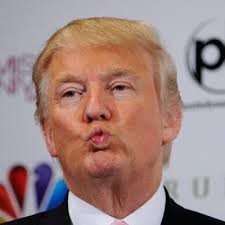
Donald Trump
Case #1: The Justice Department did not indict Trump and/or the Attorney Generals of Texas and/or Florida for their roles in the Trump University scandal.
- Florida Attorney General Pam Bondi personally solicited a political contribution from Donald Trump around the same time her office deliberated joining an investigation of alleged fraud at Trump University and its affiliates.
- After Bondi dropped the Trump University case against Trump, he wrote her a check $25,000 for her re-election campaign. The money came from the Donald J. Trump Foundation.
- Republican Texas Attorney General Ken Paxton moved to muzzle a former state regulator who says he was ordered in 2010 to drop a fraud investigation into Trump University for political reasons.
- Paxton’s office issued a cease and desist letter to former Deputy Chief of Consumer Protection John Owens after he made public copies of a 14-page internal summary of the state’s case against Donald Trump for scamming millions from students of his now-defunct real estate seminar.
- After the Texas case was dropped, Trump cut a $35,000 check to the gubernatorial campaign of then attorney general and now Texas Governor Greg Abbott.
One attorney general who refused to accept money from Trump was New York’s Eric Schneiderman. His decision to press fraud claims against Trump forced the real estate mogul to settle the case out of court for $25 million.
“Today’s $25 million settlement agreement is a stunning reversal by Donald Trump,” said Schneiderman on November 18, “and a major victory for the over 6,000 victims of his fraudulent university.”
There have been no press reports that the Justice Department investigated these cases to determine if Trump violated the Racketeer Influenced Corrupt Organizations (RICO) Act statutes.

If the Justice Department did not investigate these cases, it should have. And if he did violate the RICO statutes, he should have been indicted, even as a Presidential candidate or President-elect.
Even if an indictment had not produced a conviction, the mere bringing of one would have cast an unprecedented cloud over his candidacy–let alone his being sworn in as President.
Case #2: The Justice Department did not indict Trump for his series of threats he made–directly or indirectly–against his Republican and Democratic opponents throughout the 2016 campaign.
- On March 16, he warned Republicans that if he didn’t win the GOP nomination in July, his supporters would literally riot: “I think you’d have riots. I think you would see problems like you’ve never seen before. I think bad things would happen. I really do. I wouldn’t lead it, but I think bad things would happen.”
- An NBC reporter summed it up as: “The message to Republicans was clear on [March 16]: ‘Nice convention you got there, shame if something happened to it.’”
- That Republicans clearly saw this as a threat is undeniable. Paul Ryan, their Speaker of the House, said on March 17: “Nobody should say such things in my opinion because to even address or hint to violence is unacceptable.”
- And Ohio governor and Republican presidential candidate John Kasich chinned in. “Leaders don’t imply violence,” Kasich told “Face the Nation” on March 20. “When he says that there could be riots, that’s inappropriate. I think you understand that, okay? Secondly, while we have our differences and disagreements, we’re Americans. Americans don’t say, ‘Let’s take to the streets and have violence.’”
ABC NEWS, BARACK OBAMA, BREITBART NEWS, CBS NEWS, CHRISTOPHER S. MURPHY, CIA, CNN, DEMOCRATIC NATIONAL COMMITTEE, DEMOCRATIC PARTY, DONALD TRUMP, ERIC SCHNEIDERMAN, EXTORTION, FACE THE NATION, FACEBOOK, FERGUS CULLEN, FOX NEWS SUNDAY, GREG ABBOTT, HACKING, HILLARY CLINTON, IRS, JAMES B. COMEY, JAMES R. CLAPPER, JEFF SESSIONS, JEWS, JOHN KASICH, JUSTICE DEPARTMENT, KEN PAXTON, MARK LEVIN, MICHAEL ROGERS, MIKE PENCE, NATIONAL SECURITY AGENCY, NBC NEWS, NEW HAMPSHIRE REPUBLICAN PARTY, NEWSWEEK, NPR, PAM BONDI, PAUL RYAN, PHILIP KLEIN, POLITICO, Racketeer Influenced Corrupt Organizations (RICO) Act, REPUBLICAN NATIONAL COMMITTEE, REPUBLICAN NATIONAL CONVENTION, REPUBLICAN PARTY, ROGER STONE, SALON, SOVIET UNION, THE CHICAGO SUN-TIMES, THE CHICAGO TRIBUNE, THE HUFFINGTON POST, THE LOS ANGELES TIMES, THE NEW YORK TIMES, THE WASHINGTON EXAMINER, THE WASHINGTON POST, THREATS, TIME, TREASON, TRUMP UNIVERSITY, TRUMP-RUSSIA TIES, TWITTER, U.S. NEWS & WORLD REPORT, U.S. SECRET SERVICE, USA PATRIOT ACT, USA TODAY, VLADIMIR PUTIN, WIRETAPPING
In Bureaucracy, History, Law, Law Enforcement, Politics, Social commentary on March 8, 2017 at 12:06 am
President Donald Trump claims that, as a Presidential candidate, he was a victim of illegal wiretapping ordered by President Barack Obama.
In fact, even without wiretaps, there were at least four instances where Federal law enforcement authorities could have utterly changed the outcome of the 2016 election.
Two of these dealt with purely domestic issues–
- The Trump University scandal; and
- Trump’s repeated threats of violence against Republican and Democratic opponents.
The third and fourth ones dealt with issues directly affecting the security of the United States.
It is unprecedented for an American Presidential candidate to repeatedly bestow fulsome praise on the leader of a foreign power hostile to the United States. And to receive equally fawning compliments in return from that leader.
Yet that is precisely what has happened between Donald Trump and Vladimir Putin.
Thus Putin on Trump: “He is a bright personality, a talented person, no doubt about it. It is not up to us to appraise his positive sides, it is up to the U.S. voters. but, as we can see, he is an absolute leader in the presidential race.”
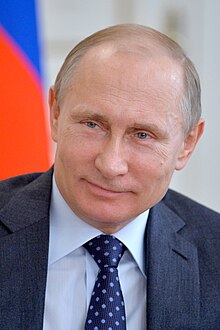
Vladimir Putin
And Trump on Putin: “It is always a great honor to be so nicely complimented by a man so highly respected within his own country and beyond. He’s running his country, and at least he’s a leader. Unlike what we have in this country”–a clear attack on President Barack Obama.
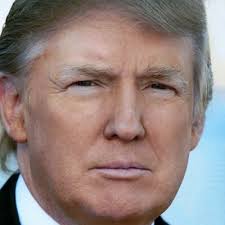
Donald Trump
Case #3: The Justice Department did not invalidate the results of the 2016 election, despite overwhelming evidence that Russia intervened to elect Trump as Vladimir Putin’s chosen candidate.
- Admiral Michael Rogers, director of the National Security Agency (NSA) and US Cyber Command, said in mid-November that Russia made “a conscious effort” to sway the results of the Presidential election by the hacking of 20,000 emails from the Democratic National Committee.
- “There shouldn’t be any doubt in anybody’s mind,” said Rogers. “This was not something that was done casually. This was not something that was done by chance. This was not a target that was selected purely arbitrarily. This was a conscious effort by a nation-state to attempt to achieve a specific effect.”
- The Russians hacked the Democratic committee’s servers–but not those of the Republican National Committee.
- On December 16, FBI Director James B. Comey and Director of National Intelligence James R. Clapper Jr. agreed with a CIA assessment that Russia intervened in the 2016 election in part to help Donald Trump win the White House.
Trump, however, has steadfastly denied any such role by Russia: “I think it’s ridiculous,” he told “Fox News Sunday.” “I think it’s just another excuse. I don’t believe it….No, I don’t believe it at all.”
Case #4: The Justice Department did not prosecute Trump for treason, even though he solicited aid from Russia, a nation hostile to the United States. And no major official of the government–including President Obama–publicly condemned him as a traitor.
At a news conference in Doral, Florida on July 27, Trump publicly invited “Russia”–i.e., Vladimir Putin–to hack Hillary Clinton’s emails: “I will tell you this, Russia: If you’re listening, I hope you’re able to find the 30,000 emails that are missing. I think you will probably be rewarded mightily by our press.”
This was essentially treason–calling on a hostile foreign power to interfere directly in an American Presidential election. And it was seen as such by both Democrats and even Republicans.
- “This has to be the first time that a major presidential candidate has actively encouraged a foreign power to conduct espionage against his political opponent,” Hillary for America policy adviser Jake Sullivan said in a statement. “That’s not hyperbole, those are just the facts. This has gone from being a matter of curiosity, and a matter of politics, to being a national security issue.”
- “I find those kinds of statements to be totally outrageous because you’ve got now a presidential candidate who is, in fact, asking the Russians to engage in American politics,” said former CIA Director Leon Panetta, a Clinton surrogate. “I just think that’s beyond the pale.”
- Brendan Buck, a spokesman for House Speaker Paul Ryan, said: “Russia is a global menace led by a devious thug. Putin should stay out of this election.”
- Even Trump’s Vice Presidential running mate, Mike Pence, said: “If it is Russia and they are interfering in our elections, I can assure you both parties and the United States government will ensure there are serious consequences.”
FBI Director James Comey believed that Hillary Clinton’s emails on a private server were so dangerous to national security that he announced–11 days before the election–that he was re-opening an investigation he had closed.
That announcement erased widespread outrage over Trump’s unintended admissions of predatory behavior toward women–“Grab them by the pussy”–and reversed Clinton’s growing lead in the polls.
Yet the Bureau has not issued any such statements about the continuing reports of close ties between Trump and Putin, and Trump’s possible investments in Russia.
To their shame, the federal agencies charged with safeguarding America failed to take action against these abuses.
And, to their shame, the news media, to date, has failed to indict them for their negligence.
ABC NEWS, BARACK OBAMA, BREITBART NEWS, CBS NEWS, CHRISTOPHER S. MURPHY, CIA, CNN, DEMOCRATIC NATIONAL COMMITTEE, DEMOCRATIC PARTY, DONALD TRUMP, ERIC SCHNEIDERMAN, EXTORTION, FACE THE NATION, FACEBOOK, FERGUS CULLEN, FOX NEWS SUNDAY, GREG ABBOTT, HACKING, HILLARY CLINTON, IRS, JAMES B. COMEY, JAMES R. CLAPPER, JEFF SESSIONS, JOHN KASICH, JUSTICE DEPARTMENT, KEN PAXTON, LEON PANETTA, MARK LEVIN, MICHAEL ROGERS, MIKE PENCE, NATIONAL SECURITY AGENCY, NBC NEWS, NEW HAMPSHIRE REPUBLICAN PARTY, NEWSWEEK, NPR, PAM BONDI, PAUL RYAN, PHILIP KLEIN, POLITICO, Racketeer Influenced Corrupt Organizations (RICO) Act, REPUBLICAN NATIONAL COMMITTEE, REPUBLICAN NATIONAL CONVENTION, REPUBLICAN PARTY, ROGER STONE, SALON, SOVIET UNION, THE CHICAGO SUN-TIMES, THE CHICAGO TRIBUNE, THE HUFFINGTON POST, THE LOS ANGELES TIMES, THE NEW YORK TIMES, THE WASHINGTON EXAMINER, THE WASHINGTON POST, THREATS, TIME, TREASON, TRUMP UNIVERSITY, TRUMP-RUSSIA TIES, TWITTER, U.S. NEWS & WORLD REPORT, U.S. SECRET SERVICE, USA PATRIOT ACT, USA TODAY, VLADIMIR PUTIN, WEIMAR REPUBLIC, WIRETAPPING
In Bureaucracy, History, Law, Law Enforcement, Politics, Social commentary on March 7, 2017 at 12:35 am
Even without wiretaps, there were at least four instances when Federal law enforcement authorities could have disqualified Donald Trump as a Presidential candidate–or secured his indictment.
Threatening your political opponents with violence is a crime under Federal law. Yet such threats against his Republican and Democratic opponents played a major role in Trump’s Presidential campaign.
- Philip Klein, the managing editor of the Washington Examiner, wrote on the eve of the Republican National Convention in July: “Political commentators now routinely talk about the riots that would break out in Cleveland if Trump were denied the nomination, about how his supporters have guns and all hell could break loose, that they would burn everything to the ground. It works to Trump’s advantage to not try too hard to dispel these notions.”
- On August 9, 2016, Trump told a rally in Wilmington, North Carolina: “Hillary [Clinton] wants to abolish, essentially abolish, the Second Amendment. If she gets to pick her [Supreme Court] judges, nothing you can do folks. Although the Second Amendment people, maybe there is, I don’t know.”
- Reacting to Trump’s “dog-whistle” threat against Clinton, Michael Hayden, former head of the CIA and National Security Agency (NSA) said: “Well, let me say if someone else said that outside of the hall, he’d be in the back of a police wagon now, with the Secret Service questioning him.”
Making threats against anyone under protection by the U.S. Secret Service is a felony. Yet Donald Trump was never held legally accountable by the Justice Department.
Threats of violence continued to be made by Trump supporters right up to the day of the election.
- On July 29, 2016, Roger Stone, a notorious Right-wing political consultant acting as a Trump strategist, told Breitbart News: “The first thing Trump needs to do is begin talking about [voter fraud] constantly. If there’s voter fraud, this election will be illegitimate, the election of the winner will be illegitimate, we will have a constitutional crisis, widespread civil disobedience, and the government will no longer be the government.”
- At a town hall meeting where Trump’s Vice Presidential nominee Mike Pence appeared, a woman named Rhonda said: “For me personally, if Hillary Clinton gets in, I myself am ready for a revolution.”
- In Cincinnati, a Trump supporter threatened to forcibly remove Hillary Clinton, the Democratic nominee, from the White House if she won the race: “If she’s in office, I hope we can start a coup. She should be in prison or shot. That’s how I feel about it,” said Dan Bowman, a 50-year-old contractor. “We’re going to have a revolution and take them out of office if that’s what it takes. There’s going to be a lot of bloodshed. But that’s what it’s going to take….”
Even Fergus Cullen, former chairman of the New Hampshire GOP, expressed fear of what might happen if Trump lost the election:
Fergus Cullen
“That’s really scary,” Cullen said, recounting the violence at Trump rallies around the country leading up to the Republican National Convention. “In this country, we’ve always had recriminations after one side loses. But we haven’t had riots. We haven’t had mobs that act out with violence against supporters of the other side.
“There’s no telling what his supporters would be willing to do at the slightest encouragement from their candidate,” he said.
Trump even began encouraging his mostly white supporters to sign up online to be “election observers” to stop “Crooked Hillary from rigging this election.” He urged them to act as poll watchers in “other” [non-white] communities to ensure that things are “on the up and up.”
Many of his supporters promised to do so.
“Trump said to watch your precincts. I’m going to go, for sure,” said Steve Webb, a 61-year-old carpenter from Fairfield, Ohio.
“I’ll look for…well, it’s called racial profiling. Mexicans. Syrians. People who can’t speak American,” he said. “I’m going to go right up behind them. I’ll do everything legally. I want to see if they are accountable. I’m not going to do anything illegal. I’m going to make them a little bit nervous.”
Knowing that large numbers of angry–and possibly armed–Right-wingers planned to descend on polling places could only have had a chilling effect on untold numbers of Democratic voters. And this would have been especially true in heavily conservative states.
Both the USA Patriot Act and the Racketeer Influenced Corrupt Organizations (RICO) Act have statutes dealing with making terrorist threats against government institutions to influence their members.
President George W. Bush signing the USA Patriot Reauthorization Act of 2005
If Trump’s remarks did not violate one or both of those laws, certainly remarks made by his surrogates did.
Thus, the Justice Department could have cited the Patriot Act in indicting Trump and/or any number of his followers for “activities that…appear to be intended…to influence the policy of a government by intimidation or coercion [and]…occur primarily within the territorial jurisdiction of the United States.”
The Justice Department could have also demanded that the results of the election be invalidated on the basis that widespread voter and candidate intimidation played a massive role in it.
But of course this did not happen.
ABC NEWS, BARACK OBAMA, BREITBART NEWS, CBS NEWS, CHRISTOPHER S. MURPHY, CIA, CNN, DEMOCRATIC NATIONAL COMMITTEE, DEMOCRATIC PARTY, DONALD TRUMP, ERIC SCHNEIDERMAN, EXTORTION, FACE THE NATION, FACEBOOK, FERGUS CULLEN, FOX NEWS SUNDAY, GREG ABBOTT, HACKING, HILLARY CLINTON, IRS, JAMES B. COMEY, JAMES R. CLAPPER, JEFF SESSIONS, JOHN KASICH, JUSTICE DEPARTMENT, KEN PAXTON, LEON PANETTA, MARK LEVIN, MICHAEL ROGERS, MIKE PENCE, NATIONAL SECURITY AGENCY, NBC NEWS, NEW HAMPSHIRE REPUBLICAN PARTY, NEWSWEEK, NPR, PAM BONDI, PAUL RYAN, PHILIP KLEIN, POLITICO, Racketeer Influenced Corrupt Organizations (RICO) Act, REPUBLICAN NATIONAL COMMITTEE, REPUBLICAN NATIONAL CONVENTION, REPUBLICAN PARTY, ROGER STONE, SALON, SOVIET UNION, THE CHICAGO SUN-TIMES, THE CHICAGO TRIBUNE, THE HUFFINGTON POST, THE LOS ANGELES TIMES, THE NEW YORK TIMES, THE WASHINGTON EXAMINER, THE WASHINGTON POST, THREATS, TIME, TREASON, TRUMP UNIVERSITY, TRUMP-RUSSIA TIES, TWITTER, U.S. NEWS & WORLD REPORT, U.S. SECRET SERVICE, USA PATRIOT ACT, USA TODAY, VLADIMIR PUTIN, WIRETAPPING
In Bureaucracy, History, Law, Law Enforcement, Politics, Social commentary on March 6, 2017 at 12:56 am
Future historians–if there are any–may one day write that it’s what didn’t happen that played at least as great a role in electing Donald Trump President as what actually did.
There were at least four instances where intervention by Federal law enforcement authorities could have utterly changed the outcome of the 2016 election.
And Trump’s completely unsupported accusations that he was illegally wiretapped were not one of those instances.
On March 4, in a series of unhinged tweets, Trump accused former President Barack Obama of tapping his Trump Tower phones prior to the election:
“Terrible! Just found out that Obama had my ‘wires tapped’ in Trump Tower just before the victory. Nothing found. This is McCarthyism!”
“Is it legal for a sitting President to be ‘wire tapping’ a race for president prior to an election? Turned down by court earlier. A NEW LOW!”
“I’d bet a good lawyer could make a great case out of the fact that President Obama was tapping my phones in October, just prior to Election!”
“How low has President Obama gone to tapp my phones during the very sacred election process. This is Nixon/Watergate. Bad (or sick) guy!”
There are two theories about what prompted Trump’s accusations.
Theory #1: They were prompted by Right-wing media outlets that had been pushing wiretapping claims in recent days.
On March 2, Right-wing radio host Mark Levin claimed that Obama had used “powers of the federal government to surveil members of the Trump campaign.”
Referring to Attorney General Jeff Sessions and his newly disclosed meetings with Russia’s ambassador last year, Levin asked: “Today’s reporting on Sessions having a chance meeting with the ambassador–where did that information come from? Look at the timing of it. Was Obama surveilling top Trump campaign officials during the election?”
On March 3, the Fascist media site Breitbart News echoed the charge. Its story was based on Levin’s show and offered no evidence to back up its accusations.
Theory #2: Trump, under scrutiny for ties between his campaign and Russia, sought to deflect attention by making an outrageous accusation.
Donald Trump
Even without wiretaps, there were at least four instances where intervention by Federal law enforcement authorities could have disqualified Trump as a Presidential candidate and/or secured his indictment.
Case #1: The Justice Department did not indict Trump and/or the Attorney Generals of Texas and/or Florida for their roles in the Trump University scandal.
- Florida Attorney General Pam Bondi personally solicited a political contribution from Donald Trump around the same time her office deliberated joining an investigation of alleged fraud at Trump University and its affiliates.
- After Bondi dropped the Trump University case against Trump, he wrote her a check $25,000 for her re-election campaign. The money came from the Donald J. Trump Foundation.
- Republican Texas Attorney General Ken Paxton moved to muzzle a former state regulator who says he was ordered in 2010 to drop a fraud investigation into Trump University for political reasons.
- Paxton’s office issued a cease and desist letter to former Deputy Chief of Consumer Protection John Owens after he made public copies of a 14-page internal summary of the state’s case against Donald Trump for scamming millions from students of his now-defunct real estate seminar.
- After the Texas case was dropped, Trump cut a $35,000 check to the gubernatorial campaign of then attorney general and now Texas Governor Greg Abbott.
One attorney general who refused to accept money from Trump was New York’s Eric Schneiderman. His decision to press fraud claims against Trump forced the real estate mogul to settle the case out of court for $25 million.
“Today’s $25 million settlement agreement is a stunning reversal by Donald Trump,” said Schneiderman on November 18, “and a major victory for the over 6,000 victims of his fraudulent university.”
There have been no press reports that the Justice Department investigated these cases to determine if Trump violated the Racketeer Influenced Corrupt Organizations (RICO) Act statutes.
If the Justice Department did not investigate these cases, it should have. And if he did violate the RICO statutes, he should have been indicted, even as a Presidential candidate or President-elect.
Even if an indictment had not produced a conviction, the mere bringing of one would have cast an unprecedented cloud over his candidacy–let alone his being sworn in as President.
Case #2: The Justice Department did not indict Trump for his series of threats that he made–directly and indirectly–against Republicans and Democrats throughout the 2016 campaign.
- On March 16, he warned Republicans that if he didn’t win the GOP nomination in July, his supporters would literally riot: “I think you’d have riots. I think you would see problems like you’ve never seen before. I think bad things would happen. I really do. I wouldn’t lead it, but I think bad things would happen.”
- An NBC reporter summed it up as: “The message to Republicans was clear on [March 16]: ‘Nice convention you got there, shame if something happened to it.’”
- That Republicans clearly saw this as a threat is undeniable. Paul Ryan, their Speaker of the House, said on March 17: “Nobody should say such things in my opinion because to even address or hint to violence is unacceptable.”
ABC NEWS, AFFORDABLE CARE ACT, AIR TRAFFIC CONTROLLERS STRIKE, ALTERNET, BARCK OBAMA, BUZZFEED, CBS NEWS, CNN, COLUMBIA UNIVERSITY, DAILY KOS, EXTORTION, FACEBOOK, GEORGE W. BUSH, HARVARD LAW SCHOOL, HILLARY CLINTON, JOHN SCHNATTER, JON STEWART, JONATHAN ALTER, JUSTICE DEPARTMENT, MEDICAL CARE, MOTHER JONES, MOVEON, NBC NESS, NBC NEWS, NEWSWEEK, NICCOLO MACHIAVELLI, NPR, OBAMACARE, PAPA JOHN'S PIZZA, PATRIOT ACT, POLITICO, RACKETEER INFLUENCED CORRUPT ORGANIZATIONS ACT, RAW STORY, REFORM, REPUBLICAN PARTY, RICHARD WOLFFE, SALON, SLATE, TERRORISM, THE CHICAGO SUN-TIMES, THE CHICAGO TRIBUNE, THE DAILY BEAST, THE DAILY SHOW, THE HUFFINGTON POST, THE LOS ANGELES TIMES, THE NEW YORK TIMES, THE PRINCE, THE WALL STREET JOURNAL, THE WASHINGTON POST, TIME, TWITTER, U.S. NEWS & WORLD REPORT, USA TODAY
In Bureaucracy, History, Law, Medical, Politics, Social commentary on March 2, 2017 at 12:11 am
President Barack Obama was often accused of playing ruthless “Chicago politics” by his Republican enemies. But Obama’s biggest mistake lay not in cynicism but misplaced idealism.
Obama Mistake No. 5: Believing that public and private employers would voluntarily comply with the law.
The Affordable Care Act (ACA) requires employers to provide insurance for part-time employees who work more than 30 hours per week. Yet many employers claimed–without having to offer proof–that they couldn’t afford it.
So they limited part-time workers’ hours to 29 per week instead.
Obama was clearly surprised at this. But he shouldn’t have been.
Greed-fueled businessmen always try to avoid complying with the law–or achieve minimum compliance with it.
The Act doesn’t penalize companies for not providing health insurance coverage for part-time employees who work fewer than 30 hours.
Predictably, employers:
- Moved fulltime workers into part-time positions;
- Refused to provide their employees with medical insurance; and
- Avoided fines for non-compliance with the law.
Some employers openly showed their contempt for President Obama–and the idea that employers have any obligation to those who make their profits a reality.
One was John Schnatter, CEO of Papa John’s Pizza, who said:
- The prices of his pizzas would go up–by 11 to 14 cents per pizza, or 15 to 20 cents per order; and
- He would pass along these costs to his customers.
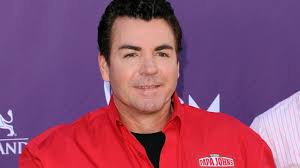
John Schnatter
“If Obamacare is in fact not repealed,” he told Politico, “we will find tactics to shallow out any Obamacare costs and core strategies to pass that cost onto consumers in order to protect our shareholders’ best interests.”
Thus, President Obama should have required all employers to provide insurance coverage for all of their employees, regardless of their fulltime or part-time status.
This would have produced two substantial benefits:
- All employees would have been able to obtain medical coverage; and
- Employers would have been encouraged to provide fulltime positions rather than part-time ones.
Employers would thus feel: “I’m paying for fulltime insurance coverage, so I should be getting fulltime work in return.”
If Obama considered this option, he decided against pressing for it.
Obama Mistake No. 6: Failing to closely study his proposed legislation.
Throughout his campaign to win support for the ACA, Obama had repeatedly promised: “If you like your health insurance plan, you can keep your plan. If you like your doctor, you can keep your doctor. Period.”
But the 906 pages of the law held a fatal catch for the President’s own credibility.
The law stated that those who already had medical insurance could keep their plans–so long as those plans met the requirements of the new healthcare law.
If their plans didn’t meet those requirements, they would have to obtain coverage that did.
But many Americans wanted to keep their current plan–even if it did not provide the fullest possible coverage.
Suddenly, the President found himself facing a PR nightmare–charged and ridiculed as a liar.
Even Jon Stewart, who on “The Daily Show,” had supported the implementation of “Obamacare,” ran footage of Obama’s “you can keep your doctor” promise.
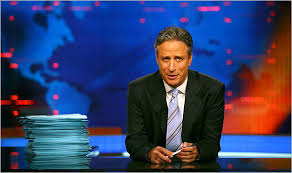
Jon Stewart
The implication: You said we could keep our plan/doctor. Since we can’t, you must be a liar.
All of which points to a final warning offered by Niccolo Machiavelli: Whence it may be seen that hatred is gained as much by good works as by evil….
Former Democratic Presidential nominee Hillary Clinton said that, if she were elected, she would seek incremental changes in the ACA. That possibility became moot when she lost the 2016 election to Donald Trump.
Vermont U.S. Senator Bernie Sanders, on the other hand, wants a single-payer plan.
A single-payer plan would prove simpler and more comprehensive than the ACA. But the chances of its passing a Republican-dominated Congress are absolutely zero.
The election of Donald Trump seems to have finally doomed the ACA–except for one thing: Since it became law, in 2010, 22 million Americans who had never before obtained healthcare insurance now have it.
This includes even Republicans who voted for Trump–without realizing they would be losing their only tie to medical care. And now many of them are finally realizing this truth.
Thus, Republicans in the House and Senate now find themselves besieged by angry constituents at town hall meetings.
These Republicans care nothing for Americans who would be left without medical care. But they do care about their own futures–as members of Congress.
This has led to three schisms among Republicans:
- Those who still demand the complete repeal of “Obamacare.”
- Those who want the Act repealed and then replaced with an entirely different healthcare plan–which Republicans have yet to agree on. Developing this could literally take years–during which time former ACA members would have no insurance.
- Those who want Republicans to first create an alternative healthcare plan, win its Congressional approval, and then repeal the Act.
Republicans expect Democrats to sign on with their “Obamacare replacement plan.” But Democrats have made it clear: “You repeal it, you’re on your own in replacing it.”
Republicans spent eight years demanding the repeal of “Obamacare.” But now they fear that its repeal will lead to the repeal of their own political ambitions.
ABC NEWS, AFFORDABLE CARE ACT, AIR TRAFFIC CONTROLLERS STRIKE, ALTERNET, BARCK OBAMA, BUZZFEED, CBS NEWS, CNN, COLUMBIA UNIVERSITY, DAILY KOS, EXTORTION, FACEBOOK, GEORGE W. BUSH, HARVARD LAW SCHOOL, HILLARY CLINTON, JOHN SCHNATTER, JON STEWART, JONATHAN ALTER, JUSTICE DEPARTMENT, MEDICAL CARE, MOTHER JONES, MOVEON, NBC NESS, NBC NEWS, NEWSWEEK, NICCOLO MACHIAVELLI, NPR, OBAMACARE, PAPA JOHN'S PIZZA, PATRIOT ACT, POLITICO, RACKETEER INFLUENCED CORRUPT ORGANIZATIONS ACT, RAW STORY, REFORM, REPUBLICAN PARTY, RICHARD WOLFFE, SALON, SLATE, TERRORISM, THE CHICAGO SUN-TIMES, THE CHICAGO TRIBUNE, THE DAILY BEAST, THE DAILY SHOW, THE HUFFINGTON POST, THE LOS ANGELES TIMES, THE NEW YORK TIMES, THE PRINCE, THE WALL STREET JOURNAL, THE WASHINGTON POST, TIME, TWITTER, U.S. NEWS & WORLD REPORT, USA TODAY
In Bureaucracy, History, Law, Medical, Politics, Social commentary on March 1, 2017 at 12:26 am
President Barack Obama came into office determined to find common ground with Republicans.
But they quickly made it clear to him that they only wanted his political destruction. At that point, he should have put aside his hopes for a “Kumbaya moment” and re-read what Niccolo Machiavelli said in The Prince on the matter of love versus fear:
From this arises the question whether it is better to be loved or feared, or feared more than love. The reply is, that one ought to be both feared and loved, but as it is difficult for the two to go together, it is much safer to be feared than loved….
And men have less scruple in offending one who makes himself loved than one who makes himself feared; for love is held by a chain of obligations which, men being selfish, is broken whenever it serves their purpose; but fear is maintained by a dread of punishment which never fails.
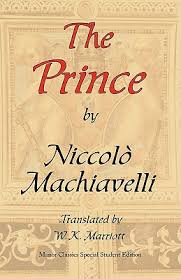
Finally, warns Machiavelli, a leader should not allow a threat to go unchecked. The motive for this is usually the hope of avoiding conflict And the result is usually catastrophe.
A man who wishes to make a profession of goodness in everything must inevitably come to grief among so many who are not good. And therefore it is necessary, for a prince who wishes to maintain himself, to learn how not to be good, and to use this knowledge and not use it, according to the necessity of the case.
For Obama, such a moment came in 2011, when House Republicans threatened to to destroy the credit rating of the United States unless the President agreed to scrap Obamacare.
Obama, a former attorney, heatedly denounced House Republicans for “extortion” and “blackmail.”
Unless he was exaggerating, both of these are felony offenses that are punishable under the 2001 USA Patriot Act and the Racketeer Influenced Corrupt Organizations (RICO) Act of 1970.
Among the crimes that can be prosecuted by Justice Department attorneys under RICO: Extortion.
Extortion is defined as “a criminal offense which occurs when a person unlawfully obtains either money, property or services from a person(s), entity, or institution, through coercion.”
And if President Obama didn’t believe that RICO was sufficient to deal with extortionate behavior, he could have ordered the Justice Department to cite the USA Patriot Act, passed in the wake of 9/11.
In Section 802, among the behaviors that are defined as domestic terrorism: “Activities that…appear to be intended…to influence the policy of a government by intimidation or coercion [and]…occur primarily within the territorial jurisdiction of the United States.”
Activities such as threatening to destroy the financial stability of the United States.
The remedies for punishing such criminal behavior were legally in place. President Obama could have directed the Justice Department to apply them.
If violations had been discovered, indictments could have quickly followed–and then prosecutions. The results of such action could be easily predicted:
- Facing lengthy prison terms, those indicted Republicans would have first had to lawyer-up.
- This would have imposed huge monetary costs on them, since good criminal attorneys don’t come cheap.
- Obsessed with their personal survival, they would have had little time to engage in more of the same thuggish behavior that got them indicted. In fact, doing so would have only made their convictions more likely.
- Those Republicans who hadn’t (yet) been indicted would have feared; “I could be next.” This would have produced a chilling effect on their willingness to engage in further acts of subversion and extortion.
- The effect on Right-wing Republicans would have been the same as that of President Ronald Reagan’s firing of striking air traffic controllers: “You cross me and threaten the security of this nation at your own peril.”
It would no doubt have been a long time before Republicans dared to engage in such behavior–at least, while Obama held office.
So: Why didn’t President Obama act to punish such criminal conduct?
Obama Mistake No. 4: He allowed himself to be cowed by his enemies.
In The Prince, Machiavelli laid out the qualities that a successful ruler should avoid–
He is rendered despicable by being thought changeable, frivolous, effeminate, timid and irresolute–which a prince must guard against as a rock of danger….
–and possess:
As to the government of his subjects, let his sentence be irrevocable, and let him adhere to his decisions so that no one may think of deceiving or cozening him.
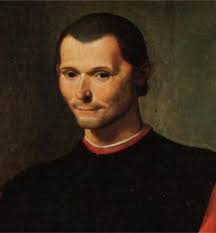
Niccolo Machiavelli
On July 2, 2013, the Treasury Department announced a major change in the application of the Affordable Care Act:
“We have heard concerns about the complexity of the requirements and the need for more time to implement them effectively…We have listened to your feedback. And we are taking action.
“The Administration is announcing that it will provide an additional year before the ACA mandatory employer and insurer reporting requirements begin.”
And the Republican response?
On July 30, 2013, House Republicans voted to sue the President for failing to enforce the Affordable Care Act–which they had voted 54 times to repeal, delay or change.
As Machiavelli warned: Timidity invites contempt–and aggression.
ABC NEWS, AFFORDABLE CARE ACT, AIR TRAFFIC CONTROLLERS STRIKE, ALTERNET, BARCK OBAMA, BUZZFEED, CBS NEWS, CNN, COLUMBIA UNIVERSITY, DAILY KOS, EXTORTION, FACEBOOK, GEORGE W. BUSH, HARVARD LAW SCHOOL, HILLARY CLINTON, JOHN SCHNATTER, JON STEWART, JONATHAN ALTER, JUSTICE DEPARTMENT, MEDICAL CARE, MOTHER JONES, MOVEON, NBC NESS, NBC NEWS, NEWSWEEK, NICCOLO MACHIAVELLI, NPR, OBAMACARE, PAPA JOHN'S PIZZA, PATRIOT ACT, POLITICO, RACKETEER INFLUENCED CORRUPT ORGANIZATIONS ACT, RAW STORY, REFORM, REPUBLICAN PARTY, RICHARD WOLFFE, SALON, SLATE, TERRORISM, THE CHICAGO SUN-TIMES, THE CHICAGO TRIBUNE, THE DAILY BEAST, THE DAILY SHOW, THE HUFFINGTON POST, THE LOS ANGELES TIMES, THE NEW YORK TIMES, THE PRINCE, THE WALL STREET JOURNAL, THE WASHINGTON POST, TIME, TWITTER, U.S. NEWS & WORLD REPORT, USA TODAY
In Bureaucracy, History, Law, Medical, Politics, Social commentary on February 28, 2017 at 12:13 am
Barack Obama was easily one of the most highly educated Presidents in United States history. He is a graduate of Columbia University (B.A. in political science in 1983).
In 1988, he entered Harvard Law School, graduating magna cum laude–“with great honor”–in 1991.
He was selected as an editor of the Harvard Law Review at the end of his first year, and president of the journal in his second year.
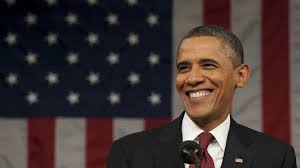
President Barack Obama
He then taught Constitutional law at the University of Chicago Law School for 12 years–as a Lecturer from 1992 to 1996, and as a Senior Lecturer from 1996 to 2004.
Yet, his signature plan to give every American access to healthcare, the Affordable Care Act–universally known as “Obamacare”–remains stricken with dangerous flaws.
So where did he go wrong?
Several ways–in all, at least six.
Obama Mistake No. 1: Putting off what people wanted while concentrating on what they didn’t.
Obama started off well when he took office. Americans had high expectations of him. This was partly due to his being the first black to be elected President.
And it was partly due to the disastrous legacies of needless war and financial catastrophe left by his predecessor, George W. Bush.
Obama entered office intending to reform the American healthcare system, to make medical care available to all citizens, and not just the richest. But that was not what the vast majority of Americans wanted him to concentrate his energies on.
With the lost of 2.6 million jobs in 2008, Americans wanted Obama to find new ways to create jobs. This was especially true for the 11.1 million unemployed, or those employed only part-time.
Jonathan Alter, who writes sympathetically about the President in The Center Holds: Obama and His Enemies, candidly states this.
But Obama chose to spend most of his first year as President pushing the Affordable Care Act (ACA)–which would soon become known as Obamacare–through Congress.
The results were:
- Those desperately seeking employment felt the President didn’t care about them.
- The reform effort became a lightning rod for Right-wing groups like the Koch-brothers-financed Tea Party.
- In 2010, a massive Rightist turnout cost the Democrats the House of Representatives, and threatened Democratic control of the Senate.
Obama Mistake No. 2: He underestimated the amount of opposition he would face to the ACA.
For all of Obama’s academic brilliance and supposed ruthlessness as a “Chicago politician,” he displayed an incredible naivety in dealing with his political opposition.
Niccolo Machiavelli (1469-1527), the Florentine statesman and father of modern politics, could have warned him of the consequences of this–through the pages of The Prince, his infamous treatise on the realities of politics.

Niccolo Machiavelli
And either Obama skipped those chapters or ignored their timeless advice for political leaders.
He should have started with Chapter Six: “Of New Dominions Which Have Been Acquired By One’s Own Arms and Ability”:
…There is nothing more difficult to carry out, nor more doubtful of success, nor more dangerous to handle than to initiate a new order of things.
For the reformer has enemies in all those who profit by the old order, and only lukewarm defenders in all those who would profit by the new order, this lukewarmness arising partly from fear of their adversaries, who have the laws in their favor, and partly from the incredulity of mankind, who do not truly believe in anything new until they have had actual experience of it.
This proved exactly the case with the proposed Affordable Care Act.
Its supporters–even when they comprised a majority of the Congress–have always shown far less fervor than its opponents.
This was true before the Act became effective on March 23, 2010. And it has remained true since, with House Republicans voting more than 60 times to repeal, delay or revise the law.
So before President Obama launched his signature effort to reform the American medical system, he should have taken this truism into account.
Obama Mistake No. 3: Failing to consider–and punish–the venom of his political enemies.
The ancient Greeks used to say: “A man’s character is his fate.” It was Obama’s character–and America’s fate–that he was by nature a man of conciliation, not conflict.
Richard Wolffe chronicled Obama’s winning of the White House in his 2009 book, Renegade: The Making of a President. He noted that Obama was always more comfortable when responding to Republican attacks on his character than he was in making attacks on his enemies.
President Obama came into office determined to find common ground with Republicans.
But they quickly made it clear to him that they only wanted his political destruction. At that point, he should have put aside his hopes for a “Kumbaya moment” and re-read what Niccolo Machiavelli said in The Prince on the matter of love versus fear:
From this arises the question whether it is better to be loved or feared, or feared more than love. The reply is, that one ought to be both feared and loved, but as it is difficult for the two to go together, it is much safer to be feared than loved.
ABC NEWS, ADOLF HITLER, BAVARIA, BEER HALL PUTSCH, BREITBART NEWS, CBS NEWS, CHRISTOPHER S. MURPHY, CIA, CNN, DEMOCRATIC NATIONAL COMMITTEE, DEMOCRATIC PARTY, DONALD TRUMP, EXTORTION, FACE THE NATION, FACEBOOK, FERGUS CULLEN, FOX NEWS SUNDAY, GREG ABBOTT, HACKING, HILLARY CLINTON, HITLER: ASCENT, IRS, JAMES B. COMEY, JAMES R. CLAPPER, JEWS, JOHN KASICH, JUSTICE DEPARTMENT, KEN PAXTON, LEON PANETTA, MEIN KAMPF, MICHAEL ROGERS, MIKE PENCE, MUNICH, NATIONAL SECURITY AGENCY, NAZI PARTY, NBC NEWS, NEW HAMPSHIRE REPUBLICAN PARTY, NEWSWEEK, NPR, PAM BONDI, PAUL RYAN, PHILIP KLEIN, POLITICO, Racketeer Influenced Corrupt Organizations (RICO) Act, REPUBLICAN NATIONAL COMMITTEE, REPUBLICAN NATIONAL CONVENTION, REPUBLICAN PARTY, ROGER STONE, SALON, SOVIET UNION, THE CHICAGO SUN-TIMES, THE CHICAGO TRIBUNE, THE HUFFINGTON POST, THE LOS ANGELES TIMES, THE NEW YORK TIMES, THE WASHINGTON EXAMINER, THE WASHINGTON POST, THREATS, TIME, TREASON, TRUMP UNIVERSITY, TWITTER, U.S. NEWS & WORLD REPORT, U.S. SECRET SERVICE, USA PATRIOT ACT, USA TODAY, VLADIMIR PUTIN, VOLKER ULLRICH, WEIMAR REPUBLIC
In Bureaucracy, History, Law, Law Enforcement, Politics, Social commentary on January 4, 2017 at 12:15 am
Future historians may one day write that it’s what didn’t happen that played at least as great a role in electing Donald Trump President as what actually did.
There were at least four instances where intervention by Federal law enforcement authorities could have utterly changed the outcome of the 2016 election.
Two of these dealt with purely domestic issues—the Trump University scandal and Trump’s repeated threats of violence against Republican and Democratic opponents.
The third and fourth ones dealt with events directly affecting the security of the United States.
It is unprecedented for an American Presidential candidate to repeatedly bestow fulsome praise on the leader of a foreign power hostile to the United States. And to receive equally fawning compliments in return from that leader.
Yet that is precisely what has happened between Donald Trump and Vladimir Putin.
Thus Putin on Trump: “He is a bright personality, a talented person, no doubt about it. It is not up to us to appraise his positive sides, it is up to the U.S. voters. but, as we can see, he is an absolute leader in the presidential race.”
Vladimir Putin
And Trump on Putin: “It is always a great honor to be so nicely complimented by a man so highly respected within his own country and beyond. He’s running his country, and at least he’s a leader. Unlike what we have in this country”—a clear attack on President Barack Obama.
Donald Trump
Case #3: The Justice Department did not invalidate the results of the 2016 election, despite overwhelming evidence that Russia intervened to elect Trump as Vladimir Putin’s chosen candidate.
- Admiral Michael Rogers, director of the National Security Agency (NSA) and US Cyber Command, said in mid-November that Russia made “a conscious effort” to sway the results of the Presidential election by the hacking of 20,000 emails from the Democratic National Committee.
- “There shouldn’t be any doubt in anybody’s mind,” said Rogers. “This was not something that was done casually. This was not something that was done by chance. This was not a target that was selected purely arbitrarily. This was a conscious effort by a nation-state to attempt to achieve a specific effect.”
- The Russians hacked the Democratic committee’s servers–but not those of the Republican National Committee.
- On December 16, FBI Director James B. Comey and Director of National Intelligence James R. Clapper Jr. agreed with a CIA assessment that Russia intervened in the 2016 election in part to help Donald Trump win the White House.

Trump, however, has steadfastly denied any such role by Russia: “I think it’s ridiculous,” he told “Fox News Sunday.” “I think it’s just another excuse. I don’t believe it….No, I don’t believe it at all.”
Case #4: The Justice Department did not prosecute Trump for treason, even though he solicited aid from Russia, a nation hostile to the United States. And no major official of the government—including President Obama—publicly condemned him as a traitor.
At a news conference in Doral, Florida on July 27, Trump publicly invited “Russia”—i.e., Vladimir Putin—to hack Hillary Clinton’s emails: “I will tell you this, Russia: If you’re listening, I hope you’re able to find the 30,000 emails that are missing. I think you will probably be rewarded mightily by our press.”
This was essentially treason—calling on a hostile foreign power to interfere directly in an American Presidential election. And it was seen as such by both Democrats and even Republicans.
- “This has to be the first time that a major presidential candidate has actively encouraged a foreign power to conduct espionage against his political opponent,” Hillary for America policy adviser Jake Sullivan said in a statement. “That’s not hyperbole, those are just the facts. This has gone from being a matter of curiosity, and a matter of politics, to being a national security issue.”
- “I find those kinds of statements to be totally outrageous because you’ve got now a presidential candidate who is, in fact, asking the Russians to engage in American politics,” said former CIA Director Leon Panetta, a Clinton surrogate. “I just think that’s beyond the pale.”
- Brendan Buck, a spokesman for House Speaker Paul Ryan, said: “Russia is a global menace led by a devious thug. Putin should stay out of this election.”
- Even Trump’s Vice Presidential running mate, Mike Pence, said: “If it is Russia and they are interfering in our elections, I can assure you both parties and the United States government will ensure there are serious consequences.”
FBI Director James Comey believed that Hillary Clinton’s emails on a private server were so dangerous to national security that he announced—11 days before the election—that he was re-opening an investigation he had closed.
That announcement erased widespread outrage over Trump’s unintended admissions of predatory behavior toward women—“Grab them by the pussy”—and reversed Clinton’s growing lead in the polls.
Yet the Bureau has not issued any such statements about the continuing reports of close ties between Trump and Putin, and Trump’s possible investments in Russia.
To their shame, the federal agencies charged with safeguarding America failed to take action against these abuses. And, to their shame, the news media, to date, has failed to indict them for their negligence.


 Bureaucracybuster's Blog
ABC NEWS, ADOLF HITLER, ALTERNET, AP, BAVARIA, BBC, BEER HALL PUTSCH, BREITBART NEWS, BUZZFEED, CBS NEWS, CHRISTOPHER S. MURPHY, CIA, CNN, DAILY KOS, DEMOCRATIC NATIONAL COMMITTEE, DEMOCRATIC PARTY, DONALD TRUMP, EDMUND BURKE, EXTORTION, FACE THE NATION, FACEBOOK, FERGUS CULLEN, FOX NEWS SUNDAY, GREG ABBOTT, HACKING, HILLARY CLINTON, HITLER: ASCENT, IRS, JAMES B. COMEY, JAMES R. CLAPPER, JEWS, JOHN KASICH, JUSTICE DEPARTMENT, KEN PAXTON, LEON PANETTA, MEIN KAMPF, MICHAEL ROGERS, MIKE PENCE, MOTHER JONES, MOVEON, MUNICH, NATIONAL SECURITY AGENCY, NAZI PARTY, NBC NEWS, NEW HAMPSHIRE REPUBLICAN PARTY, NEWSWEEK, NPR, PAM BONDI, PAUL RYAN, PHILIP KLEIN, POLITICO, Racketeer Influenced Corrupt Organizations (RICO) Act, RAW STORY, REPUBLICAN NATIONAL COMMITTEE, REPUBLICAN NATIONAL CONVENTION, REPUBLICAN PARTY, REUTERS, ROGER STONE, SALON, SEATTLE TIMES, SLATE, SOVIET UNION, THE ATLANTIC, THE CHICAGO SUN-TIMES, THE CHICAGO TRIBUNE, THE DAILY BEAST, THE GUARDIAN, THE HILL, THE HUFFINGTON POST, THE LOS ANGELES TIMES, THE NEW YORK TIMES, THE WALL STREET JOURNAL, THE WASHINGTON EXAMINER, THE WASHINGTON POST, THREATS, TIME, TREASON, TRUMP UNIVERSITY, TWITTER, U.S. NEWS & WORLD REPORT, U.S. SECRET SERVICE, UPI, USA PATRIOT ACT, USA TODAY, VLADIMIR PUTIN, VOLKER ULLRICH, WEIMAR REPUBLIC
EVIL TRIUMPHS WHEN GOOD MEN DO NOTHING: PART THREE (END)
In Bureaucracy, History, Law, Law Enforcement, Politics, Social commentary on May 29, 2017 at 12:01 amFuture historians may one day write that it’s what didn’t happen that played at least as great a role in electing Donald Trump President as what actually did.
There were at least four instances where intervention by Federal law enforcement authorities could have utterly changed the outcome of the 2016 election.
Two of these dealt with purely domestic issues–the Trump University scandal and Trump’s repeated threats of violence against Republican and Democratic opponents.
The third and fourth ones dealt with events directly affecting the security of the United States.
It is unprecedented for an American Presidential candidate to repeatedly bestow fulsome praise on the leader of a foreign power hostile to the United States. And to receive equally fawning compliments in return from that leader.
Yet that is precisely what has happened between Donald Trump and Vladimir Putin.
Thus Putin on Trump: “He is a bright personality, a talented person, no doubt about it. It is not up to us to appraise his positive sides, it is up to the U.S. voters. but, as we can see, he is an absolute leader in the presidential race.”
Vladimir Putin
And Trump on Putin: “It is always a great honor to be so nicely complimented by a man so highly respected within his own country and beyond. He’s running his country, and at least he’s a leader. Unlike what we have in this country”–a clear attack on President Barack Obama.
Donald Trump
Case #3: The Justice Department did not invalidate the results of the 2016 election, despite overwhelming evidence that Russia intervened to elect Trump as Vladimir Putin’s chosen candidate.
Trump, however, has steadfastly denied any such role by Russia: “I think it’s ridiculous,” he told “Fox News Sunday.” “I think it’s just another excuse. I don’t believe it. No, I don’t believe it at all.”
Case #4: The Justice Department did not prosecute Trump for treason, even though he solicited aid from Russia, a nation hostile to the United States. And no major official of the government–including President Obama–publicly condemned him as a traitor.
At a news conference in Doral, Florida, on July 27, 2016, Trump publicly exhorted “Russia”–i.e., Vladimir Putin–to hack Hillary Clinton’s emails: “I will tell you this, Russia: If you’re listening, I hope you’re able to find the 30,000 emails that are missing. I think you will probably be rewarded mightily by our press.”
This was essentially treason–calling on a hostile foreign power to interfere directly in an American Presidential election. And it was seen as such by both Democrats and even some Republicans.
FBI Director James Comey believed that Hillary Clinton’s emails on a private server were so dangerous to national security that he announced–11 days before the election–that he was re-opening an investigation he had closed.
That announcement erased widespread outrage over Trump’s unintended admissions of predatory behavior toward women–“Grab them by the pussy”–and reversed Clinton’s growing lead in the polls.
Yet the Bureau did not issue any such statements about the continuing reports of close ties between Trump and Putin, and Trump’s possible investments in Russia.
To their shame, the federal agencies charged with safeguarding America failed to take action against these abuses. And, to their shame, the news media, to date, has failed to indict them for their negligence.
Share this: