Posts Tagged ‘IRAN’
60 MINUTES, 9/11 ATTACKS, ABC NEWS, ADOLF HITLER, AFGHANISTAN, AL QAEDA, AYATOLLAH RUHOLLAH KHOMEINI, BARACK OBAMA, BASHAR AL-ASSAD, CARL VON CLAUSEWITZ, CARLOS THE JACKAL, CBS NEWS, CIA, CNN, FACEBOOK, HARRY TRUMAN, IMPERIAL HUBRIS, IRAN, ISLAM, ISLAMIC STATE OF IRAQ AND THE LEVANT, ISRAEL, MARCHING TOWARD HELL, MICHAEL SCHEUER, MUSLIMS, NAZI GERMANY, NBC NEWS, OSAMA BIN LADEN, RUSSIA, SHAH OF IRAN, SOVIET UNION, SYRIA, TERRORISM, THE CHICAGO TIMES, THE CHICAGO TRIBUNE, THE LOS ANGELES TIMES, THE NEW YORK TIMES, THE WASHINGTON POST, TWITTER, USA TODAY, VIETNAM WAR, VLADIMIR PUTIN, WORLD WAR 1
In Bureaucracy, History, Military, Politics, Social commentary, Uncategorized on November 19, 2015 at 12:14 am
According to Micheal Scheuer, America needs to end its role as Israel’s permanent bodyguard.
Scheuer is a 20-year CIA veteran–as well as an author, historian, foreign policy critic and political analyst.
Testifying before the House Committee on Homeland Security on October 9, 2013, Scheuer warned:
“If it was up to me, I’d dump the Israelis tomorrow. All I worry about is that continuing preaching of American politicians to the American people that our relationship with the Israelis doesn’t cause us to have dead Americans and extraordinary expenses in fighting the Muslim world.”

Michael Scheuer
For decades, the United States has pursued two policies in the Middle East, one based on relations with the Arab world and the other based on relations with Israel.
Policy 1: Maintaining access to vast amounts of Arab oil at low prices.
Policy 2: Maintaining the security of Israel.
Since the Arabs and Israelis hate each other, each side constantly tries to sway American support in its direction.
Every step the United States takes to defend Israel–diplomatically or militarily–ignites hatred of Americans among Islamics.
And every step–diplomatically or militarily–the United States takes to improve its relations with Islamic countries convinces Israelis that they’re being “sold out.”
President George W. Bush tilted strongly toward Israel. That convinced Israelis to go on building settlements in occupied Arab territory–and alienated the Arabs.
President Barack Obama, seeking a balanced approach, leaned heavily on Israel to stop building settlements. Israel has continued doing so–thus alienating the Israelis while leaving the Arabs enraged.
In short: The United States is like a giant who has one foot stuck in Israel and the other stuck in any Islamic country–leaving his private parts fully exposed to whichever side wants to take a shot at them.
This is not to deny that Israel has a right to exist. Every nation--including Israel–has the absolute right to defend itself from aggression.
But no nation–including Israel–should have the right to expect another nation to act as its permanent bodyguard.
Millions of Americans believe they are morally obligated to defend Israel owing to the barbarism of the Holocaust. America, however, was never a party to this, and has nothing to atone for.
But there is another reason many Americans feel committed to Israel. And it has nothing to do with concern for the fates of Israelis.
It lies in the mythology of the Christian Right: Many fundamentalist Christians believe that, for Jesus Christ to awaken from his 2,000-year slumber, Israel must first re-conquer every inch of territory it supposedly held during the reign of Kings David and Solomon.

Right-wing Christian fantasy: Dead man hovering
After Christ returns, they believe, the Jews will face a choice: Become Christians or go to hell. For evangelical Christians, Jews remain the eternal “Christ killers.”
And if Jews must assume temporary control of the Middle East to bring about the return of a man who died 2,000 years ago, so be it.
This is also the view of many Right-wing members of the House of Representatives and Senate. Clearly, people who hold such totally irrational views shouldn’t be allowed to hold public office.
Unfortunately, such unbalanced views are shared by millions of equally irrational evangelical Christians.
During his appearance before the House Committee on Homeland Security, Michael Scheuer absolutely rejected the conservatives’ assertion that jihadists wage war on us because they “hate us for our freedoms.”
SCHEUER: These people are fighting for something substantive, for something religious. ….They are not going to fight us because we have women in the workplace.
That is an insanity. What they are fighting us about is what we do.
…I would draw your attention to the reality that, to the best of my knowledge, neither we nor any of our NATO partners have yet to capture a Western Islamist fighter whose words or documents have shown a motivation to attack based on hatred for liberty, elections or gender equality.
Invariably, they attribute their motivation to U.S. and Western military intervention and support for Israel and Muslim tyrannies.
Scheuer’s take on Israel brought him into direct conflict with Rep. Peter T. King (R-New York).

Congressman Peter T. King
KING: I would just say we would have more dead Americans if we didn’t stand by our allies in the Middle East. We would just be encourage al-Qaeda to take advantage of us.
SCHEUER: You know, you are presiding over a bankruptcy. What can be worse? What has been the goal of al-Qaeda since it was formed? To bankrupt the United States.
Who is winning today, sir? We are done like dinner.
KING: We are winning and we will continue to win unless we take the advice of people like you.
SCHEUER: Sir, you are exactly wrong. We are losing. Two U.S. field armies were defeated by men in the field with weapons from the Korean War.
KING: The fact is we have not been successfully attacked since September 11.
SCHEUER: The fact is, sir, we have had two military defeats overseas, which is far more important.
And, warns Scheuer, more defeats–domestic and international–lie ahead unless the United States radically changes its policies toward the Middle East.
60 MINUTES, 9/11 ATTACKS, ABC NEWS, ADOLF HITLER, AFGHANISTAN, AL QAEDA, AYATOLLAH RUHOLLAH KHOMEINI, BARACK OBAMA, BASHAR AL-ASSAD, CARL VON CLAUSEWITZ, CARLOS THE JACKAL, CBS NEWS, CHEMICAL WEAPONS, CHINA, CIA, CNN, FACEBOOK, HARRY TRUMAN, IMPERIAL HUBRIS, IRAN, ISLAM, ISLAMIC STATE OF IRAQ AND THE LEVANT, ISRAEL, MARCHING TOWARD HELL, MICHAEL SCHEUER, MUSLIMS, NAZI GERMANY, NBC NEWS, OSAMA BIN LADEN, RUSSIA, SHAH OF IRAN, SOVIET UNION, SYRIA, TERRORISM, THE CHICAGO TIMES, THE CHICAGO TRIBUNE, THE LOS ANGELES TIMES, THE NEW YORK TIMES, THE WASHINGTON POST, TWITTER, USA TODAY, VIETNAM WAR, VLADIMIR PUTIN, WORLD WAR 1
In Bureaucracy, History, Military, Politics, Social commentary on November 18, 2015 at 12:16 am
For America to avoid permanent military entanglements in the Middle East, it must learn to mind its own business.
So says Michael Scheuer, a 20-year CIA veteran who, from 1996 to 1999, headed Alec Station, the CIA’s unit assigned to track Osama bin Laden at the agency’s Counterterrorism Center.
He’s also the author of two seminal works on America’s fight against terrorism:Imperial Hubris: Why the West is Losing the War on Terror (2003) and Marching Toward Hell: America and Islam after Iraq (2008).
Scheuer has repeatedly warned: The United States must not deploy troops in Syria.
More than 310,000 people have been killed in Syria’s uprising-turned-civil war. The conflict began on March 15, 2011, triggered by protests demanding political reforms and the ouster of dictator Bashar al-Assad.
And many members of Congress are demanding that “we must do something” to stop all that killing.
Three reasons have already been given for why America should steer clear of the Syrian tar-baby. Among the others:
Fourth, the Assad regime is backed by–-among others–the Iranian-supported terrorist group, Hezbollah (Party of God). Its enemies include another terrorist group–Al Qaeda.
Hezbollah is comprised of Shiite Muslims. A sworn enemy of Israel, it has kidnapped scores of Americans suicidal enough to visit Lebanon and truck-bombed the Marine Barracks in Beirut in 1983, killing 299 Americans.
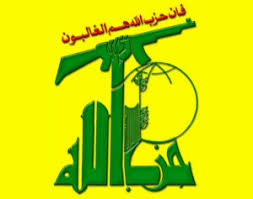
Flag of Hezbollah
Al-Qaeda, on the other hand, is made up of Sunni Muslims. Besides plotting 9/11, It has attacked the mosques and gatherings of liberal Muslims, Shias, Sufis and other non-Sunnis.
Examples of these sectarian attacks include the Sadr City bombings, the 2004 Ashoura massacre and the April, 2007 Baghdad bombings.
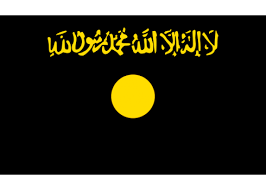
Flag of Al Qaeda
When your enemies are intent on killing each other, it’s best to stand aside and let them do it.
Fifth, intervening in Syria could produce unintended consequences for American forces–and make the United States a target for more Islamic terrorism.
President Obama has repeatedly said American warplanes are targeting the Islamic State of Iraq and the Levant (ISIL). But bombing is never as accurate as its proponents insist.
An accidental American strike on Syrian government forces could lead the country’s dictator, Bashar al-Assad, to attack Israel–perhaps even with chemical weapons.
Assad could do this simply because he hates Jews–or to lure Israel into attacking Syria.
If that happened, the Islamic world–which lusts to destroy Israelis even more than “apostate” Muslims–would rally to Syria against the United States, Israel’s chief ally.
Sixth, the United States cannot defeat ISIL through air power alone.
President Barack Obama authorized airstrikes against ISIL in September, 2014. Since then, the United States Air Force has dropped thousands of bombs on ISIL convoys.
This has not, however, destroyed ISIL. And its failure to do so has only led to demands by hawkish Republicans and Democrats for “boots on the ground.”
This was in fact predictable. Air power alone failed to secure victory over Nazi Germany during World War II and Vietnam during the Vietnam war. Nor did it “shock and awe” the Iraqis into surrendering during the 2003 Iraq war.
Seventh, while Islamic nations like Syria and Iraq wage war within their own borders, they will lack the resources to launch attacks against the United States.
When Adolf Hitler invaded the Soviet Union in 1941, then-Senator Harry Truman said: “I hope the Russians kill lots of Nazis and vice versa.”
That should be America’s view whenever its sworn enemies start killing themselves off. Americans should welcome such self-slaughters, not become entrapped in them.
Eighth, China and Russia are fully supporting the Assad dictatorship–-and the brutalities it commits against its own citizens.
Any move by the United States to directly attack the Assad regime could ignite an all-out war with Russia and/or China.
What happens if American and Russian forces start trading salvos? Or if Russian President Vladimir Putin orders an attack on Israel, in return for America’s attack on Russia’s ally, Syria?
It was exactly that scenario–Great Powers going to war over conflicts between their small-state allies–-that triggered World War l.
Ninth, America’s past efforts in the Middle East have usually gone horribly awry.
Two examples should suffice:
Iran: Mohammad Mosaddegh was the democratically elected prime minister of Iran from 1951 until 1953. His decision to nationalize the Iranian oil industry led to his overthrow in a CIA coup.
He was replaced by Shah Mohammad Reza Pahlavi, who ruled until 1979 when a national upheaval forced him to flee. Iranians have never forgiven the United States for subjecting them to the 25-year reign of a brutal despot.
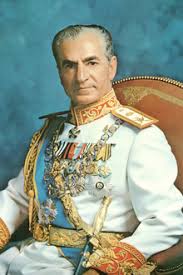
Shah of Iran
Afghanistan: In 1979, the Soviet Union invaded Afghanistan. America began supplying shoulder-fired Stinger anti-aircraft missiles to the Afghan Mujahideen fighters. These shifted the balance of the war to the Afghans, who brought down countless Soviet airplanes and helicopters.
Deprived of air supremacy, the Soviet army lost 14,453 killed and 53,753 wounded, and withdrew by 1989.
Americans congratulated themselves on their Realpolitic. But many of the Stingers remained in the hands of jihadists–who decided that America was now “The Great Satan.” One of those jihadists: Osama bin Laden.
60 MINUTES, 9/11 ATTACKS, ABC NEWS, ADOLF HITLER, AFGHANISTAN, AL QAEDA, BARACK OBAMA, BASHAR AL-ASSAD, CARL VON CLAUSEWITZ, CARLOS THE JACKAL, CBS NEWS, CHEMICAL WEAPONS, CHINA, CIA, CNN, FACEBOOK, HARRY TRUMAN, IMPERIAL HUBRIS, IRAN, ISLAM, ISLAMIC STATE OF IRAQ AND THE LEVANT, ISRAEL, MARCHING TOWARD HELL, MICHAEL SCHEUER, MUSLIMS, NAZI GERMANY, NBC NEWS, OSAMA BIN LADEN, RUSSIA, SOVIET UNION, SYRIA, TERRORISM, THE CHICAGO TIMES, THE CHICAGO TRIBUNE, THE LOS ANGELES TIMES, THE NEW YORK TIMES, THE WASHINGTON POST, TWITTER, USA TODAY, VIETNAM WAR, VLADIMIR PUTIN, WORLD WAR 1
In Bureaucracy, History, Military, Politics, Social commentary, Uncategorized on November 17, 2015 at 12:30 am
According to Micheal Scheuer, for all their ideological differences, Republicans and Democrats share one belief in common:
“An unquenchable ardor to have the United States intervene abroad in all places, situations and times.”
Scheuer is a 20-year CIA veteran–as well as an author, historian, foreign policy critic and political analyst.

Michael Scheuer
From 1996 to 1999 he headed Alec Station, the CIA’s unit assigned to track Osama bin Laden at the agency’s Counterterrorism Center.
He is currently an adjunct professor at Georgetown University’s Center for Peace and Security Studies.
And he’s convinced that if America wants peace, it must learn to mind its own business.
He’s also the author of two seminal works on America’s fight against terrorism: Imperial Hubris: Why the West is Losing the War on Terror (2003) and Marching Toward Hell: America and Islam after Iraq (2008).
Scheuer says that Islamics don’t hate Americans because of “our way of life”–with its freedoms of speech and worship and its highly secular, commercialized culture.
Instead, Islamic hatred toward the United States stems from America’s six longstanding policies in the Middle East:
- U.S. support for apostate, corrupt, and tyrannical Muslim governments;
- U.S. and other Western troops on the Arabian Peninsula;
- U.S. support for Israel that keeps Palestinians in the Israelis’ thrall;
- U.S. pressure on Arab energy producers to keep oil prices low;
- U.S. occupation of Iraq and Afghanistan; and
- U.S. support for Russia, India, and China against their Muslim militants.
Scheuer contends that no amount of American propaganda will win “the hearts and minds” of Islamics who can “see, hear, experience, and hate” these policies firsthand.
But there is another danger facing America, says Scheuer, one that threatens “the core of our social and civil institutions.”
And in Marching Toward Hell he bluntly indicts that threat: The “profound and willful ignorance” of America’s “bipartisan governing elite.”

Scheuer defines this elite as “the inbred set of individuals who have influenced…drafted and conducted U.S. foreign policy” since 1973.
Within that group are:
- politicians
- journalists
- academics
- preachers
- civil servants
- military officers
- philanthropists.
“Some are Republicans, others Democrats; some are evangelicals, others atheists; some are militarists, others pacifists; some are purveyors of Western civilization, others are multiculturalists,” writes Scheuer.
But for all their political and/or philosophical differences, the members of this governing elite share one belief in common: “An unquenchable ardor to have the United States intervene abroad in all places, situations and times.”
And he warns that this “bipartisan governing elite” must radically change its policies–such as unconditional support for Israel and corrupt, tyrannical Muslim governments.
Otherwise, Americans will be locked in an endless “hot war” with the Islamic world.
On September 28, 2014, President Barack Obama provided an example of this “unquenchable ardor to have the United States intervene abroad in all places, situations and times.”
In an appearance on 60 Minutes, Obama spoke about his recent decision to commit American troops to fighting the Islamic State of Iraq and the Levant (ISIL).
Steve Kroft: I think everybody applauds the efforts that you’ve made and the size of the coalition that has been assembled.
But most of them are contributing money or training or policing the borders, not getting particularly close to the contact. It looks like once again we are leading the operation. We are carrying…
President Obama: Steve, that’s always the case. That’s always the case. America leads. We are the indispensable nation. We have capacity no one else has. Our military is the best in the history of the world.
And when trouble comes up anywhere in the world, they don’t call Beijing. They don’t call Moscow. They call us. That’s the deal.

President Barack Obama
Steve Kroft: I mean, it looks like we are doing 90%.
President Obama: Steve…when there’s an earthquake in Haiti, take a look at who’s leading the charge making sure Haiti can rebuild. That’s how we roll. And that’s what makes this America.
Scheuer believes that this mindset shouldn’t be what “makes this America.” And that the place to start is by not deploying troops to Syria.
More than 310,000 people have been killed in Syria’s uprising-turned-civil war. The conflict began on March 15, 2011, triggered by protests demanding political reforms and the ouster of dictator Bashar al-Assad.
Among the reasons why America should steer clear of the Syrian bloodbath:
First, since 1979, Syria has been listed by the U.S. State Department as a sponsor of terrorism.
Among the terrorist groups it supports are Hizbollah and Hamas. For years, Syria provided a safehouse in Damascus to Ilich Ramírez Sánchez–-the notorious terrorist better known as Carlos the Jackal.

Ilich Ramírez Sánchez–“Carlos the Jackal”
Second, there are no “good Syrians” for the United States to support–-only murderers who have long served a tyrant and other murderers who now wish to become the next tyrant.
Third, the United States doesn’t know what it wants to do in Syria, other than “send a message.”
Carl von Clausewitz, the Prussian military theorist, wrote: “War is the continuation of state policy by other means.” But President Barack Obama hasn’t stated what his “state policy” is toward Syria–or what he intends to gain by attacking it.
Obama has said he’s “not after regime-change.” If true, that would leave Assad in power–-and free to go on killing those who resist his rule.
ABC NEWS, AYATOLLAH RUHOLLAH KHOMEINI, CBS NEWS, CHRISTIAN RIGHT, CNN, COLD WAR, CZECHOSLOVAKIA, EGYPT, FACEBOOK, GLOBAL WARMING, HUNGARIAN UPRISING, HUNGARY, IRAN, IRAQ, ISLAM, ISRAEL, JESUS CHRIST, MIDDLE EAST, NBC NEWS, Oil, REUTERS, SAND CURTAIN, SECOND COMING, SHAH OF IRAN, SHIITE MUSLIMS, SOVIET UNION, SUNNI MUSLIMS, TERRORISM, THE CHICAGO SUN-TIMES, THE CHICAGO TRIBUNE, THE LOS ANGELES TIMES, THE NEW YORK TIMES, THE WALL STREET JOURNAL, THE WASHINGTON POST, TWITTER, UNITED STATES
In Bureaucracy, History, Military, Politics, Uncategorized on November 16, 2015 at 12:01 am
There can be peace–for the United States--in the Middle East.
But to achieve this, Western Europe and the United States will have to make radical changes in their approach to that part of the world.
First, the United States must embark on a crash program to develop alternatives to oil.
The Islamic world offers only one reason for American concern: oil.
Yet its consumption threatens the future of the world through global warming. And it keeps America tethered to regimes that are fundamentally unstable and hostile to the West.
Second, once the United States weans itself from its dependency on fossil fuels, it can safely end its relationship with such regimes.
That means putting an end to spending billions of dollars every year to prop up regimes like those in Iraq and Egypt. And it also means stopping the supply of big-ticket military hardware (like fighter planes and missiles) to Islamic regimes.
When the Shah of Iran was overthrown in 1979, he was probably the best-armed Islamic leader in the Middle East. His army and air force bristled with sophisticated American weaponry he had bought with billions of dollars in oil revenues.
Shah of Iran
But he had thoroughly alienated his people. Liberals thought him a tyrant, and conservatives thought him a traitor to Islam. So when Ayatollah Ruhollah Khomeini flew to Iran from his self-exile in Paris, no one in the Shah’s army and air force raised a hand in his defense.
Third, the United States should end its “Permanent Bodyguard” relationship with Israel.
Every nation--including Israel–has the absolute right to defend itself from aggression. But no nation–including Israel–should have the right to expect another nation to act as its permanent bodyguard.
Millions of Americans believe they are morally obligated to defend Israel owing to the barbarism of the Holocaust. But America was never a party to this, and has nothing to atone for.
But there is another reason many Americans feel committed to Israel. And it has nothing to do with concern for the fates of Israelis.
It lies in the mythology of the Christian Right: Many fundamentalist Christians believe that, for Jesus Christ to awaken from his 2,000-year slumber, Israel must first re-conquer every inch of territory it supposedly held during the reign of Kings David and Solomon.
Right-wing Christian fantasy: Dead man hovering
After Christ returns, they believe, the Jews will face a choice: Become Christians or go to hell. For evangelical Christians, Jews remain the eternal “Christ killers.”
And if Jews must assume temporary control of the Middle East to bring about the return of a man who died 2,000 years ago, so be it.
This is the view of many Right-wing members of the House of Representatives and Senate. Obviously, people who hold such totally irrational views shouldn’t be allowed to hold public office.
Unfortunately, such unbalanced views are shared by millions of equally irrational evangelical Christians.
Fourth, the United States and its European allies should erect a “Sand Curtain” around the Middle East.
For 44 years–1947 to 1991–the United States and the Soviet Union were locked in a Cold War. Essentially, the United States drew a ring around the Soviet Union–including those nations its armies had seized following the defeat of Nazi Germany in 1945.
The United States said, in effect: “We can’t liberate the countries you’re now occupying”–because trying to do so would have triggered a nuclear World War III. “But we won’t allow you to occupy and enslave any other countries. And if you try to do so, it will mean total war.”
That’s why the United States did nothing to aid Hungarians when they rose up against their Soviet occupiers in 1956. That rebellion was quickly and brutally crushed.
And that’s why America stood by when Soviet tanks rolled into Prague in 1968 when Czechoslovakia dared to relax controls over its citizens.
Fifth, a “Sand Curtain” around the Middle East would work as follows:
America would withdraw all of its forces from the Middle East–but keep a good portion stationed in Europe.

It would then publicly announce: “From now on, you are the masters of your own destinies–so long as what you do affects only those of you living in the Middle East.
“We recognize that barbarism and violence have always been a part of life in the Middle East. And we don’t expect this to change.
“So go ahead and destroy as many of your own citizens as you wish–either because they’re Jewish or Christians, or because Sunni Muslims hate Shiite Muslims and Shiite Muslims hate Sunni Muslims.
“Just don’t do anything that poses a threat to those living outside your barbaric lands. In short: Europe and the United States are strictly off-limits to you.
“And if you aim your aggression at either, we will consider this an act of war and use all the weapons at our disposal–including nuclear ones–to wipe you from the face of the Earth.“
The United States cannot enforce peace between Islamics and Israelis. Nor between Christians and Islamics. Nor between Islamics and Islamics.
But it can impose an embargo to confine such barbarism to only the Middle East.
ABC NEWS, AFGHANISTAN, AL QAEDA, BARACK OBAMA, BASHAR AL-ASSAD, CARL VON CLAUSEWITZ, CARLOS THE JACKAL, CBS NEWS, CHINA, CNN, FACEBOOK, IRAN, ISLAM, ISLAMIC STATE OF IRAQ AND THE LEVANT, MUSLIMS, NBC NEWS, RUSSIA, SOVIET UNION, SYRIA, TERRORISM, THE CHICAGO TIMES, THE CHICAGO TRIBUNE, THE LOS ANGELES TIMES, THE NEW YORK TIMES, THE WASHINGTON POST, TWITTER, USA TODAY, VLADIMIR PUTIN, WORLD WAR 1
In Bureaucracy, History, Military, Politics on October 7, 2015 at 12:40 am
Russia has started launching airstrikes in Syria to bolster the dictatorship of Syrian “president” Bashar al-Assad.
The Obama administration is worried. And Republicans are furious, with some of them demanding that American military forces directly confront the Russians..
But there is actually no reason for alarm.
On the contrary, there are several major reasons why the United States should quit Syria–now.
First, since 1979, Syria has been listed by the U.S. State Department as a sponsor of terrorism.
Among the terrorist groups it supports are Hezbollah and Hamas. For years, Syria provided a safehouse in Damascus to Ilich Ramírez Sánchez–-the notorious terrorist better known as Carlos the Jackal.
Ilich Ramírez Sánchez–“Carlos the Jackal”
Second, there are no “good Syrians” for the United States to support–-only murderers who have long served a tyrant and other murderers who now wish to become the next tyrant.
Third, the United States doesn’t know what it wants to do in Syria, other than “send a message.”
Carl von Clausewitz, the Prussian military theorist, wrote: “War is the continuation of state policy by other means.” But President Barack Obama hasn’t stated what his “state policy” is toward Syria–or what he intends to gain by attacking it.
President Obama has said he’s “not after regime-change.” If true, that would leave Syria’s brutal dictator, Bashar al-Assad in power–-and free to go on killing those who resist his rule.
Fourth, Russia is intervening to support its longtime ally, Assad, which is now engulfed in civil war.
This began on March 15, 2011, triggered by protests demanding political reforms and the ouster of al-Assad. More than 310,000 people have been killed in the fighting.
Fifth, the Assad regime is backed by the Iranian-supported terrorist group, Hezbollah (Party of God). Its enemies include another terrorist group–Al Qaeda.
Hezbollah is comprised of Shiite Muslims. A sworn enemy of Israel, it has kidnapped scores of Americans suicidal enough to visit Lebanon and truck-bombed the Marine Barracks in Beirut in 1983, killing 299 Americans.
Flag of Hezbollah
Al-Qaeda, on the other hand, is made up of Sunni Muslims. Besides plotting 9/11, It has attacked the mosques and gatherings of liberal Muslims, Shias, Sufis and other non-Sunnis.
When your enemies are intent on killing each other, it’s best to stand aside and let them do it.
Flag of Al Qaeda
Sixth, the United States hasn’t defeated ISIS through air power alone–and neither will Russia.
President Barack Obama authorized airstrikes against ISIS in September, 2014. Since then, the United States Air Force has dropped thousands of bombs on ISIL convoys.
But this has not destroyed ISIS. And this failure has only led to demands by hawkish Republicans and Democrats for “boots on the ground.”
Seventh, China and Russia are fully supporting the Assad dictatorship–-and the brutalities it commits against its own citizens.
Any move by the United States to directly attack the Assad regime could ignite an all-out war with Russia and/or China.
What happens if American and Russian forces start trading salvos? Or if Russian President Vladimir Putin orders an attack on Israel, in return for America’s attack on Russia’s ally, Syria?
It was exactly that scenario–Great Powers going to war over conflicts between their small-state allies–-that triggered World War l.
Eighth, while Islamic nations like Syria and Iraq wage war within their own borders, they will lack the resources to launch attacks against the United States.
* * * * *
The United States owes Syria–and the Syrians–nothing. But it does owe its own citizens security from Islamic terrorism.
That’s why it’s time to “let Vladimir do it.”
Putin’s intervention in Syria’s four-year civil war offers three possible outcomes for the United States. And they’re all positive.
First, the Russians will kill thousands of America’s sworn enemies.
Russians are well-known for their disregard for human life. During their invasion of Germany in 1945, Russian soldiers literally nailed civilians to barn doors, squashed them under their tanks, and raped countless women of all ages.
In Syria, they will slaughter everyone who gets in their way. Thus, they will kill far more of America’s Islamic enemies than even our own military–hamstrung by do-gooder “rules of engagement”–could possibly eliminate.
Second, Russia will replace the United States as “The Great Satan” in the eyes of most Islamics.
The Soviet Union waged a ruthless war against Afghanistan from 1979 to 1989. Out of that war grew Al-Qaeda. Millions of Islamics still hate Russians for their brutalities.
From 1999 to 2009, Russia fought a brutal war against Islamics in Chechnya. Chechens responded with terrorism across Russia.
Russia’s intervention in Syria will only harden its image as an enemy of Islam–even if it’s supporting one group of Islamics (the Assad regime) against others.
If Islamic terrorism starts raging throughout Russia, Putin may be forced to back down from his military moves against Syria and Ukraine.
Third, if Russian planes get shot down or Russian soldiers kiled, Russia will suffer the casualties–not the United States.
The Soviet Union never fully recovered from its losses in Afghanistan–13,310 soldiers killed, 35,478 wounded.
If Russia starts taking heavy losses in Syria or at home through terrorism, this could lead to widespread unrest. Even Vladimir Putin could find himself in danger of being replaced.
9/11 ATTACKS, ABC NEWS, ADOLF HITLER, AFGHANISTAN, AL QAEDA, BARACK OBAMA, BARCK OBAMA, BASHAR AL-ASSAD, CARL VON CLAUSEWITZ, CBS NEWS, CHEMICAL WEAPONS, CHINA, CNN, FACEBOOK, HARRY TRUMAN, IRAN, IRAQ, ISLAM, ISRAEL, MUSLIMS, NAZI GERMANY, NBC NEWS, OSAMA BIN LADEN, RUSSIA, SOVIET UNION, SYRIA, TERRORISM, THE LOS ANGELES TIMES, THE NEW YORK TIMES, THE WASHINGTON POST, TWITTER, VLADIMIR PUTIN, WORLD WAR 1
In Bureaucracy, History, Military, Politics, Social commentary on September 21, 2015 at 11:26 am
There are ten excellent reasons for withdrawing American soldiers from their current war on ISIS forces in Syria.
1. It’s been only four years since the United States disengaged from Iraq. On December 15, 2011, the American military formally ended its mission there. The war–begun in 2003–had killed 4,487 service members and wounded another 32,226.
2. The United States is still fighting a brutal war in Afghanistan. Although the United States’ military role formally ended in December, 2014, airstrikes against Taliban positions continue and U.S. troops remain in combat positions.
U.S. Special Operations troops, serving as advisors and trainers of struggling Afghan government forces, still unleash military operations against the Taliban.
3. Intervening in Syria could produce unintended consequences for American forces–and make the United States a target for more Islamic terrorism.
American bombs or missiles could land on one or more sites containing stockpiles of chemical weapons. Imagine the international outrage that will result if the release of those weapons kills hundreds or thousands of Syrians.
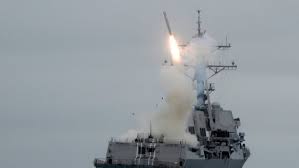
U.S. warship firing Tomahawk Cruise missile
Within the Islamic world, the United States will be seen as waging a war against Islam, and not simply another Islamic dictator.
4. Since 1979, Syria has been listed by the U.S. State Department as a sponsor of terrorism.
Among the terrorist groups it supports are Hezbollah and Hamas. For years, Syria provided a safe-house in Damascus to Ilich Ramírez Sánchez–the notorious terrorist better known as Carlos the Jackal.
Ilich Ramírez Sánchez–“Carlos the Jackal”
5. There are no “good Syrians” for the United States to support–only murderers who have long served a tyrant or now wish to become the next tyrant.
With no history of democratic government, Syrians aren’t thirsting for one now.
6. The United States had no part in creating the dictatorial regime of “President” Bashir al-Assad.
Thus, Americans have no moral obligation to support those Syrians trying to overthrow it since 2011.
7. The United States doesn’t know what it wants to do in Syria, other than “send a message.”
Carl von Clausewitz, the Prussian military theorist, wrote: “War is the continuation of state policy by other means.”
But President Barack Obama hasn’t stated what his “state policy” is toward Syria. He’s said he’s “not after regime-change.” If true, that would leave Assad in power–and free to go on killing those who resist his rule.
8. The Assad regime is backed by–among others–the Iranian-supported terrorist group, Hezbollah (Party of God). Its enemies include another terrorist group–Al Qaeda.
Hezbollah is comprised of Shiite Muslims. A sworn enemy of Israel, it has kidnapped scores of Americans suicidal enough to visit Lebanon and truck-bombed the Marine barracks in Beirut in 1983, killing 241 Americans.
Flag of Hezbollah
Al-Qaeda, on the other hand, is made up of Sunni Muslims. Besides plotting 9/11, It has attacked the mosques and gatherings of liberal Muslims, Shias, Sufis and other non-Sunnis.
Examples of these sectarian attacks include the Sadr City bombings, the 2004 Ashoura massacre and the April, 2007 Baghdad bombings.
Flag of Al Qaeda
When your enemies are intent on killing each other, it’s best to stand aside and let them do it.
9. The United States could find itself in a shooting war with Russia.
The Russians recently sent tanks and artillery units to Syria, in addition to hundreds of Russian troops. This is almost certainly an effort by Russian President Vladimir Putin to bolster President Bashar al-Assad’s embattled regime.
What happens if American and Russian tanks and/or artillery units start trading salvos? Or if Putin orders an attack on Israel, in return for America’s attack on Russia’s ally, Syria?
It was exactly that scenario–Great Powers going to war over conflicts between their small-state allies–that triggered World War l. The difference between 1941 and 2015: Today’s Great Powers have nuclear arsenals.
10. While Islamic nations like Syria and Iraq wage war within their own borders, they will lack the resources to launch attacks against the United States.
Every dead supporter of Hezbollah or Al-Qaeda–or ISIS–makes the United States that much safer.
The peoples of the Middle East have long memories for those who commit brutalities against them. In their veins, the cult of the blood feud runs deep.
When Al-Qaeda blows up civilians in Damascus, their relatives will urge Hezbollah to take brutal revenge. And Hezbollah will do so.
Similarly, when Hezbollah destroys a mosque, those who support Al-Qaeda will demand even more brutal reprisals against Hezbollah.
No American could instill such hatred in Al-Qaeda for Hezbollah–or vice versa. This is entirely a war of religious and sectarian hatred.
This conflict could easily become the Islamic equivalent of “the Hundred Years’ War” that raged from 1337 to 1453 between England and France.
When Adolf Hitler invaded the Soviet Union in 1941, then-Senator Harry Truman said: “I hope the Russians kill lots of Nazis and vice versa.”
That should be America’s view whenever its sworn enemies start killing themselves off. Americans should welcome such self-slaughters, not become entrapped in them.
9/11, ABC NEWS, ADOLF HITLER, BOSTON MARATHON BOMBING, CBS NEWS, CHRISTIANITY, CNN, COLUMBIA UNIVERSITY, FACEBOOK, HARVARD UNIVERSITY, IRAN, ISLAM, LEBANON, MUNICH OLYMPICS MASSACRE, NBC NEWS, POLITICAL CORRECTNESS, RACIAL PROFILING, RELIGION, SAMUEL P. HUNTINGTON, TERRORISM, THE CHICAGO SUN-TIMES, THE CHICAGO TRIBUNE, THE CLASH OF CIVILIZATIONS, THE LOS ANGELES TIMES, THE NEW YORK TIMES, THE SPECTATOR, THE WASHINGTON POST, TWITTER, USA TODAY, WINSTON CHURCHILL, WORLD TRADE CENTER
In History, Military, Politics, Social commentary on September 18, 2015 at 12:11 am
During the 1930s, Winston Churchill, a seemingly failed politican, repeatedly warned his British countrymen against the growing menace of Nazi Germany.
The leaders of Britain and France–the two great victors of World War 1–hoped that if they simply ignored the increasingly aggressive behavior of German Fuehrer Adolf Hitler, they could somehow escape catastrophe.
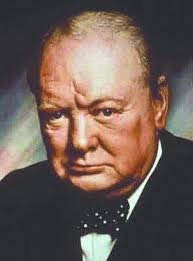
Winston Churchill
This behavior included:
- In the early 1930s, Hitler began re-building a powerful German army in open defiance of the Versallies Treaty that had ended World War 1.
- Hitler ordered his army to occupy his native Austria in 1938.
- In 1938, Hitler demanded that Czechoslavakia cede the Sudetenland, its northern, southwest and western regions, which were inhabited mostly by ethnic Germans.
- British Prime Minister Nveille Chamberlain surrendered to Hitler’s demands at the infamous “Munich conference.” Believing they had avoided war, his fellow Britons were ecstatic.
- In March, 1939, the German army occupied the rest of Czechoslovakia.
- Hitler next turned his attention to Poland–which he invaded on September 1.
- In doing so, he unintentionally triggered World War II.
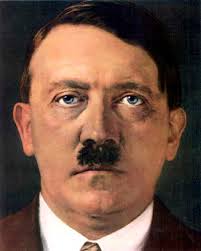
Adolf Hitler
In time, historians and statesmen would agree: Trying to appease dictators is futile–and a guarantee for their further aggression.
It is a lesson that current world leaders have forgotten as Islamic fundamentalists increasingly flex their military and economic muscles–and demand that Western nations bow to their demands.
- In Iran, scientists continue to fashion a nuclear weapons program–while insisting they intend to use the atom only for “peaceful purposes.”
- In Pakistan–which has 90-110 nuclear warheads–Osama bin Laden lived less than a mile from the Pakistan Military Academy, the country’s West Point. So much for America’s “ally” in the “war on terror.”
- On January 7, 2015, the worst terrorist act in France since World War II occurred when three Islamics slaughtered 12 people at a satirical magazine that had published cartoons about the Prophet Muhammed.
- The rising tide of Muslim population growth spells deadly challenges for non-Islamic nations.
Winston Churchill’s warnings were ignored by other world leaders–most notably Franklin Roosevelt and Joseph Stalin–until their countries became victims of unprovoked aggression.
So were the warnings of Harvard political science professor Samuel P. Huntington.
In 1993, he published an essay in Foreign Affairs called “The Clash of Civilizations.” Its thesis: In the post-Cold War world, nationalism would decline and differing cultures and religions would emerge as the primary sources of conflict.
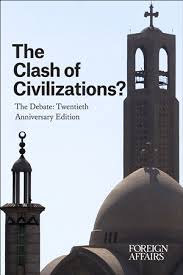
Huntington’s critique of Islamic civilizations ignited a firestorm of controversey–especially his statement: “Islam has bloody borders.”
In 1996, Huntington expanded his thesis into a book–called The Clash of Civilizations and the Remaking of World Order.
Among his assertions:
- People are divided along religious and cultural lines.
- Islamic civilization do not share the general ideals of the Western world–such as individualism and democracy.
- Their primary attachment is to their religion, not to their nation-state.
- When the Muslim world conflicts with other civilizations, tensions and wars result.
- Arab dictatorships were fragile and could be overturned by the masses of unemployed young men. But even if they fell, the new regimes would not modernize along Western lines.
- A fundamental clash of civilizations between Islam and the West is inevitable.
- Relations between Muslims and non-Muslims–such as Catholics, Protestants, Hindus, Buddhists and Jews–have been marked by Islamic antagonism and violence.
- Western nations should distance themselves from Islamic ones. The more both civilizations interact, the greater tensions between them will be.
Huntington cited several reasons for an inevitable war between the West and Islam:
- Western secular vs. Islamic religious values.
- Past historical rivalry between Christianity and Islam.
- Jealousy of Western power by Islamic nations.
- Islamic resentments of Western domination during the post-colonial restructuring of the Middle East.
- Islamic bitterness and humiliation at the achiveements of Western civilization over the last 200 years.
A point of Islamic irony:
Islamic terror groups such as Al Qaeda and ISIS damn Western nations as havens of corrupt infidels. But it’s to Europe and the United States that tens of thousands of Syrians and Iraqis are now fleeing.
And they are fleeing to escape the barbaric slaughters of their fellow Islamics.
Following the 1979 Iranian Revolution, a quasi-war developed between some Islamic nations and some Western ones.
On the Islamic side:
- Iran
- Sudan
- Iraq
- Libya
- Syria.
On the Western side:
- The United States
- Great Britain.
“In this quasi war,” wrote Huntington, “each side has capitalized on its own strengths and the other side’s weaknesses.” For example:
- Muslim terrorists exploited the openness of Western societies to plant car bombs at selected targets.
- Western powers used their superior air power to bomb selected targets in Islamic countries.
- Islamics plotted the assassination of Western leaders.
- The United States plotted the overthrow of hostile Islamic regimes.
Writing at a time before the United States directed its full military power at conquering Afghanistan and Iraq, Huntington ominously noted:
“During the 15 years between 1980 and 1995…the United States engaged in 17 military operations in the Middle East, all of them directed against Muslims. No comparable pattern of U.S. military operations occurred against the people of any other civilization.”
The war that Huntington warned was coming and was, in fact, already in progress, has since erupted into full-scale conflict, with no end in sight.
9/11, ABC NEWS, ADOLF HITLER, BOSTON MARATHON BOMBING, CBS NEWS, CHRISTIANITY, CNN, COLUMBIA UNIVERSITY, FACEBOOK, HARVARD UNIVERSITY, IRAN, ISLAM, LEBANON, MUNICH OLYMPICS MASSACRE, NBC NEWS, POLITICAL CORRECTNESS, RACIAL PROFILING, RELIGION, SAMUEL P. HUNTINGTON, TERRORISM, THE CHICAGO SUN-TIMES, THE CHICAGO TRIBUNE, THE CLASH OF CIVILIZATIONS, THE LOS ANGELES TIMES, THE NEW YORK TIMES, THE SPECTATOR, THE WASHINGTON POST, TWITTER, USA TODAY, WINSTON CHURCHILL, WORLD TRADE CENTER
In History, Military, Politics, Social commentary on September 17, 2015 at 12:01 am
There is a famous joke about racial profiling that’s long made the rounds of the Internet. It appears in the guise of a “history test,” and offers such multiple-choice questions as:
In 1972 at the Munich Olympics, athletes were kidnapped and massacred by:
- Olga Korbut
- Sitting Bull
- Arnold Schwarzenegger
- Muslim male extremists mostly between the ages of 17 and 40
In 1979, the US embassy in Iran was taken over by:
- Lost Norwegians
- Elvis
- A tour bus full of 80-year-old women
- Muslim male extremists mostly between the ages of 17 and 40
During the 1980s a number of Americans were kidnapped in Lebanon by:
- John Dillinger
- The King of Sweden
- The Boy Scouts
- Muslim male extremists mostly between the ages of 17 and 40
In 1983, the US Marine barracks in Beirut was blown up by:
- A pizza delivery boy
- Pee Wee Herman
- Geraldo Rivera
- Muslim male extremists mostly between the ages of 17 and 40
On September 11, 2001, four airliners were hijacked. Two were used as missiles to take out the World Trade Center; one crashed into the Pentagon; and the other was diverted and crashed by the passengers. Thousands of people were killed by:
- Bugs Bunny, Wiley E. Coyote, Daffy Duck and Elmer Fudd
- The Supreme Court of Florida
- Mr. Bean
- Muslim male extremists mostly between the ages of 17 and 40
* * * * *
It’s well to remember the bitter truth behind this joke, especially in light of such Islamic atrocities as:
- On April 15, 2013, two pressure-cooker bombs exploded at the finish line of the Boston Marathon, killing 3 people and injuring 264. The culprits: Two Muslim brothers, Dzhokhar Tsarnaev and Tamerlan Tsarnaev, who had emigrated to the United States from the former Soviet Union.
- On May 22, 2013, two Islamic terrorists, wielding machetes and shouting “Allahu Akbar!” (“God is Great!”) hacked a British soldier to death on a London street.
- On January 7, 2015, 2015, the worst terrorist act in France since World War II occurred when three Islamics slaughtered 12 people at a satirical magazine that had published cartoons about the Prophet Muhammed.
Writing in the British newspaper, The Spectator, Douglas Murray issued a warning to his fellow Britons: “Over recent years, those who have warned that such attacks would come here have been attacked as ‘racists’, ‘fascists’ and, most commonly, ‘Islamophobes.’
“A refusal to recognise the actual threat (a growingly radicalised Islam) has dominated most of our media and nearly all our political class.”
One man who did foresee the present conflicts with stunning clarity–and had the courage to say what has since become Politically Incorrect–was Samuel P. Huntington.

Samuel P. Huntington
A political scientist, Huntington taught government at Harvard University (1950-1959, then at Columbia University (1959-1962). He returned to Harvard in 1963, and remained there until his death in 2008.
The author of nine books, in 1996 he published his most influential one: The Clash of Civilizations and the Remaking of World Order. Its thesis was that, in the post-Cold War world, people’s cultural and religious identities would be the primary sources of conflict.
Among the points he makes:
- Modernization does not mean Westernization.
- Economic progress has come with a revival of religion.
- Post-Cold War politics emphasize ethnic nationalism over ideology.
- Civilizations are fundamentally differentiated from each other by centuries-old history, language, culture, tradition, and, most important, religion.
- As the world becomes smaller, different civilizations increasingly interact. These intensify civilization consciousness and the awareness of differences between civilizations.
- Economic modernization and social change separate people from age-old identities (such as hometowns and familiar neighbors). Religion has replaced this gap, providing a basis for identity, socialization and commitment that transcends national boundaries and unites civilizations.
- The West, at the peak of its power, is confronting non-Western countries that increasingly have the desire, will and resources to shape the world in non-Western ways.
- Cultural characteristics and differences are less mutable and hence less easily compromised and resolved than political and economic ones.
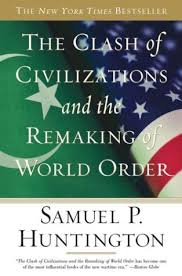
The most controversial part of The Clash of Civilizations focuses on Islam. Huntington points out, for example, that Muslim countries are involved in far more intergroup violence than others.
And he warns that the West’s future conflcts with Islamic nations will be rooted in the Islamic religion:
“Islam’s borders are bloody and so are its innards. The fundamental problem for the West is not Islamic fundamentalism. It is Islam, a different civilisation whose people are convinced of the superiority of their culture and are obsessed with the inferiority of their power.”
Huntington argues that civilizational conflicts are “particularly prevalent between Muslims and non-Muslims.” Among the reasons for these conflicts: Both Islam and Christianity have similarities which heighten conflicts between their followers:
- Both seek to convert others.
- Both are “all-or-nothing” religions; each side believes that only its faith is the correct one.
- The followers of both Islam and Christianity believe that people who violate the base principles of their religion are idolators and thus damned.
Other reasons for the Western-Islamic clash are:
- The Islamic revival, which began in the 1970s and is manifested in greater religious piety and in a growing adoption of Islamic culture, values, dress, separation of the sexes, speech and media censorship.
- Western universalism–the belief that all civilizations should adopt Western values–infuriates Islamic fundamentalists.
These are not differences that will disappear–overnight or even over the span of several centuries. Nor will they be sweet-talked away by Politically Correct politicians, however well-meaning.
60 MINUTES, 9/11 ATTACKS, ABC NEWS, ADOLF HITLER, AFGHANISTAN, AL QAEDA, BARACK OBAMA, BARCK OBAMA, BASHAR AL-ASSAD, CARL VON CLAUSEWITZ, CARLOS THE JACKAL, CBS NEWS, CHEMICAL WEAPONS, CHINA, CIA, CNN, DAVID BROOKS, DAVID CORN, FACEBOK, FACEBOOK, HARRY TRUMAN, IMPERIAL HUBRIS, IRAN, ISLAM, ISLAMIC STATE OF IRAQ AND THE LEVANT, ISRAEL, MARCHING TOWARD HELL, MICHAEL SCHEUER, MOTHER JONES MAGAZINE, MUSLIMS, NAZI GERMANY, NBC NEWS, OSAMA BIN LADEN, RUSSIA, SOVIET UNION, SYRIA, TERRORISM, THE CHICAGO TIMES, THE CHICAGO TRIBUNE, THE LOS ANGELES TIMES, THE NEW YORK TIMES, THE WASHINGTON POST, TWITTER, USA TODAY, VIETNAM WAR, VLADIMIR PUTIN, WORLD WAR 1
In Bureaucracy, History, Military, Politics, Social commentary on August 21, 2015 at 12:56 am
For America to avoid permanent military entanglements in the Middle East, it must learn to mind its own business.
So says Michael Scheuer, a 20-year CIA veteran who, from 1996 to 1999, headed Alec Station, the CIA’s unit assigned to track Osama bin Laden at the agency’s Counterterrorism Center.
He’s also the author of two seminal works on America’s fight against terrorism: Imperial Hubris: Why the West is Losing the War on Terror (2003) and Marching Toward Hell: America and Islam after Iraq (2008).
Scheuer has repeatedly warned: The United States must not deploy troops in Syria.
More than 310,000 people have been killed in Syria’s uprising-turned-civil war. The conflict began on March 15, 2011, triggered by protests demanding political reforms and the ouster of dictator Bashar al-Assad.
And many members of Congress are demanding that “we must do something” to stop all that killing.
Among the reasons why America should steer clear of the Syrian tar-baby:
The Assad regime is backed by–-among others–the Iranian-supported terrorist group, Hezbollah (Party of God). Its enemies include another terrorist group–Al Qaeda.
Hezbollah is comprised of Shiite Muslims. A sworn enemy of Israel, it has kidnapped scores of Americans suicidal enough to visit Lebanon and truck-bombed the Marine Barracks in Beirut in 1983, killing 299 Americans.
Flag of Hezbollah
Al-Qaeda, on the other hand, is made up of Sunni Muslims. Besides plotting 9/11, It has attacked the mosques and gatherings of liberal Muslims, Shias, Sufis and other non-Sunnis.
Examples of these sectarian attacks include the Sadr City bombings, the 2004 Ashoura massacre and the April, 2007 Baghdad bombings.
Flag of Al Qaeda
When your enemies are intent on killing each other, it’s best to stand aside and let them do it.
Intervening in Syria could produce unintended consequences for American forces–and make the United States a target for more Islamic terrorism.
An American military strike on Syrian government forces could lead the country’s dictator, Bashar al-Assad, to attack Israel–perhaps even with chemical weapons.
Assad could do this simply because he hates Jews–or to lure Israel into attacking Syria.
If that happened, the Islamic world–which lusts to destroy Israelis even more than “apostate” Muslims–would rally to Syria against the United States, Israel’s chief ally.
China and Russia are fully supporting the Assad dictatorship–-and the brutalities it commits against its own citizens.
This reflects badly on them–-not the United States.
And any move by the United States to directly attack the Assad regime could ignite an all-out war with Russia and/or China.
What happens if American and Russian forces start trading salvos? Or if Russian President Vladimir Putin orders an attack on Israel, in return for America’s attack on Russia’s ally, Syria?
It was exactly that scenario–Great Powers going to war over conflicts between their small-state allies–-that triggered World War l.
The United States cannot defeat the Islamic State of Iraq and the Levant (ISIL) through air power alone.
President Barack Obama authorized airstrikes against ISIL in September, 2014. Since then, the United States Air Force has dropped thousands of bombs on ISIL convoys.
This has not, however, destroyed ISIL. And its failure to do so has only led to demands by hawkish Republicans and Democrats for “boots on the ground.”
This was in fact predictable. Air power alone failed to secure victory over Nazi Germany during World War II and Vietnam during the Vietnam war. Nor did it “shock and awe” the Iraqis into surrendering during the 2003 Iraq war.
While Islamic nations like Syria and Iraq wage war within their own borders, they will lack the resources to launch attacks against the United States.
When Adolf Hitler invaded the Soviet Union in 1941, then-Senator Harry Truman said: “I hope the Russians kill lots of Nazis and vice versa.”
That should be America’s view whenever its sworn enemies start killing themselves off. Americans should welcome such self-slaughters, not become entrapped in them.
* * * * *
During his September 28, 2014 appearance on 60 Minutes, President Obama admitted that the mostly Sunni-Muslim Iraqi army had refused to combat the Sunni army of ISIL.
Then followed this exchange:
Steve Kroft: What happens if the Iraqis don’t fight or can’t fight?
President Obama: Well…
Steve Kroft: What’s the end game?
President Obama: I’m not going to speculate on failure at the moment. We’re just getting started. Let’s see how they do….
It was precisely such a mindset that led the United States, step by step, into the Vietnam quagmire.
As in the case of Vietnam, the United States lacks:
- Real or worthwhile allies in Iraq or Syria;
- A working knowledge of the peoples it wants to influence in either country;
- Clearly-defined goals that it seeks to accomplish in that region.
America rushed to disaster in Vietnam because its foreign policy elite felt it had to “do something” to fight Communism anywhere in the world.
And it is continuing to rush toward disaster in the Middle East because its foreign policy elite once again feel is must “do something.”
60 MINUTES, 9/11 ATTACKS, ABC NEWS, ADOLF HITLER, AFGHANISTAN, AL QAEDA, BARACK OBAMA, BARCK OBAMA, BASHAR AL-ASSAD, CARL VON CLAUSEWITZ, CARLOS THE JACKAL, CBS NEWS, CHEMICAL WEAPONS, CHINA, CIA, CNN, DAVID BROOKS, DAVID CORN, FACEBOK, FACEBOOK, HARRY TRUMAN, IMPERIAL HUBRIS, IRAN, ISLAM, ISLAMIC STATE OF IRAQ AND THE LEVANT, ISRAEL, MARCHING TOWARD HELL, MICHAEL SCHEUER, MOTHER JONES MAGAZINE, MUSLIMS, NAZI GERMANY, NBC NEWS, OSAMA BIN LADEN, RUSSIA, SOVIET UNION, SYRIA, TERRORISM, THE CHICAGO TIMES, THE CHICAGO TRIBUNE, THE LOS ANGELES TIMES, THE NEW YORK TIMES, THE WASHINGTON POST, TWITTER, USA TODAY, VIETNAM WAR, VLADIMIR PUTIN, WORLD WAR 1
In Bureaucracy, History, Military, Politics, Social commentary on August 20, 2015 at 12:10 am
The United States must learn to mind its own business. Otherwise, it will remain forever entangled in warfare–especially in the Middle East.
That’s the advice of former CIA agent Michael Scheuer.
Scheuer is a 20-year CIA veteran–as well as an author, historian, foreign policy critic and political analyst.
He is currently an adjunct professor at Georgetown University’s Center for Peace and Security Studies.
Michael Scheuer
He’s also the author of two seminal works on America’s fight against terrorism: Imperial Hubris: Why the West is Losing the War on Terror (2003) and Marching Toward Hell: America and Islam after Iraq (2008).
Scheuer says that Islamics don’t hate Americans because of “our way of life”–with its freedoms of speech and worship and its highly secular, commercialized culture.
Instead, Islamic hatred toward the United States stems from America’s six longstanding policies in the Middle East:
- U.S. support for apostate, corrupt, and tyrannical Muslim governments
- U.S. and other Western troops on the Arabian Peninsula
- U.S. support for Israel that keeps Palestinians in the Israelis’ thrall
- U.S. pressure on Arab energy producers to keep oil prices low
- U.S. occupation of Iraq and Afghanistan
- U.S. support for Russia, India, and China against their Muslim militants
Scheuer contends that no amount of American propaganda will win “the hearts and minds” of Islamics who can “see, hear, experience, and hate” these policies firsthand.
But there is another danger facing America, says Scheuer, one that threatens “the core of our social and civil institutions.”
And in Marching Toward Hell he bluntly indicts that threat: The “profound and willful ignorance” of America’s “bipartisan governing elite.”
Scheuer defines this elite as “the inbred set of individuals who have influenced…drafted and conducted U.S. foreign policy” since 1973.
Within that group are:
- politicians
- journalists
- academics
- preachers
- civil servants
- military officers
- philanthropists.
“Some are Republicans, others Democrats; some are evangelicals, others atheists; some are militarists, others pacifists; some are purveyors of Western civilization, others are multiculturalists,” writes Scheuer.
But for all their political and/or philosophical differences, the members of this governing elite share one belief in common: “An unquenchable ardor to have the United States intervene abroad in all places, situations and times.”
And he warns that this “bipartisan governing elite” must radically change its policies–such as unconditional support for Israel and corrupt, tyrannical Muslim governments.
Otherwise, Americans will be locked in an endless “hot war” with the Islamic world.
On September 28, 2014, President Barack Obama provided an example of this “unquenchable ardor to have the United States intervene abroad in all places, situations and times.”
In an appearance on 60 Minutes, Obama spoke about his recent decision to commit American troops to fighting the Islamic State of Iraq and the Levant (ISIL).
Steve Kroft: I think everybody applauds the efforts that you’ve made and the size of the coalition that has been assembled.
But most of them are contributing money or training or policing the borders, not getting particularly close to the contact. It looks like once again we are leading the operation. We are carrying…
President Obama: Steve, that’s always the case. That’s always the case. America leads. We are the indispensable nation. We have capacity no one else has. Our military is the best in the history of the world.
And when trouble comes up anywhere in the world, they don’t call Beijing. They don’t call Moscow. They call us. That’s the deal.
President Barack Obama
Steve Kroft: I mean, it looks like we are doing 90%.
President Obama: Steve…when there’s an earthquake in Haiti, take a look at who’s leading the charge making sure Haiti can rebuild. That’s how we roll. And that’s what makes this America.
Scheuer believes that this mindset shouldn’t be what “makes this America.” And that the place to start is by not deploying troops to Syria.
More than 310,000 people have been killed in Syria’s uprising-turned-civil war. The conflict began on March 15, 2011, triggered by protests demanding political reforms and the ouster of dictator Bashar al-Assad.
Among the reasons why America should steer clear of the Syrian bloodbath:
Since 1979, Syria has been listed by the U.S. State Department as a sponsor of terrorism.
Among the terrorist groups it supports are Hizbollah and Hamas. For years, Syria provided a safehouse in Damascus to Ilich Ramírez Sánchez–-the notorious terrorist better known as Carlos the Jackal.
Ilich Ramírez Sánchez–“Carlos the Jackal”
There are no “good Syrians” for the United States to support–-only murderers who have long served a tyrant and other murderers who now wish to become the next tyrant.
The United States doesn’t know what it wants to do in Syria, other than “send a message.”
Carl von Clausewitz, the Prussian military theorist, wrote: “War is the continuation of state policy by other means.” But President Barack Obama hasn’t stated what his “state policy” is toward Syria–or what he intends to gain by attacking it.
Obama has said he’s “not after regime-change.” If true, that would leave Assad in power–-and free to go on killing those who resist his rule.


.jpg)

 Bureaucracybuster's Blog
60 MINUTES, 9/11 ATTACKS, ABC NEWS, ADOLF HITLER, AFGHANISTAN, AL QAEDA, AYATOLLAH RUHOLLAH KHOMEINI, BARACK OBAMA, BASHAR AL-ASSAD, CARL VON CLAUSEWITZ, CARLOS THE JACKAL, CBS NEWS, CIA, CNN, FACEBOOK, HARRY TRUMAN, IMPERIAL HUBRIS, IRAN, ISLAM, ISLAMIC STATE OF IRAQ AND THE LEVANT, ISRAEL, MARCHING TOWARD HELL, MICHAEL SCHEUER, MUSLIMS, NAZI GERMANY, NBC NEWS, OSAMA BIN LADEN, RUSSIA, SHAH OF IRAN, SOVIET UNION, SYRIA, TERRORISM, THE CHICAGO TIMES, THE CHICAGO TRIBUNE, THE LOS ANGELES TIMES, THE NEW YORK TIMES, THE WASHINGTON POST, TWITTER, USA TODAY, VIETNAM WAR, VLADIMIR PUTIN, WORLD WAR 1
GOODBYE TO ALL THAT: PART THREE (END)
In Bureaucracy, History, Military, Politics, Social commentary, Uncategorized on November 19, 2015 at 12:14 amAccording to Micheal Scheuer, America needs to end its role as Israel’s permanent bodyguard.
Scheuer is a 20-year CIA veteran–as well as an author, historian, foreign policy critic and political analyst.
Testifying before the House Committee on Homeland Security on October 9, 2013, Scheuer warned:
“If it was up to me, I’d dump the Israelis tomorrow. All I worry about is that continuing preaching of American politicians to the American people that our relationship with the Israelis doesn’t cause us to have dead Americans and extraordinary expenses in fighting the Muslim world.”
Michael Scheuer
For decades, the United States has pursued two policies in the Middle East, one based on relations with the Arab world and the other based on relations with Israel.
Policy 1: Maintaining access to vast amounts of Arab oil at low prices.
Policy 2: Maintaining the security of Israel.
Since the Arabs and Israelis hate each other, each side constantly tries to sway American support in its direction.
Every step the United States takes to defend Israel–diplomatically or militarily–ignites hatred of Americans among Islamics.
And every step–diplomatically or militarily–the United States takes to improve its relations with Islamic countries convinces Israelis that they’re being “sold out.”
President George W. Bush tilted strongly toward Israel. That convinced Israelis to go on building settlements in occupied Arab territory–and alienated the Arabs.
President Barack Obama, seeking a balanced approach, leaned heavily on Israel to stop building settlements. Israel has continued doing so–thus alienating the Israelis while leaving the Arabs enraged.
In short: The United States is like a giant who has one foot stuck in Israel and the other stuck in any Islamic country–leaving his private parts fully exposed to whichever side wants to take a shot at them.
This is not to deny that Israel has a right to exist. Every nation--including Israel–has the absolute right to defend itself from aggression.
But no nation–including Israel–should have the right to expect another nation to act as its permanent bodyguard.
Millions of Americans believe they are morally obligated to defend Israel owing to the barbarism of the Holocaust. America, however, was never a party to this, and has nothing to atone for.
But there is another reason many Americans feel committed to Israel. And it has nothing to do with concern for the fates of Israelis.
It lies in the mythology of the Christian Right: Many fundamentalist Christians believe that, for Jesus Christ to awaken from his 2,000-year slumber, Israel must first re-conquer every inch of territory it supposedly held during the reign of Kings David and Solomon.
Right-wing Christian fantasy: Dead man hovering
After Christ returns, they believe, the Jews will face a choice: Become Christians or go to hell. For evangelical Christians, Jews remain the eternal “Christ killers.”
And if Jews must assume temporary control of the Middle East to bring about the return of a man who died 2,000 years ago, so be it.
This is also the view of many Right-wing members of the House of Representatives and Senate. Clearly, people who hold such totally irrational views shouldn’t be allowed to hold public office.
Unfortunately, such unbalanced views are shared by millions of equally irrational evangelical Christians.
During his appearance before the House Committee on Homeland Security, Michael Scheuer absolutely rejected the conservatives’ assertion that jihadists wage war on us because they “hate us for our freedoms.”
SCHEUER: These people are fighting for something substantive, for something religious. ….They are not going to fight us because we have women in the workplace.
That is an insanity. What they are fighting us about is what we do.
…I would draw your attention to the reality that, to the best of my knowledge, neither we nor any of our NATO partners have yet to capture a Western Islamist fighter whose words or documents have shown a motivation to attack based on hatred for liberty, elections or gender equality.
Invariably, they attribute their motivation to U.S. and Western military intervention and support for Israel and Muslim tyrannies.
Scheuer’s take on Israel brought him into direct conflict with Rep. Peter T. King (R-New York).
Congressman Peter T. King
KING: I would just say we would have more dead Americans if we didn’t stand by our allies in the Middle East. We would just be encourage al-Qaeda to take advantage of us.
SCHEUER: You know, you are presiding over a bankruptcy. What can be worse? What has been the goal of al-Qaeda since it was formed? To bankrupt the United States.
Who is winning today, sir? We are done like dinner.
KING: We are winning and we will continue to win unless we take the advice of people like you.
SCHEUER: Sir, you are exactly wrong. We are losing. Two U.S. field armies were defeated by men in the field with weapons from the Korean War.
KING: The fact is we have not been successfully attacked since September 11.
SCHEUER: The fact is, sir, we have had two military defeats overseas, which is far more important.
And, warns Scheuer, more defeats–domestic and international–lie ahead unless the United States radically changes its policies toward the Middle East.
Share this: