Posts Tagged ‘ALCOHOLISM’
ABC NEWS, ALCOHOLISM, ALTERNET, AP, BUMS, BUZZFEED, CBS NEWS, CNN, CROOKS AND LIARS, DAILY KOZ, DEBBIE STABENOW, DEPARTMENT OF EDUCATION, DRUG ADDICTION, DRUG ENFORCEMENT ADMINISTRATION, FACEBOOK, FIREARMS, HOMELESSNESS, IRAQ, LIBERTARIAN PARTY, MENTAL ILLNESS, MOTHER JONES, MOVEON, MSNBC, NBC NEWS, NEWSWEEK, NPR, POLICE, POLITICO, RAW STORY, REUTERS, SALON, SEATTLE TIMES, SHOTGUNS, SLATE, THE ATLANTIC, THE CHICAGO SUN-TIMES, THE CHICAGO TRIBUNE, THE DAILY BEAST, THE GUARDIAN, THE HILL, THE HUFFINGTON POST, THE LOS ANGELES TIMES, THE NATION, THE NEW YORK TIMES, THE WASHINGTON POST, TIME, TRANSPORTATION SECURITY ADMINISTRATION, TWITTER, U.S. NEWS & WORLD REPORT, UNITED STATES SENATE, UPI, USA TODAY, USA TODAY BRIAN ELLISON
In Bureaucracy, History, Law, Law Enforcement, Politics, Social commentary on August 26, 2019 at 12:19 am
In 2018, Brian Ellison was a Libertarian candidate for United States Senator from Michigan. And unlike other political candidates, he had a unique position on homelessness.
Some politicians want to outlaw homeless encampments. Others want to spend billions on low-cost housing for this population.
Ellison, instead, wanted to arm bums with guns. Specifically, with pump-action shotguns.
“Get us a group of 20 homeless people that we could train, help them understand how the shotgun works, how to maintain it, how to fire it,” Ellison told Newsweek. “And equip them with a shotgun, a sling and some shells so they can protect themselves.”

Brian Ellison
Actually, the shotgun was not Ellison’s first choice of weaponry for his intended beneficiaries.
“Frankly I think the ideal weapon would be a pistol,” he told The Guardian, “but due to the licensing requirements in the state we’re going to have a hard enough time getting homeless people shotguns as it is.
“Getting them pistols is probably next to impossible. The pistols need to be registered, people have to have addresses.”
But “open-carrying a long gun is completely legal. So we thought that pump-action shotguns were a suitable alternative to a pistol.”

Winchester Model 1912-gauge pump-action shotgun
Ellison is a former Army soldier who served in Iraq.
Apparently that experience didn’t teach him that when too many people have guns, no one is safe.
Ellison also wanted to abolish the Drug Enforcement Administration and the Transportation Security Administration, and localize the Department of Education.
“I’m basically entirely opposed to any government program,” said Ellison.
Unless it’s a government program to arm bums with guns.
This population can be roughly divided into four categories:
- Druggies
- Drunks
- Mental cases and
- Bums.
The homeless are “constantly victims of violent crime,” said Ellison, who believes that giving them firearms would provide a deterrent.
It would also provide a real incentive for tax-paying citizens to hand over their money the moment a shotgun-carrying DDMB confronts them on the street.
But Ellison had an answer for this: “Pre-qualify” DDMBs as suitable candidates to own firearms:
“The first thing that we’re gonna do is ask them if they think this is something that would benefit them. We’re certainly not trying to force anything on anybody.”
Except, of course, on those citizens being hit on daily—sometimes hourly—by DDMBs for money.
Naturally, ammunition would be provided—at state expense—for the shotguns. This would come in five- or six-shell magazines.
Ellison said that more shells would be provided if the owners legitimately used their guns to defend themselves.
But if they used their ammo for “shooting cans in somebody’s private property” then they would not be given more shells.
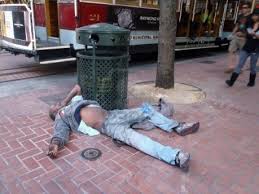
A potential beneficiary of Ellison’s “guns for bums” program
Ellison wasn’t worried that his intended beneficiaries might use the guns for murder or robbery: “Well, are you worried about the police being armed with military weapons? I am.
“The world we live in is a scary world, where the police who used to dress in short-sleeved shirts and carry a revolver now have long rifles with scopes and bulletproof vests and armored vehicles.
“And quite frankly that scares me much more than a homeless person trying to defend themselves with a shotgun.”
This, of course, ignores the fact that police are pre-qualified with firearms—and every shooting by officers in a big-city police department is thoroughly investigated.
Their firearms are turned in for investigation. And the officers who used them can be disciplined and even prosecuted if a police chief and/or prosecutor believes the shooting was improper or illegal.
And who would make such lethal weaponry available to street people?
“There are a lot of charities out there that help to provide the homeless with food, housing, job training, all kinds of stuff,” said Ellison. “There’s not a charity out there that helps them learn how to protect themselves. What’s going to drive this is popular support.”
Just how many DDMBs could receive Ellison’s special gift? In Michigan, there are more than 56,000 of them.
Ellison remarked that the population is “constantly victims of violent crime” in his state.
His website page opened with: “LIBERTARIANISM MEANS ALL OF YOUR FREEDOMS ALL OF THE TIME.” And it outlined his core beliefs:
“We as a people must admit that the many laws, regulations, and policies established over the years in an effort to ‘promote social welfare’ have failed in their stated purpose. These laws and regulations now represent the greatest threat to our natural rights, and must be repealed.
“Abroad, we must change how we engage the rest of the world, leading by example, not force of arms….Imperialism was not the intent of our founders nor is it the desire of the majority of Americans.”
“In order to move forward in these beliefs,” said his website, “we must remember that while our ideology is our core, we must also be practical and reasonable in their implementation.”
Apparently, many voters decided that arming bums with guns wasn’t “practical and reasonable.” Ellison’s opponent, Democratic incumbent Debbie Stabenow, defeated him in the general election on November 6, 2018.
ABC NEWS, ALCOHOLISM, ALTERNET, AP, BEGGING, BUMS, BUZZFEED, CBS NEWS, CNN, DAILY KOS, DISEASE, DRUG ADDICTION, FACEBOOK, HEPATITIS B, HEPATITIS C, HILLARY RONEN, HIV, HOMELESS, HOMELESSNESS, MENTAL ILLNESS, MOTHER JONES, MOVEON, NBC NEWS, NEWSWEEK, NPR, PANHANDLING, POLITICO, PUBLIC HEALTH, RAW STORY, REUTERS, ROTAVIRUS, SALON, SAN FRANCISCO, SAN FRANCISCO CHRONICLE, SAN FRANCISCO DEPARTMENT OF PUBLIC WORKS, SEATTLE TIMES, SLATE, THE ATLANTIC, THE CHICAGO SUN-TIMES, THE CHICAGO TRIBUNE, THE DAILY BEAST, THE GUARDIAN, THE HILL, THE HUFFINGTON POST, THE LOS ANGELES TIMES, THE NEW YORK TIMES, THE WALL STREET JOURNAL, THE WASHINGTON POST, TIME, TWITTER, U.S. NEWS & WORLD REPORT, UPI, USA TODAY, WILLIE BROWN
In Bureaucracy, History, Law, Law Enforcement, Politics, Social commentary on March 29, 2019 at 12:17 am
In 2010, San Francisco voters passed the “No Sit/No Lie” ordinance, which “makes it unlawful, with certain exceptions, to sit or lie on a public sidewalk, or on an object placed on a public sidewalk, between 7AM and 11PM.”
It also prohibits sleeping in public parks at night and building encampments.
The number of sit-lie infractions peaked at 1,011 in 2013 before steadily declining to just 114 in 2017, according to San Francisco Superior Court records.
Meanwhile, the number of misdemeanors tracked by the SFPD spiked at 195 in 2016 and then declined sharply by almost half the next year.
This does not mean that San Francisco’s Untermenschen problem has abated.
It simply means that the city has essentially given up on trying to protect its contributing, tax-paying citizens from the thousands of tax-draining drug-abusers, alcoholics, mentally ill and bums who infest its streets.
Walk down almost any street in the downtown part of the city and you’ll find sidewalks crowded with stinking,
- disease-ridden,
- lice infested,
- drug-addicted,
- alcohol-soaked,
- often psychotic men and women
whom city officials politely refer to as “the homeless.”

Among the trappings that go with this population:
- Tents
- Mattresses
- Piles of belongings
- Stolen shopping carts
- Trash
- Half-eaten food
- Empty cans/bottles of alcohol
- Feces
- Pools of urine
- Hypodermic needles
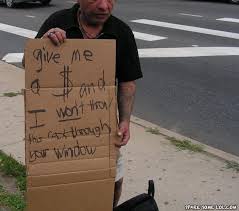
What you’ll almost never see: Police actually enforcing the “No Sit/No Lie” ordinance.
So much for the will of the voters.
San Francisco officials have effectively washed their hands—if not the streets—of the problem. If local residents must put up with repeated violations of the most basic sanitation laws, that’s their tough luck.
What matters to the Mayor and Board of Supervisors is this: The “rights” of those whose filth and behavior pose an immediate threat to public health and safety take precedence over those of tax-paying, law-abiding San Franciscans.
San Francisco residents can be fined $25 to $1,000 for feeding pigeons—but not for giving money to street bums.
Often those asking for money to “buy food” refuse offers to buy them food—no doubt because they intend to use the money on drugs or alcohol.
During the Mayorship of Willie Brown (1996 – 2004), Hizzonor proposed what he thought was a brilliant way for residents to “contribute” to “street people.”
Those who were somehow certified as “homeless” would be issued special electronic “cash cards.” When someone wanted to make a “donation,” s/he would swipe a credit card against the one owned by the street bum, for whatever amount s/he wanted to donate.
But before the program started, someone at City Hall realized a blunt truth: Residents—especially women—weren’t likely to whip out their credit cards in front of a ranting, foul-smelling, probably disease-ridden street bum.
Mercifully, the program died before it ever got started.
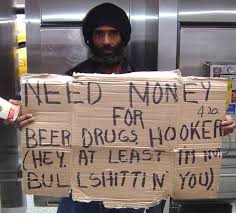
It’s long past time for San Francisco—and other cities—to stop catering to its population of DDMBs: Druggies, Drunks, Mental cases and Bums—who prey on the guilt or fear of law-abiding, tax-paying citizens.
The same laws that protect citizens against patients with highly communicable diseases like typhoid and cholera should be vigorously applied to those whose filthy habits threaten similar public contagion.
Among such reforms:
- The city should launch a “Please Do Not Feed the Bums” publicity campaign—as it has against feeding pigeons. And those caught doing so should be heavily fined.
- Trash cans should be equipped with locked doors, to prevent bums from using them as food dispensers.
- Those living on the street should be given a choice: Go to a local shelter or face arrest and the immediate confiscation of their possessions.
- For those who refuse shelter and insist on living on the streets, a special “Untermenschen City” should be set up near the city dump. There they can live in their tents and/or sleeping bags while being unable to daily confront or assault others to obtain free money.
- San Francisco’s rent control laws should be strengthened, to prevent future evictions owing to the unchecked greed of landlords. Tenants on fixed incomes should be given special protections against extortionate rent increases.
- Bus drivers should have the right to refuse passengers who stink of urine/feces, as they present a potential health-hazard to others.
- The owners of restaurants, theaters and grocery stores should likewise be allowed to refuse service on the same basis.
- Those applying for welfare benefits should be required to provide proof of residence. Too many people come to San Francisco because, upon arrival, they can immediately apply for such benefits.
- The city should set up a special unit to deal entirely with removing “street people” and their possessions from city sidewalks. This could be a division of the Sanitation Department, since its personnel are used to removing filth and debris of all types.
San Francisco officials need to:
- Forcefully tell alcoholics and drug addicts: “Your anti-social behavior is not welcome here. Take your self-destructive lifestyles elsewhere. We won’t subsidize them.”
- Take the mentally unstable off the street and place them in institutions where their needs can be met.
- Tell those who are just plain bums: Don’t expect us to support you.
Only then will San Francisco rightly reclaim its former glory as “the city by the Bay.”
ABC NEWS, ALCOHOLISM, ALTERNET, AP, BEGGING, BUMS, BUZZFEED, CBS NEWS, CNN, DAILY KOS, DISEASE, DRUG ADDICTION, FACEBOOK, HEPATITIS B, HEPATITIS C, HILLARY RONEN, HIV, HOMELESS, HOMELESSNESS, MENTAL ILLNESS, MOTHER JONES, MOVEON, NBC NEWS, NEWSWEEK, NPR, PANHANDLING, POLITICO, PUBLIC HEALTH, RAW STORY, REUTERS, ROTAVIRUS, SALON, SAN FRANCISCO, SAN FRANCISCO CHRONICLE, SAN FRANCISCO DEPARTMENT OF PUBLIC WORKS, SEATTLE TIMES, SLATE, THE ATLANTIC, THE CHICAGO SUN-TIMES, THE CHICAGO TRIBUNE, THE DAILY BEAST, THE GUARDIAN, THE HILL, THE HUFFINGTON POST, THE LOS ANGELES TIMES, THE NEW YORK TIMES, THE WALL STREET JOURNAL, THE WASHINGTON POST, TIME, TWITTER, U.S. NEWS & WORLD REPORT, UPI, USA TODAY, WILLIE BROWN
In Bureaucracy, History, Law, Law Enforcement, Politics, Social commentary on March 28, 2019 at 12:06 am
Huge areas of San Francisco are covered in feces, urine, trash and needles. Hospitals overflow with patients that have fallen ill due to the contamination.
And what has been the reaction of successive mayors and members of the Board of Supervisors?
A disgraceful combination of tolerance and indifference: Tolerance toward those who create such dangers—and indifference toward those who are their potential victims.
And yet those officials remain in office for years.
In February, 2018, NBC News surveyed 153 blocks of the city—an area more than 20 miles. That area includes popular tourist spots like Union Square and the cable car turnaround. It’s bordered by Van Ness Avenue, Market Street, Post Street and Grant Avenue. And it’s also home to City Hall, schools, playgrounds, and a police station.
A typical San Francisco scene
Most of the trash found consisted of heaps of garbage, food, and discarded junk—including 100 drug needles and more than 300 piles of feces throughout downtown. If you step on one of these needles, you can get HIV, Hepatitis C, Hepatitis B or a variety of other viral diseases.
But you don’t have to actually get stuck by a needle to become a victim. Once fecal matter dries, it can become airborne and release deadly viruses, such as the rotavirus.
“If you happen to inhale that, it can also go into your intestine,” says Dr. Lee Riley, an infectious disease specialist at the University of California, Berkeley. The results can prove fatal, especially in children.
As the news unit filmed a typical day’s activity in San Francisco, a group of preschool students, enjoying a field trip, walked to City Hall.
Responding to a reporter’s question, Adelita Orellana said: “We see poop, we see pee, we see needles, and we see trash.
“Sometimes they ask what is it, and that’s a conversation that’s a little difficult to have with a two-year old, but we just let them know that those things are full of germs, that they are dangerous, and they should never be touched.”
San Francisco’s political elite see this blight as well as everyone else. They can’t avoid seeing it, since the city covers only 47 square miles.

San Francisco City Hall
Cabe6403 at English Wikipedia [CC BY-SA 3.0 (https://creativecommons.org/licenses/by-sa/3.0) or GFDL (http://www.gnu.org/copyleft/fdl.html)%5D, from Wikimedia Commons
One of those who sees the disgrace up-front is Supervisor Hillary Ronen: “Unacceptable. Absolutely unacceptable. We’re losing tourists. We’re losing conventions in San Francisco.”
Yet what does she propose as the solution? “We need more temporary beds for street homelessness.”
This is on a par with a “pest control expert” recommending: “We need more sugar to clear up our roach problem.”
Thanks to its mild climate and social programs that dole out cash payments to virtually anyone with no residency requirement, San Francisco is often considered the “homeless capital” of the United States.
According to a 2016 article in the San Francisco Chronicle, there are about 13,000 “homeless” people in San Francisco. Of these, an estimated 3,000 to 5,000 refuse shelter.
In 2016, San Francisco spent $275 million on homelessness—up from $241 million in 2015. Public Works cleanup crews picked up more than 679 tons of trash from homeless tent camps—and collected more than 100,000 used syringes from the camps.
In 2016, San Francisco residents made 22,608 complaints about encampments—a five-fold increase from 2015.
City officials euphemistically call this population “the homeless.” That’s because they don’t want to use words that accurately describe those who comprise the overwhelming majority of this population:
- Druggies
- Drunks
- Mentally ill
- Bums.
Or, as even many police, social workers and paramedics who wrestle with this population privately refer to them: DDMBs.
Yet the mere citing of statistics—how many “homeless,” how much money is spent on how many people, how much filth they produce—doesn’t capture the true intensity of the problem.
To do that, you must confront its realities at the street level. Imagine:
- You’re elderly, and walking with a cane—and must often try to negotiate your way around big tents that take up most of a sidewalk.
- You’re riding in a wheelchair along a sidewalk until you come to a large mattress lying directly in your path, with a potentially psychotic “homeless” man lying upon it.
- You find a street teeming with rats—eating the food scraps left by “homeless” people.
- You walk into an underground Municipal Railway bus station—and find it littered with derelicts passed out or shooting up heroin in plain sight. Naturally, they don’t worry about picking up their used hypodermic needles. They leave those out for others to step on or pick up at their own risk.
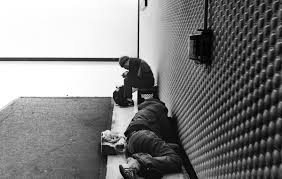
- You’re standing at a bus stop or eating in a restaurant—when a large, filthy, possibly disease-carrying man or woman demands a “handout” from you.
- You board a local bus and are forced to sit near a man stinking of feces and/or urine. Naturally, the driver doesn’t put him off—giving you the choice of surviving the stench or getting off to catch another bus.
- You can’t use the elevator at the Bay Area Rapid Transit (BART) station because “homeless” derelicts have ruined its mechanism with urine and feces.
ABC NEWS, ALCOHOLISM, ALTERNET, AP, BUMS, BUZZFEED, CBS NEWS, CNN, CROOKS AND LIARS, DAILY KOZ, DEBBIE STABENOW, DEPARTMENT OF EDUCATION, DRUG ADDICTION, DRUG ENFORCEMENT ADMINISTRATION, FACEBOOK, FIREARMS, HOMELESSNESS, IRAQ, LIBERTARIAN PARTY, MENTAL ILLNESS, MOTHER JONES, MOVEON, MSNBC, NBC NEWS, NEWSWEEK, NPR, POLICE, POLITICO, RAW STORY, REUTERS, SALON, SEATTLE TIMES, SHOTGUNS, SLATE, THE ATLANTIC, THE CHICAGO SUN-TIMES, THE CHICAGO TRIBUNE, THE DAILY BEAST, THE GUARDIAN, THE HILL, THE HUFFINGTON POST, THE LOS ANGELES TIMES, THE NATION, THE NEW YORK TIMES, THE WASHINGTON POST, TIME, TRANSPORTATION SECURITY ADMINISTRATION, TWITTER, U.S. NEWS & WORLD REPORT, UNITED STATES SENATE, UPI, USA TODAY, USA TODAY BRIAN ELLISON
In History, Law, Law Enforcement, Politics, Social commentary on August 2, 2018 at 12:04 am
Brian Ellison is running for the position of United States Senator from Michigan. And unlike other political candidates, he has taken a unique position on homelessness.
Some politicians want to outlaw homeless encampments. Others want to spend billions on low-cost housing for this population.
Ellison, instead, wants to arm bums with guns. Specifically, with pump-action shotguns.
“Get us a group of 20 homeless people that we could train, help them understand how the shotgun works, how to maintain it, how to fire it,” Ellison told Newsweek. “And equip them with a shotgun, a sling and some shells so they can protect themselves.”
Brian Ellison
Actually, the shotgun was not Ellison’s first choice of weaponry for his intended beneficiaries.
“Frankly I think the ideal weapon would be a pistol,” he told The Guardian, “but due to the licensing requirements in the state we’re going to have a hard enough time getting homeless people shotguns as it is.
“Getting them pistols is probably next to impossible. The pistols need to be registered, people have to have addresses.”
But “open-carrying a long gun is completely legal. So we thought that pump-action shotguns were a suitable alternative to a pistol.”
Winchester Model 1912-gauge pump-action shotgun
Ellison is a Libertarian. He’s also a former Army soldier who served in Iraq.
Apparently that experience didn’t teach him that when too many people have guns, no one is safe.
Ellison’s opponent is Democratic incumbent Debbie Stabenow.
Besides providing shotguns to thousands of rootless people, Ellison wants to abolish the Drug Enforcement Administration and the Transportation Security Administration, and localize the Department of Education.
“I’m basically entirely opposed to any government program,” said Ellison.
Unless it’s a government program to arm bums with guns.
This population can be roughly divided into four categories:
- Druggies
- Drunks
- Mental cases and
- Bums.
The homeless are “constantly victims of violent crime,” says Ellison, who believes that giving them firearms would provide a deterrent.
It would also provide a real incentive for tax-paying citizens to hand over their money the moment a shotgun-carrying DDMB confronts them on the street.
Of course, Ellison has an answer for this: He would try to “pre-qualify” DDMBs as suitable candidates to own firearms:
“The first thing that we’re gonna do is ask them if they think this is something that would benefit them. We’re certainly not trying to force anything on anybody.”
Except, of course, on those citizens being hit on daily—sometimes hourly—by DDMBs for money.
Naturally, ammunition would be provided—at state expense—for the shotguns. This would come in five- or six-shell magazines.
Ellison said that more shells would be provided if the owners legitimately used their guns to defend themselves.
But if they used their ammo for “shooting cans in somebody’s private property” then they would not be given more shells.
A potential beneficiary of Ellison’s “guns for bums” program
Ellison isn’t worried that is intended beneficiaries might use the guns for murder or robbery: “Well, are you worried about the police being armed with military weapons? I am.
“The world we live in is a scary world, where the police who used to dress in short-sleeved shirts and carry a revolver now have long rifles with scopes and bulletproof vests and armoured vehicles.
“And quite frankly that scares me much more than a homeless person trying to defend themselves with a shotgun.”
This, of course, ignores the fact that police are pre-qualified with firearms—and every shooting by officers in a big-city police department is thoroughly investigated.
Their firearms are turned in for investigation. And the officers who used them can be disciplined and even prosecuted if a police chief and/or prosecutor believes the shooting was improper or illegal.
And who would make such lethal weaponry available to street people?
“There are a lot of charities out there that help to provide the homeless with food, housing, job training, all kinds of stuff,” said Ellison. “There’s not a charity out there that helps them learn how to protect themselves. What’s going to drive this is popular support.”
Just how many DDMBs could receive Ellison’s special gift? In Michigan, there are more than 56,000 of them.
Ellison remarked that the population is “constantly victims of violent crime” in his state.
His website page opens with: “LIBERTARIANISM MEANS ALL OF YOUR FREEDOMS ALL OF THE TIME.” And it outlines his core beliefs:
“We as a people must admit that the many laws, regulations, and policies established over the years in an effort to ‘promote social welfare’ have failed in their stated purpose. These laws and regulations now represent the greatest threat to our natural rights, and must be repealed.
“Abroad, we must change how we engage the rest of the world, leading by example, not force of arms….Imperialism was not the intent of our founders nor is it the desire of the majority of Americans.”
“In order to move forward in these beliefs,” says his website, “we must remember that while our ideology is our core, we must also be practical and reasonable in their implementation.”
Yet many voters may well decide that arming bums with guns isn’t “practical and reasonable.”
ABC NEWS, ALCOHOLISM, ALTERNET, AP, BEGGING, BUMS, BUZZFEED, CBS NEWS, CNN, DAILY KOS, DISEASE, DRUG ADDICTION, FACEBOOK, HEPATITIS B, HEPATITIS C, HILLARY RONEN, HIV, HOMELESS, HOMELESSNESS, MENTAL ILLNESS, MOTHER JONES, MOVEON, NBC NEWS, NEWSWEEK, NPR, PANHANDLING, POLITICO, PUBLIC HEALTH, RAW STORY, REUTERS, ROTAVIRUS, SALON, SAN FRANCISCO, SAN FRANCISCO CHRONICLE, SAN FRANCISCO DEPARTMENT OF PUBLIC WORKS, SEATTLE TIMES, SLATE, THE ATLANTIC, THE CHICAGO SUN-TIMES, THE CHICAGO TRIBUNE, THE DAILY BEAST, THE GUARDIAN, THE HILL, THE HUFFINGTON POST, THE LOS ANGELES TIMES, THE NEW YORK TIMES, THE WALL STREET JOURNAL, THE WASHINGTON POST, TIME, TWITTER, U.S. NEWS & WORLD REPORT, UPI, USA TODAY, WILLIE BROWN
In Bureaucracy, History, Law, Law Enforcement, Medical, Politics, Social commentary on June 22, 2018 at 12:05 am
To capture the true intensity of the “homeless” problem in San Francisco, you must confront its realities at the street level. Imagine:
- You’re elderly, and walking with a cane—and must often try to negotiate your way around big tents that take up most of a sidewalk.
- You’re riding in a wheelchair along a sidewalk until you come to a large mattress lying directly in your path, with a potentially psychotic “homeless” man lying upon it.
- You find a street teeming with rats—eating the food scraps left by “homeless” people.
- You board a local bus and are forced to sit near a man stinking of feces and/or urine. Naturally, the driver doesn’t put him off—giving you the choice of surviving the stench or getting off to catch another bus.
- You walk into an underground Municipal Railway bus station—and find it littered with derelicts passed out or shooting up heroin in plain sight. Naturally, they don’t worry about picking up their used hypodermic needles. They leave those out for others to step on or pick up at their own risk.
- You’re standing at a bus stop or eating in a restaurant—when a large, filthy, possibly disease-carrying man or woman demands a “handout” from you.
- You can’t use the elevator at the Bay Area Rapid Transit (BART) station because “homeless” derelicts have ruined its mechanism with urine and feces.
In 2010, San Francisco voters passed the “No Sit/No Lie” ordinance, which “makes it unlawful, with certain exceptions, to sit or lie on a public sidewalk, or on an object placed on a public sidewalk, between 7AM and 11PM.”
But walk down almost any street in the downtown part of the city and you’ll find sidewalks crowded with stinking, disease-ridden, lice/bedbug-infested, drug-addicted, alcohol-soaked, often psychotic men and women whom city officials politely refer to as “the homeless.”
Among the trappings that go with this population:
- Tents
- Mattresses
- Piles of belongings
- Stolen shopping cards
- Trash
- Half-eaten food
- Empty cans/bottles of alcohol
- Feces
- Hypodermic needles
What you’ll almost never see: Police actually enforcing the “No Sit/No Lie” ordinance.
So much for the will of the voters.
San Francisco officials have effectively washed their hands of the problem. If local residents must put up with repeated violations of the most basic sanitation laws, that’s their tough luck.
What matters to the Mayor and Board of Supervisors is this: The “rights” of those whose filth and behavior pose an immediate threat to public health and safety take precedence over those of tax-paying, law-abiding San Franciscans.
San Francisco residents can be fined $25 to $1,000 for feeding pigeons—but not for feeding street bums.
During the Mayorship of Willie Brown (1996 – 2004), Hizzonor proposed what he thought was a brilliant way for residents to “contribute” to “street people.”
Those who were somehow certified as “homeless” would be issued special electronic “cash cards.” When someone wanted to make a “donation,” s/he would swipe a credit card against the one owned by the street bum, for whatever amount s/he wanted to donate.
But before the program started, someone at City Hall realized a blunt truth: Residents—especially women—weren’t likely to whip out their credit cards in front of a ranting, foul-smelling, probably disease-ridden street bum.
It’s long past time for San Francisco—and other cities—to stop catering to the druggies, alcoholics, mental cases and bums who prey on the guilt or fear of law-abiding, tax-paying citizens.
The same laws that protect citizens against patients with highly communicable diseases like typhoid and cholera should be vigorously applied to those whose filthy habits threaten similar public contagion.
Among such reforms:
- The city should launch a “Please Do Not Feed the Bums” publicity campaign—as it has against feeding pigeons. And it should be backed up with stiff fines for those caught doing so.
- Those living on the street should be given a choice: Go to a local shelter or face arrest and the immediate confiscation of their possessions.
- Bus drivers should have the right to refuse passengers who stink of urine/feces, as they present a potential health-hazard to others.
- The owners of restaurants should likewise be allowed to refuse service on the same basis.
- Those applying for welfare benefits should be required to provide proof of residence. Too many people come to San Francisco because, upon arrival, they can immediately apply for such benefits.
- The city should set up a special unit to deal entirely with removing “street people” and their possessions from city sidewalks. This could be a division of the Sanitation Department, since its personnel are used to removing filth and debris of all types.
San Francisco officials need to:
- Forcefully tell alcoholics and drug addicts: “Your anti-social behavior is not welcome here. Take your self-destructive lifestyles elsewhere. We won’t subsidize them.”
- Take the mentally unstable off the street and place them in institutions where their needs can be met.
- Tell those who are just plain bums: Don’t expect us to support you.
Only then will San Francisco rightly reclaim its former glory as “the city by the Bay.”
ABC NEWS, ALCOHOLISM, ALTERNET, AP, BEGGING, BUMS, BUZZFEED, CBS NEWS, CNN, DAILY KOS, DISEASE, DRUG ADDICTION, FACEBOOK, HEPATITIS B, HEPATITIS C, HILLARY RONEN, HIV, HOMELESS, HOMELESSNESS, MENTAL ILLNESS, MOTHER JONES, MOVEON, NBC NEWS, NEWSWEEK, NPR, PANHANDLING, POLITICO, PUBLIC HEALTH, RAW STORY, REUTERS, ROTAVIRUS, SALON, SAN FRANCISCO, SAN FRANCISCO CHRONICLE, SAN FRANCISCO DEPARTMENT OF PUBLIC WORKS, SEATTLE TIMES, SLATE, THE ATLANTIC, THE CHICAGO SUN-TIMES, THE CHICAGO TRIBUNE, THE DAILY BEAST, THE GUARDIAN, THE HILL, THE HUFFINGTON POST, THE LOS ANGELES TIMES, THE NEW YORK TIMES, THE WALL STREET JOURNAL, THE WASHINGTON POST, TIME, TWITTER, U.S. NEWS & WORLD REPORT, UPI, USA TODAY, WILLIE BROWN
In Bureaucracy, History, Law, Law Enforcement, Medical, Politics, Social commentary on June 21, 2018 at 1:45 am
Imagine that, late one night, you wake up and decide to go to the kitchen for a drink of water. You turn on the light—and suddenly find a virtual army of cockroaches hurriedly scurrying across the floor.
In the morning, you call an exterminator, and a “pest control specialist” soon knocks at your door.
“What you need to do,” he says, “is to put out big packets of sugar for the roaches.”
“Wait a minute—don’t roaches love sugar? How is this going to make them go away?”
“It won’t.”
“Then what’s the point?”
“The point is that roaches are God’s creatures, and they need to eat, too.”

A typical cockroach scene
“But they’ve taken over my kitchen. They’re filthy, they leave droppings everywhere and they contaminate the food I’m supposed to eat.”
“You must learn to have compassion for all of God’s creatures, and learn to get along with them.”
“So if I hire you, you’re not going to get rid of them for me?”
“No.”
“So what are you going to do?”
“Help you to accept that they have a right to be a part of your community.”
If a pest control company actually operated like that, how long would they be in business?
Not long.
Yet, in San Francisco, successive mayors and members of the Board of Supervisors operate in exactly that manner toward succeeding waves of human pestilence. And they remain in office for years.
Huge areas of the city are covered in feces, urine, trash and needles. Hospitals overflow with patients that have fallen ill due to the contamination.
NBC News surveyed 153 blocks of the city—an area more than 20 miles. That area includes popular tourist spots like Union Square and the cable car turnaround. It’s bordered by Van Ness Avenue, Market Street, Post Street and Grant Avenue. And it’s also home to City Hall, schools, playgrounds, and a police station.
A typical San Francisco scene
Most of the trash found consisted of heaps of garbage, food, and discarded junk—including 100 drug needles and more than 300 piles of feces throughout downtown. If you step on one of these needles, you can get HIV, Hepatitis C, Hepatitis B or a variety of other viral diseases.
But you don’t have to actually get stuck by a needle to become a victim. Once fecal matter dries, it can become airborne and release deadly viruses, such as the rotavirus.
“If you happen to inhale that, it can also go into your intestine,” says Dr. Lee Riley, an infectious disease specialist at the University of California, Berkeley. The results can prove fatal, especially in children.
As the news unit filmed a typical day’s activity in San Francisco, a group of preschool students, enjoying a field trip, walked to City Hall.
Responding to a reporter’s question, Adelita Orellana said: “We see poop, we see pee, we see needles, and we see trash.
“Sometimes they ask what is it, and that’s a conversation that’s a little difficult to have with a two-year old, but we just let them know that those things are full of germs, that they are dangerous, and they should never be touched.”
San Francisco’s political elite see this blight as well as everyone else. They can’t avoid seeing it, since the city covers 47 square miles.
San Francisco City Hall
Cabe6403 at English Wikipedia [CC BY-SA 3.0 (https://creativecommons.org/licenses/by-sa/3.0) or GFDL (http://www.gnu.org/copyleft/fdl.html)%5D, from Wikimedia Commons
One of those who sees the disgrace up-front is Supervisor Hillary Ronen: “Unacceptable. Absolutely unacceptable We’re losing tourists. We’re losing conventions in San Francisco.”
Yet what does she propose as the solution? “We need more temporary beds for street homelessness.”
This is on a par with a “pest control expert” recommending: “We need more sugar to clear up our roach problem.”
Thanks to its mild climate and social programs that dole out cash payments to virtually anyone with no residency requirement, San Francisco is often considered the “homeless capital” of the United States.
According to a 2016 article in the San Francisco Chronicle, there are about 13,000 “homeless” people in San Francisco. Of these, an estimated 3,000 to 5,000 refuse shelter.
In 2016, San Francisco spent $275 million on homelessness—up from $241 million in 2015. Public Works cleanup crews picked up more than 679 tons of trash from homeless tent camps—and collected more than 100,000 used syringes from the camps.
In 2016, San Francisco residents made 22,608 complaints about encampments—a five-fold increase from 2015.
City officials euphemistically call this population “the homeless.” That’s because they don’t want to use words that accurately describe those who comprise the overwhelming majority of this population:
- Druggies
- Drunks
- Mentals
- Bums.
Or, as even many police, social workers and paramedics who wrestle with this population privately refer to them: DDMBs.
Yet the mere citing of statistics—how many “homeless,” how much money is spent on how many people, how much filth they produce—doesn’t capture the true intensity of the problem.
To do that, you must confront its realities at the street level. Which is what we’ll do in Part Two of this series.
ABC NEWS, ALCOHOLISM, ALTERNET, AP, BBC, BEGGING, BIRDS, BUZZFEED, CBS NEWS, CNN, DAILY KOS, DRUG ADDICTION, FACEBOOK, HOMELESS, HOMELESSNESS, JULIE ANDREWS, MARY POPPINS, MENTAL ILLNESS, MOTHER JONES, MOVEON, NBC NEWS, NEWSWEEK, NPR, PIGEONS, POLITICO, PUBLIC HEALTH, RAW STORY, REUTERS, SALON, SAN FRANCISCO, SAN FRANCISCO DEPARTMENT OF PUBLIC WORKS, SEATTLE TIMES, SLATE, THE ATLANTIC, THE CHICAGO SUN-TIMES, THE CHICAGO TRIBUNE, THE DAILY BEAST, THE GUARDIAN, THE HILL, THE HUFFINGTON POST, THE LOS ANGELES TIMES, THE NEW YORK TIMES, THE WALL STREET JOURNAL, THE WASHINGTON POST, TIME, TWITTER, U.S. NEWS & WORLD REPORT, UPI, USA TODAY, WILLIE BROWN
In Bureaucracy, History, Law, Law Enforcement, Politics, Social commentary on June 12, 2017 at 12:01 am
If you visit San Francisco, forget what Julie Andrews told you in Mary Poppins: Don’t “Feed the Birds.”
Getting caught doing so can net you a fine from $25 to $1,000.
City officials launched the campaign in 2004, fining people who fed pigeons in the Tenderloin area.
Within a month, they extended the crackdown to Fisherman’s Wharf, Chinatown and the cable car turnaround in downtown.Feeding birds “damages property, and it’s not good for the bird population,” said Christine Falvey, a spokeswoman for the Public Works Department at the time of the ban.
“We have a whole education campaign letting people know it’s against the law,” said Falvey.
This includes posters erected by the Department of Public Works, which read:
“Please do not feed the pigeons. There are dozens of reasons why, but mainly: feeding pigeons harms our neighborhoods and also harms the birds.
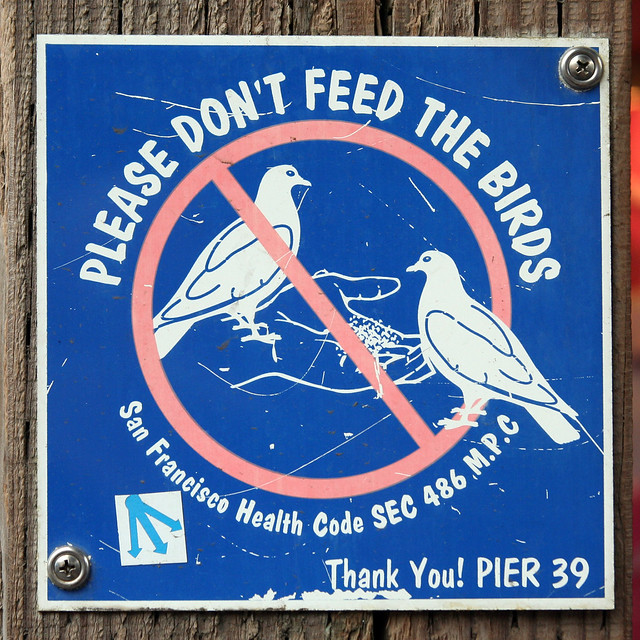
“Large population of pigeons is a health hazard. Our huge feral pigeon population is a health hazard and creates many problems in the city.
“Pigeon droppings dirty public spaces, do costly damage to buildings, and can spread life-threatening diseases, especially to the elderly and immune-deficient. Their nesting materials block drains and harbor parasites like bird mites. Pigeon food makes a mess and attracts rats.
“Feeding pigeons promotes over-breeding. Pigeon feeding produces over-breeding.
“Pigeons normally breed two or three times a year, producing two eggs per brood. Overfed city pigeons can breed up to eight times a year.
“Pigeons are harmed when fed. When you feed pigeons, you are not doing them a favor. They lose their natural ability to scavenge and survive on their own.
“Pigeon over population leads to overcrowded, unsanitary conditions and produces sick and injured birds. A smaller flock is healthier and does less damage.
“It is illegal. It’s against the law to feed pigeons on the streets or sidewalks of San Francisco (Sec. 486. M.P.C). Violators may be cited and fined.
“You can help keep your neighborhood safe and clean and the pigeon population under control by not feeding pigeons. Keep edible garbage away from pigeons by discarding it in a securely covered garbage can.
“And don’t feed pets outside.You may report pigeon feeders to the San Francisco Police Department at 415-553-0123, or by calling 3-1-1.
“Please join in on the efforts to keep San Francisco clean and beautiful by NOT feeding the pigeons.”

* * * * *
At the same time that city officials are telling residents, “Please don’t feed the pigeons,” they aren’t telling them, “Please don’t feed the bums.”
Because of its mild climate and social programs that give cash payments to just-arrived vagrants, San Francisco is often considered the homelessness capital of the United States.
Former San Francisco Mayor Willie Brown (1996–2004) actually proposed that the city create electronic cards for transients that residents could swipe with their credit cards, thus transferring money from their accounts to that of the recipient.
Brown dropped the idea when faced with the brutal truth that not many citizens–especially women–would be willing to whip out their credit card when confronted by a smelly, unshaved and possibly psychotic transient.

San Francisco spends $250 million annually on services for what are now euphemistically called “the homeless.”That’s because city officials don’t want to use words that accurately describe who makes up the overwhelming majority of this population:
- Druggies
- Drunks
- Mental cases
- Bums
Eight city departments oversee at least 400 contracts to 76 private organizations, most of them nonprofits, that are charged with eliminating this pestilence.
Estimates of this population range from 7,000-10,000 people, of which approximately 3,000-5,000 refuse shelter.
A similar public crackdown on “bum-feeders” could go like this:
“Please do not feed the bums. There are dozens of reasons why, but mainly: feeding bums harms our neighborhoods and also harms the bums.
“Our huge feral bum population is a health hazard and creates many problems in the city.Bum droppings dirty public spaces, do costly damage to buildings, and can spread life-threatening diseases, especially to the elderly and immune-deficient.

“Their stolen shopping carts and filthy possessions block sidewalks and harbor parasites like bedbugs and lice. Bum food makes a mess and attracts rats.
“Feeding bums promotes overbreeding. Bums normally travel alone, foraging for drugs and/or alcohol.Pampered city bums flock to liquor stores and drug dens where they can indulge their vices, thus taxing city medical services to the limit.

“When you feed bums, you are not doing them a favor. They lose their natural ability to find work and support themselves and their families.
“Bum over population leads to overcrowded, unsanitary conditions and produces sick and injured bums. A smaller horde is healthier and does less damage.
“It’s against the law to feed bums on the streets or sidewalks of San Francisco. Violators may be cited and fined.
“You can help keep your neighborhood safe and clean and the bum population under control by not feeding bums.
“Keep edible garbage away from bums by discarding it in a securely covered garbage can. And don’t feed bums outside.
“It is Illegal. You may report bum feeders to the San Francisco Police Department at 415-553-0123, or by calling 3-1-1.
“Please join in on the efforts to keep San Francisco clean and beautiful by NOT feeding the bums.”
ABC NEWS, ALCOHOLISM, BUMS, CBS NEWS, CNN, DISEASE, DRUG ADDICTION, FACEBOOK, HOMELESS, MENTAL ILLNESS, NBC NEWS, PANHANDLING, SAN FRANCISCO, THE CHICAGO SUN-TIMES, THE CHICAGO TRIBUNE, THE LOS ANGELES TIMES, THE NEW YORK TIMES, THE WASHINGTON POST, TWITTER, WILLIE BROWN
In Bureaucracy, History, Law, Law Enforcement, Politics, Social commentary on August 28, 2015 at 12:14 am
Yes, welcome to San Francisco–home of cable cars, Ghiradelli Square and the Golden Gate Bridge.
Oh, and thousands of stinking, disease-ridden, lice/bedbug-infested, drug-addicted, alcohol-soaked, often psychotic men and women whom Politically Correct city officials refer to as “the homeless.”
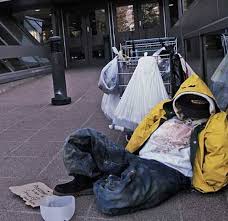
Privately, many of the police, social workers and paramedics who wrestle with this population have another term for them–DDMBs: Druggies, Drunks, Mentals and Bums.
Thanks to its mild climate and social programs that dole out cash payments to virtually anyone with no residency requirement, San Francisco is often considered the homeless capital of the United States.
Although the city spends $200 million a year on “honeless” services, the population surges between 7,000 and 10,000. Of these, 3,000 to 5,000 refuse shelter.

Yet mere statistics don’t capture the true intensity of the problem. To do that, you must confront its realities at the street level.
One of those realities can be seen every Sunday, when many stores on Market Street close for lack of workday traffic. Stroll along the street and you’ll find it crowded with passed-out drunks/druggies, ranting psychotics and aggressive panhandlers.
Another such reality is Suzie Wong, 66, who goes by the name Ling Ling. A resident of the Nob Hill District, Wong daily gives residents and tourists a sight to remember her by.
She alights from the 27 Bryant bus from the Mission and halts at the nearby bus stop. Then she drops her drawers to leave a yellow or brown deposit on the sidewalk.

Finally, she crosses the street, and catches the 1 California bus for Chinatown.
When she doesn’t relieve herself on Nob Hill, she often does so on Stockton Street in Chinatown. Then she heads to her usual spot to panhandle.
Children and pets often step in her feces. So do adults, who are preoccupied with their cell phones. Parents vainly try to shield their kids from the disgusting sight.
Residents have lodged scores of complaints about Wong’s repeated defecations. The Department of Public Works sent crews to clean up her messes at least 44 times in a six-month period.
Druggies Drunks Mentals Bums
Police have repeatedly scooped up Wong for a 5150 involuntary psychiatric hold at San Francisco General Hospital. But doctors usually release her before the cops even get back to the station.
Under a 5150 designation, people can be held at the hospital for up to 72 hours to determine:
- Are they gravely disabled?
- Are they mentally ill?
- If they are mentally ill, do they pose a danger to others or themselves?
But authorities have repeatedly determined that Wong doesn’t fit any of these criteria. The reasons:
- She has a mental health case worker at a North Beach clinic.
- She’s arranged housing and food services through the city.
- She can use public transit.
Chalk up another win for the DDMBs.
San Francisco officials have effectively washed their hands of the problem. If local residents must put up with repeated violations of the most basic sanitation laws, that’s their tough luck.
What matters to the Mayor and Board of Supervisors is this:
The “rights” of those whose filth poses an immediate threat to public health take precedence over those of tax-paying, law-abiding San Franciscans.
San Francisco residents can be fined for feeding pigeons–but not for feeding street bums.
During the Mayorship of Willie Brown (1996 – 2004), Hizzonor proposed what he thought was a brilliannt way for residents to “contribute” to street people. Those who were somehow certified as “homeless” would be issued special electronic “cash cards.”
When someone wanted to make a “donation,” s/he would swipe a credit card against the one owned by the street bum, for whatever amount s/he wanted to donate.
But before the program started, someone at City Hall realized a blunt truth: Residents–especially women–weren’t likely to whip out their credis cards in front of a ranting, foul-smelling, probably disease-ridden street bum.
* * * * *
It’s long past time for San Francisco–and other cities–to stop catering to the druggies, alcoholics, mental cases and bums who prey on the guilt or fear of law-abiding, tax-paying citizens.
The same laws that protect citizens against patients with highly communicable diseases like typhoid and cholera should be vigorously applied to those whose filthy habits threaten similar public contagion.
ABC NEWS, ALCOHOLISM, CBS NEWS, CELEBRITY CHEFS, COOKING, DEPOSITION, FACEBOOK, FOOD NETWORK, KU KLUX KLAN, LAWSUITS, MANAGEMENT, NBC NEWS, PAULA DEEN, RACIAL DISCRIMINATION, RESTAURANTS, THE LOS ANGELES TIMES, THE NEW YORK TIMES, THE WASHINGTON POST, THEFT, TWITTER
In Bureaucracy, Business, Law, Social commentary on April 16, 2014 at 12:38 am
In 2012, Celebrity Chef Paula Deen was sued by a former employee for sexual/racial harassment. For Deen, the deposition she filed in May, 2013, proved to be the worst mistake of her life.
Interrogated by Matthew C. Billips, the attorney for the plaintiff, Lisa Jackson, Deen responded as follows:
Q. Are you aware of [your brother, Earl “Bubba” Hiers] admitting that he engaged in racially and sexually inappropriate behavior in the workplace?
A. I guess. Q. Okay.
A. If I was sitting here I would have heard it.
Mistake #13: She admits once again to having been apprised of her brother’s offensive behavior.

Earl “Bubba” Hiers
Q. Okay. Well, have you done anything about what you heard him admit to doing?
A. My brother and I have had conversations. My brother is not a bad person. Do humans behave inappropriately? At times, yes.
I don’t know one person that has not. My brother is a good man. Have we told jokes? Have we said things that we should not have said, that–yes, we all have. We all have done that, every one of us.
Mistake #14: She admitted to having talked with her brother about his offensive behavior–but she did not say she did anything to stop it or punish him for it.
Q. You said you have had such conversations with [your brother]. When did you do so?
A. When Karl told me he was stealing, I addressed that with Bubba.
Q. And as a result of Mr. Hiers stealing, he received a pay increase and the money he had taken was recharacterized as wages, is that correct?
A. I don’t know how it was settled. I know that Karl was paying Lisa Jackson more than my brother was being paid, so if there was a salary increase, it would have been long overdue.
Mistake #15: She admitted that even though she learned that one of her employees was stealing from her, she had nevertheless retained him.
Speaking of her employee, Karl Schumacher, Deen said:
A. Karl is the most judgmental person I know. And out of every team member on our team, he is certainly the most prejudice.
Mistake #16: She admitted that she had retained an employee who was openly prejudiced toward a wide range of people.
MackWorks, a business consulting firm, conducted an investigation of Uncle Bubba’s, which was owned by her brother, Earl “Bubba” Hiers. A
. I didn’t read the report.
Q. Okay. And what, if any, investigation have you done to determine if it is your brother who is lying, as opposed to Miss Jackson and Mr. Schumacher and the people at MackWorks?
A. I know my brother. I know his character. If I ask him something, he would not lie to me, nor would I to him. There was nothing to investigate.
Mistake #18: After an independent consulting firm gives her a scathing report about her brother’s restaurant, she didn’t read it.
Mistake #19: She admitted she didn’t read it.
Mistake #20: She admitted she took no action to discover the truth for herself: “There was nothing to investigate.”
* * * * *
 The media has focused its attention on Deen’s admission to having used the “N-word.”
But clearly she was running a dysfunctional operation–replete with alcoholism, racial prejudice, sexual harassment and theft.
Much has been made of Deen’s serving as an ambassador of Southern culture and cooking.
But if only some of the accusations made against her hold up, she must also serve as an ambassador of a South decent Americans want to forget–and forever put behind them.
That was definitely an era when blacks knew their place–which was as slaves in the kitchens or fields of the Southern planter class who owned them.
According to Jackson, those are the days Deen would love to return to.
Deen has given lip service to knowing that the days of Southern racism are past. But according to the complaint filed against her by her former employee, Lisa Jackson, that past remained very much alive:
- Requiring black employees to use separate bathrooms and entrances from whites.
- Holding black employees to “different, more stringent standards” than whites.
- Allowing her brother, Earl “Bubba” Hiers, to regularly made offensive racial remarks.
- Allowing Hiers to make inappropriate sexual comments.
- Allowing Hiers to force the plaintiff, Lisa Jackson, to look at pornography with him.
- Allowing Hiers to often violently shake employees.
- Allowing Hiersto come to work in “an almost constant state of intoxication.”
- Enabling Hiers’ behavior by ignoring Jackson’s efforts to discuss his behavior.
- Holding “racist views herself.”
Many of Deen’s supporters have claimed she is the victim of anti-Southern prejudice. But the truth appears that only in the South could she have run so gigantic and lucrative an empire for so long in such prejucial and dysfunctional fashion.
The wonder is not that the Food Network refused to renew her contract after June, 2013. The wonder is that she has managed to stay in business this long.
ABC NEWS, ALCOHOLISM, CBS NEWS, CELEBRITY CHEFS, COOKING, DEPOSITION, FACEBOOK, FOOD NETWORK, KU KLUX KLAN, LAWSUITS, MANAGEMENT, NBC NEWS, PAULA DEEN, RACIAL DISCRIMINATION, RESTAURANTS, THE LOS ANGELES TIMES, THE NEW YORK TIMES, THE WASHINGTON POST, THEFT, TWITTER
In Bureaucracy, Business, Law, Social commentary on April 15, 2014 at 12:07 am
There are many lessons to be learned from the deposition Paula Deen gave in May, 2012, during a lawsuit filed against her for sexual/racial harassment lawsuit.
Interrogated by Matthew C. Billips, the attorney for the plaintiff, Lisa Jackson, Deen responded as follows:
Q. Now, does [your brother’s] sense of humor include telling jokes about matters of a sexual nature?
A. We have all told off-colored jokes.
Q. Okay. Does his sense of humor include telling jokes of a racial nature?
A. I’m sure those kind of jokes have been told. Every man I’ve ever come in contact with has one.
Mistake #3: Deen acknowledged that off-color jokes were told in her workplace, and that she was clearly aware of it.
Mistake #4: Deen made light of the telling of jokes that the vast majority of employers would not tolerate in their workplaces.

Q. Okay. Miss Deen, have you told racial jokes?
A. No, not racial.
Q. Okay, have you ever used the N-word yourself?
A. Yes, of course.
Mistake #5: She knew that the charge of racial discrimination stood at the very heart of the lawsuit facing her.
Yet, when asked if she had ever used the “N-word,” she replied, “Yes, of course,” as if this were the most natural thing in the world.
Q. Okay. In what context?
A. Well, it was probably when a black man burst into the bank that I was working at and put a gun to my head.
Q. Okay, and what did you say?
A. Well, I don’t remember, but the gun was dancing all around my temple. I didn’t…feel real favorable towards him.
Q. Okay. Well, did you use the N-word to him as he pointed a gun in your head at your face?
A. Absolutely not.
Q. Well, then, when did you use it?
A. Probably in telling my husband.
Mistake #6: What is discussed between husband and wife is protected legally as marital privilege. Her attorney should have objected and told her not to answer the question.
If she had not admitted to using it privately with her husband, she might not have been asked if she had used it since then.
Q, Okay. Have you used it [the “N-word”] since then?
A. I’m sure I have, but it’s been a very long time.
Mistake #7: Having admitted she used it in the past, she compounds her mistake by admitting she had used it since.
Mistake #8: There is an entirely legal way to avoid incriminating oneself–and being prosecuted for perjury. It’s contained in the words: “Not that I can recall.”
Q. Can you remember the context in which you have used the N-word?
A. No.
Q. Has it occurred with sufficient frequency that you cannot recall all of the various context in which you’ve used it?
A. No.
Q. Well, then tell me the other context in which you’ve used the N-word.
A. I don’t know, maybe in repeating something that was said to me.
Q. Like a joke?
A No, probably a conversation between blacks. I don’t–I don’t know.
Mistake #9: The vast majority of restaurant kitchens are staffed by blacks or Hispanics, whose exchanges are often obscene and homophobic.
If Deen had said she had quoted such a conversation between employees, she could have legitimately claimed she did so entirely for the sake of accuracy.
She could have blamed them for using the N”-word,” and cast herself strictly in the role of reporter.
Q. Okay.
A. But that’s just not a word that we use as time has gone on. Things have changed since the 60s in the South. And my children and my brother object to that word being used in any cruel or mean behavior.
Q. Okay.
A. As well as I do.
Q. Are you aware that your brother has admitted to using that word at work?
A. I don’t know about that.
Mistake #10: She had previously admitted to attending her brother’s deposition, where he admitted to, among other offenses, using the N-word in the workplace.
So this is a direct contradiction of her earlier admission.
Q Okay. Now, if you had learned of Mr. Hiers engaging in racially or sexually inappropriate behavior in the workplace, what, if any, actions would you have taken?
A. I certainly would have addressed it.
Mistake #11: Previously she had been asked: “Did any of the things that your brother admitted to doing, including…using the N-word in the workplace, did any of that conduct cause you to have any concerns about him continuing to operate the business?”
And she had replied: “No.” So this amounts to yet another contradiction.
Q. Have you ever addressed Mr. Hiers’ racially or sexually inappropriate conduct?
A. No.
Mistake #12: She admitted to having learned about her brother’s use of the “N-word” in the workplace–and then admitted to having never addressed it.
Q. And you are aware of his admitting to engaging in racially and sexually inappropriate behavior in the workplace in his deposition in this case?
A. No.
Mistake #12: This directly contradicts her previous admission that she had learned of his engaging in such behavior during his deposition.


 Bureaucracybuster's Blog
ABC NEWS, ALCOHOLISM, ALTERNET, AP, BUMS, BUZZFEED, CBS NEWS, CNN, CROOKS AND LIARS, DAILY KOZ, DEBBIE STABENOW, DEPARTMENT OF EDUCATION, DRUG ADDICTION, DRUG ENFORCEMENT ADMINISTRATION, FACEBOOK, FIREARMS, HOMELESSNESS, IRAQ, LIBERTARIAN PARTY, MENTAL ILLNESS, MOTHER JONES, MOVEON, MSNBC, NBC NEWS, NEWSWEEK, NPR, POLICE, POLITICO, RAW STORY, REUTERS, SALON, SEATTLE TIMES, SHOTGUNS, SLATE, THE ATLANTIC, THE CHICAGO SUN-TIMES, THE CHICAGO TRIBUNE, THE DAILY BEAST, THE GUARDIAN, THE HILL, THE HUFFINGTON POST, THE LOS ANGELES TIMES, THE NATION, THE NEW YORK TIMES, THE WASHINGTON POST, TIME, TRANSPORTATION SECURITY ADMINISTRATION, TWITTER, U.S. NEWS & WORLD REPORT, UNITED STATES SENATE, UPI, USA TODAY, USA TODAY BRIAN ELLISON
BUMS AND GUNS: AN UPDATE
In Bureaucracy, History, Law, Law Enforcement, Politics, Social commentary on August 26, 2019 at 12:19 amIn 2018, Brian Ellison was a Libertarian candidate for United States Senator from Michigan. And unlike other political candidates, he had a unique position on homelessness.
Some politicians want to outlaw homeless encampments. Others want to spend billions on low-cost housing for this population.
Ellison, instead, wanted to arm bums with guns. Specifically, with pump-action shotguns.
“Get us a group of 20 homeless people that we could train, help them understand how the shotgun works, how to maintain it, how to fire it,” Ellison told Newsweek. “And equip them with a shotgun, a sling and some shells so they can protect themselves.”
Brian Ellison
Actually, the shotgun was not Ellison’s first choice of weaponry for his intended beneficiaries.
“Frankly I think the ideal weapon would be a pistol,” he told The Guardian, “but due to the licensing requirements in the state we’re going to have a hard enough time getting homeless people shotguns as it is.
“Getting them pistols is probably next to impossible. The pistols need to be registered, people have to have addresses.”
But “open-carrying a long gun is completely legal. So we thought that pump-action shotguns were a suitable alternative to a pistol.”
Winchester Model 1912-gauge pump-action shotgun
Ellison is a former Army soldier who served in Iraq.
Apparently that experience didn’t teach him that when too many people have guns, no one is safe.
Ellison also wanted to abolish the Drug Enforcement Administration and the Transportation Security Administration, and localize the Department of Education.
“I’m basically entirely opposed to any government program,” said Ellison.
Unless it’s a government program to arm bums with guns.
This population can be roughly divided into four categories:
The homeless are “constantly victims of violent crime,” said Ellison, who believes that giving them firearms would provide a deterrent.
It would also provide a real incentive for tax-paying citizens to hand over their money the moment a shotgun-carrying DDMB confronts them on the street.
But Ellison had an answer for this: “Pre-qualify” DDMBs as suitable candidates to own firearms:
“The first thing that we’re gonna do is ask them if they think this is something that would benefit them. We’re certainly not trying to force anything on anybody.”
Except, of course, on those citizens being hit on daily—sometimes hourly—by DDMBs for money.
Naturally, ammunition would be provided—at state expense—for the shotguns. This would come in five- or six-shell magazines.
Ellison said that more shells would be provided if the owners legitimately used their guns to defend themselves.
But if they used their ammo for “shooting cans in somebody’s private property” then they would not be given more shells.
A potential beneficiary of Ellison’s “guns for bums” program
Ellison wasn’t worried that his intended beneficiaries might use the guns for murder or robbery: “Well, are you worried about the police being armed with military weapons? I am.
“The world we live in is a scary world, where the police who used to dress in short-sleeved shirts and carry a revolver now have long rifles with scopes and bulletproof vests and armored vehicles.
“And quite frankly that scares me much more than a homeless person trying to defend themselves with a shotgun.”
This, of course, ignores the fact that police are pre-qualified with firearms—and every shooting by officers in a big-city police department is thoroughly investigated.
Their firearms are turned in for investigation. And the officers who used them can be disciplined and even prosecuted if a police chief and/or prosecutor believes the shooting was improper or illegal.
And who would make such lethal weaponry available to street people?
“There are a lot of charities out there that help to provide the homeless with food, housing, job training, all kinds of stuff,” said Ellison. “There’s not a charity out there that helps them learn how to protect themselves. What’s going to drive this is popular support.”
Just how many DDMBs could receive Ellison’s special gift? In Michigan, there are more than 56,000 of them.
Ellison remarked that the population is “constantly victims of violent crime” in his state.
His website page opened with: “LIBERTARIANISM MEANS ALL OF YOUR FREEDOMS ALL OF THE TIME.” And it outlined his core beliefs:
“We as a people must admit that the many laws, regulations, and policies established over the years in an effort to ‘promote social welfare’ have failed in their stated purpose. These laws and regulations now represent the greatest threat to our natural rights, and must be repealed.
“Abroad, we must change how we engage the rest of the world, leading by example, not force of arms….Imperialism was not the intent of our founders nor is it the desire of the majority of Americans.”
“In order to move forward in these beliefs,” said his website, “we must remember that while our ideology is our core, we must also be practical and reasonable in their implementation.”
Apparently, many voters decided that arming bums with guns wasn’t “practical and reasonable.” Ellison’s opponent, Democratic incumbent Debbie Stabenow, defeated him in the general election on November 6, 2018.
Share this: