In San Francisco, if your house is infested with bedbugs, don’t get rid of the bedbugs—close down the house.
Proof of this came on June 18, when the San Francisco Board of Supervisors unanimously approved legislation to place a curfew on food markets and tobacco businesses in the city’s latest attempt at preventing drug abuse in the crime-ridden Tenderloin district.
San Francisco’s Tenderloin district is about 50 square blocks in size, with a population of around 35,000 people. It’s bordered on the north by Geary Street, on the east by Mason Street, on the south by Market Street and on the west by Van Ness Avenue.

The Tenderloin
The new curfew rules will prevent businesses in the Tenderloin selling “prepackaged food or tobacco products from operating” between midnight and 5 a.m.
“The drug markets happening at night in this neighborhood are unacceptable and must be met with increased law enforcement and new strategies, but this must be done in partnership with community, which we are doing,” San Francisco Mayor London Breed said.
The legislation is designed as a two-year pilot program, according to the press release, and will be enforced by fines from the San Francisco Department of Public Health (SFDPH) and investigation from the San Francisco Police Department (SFPD).
The legislation does not apply to restaurants, bars, or non-retail businesses, such as event halls. Fines can be levied for up to $1,000 for each hour a store operates in violation of the ordinance.
The curfew program targets these businesses that, “in effect, facilitate the late night-time drug market by providing a lighted gathering point,” according to the legislation.
Some local businesses are saying if they take a loss in revenue or jobs, they want the city to offer financial mitigation, such as a reduction in fees.
Residents appear divided about the effectiveness of the legislation.
“That’s backwards,” said Abdul Malik Muhammad, about allowing liquor stores to remain open past midnight. “Those are the stores that should be shut down, I believe.”

Wallie, one of the owners of Plaza Snacks and Delli at 7th and McAllister street, said: “That’s not gonna make any difference, I guarantee you. I’ve been here for 20 years. They just move them from one block to the next.”
“Some of the stores are like magnets, and they attract problems,” said Muhammad. He accused some store owners of price-gouging their low-income customers.
Many residents feel imprisoned in their own homes “when the sun goes down,” several business organizations wrote the city. They speak of drug sales in the open, rapes, murders and shootings with human waste left in the wake.
Yet much of this can be traced directly to the city’s open door welcome to those euphemistically termed as “the homeless.” The vast majority of these fall into four major groups: Drug addicts, alcoholics, the mentally ill and those who refuse to work.
In short: DDMBs—Druggies, Drunks, Mentals and Bums.
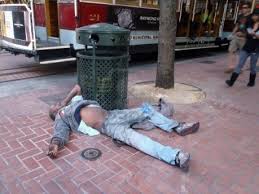
Another casualty of booze or drugs
“Our challenges still occur at night,” said Assistant Chief David Lazar. “Crowds of people that are there selling stolen property, selling narcotics. We have drug users all over. And the problem is that when you have businesses that are open, like liquor stores and smoke shops, it just attracts more people.”
A study by WalletHub, a personal finance company, recently found that San Francisco was the “worst run” city in the United States. The study measured the “effectiveness of local leadership” by comparing the quality of city services matched against the city’s total budget to determine its operating efficiency.
In a statement to Fox News Digital, Breed’s office defended the mayor’s policy actions to reduce drug use in San Francisco:
“Mayor Breed has taken aggressive steps to shut down open-air drug markets and that is why she established the Drug Market Agency Coordination Center (DMACC) in May 2023, activating resources across the City to dismantle the illegal drug markets in the Tenderloin and South of Market neighborhoods.
“Since May 28, 2023, SFPD has seized over 225 kilos of narcotics and made more than 3,400 arrests related to drug activity in these neighborhoods, including more than 1,400 drug dealers and over 1,500 drug users arrested. For fentanyl seizures, over 77 million lethal doses have been seized since the start of DMACC.”
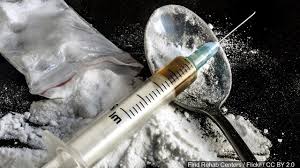
And while city officials laud their efforts to “crack down” on drug use, the city operates a second program to provide vodka or beer to “homeless” people struggling with severe alcohol addiction.
The city set up its Managed Alcohol Program (MAP) in 2020 as part of its COVID-19 response, to keep “homeless” people out of jails and emergency rooms.
Adam Nathan, chair of the Salvation Army’s advisory board in San Francisco, posted on X that he recently “stumbled across” the former hotel from which the program operates:
“It’s set up so people in the program just walk in and grab a beer, and then another one. All day. The whole thing is very odd to me and just doesn’t feel right. Providing free drugs to drug addicts doesn’t solve their problems. It just stretches them out. Where’s the recovery in all of this?”
 Bureaucracybuster's Blog
ABC NEWS, ADAM NATHAN, ALCOHOL ADDICTION, ALTERNET, AMERICABLOG, AP, BABY BOOMER RESISTANCE, BBC, BEER, BLOOMBERG, BUMS, BUZZFEED, CBS NEWS, CITY OF GRANTS PASS VS. JOHNSON, CNN, CROOKS AND LIARS, CURFEW, DAILY KOS, DRUG ADDICTION, DRUG MARKET AGENCY COORDINATION CENTER, EIGHTH AMENDMENT, FIVETHIRTYEIGHT, HARPER’S MAGAZINE, HOMELESSNESS, HUFFINGTON POST, LAURA POWELL, LONDON BREED, MANAGED ALCOHOL PROGRAM, MEDIA MATTERS, MENTAL ILLNESS, MOTHER JONES, MOVEON, MSNBC, NBC NEWS, NEW REPUBLIC, NEWSDAY, NEWSWEEK, NINTH CIRCUIT COURT OF APPEALS, NPR, PBS NEWSHOUR, POLITICO, POLITICUSUSA, RAW STORY, REUTERS, SALON, SALVATION ARMY’S ADVISORY BOARD, SAN FRANCISCO, SAN FRANCISCO CHRONICLE, SAN FRANCISCO DEPARTMENT OF PUBLIC HEALTH, SAN FRANCISCO POLICE DEPARTMENT, SEATTLE TIMES, SLATE, TALKING POINTS MEMO, TENDERLOIN DISTRICT, THE ATLANTIC, THE CHICAGO SUN-TIMES, THE CHICAGO TRIBUNE, THE DAILY BEAST, THE DAILY BLOG, THE GUARDIAN, THE HILL, THE HUFFINGTON POST, THE INTERCEPT, THE LOS ANGELES TIMES, THE NATION, THE NEW REPUBLIC, THE NEW YORK TIMES, THE NEW YORKER, THE VILLAGE VOICE, THE WASHINGTON POST, THINKPROGRESS, TIME, TRUTHDIG, TRUTHOUT, TWO POLITICAL JUNKIES, U.S. NEWS & WORLD REPORT, UNITED STATES SUPREME COURT, UPI, USA TODAY, VODKA, WALLETHUB, X
SAN FRANCISCO’S SCHIZOID PLAN TO END ADDICTION: PART ONE (OF TWO)
In Bureaucracy, Business, History, Law, Law Enforcement, Medical, Politics, Social commentary on July 23, 2024 at 12:11 amIn San Francisco, if your house is infested with bedbugs, don’t get rid of the bedbugs—close down the house.
Proof of this came on June 18, when the San Francisco Board of Supervisors unanimously approved legislation to place a curfew on food markets and tobacco businesses in the city’s latest attempt at preventing drug abuse in the crime-ridden Tenderloin district.
San Francisco’s Tenderloin district is about 50 square blocks in size, with a population of around 35,000 people. It’s bordered on the north by Geary Street, on the east by Mason Street, on the south by Market Street and on the west by Van Ness Avenue.
The Tenderloin
The new curfew rules will prevent businesses in the Tenderloin selling “prepackaged food or tobacco products from operating” between midnight and 5 a.m.
“The drug markets happening at night in this neighborhood are unacceptable and must be met with increased law enforcement and new strategies, but this must be done in partnership with community, which we are doing,” San Francisco Mayor London Breed said.
The legislation is designed as a two-year pilot program, according to the press release, and will be enforced by fines from the San Francisco Department of Public Health (SFDPH) and investigation from the San Francisco Police Department (SFPD).
The legislation does not apply to restaurants, bars, or non-retail businesses, such as event halls. Fines can be levied for up to $1,000 for each hour a store operates in violation of the ordinance.
The curfew program targets these businesses that, “in effect, facilitate the late night-time drug market by providing a lighted gathering point,” according to the legislation.
Some local businesses are saying if they take a loss in revenue or jobs, they want the city to offer financial mitigation, such as a reduction in fees.
Residents appear divided about the effectiveness of the legislation.
“That’s backwards,” said Abdul Malik Muhammad, about allowing liquor stores to remain open past midnight. “Those are the stores that should be shut down, I believe.”
Wallie, one of the owners of Plaza Snacks and Delli at 7th and McAllister street, said: “That’s not gonna make any difference, I guarantee you. I’ve been here for 20 years. They just move them from one block to the next.”
“Some of the stores are like magnets, and they attract problems,” said Muhammad. He accused some store owners of price-gouging their low-income customers.
Many residents feel imprisoned in their own homes “when the sun goes down,” several business organizations wrote the city. They speak of drug sales in the open, rapes, murders and shootings with human waste left in the wake.
Yet much of this can be traced directly to the city’s open door welcome to those euphemistically termed as “the homeless.” The vast majority of these fall into four major groups: Drug addicts, alcoholics, the mentally ill and those who refuse to work.
In short: DDMBs—Druggies, Drunks, Mentals and Bums.
Another casualty of booze or drugs
“Our challenges still occur at night,” said Assistant Chief David Lazar. “Crowds of people that are there selling stolen property, selling narcotics. We have drug users all over. And the problem is that when you have businesses that are open, like liquor stores and smoke shops, it just attracts more people.”
A study by WalletHub, a personal finance company, recently found that San Francisco was the “worst run” city in the United States. The study measured the “effectiveness of local leadership” by comparing the quality of city services matched against the city’s total budget to determine its operating efficiency.
In a statement to Fox News Digital, Breed’s office defended the mayor’s policy actions to reduce drug use in San Francisco:
“Mayor Breed has taken aggressive steps to shut down open-air drug markets and that is why she established the Drug Market Agency Coordination Center (DMACC) in May 2023, activating resources across the City to dismantle the illegal drug markets in the Tenderloin and South of Market neighborhoods.
“Since May 28, 2023, SFPD has seized over 225 kilos of narcotics and made more than 3,400 arrests related to drug activity in these neighborhoods, including more than 1,400 drug dealers and over 1,500 drug users arrested. For fentanyl seizures, over 77 million lethal doses have been seized since the start of DMACC.”
And while city officials laud their efforts to “crack down” on drug use, the city operates a second program to provide vodka or beer to “homeless” people struggling with severe alcohol addiction.
The city set up its Managed Alcohol Program (MAP) in 2020 as part of its COVID-19 response, to keep “homeless” people out of jails and emergency rooms.
Adam Nathan, chair of the Salvation Army’s advisory board in San Francisco, posted on X that he recently “stumbled across” the former hotel from which the program operates:
“It’s set up so people in the program just walk in and grab a beer, and then another one. All day. The whole thing is very odd to me and just doesn’t feel right. Providing free drugs to drug addicts doesn’t solve their problems. It just stretches them out. Where’s the recovery in all of this?”
Share this: