Come visit San Francisco and you’ll see all the famous sights so beloved by tourists: Ghirardelli Square, the cable cars, the Golden Gate Bridge.
What you won’t see is one of the biggest blights facing the city: The behavior of predatory slumlords, who own both hotels and apartment buildings.
This behavior-–and the City’s steadfast refusal to change it-–poses a daily threat to the lives of San Francisco tenants. And it poses an equal threat to the City’s long-term ability to sustain its Number One source of revenues: The tourism industry.
To take one example: San Francisco is now facing an infestation of bedbugs. Everyone in the Department of Public Health (DPH) knows it. And everyone in DPH knows that many of the slumlords who own hotels plagued with these creatures refuse to do anything about them.
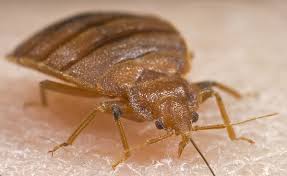
Bedbug
The reasons are twofold.
First, there’s a stigma attached to bedbugs that isn’t attached even to cockroaches. Roaches are filthy, but they don’t suck your blood. So when people learn that a hotel (including name-brand ones) has a bedbug infestation, they take their business elsewhere.
Second, combating bedbugs can be expensive. The most effective method involves a combination of poisons and heat treatments on a building-wide basis. Most landlords–-and certainly all slumlords––don’t want to take on that sort of expense.
San Francisco depends overwhelmingly on tourism for its revenues. A city whose hotels and apartment buildings are centers of contagion of any kind is a city destined to become a tourist ghost town, not a tourist mecca.
So, how to cope with this challenge? Here’s how:
- Greatly expand the Inspection Division at the Department of Public Health (DPH). This agency is legally charged with ensuring the health of San Francisco’s tenants-–both guests and residents.
- DPH should demand that a portion of those monies now directed toward entirely tourist-related issues be transferred to its Inspection Bureau. With those monies it can hire additional-–and badly-needed-–inspectors.
- Greatly expand the Inspection Division at the Department of Building Inspection–-and make it independent of the agency. As matters now stand, too many high-ranking DBI officials tilt toward landlords because they are landlords themselves.
- End the culture of secrecy at DPH. The Department of Building Inspection is responsible for ensuring compliance with San Francisco building and housing codes. If a slumlord, for example, refuses to fix a tenant’s clogged bathtub drain or replace a window that’s about to fall out, the tenant calls DBI.
- DBI’s complaint records are immediately accessible at its website. Copies of its Notices of Violation–-ordering slumlords to correct problems-–can be obtained through the mails by request. If a tenant wants to learn if other tenants have lodged complaints against his landlord, he can simply go online.
- By contrast, DPH offers nothing of this type of informational service.
- DPH should immediately make its records publicly available via the Internet, the same way DBI now does.
- DPH and DBI should order landlords to post their Notices of Violation in public areas of their buildings–-on pain of serious financial penalties for failing to do so.
- When DPH or DBI orders a slumlord to take corrective action, the only person who is notified of this is the landlord. Thus, if that slumlord refuses to comply with those directives, s/he is the only one who knows about this. Given the pressing demands on DPH and DBI, weeks or months will pass before DPH/DBI learns about this violation of its orders.
- DPH and DBI should abandon their “gradual” approach to combating health/safety code violations in slumlord-owned apartments and hotels and hit the owner up-front with a heavy fine, payable immediately. The landlord could recoup 75% to 80% of this money only if s/he could prove that the health threat had been totally eradicated within 30 days.
- If it were not, the slumlord would then be hit with a second fine twice the size of the last one and given another 30 days to correct the problem. So a slumlord hit with a $2,000 fine in January would face a $4,000 fine in February, and an $8,000 one in March.
- This would put the onus on the slumlord, not DBI/DPH. These agencies now give landlords 30 days to correct a health/safety code violation. If the slumlord claims he needs more time, he’s automatically given another 30 days–minimum–to do so. This means the tenant must live with the discomfort–if not threat–of that violation until the slumlord finally decides to correct it.
- Inspectors for DPH and DBI should be armed with cross-jurisdiction authority. That is, if a DBI Inspector spots a health/safety violation covered by DPH, he should be able to cite the slumlord for this–and pass this information on to DPH for its own investigation. And the same should apply for Inspectors from DPH.
- This would instantly turn DBI and DPH into allies, not competitors. It would also make life far easier for tenants needing help. Whether a citizen called DBI or DPH, s/he could be assured of getting the assistance s/he needed. Currently, DPH and DBI Inspectors often tell citizens, “I’m sorry, that doesn’t lie within our jurisdiction. You’ll have to call—.”
By standing up to predatory slumlords, San Francisco can achieve three goals at once:
- Protect its residents and all-important tourist industry from predatory slumlords.
- Create new and popular sources of revenue for its cash-strapped public services.
- Set a shining example for other cities and states for how they can do the same.
 Bureaucracybuster's Blog
ABC NEWS, BEDBUGS, BUILDING INSPECTION, BUSINESS, CBS NEWS, CNN, FACEBOOK, LANDLORDS, NBC NEWS, RENT CONTROL, RENTERS, SAN FRANCISCO, SLUMLORDS, THE HUFFINGTON POST, THE NEW YORK TIMES, THE WALL STREET JOURNAL, THE WASHINGTON POST, TWITTER
TAXING CRIMINALS FOR REVENUES: PART TWO (END)
In Bureaucracy, Politics, Social commentary on April 19, 2013 at 12:19 amCome visit San Francisco and you’ll see all the famous sights so beloved by tourists: Ghirardelli Square, the cable cars, the Golden Gate Bridge.
What you won’t see is one of the biggest blights facing the city: The behavior of predatory slumlords, who own both hotels and apartment buildings.
This behavior-–and the City’s steadfast refusal to change it-–poses a daily threat to the lives of San Francisco tenants. And it poses an equal threat to the City’s long-term ability to sustain its Number One source of revenues: The tourism industry.
To take one example: San Francisco is now facing an infestation of bedbugs. Everyone in the Department of Public Health (DPH) knows it. And everyone in DPH knows that many of the slumlords who own hotels plagued with these creatures refuse to do anything about them.
Bedbug
The reasons are twofold.
First, there’s a stigma attached to bedbugs that isn’t attached even to cockroaches. Roaches are filthy, but they don’t suck your blood. So when people learn that a hotel (including name-brand ones) has a bedbug infestation, they take their business elsewhere.
Second, combating bedbugs can be expensive. The most effective method involves a combination of poisons and heat treatments on a building-wide basis. Most landlords–-and certainly all slumlords––don’t want to take on that sort of expense.
San Francisco depends overwhelmingly on tourism for its revenues. A city whose hotels and apartment buildings are centers of contagion of any kind is a city destined to become a tourist ghost town, not a tourist mecca.
So, how to cope with this challenge? Here’s how:
By standing up to predatory slumlords, San Francisco can achieve three goals at once:
Share this:
Related