American Presidents—like politicians everywhere–strive to be loved. There are two primary reasons for this.
First, even the vilest dictators want to believe they are virtuous—and that their goodness is rewarded by the love of their subjects.
Second, it’s universally recognized that a leader who’s beloved has greater clout than one who isn’t.
PERCEIVED WEAKNESS INVITES CONTEMPT
But those—like Barack Obama—who strive to avoid conflict often get treated with contempt and hostility by their adversaries.
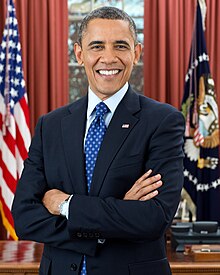
Barack Obama
In Renegade: The Making of a President, Richard Wolffe chronicled Obama’s successful 2008 bid for the White House. Among his revelations:
Obama, a believer in rationality and decency, felt more comfortable in responding to attacks on his character than in attacking the character of his enemies.
A graduate of Columbia University and Harvard Law School, Obama was one of the most academically gifted Presidents in United States history.
Yet he failed to grasp and apply this fundamental lesson taught by Niccolo Machiavelli, the father of modern political science:
A man who wishes to make a profession of goodness in everything must inevitably come to grief among so many who are not good. And therefore it is necessary for a prince, who wishes to maintain himself, to learn how not to be good, and to use this knowledge and not use it, according to the necessity of the case.
This explains why Obama found most of his legislative agenda stymied by Republicans.
For example: In 2014, Senator Rand Paul (R-KY.) sought to block David Barron, Obama’s nominee to the First Circuit Court of Appeals.
Rand Paul
Paul objected to Barron’s authoring memos that justified the killing of an American citizen by a drone in Yemen on September 30, 2011.
The target was Anwar al-Awlaki, a radical Muslim cleric notorious on the Internet for encouraging Muslims to attack the United States.
Paul demanded that the Justice Department release the memos Barron crafted justifying the drone policy.
Anwar al-Awlaki
Imagine how Republicans would depict Paul—or any Democratic Senator—who did the same with a Republican President: “Rand Paul: A traitor who supports terrorists. He sides with America’s sworn enemies against its own lawfully elected President.”
But Obama did nothing of the kind.
(On May 22, 2014, the Senate voted 53–45 to confirm Barron to the First Circuit Court of Appeals.)
USING TOO MUCH FEAR CAN BACKFIRE
But Presidents—like Donald Trump—who seek to rule primarily by fear can encounter their own limitations.
During a 2016 interview, he told legendary Washington Post reporter Bob Woodward: “Real power is—I don’t even want to use the word—fear.”
As both a Presidential candidate and President, Trump repeatedly used Twitter to attack hundreds of real and imagined enemies in politics, journalism, TV and films.
From June 15, 2015, when he launched his Presidential campaign, until October 24, 2016, Trump fired almost 4,000 angry, insulting tweets at 281 people and institutions that had somehow offended him.
Donald Trump
The New York Times needed two full pages of its print edition to showcase them.
As President, he aimed outright hatred at President Obama. He spent much of his Presidency trying to destroy Obama’s signature legislative achievement: The Affordable Care Act, which provides access to medical care to millions of poor and middle-class Americans.
Trump also refused to reach beyond the narrow base of white, racist, ignorant, hate-filled, largely rural voters who had elected him.
And he bullied and insulted even White House officials and his own handpicked Cabinet officers. Trump:
- Waged a Twitter-laced feud against Jeff Sessions, his Attorney General. Sessions’ “crime”? Recusing himself from investigations into well-established ties between Russian Intelligence agents and members of Trump’s Presidential campaign.
- Repeatedly humiliated Chief of Staff, Reince Priebus—at one point ordering him to kill a fly that was buzzing about. On July 28, 2017, Priebus resigned.
- Tongue-lashed Priebus’ replacement, former Marine Corps General John Kelly. Trump was reportedly angered by Kelly’s efforts to limit the number of advisers who had unrestricted access to him. Kelly told colleagues he had never been spoken to like that during 35 years of military service—and would not tolerate it again.
If Trump ever read Niccolo Machiavelli’s The Prince, he had clearly forgotten this passage:
“Cruelties ill committed are those which, although at first few, increase rather than diminish with time….Whoever acts otherwise….is always obliged to stand with knife in hand, and can never depend on his subjects, because they, owing to continually fresh injuries, are unable to depend upon him.”
And this one:
“Still, a prince should make himself feared in such a way that if he does not gain love, he at any rate avoids hatred.”
On that point alone, Trump proved an absolute failure. He not only committed outrages, he boasted about them. He aroused both fear and hatred.
Or, as Cambridge Professor of Divinity William Ralph Inge put it: “A man may build himself a throne of bayonets, but he can’t sit on it.”
Trump nevertheless tried—and paid the price for it. On November 3, 2020, 81,255,933 fed-up voters evicted him for former Vice President Joe Biden.
And despite committing a series of illegal actions to remain in office, he stayed evicted.




ALL GLORY IS FLEETING–AND NOW GONE
In Bureaucracy, History, Military, Politics, Social commentary on May 31, 2021 at 12:14 amSaving Private Ryan, Steven Spielberg’s 1998 World War II epic, opens with a scene of an American flag snapping in the wind.
Except that the vivid red, white and blue we’ve come to expect in Old Glory have been washed out, leaving only black-and-white stripes and black stars.
And then the movie opens—not during World War II but the present day.
Did Spielberg know that the United States—for all its military power—has become a pale shadow of its former glory?
May, 30, 1945, marked the first Memorial Day after World War II ended in Europe.
On that day, the Sicily-Rome American Cemetery became the site of just such a ceremony. The cemetery lies near the modern Italian town of Nettuno.
In 1945, it held about 20,000 graves. Most were soldiers who died in Sicily, at Salerno or Anzio.
One of the speakers at the ceremony was Lieutenant General Lucian K. Truscott, Jr., the U.S. Fifth Army Commander.
Lieutenant General Lucian K. Truscott, Jr.
Unlike many other generals, Truscott had shared in the dangers of combat, often pouring over maps on the hood of his jeep with company commanders as bullets or shells zipped close by.
Among Truscott’s audience was Bill Mauldin, the famous cartoonist for the Army newspaper, Stars and Stripes. Mauldin had created Willie and Joe, the unshaved, slovenly-looking “dogfaces” who came to symbolize the GI.
When it came his turn to speak, Truscott moved to the podium—and then did something truly unexpected.
Looking at the assembled visitors—which included several Congressmen—Truscott turned his back on the living to face the graves of his fellow soldiers.
“It was the most moving gesture I ever saw,” wrote Mauldin. “It came from a hard-boiled old man who was incapable of planned dramatics.”
Bill Mauldin and “Willie and Joe,” the characters he made famous
“He apologized to the dead men for their presence there. He said that everybody tells leaders that it is not their fault that men get killed in war, but that every leader knows in his heart that this is not altogether true.
“He said he hoped anybody here through any mistake of his would forgive him, but he realized that was asking a hell of a lot under the circumstances….
“Truscott said he would not speak of the ‘glorious’ dead because he didn’t see much glory in getting killed in your late teens or early twenties.
“He promised that if in the future he ran into anybody, especially old men, who thought death in battle was glorious, he would straighten them out. He said he thought it was the least he could do.”
Then Truscott walked away, without acknowledging his audience.
Fast forward 61 years—to March 24, 2004.
At a White House Correspondents dinner in Washington, D.C., President George W. Bush joked publicly about the absence of Weapons of Mass Destruction (WMDs) in Iraq.
One year earlier, he had invaded Iraq on the premise that its dictator, Saddam Hussein, possessed WMDs he intended to use against the United States.
To Bush, the non-existent WMDs were now simply the butt of a joke that night.
While an overhead projector displayed photos of a puzzled-looking Bush searching around the Oval Office, Bush recited a comedy routine.
“Those weapons of mass destruction have gotta be somewhere,” Bush laughed, while a photo showed him poking around the corners in the Oval Office.
“Nope-–no weapons over there! Maybe they’re under here,” he said, as a photo showed him looking under a desk.
In a scene that could have occurred under the Roman emperor Nero, an assembly of wealthy, pampered men and women—the elite of America’s media and political classes—-laughed heartily during Bush’s performance.
Only later did the criticism come, from Democrats and Iraqi war veterans—especially those veterans who had lost comrades or suffered grievous wounds to protect America from non-existent WMDs.
Bush had dodged the Vietnam war by joining the 147th Fighter-Interceptor Group of the Texas Air National Guard on May 27, 1968. His military service ended on November 21, 1974—by which time the Vietnam war was safely over.
Bush Laughs at no WMD in Iraq https://www.youtube.com/watch?v=SCTfEf6Rrmw
Then fast forward another 11 years—to July 18. 2015.
On July 18, then-candidate Donald Trump disparaged Arizona Senator John McCain: “He’s not a war hero. He was a war hero because he was captured. I like people who weren’t captured.”
McCain had served in the United States Navy as an aviator during the Vietnam war. He was shot down over Hanoi in 1967 and spent five and a half years as a heroic POW. His wartime injuries left him permanently incapable of raising his arms above his head.
Nevertheless, Republican voters turned out heavily to elect Trump—a five-time Vietnam draft dodger—over Hillary Clinton in 2016.
Trump continued to attack McCain even after the Senator died of brain cancer in 2018. But the overwhelming majority of Republicans continued to rabidly support the draft-dodger.
Of the 535 members elected or re-elected to the House and Senate in November, 2020, a total of 100 have served in the U.S. military.
Small wonder that, for many people, Old Glory has taken on a darker, washed-out appearance.
Share this:
Like this: