Albert Anastasia may have a lesson to teach Donald Trump.
Born in Calabria, Italy, in 1902, he illegally entered the United States in 1919. By the late 1920s, Anastasia had become a top leader of the International Longshoreman’s Association (ILA), controlling six local chapters of the labor union in Brooklyn.
Soon he entered the ranks of the Mafia.
His close associates included future crime bosses Charles “Lucky” Luciano, Vito Genovese, Meyer Lansky and Frank Costello.
Anastasia was not a financial wizard like Lansky or a consummate fixer like Costello. His “gift” was on a far more coarse level: He was a killer who turned murder into a highly profitable business.
As the head of “Murder, Inc.,” the Mafia’s extermination squad, Anastasia arranged for the murders of hundreds of men.

Albert Anastasia
One of those targets was Abe “Kid Twist” Reles, a Mafia assassin who turned state’s witness in 1941. His revelations sent mobster Louis “Lepke” Buchalter to the electric chair on March 4, 1944—to date, the only mob boss to do so.
Reles’ next target was to be Anastasia himself.
But he never got the chance. Guarded constantly by NYPD detectives at the Half Moon Hotel in Coney Island, Reles was found sprawled on the sidewalk six floors below his room. Police claimed he had made a makeshift rope and climbed out of the window to play a trick on his guards. No one was ever charged with his death.
“I never met anyone yet who thought Reles went out that window on purpose,” said later Mafia turncoat Joseph Valachi.
In 1951, Anastasia rose to the head of what is now called the Gambino family after making his boss, Vincent Mangno, “do the Houdini,” as mobsters liked to put it.
But his lethal wrath could descend on anyone—including honest citizens who had no connections to organized crime.
Such a citizen was Arnold Schuster, an American clothing salesman and amateur detective. On February 18, 1952, while riding the Brooklyn subway, Schuster spotted notorious bank robber Willie “The Actor” Sutton.
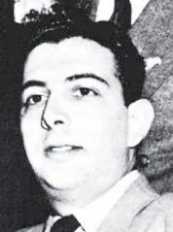
Arnold Schuster
Following Sutton to a garage, Schuster quickly notified police of his whereabouts. They arrested Sutton as he changed a dead battery from his car, which had stalled in the street.
Schuster became—briefly—a celebrity.
Then, on March 8, a gunman shot Schuster outside his home. Police were baffled: Schuster was not a mobster, and Sutton had no ties to organized crime.
Only years later did the truth emerge: According to Mafia informant Joseph Valachi, Anastasia was watching TV when Schuster was being interviewed. Anastasia yelled at a nearby enforcer: “I can’t stand squealers! Hit that guy!”
Anastasia’s murder of Schuster violated a cardinal Mafia rule: Police, prosecutors and and citizens who aren’t involved in organized crime are off-limits.
This isn’t because mobsters want to be “good guys.” It’s because attacks on these people draw unacceptable heat from the press and police.
In 1935, the Commission, the governing body established by Luciano, learned that mobster Arthur Flegenheimer—better known as Dutch Schultz—planned to “hit” New York Special Prosecutor Thomas E. Dewey.
Knowing that this would provoke an all-out attack on the Mafia, the Commission ordered Schutz’ own murder—which occurred on October 23, 1935.
Anastasia already had plenty of enemies within the mob. They feared his insatiable greed and willingness to destroy anyone who stood in his way. One of these was Meyer Lansky, who, by the mid-1950s, had set up a highly profitable casino empire in Havana, Cuba.
Anastasia made it clear he wanted a hefty portion of those revenues.
Anastasia’s murder of Arnold Schuster gave his enemies another reason to scorn him: His sheer unpredictability. If he could order the execution of a “civilian” who had become a minor celebrity, he could order the execution of anyone.
Vito Genovese, eager to replace Frank Costello as “boss of all bosses” of the Mafia, knew that Anastasia was a longtime friend of Costello. And any move made against Costello would be swiftly avenged by Anastasia.

Vito Genovese
Genovese found it easy to persuade other high-ranking Mafiosi that the killing of Schuster proved that Anastasia was too unstable to be allowed to live.
On October 27, 1957, Anastasia became a victim of his own specialty. While resting under hot towels in the Sheraton Palace barber shop, he didn’t see two men with scarves covering their faces rush in.
As the gunmen fired at Anastasia, he lunged at their reflections in the wall mirror of the barber shop. The gunmen continued firing until a lucky shot struck him in the back of the head.
So much for Anastasia.
Now for Donald Trump, a President who not only acts like a mobster but has had close business relationships with mobsters.
Specifically: Anthony “Fat Tony” Salerno, head of the Genovese crime Family, and Paul “Big Paul” Castellano, boss of the Gambino one. Trump reportedly employed construction companies linked to both Families to build Trump Plaza and Trump Tower.
Trump’s mania for using social media to attack everyone he hates is deservedly legendary. But his latest rabid attacks on megastars Taylor Swift and Bruce Springsteen may have sealed his own fate.
 Bureaucracybuster's Blog
ABE “KID TWIST” RELES, ALBERT “THE EXECUTIONER” ANASTASIA, ALTERNET, AMERICABLOG, ANTHONY "FAT TONY" SALERNO, AP, ARNOLD SCHUSTER, ARNOLD SCHWARTZNEGGER, ASIANS, BABY BOOMER RESISTANCE, BARACK OBAMA, BBC, BC NEWS, BLACKS, BLOOMBERG, BLUESKY, BRUCE SPRINGSTEEN, BUZZFEED, CBS NEWS, CHARLES “LUCKY” LUCIANO, CNN, CROOKS AND LIARS, DAILY KOS, DISABLED, DONALD TRUMP, DUTCH SCHUTZ, FIVETHIRTYEIGHT, FRANK COSTELLO, HARPER’S MAGAZINE, HILLARY CLINTON, HISPANICS, HUFFINGTON POST, JOHN OLIVER, JOSEPH VALACHI, LOUIS “LEPKE” BUCHALTER, MAFIA, MEDIA MATTERS, MERYL STREEP, MEYER LANSKY, MOTHER JONES, MOVEON, MSNBC, MURDER INC., MUSLIMS, NBC NEWS, NEIL YOUNG, NEW REPUBLIC, NEW YORK POLICE DEPARTMENT (NYPD), NEWSDAY, NEWSWEEK, NPR, PAUL “BIG PAUL” CASTELLANO, PBS NEWSHOUR, POLITICO, POLITICUSUSA, PRISONERS-OF-WAR, RAW STORY, REUTERS, SALON, SEATTLE TIMES, SLATE, TALKING POINTS MEMO, TAYLOR SWIFT, THE ATLANTIC, THE CHICAGO SUN-TIMES, THE CHICAGO TRIBUNE, THE DAILY BEAST, THE DAILY BLOG, THE GUARDIAN, THE HILL, THE HUFFINGTON POST, THE INTERCEPT, THE LOS ANGELES TIMES, THE NATION, THE NEW REPUBLIC, THE NEW YORK TIMES, THE NEW YORKER, THE VILLAGE VOICE, THE WASHINGTON POST, THINKPROGRESS, THOMAS E. DEWEY, TIME, TRUMP PLAZA, TRUMP TOWER, TRUTH SOCIAL, TRUTHDIG, TRUTHOUT, TWO POLITICAL JUNKIES, U.S. NEWS & WORLD REPORT, UPI, USA TODAY, VITO GENOVESE, WILLIE “THE ACTOR” SUTTON, WOMEN, X
ALBERT ANASTASIA HAS A MESSAGE FOR DONALD TRUMP: PART ONE (OF TWO)
In Bureaucracy, History, Law, Law Enforcement, Politics, Social commentary on August 20, 2025 at 12:05 amAlbert Anastasia may have a lesson to teach Donald Trump.
Born in Calabria, Italy, in 1902, he illegally entered the United States in 1919. By the late 1920s, Anastasia had become a top leader of the International Longshoreman’s Association (ILA), controlling six local chapters of the labor union in Brooklyn.
Soon he entered the ranks of the Mafia.
His close associates included future crime bosses Charles “Lucky” Luciano, Vito Genovese, Meyer Lansky and Frank Costello.
Anastasia was not a financial wizard like Lansky or a consummate fixer like Costello. His “gift” was on a far more coarse level: He was a killer who turned murder into a highly profitable business.
As the head of “Murder, Inc.,” the Mafia’s extermination squad, Anastasia arranged for the murders of hundreds of men.
Albert Anastasia
One of those targets was Abe “Kid Twist” Reles, a Mafia assassin who turned state’s witness in 1941. His revelations sent mobster Louis “Lepke” Buchalter to the electric chair on March 4, 1944—to date, the only mob boss to do so.
Reles’ next target was to be Anastasia himself.
But he never got the chance. Guarded constantly by NYPD detectives at the Half Moon Hotel in Coney Island, Reles was found sprawled on the sidewalk six floors below his room. Police claimed he had made a makeshift rope and climbed out of the window to play a trick on his guards. No one was ever charged with his death.
“I never met anyone yet who thought Reles went out that window on purpose,” said later Mafia turncoat Joseph Valachi.
In 1951, Anastasia rose to the head of what is now called the Gambino family after making his boss, Vincent Mangno, “do the Houdini,” as mobsters liked to put it.
But his lethal wrath could descend on anyone—including honest citizens who had no connections to organized crime.
Such a citizen was Arnold Schuster, an American clothing salesman and amateur detective. On February 18, 1952, while riding the Brooklyn subway, Schuster spotted notorious bank robber Willie “The Actor” Sutton.
Arnold Schuster
Following Sutton to a garage, Schuster quickly notified police of his whereabouts. They arrested Sutton as he changed a dead battery from his car, which had stalled in the street.
Schuster became—briefly—a celebrity.
Then, on March 8, a gunman shot Schuster outside his home. Police were baffled: Schuster was not a mobster, and Sutton had no ties to organized crime.
Only years later did the truth emerge: According to Mafia informant Joseph Valachi, Anastasia was watching TV when Schuster was being interviewed. Anastasia yelled at a nearby enforcer: “I can’t stand squealers! Hit that guy!”
Anastasia’s murder of Schuster violated a cardinal Mafia rule: Police, prosecutors and and citizens who aren’t involved in organized crime are off-limits.
This isn’t because mobsters want to be “good guys.” It’s because attacks on these people draw unacceptable heat from the press and police.
In 1935, the Commission, the governing body established by Luciano, learned that mobster Arthur Flegenheimer—better known as Dutch Schultz—planned to “hit” New York Special Prosecutor Thomas E. Dewey.
Knowing that this would provoke an all-out attack on the Mafia, the Commission ordered Schutz’ own murder—which occurred on October 23, 1935.
Anastasia already had plenty of enemies within the mob. They feared his insatiable greed and willingness to destroy anyone who stood in his way. One of these was Meyer Lansky, who, by the mid-1950s, had set up a highly profitable casino empire in Havana, Cuba.
Anastasia made it clear he wanted a hefty portion of those revenues.
Anastasia’s murder of Arnold Schuster gave his enemies another reason to scorn him: His sheer unpredictability. If he could order the execution of a “civilian” who had become a minor celebrity, he could order the execution of anyone.
Vito Genovese, eager to replace Frank Costello as “boss of all bosses” of the Mafia, knew that Anastasia was a longtime friend of Costello. And any move made against Costello would be swiftly avenged by Anastasia.
Vito Genovese
Genovese found it easy to persuade other high-ranking Mafiosi that the killing of Schuster proved that Anastasia was too unstable to be allowed to live.
On October 27, 1957, Anastasia became a victim of his own specialty. While resting under hot towels in the Sheraton Palace barber shop, he didn’t see two men with scarves covering their faces rush in.
As the gunmen fired at Anastasia, he lunged at their reflections in the wall mirror of the barber shop. The gunmen continued firing until a lucky shot struck him in the back of the head.
So much for Anastasia.
Now for Donald Trump, a President who not only acts like a mobster but has had close business relationships with mobsters.
Specifically: Anthony “Fat Tony” Salerno, head of the Genovese crime Family, and Paul “Big Paul” Castellano, boss of the Gambino one. Trump reportedly employed construction companies linked to both Families to build Trump Plaza and Trump Tower.
Trump’s mania for using social media to attack everyone he hates is deservedly legendary. But his latest rabid attacks on megastars Taylor Swift and Bruce Springsteen may have sealed his own fate.
Share this: